Category Archives: Leading Stoker

Stoker Petty Officer Charles Lavis

Stoker Petty Officer Charles Lavis

Charles Walter Lavis was born in Iowa, USA, on 2nd April 1888. The second of eleven children, his parents were James and Martha Lavis. The only census record Charles appears from – the return from 1901 – shows that James was an agricultural labourer from Long Sutton in Somerset. The family’s move to America seemed not to have lasted for long – Charles’ immediate siblings – Mabel, who was two years older, and George who was two years younger – were both born in Long Sutton.

Charles was drawn to a life of adventure and, on 11th April 1906, he enlisted in the Royal Navy. His service records confirm that he was 5ft 5ins (1,65m) tall, with brown hair grey eyes and a fresh complexion. As a Stoker 2nd Class, he was initially sent to the training ship HMS Nelson, before moving to what would become his shore base, HMS Victory, the Royal Naval Dockyard in Portsmouth, Hampshire.

Over the next year, Charles serves on HMS Hecla and HMS King Edward VII, where, on 17th May 1907, he was promoted to Stoker 1st Class. He remained on the King Edward VII for more than four years, before returning to Portsmouth in August 1911.

Back on shore, Stoker 1st Class Lavis was promoted to Leading Stoker, and spent the next nine months training for the role at HMS Fisgard, also in Portsmouth. He spent six months on the battleship HMS Revenge, before moving again to another battleship, HMS Britannia.

Charles spent two years on the Britannia, and it was while assigned to her that he got married. He wed Bessie Patten on 31st May 1914 in Martock, Somerset: the couple would go on to have a daughter, Eileen, who was born the following April.

It was while Charles was serving on HMS Britannia that was broke out. In November 1914, he returned to Victory for further training and, in the spring of 1915, he was promoted to Stoker Petty Officer.

Over the next three years, Charles served on three more vessels, before finally returning to Portsmouth in April 1918. The reason for his return was because of his health, and he was soon admitted to the Royal Naval Hospital in Haslar, Gosport, suffering from tuberculosis of the neck. The condition necessitated an operation, but Stoker Petty Office Lavis was not to survive the procedure. He suffered from heart failure, and died on 2nd May 1918. He had not long turned 30 years of age.

Charles Walter Lavis was taken back to Somerset for burial. He was laid to rest in the quiet graveyard of All Saints’ Church in Martock.


Records suggest that the Lavis family could not settle. Passenger lists from March 1912, show James and Martha travelling with nine children to Portland, Maine, before moving on to Huron in Ontario. James was still recorded as being a farm labourer, so it seems that opportunities for the family were better in North America than in Britain.

When war broke out, citizens of the Commonwealth were called upon to play their part and, despite being under age, Charles’ younger brother Arthur, stepped up to serve. Details of his time in the army are scarce, but he was assigned to the 14th Battalion of the Canadian Infantry. His troop set sail for Britain in October 1914: Arthur was just 14 years old at this point, and had lied when he joined up, giving his date of birth as 20th May 1897.

Private Arthur Lavis was in France by August 1916, taking up position on the Front Line at Coucelette. They met heavy troops, even before a full offensive got underway on 16th September. Ninety-two soldiers from the 14th Battalion were killed during the attack, Arthur included. He was just 16 years old, and his remains were never recovered. He is commemorated on the Vimy Memorial in France.
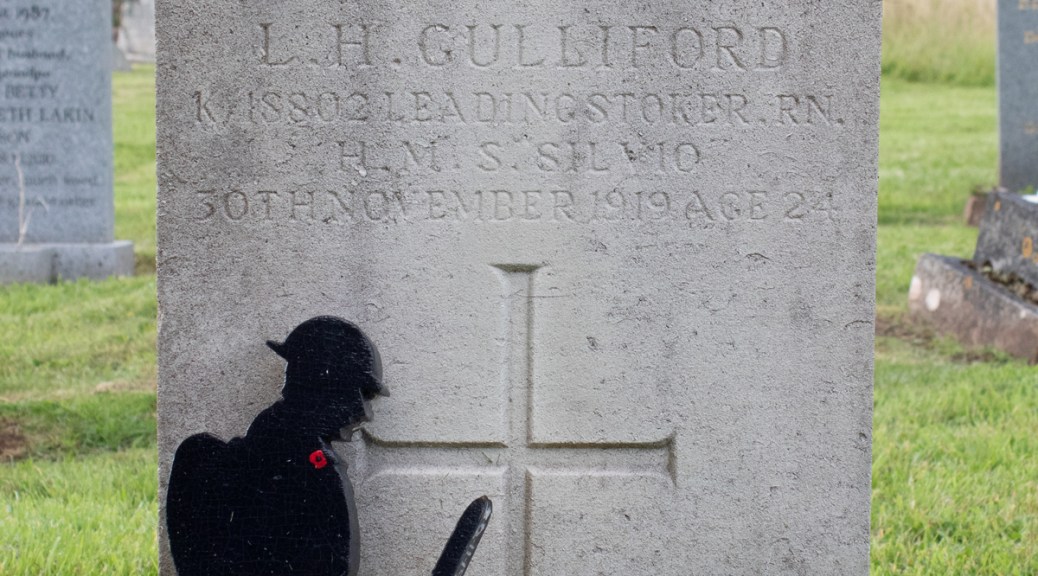
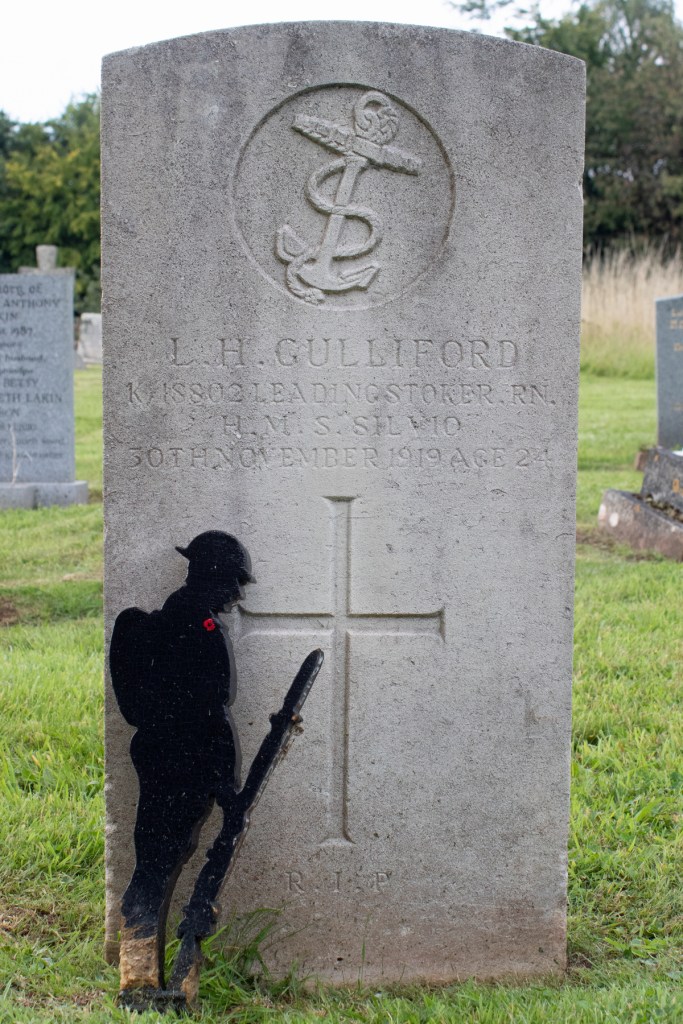
Leading Stoker Leonard Gulliford

Leading Stoker Leonard Gulliford

Leonard Henry Gulliford was born on 26th January 1895 in the village of Cothelstone, near Bishops Lydeard, Somerset. One of eleven children, he was the son of farm labourer William Gulliford and his wife, Jane.

When he completed his schooling, Leonard also found employment on the farm. However, it seemed he wanted bigger and better things and, on 7th April 1913, he enlisted in the Royal Navy as a Stoker 2nd Class. His service records show that he was 5ft 4.5ins (1.64m) tall, with fair hair, blue eyes and a fresh complexion.

Stoker Gulliford spent the first six months of his naval career at HMS Vivid, the Royal Naval Dockyard in Devonport, Devon. This was to be the base to which he would return in between voyages. His records show unusual activity for his time, as he was assigned to just one ship – the battle cruiser HMS New Zealand – during his six years’ service. Leonard spent five years on board, from September 1913 to February 1919, with just one month based back in Devonport during this time.

Leonard rose through the ranks over the years, receiving a promotion to Stoker 1st Class in April 1914, Acting Leading Stoker in July 1918 and Leading Stoker in July 1919, by which point he was, once again, based at HMS Vivid.

In November 1919, Leonard was attached to the sloop HMS Silvio, based in the River Tamar. A party of the crew, Leading Stoker Gulliford included, left the ship without leave, taking a boat to shore.

The bodies of the seven men who were missing from two warships in the Tamar Estuary were recovered this morning, and a mystery has thus been cleared up.

The men left two ships, HMS Swindon and HMS Silvio, on Sunday evening, and it is believed visited Saltash, a riverside town. Later an upturned boat and two naval caps were found…

The bodies were found close together on the mudflats in shallow water in Tamar Creek, on the eastern side of the River Tavy, near the Tavy railway bridge.

Daily News (London): Friday 5th December 1919

A subsequent inquest into the sailors’ deaths determined that, after their time in Saltash, they took their boat, which, at just 13.5ft (4.1m) long, proved too small for seven man, back to their ships. The wind and choppy waters proved too much, and the boat capsized, throwing all of them into the water to their doom. A verdict of accidental death was recorded.

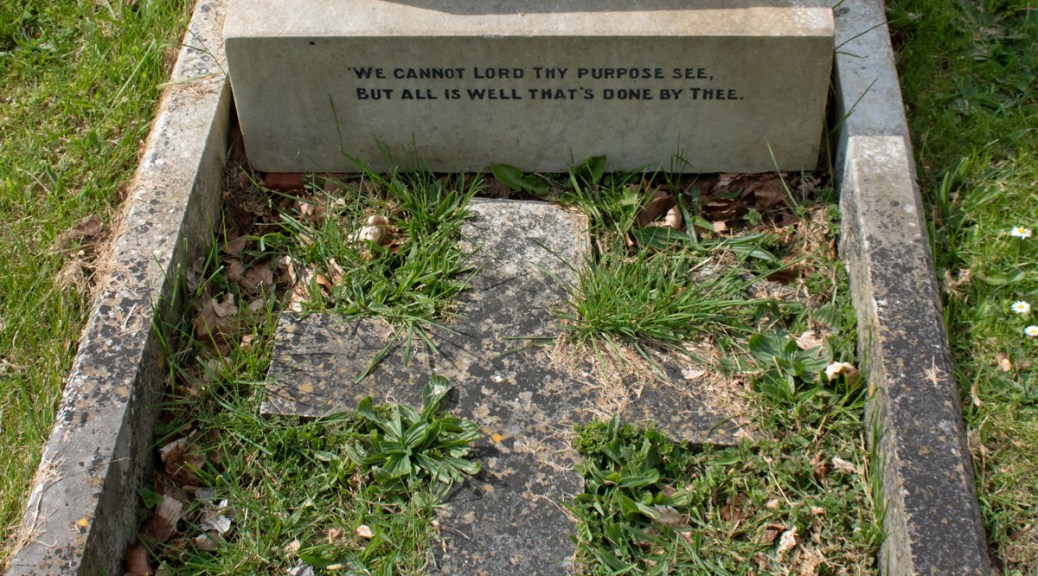
The body of 25-year-old Leonard Henry Gulliford was taken back to Somerset for burial. He was laid to rest in the graveyard of St Mary’s Church in Bishops Lydeard.


Petty Officer Stoker William Dyer

Petty Officer Stoker William Dyer

William Henry Dyer was born on 26th March 1895, in Bath, Somerset. He was the only child of William and Elizabeth Dyer. Elizabeth had had a son prior to her marriage to William Sr, and so William Jr had a half-brother, Sidney.

Elizabeth tragically passed away in December when her youngest was only a toddler. William Sr went on to marry again, to a Sarah Chivers. The couple went on to have a family of their own, giving William Jr and Sidney a further five half-siblings.

William Sr was a carman and, when his son left school, he also found carting work, the 1911 census recording him as being a milk carrier. He wanted bigger and better things, however, and, on 8th April 1913, a fortnight after his eighteenth birthday, he joined the Royal Navy.

William’s service records show that he was working as a van guard on the railway at the time of his enlistment. He was 5ft 7ins (1.7m) tall, with light hair, grey eyes and a fresh complexion. He joined as a Stoker 2nd Class, and was initially assigned to HMS Vivid, the Royal Naval Dockyard in Devonport.

After six months’ training, William was assigned to the dreadnought battleship HMS Ajax. She became his home for the next four years, patrolling the North Sea during the conflict and, in June 1916, was involved in the Battle of Jutland. During his time on board, William rose through the ranks, becoming Stoker 1st Class in August 1914, Leading Stoker in August 1916 and Petty Officer Stoker in October 1917.

In January 1918, William returned to HMS Vivid for a few weeks He was then given a new posting, on board HMS Sandhurst, based at Scapa Flow in the Orkneys. Petty Officer Stoker Dyer was to spend the next ten months here, albeit with a short break that autumn.

It was during this period of leave that William married Lily Sarah Bethia Durbin. She was the daughter of a miner, and the couple married in Clutton, Somerset. Their time together was to be brief, however, as William soon returned to Scotland.

It was while Petty Officer Stoker Dyer was back at HMS Sandhurst that he developed pneumonia. Sadly, the condition was to get the better of him. He passed away on board on 27th November 1918, at the age of just 23 years old.

William Henry Dyer’s body was brought back to Somerset for burial. He was laid to rest in St James’ Cemetery in Bath.


Lily had been a wife for just a matter of weeks, and was now left a widow. In 1926 she remarried, to baker and confectioner Albert Farmer. The couple lived a long and happy life, celebrating their 59th wedding anniversary before Albert died in 1985. Lily lived on, passing away in January 1997, at the ripe of age of 98 years old.


Leading Stoker Daniel Johnson

Leading Stoker Daniel Johnson

Daniel Johnson was born in Dingle, County Kerry, Ireland, on Christmas Day 1883, one of nine children to John and Ellen Johnson. John was a general labourer in the town, but while he initially followed suit, his son was destined to see the world.

On 3rd April 1903, Daniel joined the Royal Navy as a Stoker 2nd Class. His service records show that he was 5ft 7ins (1.70m) tall, with auburn hair, grey eyes and a sallow complexion.

Stoker Johnson was initially sent to HMS Vivid – the Royal Naval Dockyard in Devonport – for training. He was given his first posting in December, and was assigned to the battleship HMS Empress of India. She was to be his home for the next fifteen months.

In February 1905, Daniel was moved to another battleship, HMS Hannibal. Over the next eight years, he would go on to serve on six further vessels. His conduct was noted as Very Good throughout his time in the Royal Navy, and this was matched with the promotions he received. In July 1906, while on board HMS Suffolk, he was given the rank of Stoker 1st Class, and four year later, while serving on HMS Commonwealth, he was promoted to Leading Stoker.

In between voyages, Daniel’s base was HMS Vivid, but in February 1913, he was assigned to HMS Victory – the Royal Naval Dockyard in Portsmouth, Hampshire. He had been serving for ten years by this point, and his records hint at the man he had become. His height was now 5ft 10ins (1.78m), his hair recorded as dark brown and his complexion was noted as being fresh.

On 16th April 1913, Daniel seems to have been assigned to the Northern Irish Inniscrone Battalion, remaining with them for some fifteen months. Based at Inniscrone (now Enniscrone, Co. Sligo), this posting seems to have been with the Coastguard, patrolling the western coast of Ireland.

August 1914 saw Leading Stoker Johnson return to the Royal Navy. He was assigned to the battleship HMS Bulwark, which patrolled the English Channel when he first came on board. By that autumn, however, she had moved to North Kent, guarding the waters around the Isle of Sheppey against potential German invasion.

Daniel was on board Bulwark when, on the morning of 26th November 1914, an explosion ripped through the ship, tearing it apart and sinking it. In all 741 souls were lost, Leading Stoker Johnson among them. He was just 30 years of age.

The majority of those who died in the explosion aboard HMS Bulwark were buried in a mass grave in Woodland Cemetery, Gillingham, Kent. Daniel’s body, however, was not recovered until 24th January 1915, some two months after the explosion.

The sixteenth inquest on the victims of the Bulwark disaster was held at Chatham Naval Hospital on Monday. A body clothed in the dress of a patty officer was identified as that of Thomas Henry Treacher, who was a gun-layer. Two stokers were identified by marks on their clothing as Daniel Johnson, of Blackfields, Co. Kerry. and Edward Henry Buckingham of Nunhead, London, and an able seaman’s body proved to be that of John Griffin, of Kilrush, Co. Clare. The jury returned a verdict of accidental death in each case. Twenty-five bodies have now been recovered.

Westerham Herald: Saturday 30th January 1915

Daniel Johnson was laid to rest in a marked grave in Woodlands Cemetery, not far from his fellow servicemen.


Interestingly, the Coastguard station at Enniscrone would feature in history again a few years after Daniel’s death. Based next to the town’s pier, it was manned by up to five guards and was home to them and their families.

The coastguard station at Enniscrone, County Sligo, was raided on Thursday night, and arms and ammunition taken. The streets of Enniscrone were cleared by the Volunteers prior to the raid. One coastguard is stated to have fired several shots at the attackers, but he was eventually overpowered, and the garrison were then marched out. The arms and ammunition were removed to a waiting motor car, and the furniture and personal belongings of the coastguards taken from the building, which was then set fire to and destroyed.

Belfast News-Letter: Saturday 28th August 1920

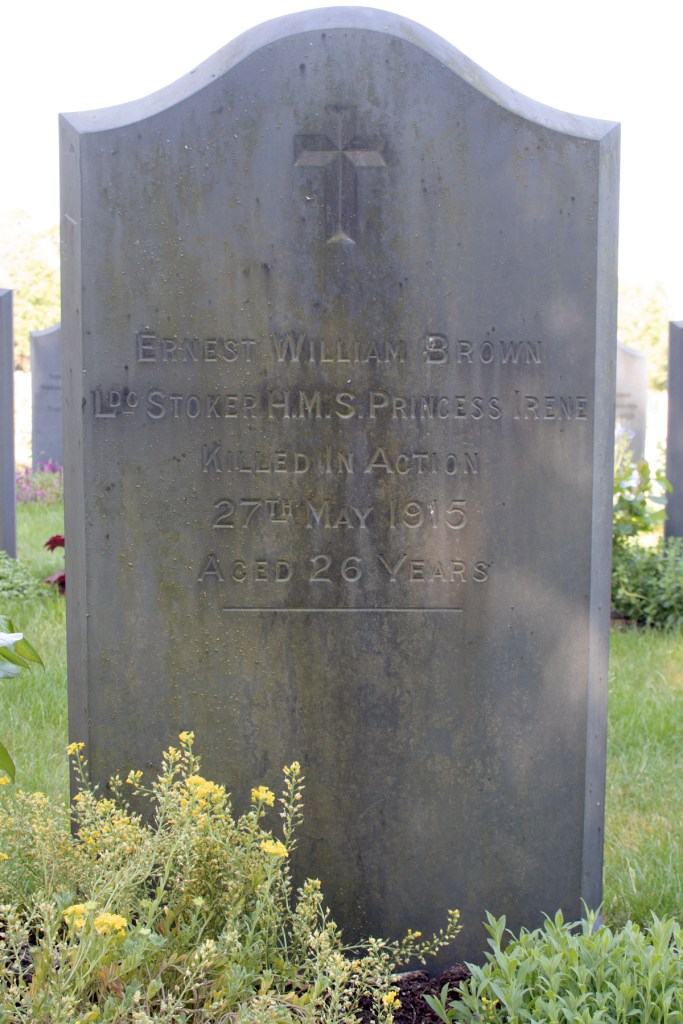
Leading Stoker Ernest Brown

Leading Stoker Ernest Brown

Ernest William Brown was born on 5th April 1889 in Halstead, Essex. One of twelve children, his parents were carpenter Edward and silk weaver Elizabeth Brown.

Ernest initially found work as an errand boy, then as a house painter. He wanted bigger and better things, however, and the Royal Navy offered him that opportunity. He enlisted as a Stoker 2nd Class on 12th March 1908 for a period of twelve years’ service.

Ernest’s early service records are lost to time, but he received a promotion to Stoker 1st Class on 12th March 1909, exactly a year after a joined up. At this point he was assigned to the dreadnought battleship HMS Russell, on board which he served until August 1912.

After a short period at HMS Pembroke, the Royal Naval Dockyard in Chatham, Kent, Stoker 1st Class Brown was transferred to the Apollo-class cruiser HMS Iphigenia. She was to be his home for the next two-and-a-half years, during which time he was promoted again, this time to Leading Stoker.

Returning to HMS Pembroke in March 1915, this was to be his shore base for the next couple of months. On 27th May, Leading Stoker Brown was helping out on the steamer Princess Irene. Tragically, while on board an explosion ripped through the ship, while moored off Sheerness, Kent and he was one of the 352 souls killed. He was just 26 years of age.

Ernest William Brown was laid to rest in the Woodlands Cemetery in Gillingham, Kent. His body having been identified, he was given his own grave, unlike those who were buried in a mass grave nearby.


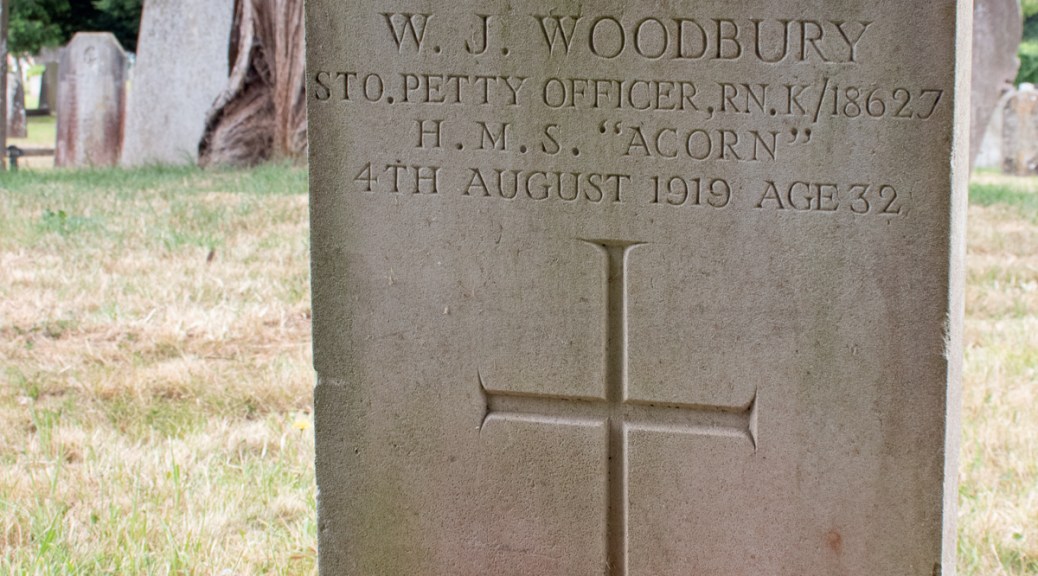
Stoker Petty Officer Wilson Woodbury

Stoker Petty Officer Wilson Woodbury

Wilson John Woodbury was born on 8th December 1888, and was the third of seven children to Daniel and Elizabeth Woodbury. Daniel was a chair maker from Wellington, Somerset, and this is where the family – including six boys and one girl – were raised.

By the time of the 1901 census, Daniel had had a change of career – he was now working as an oil presser. His and Elizabeth’s oldest three boys, Wilson included, had also found work, and were employed as wool spinners.

Elizabeth passed away in 1906, when Wilson was just seventeen years old. This may have pushed him to bigger and better things, and a career. On 13th August 1908, at the age of 19, he enlisted in the Royal Navy as a Stoker 2nd Class. His service record shows that he was 5ft 7.5ins (1.71m) tall, had light brown hair, blue eyes and a fresh complexion. It also noted that he had a tattoo of a cross on his right forearm.

Stoker Woodbury was initially trained at HMS Vivid – the naval dockyard at Devonport. On 9th February 1909, however, he was given his first posting, on board HMS Defence. He spent two years on board the armoured cruiser, and, gained a promotion to Stoker 1st Class.

During the remainder of his initial service, Wilson served on two further ships – HMS Sentinel and HMS Bellona – returning to Devonport between each posting. When he completed his five-year contract, Wilson voluntarily signed up for a further seven years with the Royal Navy.

As war came to Europe, Stoker Woodbury was given a number of assignments, on the battleships HMS Caesar and Lord Nelson, the cruisers HMS Blake and Apollo, and the depot ship HMS Blenheim. Further promotions followed – Leading Stoker in 1915 and Stoker Petty Officer two years later.

Wilson’s oldest brother, James, was serving in the Labour Corps during the conflict. Based in Northern France, he was assigned to the 720th Company, although further details are unclear. He almost survived the war unscathed, but contracted an illness of some description and died on 3rd November 1918, aged 34 years old. He was laid to rest in the Terlincthun British Cemetery in Wimille, France.

Stoker Petty Officer Woodbury returned home on leave in July 1919. The plan was to meet up with his fiancée who lived in Rockwell Green, near Wellington, but he instead turned up unexpectedly at his brother Fred’s home instead. Wilson said he had returned to Somerset because his girlfriend had broken off the engagement the previous week: the couple had been due to marry when he next came home on leave.

Fred told Wilson that she was not worth it, and they had gone drinking with a friend. Fred later said that on his previous leaves his brother had taken to drinking more than was good for him, but on that evening – Saturday 2nd August 1919 – he did not get drunk.

The following Monday, Stoker Petty Office Woodbury had taken himself down to the railway at Wellington, and been hit by a train. The action was deliberate, as, about his person were three letters. The first was to Daniel.

To My Dear Father,

Sorry to cause you any inconvenience or trouble, and please don’t worry about me, as I’m not fit to worry about. I have had this in mind for about a week. I can’t sleep and can’t eat, as I am broken-hearted, but not insane. This is through love. Now I must exit myself, and I am in great pain. Written at 4:15pm Sunday afternoon…

This is all I have to say in this world. Hoping you and my dear sister will soon forget their broken-hearted

Wilson John Woodbury.

Wilson’s second letter was to his only sister, Ivy. This included details of a parcel left on board his ship, in which was the ring he had given to his fiancée, which he asked that Ivy wear as a memory of him.

Knowing the implications of what he was doing, the third letter was addressed to the jury of the inquest.

My leave expires at 1pm, and my life expires just before by my own hand. I wait to get the chance to put a stop to my life. This would not have happened to bring disgrace on my relations. I am quite sane. Written at 2pm.

On the afternoon of Monday 4th August 1919, Wilson made his way to the Woodford crossing, a short distance from Wellington Railway Station.

…he waited by the side of the line at the crossing for a train, and as the Northern express approached he laid down with his head on the metals, being practically decapitated.

Taunton Courier and Western Advertiser: Wednesday 13th August 1919

The fiancée in question did attend Wilson’s inquest, although the Coroner did not think it was necessary to call her. The newspaper report referred to her, but not by name. She will remain a mystery.

Despite the evidence of his own hand, the inquest found that Stoker Petty Officer Woodbury had committed suicide while temporarily insane. He was just 30 years of age.

Wilson John Woodbury was laid to rest in the cemetery of his home town, Wellington.


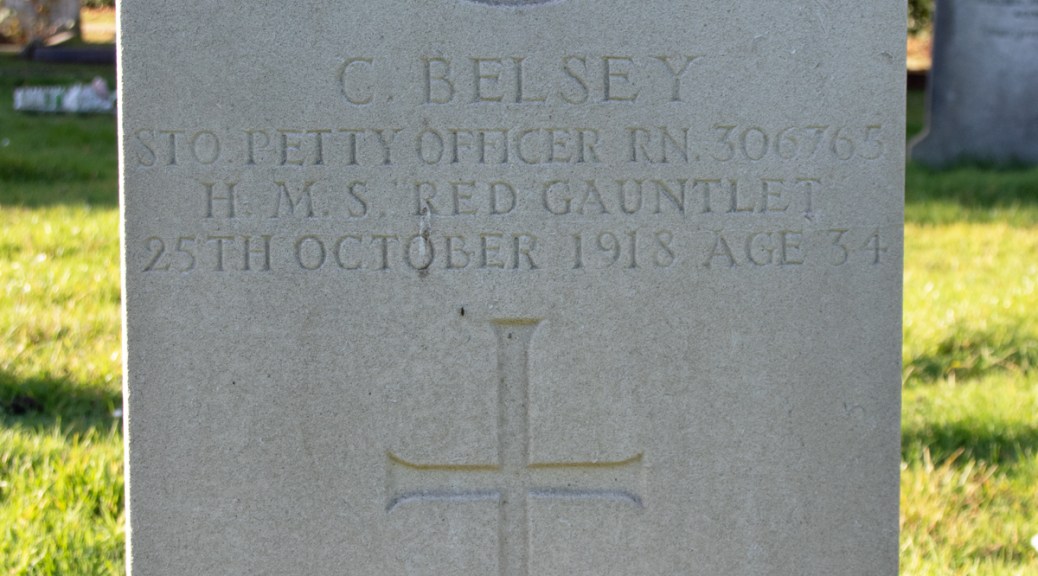
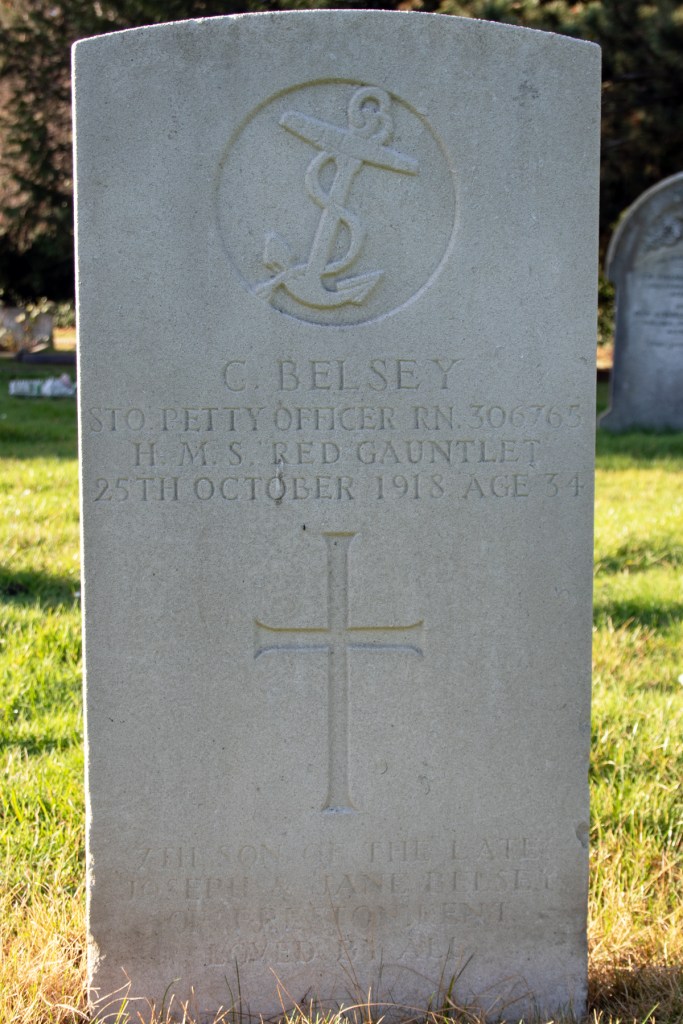
Stoker Petty Officer Christian Belsey

Stoker Petty Officer Christian Belsey

Christian Belsey was born on 12th February 1884 in the village of Preston, Kent. He was one of fourteen children to Joseph and Jane Belsey. Joseph was a farm labourer, and Christian followed suit on leaving school.

He wanted bigger and better things, however, and after his older brother Charles had sought out a life in the Royal Navy, he followed suit. Christian enlisted on 28th June 1904; his service records show that he was 6ft (1.83m) tall, had brown hair, brown eyes and a fresh complexion.

Stoker 2nd Class Belsey was based out of HMS Pembroke, the Royal aval Dockyard in Chatham, Kent, and this is where he returned to in between voyages. His first posting was on board the destroyer HMS Acheron, on board which he spent six months.

Over the twelve years of his initial service he was assigned to six different ships, rising through the ranks to Stoker 1st Class (in 1906), Leading Stoker (1911) and Stoker Petty Officer (1912).

When war broke out in August 1914, Christian was back in Chatham; he was soon assigned to HMS Laertes, a destroyer based out of Harwich, which patrolled the North Sea. She was involved in the attempt to head off the German attack on Yarmouth and Lowestoft in April 1916, during which, two of Christian’s colleagues, Stoker Ernest Clarke and Stoker Petty Officer Stephen Pritchard, were awarded the Distinguished Service Medal for their bravery under fire.

After three years on board Laertes, Christian was transferred to HMS Redgauntlet. He served on board for eighteen months until, in October 1918, he fell ill.

Admitted to a hospital in Samford, near Ipswich, Suffolk, Stoker Petty Officer Belsey was suffering from pneumonia. Sadly, the lung condition was to get the better of him, and he passed away on 25th October 1918, at the age of 34 years old,

Christian Belsey was brought back to Kent for burial. He was laid to rest in Faversham Borough Cemetery.


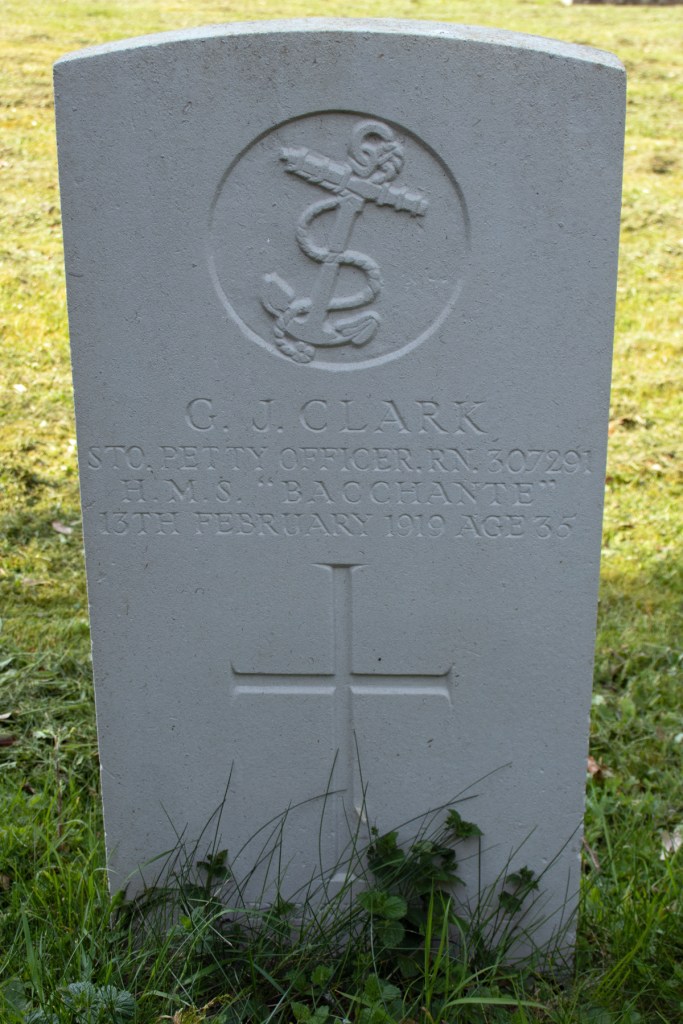
Stoker Petty Officer Gilbert Clark

Stoker Petty Officer Gilbert Clark

Gilbert John Clark was born in Bedminster, Somerset – now a suburb of Bristol – on 6th January 1884. He was one of eleven children to Jonah and Elizabeth Clark. Jonah was a coal miner from Devon, who travelled to find work. He and Elizabeth left Devon for Somerset in the early 1880s, before moving to Glamorgan, South Wales in 1891. This seemed not to last long, however, and, by 1895, the family were living back in Bristol.

The 1901 census recorded Jonah and Gilbert’ older brother, William, working the mines. Gilbert, however, had found different employment, working instead as a labourer for a brick maker. This did not turn out to be a long-term career for him, however, and, on 25th August 1904 he enlisted in the Royal Navy as a Stoker 2nd Class.

Gilbert’s service records show that he was 5ft 3ins (1.6m) tall, had black hair, dark brown eyes and a dark complexion. He was also noted to have a number of tattoos on his left arm, including a woman’s head, a figure of a woman and a cross with a man, crossed hands with a flower, a snake heart and an arrow.

Stoker 2nd Class Clark enlisted for a period of twelve years, and was initially based at HMS Vivid, the Naval Barracks in Devonport. After his training, he was given his first posting, on board HMS Barfleur. He quickly transferred, however, and in April 1905 was assigned to the battleship HMS Vengeance.

Gilbert’s three years on Vengeance were mixed. During that time, he spent two separate periods in the cells. The first, in February 1906, was for desertion, and resulted in ten days in the brig. The second, in August that year meant he was locked up for a further five days although the misdemeanour this time is not documented. This second period in the brig seemed to bring Gilbert to his senses, however, and the rest of his time on board Vengeance seems blemish-free, and even gave him a promotion to Stoker 1st Class.

The remainder of Gilbert’s twelve years’ service saw him assigned to a further eight vessels; between voyages he returned to the Devonport Naval Base. He also received a further two promotions: Leading Stoker in May 1912, and Stoker Petty Officer in February 1914.

War was imminent, by this point, and, at the end of his initial contract, he volunteered to remain in the Royal Navy for the period of the hostilities. After a six-month posting in Devon, Stoker Petty Officer Clark served on three more vessels. It was while he was on board HMS Bacchante, however that he fell ill with influenza. The ship was moored at the Royal Naval Dockyard in Chatham, Kent, at the time and he was admitted to the RN Hospital in the town.

Sadly, Gilbert’s influenza turned to pneumonia and proved too much for his body to bear. He passed away from the lung conditions on 13th February 1919, at the age of 35 years old.

Gilbert John Clark’s body was brought back to Somerset for burial. He was laid to rest in the graveyard of St John the Baptist Church in Peasedown St John, where his parents were then living.


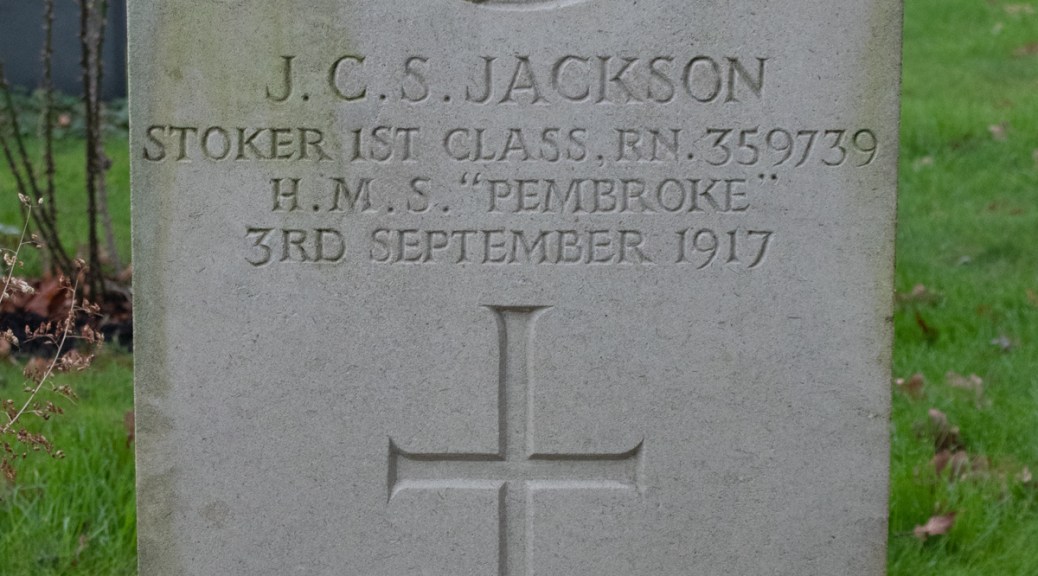
Stoker 1st Class Joseph Jackson

Stoker 1st Class Joseph Jackson

Joseph Charles Sackett Jackson was born in Rotherhithe, Surrey, on 4th May 1884, and was on of seven children. His father – post office worker Joseph Jackson Sr – died in 1895, leaving his mother, Eliza, to raise the family.

She soon married Matthew Newton, a widower himself, and the 1901 census found the couple living in Asylum Road, Peckham with eleven of their children and step-children. Joseph, who was 17 years old by this point, was one of only four of the household to be working, and was employed as a brass turner.

Keen to better himself, Joseph looked to a longer career and, in September 1901, he enlisted in the Royal Navy. His service records show that he was 5ft 3ins (1.6m) tall, had dark brown hair, brown eyes and a fresh complexion.

Initially underage, he served on the home front, Joseph was based at the shore establishments around the country – HMS President (London), HMS Pembroke (Chatham Dockyard, Kent) and HMS Victory (Portsmouth, Hampshire). In 1906, when he turned 23, he formally enlisted in the Royal Navy, and was given the rank of Stoker 2nd Class.

Over the next year, Joseph served on three vessels – HMS Hawke, HMS Dido and HMS Pathfinder – and was promoted to Stoker 1st Class. He continued his work at sea, but returned to HMS Pembroke in between voyages.

In the summer of 1913, Stoker Jackson was assigned to the battleship HMS Dominion, and it was here that he spent the next four years. He was promoted again, this time to Leading Stoker. He returned to HMS Pembroke in August 1917, although he was again given the rank of Stoker 1st Class.

Chatham Dockyard was particularly busy that summer, and the large number of extra servicemen meant that Joseph was billeted in temporary accommodation in Chatham Drill Hall.

On the 3rd September 1917, the first night air raid carried out by the German Air Force bombarded the town, and scored a direct hit on the Drill Hall; Stoker 1st Class Jackson was among those killed instantly. He was 33 years old.

Joseph Charles Sackett Jackson was laid to rest, along with the other victims of the Chatham Air Raid, in the Woodlands Cemetery, Gillingham.


Stoker Petty Officer Oliver Marchant

Stoker Petty Officer Oliver Marchant

Oliver Marchant was born in Beaminster, Dorset, on 21st September 1874. One of eight children, his parents were agricultural labourer William Marchant and his wife Hannah. Oliver’s parents had been born in Devon, and this is where they moved the family back to.

When he left school, Oliver and his older sister found work as a farm hands. They were employed at Compton Pool Farm, and were fortunate enough to be able to live in. Oliver ended up working on the farm for three years, becoming a groom in the process. A more secure career beckoned, however, and, on 11th January 1894, he enlisted as a Stoker 2nd Class in the Royal Navy.

Oliver’s service records show that he signed up for a period of twelve years. He was 5ft 4ins (1.62m) tall, had dark hair, brown eyes and a ruddy complexion. He was initially posted to HMS Vivid – the Royal Naval Base in Devonport – but soon found himself at sea on board HMS Endymion. He spent a year on board and, during this time, was promoted to Stoker 1st Class.

Over the remaining period of his service, Oliver served on five further vessels, returning each time to HMD Vivid as his base. His hard work paid off, and he was promoted to Leading Stoker and Petty Officer Stoker by the time he renewed his service contract in 1906.

During his time in between sea voyages, Oliver met Alice Honeywill; the couple married in August 1904 and set up home in Newton Abbot. They did not go on to have any children.

Back at sea, and over the next eleven years, Stoker Petty Officer Marchant served on a further eight vessels. In between times, he was based at the barracks in Devonport, and it was here that he returned in November 1917, when he fell ill.

Oliver had contracted tuberculosis and, after a short time in hospital, he was discharged from the Royal Naval on medical grounds, as the condition had rendered him no longer fit enough undertake his work. He returned home to Newton Abbot.

At this point, Oliver Marchant’s trail goes cold. He passed away at his home in Newton Abbot on 4th January 1919, at the age of 44 years old. While the cause is not recorded, it seems likely to have been the result of his lung condition. He was laid to rest in the town’s cemetery.