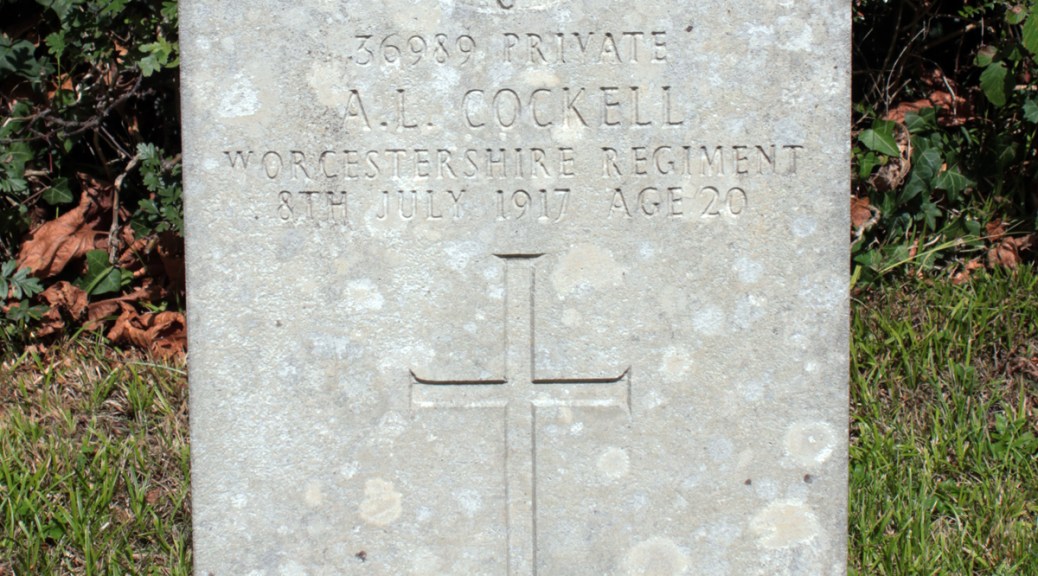
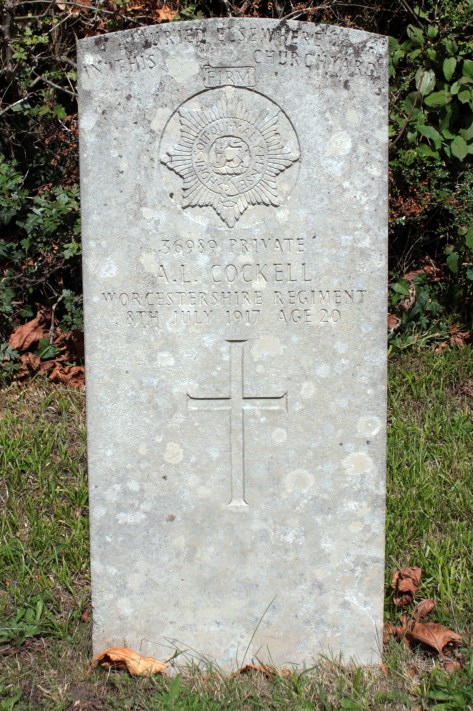
Albert Leonard Cockell was born in the spring of 1917, and was the youngest of four children to William and Annie Cockell. William was a plate layer and packer for Great Western Railways, and the family were born and raised in the village of Dilton Marsh, near Westbury, Wiltshire.
Albert finished his schooling early, to help bring in some money. The 1911 census recorded him – at 13 years of age – employed as a glove worker. When he was old enough, though, he followed in his father’s stead and, by the time war broke out, he was working as a porter at Westbury Station.
In the autumn of 1916, Albert stepped up to serve his country. He enlisted in the Worcestershire Regiment, and was assigned to the 4th Battalion. He soon found himself in the thick of things, and, by the spring of 1917, his unit was entrenched near Arras.
Sincere sympathies will be felt for Mr and Mrs William Cockell in the death of their son, Private Albert Leonard Cockell, Worcester Regiment, which took place on July 8th from wounds received while on active service in France. Private Cockell… joined the army about nine months ago, and during fighting on the 23rd April was struck by shrapnel. He was sent back to Dorchester and died on Sunday.
[Warminster & Westbury Journal: Friday 20th July 1917]
Albert Leonard Cockell was wounded on the first day of the Second Battle of the Scarpe. He died from his injuries on 8th July 1917, and his body laid to rest in the graveyard of Holy Trinity Church, Dilton Marsh.
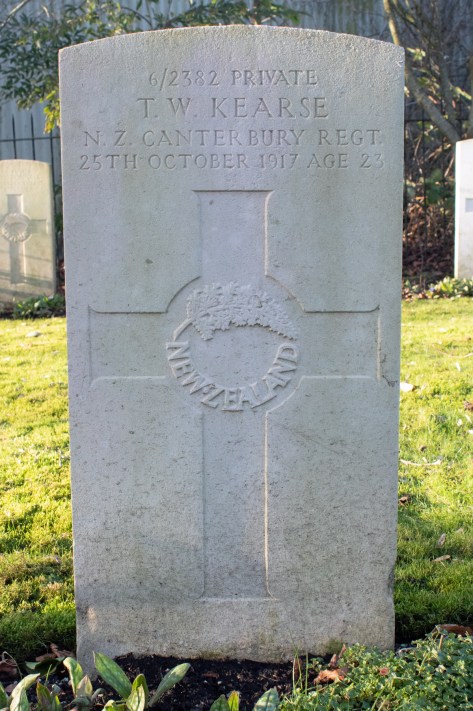
Thomas Walker Kearse was born in Westport, New Zealand, on 15th December 1891. One of seven children, his parents were British emigrant Thomas Kearse and his local-born wife, Rosanna.
There is little information available about Thomas’ early life. He found work as a general labourer when he finished his schooling, by which time his mother had passed away. By his mid-20s, he had relocated to Kaikohe, on North Island.
When war broke out, Thomas stepped up to play his part. He enlisted in Trentham on 16th February 1915, and was assigned to the New Zealand Canterbury Regiment. Private Kearse’s medical examination noted that he was just over 5ft 6ins (1.68m) tall, and weighed 139lbs (63kg). He had light hair, blue-grey eyes and a fair complexion. He was also noted as having a scar on his right shin.
Private Kearse would be in the army for two-and-a-half years, but would experience enough warfare for a lifetime. On leaving New Zealand his unit made for the Dardanelles, arriving there on 16th August 1915. He was wounded early on, and medically evacuated to Malta. His injuries would need further treatment, however, and he was shipped to Britain, and sent to hospital in Birmingham.
Thomas spent time recuperating at a base in Hornchurch, Essex, and it would seem that, while here, he met Catherine Goodwin. A romance started, but Thomas was sent to re-join his unit, who were barracked in Egypt. Within a month, however, he was on the move again, arriving in France in April 1916. While there, he went absent without leave for two days, and forfeited a month’s pay as a result.
In October, Private Kearse was wounded in the head and arm by gunfire, and, after initial treatment in Rouen, he was medically evacuated to Britain. Admitted to the 3rd Southern General Hospital in Oxford, he would remain here for the next month. He was then sent to the ANZAC base in Codford, Wiltshire, again to recuperate, but, while there, he was admitted to the camp’s venereal unit for a fortnight.
Discharged again, his condition had not cleared up: Thomas was back in hospital on 5th December 1916, and he spent a further two weeks admitted.
On his latest discharge, Private Kearse was marched to Sling Camp, near Bulford, where he took up a role as cook. He would remain there for the next four months and, during this time, he and Catherine exchanged vows. She had given birth to a daughter, Ivy, the previous October, and this helped formalise their family unit.
Over the next few months, Thomas’ life repeated itself. He was admitted to hospital in Codford again in June 1917, and went AWOL for 26 hours on 27th/28th July (for which he was docked four days’ pay). Discharged from hospital on 4th September, he was marched back to the Sling Camp.
Within six weeks, however, he was sent back to hospital in Codford, this time suffering from pneumonia. This time, Thomas would not be as fortunate. The lung condition got the better of his, and he passed away on 25th October 1917, at the age of 25 years old.
The body of Thomas Walker Kearse was laid to rest in the ANZAC extension to St Mary’s Churchyard in Codford, not far from the hospital he had visited so many times.
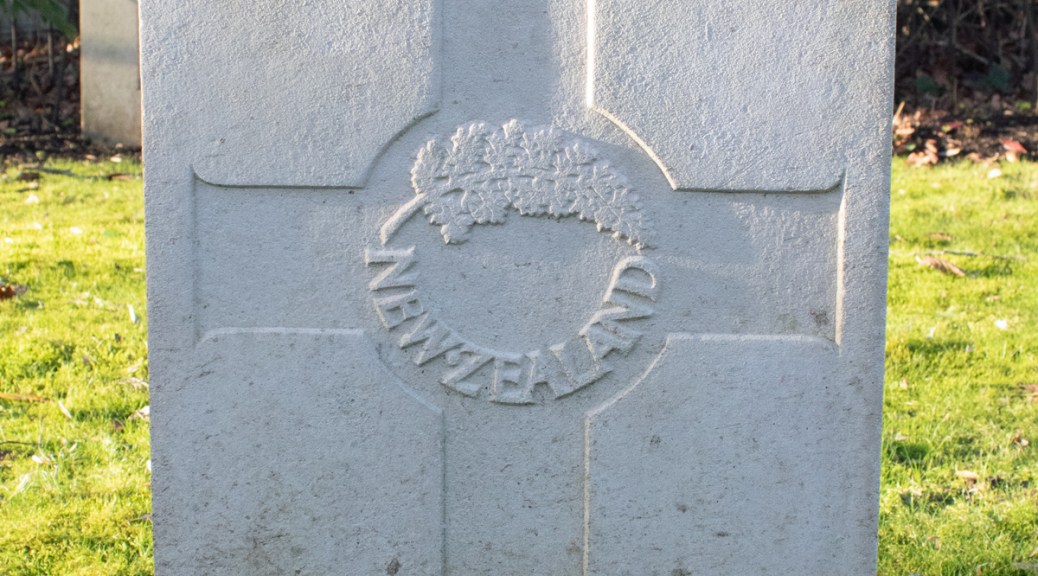
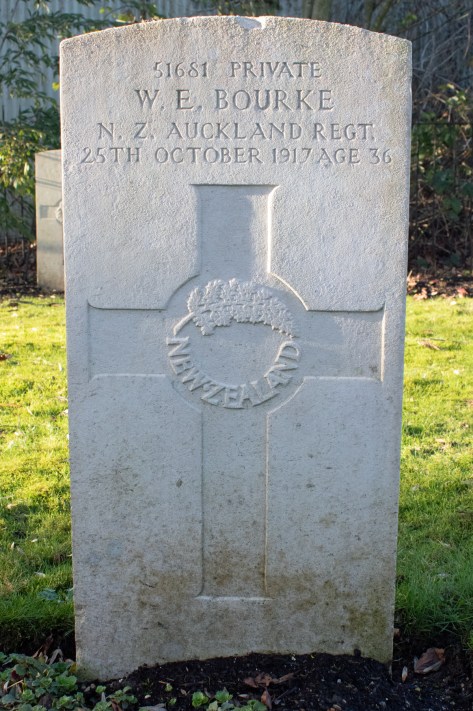
Walter Edward Bourke was born in Whangarei, New Zealand, on 6th May 1885. The fifth of six children, his parents were Patrick and Elizabeth Bourke, who had emigrated from Ireland in the 1870s.
Patrick died in 1911, at the age of 65. Walter, by this point, was working as a chamber hand in a freezing works. When war broke out, however, he was compelled to step up and serve his country. He enlisted on 22nd January 1917, and was assigned to the New Zealand Auckland Regiment.
Trained at Trentham, Private Bourke’s unit set sail for Europe on 12th June 1917. The voyage from Wellington to Devonport would take two months and, from there Walter was marched into a camp in Sling, near Bulford, Wiltshire.
Within a matter of weeks, Walter fell ill. He was sent to the No. 3 New Zealand Hospital near Codford, Wiltshire, but his condition worsened significantly over the next month. His treatment would prove fruitless, and Private Bourke passed away on 25th October 1917: he was 32 years of age.
Thousands of miles from family, Walter Edward Bourke was laid to rest in the extension to St Mary’s Church graveyard, not far from the hospital in which he had passed.
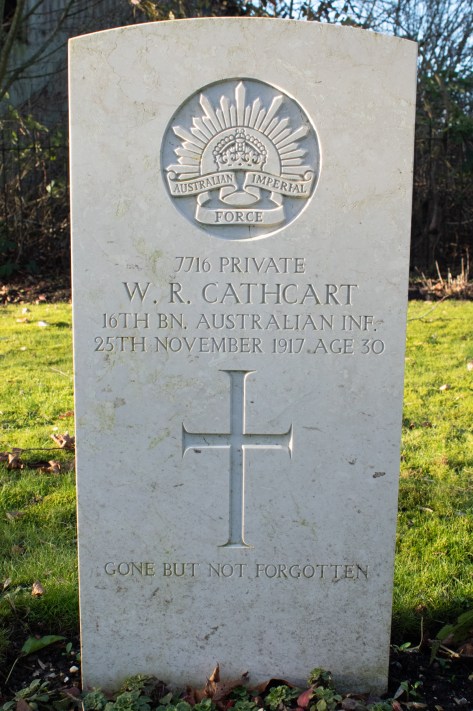
William Rea Cathcart was born in Ballymena, County Antrim, Northern Ireland, on 30th January 1887. The middle of five children, his parents were Thomas and Margaret Cathcart.
Little information is available about William’s early life, but he appears to have been a smart young man and, by his mid-20s was employed as a bookkeeper. Part of him sought a better life for himself and he took the decision to emigrate, arriving in Fremantle, Australia on board the SS Otranto on 14th November 1911.
William settled in Perth, but when war broke out, he was keen to step up and serve his King and Empire. He enlisted on 7th May 1915 but, for some reason, he wasn’t accepted for service at that time.
William did not give up, however, and he succeeded in enlisting on 30th May 1917. His service papers confirm that he was 5ft 8.75ins (1.74m) tall and weighed 150lbs (68kg). A Roman Catholic, he was noted as having brown eyes, brown hair and a fresh complexion.
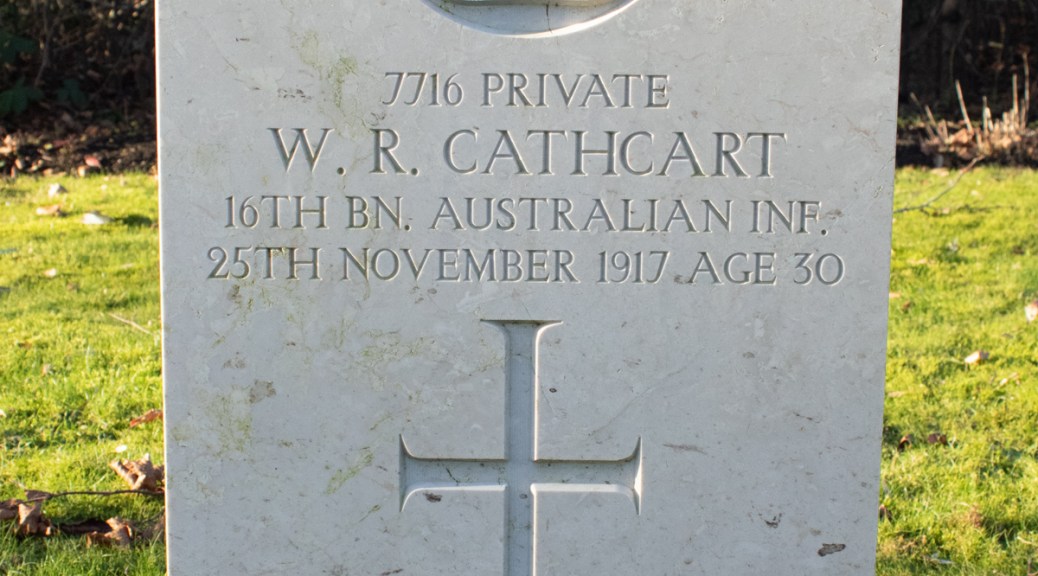
Assigned to the 16th Battalion of the Australian Infantry, Private Cathcart’s unit set sail from Sydney on the troop ship A7 Medic, on the 1st August 1917. The voyage would take two months, and his unit arrived in Liverpool, Lancashire, at the start of October. It the then marched south to the ANZAC bases near Codford, Wiltshire.
It seems that the journey had exhausted William, and his health began to deteriorate. He was admitted to the camp hospital with diabetes, but moved to the No. 3 New Zealand General Hospital on 22nd November. He was emaciated and barely able to walk, constantly drinking, but eating very little.
Over the next few days, William’s condition worsened. He began getting pains in his arms and legs, was sluggish and restless. The treatment he was provided would ultimately prove too little, too late. Private Cathcart passed away at 1:05am on 25th November 1917: he was 30 years of age.
The body of William Rea Cathcart was laid to rest in the ANZAC extension to the graveyard of St Mary’s Church, Codford, not far from the hospital in which he had been treated.
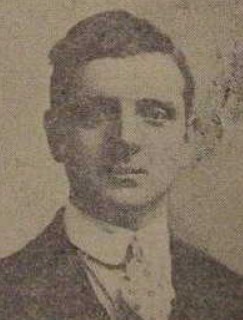
Born in Shelburne, Nova Scotia, in around 1876, the early life of Oscar Cameron is a challenge to piece together. He was one of four children to ship’s carpenter Christopher Cameron and his wife Alice.
Oscar appears to have followed his father in a sea-faring life, and his later army service records confirm that, by 1917, he was a ship’s officer. When the call came to serve the Empire, he took a discharge from his ship in Australia, and joined up.
Enlisting on 20th February 1917, Oscar’s service records show that he was 5ft 6.5ins (1.69m) tall, and weighed 128lbs (50.1kg). He had fair hair, blue eyes and a fresh complexion, with a tattoo on his right forearm and a vaccination scar on his left upper arm. His age was given as 36 years and 6 months, although he was, in fact 41 by this point.
Assigned to the 59th Battalion of the Australian Infantry, Private Cameron’s unit left from Sydney on board the HMAT A16. The two-month voyage was not uneventful: Oscar spent three days in hospital with an undeclared ailment, and also forfeited two days’ pay for being absent without leave for 34hrs during the ship’s layover in Cape Town, South Africa.
The 59th Battalion disembarked in Liverpool, Lancashire, on 16th September 1917. From there it made the journey to the ANZAC camps in Wiltshire, and this is where Oscar would have continued his training.
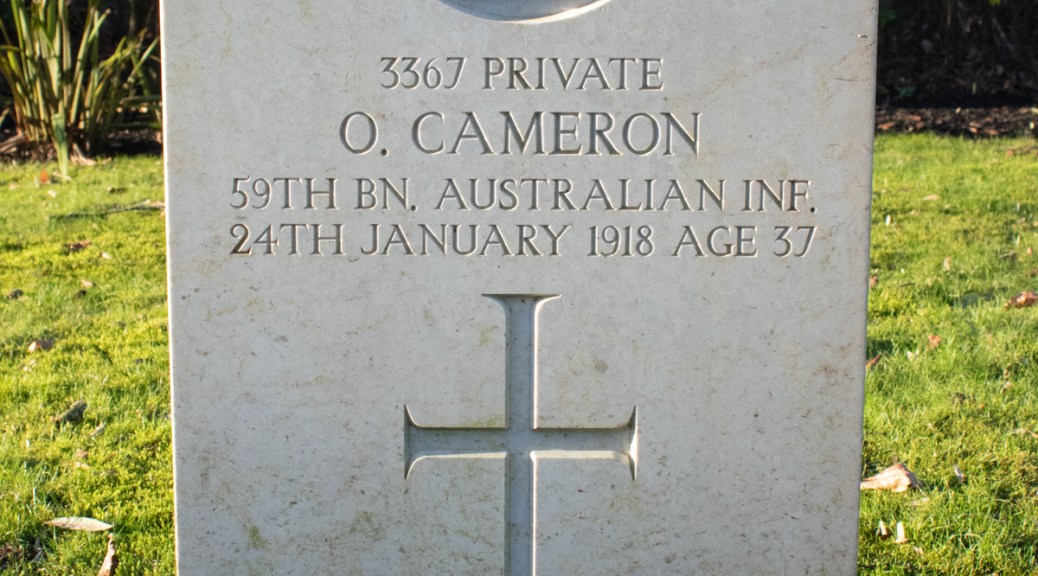
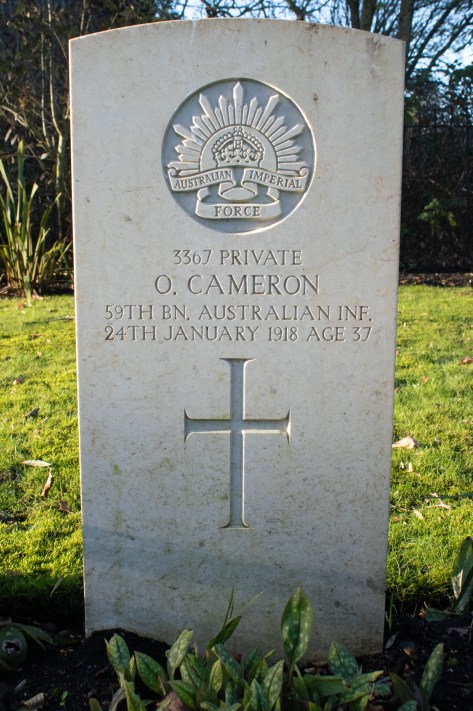
At the start of 1918, Private Cameron’s health was suffering again. He was admitted to the No. 3 New Zealand General Hospital in Codford, Wiltshire, suffering from nephritis. Ultimately, the condition was to prove fatal: Oscar passed away at 4:45pm on 24th January 1918, aged 40.
Thousands of miles from home, it wasn’t possible for the remains of Oscar Cameron to be taken back to Canada. Instead, he was laid to rest in the ANZAC extension to St Mary’s Churchyard in Codford, not far from the base where he had received treatment.
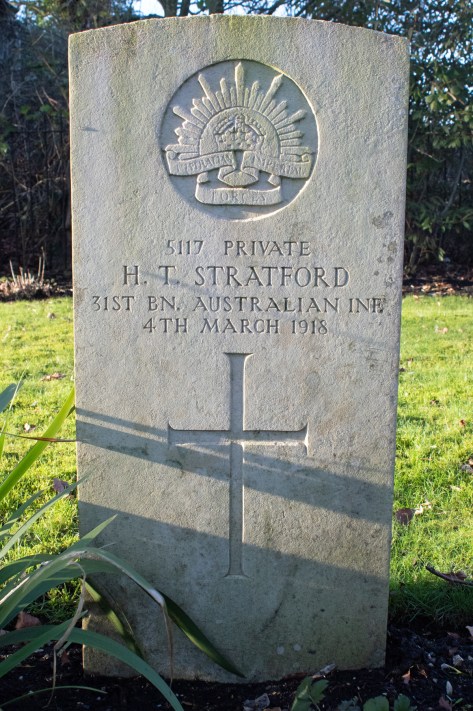
Henry Thomas Stratford was born in Southampton, Hampshire, in the autumn of 1870. The youngest of three children, his parents were John and Maria Stratford. When Henry’s father died in 1876, Maria re-married, and went on to have a further child with her new husband, James Simmons.
Maria’s husbands worked away, and likely served on ships: John was absent from the 1871 census, while James was missing from the 1881 return.
By the 1901 census, Maria had been widowed a second time. She was living at 29 Dock Street with her three youngest children – Henry, his older brother John, and his younger half-brother William. By this point, John was employed as a waterman on a barge, while Henry had also taken to the water, and was employed as a seaman.
Maria passed away in 1904, and there is little further information about Henry’s earlier life. His later army records suggest that he served in the Royal Navy for 14 years, although there are no records for his service at that time.
At some point, presumably after his time in the navy had expired, Henry emigrated to Australia. Again, details are scarce, but he was definitely there by the spring of 1917, having settled in Brisbane, and taken up work as a sailmaker.
When war broke out in Europe, Henry stepped up to serve his country, enlisting in the Australian Imperial Force on 3rd Mary 1917. His records confirm that he was 5ft 4ins (1.62m) tall, and weighed in a 152lbs (69kg). With light brown hair and blue eyes, he had a fair complexion and tattoos on both of his forearms.
Assigned to the 31st Battalion of the Australian Infantry, Private Stratford set sail from Sydney on 14th June 1917. After a ten week voyage, he was marched in to Hurdcott Camp near Fovant, Wiltshire, and would remain in the ANZAC base for his training.
On 23rd February, Henry was admitted to the No. 3 New Zealand General Hospital in Codford, Wiltshire, having fallen from a train. He remained in hospital for the next week, but his head injuries would ultimately prove fatal.
An inquest was held at the New Zealand Military Hospital on Wednesday concerning the death of Henry Thomas Stratford…
Mr FAP Sylvester (coroner) conducted the inquiry, and the evidence went to show that on the night of February 23rd last the deceased man met with an accident by trying to leave a train while it was in motion, before reaching Codford GWR Station. He was picked up in an unconscious state and conveyed to the Military Hospital where he died on Monday.
Corporal John Brooks, ASC Cyclist Section, of Codford, stated that he proceeded from Warminster on the 9:45pm train to Codford on February 23rd. He was in the company of Gunner E Ford, RFA, of Boyton, and they were in the came corridor carriage as the deceased man. After leaving Warminster deceased walked down the corridor, and some time later witness found that deceased had opened the carriage door and was sitting with his feet hanging outside, apparently trying to alight from the train. Just after passing Upton Lovel [sic] crossing, he suddenly disappeared, and witness just saw him fall off the footboard. Deceased never spoke or shouted, and when the train pulled up at Codford, witness reported the matter to the military police and stationmaster, and accompanied them to the spot where deceased was found lying face downwards, his head against the main line rail. First aid was rendered and he was moved to the military hospital.
Private Claude E Thompson, Australian military police, stated that deceased had a road pass, but he had no right to travel by train. He had probably endeavoured to leave the train before it reached Codford to evade the military police.
The jury returned a verdict that deceased came to his death by trying to alight from the train and that he accidentally fell and sustained a compound fracture of the skull.
[Warminster & Westbury Journal – Friday 08 March 1918]
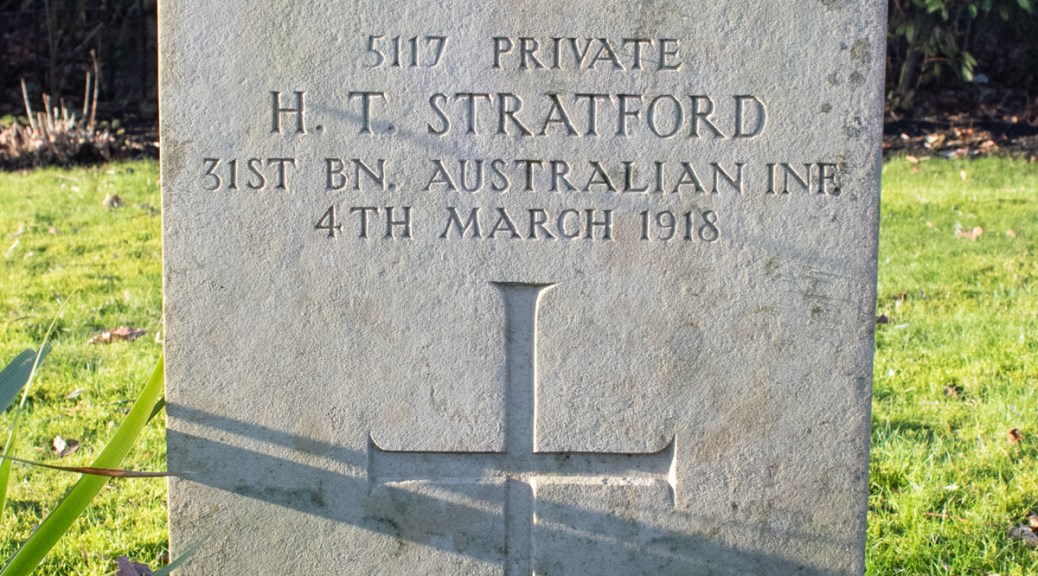
Henry Thomas Stratford was 47 years of age when he passed away. His body was laid to rest in the ANZAC extension to St Mary’s Churchyard in Codford, Wiltshire, close to the hospital in which he had breathed his last.
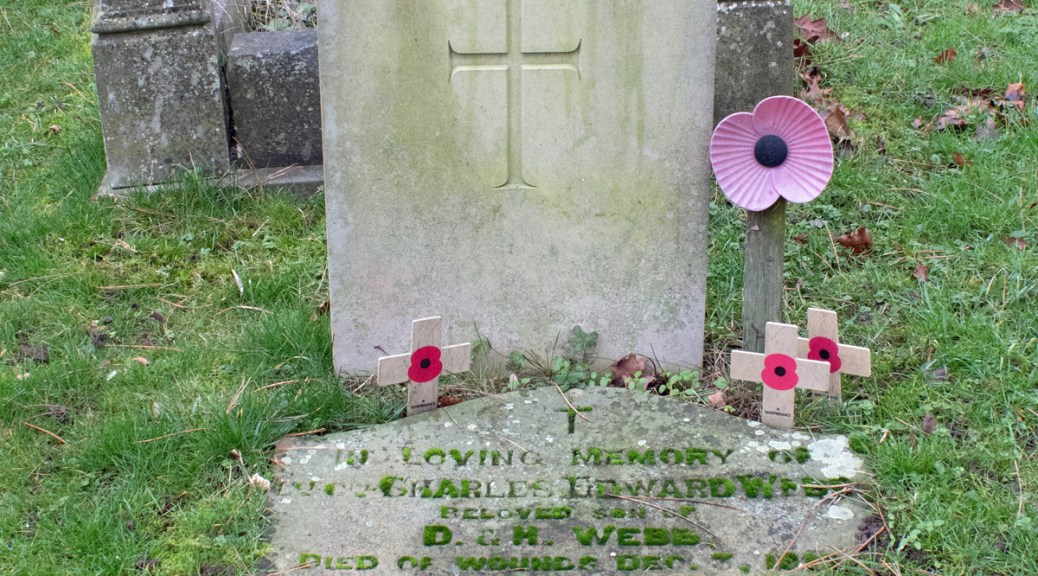
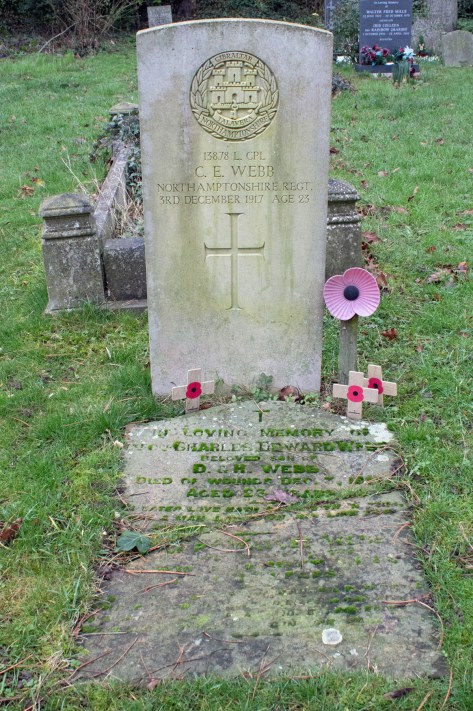
Charles Edward Webb was born in Wootton, Northamptonshire in the autumn of 1894. The oldest of seven children, his parents were clay pit foreman David Webb and his wife, Hannah.
When Charles finished his schooling, he found work as a brewer’s labourer: the 1911 census found the family living in a four-roomed cottage on Wootton High Street.
Little information is available about Charles’ time in the army. A later report, however, confirms that he enlisted not long after the declaration of war in 1914. He joined the Northamptonshire Regiment, and was assigned to the 7th (Service) Battalion.
Private Webb’s unit fought in some of the fiercest battles of the conflict, including at Loos in 1915, the Somme in 1916 and Ypres in 1917. During this time Charles was promoted to Lance Corporal.
Webb, Lce.-Corpl. CE (23), Northants, eldest son of Mr and Mrs Webb of Wootton, and fiance of Miss M Seamark, of Northampton; died in the University War Hospital, Southampton, on December 3, of wounds received in action on June 7; enlisted at the outbreak of war.
[Northampton Chronicle and Echo – Monday 31 December 1917]
The date of Charles Edward Webb’s injuries coincide the the first day of the Battle of Messines, in which the Northamptonshire Regiment played a crucial role. He was 23 years old when he died: his body was taken back home for burial and he was laid to rest in St George’s Church Cemetery, not far from the homes of his grieving family and fiancée.
Charles’ younger brother William also served in the First World War. As a Private in the 10th (Service) Battalion of the Essex Regiment, he was caught up in the Battle of Amiens on 8th August 1918, and was declared missing presumed dead: he was just 18 years of age. He is commemorated on the Vis-en-Artois British Memorial in Harcourt, France.
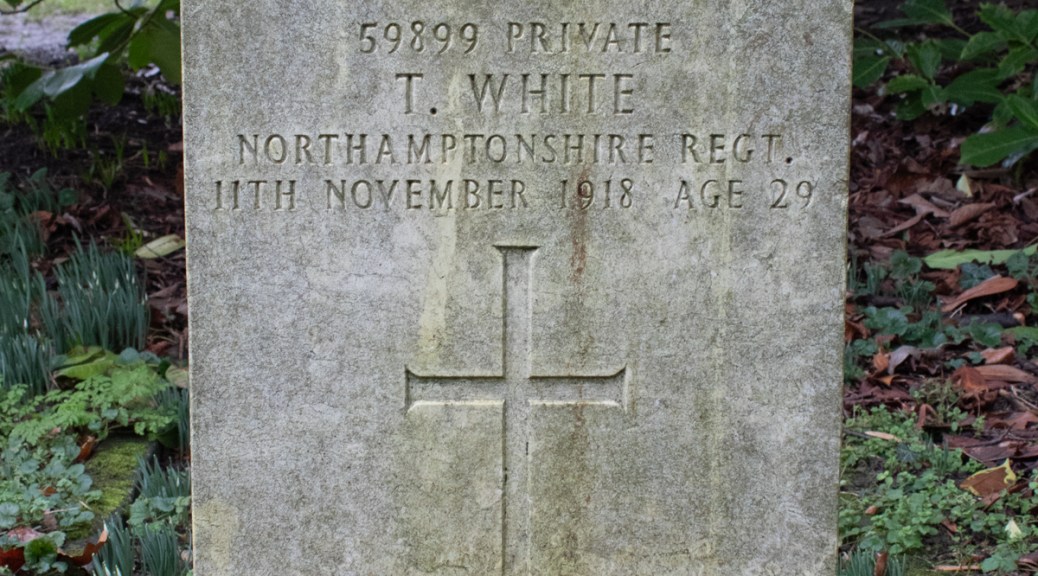
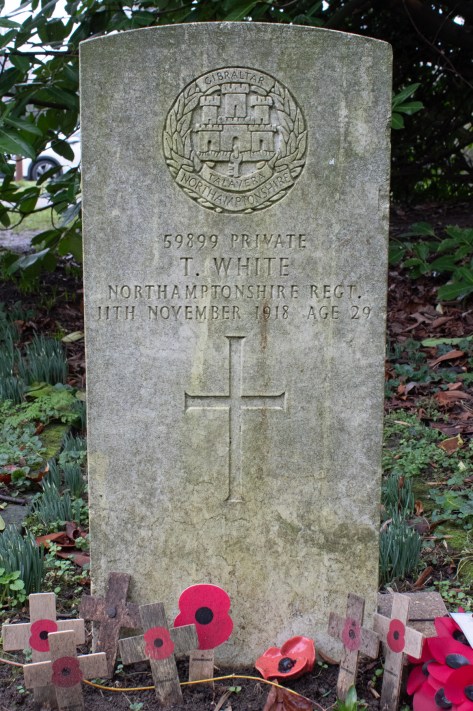
Thomas White was born on 17th October 1889, and was the fourth of nine children to William and Minnie White. William was an agricultural labourer for Hartwell, Northamptonshire, but the family were raised in the village of Hardingstone, to the south of Northampton.
When they finished their schooling, Thomas’ older siblings also found work on local farms, and Thomas was to do the same. By the time of the 1911 census, the white family had moved to Wootton, and were living in a four-roomed cottage on the village’s high street.
On 25th July 1914, Thomas married Nellie Westbury. The daughter of a groom from Wootton, she was employed as a cook at The Hermitage in the village when they couple exchanged vows. They would go on to have a daughter, Phyllis, the following year.
Details of Thomas’ military service are a challenge to pull together. His entry on the Army Register of Soldiers’ Effects confirm that he enlisted on 20th July 1918, joining the 3rd Battalion of the Northamptonshire Regiment. This was a training and depot unit, and, by the time Private White signed up, they were based in Sheerness on the Isle of Sheppey, Kent.
Thomas’ time in Kent was to be brief. While training, he came down with a combination of influenza and pneumonia, conditions to which he would succumb. Private White passed away on 11th November 1918, the day that Armistice was signed: he was 29 years of age.
The body of Thomas White was taken back to Northamptonshire for burial. He was laid to rest in the peaceful surroundings of St George’s Churchyard in Wootton.
Nellie went on to make a life for herself and her daughter. The 1921 census found them living at 28 Alton Street, Far Cotton, Hardingstone, Nellie working as an office cleaner for the Midland Railway.
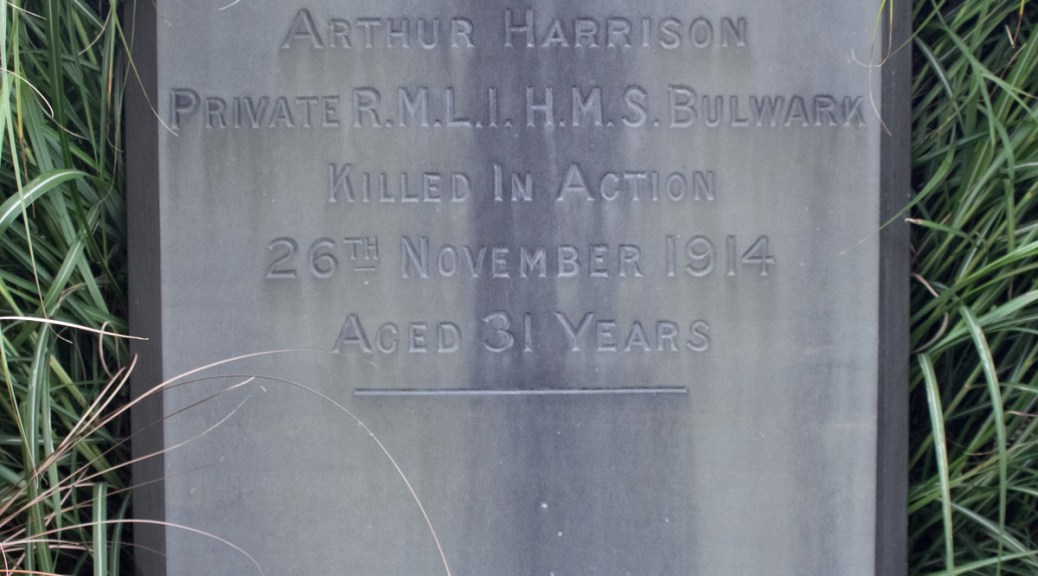
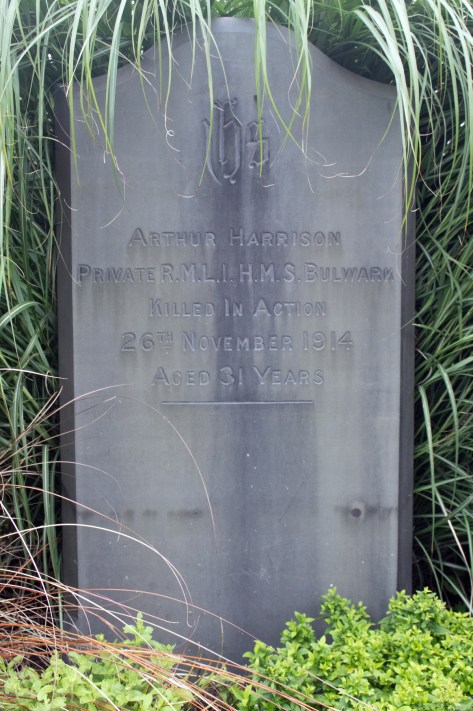
In the naval section of Woodlands Cemetery, Gillingham, Kent, is the grave of Arthur Harrison. A Private in Royal Marine Light Infantry, his headstone suggests that he was born in around 1883. The inscription also confirms that he was killed in the explosion that sank the battleship HMS Bulwark on 26th November 1914.
Beyond these sparse facts, little else is known. No surviving service records remain to illuminate Arthur’s military career, and his name is too common to be reliably traced through census returns or other contemporary documents.
As a result, Arthur Harrison’s life has largely slipped from the historical record. His story is destined to remain fragmented—lost to time, save for this quiet grave and the brief inscription that marks his passing.
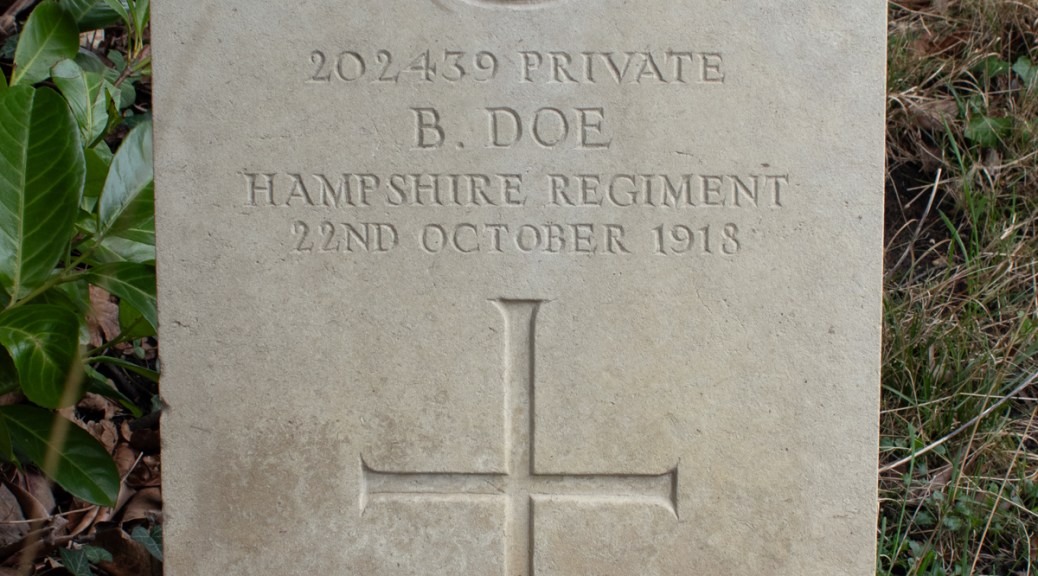
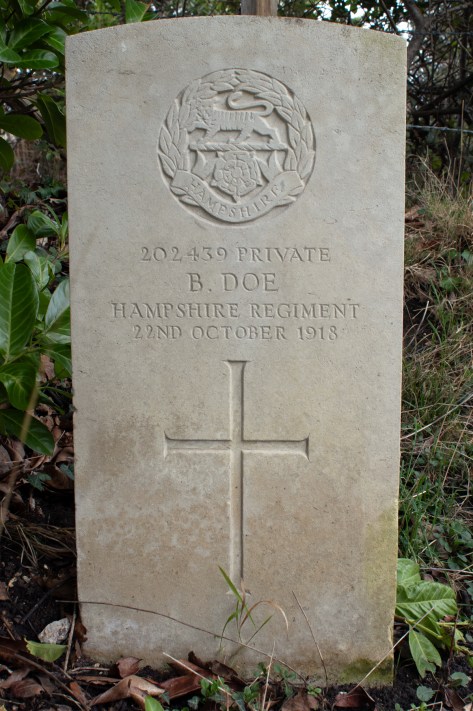
Bert Doe was born in Woking, Surrey, in 1881. One of twelve children, his parents were France and Louisa Doe. Francis – who went by his middle name, John – was a general labour and, over the years, his work took the family across the south of England. The 1891 census found the Does living in the village of Sopley, Hampshire, and this is where they seemed to settle.
There are large gaps in Bert’s early life, On 19th April 1916, he married Ellen Lackey. She was a broom maker’s daughter from Lyndhurst, Hampshire, and the couple had a son, Francis, who had been born a few weeks before they exchanged vows.
By the summer of 1918, Bert had enlisted in the army. He was attached to the Hampshire Regiment, but at some point had transferred over to the 441st Agricultural Company of the Labour Corps. Moves of this nature were often a way to rehabilitate injured or sick servicemen, and it is apparent that Private Doe fell into the latter category.
In October 1918, Bert had fallen ill with a combination of influenza and pneumonia. He was admitted to the Union Infirmary in Winchester, Hampshire, but the conditions were to prove too severe. He died on 22nd October 1918, at the age of 37 years old.
It would seem that Ellen was living in the East Boldre area of the New Forest by this point, and it was in the village’s St Paul’s Churchyard that her husband was laid to rest.
With a young son to raise, Ellen moved back in with her parents, Silas and Anna Lackey. The 1921 census found them living in Warsash Road, Sarisbury, Hampshire. Silas was employed as a labourer, while two of Ellen’s brothers were working as hawkers. Shockingly to today’s mindset, the census document records the family as ‘gipsies’.

 Death and Service