Tag Archives: 1918

Reverend Charles Jefferys

Reverend Charles Jefferys

Charles Thomas Claude Jefferys was born on 23rd August 1880 in the small Carmarthenshire town of Laugharne. One of five children, his parents were naturalist Charles Jefferys and his wife Adeline.

Charles’ Jr’s life was to be one of education, and his father’s standing allowed for the best. He studied at Ellesmere College, Shropshire, then attended Durham University and Durham Theological College. By the 1901 census he was passing that education on to others: he was listed as a schoolmaster at Stow Wood College in Hampshire.

By 1908 Charles had returned to Wales, and was living in Monmouth. On 2nd January he married Eva Pride, an estate agent’s daughter from Tetbury, Gloucestershire. The marriage certificate confirms that, by this point, Charles was a clerk in holy orders, on his way to his true calling.

The 1911 census showed what a transient life the church could lead to: Charles and Eva were listed as living in a house in Oswaldkirk, North Yorshire. Their two young children, George and Charles, born in 1909 and 1910 respectively, were living with Eva’s sister, back in Tetbury.

When war came to Europe, Reverend Jefferys must have felt compelled to play his part. He joined the Army Chaplains’ Department, and by May 1916, he found himself in France. His role – providing pastoral care to the troops – would have led him to some of the darkest places of the Front Line. He remained there for the next couple of years, only returning to the family home – now in Chelsea, London – towards the end of the conflict.

Reverend Jefferys had contracted pneumonia, and he had returned from the continent to recuperate. Sadly, the condition was to prove too much, and he succumbed to it on 20th November 1918, at the age of 38.

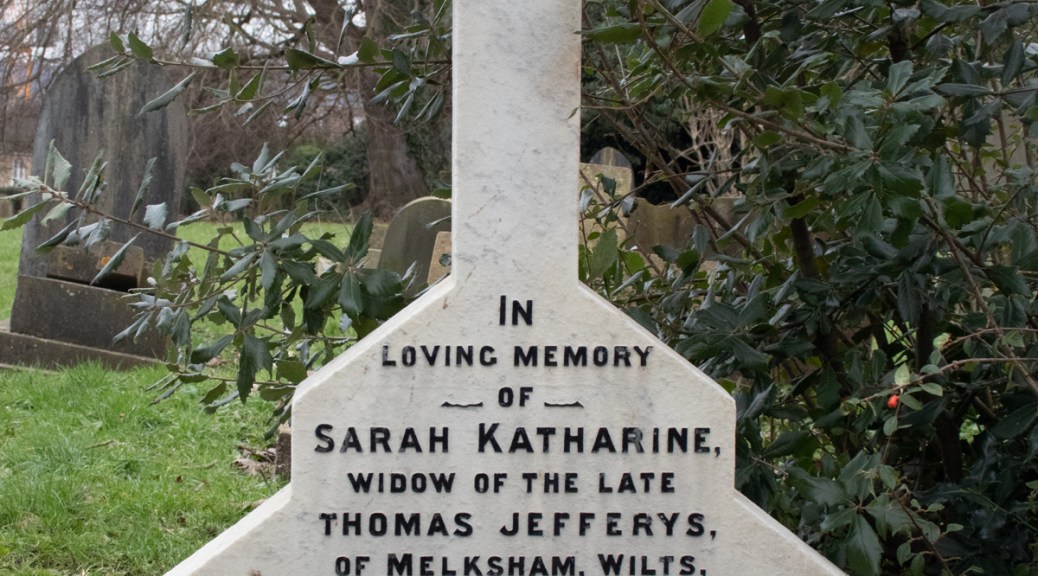
Charles Thomas Claude Jefferys was taken to Somerset for burial – there were close family connections in the Bath area. He was laid to rest in the family plot, alongside his paternal grandmother in the city’s St James’ Cemetery.


Further tragedy was to strike in June 1925 when Eva also passed away. Details of her death are unclear, but this left George and Charles as orphans in their early teens.

Private Alfred Lansdell

Private Alfred Lansdell

Alfred John Edward Lansdell was born on 25th October 1882 in Fulham, London. The fourth of six children, his parents were James and Matilda Lansdell.

James was a trunk maker, working in his father’s business. By the time of the 1901 census, he was recorded as living by his own means, while Alfred had taken up employment as a hotel porter in Chelsea.

By 1902, Alfred had moved to Somerset and set up home in Bath. He married local woman Alice Stevenson, and the couple went on to have a daughter, Lena, who was born in November 1904.

The 1911 census found the family living in central Bath, Alfred continuing his portering work, with one of his colleagues, lift operator Thomas Ward, boarding with them.

War came to Europe and on 9th December 1915, Alfred stepped up to play his part. He enlisted in the Worcestershire Regiment, and was formally mobilised the following June. Alfred’s service records confirm that he was, at the time of his review, he was 35 years old and 5ft 6ins (1.67m) tall.

Private Lansdell was assigned to the 1st/7th Battalion and by October 1916, he was shipped to France. He was very much on the Front Line, and was wounded on 19th August 1917, while at Ypres. His casualty record notes that “while waiting in a shell hole for a further move on he was wounded… in the back”. He has been shot, and the bullet penetrated his kidney.

Initially treated in a hospital in France, Private Lansdell was transferred to England on 25th October. He was admitted to the Norfolk War Hospital and remained there for some time.

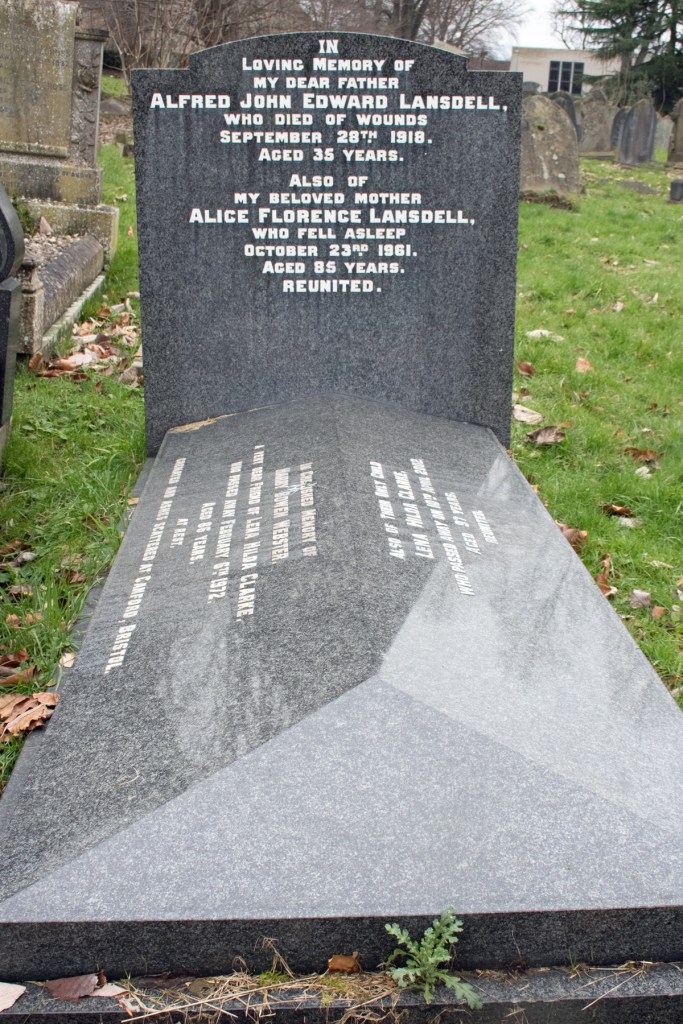
Alfred’s injuries were too severe for him to continue in the army, and he was formally discharged on 20th March 1918. He eventually returned home to Bath, but in the end his poor health was to get the better of him. He passed away at home on 28th September 1918, at the age of 35.

Alfred John Edward Lansdell was laid to rest in St James’ Cemetery, Bath. Alice lived on until 1961, when she was buried with her late husband, a couple reunited after more than four decades.


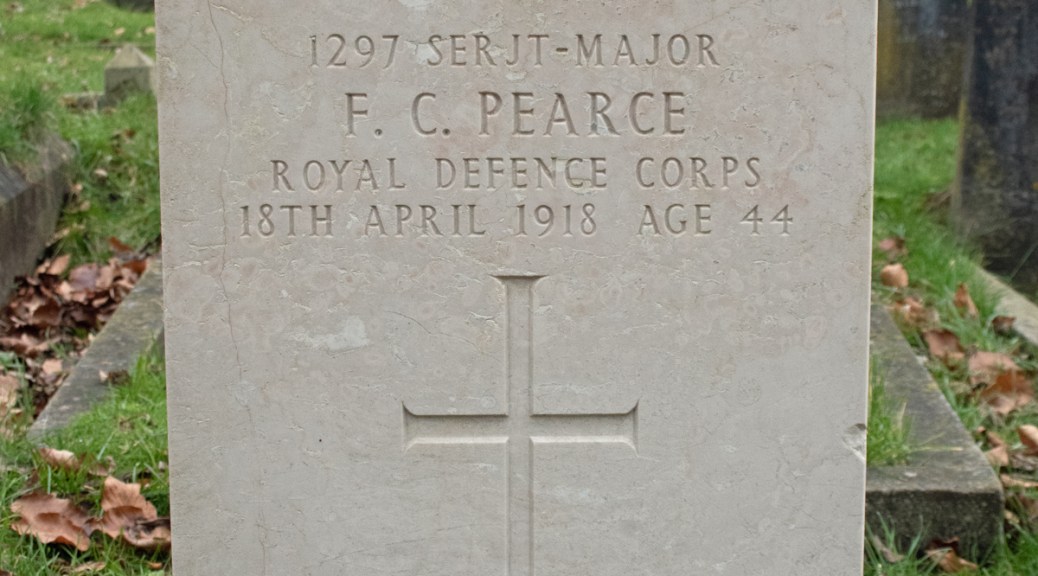
Serjeant Major Frederick Pearce

Serjeant Major Frederick Pearce

Frederick Charles Pearce was born in the spring of 1873 in the Gloucestershire town of Thornbury. The youngest of six children, his parents were Thomas and Elizabeth Pearce. Thomas was an agricultural labourer and, when he finished school, Frederick found work as a ‘rural messenger’.

This was only a step towards the career that Frederick sought, however, and on 12th July 1892, he enlisted in the Gloucestershire Regiment a a Private. His service records show that he was 5ft 5ins (1.65m) tall and weighed 128lbs (58kg). He was noted as having a fresh complexion, blue eyes and brown hair.

Private Pearce spent twelve years in the army, serving in Malta, Egypt, India and Ceylon (Sri Lanka). He had two stints in South Africa, including the 1899-1900 campaign, during which he was wounded in his chest in the battle at Farquhar’s Farm.

By the time he was discharged on 11th July 1904, he had risen through the ranks to Sergeant, his service records noting that his conduct had been “very good” (in capitals and underlined).

Thomas had died in 1896, and Frederick’s widowed brother William moved back in with his mother to help support her. Frederick also returned to Gloucestershire and, on 30th March 1905, he married Mary Rugman in the parish church in Olveston. The couple may have been childhood sweethearts, as the Pearces and Rugmans were Thornbury neighbours.

The marriage certificate noted Frederick as a groom, and it is likely that he was able to turn his hand to any role after his army career. The couple had a son Leslie, who was born in 1909, and, with the new responsibility of fatherhood, Frederick sought a more permanent career.

The 1911 census found the family living in Somerset, where Frederick was employed as a gardener at the Kingswood Reformatory School. This was a boarding school on an estate to the north of Bath, set in 57 acres of grounds, and again it seems likely that his military career stood him in good stead for such a prestigious role.

When war came to Europe, Frederick felt the pull of his military career once more. While his age did not compel it, on 20th November 1914, he re-enlisted in the Gloucester Regiment. He was enlisted with his previous rank, but within a year has been promoted to Acting Colour Sergeant.

In the spring of 1916, the Royal Defence Corps was formed, and, given his experience and age, Frederick was transferred across to the new regiment. Colour Sergeant Pearce was based in London and, over the next eighteen months served in four troops: 109, 149 and 150 Protection Companies and the 10th City of London Volunteers’ Regiment.

Frederick’s age and the demands of his role were beginning to take their toll by this point, and by the end of 1917, he had developed nephritis, or inflamed kidneys. The condition was severe enough to warrant his discharge from service, and the now Sergeant Major Pearce’s military career came to an end on 17th January 1918.

Frederick returned home to Bath, to the bosom of his family. He and Mary three children by this point, Violet and Freddie being two younger siblings to Leslie. Tragically for the Pearces, however, the family life was not to to last for long: Frederick’s condition was to get the better of him just three months later. He passed away on 18th April 1918, at the age of 44 years old.

Frederick Charles Pearce was laid to rest in St James’ Cemetery in Bath; a man of duty resting at last.


Tragedy was to strike again for poor Mary, when just six months later her youngest child, Freddie, also passed away. Details of his death are vague, but he was buried with his father, the two Fredericks reunited too soon.


Air Mechanic 3rd Class William Mells

Air Mechanic 3rd Class William Mells

William John Mells was born in Southwark, Surrey, on 13th November 1873. His parents were Thomas and Elizabeth Mells, although much of his early life is lost to time.

The 1891 census found the 19-year-old William as one of four boarders living with the Skinner family in Peckham, Surrey, where he was working as a shoe maker. By the turn of the century, however, he had changes jobs, and was employed as an advertising contractor, possibly fixing signs to walls across the country.

It was while William was working in Somerset when he met Ethel Pryor. She was the daughter of a caterer, born and bred in Somerset. On 16th August 1903, the couple married at Ethel’s parish church in Bath. They set up home in a small cottage on King Edward Road in the city, and went on to have two children, Edith, who was born in 1904, and John, who was born the following year.

Storm clouds were brewing across Europe at this point, and William was called upon to play his part in the autumn of 1918. He had previously served as part of the Army Service Corps Volunteers, and had reached the rank of Lance Corporal. When his time to actively serve King and Country came, however, he chose the fledgling Royal Air Force and, on 24th October 1918, joined them as an Air Mechanic 3rd Class.

William was sent to Blandford Forum, Dorset, for training. While here, in packed and busy billets, he contracted influenza, which developed into pneumonia. He passed away from the conditions at the camp hospital on 3rd November 1918, ten days short of his 45th birthday, eight days before the end of the conflict and after just ten days’ service.

William John Mells’ body was brought back to Somerset for burial. He was laid to rest in the city’s St James’ Cemetery, and was joined by his widow, when she passed away in 1955.


The Commonwealth War Graves Commission headstone and website gives Air Mechanic Mells’ name as John William, but all other records – including censuses, marriage document and service records – confirm his name as William John Mells.


Lance Corporal Francis Ball

Lance Corporal Francis Ball

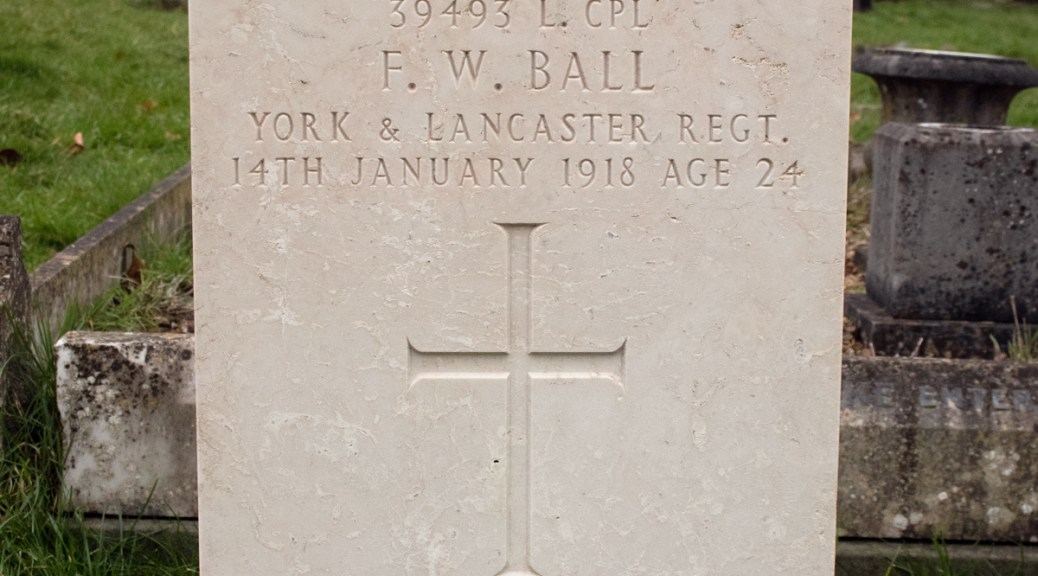
Francis William Ball was born in the spring of 1893 in the village of Wrington, Somerset and was one of ten children to Joseph and Mary Jane Ball. Joseph was a general labourer while Mary Jane took in washing to earn a little more money for the family.

Little information is available about Francis’ early life. The family travelled the county when he was growing up, and, according to the 1911 census, they were living in Walcot, a suburb of Bath. The same census notes that Francis was apprenticed, although crucially the trade he was learning is missing from the document.

When war came to Europe, he enlisted in the Yorkshire & Lancashire Regiment as a Private. Francis’ service records are lost to time, but he would have enlisted by the summer of 1917, and during his time in the army, he was promoted to Lance Corporal. He was attached to the 2nd/4th Battalion, who served in France, most notably at Arras and Cambrai.

At some point late in 1917, or early in 1918, Lance Corporal Ball was injured and medical evacuated to Britain for treatment. He was admitted to the 2nd Western General Hospital in Manchester, but his wounds were to prove too severe. He passed away on 14th January 1918, at the -age of just 24 years old.

Francis William Ball’s body was brought back to Somerset for burial. He was laid to rest in the St James Cemetery, Bath.


Serjeant John Carthew

Serjeant John Carthew

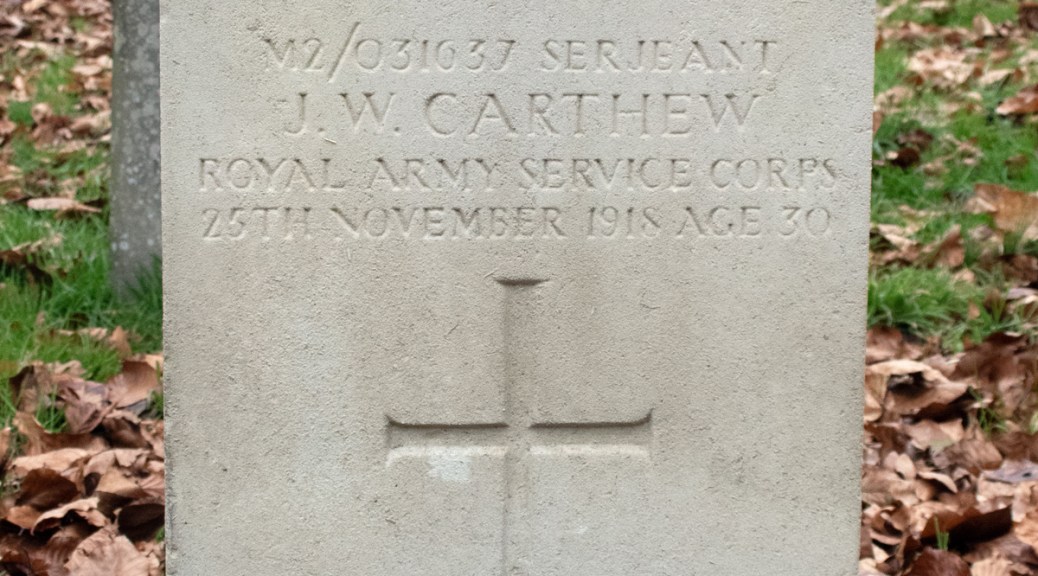
John Wallace Carthew was born in Warminster, Wiltshire, in the spring of 1892. The second youngest of seven children – three of whom did not survive childhood – his parents were miller James Carthew and his tailoress wife, Sarah.

John was destined to make a path for himself. By the time of the 1911 census, he was boarding with the Southon family in Aldershot, and working as a chauffeur.

On 22nd March 1914, John married Caroline Hamilton, a parlour maid for Captain Charles Woodroffe and his family in Aldershot. The couple set up home in Queensgate Mews, London, and having had a daughter, Cecilia, who was born that February.

When war came to Europe, John was quick to enlist. He joined up on the 21st December 1914, and was assigned to the Mechanical Transport section of the Royal Army Service Corps. His service records note that he was 6ft 1in (1.85m) tall, with a scar on his right eyebrow.

Private Carthew rose through the ranks, becoming a Corporal in 1916, and a Serjeant in 1918. During this time he acted almost exclusively as chauffeur to General Sir William Robertson. His duties were mainly based on home soil, but he did spend a year in France, while Robertson was Chief of the General Staff there.

As the war came to a close, Serjeant Carthew fell ill. Based in a camp in Aldershot, he contracted influenza, and this developed into pneumonia. This was to take his life, and he passed away at the town’s Connaught Hospital on 25th November 1918. He was just 26 years of age.

Caroline was living in Bath, Somerset by this point, and this is where the body of her husband was brought for burial. John Wallace Carthew was laid to rest in St James’ Cemetery, in the family plot where his father, who had died in 1911, was also buried.


Driver Frederick Parsons

Driver Frederick Parsons

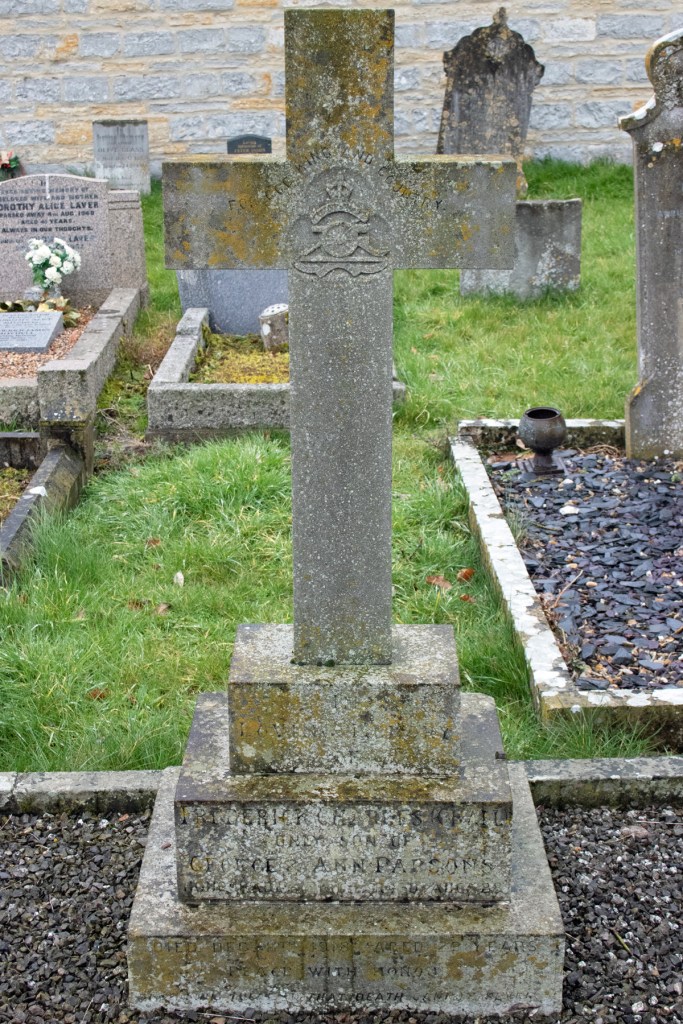
Frederick Charles Harold Parsons was born in 1889, the older of two children to George and Ann Parsons. George was a general labourer from Drayton in Somerset, and this is where he and Ann raised their young family.

Ann’s mother, Elizabeth, was a constant presence in the family’s lives, moving in with them when her own husband, William, died. The 1911 census found a packed family home, with George, Ann, Frederick, Elizabeth, Ann’s widowed brother Joseph and her nephew Robert all living under the same roof.

Frederick – who was known by the nickname Chall – was working as a grocer’s assistant by this point, but when war broke out, he was quick to step up and serve his King and Country. He enlisted on 2nd September 1914, joining the Royal Field Artillery as a Driver. His service records note that he was 5ft 6ins (1.68m) tall and weighed 116lbs (52.6kg). He had dark hair, brown eyes and a dark complexion, and had a scar below his left eye.

For the first ten months of Driver Parsons’ service, he remained on home soil. He was finally sent to France in the summer of 1915 and spent nearly two-and-a-half years overseas. Towards the end of that time, he began to have issues with his kidneys, and was posted back to the UK for treatment.

Initially admitted to Milton Hospital in Portsmouth, Chall was then moved to the VAD Hospital in Ryde on the Isle of Wight. He was initially diagnosed as having kidney stones, but was subsequently found to have enlarged kidneys. He was placed on furlough in May 1918, before being medically discharged from service at the end of August.

At this point, Chall’s trail goes cold. He appears to have returned home to Drayton, as it was in nearby Langport that his death was subsequently registered. He died on 11th December 1918, at the age of just 29 years old.

Frederick Charles Parsons was laid to rest in the family plot in St Catherine’s Churchyard, Drayton.


Serjeant Major Ernest Simmons

Serjeant Major Ernest Simmons

Ernest Simmons was born in Priddy, Somerset, in 1869, the oldest child to Henry and Ellen Simmons. Henry was a mason who, by the time of the 1881 census, was employing ten men and a boy. Three doors down lived another Simmons family, Daniel and Elizabeth, and it is likely that Ernest’s father was somehow related to them.

Ernest sought a bigger and better life away from the Somerset countryside, and enlisted in the army, joining the Army Veterinary Corps. “[He] served for 28 years… 10 of which were spent in India and 5 in South Africa.” [Wells Journal: Friday 23rd August 1918]

His service did him well, and he progressed through the ranks. The 1911 census recorded him back in the UK, renting a room in a terraced house in Preston, near Brighton. He was still serving in the army, however, and was listed as being a Farrier Sergeant Major in the 4th Battalion of the Dragoon Guards.

When war was declared, Ernest was quick to return to the fray, arriving in France on 16th August 1914. He served his battalion well, and was mentioned in dispatches for his action in the retreat from Mons the following month.

Farrier Sergeant Major Simmons returned to Britain, and transferred across to the 6th Reserve Regiment of Cavalry. This new regiment, formed in 1917, trained men for a number of regiments, including the 3rd, 4th, 6th and 7th Battalions of the Dragoon Guards. Ernest’s previous experience with horses, including his time in the Army Veterinary Corps, likely stood him in good stead for the role.

It was while he was at the camp in Tidworth, on Salisbury Plain, Wiltshire, that Ernest met with an accident. “[He] was thrown through his horse tripping over some wire. He was found in an unconscious state and died the same day.” [Wells Journal: Friday 23rd August 1918] Farrier Sergeant Major Simmons died on 26th July 1918: he was 49 years of age.

Ernest Simmons’ body was brought back to Somerset for burial. He was laid to rest in the peaceful graveyard of St Lawrence’s Church in his home village of Priddy.


Gunner William King

Gunner William King

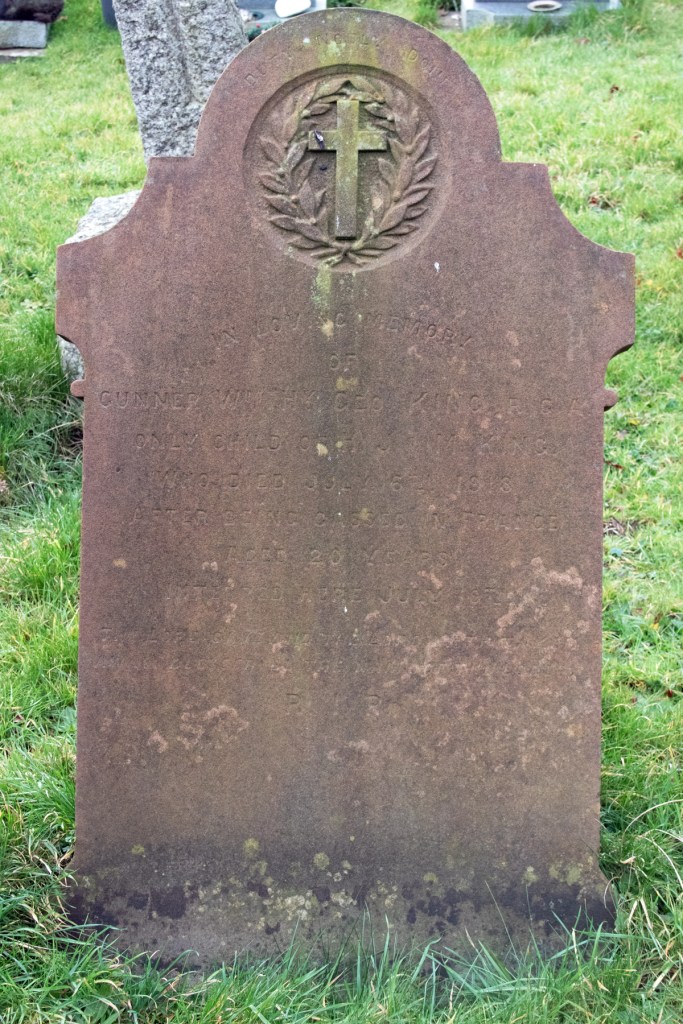
William Henry George King was born in the summer of 1898 and was the only child of Henry and Martha King. Henry was a grocer in the Somerset village of Witham Friary, and this is where William was born and raised.

When he left school, William found work as a draper’s assistant in Wells, but when he turned 18, with war raging across Europe, he gave that up to play his part. He enlisted in the Royal Garrison Artillery in August 1916, and was assigned as a Gunner in the 99th Siege Battery. His service records show that he was 6ft (1.83m) tall and weighed in at 140lbs (63.5kg).

Gunner King received his initial training in Plymouth, but was eventually shipped to France, arriving there in August 1917. He was caught up in a German gas attack at the end of June 1918, and was invalided back to Britain for treatment on 2nd July. He was admitted to the War Hospital in Bradford, but died of a combination of his injuries and the resulting bronchitis on 6th July 1918. He was just 20 years of age.

The body of William Henry George King was brought back to Somerset for burial He was laid to rest in the family plot in the graveyard of St Mary’s Church in his home village of Witham Friary.


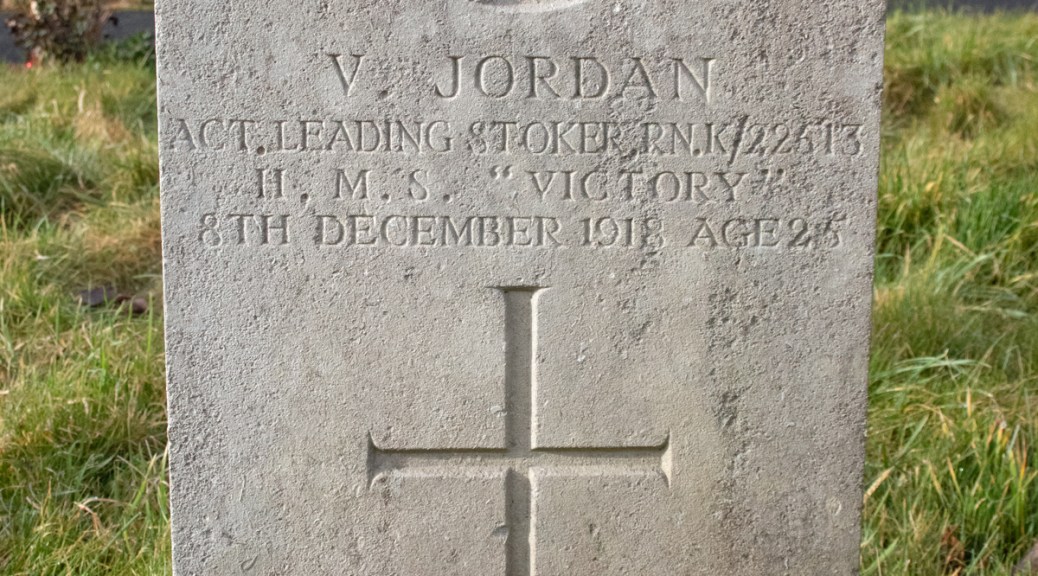
Leading Stoker Victor Jordan

Leading Stoker Victor Jordan

Victor Jordan was born on 20th November 1893 in Beeston Regis on the north Norfolk coast. The second of four children, his parents were school teachers Albert and Melletta Jordan.

By the time of the 1911 census, the family had moved from one coast to another, setting up home in Bognor Regis, Sussex. Albert had given up teaching, and had become an insurance agent for Prudential. Victor had left school and found work as a wheelwright, while his older sister, Emily, had taken up where her father had left off, teaching in an elementary school, The family of six was expanded by the inclusion of Albert’s mother, Emily, who had moved in with them.

By 1914, war was on the horizon, and Victor sought out a career beyond wheel work. On 21st May he enlisted in the Royal Navy as a Stoker 2nd Class. His service records show that he was 5ft 6ins (1.78m) tall, had light brown hair, blue eyes and a fair complexion.

Stoker Jordan was initially sent to HMS Victory, the Royal Naval Dockyard in Portsmouth, Hampshire, for training. After an initial six-month period, he was assigned to the battleship HMS Indomitable, on board which he was to serve for the next four years.

During his time on board, Victor proved to be a disciplined and determined worker. He was promoted to Stoker 1st Class in July 1915, and reached the rank of Leading Stoker in the summer of 1918. HMS Indomitable was involved in some of the key naval battles of the First World War – including Dogger Bank and Jutland – and Victor would have been on the forefront of maintaining the vessel’s power.

By October 1918, Leading Stoker Jordan was back on dry land, and was based once again in Portsmouth. As the war came to a close, however, he became unwell, and was admitted to Haslar Naval Hospital in nearby Gosport, suffering from acute tonsillitis.

Tragically, the condition was to get the better of him: Leading Stoker Jordan died of heart failure on 8th December 1918, having not long turned 25 years old.

Victor Jordan’s family were, by now, living in the Somerset hamlet of Brewham, and this is where his body was brought for burial: he was laid to rest in the peaceful graveyard of St John the Baptist’s Church.


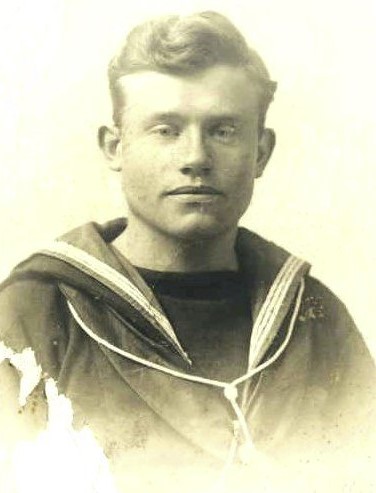
Leading Stoker Victor Jordan
(from findagrave.com)

Scandal was set to rock the grieving family. Albert, who was now teaching again, was charged with indecently assaulting a nine-year-old girl three times over the winter of 1918/19. He denied the accusation and a jury found him not guilty after only a few minutes’ deliberation.

Albert and Melletta seem to have found it impossible to remain in the quiet corner of Somerset, and moved to Essex. The couple took up new teaching posts, Albert eventually becoming the headmaster of Doddinghurst Church of England School, near Brentwood, while his wife worked as a school mistress for one of the classes.

Melletta died in February 1931, and at this point, Albert came back to Somerset to live with his daughter and her family in Cheddar. He was 75 years old when he passed away at Emily’s family home – called Melletta after her mother – and was laid to rest in St Andrew’s Churchyard, Cheddar.