Tag Archives: bronchitis

Shoeing Smith Samuel Treeby

Shoeing Smith Samuel Treeby

Samuel Treeby was born in December 1865 in Taunton, Somerset. The third of seven children, his parents were cordwainer Thomas Treeby and his wife, Anna (or Hannah).

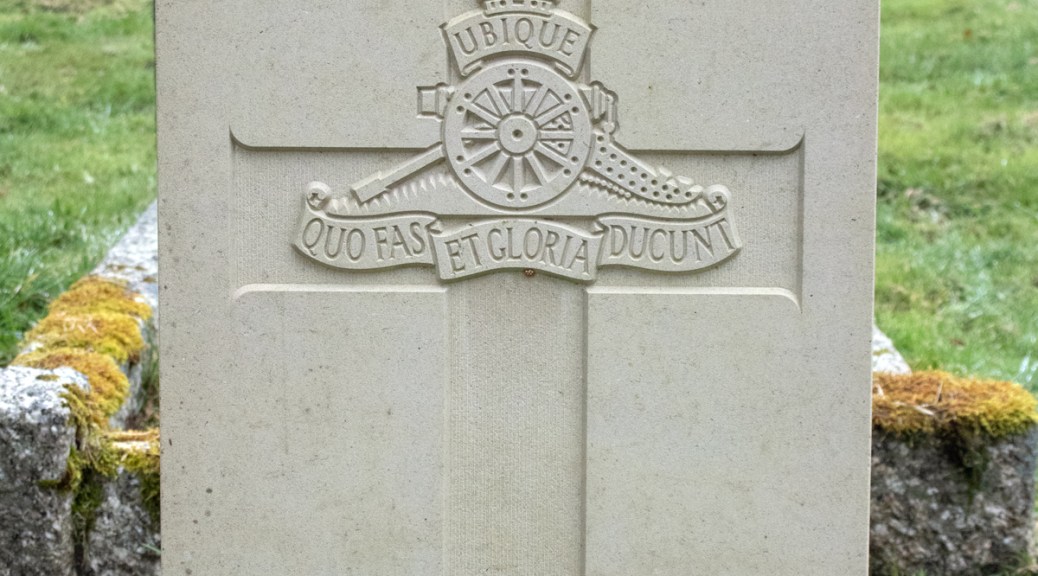
When he finished his schooling, Samuel found work as a blacksmith at a collar factory in Taunton. His trade stood him in good stead away from the forge: he volunteered for the Royal Horse Artillery, becoming adept at shoeing the animals.

In 1906, Samuel married Sarah Parker. She was from Enmore, between Bridgwater and Taunton, although the couple married in Cardiff, Glamorgan. The couple settled back in Enmore, where Samuel continued his smithing trade.

War came to Europe in 1914 and, although he was 49 years old, Samuel stepped up to play his part. He was attached to the Royal Army Service Corps and given a rank that echoed his civilian profession, that of Shoeing Smith. His service records show that he was of average height – 5ft 6ins (1.68m) tall – but that he was illiterate: he signed his declaration with a cross.

Samuel spent several months on home soil, before being sent out to France in March 1916. He spent six months overseas, before being shipped back to Britain, suffering from rheumatism. Shoeing Smith Treeby was admitted to the East Leeds War Hospital before being discharged to the regiment’s Remount Depot in Woolwich, Kent.

Samuel returned home to Somerset, but his poor health still dogged him during the winter of 1916/17. He contracted bronchitis, and died of the condition on 27th February 1917, while still based in London. He was 51 years of age.

Samuel’s body was taken back to Somerset for burial. He was laid to rest in the peaceful graveyard of St Michael’s Church in Enmore, not far from where his widow still lived.


Private Thomas Parsons

Private Thomas Parsons

Thomas Alfred Parsons was born in the summer of 1885 in Twerton, Somerset. One of six children, his parents were railway engine driver William Parsons and his wife, Mary. When Thomas finished his schooling, he found work at a labourer at a mineral water supplier, something he continued doing through to the outbreak of war.

On 27th May 1912, Thomas married Lily Howell, a labourer’s daughter, the couple tying the knot in Twerton parish church. They were living in Charlton Buildings, next to the river and now student accommodation for Bath’s universities. Lily had had a son, in November 1905: young Ronald was either Thomas’, or he was accepted as his own.

When war came to Europe, Thomas stepped up to play his part. He enlisted on 11th December 1915, although he was not formally mobilised until six months later. Private Parsons initially joined the Devonshire Regiment, but by early 1917, he became attached to the 169th Labour Corps.

Sent to France in February that year, Private Parsons only remained overseas for a matter of six months. By early September Thomas had fallen ill, contracting a combination of bronchitis and phthisis (or tuberculosis). Medically evacuated back to Britain, he was admitted to a hospital in Plymouth, Devon, but grew weaker until, on 2nd October 1917, he passed away. He was 32 years of age.

The body of Thomas Alfred Parsons was taken back to Somerset for burial. He was laid to rest in Twerton Cemetery, not far from his widow’s home.


Private George Taylor

Private George Taylor

George William Taylor was born on 14th July 1884 in Holcombe, Somerset. He was one of ten children, and his parents were John and Martha Taylor. John was a coal miner and for a while after finishing school, George followed his father to the pit. But he wanted bigger and better things, and was drawn to a career in the army.

On 16th September 1901, George enlisted in the Somerset Light Infantry. His service records confirm that he was 5ft 7ins (1.69m) tall, and weighed 131lbs (59.4kg). It was also noted that he had brown hair, grey eyes and a fresh complexion, and that he had a scar on his right shin and another on his left arm.

Private Taylor was assigned to the 2nd Battalion, and spent the next ten months training on home soil. In July 1902, however, he set off on his first big adventure, travelling to South Africa with his troop. He returned home in the spring of 1903, and spent the remainder of his seven years’ term of service on British soil.

On Christmas Day 1906, George married Ellen Hitchcock. She was the daughter of a blacksmith from Bath, and their marriage certificate adds further details to George’s life. He was living in Plymouth, Devon, when they married, and he gave his trade as a Bugler in the Somerset Light Infantry.

During the rest of his army contract, George had a number of admissions to hospital, for recurring conjunctivitis, a sprained ankle in November 1905 and a bout of scabies in January 1908. That autumn, having served for seven years, he was stood down to reserve status.

By the time of the 1911 census, George had settled back into civilian life. The young couple set up home in Holcombe, and George took up work back in the colliery there, where he was employed as a carter. A boarder helped them bring in a bit more money, but the document shows evidence of tragedy as it notes that Ellen had given birth to two children, but that both had died.

When war came to Europe in 1914, George was called back into active service. Initially assigned to the 1st Battalion of the Somerset Light Infantry, he arrived in France in July 1915. He only remained there for a matter of months, however, and, by October Private Taylor was back in Britain and reassigned to the 3rd Battalion.

It appears that his repatriation may have been for health reasons. On 31st January 1916, George was admitted to the 4th Southern General Hospital in Plymouth. The handwriting in the notes for this admission is difficult to read, but the basic headline is starkly clear: ‘bronchitis and subsequently mental’.

Private Taylor remained in hospital for a couple of weeks, before being moved to the Wells Asylum in Somerset. He was assessed by the military doctor after a couple of months’ treatment, and was declared unfit to continue in active service, due to ‘general paralysis of the insane’ or shellshock/PTSD as it is known today. His illness was wholly attributed to his military service, and sheds some light on what he must have gone through during his short time in France, compared to his previous seven years’ service. George’s last day in the army was on 13th April 1916, and he had served for a total of 14 years, 211 days.

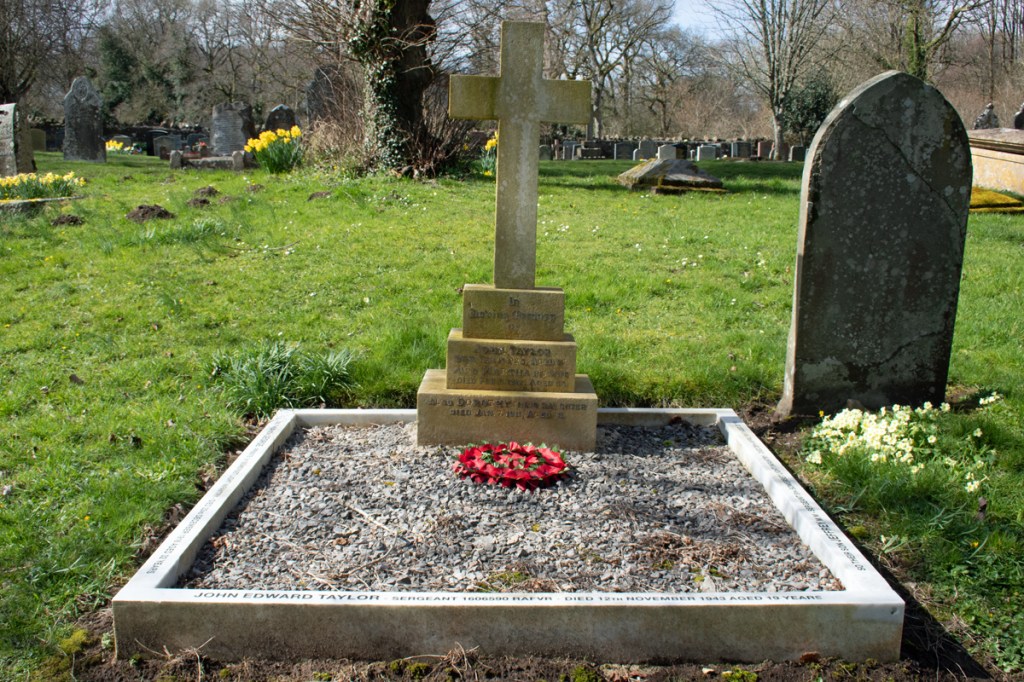
George’s trail goes cold at this point. He passed away on 22nd December 1916, at the age of 32 years old. Although records do not confirm this, it seems likely that he died while he was still admitted to the asylum, as his death was recorded in Wells.

George William Taylor was brought back to Holcombe for burial. He was laid to rest in the family plot in the graveyard of St Andrew’s Church.


Bombardier Charles Newbery

Bombardier Charles Newbery

Charles James Anderson Newbery was born in Misterton, a stone’s throw from Crewkerne, Somerset, in the spring of 1895. The oldest of eight children, his parents were Benjamin and Edith Newbery. Benjamin was a farmer, who passed away in 1908, when his son was just 13 years of age.

Charles seems not to have spent a great deal of time in the family home, however: the 1901 census found him living with his paternal grandmother, while the 1911 census, taken three years after his father’s death, recorded him as living with his paternal aunt, and working on their farm.

The farming life seemed to suit Charles: indeed he emigrated to Australia to pursue the life. When war broke out in Europe, however, he returned to England’s shores to better serve King and Country. He enlisted in the Royal Garrison Artillery on 18th October 1915, and was given the rank of Gunner.

Charles’ service records confirm that he was 5ft 5ins (1.65m) tall and weighed 140lbs (63.5kg). He was noted as having a mole on his left shoulder and an upper denture.

Private Newbery was sent to France in April 1916 and, a little over a year later, was promoted to Bombardier. He was attached to the 137th Heavy Battery and all seemed to be going reasonably well for him. He had ten days’ in England in July 1917, and a further two weeks’ in March 1918.

On 13th August 1918, possible during the Battle of Amiens, Charles was injured by a gun shot wound to his right leg. He was initially treated at the 47th General Hospital at Le Treport on the French coast, but was medically evacuated to Britain for further treatment.

Charles was moved to the 4th Northern General Hospital in Lincoln. To complicate matters, he had contracted bronchitis and, while his injury was being managed, it was a combination of the lung condition and cardiac failure to which he succumbed. Private Newbery passed away on 2nd September 1918, his mother and sisters by his side. He was just 23 years of age.

Charles James Anderson Newbery was taken back to Somerset for burial. He was laid to rest in Crewkerne’s Townsend Cemetery, not far from the family home.


Bombardier Charles Newbery
(from ancestry.co.uk)

Edith had to write to the regimental office three times to get her late son’s belongings back, and in the end it took more than six months to do so. She received the items he had on him in Lincoln in April 1919: they included and “upper row [of] teeth, cigarette case, wallet containing letters, hair brush [and] comb, disc, letter, wristlet watch, note paper and envelopes.”


Driver Henry Sweet

Driver Henry Sweet

Henry – or Harry – Sweet was born on 31st July 1887 in the Somerset village of Merriott. He was the fourth of seven children to Edward and Emma Sweet. Emma had married Edward after her first husband, John, had died, and so Harry also had three half-siblings.

Edward was an agricultural labourer by trade, but by the time of the 1901 census he had turned his hand to brewing, and listed his trade as a maltster. Harry’s older brother John, was also recorded as a maltster, while he had left school and was noted as being a brewery hand.

The next census, in 1911, found Emma and Edward heading up the family in Crewkerne, brewing for, and working at, the Volunteer Inn. Harry was working with his father, while two of his sisters – Prudence and Beatrice – were still living at home and working as shirt and collar machinists. Making up the household were Harry’s other sister, Ellen, who was a shirt ironer, and her husband George, who was recorded as a web weaver. In all there were seven wages coming into the household, meagre salaries though they may have been.

On 26th December 1911, Harry married Rosina Woodland in the parish church in Crewkerne. She was the daughter of Walter Woodland, a local labourer, although there is little further information on her family.

When war came to Europe, Harry wanted to play his part. Full details of his military service are lost to time, although he had certainly enlisted in the Royal Army Service Corps by the start of 1917. Driver Sweet served in the Eastern Mediterranean, and was ensconced in Salonika, in Northern Greece, for nearly two years.

Harry suffered on and off with dysentery, and was moved to the 4th Scottish General Hospital in Glasgow in January 1919 for treatment. This was initially successful, but while was was admitted he contracted a combination of bronchitis and pneumonia, and these were ultimately to take his life. Driver Sweet passed away on 13th February 1919, at the age of 31 years old.

Henry Sweet’s body was brought back to Somerset for burial. He was laid to rest in the Townsend Cemetery in his home town of Crewkerne.


Gunner William King

Gunner William King

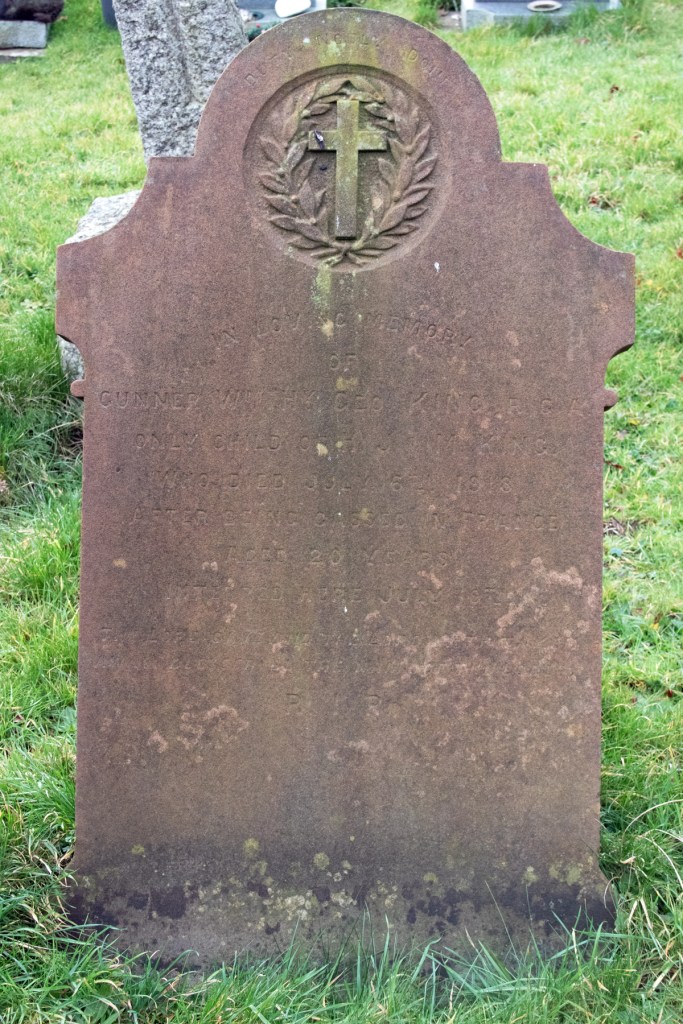
William Henry George King was born in the summer of 1898 and was the only child of Henry and Martha King. Henry was a grocer in the Somerset village of Witham Friary, and this is where William was born and raised.

When he left school, William found work as a draper’s assistant in Wells, but when he turned 18, with war raging across Europe, he gave that up to play his part. He enlisted in the Royal Garrison Artillery in August 1916, and was assigned as a Gunner in the 99th Siege Battery. His service records show that he was 6ft (1.83m) tall and weighed in at 140lbs (63.5kg).

Gunner King received his initial training in Plymouth, but was eventually shipped to France, arriving there in August 1917. He was caught up in a German gas attack at the end of June 1918, and was invalided back to Britain for treatment on 2nd July. He was admitted to the War Hospital in Bradford, but died of a combination of his injuries and the resulting bronchitis on 6th July 1918. He was just 20 years of age.

The body of William Henry George King was brought back to Somerset for burial He was laid to rest in the family plot in the graveyard of St Mary’s Church in his home village of Witham Friary.


Sapper Henry Tabor

Sapper Henry Tabor

Henry James Tabor was born in 1877, the second of six children to James and Sarah Tabor. Wiltshire-born James was a carpenter and joiner by trade, and the family were raised in Sarah’s home town of Milborne Port, Somerset.

Henry followed in his father’s footsteps when he left school and, by the time of the 1901 census, both were carrying out their trade (along with younger brother, Sidney) from the family home in East Street.

James died in September 1915, at the age of 75, and shortly afterwards, his oldest son stepped up to play his part for King and Country. He enlisted in the spring of 1916, joining the Royal Engineers as a Sapper.

Little information about his military life remains documented, but, according to a later newspaper report, he went to France and fought at both Ypres and the Somme. It was while he was overseas that Sapper Tabor contracted bronchitis, which then developed into tuberculosis. He was medically evacuated to Britain for treatment, but passed away on 28th March 1917, having been admitted to the Military Hospital in Southwark. He was 40 years of age.

The body of Henry James Tabor was brought back to Somerset for burial. He was laid to rest in the family plot in the cemetery of his home town, Milborne Port.


The loss of her husband and oldest son in such a short space of time, may have proved too much for Sarah Tabor. She passed away just two months after Henry, and he was reunited with both parents once again.


Corporal James Stuckey

Corporal James Stuckey

James Oscar Stuckey was born in the summer of 1886, in Milford Haven, Pembrokeshire. The second of eight children, his parents were James and Minnie Stuckey. James Sr was a carter from Langport in Somerset, and his work took him across the country. James Jr’s older sister was born in Sandown, on the Isle of Wight, and, when his next sibling was born, the family had moved back to Somerset and were living in the village of Curry Rivel.

By the time of the 1901 census James Sr was working as a warehouseman. James Jr had also left school and found employment as an agricultural labourer.

On 24th March 1913, James married Margaret Beatrice Tilley – who was better known as Beattie. The couple set up home in Curry Rivel, and went on to have two children, Cecil and James.

By this time war was coming to Europe and, in January 1915, James stepped up to play his part for King and Country. He enlisted in the Royal Field Artillery, and was given the rank of Gunner. Over the next couple of years, he served in France and Italy, rising through the ranks to Bombardier and Corporal.

During this time, however, James’ health was being impacted. His troop was gassed while in France, and he was hospitalised a couple of times with bronchitis and tuberculosis, and it was TB that saw him evacuated to Britain for treatment in September 1918.

His condition was such that Corporal Stuckey was medically discharged from the army on 23rd November 1918, as he was no longer fit for duty. He returned to civilian life, and settled back into Curry Rivel.

He was well-known in the district, and being of a jovial disposition, was liked by everyone with whom he came into contact. He was a member of the Curry Rivel Male Friendly Society.

Langport & Somerton Herald: Saturday 11th December 1920

James’ lung conditions were to get the better of him. After a protracted illness, he finally succumbed, breathing his last on 3rd December 1920. He was just 34 years of age.

James Oscar Stuckey was laid to rest in the graveyard of St Andrew’s Church, in Curry Rivel.


Gunner Frederick Milverton

Gunner Frederick Milverton

Frederick Walter John Milverton was born on 26th June 1888 in the Somerset village of Rimpton. One of seven children, his parents were farm workers George and Mary Milverton.

When he left school, it was natural for Frederick to follow in his father’s footsteps. The 1901 census recorded him as working as a farm lad in Leigh, Dorset, while in 1911 he was back at the family home, where he was formally employed as a rabbit trapper.

George passed away in 1913 and, with war fast approaching, Frederick remained at home, to help support his mother. But he eventually received his enlistment notice and, on 28th February 1916, he joined the Royal Marine Artillery.

Private Milverton’s service records show that he was 5ft 8ins (1.73m) tall, with dark brown hair, blue eyes and a fresh complexion. After five months’ initial training, Frederick was awarded the rank of Gunner 2nd Class, and assigned to the cruiser HMS Euryalus.

For the next couple of years Gunner Milverton remained on board Euryalus, serving in the Mediterranean, the Middle East, India and Hong Kong. He transferred to HMS Lavatera in March 1918, and saw out the remainder of the war on board.

In January 1919 Gunner Milverton returned to home soil, and was assigned to the Royal Marine Artillery Headquarters in Eastney, Hampshire. It was here, however, that he fell ill, and was admitted to the Royal Naval Haslar Hospital with bronchial pneumonia. Tragically the condition was to get the better of him: Frederick passed away on 6th February 1919, at the age of 30 years old.

Frederick Walter John Milverton’s body was brought back to Somerset for burial. He was laid to rest in the quiet graveyard of St Mary’s Church in his home village of Rimpton.


Private Charles Grigsby

Private Charles Grigsby

Charles Grigsby was born in Boughton Monchelsea, a village to the south of Maidstone, Kent, in the summer of 1878. His parents were farm labourer William Grigsby and his wife, Elizabeth, and he was one of four children. Charles’ mother passed away when he was just three years old, and William married again – to another Elizabeth. They had six children – half-siblings to Charles.

Charles falls off the radar for a few years – his First World War service records suggest that he had enlisted with the East Kent Regiment, and so may have been serving abroad at the time of the 1891 and 1901 censuses.

In 1904 he was back in Kent, however, where he married Henrietta Harpum. The daughter of a soldier, Henrietta had been born in Shoeburyness, Essex, but the family had moved to Frindsbury, Kent, not long afterwards.

The 1911 census found the Grigsbys living in the village of Eccles, near Aylesford. Charles was working as a blacksmith’s striker at the local cement works, and they had their Henrietta’s nephew, George, living with them at the time the record was taken.

When war was declared, Charles stepped up again to play his part. He enlisted on 24th August 1914, and was assigned to the Queen’s Own (Royal West Kent Regiment). Private Grigsby’s service records confirm that he was 5ft 6.5ins (1.69m) tall, and weighed 129lbs (58.5kg). He had brown hair, blue eyes and tattoos on both arms.

Tragically, Henrietta died not long after her husband joined up, although the exact date and cause of her passing is lost to time. Assigned to the 6th (Service) Battalion, Charles was, by this time, based in Hythe, on the Kent coast.

Private Grigsby’s time back in the army was to be a short one, however. He was admitted to Shorncliffe Military Hospital in January 1915, suffering from bronchial pneumonia, and is was this lung condition that was to take his life just weeks later. He passed away on 22nd February 1915, at the age of 35 years old.

Charles Grigsby was brought back to Aylesford by his siblings. He was laid to rest in the graveyard of St Peter & St Paul’s Churchyard. It is likely that he was buried alongside Henrietta, although the exact location of his grave is not longer known. Instead, he is commemorated on a joint headstone in the First World War section of the graveyard.