The life of Forrest Dinnett Evans is a challenge to uncover, although his service records shed tantalising glimpses into his history.
Forrest enlisted in the Canadian Royal Flying Corps on 8th August 1917. He joined up in Toronto, Canada, but gave his address as 26 Leicester Drive, Boston, Massachusetts.The same document gives his middle names as Dennett, and that his father was called George William Evans. It also suggests that both men were British subjects. While it’s not clear when the Evans family moved to North America, there are no UK census or birth records for either man.
Forrest was 19 years 9 months old when he enlisted and stood 5ft 10ins (1.77m) tall. He gave his trade as an student aviation cadet. He was mobilised straight away, and sent to Britain. His time in the Canadian Royal Flying Corps came to an end on 18th December 1917, when he received a commission in the Royal Flying Corps.
Second Lieutenant Evans, as he was now known, was based at Boscombe Down, Wiltshire. It was here, on 27th March 1918, that he was in charge of an Armstrong Whitworth FK8 two-seater biplane. Shortly after take off, the aircraft span into the ground: Forrest was killed instantly. He was 20 years of age.
With his family overseas, Forrest Dinnett Evans was laid to rest in Amesbury Cemetery, just a few miles from Boscombe Down.
Samuel Herbert Smith was born on 15th March 1886 in Liverpool, Lancashire. He was one of six children to parents Henry – a road labourer for the local council – and Elizabeth.
There is little concrete information about Samuel’s early life. While the 1901 census confirms he was employed as an apprentice, the writing is not legible enough to identify the trade he was in. A later record suggests he spent two years in the Royal Engineers, although, again, no supporting documents evidences this.
Samuel married a woman from South Wales. Her details are lost, but his war pension record gives the name Mrs SH Smith, and gives her address as 34 Albany Street, Newport, Monmouthshire.
It would seem that Samuel was keen to build a bigger and better life for the couple, and left Britain to find work overseas. By 1914 he was living in Valcartier, Quebec, and working as a bartender. War was declared in the summer of that year, however, and he immediately stepped up to serve his country.
Samuel enlisted in the Canadian Expeditionary Force on 23rd September, and was assigned to the 13th Battalion of the Canadian Infantry. His service records suggest he cut a striking figure: he stood 6ft 1in (1.85m) tall and weighed 168lbs (76.2kg). He had light brown hair, hazel eyes and a medium complexion, and his records note that he had a crossed hands tattoo on his right arm.
His unit set sail for England and, by the end of October, Private Smith was installed at Bustard Camp on Salisbury Plain, Wiltshire.
An enquiry was led into the death of Samuel Herbert Smith… Private Smith was travelling… in a motor car, and while the car was passing over uneven ground he fell into the road and was almost instantaneously killed.
George William Hincks, a private in the Canadian Force… was driving from Salisbury… in a motor car, which was meant to carry a machine gun, and was, therefore, open at the sides. Private Smith was seated next to [him] and was inclined to be rather sleepy. He had travelled in the train from Liverpool on the previous day. hey had gone some distance on their journey when deceased said “I want to get out of this.” [Hincks] said “Sit still, Bert. We will be soon be there,” Smith smiled and said “Oh, all right.” Almost immediately the car jolted on a rough piece of road, and Smith pitched on his head in the road. The car was immediately stopped, and [Hincks] went back to him and found him lying with his knees up, on his back, with wounds in his head. He was dead. [Hincks] returned to Salisbury and reported the occurrence to superior officers. The road on which fatality happened was rough and had been badly cut up, more especially at the place where deceased fell from the car.
Salisbury and Winchester Journal: Saturday 31st October 1914
The accident occurred on 29th October, Private Smith was just 28 years of age.
Samuel Herbert Smith’s widow was unable to cover the cost of bringing her husband back to Wales for burial. Instead, he was laid to rest in Amesbury Cemetery, not car from Bustard Camp.
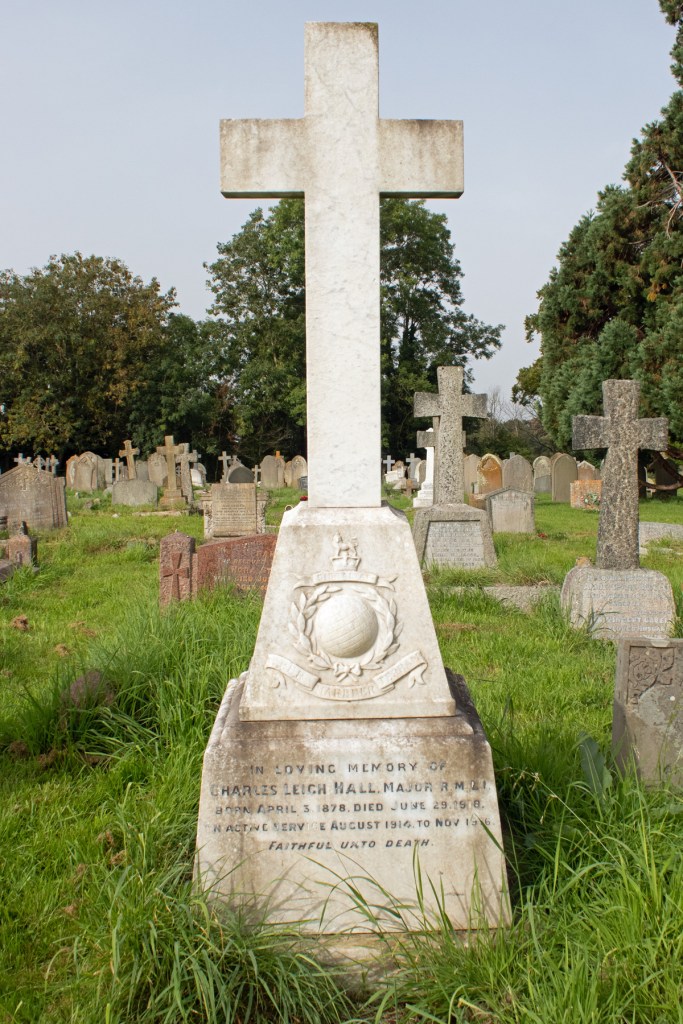
Charles Leigh Hall and his twin Maud, were born on 3rd April 1878 in Clifton, Gloucestershire. Two of eight children, their parents were Pedro and Anne Hall. Pedro, whose full name was Pedro Henrique Sinclair Hall, was better known as Henry, and was a mathematics tutor and Assistant Master at Clifton College, and it goes without saying that the Hall children had a educated upbringing.
Charles was always to be destined for great things. By the time of the 1901 census, when he was 22 years of age, he was a Lieutenant in the Royal Marines Light Infantry. Based on the cruiser HMS Amphion, he travelled the Pacific and, on the night the return was taken, was moored in Vancouver, Canada.
On 15th June 1910, Charles married Sophia Elinor Veale. Born in Caledon, South Africa, the couple wed in the village of Littleham, Devon. They set up home in Gosport, Hampshire – presumably as the now Captain Hall’s work was based from the docks there – and went on to have two children, Anthony and Nicholas.
By September 1915, Charles had been promoted again, this time to the rank of Major. His wartime service included a lot of work in Africa, including in Cameroon in 1914 – for which he was mentioned in Dispatches – German East Africa (Burundi, Rwanda and Tanzania today) in 1915 and Saadani (Tanzania) in 1916.
In October 1916, he was invalided out of the Royal Marine Light Infantry for reasons that are unclear, and returned to Britain from Simonstown, South Africa. While Charles seems not to have gone to sea any more, his experience was still respected, and, on 15th January 1917, he was promoted to Brigade Major.
The family settled back down in Portsmouth, Hampshire, and remained there for the next eighteen months. By the summer of 1918, Charles was in Bristol – either based at the docks there, or hospitalised in the city – and passed away on 29th July 1918. He was 40 years of age.
Sophia and her boys were still in Portsmouth, but Charles Leigh Hall was laid to rest in the graveyard of St George’s Church in Easton-in-Gordano, Somerset. The headstone incorrectly gives the month of death as June. Charles’ will divided his estate – £4467 (£318,000 in today’s money) – between his brother, Arthur, and Charles Garnett, a barrister, possibly as a trust for his sons.
Peter Bennoit was born in 1897 in St George’s, Newfoundland. The son of fisherman and sporting guide Peter Bennoit and his wife, Selina, little more is known about his early life.
When war was declared in Europe, he was quick to take up the call to arms. He made the journey to St John’s, and enlisted in the Newfoundland Royal Naval Reserve on 14th October 1914. He set sail for Britain on board the training ship HMS Calypso and, having arrived in November, he was transferred to HMS Pembroke, the Royal Naval Dockyard in Chatham, Kent.
Seaman Bennoit remained in Chatham for the next couple of month, presumably to await a formal posting. This was not to happen, however: he was admitted to the Royal Naval Hospital in Chatham with mastoiditis, a bacterial infection of the inner ear. The condition was so serious that Peter succumbed to it: he passed away on 20th January 1915, at the age of just 18 years old.
Peter Bennoit was 2500 miles (4000km) from home, so it was not possible for him to be interred in Newfoundland. Instead, he was laid to rest in the Roman Catholic section of Woodlands Cemetery in Gillingham, Kent, not far from where he had passed.
Charles Walter Lavis was born in Iowa, USA, on 2nd April 1888. The second of eleven children, his parents were James and Martha Lavis. The only census record Charles appears from – the return from 1901 – shows that James was an agricultural labourer from Long Sutton in Somerset. The family’s move to America seemed not to have lasted for long – Charles’ immediate siblings – Mabel, who was two years older, and George who was two years younger – were both born in Long Sutton.
Charles was drawn to a life of adventure and, on 11th April 1906, he enlisted in the Royal Navy. His service records confirm that he was 5ft 5ins (1,65m) tall, with brown hair grey eyes and a fresh complexion. As a Stoker 2nd Class, he was initially sent to the training ship HMS Nelson, before moving to what would become his shore base, HMS Victory, the Royal Naval Dockyard in Portsmouth, Hampshire.
Over the next year, Charles serves on HMS Hecla and HMS King Edward VII, where, on 17th May 1907, he was promoted to Stoker 1st Class. He remained on the King Edward VII for more than four years, before returning to Portsmouth in August 1911.
Back on shore, Stoker 1st Class Lavis was promoted to Leading Stoker, and spent the next nine months training for the role at HMS Fisgard, also in Portsmouth. He spent six months on the battleship HMS Revenge, before moving again to another battleship, HMS Britannia.
Charles spent two years on the Britannia, and it was while assigned to her that he got married. He wed Bessie Patten on 31st May 1914 in Martock, Somerset: the couple would go on to have a daughter, Eileen, who was born the following April.
It was while Charles was serving on HMS Britannia that was broke out. In November 1914, he returned to Victory for further training and, in the spring of 1915, he was promoted to Stoker Petty Officer.
Over the next three years, Charles served on three more vessels, before finally returning to Portsmouth in April 1918. The reason for his return was because of his health, and he was soon admitted to the Royal Naval Hospital in Haslar, Gosport, suffering from tuberculosis of the neck. The condition necessitated an operation, but Stoker Petty Office Lavis was not to survive the procedure. He suffered from heart failure, and died on 2nd May 1918. He had not long turned 30 years of age.
Charles Walter Lavis was taken back to Somerset for burial. He was laid to rest in the quiet graveyard of All Saints’ Church in Martock.
Records suggest that the Lavis family could not settle. Passenger lists from March 1912, show James and Martha travelling with nine children to Portland, Maine, before moving on to Huron in Ontario. James was still recorded as being a farm labourer, so it seems that opportunities for the family were better in North America than in Britain.
When war broke out, citizens of the Commonwealth were called upon to play their part and, despite being under age, Charles’ younger brother Arthur, stepped up to serve. Details of his time in the army are scarce, but he was assigned to the 14th Battalion of the Canadian Infantry. His troop set sail for Britain in October 1914: Arthur was just 14 years old at this point, and had lied when he joined up, giving his date of birth as 20th May 1897.
Private Arthur Lavis was in France by August 1916, taking up position on the Front Line at Coucelette. They met heavy troops, even before a full offensive got underway on 16th September. Ninety-two soldiers from the 14th Battalion were killed during the attack, Arthur included. He was just 16 years old, and his remains were never recovered. He is commemorated on the Vimy Memorial in France.
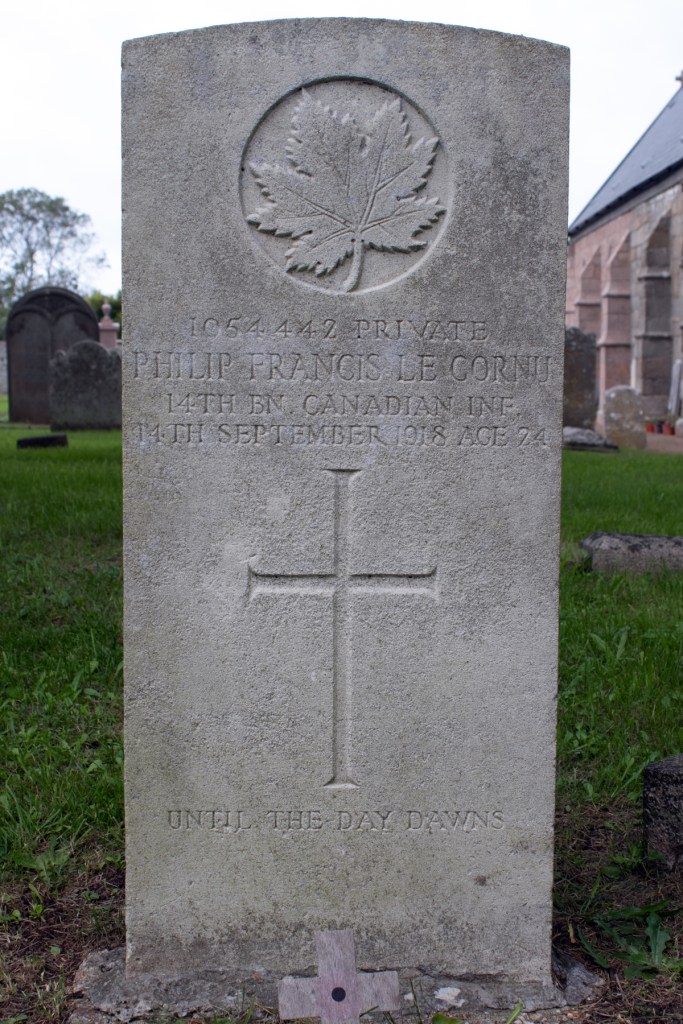
Philip Francis le Cornu was born on 29th July 1894 in St Peter’s, Jersey. The youngest of five children, his parents were Philip and Mary le Cornu. Philip Sr was a farmer, but it seems that both he and Mary passed away not long after his youngest son’s birth. By the time of the 1901 census the children had been split between family members, and Philip Jr was living with his maternal grandparents.
Philip finished his schooling, and seems to have sought a purpose in life. He emigrated to Canada and, by the time war broke out, was living in Grande-Mère, Quebec. He found employment as a clerk, but with conflict raging on the other side of the Atlantic, he responded to the call to arms.
Philip enlisted in the Canadian Expeditionary Force on 12th September 1916. His service records show that he was 22 years and 2 months old and stood 5ft 6ins (1.68m) tall. He had black hair, blue eyes and a dark complexion. Private le Cornu sailed to Britain, and arrived there on 7th April 1917.
Billeted in Shoreham, West Sussex, Philip was attached to the 14th Battalion of the Canadian Infantry. Within weeks he was sent to France, and, on 15th August 1917, was caught up in the Battle of Hill 70 near Lens.
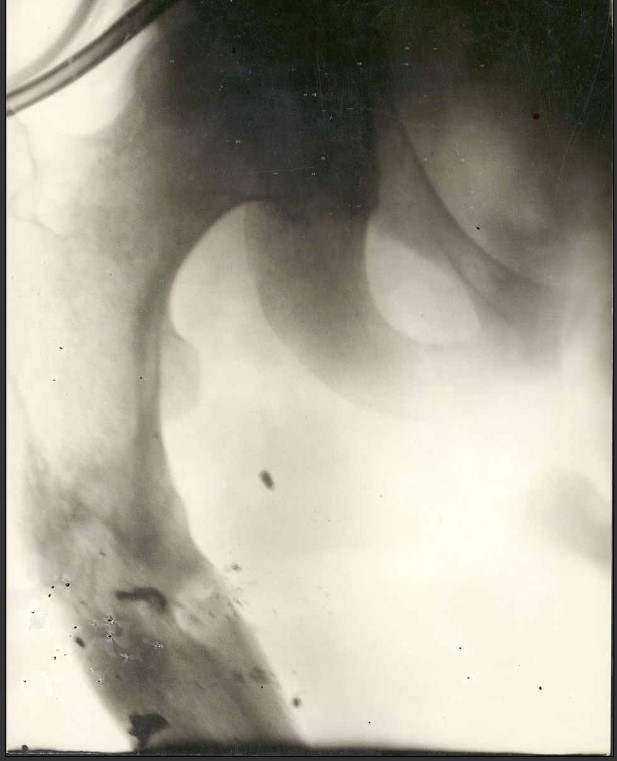
During the skirmish, Private le Cornu was badly wounded in the thigh and sent to the 58th Casualty Clearing Station. Within days he was moved to the 4th General Hospital in Camiens, but his condition necessitated medical evacuation to Britain.
Over the next year, Philip had three operations on his leg, and spent time at the 3rd Southern General Hospital in Oxford, the Manor War Hospital in Epsom, Surrey, and the 16th Canadian General Hospital in Orpington, Kent. Tragically, all of the medical treatment was to prove to no avail. Private le Cornu passed away from his injuries on 14th September 1918, more than a year after Hill 70. He was 24 years of age.
Philip Francis le Cornu’s body was taken back to the Channel Islands for burial. He was laid to rest in the quiet graveyard of St Mary’s Church on Jersey.
X-ray of Private Philip le Cornu’s left femur (from uk.forceswarrecords.com)
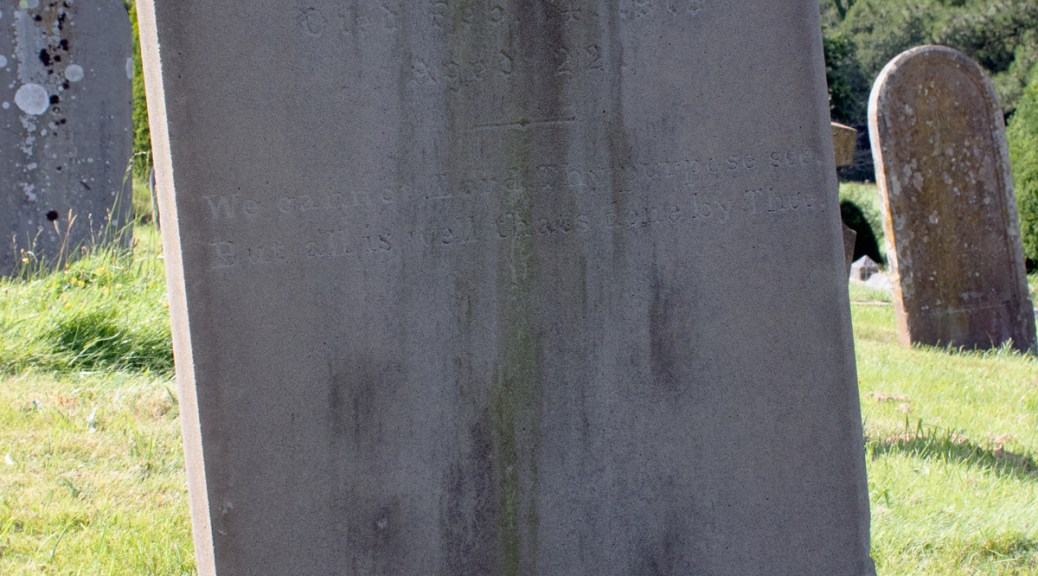
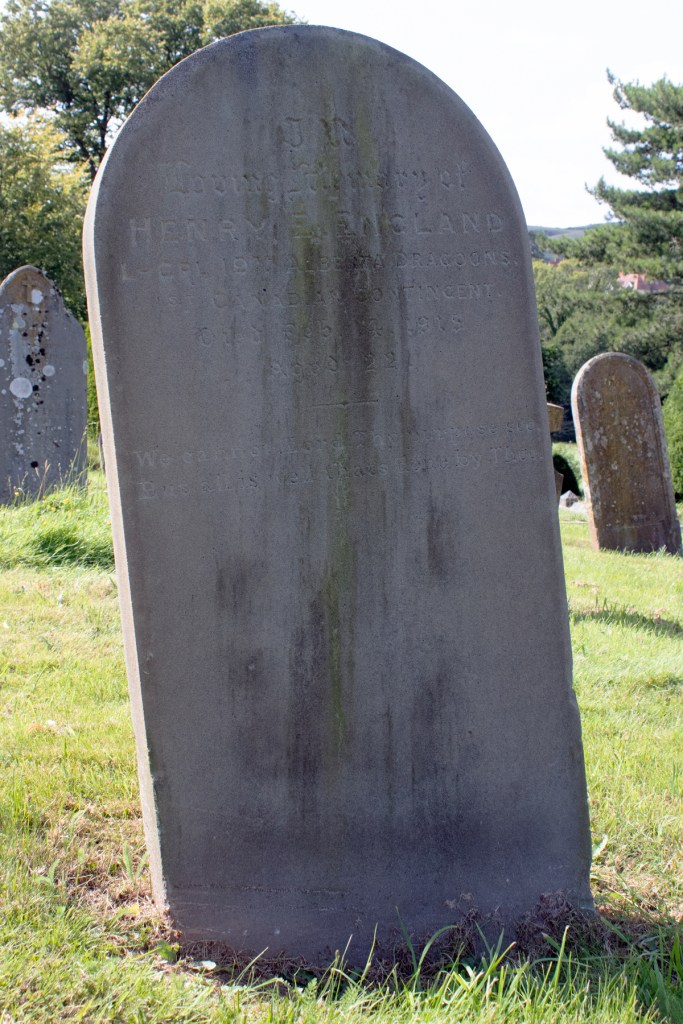
Henry Edward England was born in Gloucestershire on 7th October 1893. One of seven children, his parents were Charles and Unity England. Charles was coachman and groom to Sir Charles Cuyler, and the family were raised in Bristol.
There are gaps in Henry’s life that are a challenge to fill. He seems to have sought to better himself, emigrating to Canada and becoming a bank clerk in Quebec.
When war broke out, Henry was quick to enlist. He joined up on 21st September 1914, becoming a Private in the 19th Battalion of the Alberta Dragoons. His service records show that he was 5ft 8ins (1.73m) tall and weighed 140lbs (63.5kg). He was noted as being of average physical development with dark hair, brown eyes and a dark complexion.
Private England returned to home shores by December 1914, at which point he transferred to the 6th (Reserve) Battalion of the Canadian Infantry. His troop proceeded to Tidworth Camp in Wiltshire, on the edge of Salisbury Plain.
Army barracks at this time were melting pots: hundreds of men from different parts of the world cramped together in small billets proving breeding grounds for illness and disease. Henry was to prove a victim of the conditions: in the winter of 1914, he contracted meningitis. Admitted to the camp hospital, he was to succumb. Private England breathed his last on 14th February 1915, aged just 21 years of age.
Henry Edward England’s body was taken back to Somerset for burial. He was laid to rest in the sweeping vista of Minehead Cemetery, not far from where his family now lived.
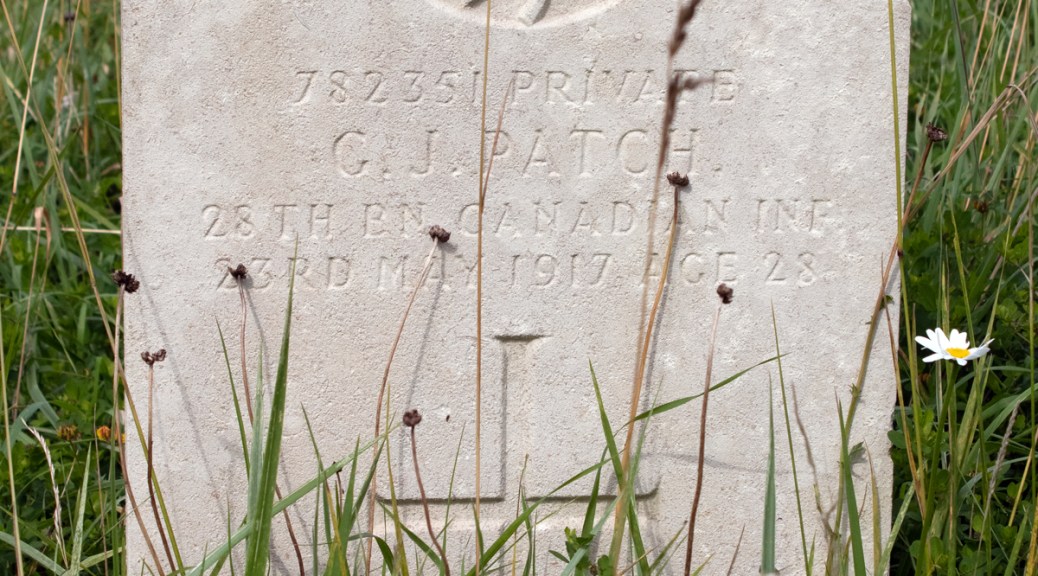
Gilbert John Patch was born in Winford, Somerset, on 3rd July 1888. The third of seven children, his parents were haulier Robert Patch and his wife Ann.
Gilbert followed his father into carting work, but the opportunity of a bigger and better life presented itself. In the spring of 1913, he emigrated to Canada, to find land and work as a farmer. He settled in the hamlet of Caron, Saskatchewan with a friend from home, Percy Worle.
Gilbert’s time overseas was not to be a length one, however. When Europe went to war, the empire was called upon and, on 1st April 1916, Gilbert enlisted in the Canadian Expeditionary Force. His service records show that he was 5ft 8ins (1.72m) tall, with blue eyes, fair hair and a medium complexion.
After his training, Private Patch arrived in France on 28th December 1916, and was assigned to the 28th Battalion of the Canadian Infantry – the same troop as his friend, Percy. During the Capture of Hill 70 in May 1917, Percy was killed and Gilbert himself was badly injured, receiving shrapnel wounds to his head, left arm and right leg.
Private Patch was medically evacuated to Britain for treatment. He was admitted to the Clopton House War Hospital in Stratford-upon-Avon, and while his wounds were treated, within a couple of weeks, he was dangerously ill with a kidney infection. The combination proved too much for his body to take, and Gilbert died on 23rd May 1917. He was 28 years of age.
Gilbert John Patch’s body was brought back to Somerset for burial. He was laid to rest in the graveyard of the local parish church, St Mary & St Peter’s, in his home village of Winford.
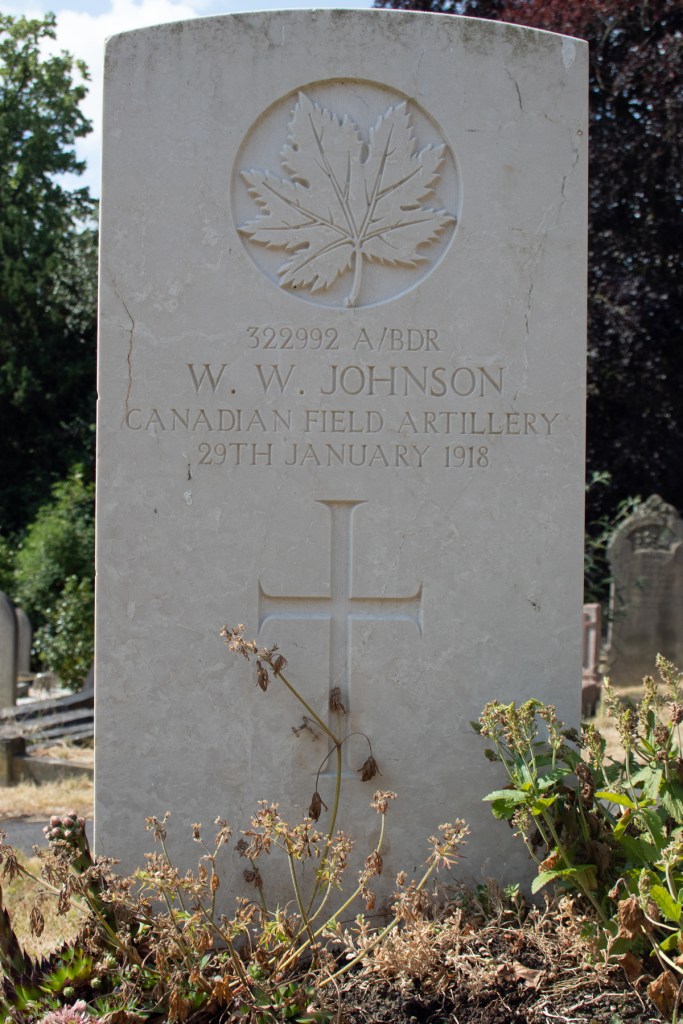
William Wilbur Johnson was born in Wingham, Ontario, Canada, on 25th August 1889, and was the son of John and Barbara Johnson. Little information is available about his early life, but he found work as a saddler when he finished his schooling.
In his free time, William volunteered in the 20th Border Horse Regiment. When war broke out in Europe, he was called upon to play his part, and joined the Canadian Expeditionary Force. His service records confirm he was 5ft 8ins (1.73m) tall, with brown hair, blue eyes and a dark complexion. He was also noted as having two scars both on his inner left forearm.
Private Johnson arrived in England in May 1916, and was initially billeted in Shorncliffe, Kent. He did not remain in Britain for long, however, and, assigned to the 2nd Brigade of the Canadian Field Artillery, he arrived in France on 1st June 1916. William would have been in the thick of things, caught up in the bloody stalemate of the Somme for most of the rest of the year.
In November 1916, William was promoted to Acting Bombardier. After a miserable winter on the Front Line, he became ill, and was admitted to a field hospital for a week with bronchitis and influenza. He recovered and remained on the Western Front during 1917, fighting at both Vimy Ridge and Passchendaele.
By the end of November 1917, Acting Bombardier Johnson’s health was suffering once more. He became jaundiced and, after some time spent in a field hospital, he was medically evacuated to Britain for further treatment. He was admitted to the Bath War Hospital in Somerset, with what turned out to be cirrhosis of the liver. This was something his body was unable to overcome: William passed away on 29th January 1918, at the age of 28 years old.
With all of his family overseas, it was not practical for the body of William Wilbur Johnson to be returned to Canada. Instead, he was laid to rest in the sweeping grounds of the Locksbrook Cemetery, not far from the hospital in which he had breathed his last.
William George MacPherson was born in the township of Greenway, Huron County, Ontario, on 24th September 1893. The eighth of nine children, his parents were farmer Edmund Macpherson and his wife, Sarah, who was better known by her middle name, Keren (short for Kerenhappuch).
Edmund was the fourth generation of the family to be born in Canada, his maternal great grandfather having emigrated from Scotland to Nova Scotia in the late 1770s. Sarah was the first generation of her family to be born in North America, her parents having moved there in the 1850s.
After he finished his schooling, William followed his father into farming. When war broke out in Europe, the Empire was called upon to serve their King. On 7th January 1916, William enlisted in the Canadian Expeditionary Force. His service records show that he was 5ft 6.5ins (1.69m) tall and weighed 150lbs (68kg). He was noted a having dark hair, brown eyes and a dark complexion.
Private MacPherson set sail from Halifax on 22nd August 1916, and arrived in Liverpool eight days later. His troop was based in Witley, Surrey, and it was here, while attached to the 125 Battalion of the Canadian Infantry, that William spent the winter.
On 23rd May 1917, Private MacPherson was transferred to the 4th Battalion, and set sail for France. He was to spend the summer at Ypres, where he encountered some of the bloodiest fighting of the conflict. William was not to be unscathed, and was wounded in his shoulder and neck on 6th November 1917.
William was initially treated at the No. 2 State Hospital at Abbeville. Dangerously ill, though, he was medically evacuated to Britain, on board the Hospital Ship Essequibo, from Le Havre to Shornescliffe. Private MacPherson was quickly moved to Somerset, and was admitted to the Bath War Hospital. Tetanus set in, and he died of his wounds on 21st December 1917. He was 24 years of age.
With his family thousands of miles away, William George MacPherson was laid to rest in the Locksbrook Cemetery in Bath, not far from the hospital in which he had breathed his last.