Tag Archives: Dorset

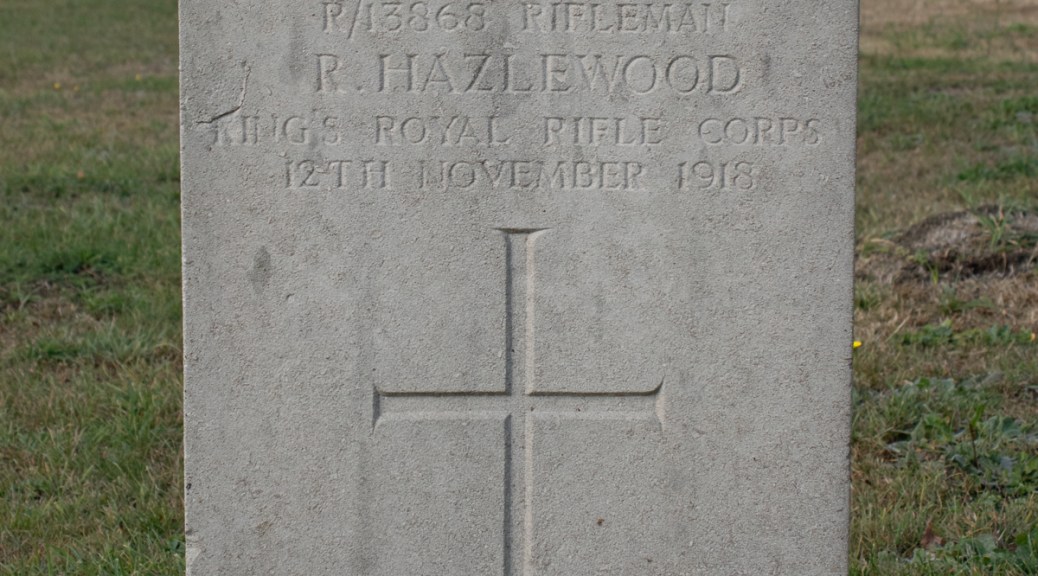
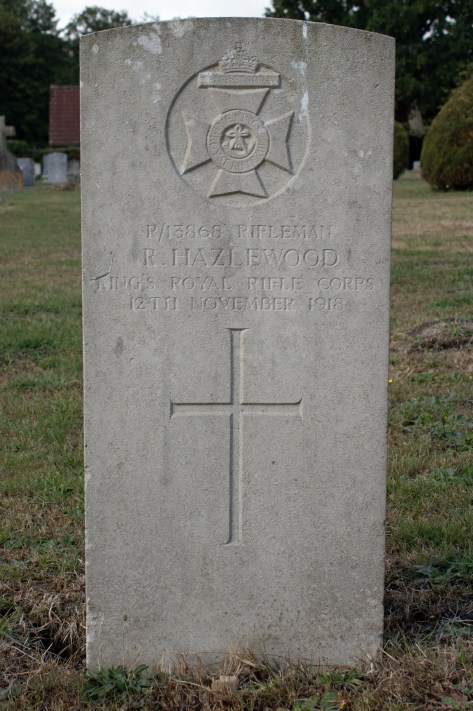
Rifleman Richard Hazlewood

Rifleman Richard Hazlewood

Richard Hazlewood was born in the spring of 1892 in Kentish Town, Middlesex. One of at least seven children, his parents were railway engine driver George Hazlewood and his wife, Sarah.

There is frustratingly little documentation for Richard’s early life. The family do not appear on the 1901 or 1911 census records, and it is only when he enlists on 5th June 1915, that his name appears on paperwork once more.

Richard was working as a cook when he joined up, and gave this up to join the King’s Royal Rifle Corps. His service record notes that he was a little over 5ft 9ins (1.76m) tall, and had brown hair, blue eyes and a fresh complexion.

Rifleman Hazlewood was attached to the 12th Battalion, and, after his initial training, he was sent to France. He would spend the next three years overseas, his unit being caught up in the fighting at the Somme and Ypres. In February 1917, he spent a few days in hospital, suffering from scabies in his right foot.

In the autumn of 1918, Richard came down with pneumonia. He was medically evacuated to Britain for treatment, and was admitted to the Station Road Hospital in Gillingham, Dorset. His condition would prove fatal: Rifleman Hazlewood passed away on 12th November – a day after the Armistice was signed. He was 26 years of age.

George had died in 1911, and it seems likely that Sarah, who was now living at the St Pancras Almshouses, Kentish Town, was unable to cover the cost of bringing her son back to Middlesex. Richard Hazlewood was instead laid to rest in Gillingham Cemetery, not far form the Dorset hospital in which he had died.
Driver Frederick Street

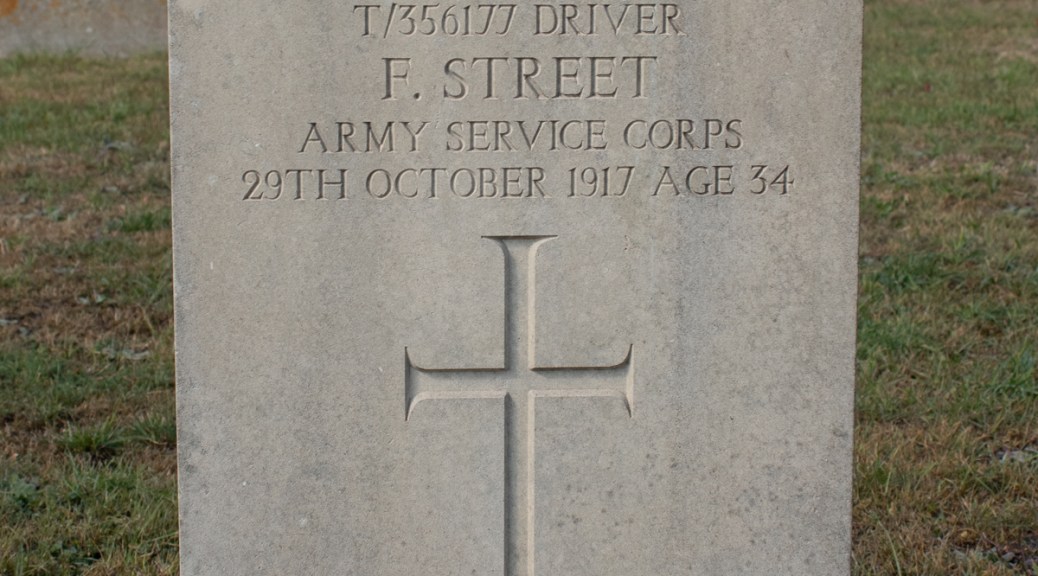
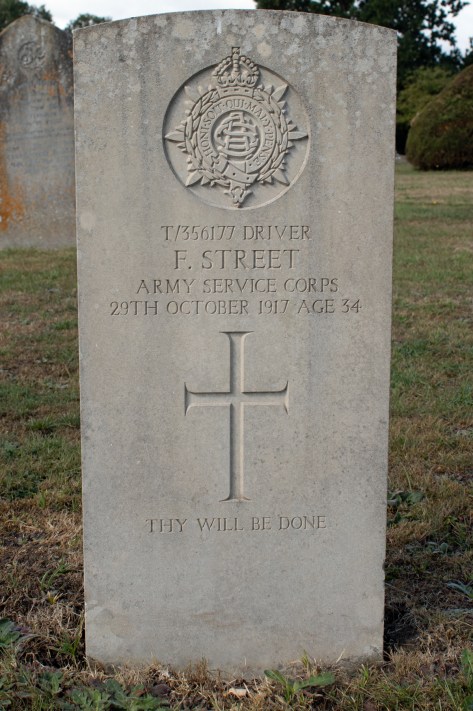
Driver Frederick Street

Frederick Street was born in the autumn of 1882, and was one of ten children. His parents were James Street and his wife Izett (or Izit, Ezit, or Iyitt, depending on which document you are looking at: both of Frederick’s parents were illiterate, and so there is no consistency in how his mother’s unusual name was spelt). James was a general labour from East Stour, Dorset, but it was in the nearby town of Gillingham where the family were born and raised.

When Frederick completed his schooling, he also took up work as a labourer. In the autumn of 1908 he married Mary White. Born in Yeovil, Somerset, in 1885, she was working as a servant for draper Sidney Clement when the couple exchanged vows. They set up home on Milton Lane, Gillingham, and went on to have two children: Charles, born in 1909, and William, born in 1916.

Frederick had taken work as a gardener by the outbreak of war. He was called upon to play his part and, while full details of his service have been lost to time, it is clear that he had enlisted in the Army Service Corps no earlier than the spring of 1917.

Sent to Kent for his service with the No. 2 Horse Transport Depot Company, Driver Street fell ill with tetanus. He was admitted to the Brook War Hospital in Woolwich, but the condition would prove too severe. Frederick died on 29th October 1917: he was 34 years of age.

The body of Frederick Street was taken back to Dorset for burial: he was laid to rest in Gillingham Cemetery, not far from where his widow and children were still living. This was the second death in the family in six months, James Street having died in March: the location of his burial is unclear.


Lance Corporal Hugh Parmiter

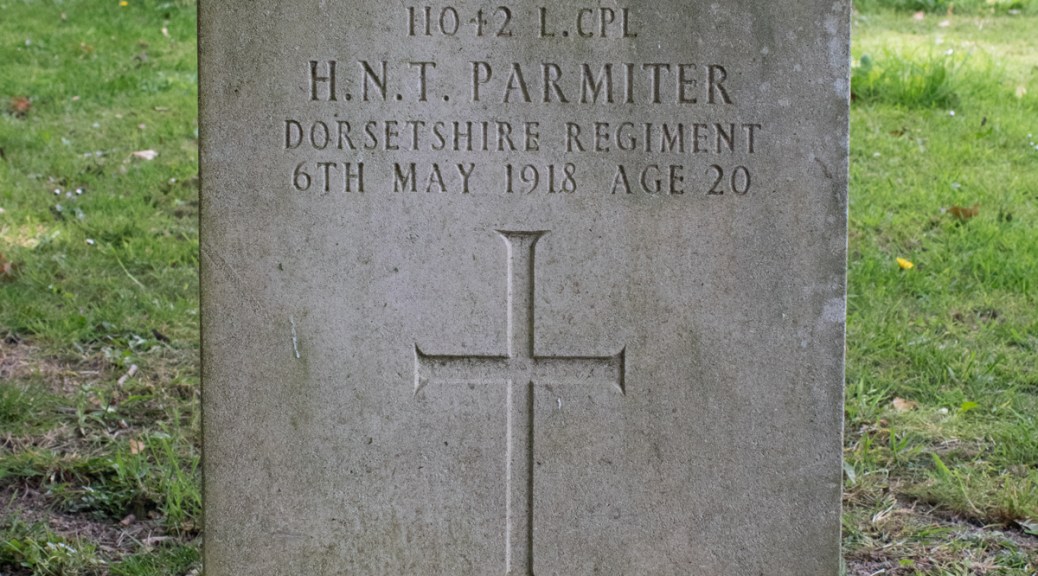
Lance Corporal Hugh Parmiter

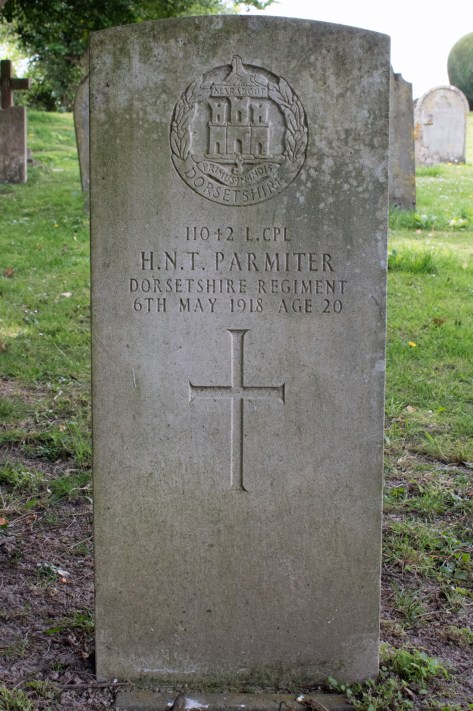
Hugh Norman Trivick Parmiter was born on 21st February 1898, and was the sixth of ten children. His father, James, was a Sergeant in the Dorsetshire Regiment, and the family travelled to where the army needed him. Hugh was the third of the children to be born in Bangalore, India, while his mother, Annie, gave birth to his oldest two siblings in Egypt.

By 1900 the Parmiters had returned to Britain, Annie and the children living in family barracks in Dorchester, while James was being trained in Hythe, Kent.

The 1911 census records the family living in the rural Dorset village of Gussage St Michael. Having been pensioned from the army, James was employed as a dairyman, and the family lived in a modest village cottage. At thirteen years of age, Hugh was still attending school, growing up in the peaceful surroundings of the Dorset countryside.

When war broke out, Hugh stepped up to play his part. Full details of his service have been lost to time, but from what remains it is clear that he enlisted in the Devonshire Regiment in the opening weeks of the war. By 11th July 1915, Private Parmiter’s unit was ensconced in the Balkans.

Hugh was caught up in the fierce fighting at Gallipoli, and rose to the rank of Lance Corporal. He would not come out unscathed, however, and was medically evacuated to Britain for treatment. While details of his injuries are unclear, they were severe enough for him to be medically discharged from the army: he was formally stood down on 17th January 1916, a week after the final evacuations from the Dardanelles Strait.

At this point, Hugh’s trail goes cold. James had passed away in 1914, and Annie had moved to Pimperne, a village on the outskirts of Blandford Fordham. Hugh’s health still dogged him however, and he passed away on 6th May 1918: he was 20 years of age.

The body of Hugh Norman Trivick Parmiter was laid to rest in St Peter’s Churchyard in Pimperne.


Private George Everett

Private George Everett

George James Everett was born in Fordington, Dorset, on 3rd July 1898. The fifth of six children, his parents were Frank and Jane Everett. Frank was a shepherd, and farm work was a trade into which at least two of George’s older siblings went.

George was only sixteen at the outbreak of the First World War, and so had to bide his time before he could serve his country. This he did, however, enlisting in the Hampshire Regiment on 24th July 1916. Assigned to the 52nd (Graduated) Battalion, he was sent to Canterbury, Kent for his training.

Private Everett’s time in the army was not to be as much of an adventure and he might have hoped. He spent his time on home soil, and, by the end of 1917, his health wasn’t standing up to the rigours of army life. George had contracted tuberculosis, and the contagious health condition led to his discharge from the military service on 5th December.

At this point, George’s trail goes cold. He returned to home to recuperate, and back at home, he fell in love. Amelia Aylen had been born in Beckenham, Kent, and it seems that she may have moved to Dorset to live with her brother, , Thomas, who had found farm work there. George and Amelia married in Blandford Forum on 3rd March 1919, and had a son, George Jr, that September.

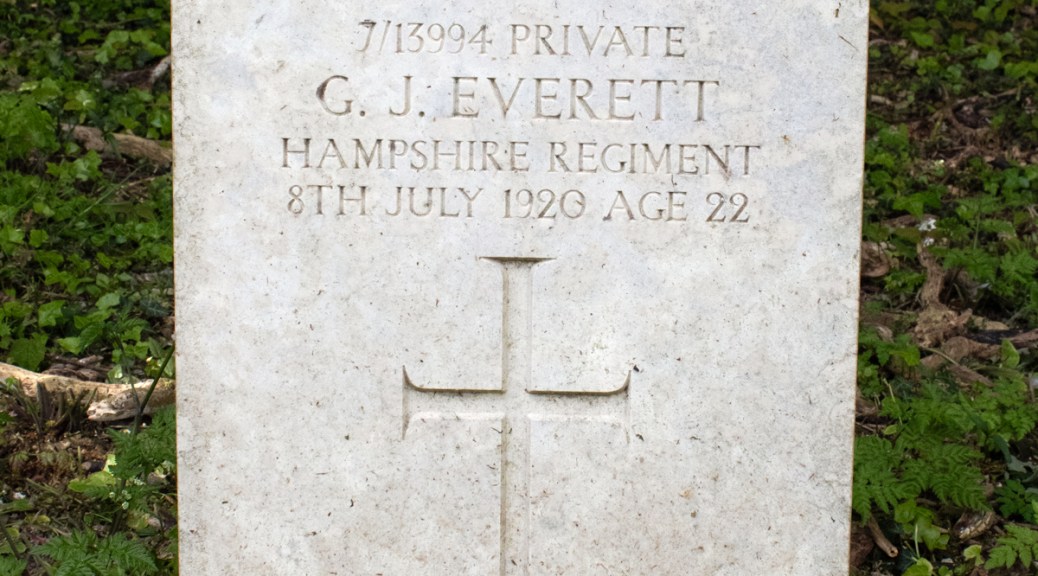
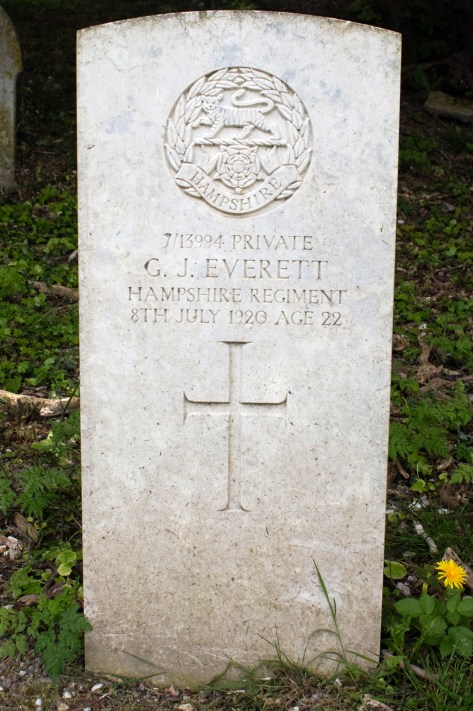
George’s health would ultimately get the better of him. He passed away from tuberculosis and exhaustion on 8th July 1920: he had turned 22 years old just a few days before.

The body of George James Everett was laid to rest in the graveyard of St Peter’s Church in the village of Pimperne, to the north of Blandford.


As George and Amelia had been married after his discharge from the army, she was not eligible for his war pension. The 1921 census found her working as a servant for a retired army major in Wiltshire, while George Jr was being raised by her brother’s family.


Private Albert Thorne

Private Albert Thorne

Albert Edward Thorne was born on 30th April 1874. The fourth of eight children, his parents were George and Rosanna Thorne. George was born in Nether Compton, Dorset, and this is where the family were raised. He worked as a stone mason, the 1884 census confirming he employed six men and two boys.

When Albert completed his schooling, he found work as a domestic gardener. This was not something he wanted to do long-term, however, and, on 30th May 1892, he enlisted in the Royal Marine Light Infantry. His service records show that he was 5ft 6ins (1.68m) tall, with dark brown hair and blue eyes. He was also noted as having a mole on the right of this abdomen and a scar on the right of his waist.

Private Thorne was sent to the Royal Marine depot in Walmer, Kent, for his training, and he remained there until the end of November. He transferred to Plymouth, Devon, and, over the next three years, split his time between there and Devonport.

On 26th December 1895, Albert married Rhoda Mills, the daughter of a local labourer, in Plymouth Register Office. The couple would have three children: Albert Jr, Arthur and Vera.

Private Thorne was a career marine, and remained in the service, based between Plymouth and Portsmouth, Hampshire, until the spring of 1914. Having completed 22 years, he was stood down to reserve status, although this was not to be for long, as storm clouds were brewing over Europe.

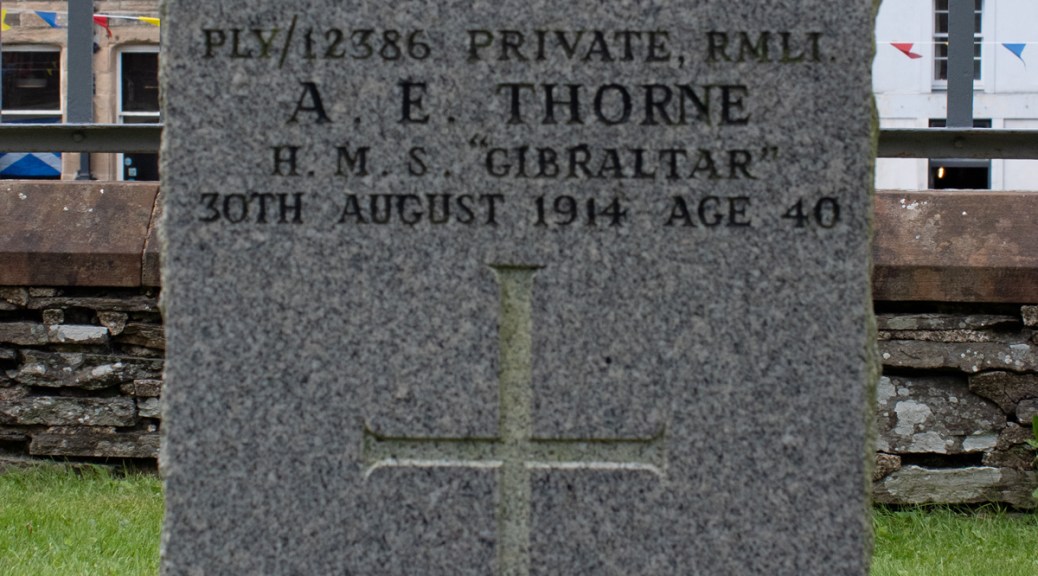
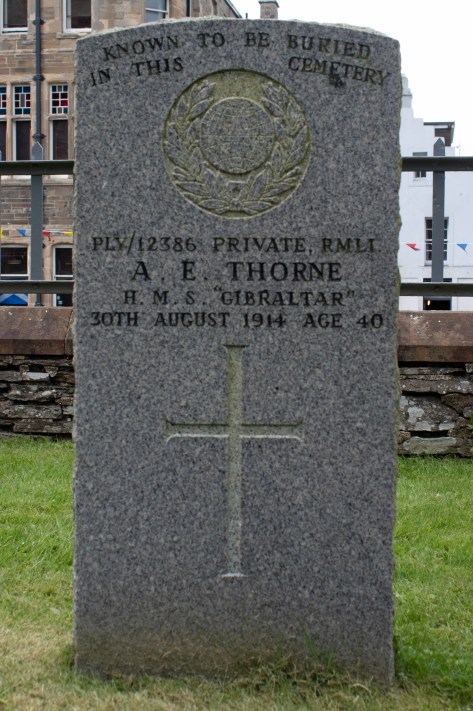
In August 1914, Albert was mobilised once more, and was assigned to the cruiser HMS Gibraltar. A depot ship, she would support other ships in and around the Orkney and Shetland Isles. The voyage north seems to have taken its toll, however, and Private Thorne was evacuated to the hospital ship Rohilla, suffering from appendicitis, which resulted in peritonitis. The conditions would prove fatal, and he passed away on 30th August 1914, at the age of 40 years old.

The Rohilla docked at Kirkwall on the Orkney mainland. Hundreds of miles from home, is seems that Rhoda may not have been able to afford to bring her husband’s body back to Devon. Instead, the body of Albert Edward Thorne was laid to rest in the graveyard of St Magnus’ Cathedral, Kirkwall.


Rhoda remained in Plymouth, in the rooms at 64 Durnford Street that she knew as home. The 1921 census found her living there with eldest son Albert – now a construction manager at the Royal Naval Dockyard in Devonport – and daughter Vera. The family had a boarder, Irish-born merchant seaman William Arnold, whose sister, Margaret Fitzgerald, was also visiting.


Gunner George Elmes

Gunner George Elmes

George Victor Jim Elmes was born in the autumn of 1897 in the village of Derry Hill, between Calne and Chippenham in Wiltshire. One of six children, his parents were Nelson and Hannah Elmes. Nelson was a shepherd, and when George completed his schooling, he found work as a labourer on the same farm. Money must have been tight, and the 1901 and 1911 census returns both show that the family had taken in boarders for a little extra.

There is little further documentation about George’s life. He would enlist in the Machine Gun Corps at some point after June 1917, and would undertake his training in Dorset.

The death took place at the Trowbridge Red Cross Hospital on Wednesday of Gunner George Elmes, Machine Gun Corps. Gunner Elmes, whose home is at Chippenham, was travelling thence from Bovington Cap on Monday when he was found to be seriously ill at Trowbridge. Dr Bond conveyed him to the hospital in his motor car, but he got rapidly worse and died on Wednesday. He was going to Chippenham to visit his mother, who is seriously ill.

[Wiltshire Times and Trowbridge Advertiser: Saturday 6th January 1917]

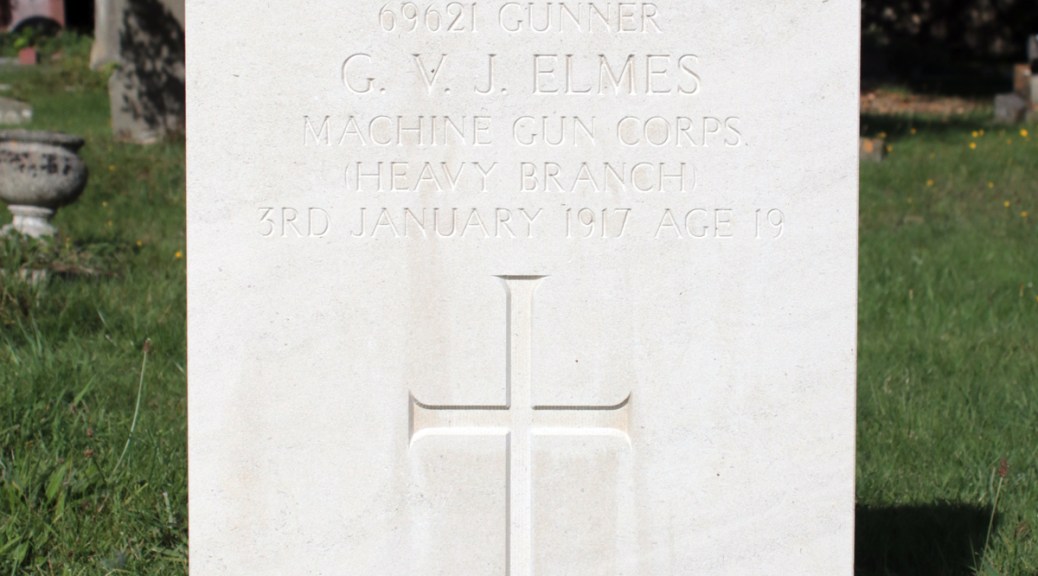
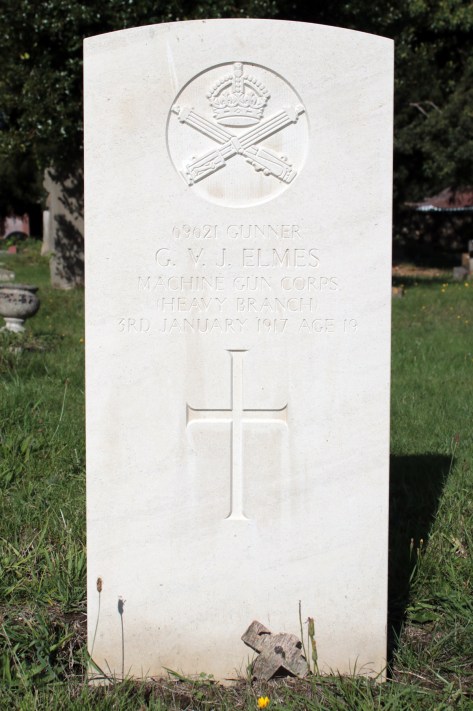
George Victor Jim Elmes died on 3rd January 1917: he was just 19 years of age. Hannah passed away soon after her son: she was 55 years old.

With two funerals to pay for, money must have been incredibly tight for Nelson and the rest of the family. While Hannah was buried locally, the body of George Elmes was laid to rest in Trowbridge Cemetery, not far from the hospital to which he had been taken when he fell ill.


Private James Willetts

Private James Willetts

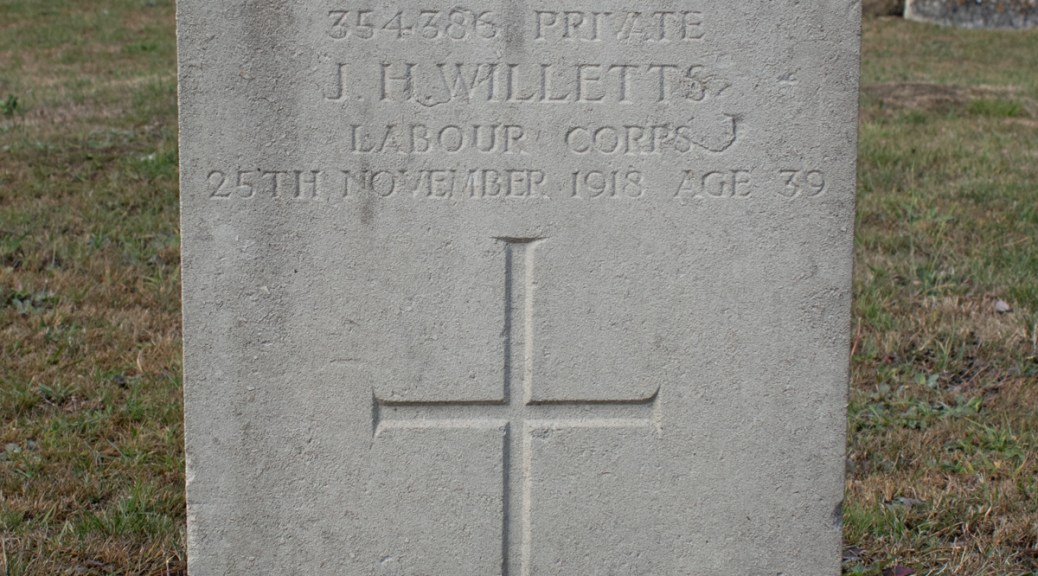
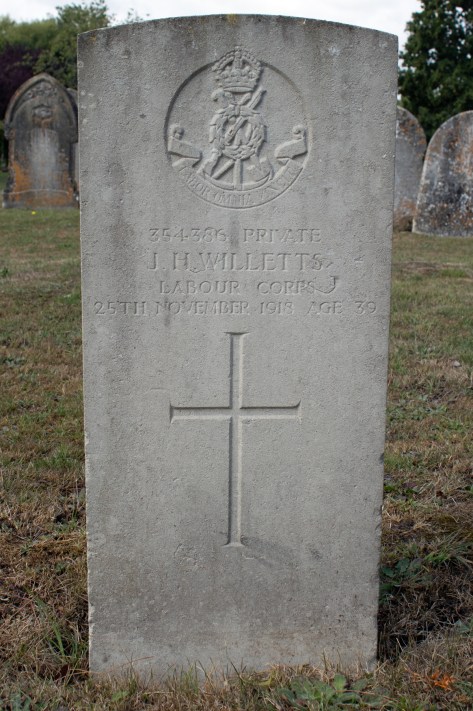
In the peaceful grounds of Gillingham Cemetery, Dorset, is the grave of Private James Henry Willetts of the Labour Corps, who died on 25th November 1918, at the age of 39 years old. The Commonwealth War Graves Commission records confirm that he was the son of James Willetts who, at the time of his son’s passing, was living in Springhill, Birmingham.

Private Willetts’ service records no longer exist, but his entry on the British Register of Soldiers’ Effects state that he was attached to the 443rd Agricultural Company, and died in Peasemarsh, Dorset. It also noted that his next of kin would not be able to claim a war gratuity: this suggests that he had served for less than six months when he passed.

A further document – the Pension Ledger Index Card – gives James’ dependent as his stepmother, Elizabeth Willetts. The record also confirms that his brother George had also died while serving as a Corporal in the Royal Warwickshire Regiment.

The challenge with trying to trace James’ early life is that there aren’t enough confirmed details. His mother’s name is not known, nor is it clear when James Sr married Elizabeth. Census records are available, but none give a clear match for father and son. Given James Jr shared his father’s name, it may also be that he went by his middle name, but this too could have been changed to Harry.

It seems, therefore, that James Henry Willetts’ life is destined to remain a mystery, taken to the grave in the Dorset cemetery.


Cadet Clifford Kiddle

Cadet Clifford Kiddle

Clifford Henry Evan Kiddle was born on 10th November 1900, and was the youngest of five children to Fred and Martha. Fred was a wheelwright from East Stour, Dorset, and it was here that the Kiddle family were born and raised.

The 1911 census makes for interesting reading. Fred is missing from it, and Martha is recorded as married, and at a house on Victoria Road in Gillingham, Dorset. Her son Leonard is living with her, as are three of her nephews, and a boarder, John Samways.

Clifford, meanwhile, had moved to the village of Penselwood in Wiltshire. His two sisters, Ellen and Sarah, were employed as elementary school teachers there, and their young brother had relocated with them.

When war broke out, Clifford was just a boy. He was keen to play his part as soon as he could, however, and, on 8th October 1918, he gave up his job as a chemist’s apprentice to enlist in the Royal Air Force. Cadet Kiddle’s service papers show that he was 5ft 8ins (1.72m) tall, and had brown hair, hazel eyes and a fresh complexion.

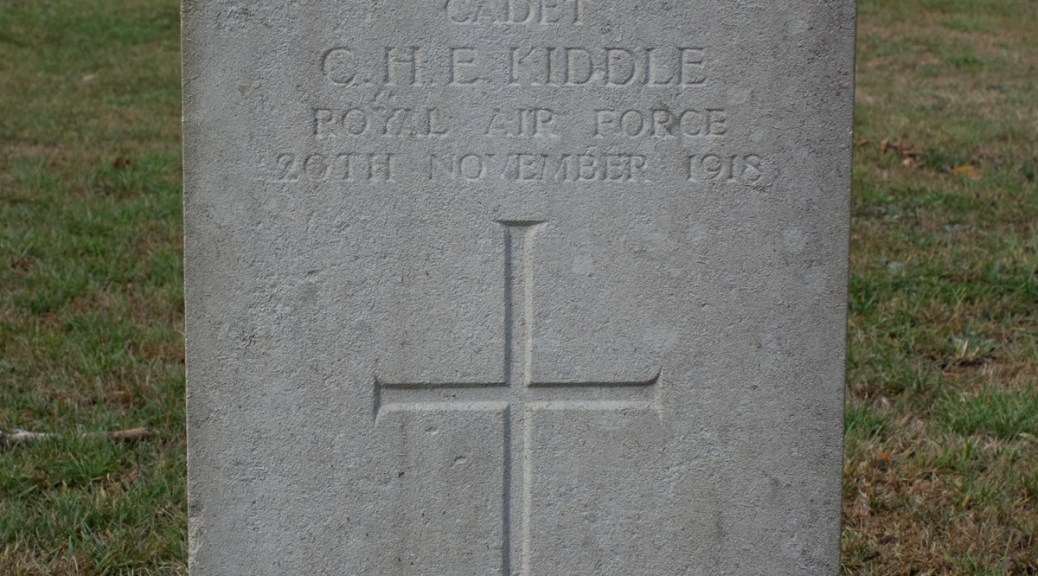
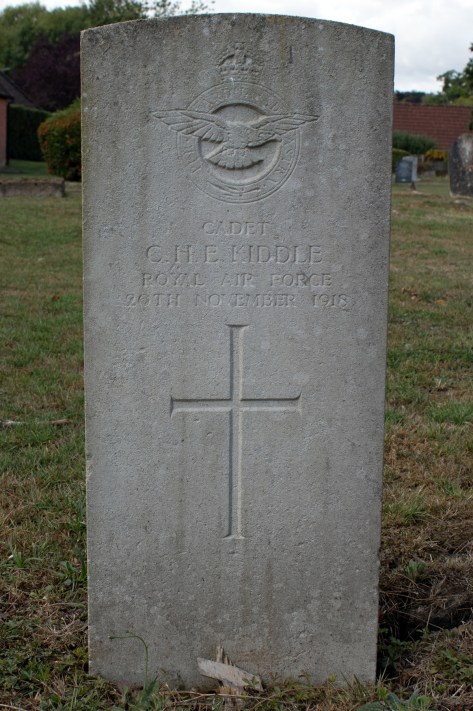
Clifford was sent to Kent for his training, but his time as an airman was to be brief. He was admitted to Shorncliffe Military Hospital with pneumonia, but the condition would prove too much. He died on 20th November 1918, ten days after his eighteenth birthday.

The body of Clifford Henry Evan Kiddle was taken back to Dorset for burial. He was laid to rest in Gillingham Cemetery, not far from where his family were living.


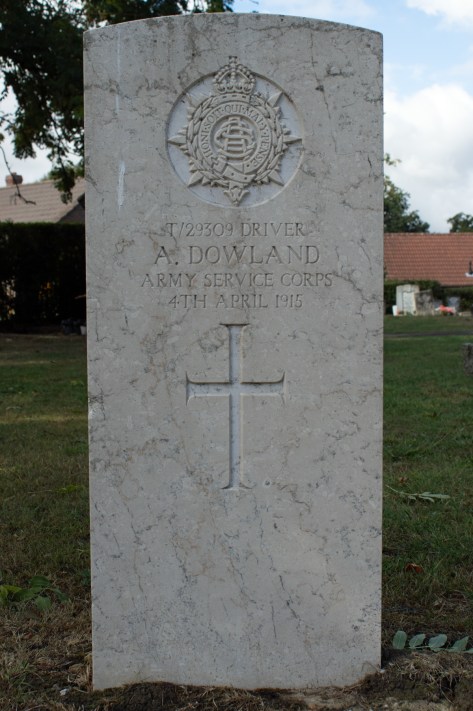
Driver Arthur Dowland

Driver Arthur Dowland

Arthur Dowland was born in the spring of 1884, and was the third of seven children to Austin and Maria Dowland. Austin was a coachman from Dorset, and the family seemed to travel with his work. By the time Arthur was born, they were living in Bourton, on the Dorset, Somerset and Wiltshire borders.

There is little in the way of documentation to track Arthur’s life. He does not appear in the 1911 census, and a separate record suggests that he may have emigrated to Canada for work, returning to Britain by the time war broke out.

Driver Dowland’s service papers have been lost to time, but it is clear that he had enlisted in the Army Service Corps, and was attached to one of the Horse Transport companies.

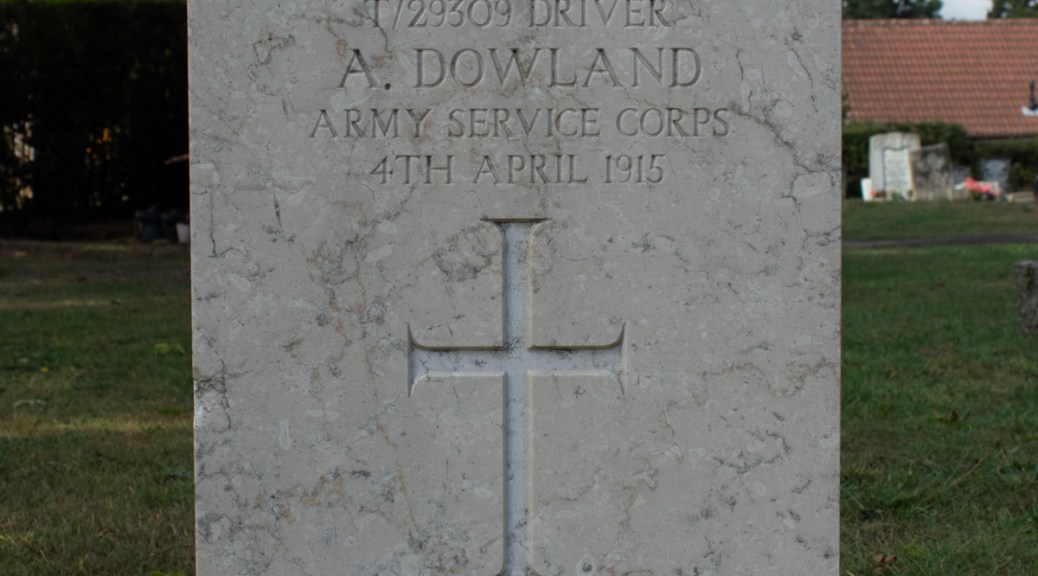
Arthur’s time in the army was not to be a lengthy one, and it appears that he fell ill while training. He passed away at his parents’ home in Gillingham, Dorset, on 4th April 1915, at the age of 31 years old.

The body of Arthur Downland was laid to rest in Gillingham Cemetery.


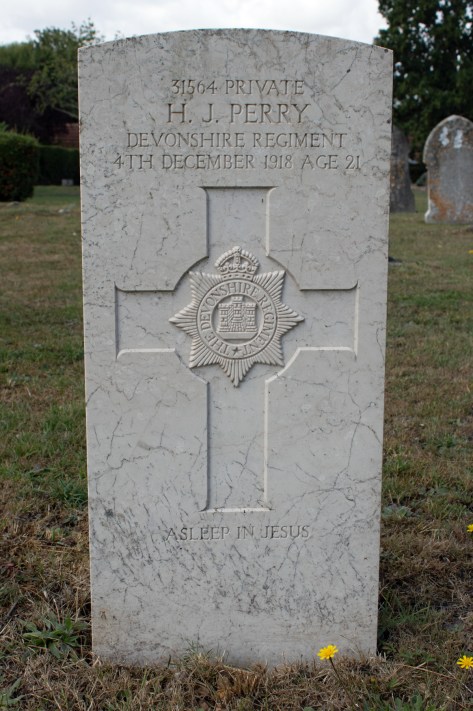
Private Hedley Perry

Private Hedley Perry

Hedley James Garfield Perry was born in Camborne, Cornwall in the autumn of 1898. One of nine children, his parents were John and Thurza Perry. John was a farm labourer, and the family lived in a semi-detached cottage at 15 Tehidy Road, to the north of the town centre.

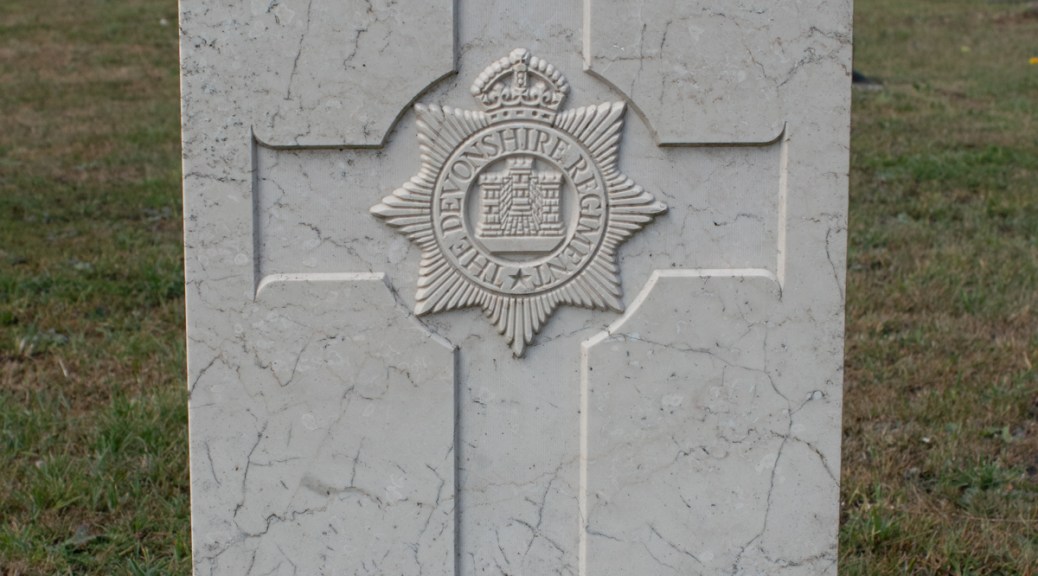
Hedley was under age when war broke out, but it is clear that he wanted to play his part. His service records are long since lost, but he had enlisted in the Devonshire Regiment by the spring of 1918. Private Perry’s unit – the 9th (Service) Battalion – was involved in the final advance on Picardy in the last weeks of the war, and it was during this time that he was wounded.

Private Perry was medically evacuated to Britain for treatment, and he was admitted to a military hospital in Gillingham, Dorset. Hedley’s injuries would prove too severe, however, and he succumbed to them on 4th December 1918, just three weeks after the Armistice was signed. He was 20 years of age.

The body of Hedley James Garfield Perry was laid to rest in Gillingham Cemetery.