Tag Archives: Egypt

Serjeant-Trumpeter Alexander de Vere

Serjeant-Trumpeter Alexander de Vere

Alexander Johnstone de Vere was born on 10th August 1889 in Murree, India (now Pakistan). He was one of five children to Norfolk-born Alexander Johnstone (also known as John Ralph de Vere), and his wife Dorothea who had been born in Sangor, India. Alexander Sr was a Sergeant Major in the 12th Lancers, and the family returned to England not long after his son was born, settling first in Aldershot, then in Sandhurst.

Alexander’s youngest sibling, George, was born in Cairo, Egypt, so the family was on the move again. Sadly, Alexander Sr died in a nursing home in the city just two years later and, after returning to England, Dorothea passed away in a Holborn infirmary just two years later.

Documents for the de Vere children – Ellen, Alexander, Dorothea, William and George – are few and far between. The 1911 census places Dorothea boarding with a family in Kingston-upon-Thames, where she was employed as a dress maker. The same document records William as a Bandsman in the 1st Battalion of the Seaforth Highlanders, based at Chanpatia, in Northern India. George, meanwhile, was a schoolboy at the Duke of York’s Royal Military School on the outskirts of Dover. Of the two eldest siblings, however, there is no record.

In the autumn of 1912, Alexander married Emily Louise Collins. Born in Norfolk in 1884, she was working as a servant in a house in Surrey when she and Alexander met. The couple married in Faversham, Kent, and settle down there, their daughter, Dora, being born in the town in January 1915.

Given his family’s military background, it is not unsurprising that Alexander enlisted in the army almost as soon as war was declared. He may have already seen military service, as he enlisted in the 11th Hussars as a Lance Corporal. By 15th August 1914, Alexander was in France.

Lance Corporal de Vere was quickly caught up in the fighting. He saw action at Mons and Nery in 1914, and at Ypres the following year. By this point, he had been promoted to the rank of Sergeant Trumpeter, reflecting the musical connection he shared with his younger brother, William.

Alexander remained in France until January 1916, when he was invalided home. He was admitted to Dorchester County Hospital in Dorset, suffering from a cerebral abscess. Despite treatment, he succumbed to the condition, passing away on 17th March 1916, at the age of just 26 years old.

Alexander Johnstone de Vere was brought back to Kent for burial. He was laid to rest in Faversham Borough Cemetery.


Private Alonsa Dixon

Private Alonsa Dixon

Alonsa Dixon was born in Kingston-upon-Hull, Yorkshire, in 1887, the oldest of seven children to Alonsa and Caroline Dixon. Alonsa Sr was a billiard marker, who raised his family in a small house near the city centre.

Alonsa Jr found work as an errand boy for a grocer when he left school, but went on to find work as a jobbing gardener. By the time of the 1911 census, he had moved out of home, and was boarding with cab driver George Gill and his family.

In April 1912, he married Edith Alice Gill. Trixie, as she was also known, was George’s daughter, and it seems likely that romance blossomed after Alonsa moved in. The couple went on to have a son, also called Alonsa, who was born the following year.

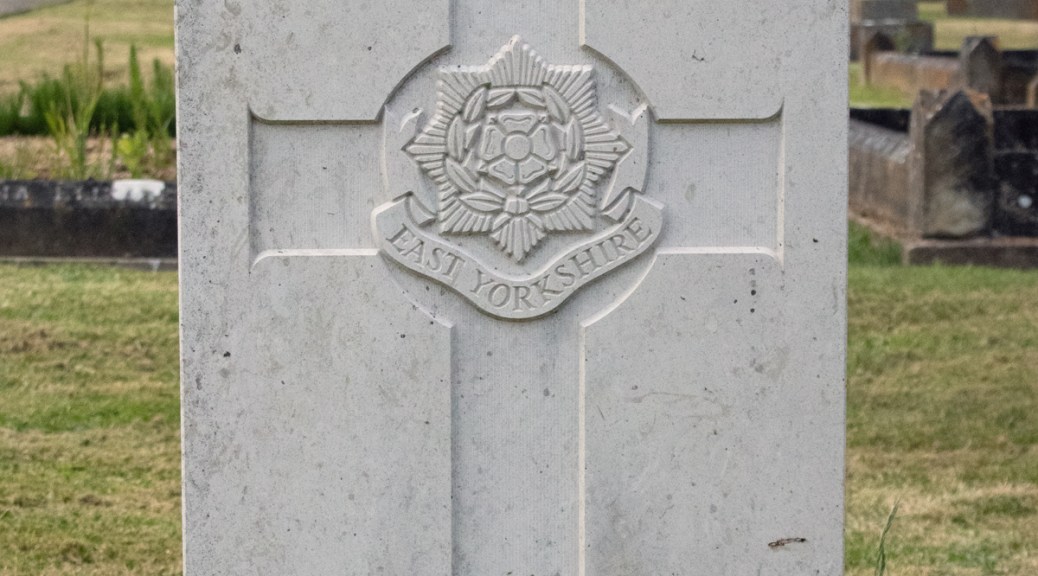
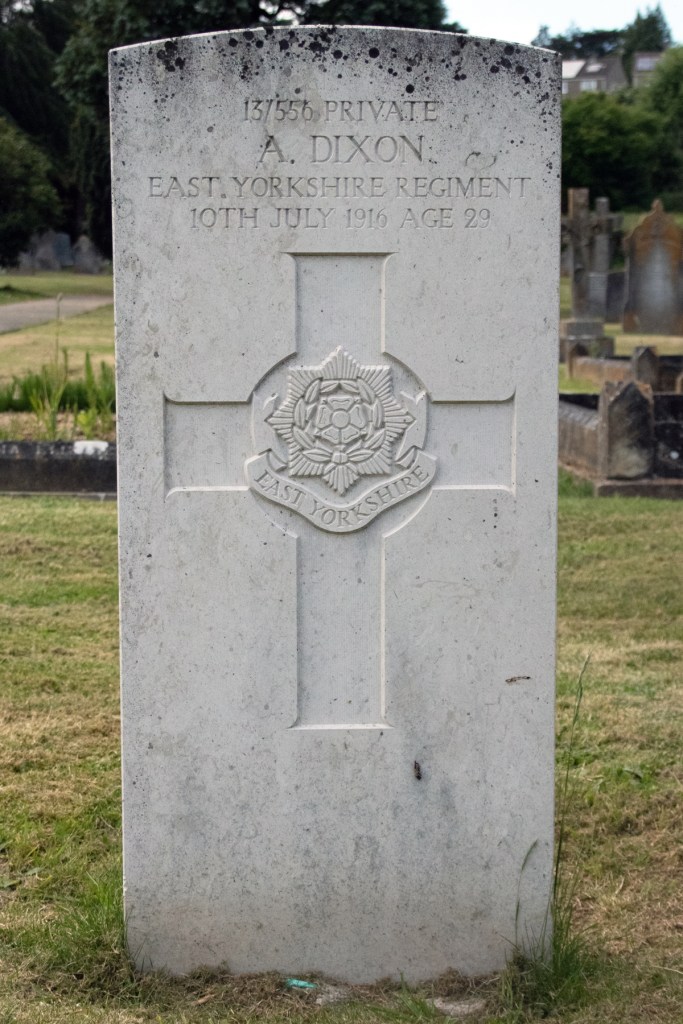
War was coming to Europe, and Alonsa was in one of the first waves of men to volunteer for King and Country. He enlisted in the East Yorkshire Regiment, and was assigned to the 13th Battalion. His service records show that he was 5ft 7.5ins (1.71m) tall, and weighed 144lbs (65.3kg). He was noted as being of good physical development.

Initially serving on home soil, Private Dixon was eventually dispatched overseas, arriving in Egypt in December 1915. Having spent just under three months in North Africa, he was moved to France in March the following year.

Alonsa had some health issues by this point, and was suffering from Bright’s Disease, or nephritis (inflammation of the kidneys). He was treated in a field hospital in Abbeville, but subsequently medically evacuated back to England for further care.

Private Dixon was admitted to the Monastery Hospital in Wincanton, Somerset in April 1916, but his condition proved too severe, and he passed away on 10th July 1916. He was just 29 years of age.

Alonsa Dixon was laid to rest in the cemetery of the town in which he passed away, Wincanton.


Private Alonsa Dixon
(from findagrave.com)

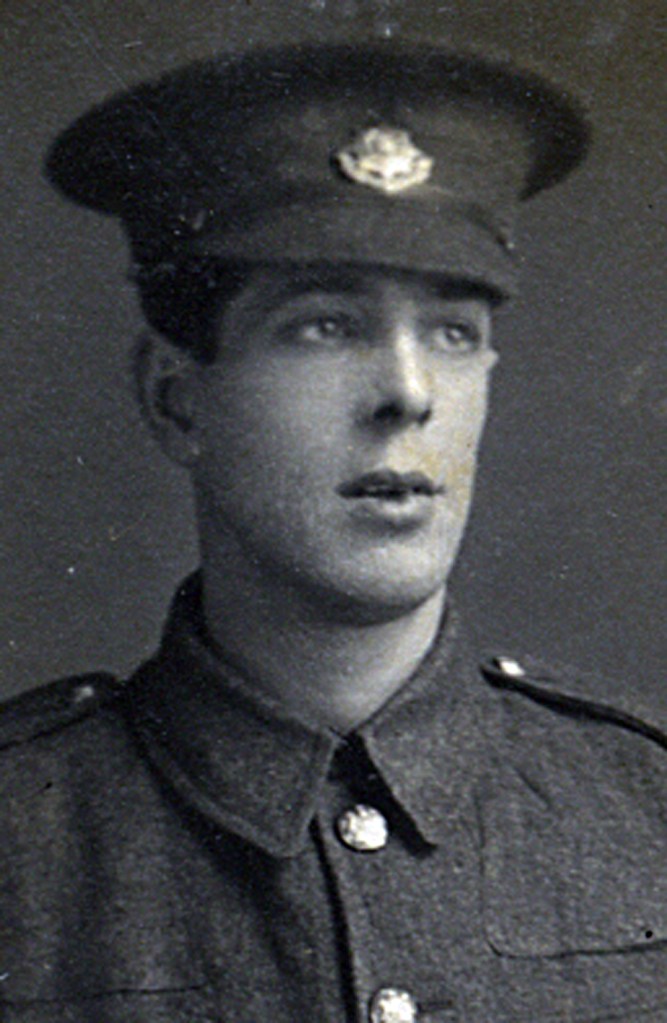
Serjeant Tom Harris

Serjeant Tom Harris

Thomas Harris – known as Tom – was born on 13th October 1876, the only son of Edmund and Mary Harris. Edmund was an agricultural labourer from the Somerset village of Seavington St Mary, and this is where Tom was born and raised.

Mary had married Edmund in the spring of 1876, but had been married before; she was widowed when her previous husband, Alfred Vickery, died ten years before. They had had seven children of their own, half-siblings to Tom.

Edmund died in the Wells Lunatic Asylum when Tom was only six years old. When he left school, he found work as a farm labourer, but sought bigger and better things, even though he was now the only one of Mary’s children still living at home.

Tom enlisted in the Somerset Light Infantry in January 1893, and soon found himself overseas. During his sixteen years’ service, he spent seven years in India and six months fighting in the Second Boer War. Corporal Harris seems to have had a sickly time of it, and while in India, was admitted to hospital a number of times for fever, ague and diarrhoea, as well as a bout of conjunctivitis.

When Tom’s contract came to an end in 1909, he returned to Britain, setting up home in Newport, South Wales, where he found work as a sheet weigher at the local steel works.

Mary died of senile decay and cardiac failure in May 1910. She was 74 years old, and sadly passed away in the Chard Workhouse, in similar circumstances to her late husband.

In October 1913, Tom married Ada Long in Chard. She was the daughter of a shopkeeper, and the couple set up home in South Wales, where Tom was still working.

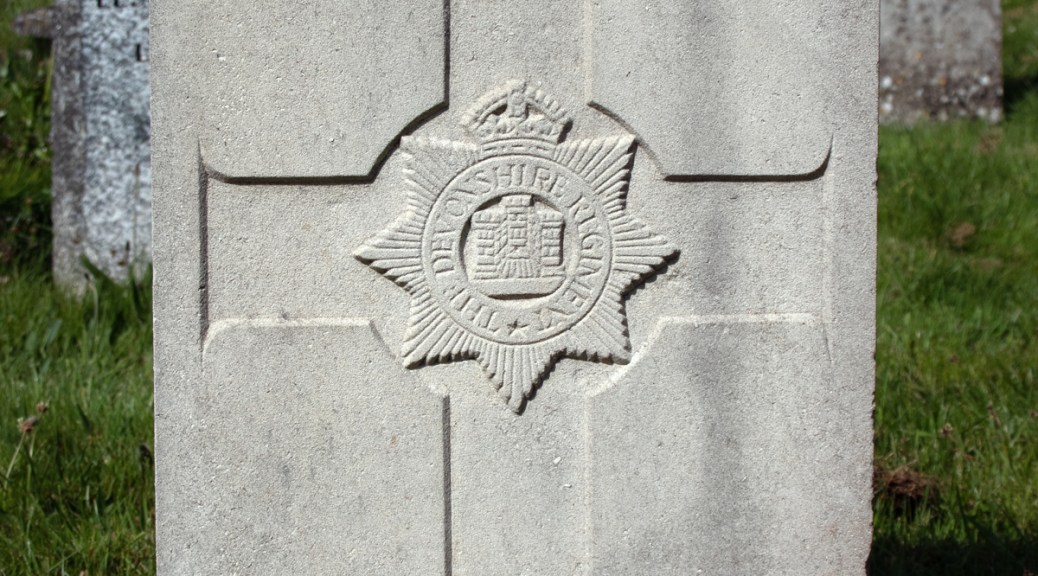
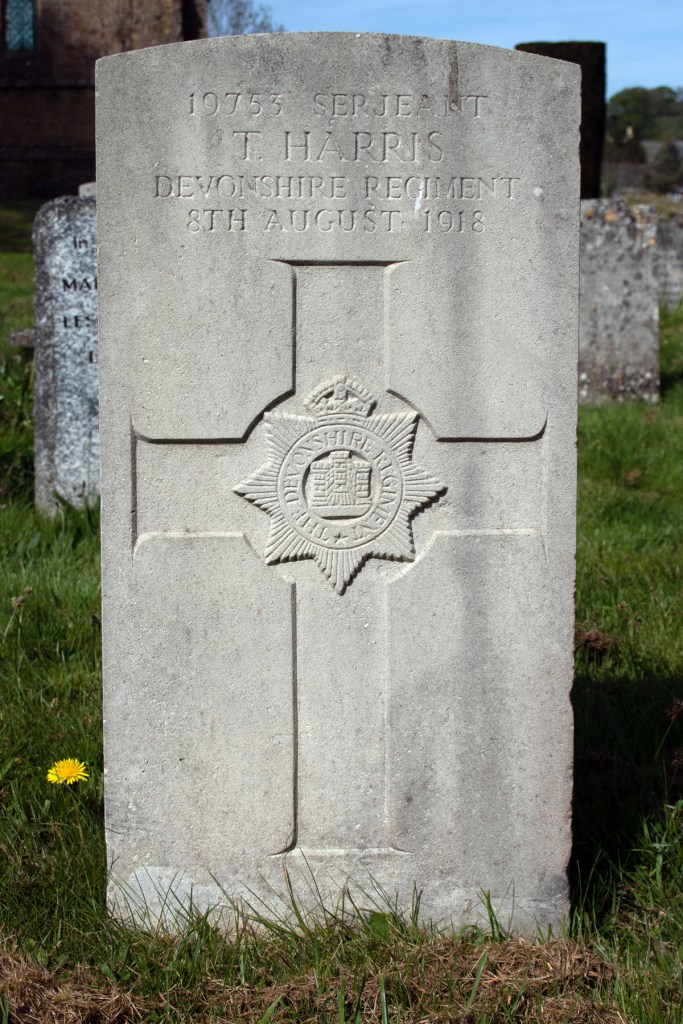
War, by now, was closing in on Europe, and Tom wanted to use his previous experience to serve his country once again. He enlisted on 20th August 1914 in Newport, joining the Devonshire Regiment as a Private, although he was quickly promoted first to Corporal and then to Serjeant. His service records show that he was 5ft 8ins (1.73m) tall, had blue eyes, brown hair and a tattoo of a Spanish girl on his right forearm.

After a year on the Home Front, Serjeant Harris was sent to Egypt in September 1915. On the way out, he contracted a severe cold, which left him deaf in his left ear. He was also suffering from varicose veins, which left him in pain in his right leg. He was treated for both conditions, and put on light duties for three months.

In November 1916, Serjeant Harris was supporting a food convoy when it came under attack. Buried in sand and wounded, he was laid up in a hole for two days and nights before help came. He was initially treated for shell shock in the camp hospital, but was eventually evacuated to Britain for treatment.

The incident had put too much of a strain on Tom, and he was medically discharged from the army in April 1917. While his medical report confirmed that the general paralysis he was suffering from was a result of the attack, it also noted on six separate occasions that he had previously suffered from syphilis, suggesting this may also have been a contributing factor to his mental state.

Tom was discharged initially to an asylum in South Wales, before returning home to Ada. The couple were soon expecting a child, and a boy, Sidney, was born in February 1918. By that summer, however, Tom’s condition had worsened enough for him to be admitted back to the Whitchurch Military Hospital in Cardiff.

It was here that Tom passed away, dying from a combination of chronic phlebitis – an extension of the varicose veins he had previously complained of – and general paralysis on 8th August 1918. He was, by this point, 41 years of age.

Tom Harris was brought back to Somerset for burial. He was laid to rest – finally at peace – in Chard Cemetery.


Serjeant Tom Harris
(from ancestry.co.uk)

Private Arthur King

Private Arthur King

Arthur Thomas Rendell King was born early in 1896, the oldest of six children to Thomas and Bessie King. Engine driver Thomas had been born in London, but, after marrying his wife the year before Arthur was born, he settled in Highweek near Newton Abbot, Devon.

When he left school, Arthur followed his father in working for Great Western Railways, working as a carriage cleaner at the town’s depot. War was on the horizon, however, and he enlisted in the Devonshire Regiment shortly after conflict was declared.

Private King was assigned to the 1st/5th Battalion and sailed for India in October 1914, arriving in Karachi a month later. After nearly three years, his regiment moved again, this time to Egypt, in advance of action in the Middle East.

Involved in the Battle of Nebi Samwil in November 1917, Arthur was badly wounded – and initially recorded as missing, presumed dead. However, he was found, and evacuated to England. Tragically, within hours of being admitted to a hospital on home soil on 31st January 1918, Private King died of his injuries. He had just turned 22 years of age.

Arthur Thomas Rendell King’s body was brought back to Devon for burial. He was laid to rest in the family grave in the graveyard of All Saints Church, Highweek.


Private Arthur King
(from findagrave.com)

Seaman Alexander Kennedy

Seaman Alexander Kennedy

Alexander Kennedy was born in Cromore on the Isle of Lewis on 15th June 1895. He was one of five children – four of them boys – to John and Isabella Kennedy.

Living in the remote coastal township, he would have grown up knowing the sea and, when the opportunity arose, he volunteered for the Royal Naval Reserve. His service records show that he enlisted on 12th December 1913; they also note that he was 5ft 6.5ins (1.69m) tall, had blue eyes, a fresh complexion and a scar under his chin.

Seaman Kennedy was kept on a retainer until war broke out the following summer, at which point he was sent to the other end of the country – HMS Pembroke, the Royal Naval Dockyard in Chatham, Kent – for formal training. His time in the navy was then split between the dockyard and the battleship HMS Implacable.

Over the next couple of years, Seaman Kennedy toured the Mediterranean, berthing in Egypt, Malta and Gibraltar between stops back in the ports on the English coasts. By the summer of 1917, he had returned to HMS Pembroke for good.

At that point in the war, Chatham Dockyard was a particularly busy place, and Alexander was billeted in overflow accommodation set up in the naval barracks’ Drill Hall.

On the night of the 3rd September, the German Air Force conducted the first night time raid on England. Chatham came in the firing line, and the Drill Hall received a direct hit. Seaman Kennedy was among those killed. He was just 21 years of age.

Alexander Kennedy was laid to rest in the Woodlands Cemetery in nearby Gillingham, along with the other victims of the Chatham Air Raid.


Seaman Alexander Kennedy
(from ancestry.co.uk)

Rifleman Edward Drewett

Rifleman Edward Drewett

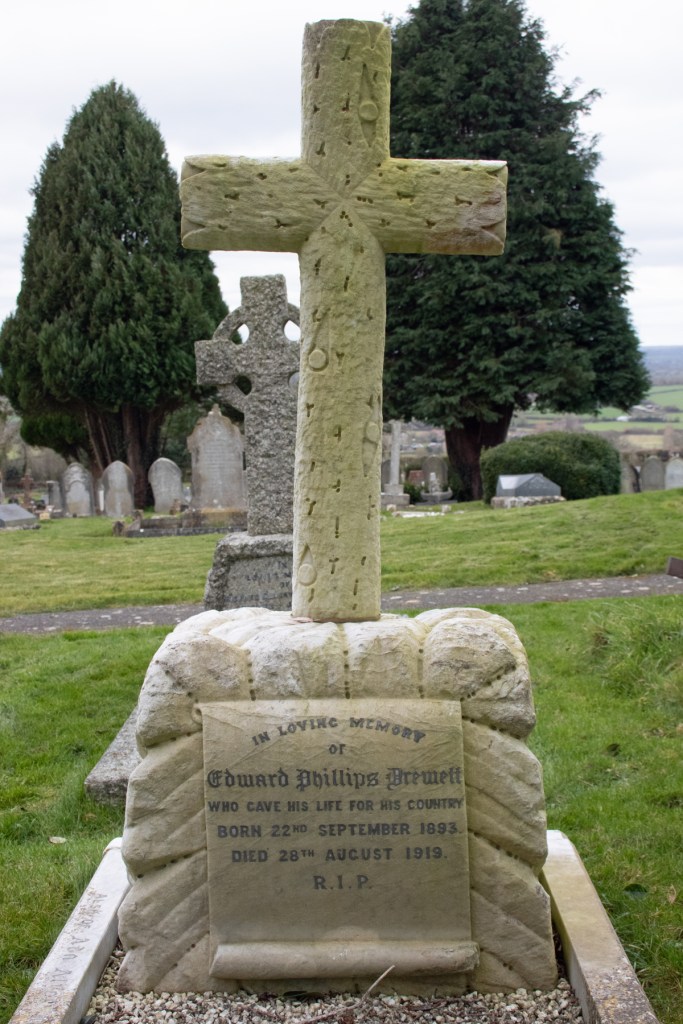
Edward Phillips Drewett was born on 22nd September 1893 in the Somerset town of Castle Cary. He was one of four children to Richard and Martha Drewett; his mother had been widowed before marrying Richard, and had a child from that marriage, Edward’s half-sister.

Richard was a solicitor’s clerk, but when he left school Edward found employment as a grocer’s assistant. It was this that he was doing when war broke out in 1914 and, in November 1915, he joined up to do his bit for King and Country.

Edward joined the 17th Battalion of the London Regiment as a Rifleman: his service records show that he stood 5ft 7.5ins (1.71m) tall, weighed in at 9st (57.2kg) and was of good physical development.

Rifleman Drewett ended up spending three-and-a-half years in the army, and travelled a lot. After nine months on home soil, he was sent to France, Salonika, Malta and Egypt, spending between four and nine months in each place. By July 1918, he was back in France, and by Christmas that year was on home soil again.

By this point, Rifleman Drewett was unwell, and suffering from nephritis – inflamed kidneys. The condition was severe enough for him to be stood down from the army, and he was formally discharged from military service on 31st March 1919, while admitted to the Bath War Hospital.

At this point, Edward’s trail goes cold. He passed away on 28th August 1919 and, while the cause is unclear, it seems likely to have been kidney-related. He was just 25 years of age.

Edward Phillips Drewett was laid to rest in the cemetery of his home town, Castle Cary.


Private Albert Withey

Private Albert Withey

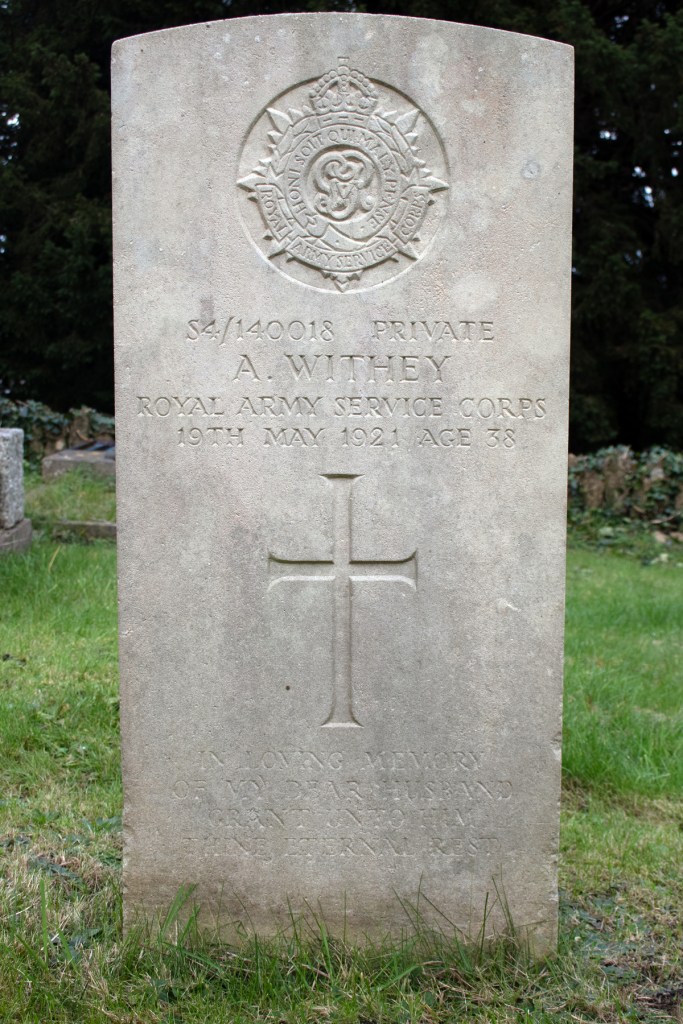
Albert Withey was born in Frome, Somerset in November 1882. One of ten children, his parents were John Withey, a coal dealer, and his wife Elizabeth. John passed away in 1891, Elizabeth eight years later, which led to Albert becoming an orphan while still in his teens.

Information on Albert’s early life is scarce and, indeed, his trail goes cold until 26th September 1915, when he enlisted in the Army Service Corps, as part of the war effort.

Private Withey’s service records give more insight into his life: he was 5ft 7ins (1.70m) tall, and had varicose veins on both legs. The document also confirms that he had married local woman Annie Louisa Stent on 2nd January 1912. Both attended Holy Trinity Church, and it is likely that this is where they met. Annie was the daughter of a local house painter, while Albert had become a baker; it is probable that it was this work that led him to be assigned to the ASC.

Within weeks of joining up, Private Withey was in Egypt, and it was here that he worked as part of the Supply Corps for the next four years. Albert remained in North Africa long after the Armistice was signed and, in fact, did not return to England until the August after the war had ended. He was officially demobbed on 30th September 1919.

At this point, Albert’s trail once again goes cold, and the next document relating to him is a short notice in the Somerset Standard, two years later, when, “at Pensions Hospital, Bath, Albert Withey, aged 38 years, [died] after a long and painful illness, patiently borne.[Somerset Standard: Friday 27th May 1921]

Albert Withey was laid to rest in the graveyard of the church in which he was baptised and married, Holy Trinity Church, Frome.


Albert’s widow, Annie, was the sister of Bertie Stent, who had also died after coming home from war. Read his story here.


Corporal Bruce Chapple

Corporal Bruce Chapple

Bruce Chapple was born in the autumn of 1893, the youngest of four children to Frederick and Elizabeth Chapple. Frederick was born in Newton Abbot and ran the managed a public house in the town (now the Locomotive Inn), although the 1901 census also listed him as a tobacco pipe manufacturer.

According to the next census – in 1911 – Bruce had taken over the pipe making, which meant that Frederick was devoting his time to being a publican. By this time, Bruce had another interest; military service. He had volunteered for the Devonshire Regiment in October 1909 and, over the next few years, the 5ft 3.5ins (1.61m) tall teenager received training in and around the county.

When war broke out in 1914, Private Chapple was formally enrolled and, as part of the 1st/5th Battalion, he set out for India that October. Initially based in Multan – in what is now Pakistan – he subsequently moved on to Lahore.

Bruce spent a total of two-and-a-half years in India, receiving a promotion to Lance Corporal in the process. In March 1917, his battalion transferred to Egypt, and the now Corporal Chapple went with them.

On 23rd November, Bruce was wounded in action, receiving a gun shot wound to his left thigh; he was not medically repatriated for treatment, but appears to have recovered from his injury and remained in Egypt until July 1918.

Back home in England, Corporal Chapple remained in the army for a further couple of months, before he was discharged as being no longer medically fit for service in September. Sadly, the cause for his discharge is lost to time.

It is at this point that Bruce’s trail goes cold. The next available record is of his death, on 16th November 1919; he was 26 years old.

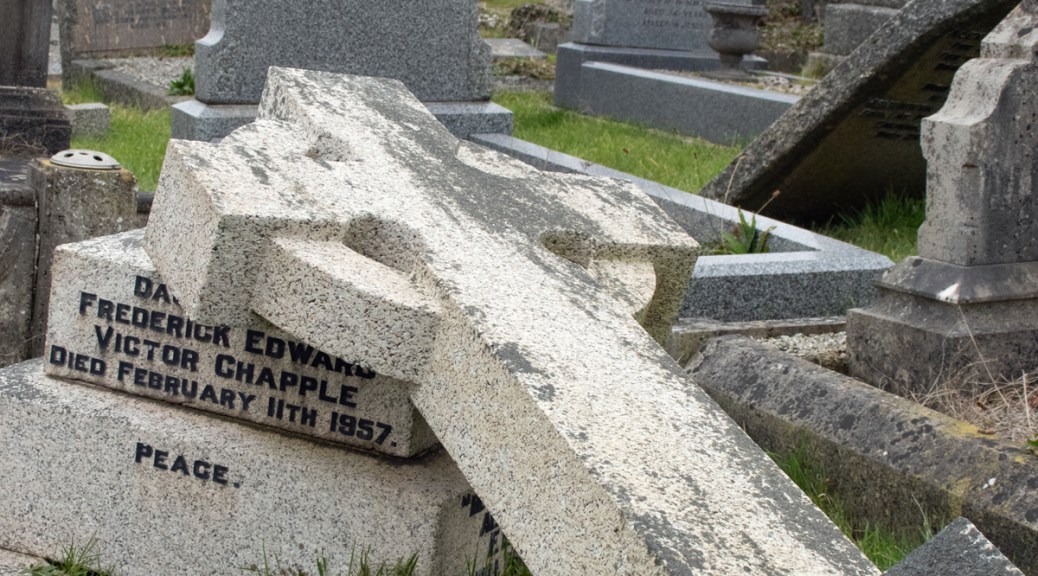
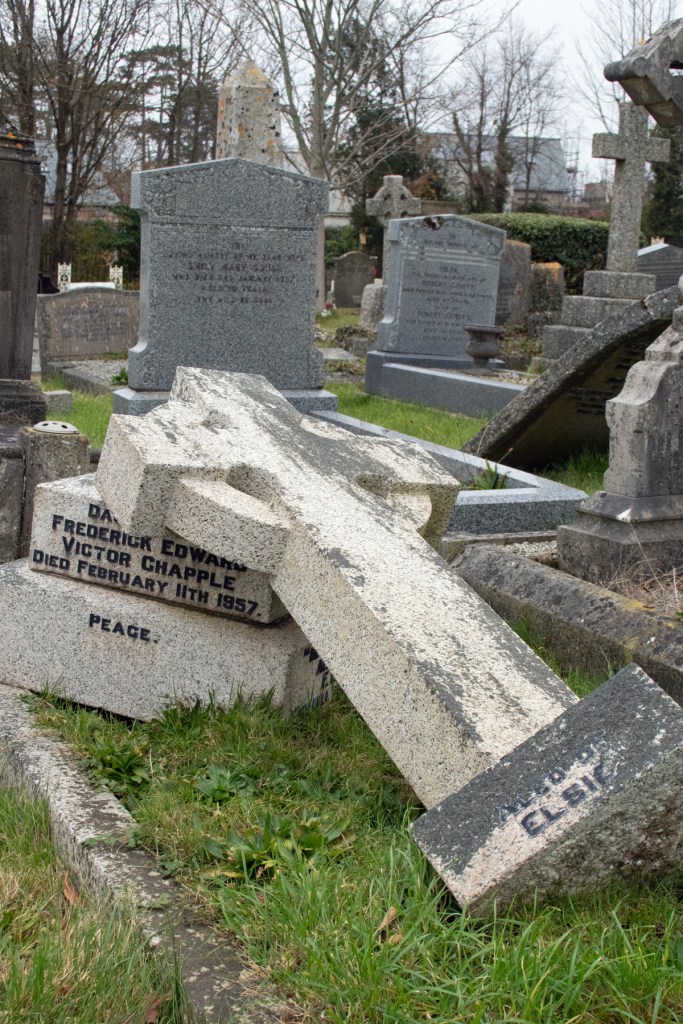
Bruce Chapple was laid to rest in the family plot in Newton Abbot Cemetery.


Private Arthur Srodzinski

Private Arthur Srodzinski

Arthur Reginald Srodzinski was born in Paignton, Devon, in October 1890. His great grandfather Stanislaus was born in Poland and emigrated to Devon in the early 1840s. He was an upholsterer, and this is a trade that his son Samuel, and his grandson – Arthur’s father – Henry also followed. Henry and his wife, Sarah, had five children, of which Arthur was the middle one; by the time of the 1901 census, Henry has moved the family to Newton Abbot.

Arthur wanted bigger and better things than upholstering, and sought out a career in the army. In March 1909, he enlisted in the Devonshire Regiment as a Private. His service records show that he was 5ft 5ins (1.69m) tall, and weighed in at 131lbs (59kg). He has hazel eyes, brown hair and a fresh complexion.

Private Srodzinski enlisted for a period of twelve years (seven on active duty), and after his initial training, he was sent overseas. Over the next few years, he was posted to Malta, Cyprus and Egypt but, when was came to Europe, he returned to England, before heading to the Western Front.

Arthur’s time in France was not to be a long one – at the end of December 1914, he was medically evacuated to England, suffering from a heart condition. This was to turn out to be a serious issue, and he was formally discharged from the army on medical grounds just four months later.

Back in Devon, Arthur found work as a butcher and, in the autumn of 1917, he married local carpenter’s daughter Carrie Larkworthy; the couple set up home in Newton Abbot.

In March 1918, Arthur was attending a meeting of discharged soldiers at the Commercial Hotel in Newton Abbot, when he collapsed. Medical treatment was sought, but it proved too late; he had died of a heart attack. Arthur was just 28 years of age.

Arthur Reginald Srodzinski was laid to rest in Newton Abbot Cemetery. Three months later, Carrie gave birth to their one and only child, who she named Reginald.


Serjeant Edwin Lloyd

Serjeant Edwin Lloyd

Edwin Lloyd was born at the start of 1885 and was the youngest of ten children. His father, Henry, was from Bristol; while his mother, Mary, had been born in Ireland.

Henry had been a Serjeant in the armed forces, and his postings are reflected in the places where Edwin and his siblings were born. Henry and Mary’s oldest two children were born in Aden, Arabia (now Yemen), but by 1875, the family were back in England and their next oldest child was born in Dover, Kent. Sarah, the youngest of Edwin’s sisters, was born in Colchester, Essex the following year, but by 1879, Henry had left the army, and had moved the family to Frome, Somerset.

In his retirement, Henry took a job as a grocer, the family living above the shop on the main thoroughfare into the town. Edwin did not follow his father’s trade when he left school; instead the 1901 census lists him as a metal engineer, one of only two of the siblings still living above Henry’s shop.

Henry died in 1907 – a lot of the documentation about his life suggests he was a bit free about his age. The notice in the Somerset Standard announcing his passing gives his age as 69, although it is likely that he was closer to 80.

The following year, Edwin married Florence Emily Letchford in St Matthew’s Church, Bristol. Florence was the daughter of a travelling salesman, but their marriage record sheds more light onto Edwin’s life by this stage and he was recorded as a police constable.

Edwin’s time in the police seems to have been short-lived, however, as, by the census three years later, his role had reverted to memorial brass engraver.

War was coming to Europe, and, while Edwin’s full service records are not available, it’s possible to piece together some of his life in the army. He enlisted in 1915, joining the Dorsetshire Regiment, and was assigned to the 5th (Service) Battalion.

Edwin’s battalion fought at Gallipoli and served in Egypt, moving finally to France in the summer of 1916. He was obviously a diligent soldier, as, by the end of the conflict, he had made the rank of Serjeant.

A local newspaper reported on the end of his army life:

He had served with the forces for about four years, and on his way home from France he was taken ill, and was, when he arrived at home, in a somewhat critical condition. The fatigue of the journey told still further upon him, and he passed away three days after his arrival.

Somerset Standard: Friday 7th March 1919

Serjeant Lloyd’s pension record gives the cause his passing as influenza, pneumonia and syncope, sadly none of which were uncommon for soldiers returning from the front. He was just 34 years old when he died on 25th February 1919.

Edwin Lloyd was laid to rest in the Vallis Road Cemetery (also known as the Dissenters’ Cemetery) in Frome.