Tag Archives: illness

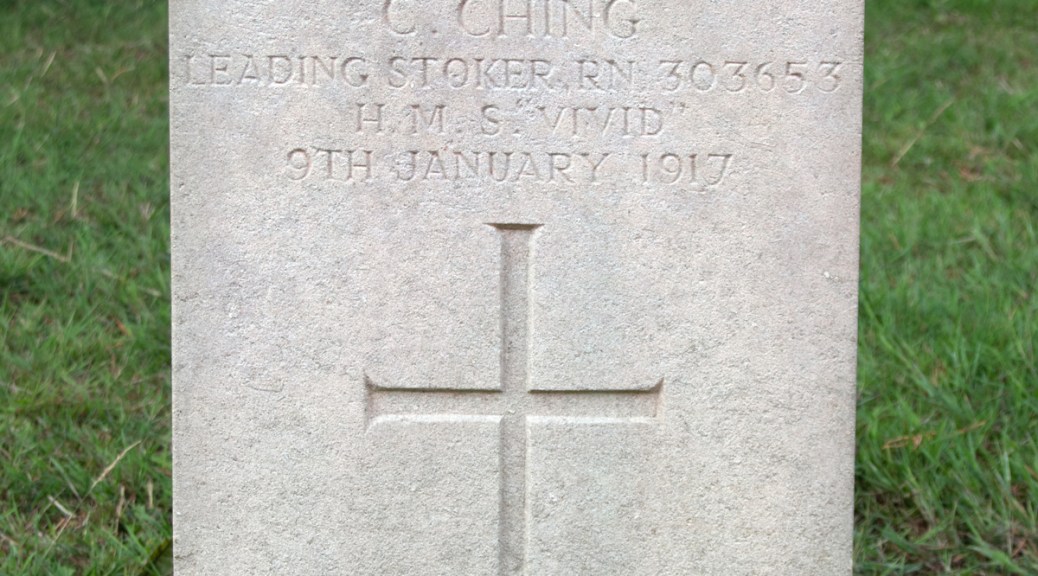
Leading Stoker Charles Ching

Leading Stoker Charles Ching

Charles Ching was born in Torquay, Devon, on 22nd March 1885. The oldest of three children, his parent were Joseph and Sarah Ching. Joseph died by the time Charles was just four years old. The 1891 census found Sarah living with their three sons – plus her other son from a previous marriage – on Pannier Street in Paignton. There is no evidence of work for any of the family, but it is likely that Charles’ half-brother, George, would have been bringing some money in, as he was 14.

Moving forward ten years, and Sarah was employed as a charwoman. Her three boys with Joseph were still at home, and Charles and his younger brother Henry were both working as errand boys.

Charles had his sights on bigger and better things, however, and on 21st March 1903, he enlisted in the Royal Navy. His service records show that he had given up a job as a gardener, and he would continue with manual labour, taking on the rank of Stoker 2nd Class. The document also confirms that he was 5ft 8ins (1.73m) tall, with brown hair, hazel eyes and a fresh complexion.

Throughout his naval career, Stoker Ching would be based out of HMS Vivid, the Royal Naval Dockyard in Devonport. Over the twelve years of his service, he was assigned to six ships, and rose through the ranks. In June 1904, he was given the rank of Stoker, and two years later was promoted to Stoker 1st Class.

On 1st July 1907, Charles was given a posting on board the cruiser HMS Forth. She would remain his home for five-and-a-half years, during which time, a number of things changed. A previously unblemished record was tainted by seven days in cells in November that year, although his misdemeanour is not noted.

In December 1908, Charles married Florence Tucker. The daughter of a carter from Totnes, her mother’s maiden name was Ching, although whether there was any connection to Charles’ late father is unknown.

On 1st September 1911, Charles was promoted again, taking on the rank of Leading Stoker. When his initial term of service came to an end in March 1915, war was raging around the world. He re-enlisted, and his records not that he had grown an inch (2.5cm) over the previous decade, but had also gained a number of tattoos. These included a woman’s head, a rose pierced by a sword and a Japanese woman on his right arm; there was also a peacock, clasped hand, heart and butterfly on his left.

Leading Stoker Ching’s health was beginning to suffer at this point, and by September 1915, he had returned to his short base, HMS Vivid. Suffering from pulmonary tuberculosis, he was invalided out the Royal Navy just a month later.

At this point, Charles’ trail goes cold. He seems to have settled in Totnes with Florence, her father having passed away there in 1915. His health was to get the better of him, however. He passed away on 9th January 1917 at the age of 31 years old.

Charles Ching was taken to Paignton for burial. He was laid to rest in the town’s cemetery.


Florence remained in Totnes after her husband’s passing. Her life there would not be a lengthy one: she passed away in March 1919, aged 29.


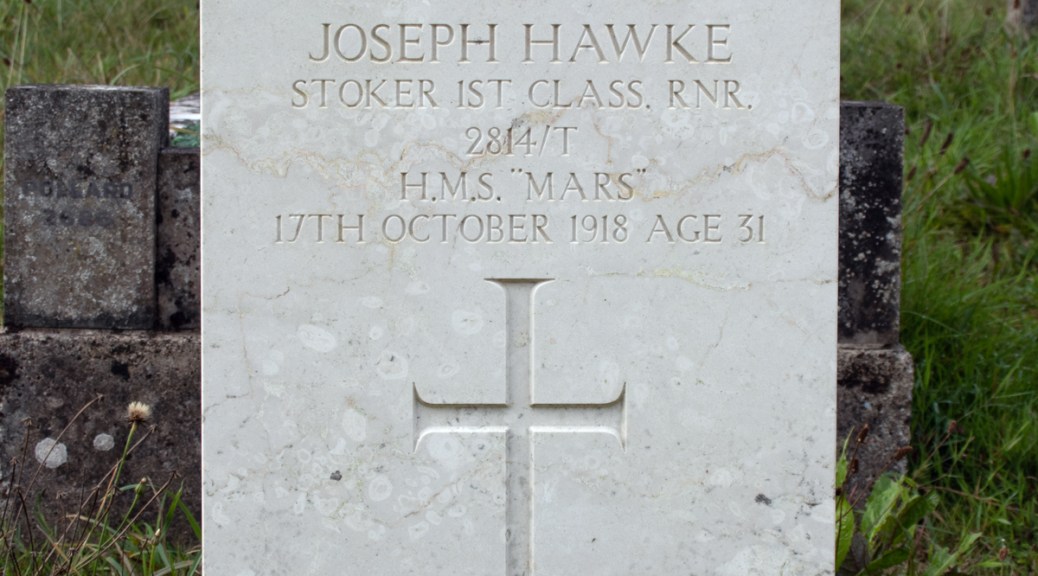
Stoker 1st Class Joseph Hawke

Stoker 1st Class Joseph Hawke

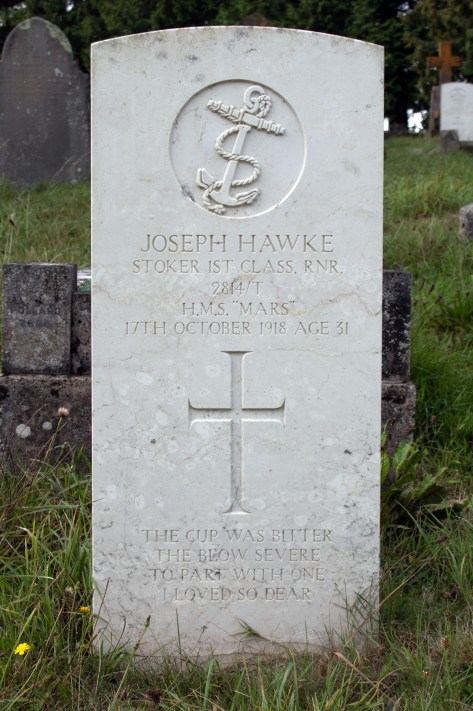
Joseph Hawke was born in Paignton, Devon, on 8th January 1887. Details of his early life are lost to time, although the 1891 census suggests that he was one of five children to Maria Hawke, who had been widowed by that point. The family had taken rooms at 104 Pembroke Street in Devonport.

When he finished his schooling, Joseph initially found work as a packer. However, possibly driven by his proximity to the Devon dockyards, he soon stepped up to take a job in the Royal Navy. Joining the training cruiser HMS Northampton, he was given the rank of Boy 2nd Class, as he was under the age to enlist.

Over the next few years, Joseph proved his mettle. In May 1904 he was promoted to Boy 1st Class and, when he came of age on 8th January 1895, he was formally inducted into the Royal Navy, taking the rank of Ordinary Seaman. His service papers show that he was 5ft 3ins (1.6m) tall, with fair hair, hazel eyes and a fresh complexion. It was also noted that he a mole on his right shoulder and abdomen, a scar on his chin, and tattoo marks on the back of his left hand and on his right forearm.

Ordinary Seaman Hawke would serve on three ships in total. On 26th February 1906 he became a Stoker 2nd Class, a role change that might be seen as a semotion, although his records suggest he was of very good character. By November 1906 Joseph had become Stoker 1st Class, but within twelve months, he gave up his life at see, buying himself out of the Royal Navy.

This change of heart may have been driven by love as, on Christmas Day 1908, he married Ellen Saunders, in Tower Hamlets, London. Their wedding certificate gives Joseph’s father’s name as cabinet maker George Hawke, but doesn’t suggest that he is deceased.

The document also gives Joseph’s job as a stoker, later confirmation suggesting that he was employed by the electrical works in Paignton, Devon. Joseph and Ellen would go on to have five children – Marie, Joseph, Albert, Harry and Ellen – between 1909 and 1917.

When war broke out, Joseph was called upon to play his part once more and, as part of the Royal Naval Reserve, he was assigned to HMS Gibraltar in November 1914. Over the next four years, he would serve as a Stoker 1st Class on four more ships, each time returning to HMS Vivid, the Royal Naval Dockyard in Devonport, in between voyages.

By the spring of 1918, Joseph’s health was struggling. He was medically dismissed from active service on 22nd May, and returned home to Paignton. His condition was to worsen, however, and on 17th October 1918 he passed away froma combination of dysentery and influenza. He was 31 year of age.

Joseph Hawke was laid to rest in Paignton’s sweeping cemetery, not far from his family home in Laura Terrace.


Rifleman Alfred Glastonbury

Rifleman Alfred Glastonbury

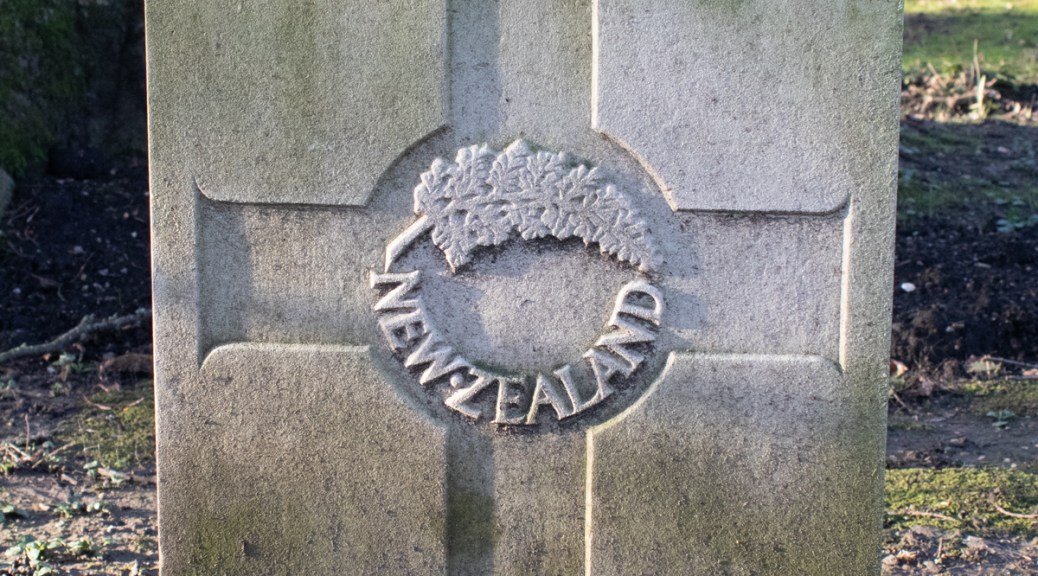
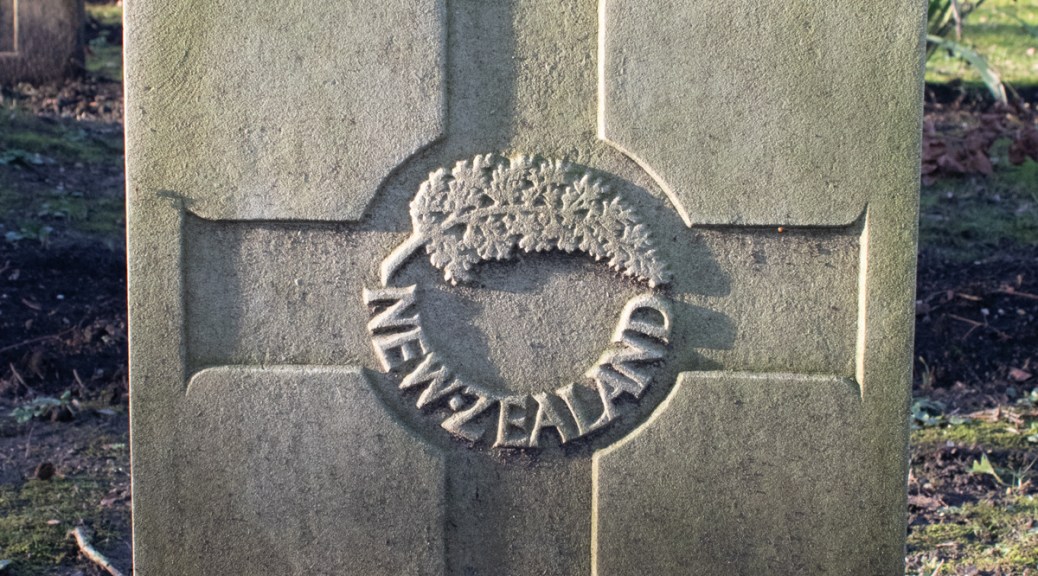
Alfred George Glastonbury – who was better known as Jack – was born on 26th June 1882 in Canvastown, New Zealand. The oldest of fourteen children, he was one of nine sons to Alfred and Matilda Glastonbury.

There is little concrete information about Jack’s early life. He found work with New Zealand Railways, and married Eliza Taylor on 30th January 1904. The couple had a son – also called Alfred – on 2nd December 1908, but Eliza passed away just a couple of weeks after he was born.

Jack married a second time in July 1914, to Ann Leeks. Setting up home in Ohingaiti, they went on to have three children: John, Norah and Harold.

When war came, men of the Empire were called upon to play their part. Jack enlisted on 30th May 1916, and was assigned tot he New Zealand Rifle Brigade. His service records show that he was 5ft 4ins (1.63m) tall, and weighed 182lbs (82.6kg). He had light brown hair, blie eyes and a fair complexion: he was also recorded as never being absent from his job as a surfaceman through sickness or accident, but did have signs of varicose veins in his left leg.

Rifleman Glastonbury’s unit departed from Wellington on 25th September 1916. The troop ship Devon arrived in Devonport, England, two months later, and the regiment marched to Sling, near Bulford, Wiltshire, where they would be based.

Jack’s time there would be brief, however. He was admitted to the No. 3 New Zealand General Hospital in Codford on 3rd December, suffering from gastritis. He would succumb to the condition quickly, passing away on 5th December 1916: he was 34 years of age.

Alfred George ‘Jack’ Glastonbury was laid to rest in the ANZAC extension to St Mary’s Churchyard, Codford, cloe to the hospital in which he had breathed his last.


Rifleman Alfred Glastonbury
(from findagrave.com)

Private Alfred Darch

Private Alfred Darch

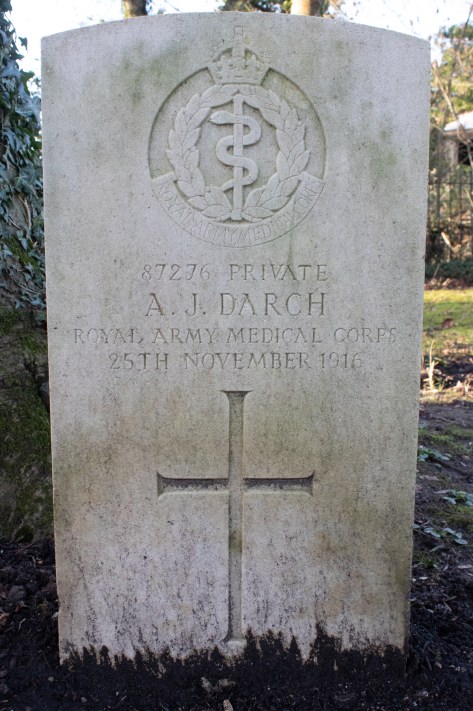
Alfred James Darch was born early in 1884, the second of seven children to James and Emily Darch. James was a postman and labourer from Somerset, but the family were brought up in Devon village of Clayhidon.

By the time of the 1901 census, the family had moved over the border to Wellington. Alfred had completed his schooling, and was working as a showmaker’s assistant. He committed himself to the role, and by 1911 was a shoemaker in his own right. By this point he was one of two of the Darch children to still be living with his parents: the family were settled at 22 Eight Acres Lane in Wellington.

When war broke out, Alfred stepped up to play his part. On 19th October 1916 he enlisted, joining the Army Medical Corps. His service records show that he was 5ft 4ins (1.63m) tall. They also suggested that his right leg was slightly shorter than his left, following an old dislocation. Private Darch had also had an operation for appendicitis five years previously.

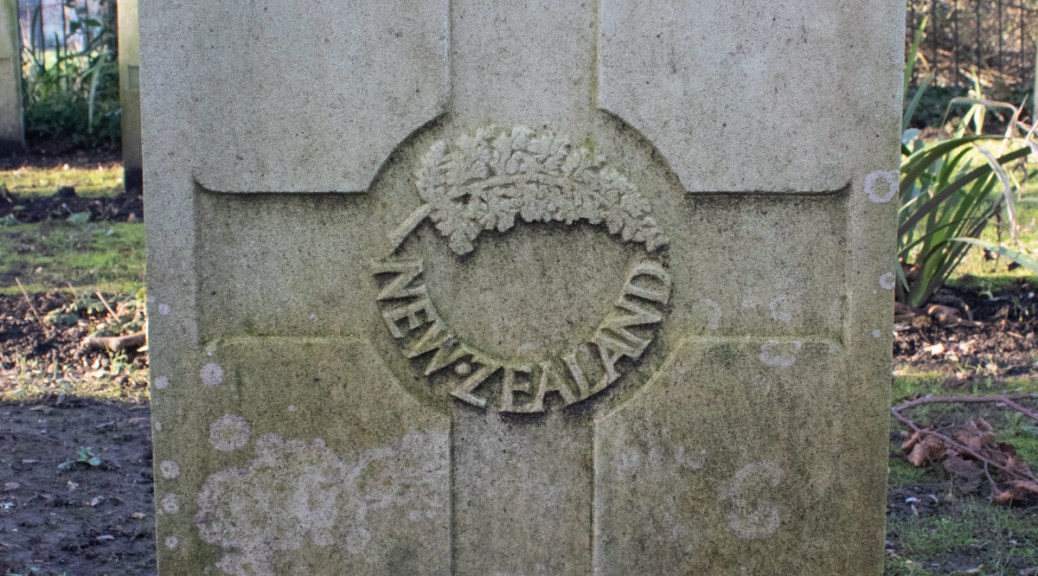
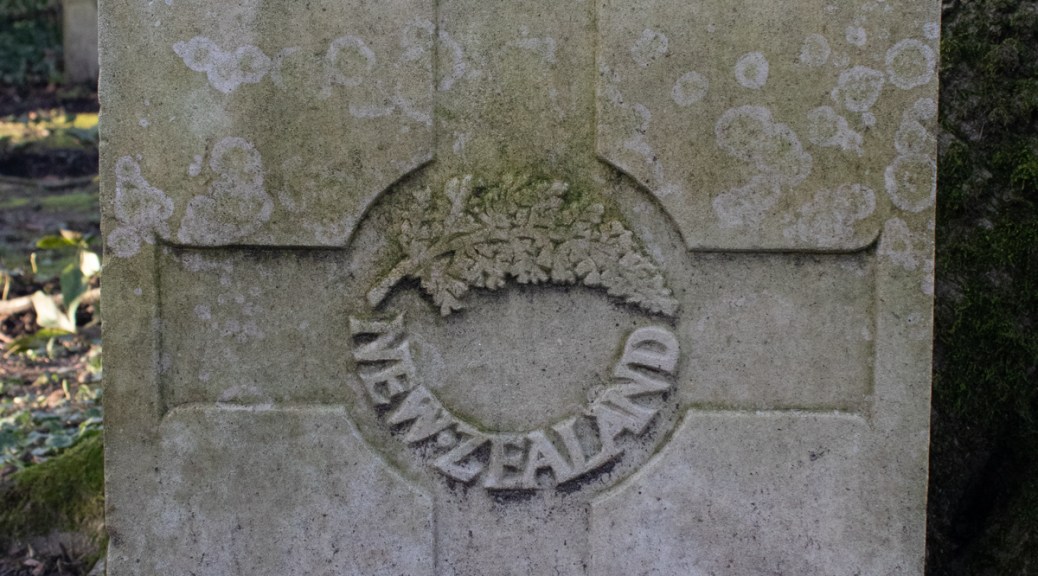
Alfred was sent to Codford, Wiltshire, where the No. 3 New Zealand General Hospital was located. His time there was to be tragically short, however. On 17th November he was admitted himself, suffering with some breathing complications. The medical report noted that he was “vaccinated a fortnight ago. Bad, sore, inflamed arm. Reported sick eight days later with general malaise, slightly sore throat, slight headache – some cough. He had one anti-typhoid inoculation 2 or 3 days before vaccination… Has had no [previous] chest trouble… Face flushed. Temp 104.8. Pulse 100. Tongue white in centre, red at sides. Breath extremely foul. Voice hoarse. Breathing quiet. Not distressed.”

Over the nest week, Private Darch’s health deteriorated. Pleurisy was suggested, but when he passed away, at 5:45am on 24th November 1916, the diagnosis was pneumonia. He was 32 years of age.

Alfred James Darch was laid to rest in the extension to St Marys Church, Codford, not far from the base to which he had been sent just weeks before.


Rifleman Edward Foster

Rifleman Edward Foster

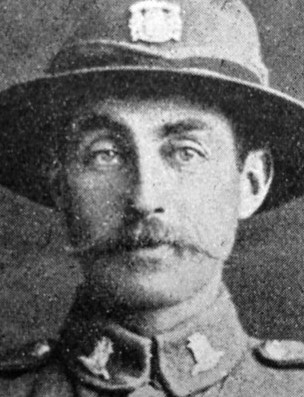
The early life of Edward Foster is destined to remain lost in the mists of time. Born in Sydenham, Christchurch, New Zealand on 16th May 1883, the only family connection available is Arthur Norman, a half-brother.

By 1916, Edward was working as a labourer and living in the British Empire Hotel in Gisborne. At this point, however, war was raging across the world, and New Zealanders were being called upon to serve their King.

Edward stepped up to play his part, and his service records confirm the man he had become. At 32 years of age, he stood 5ft 9ins (1.75m) tall and weighed 11st 4lbs (71.7kg). He had light brown hair, blue eyes and a fair complexion and, interestingly, his medical report notes that, while he was fit to serve, he was of very deficient intelligence. Edward’s papers also report that in around 1906 he had spent two months in a Wanganui prison.

Assigned to the New Zealand Rifle Brigade, Rifleman Foster’s unit set sail from Wellington on 19th August 1916. Their ship, the SS Aparima, would arrive in Devonport, Devon towards the end of October. Edward spent nearly three weeks of the of the voyage in the ship’s hospital, suffering from influenza.

When the brigade arrived in Britain, they were marched to camp in Sling, near Bulford, Wiltshire. Rifleman Foster’s health was still causing issues, however, and, on 10th November 1916, he was transferred to the No. 3 New Zealand General Hospital, near the Codford ANZAC base. He was suffering from bronchial pneumonia, and this was to take his life. He died on 14th November 1916, at the age of 33 years old.

Edward Foster was laid to rest in the new extension to St Mary’s Churchyard in Codford. Thousands of miles from home, he was surrounded by tens of his army colleagues.


Rifleman John Delaney

Rifleman John Delaney

Little information is available on the early life of Rifleman John Delaney. Born in Launceston, Ausrtalia, on 31st January 1888, by the summer of 1916 he was working as a shepherd in the New Zealand settlement of Whatatutu.

It was here that he enlisted in the country’s Expeditionary Force, and was assigned to the Rifle Brigade. His service records note that, at 28 years of age, he was 5ft 9ins (1.75m) tall and weighed 143lbs (64.9kg). The record confirms that he had fair hair, grey eyes and a fair complexion. He had tattoos on both forearms, and a scar on his left foot. The service docmentation also gives his next-of-kin as his friend, Mr G Garrett of Springbank, near Canterbury, on New Zealand’s South Island.

John’s unit boarded the TSS Maunganui in Wellington on 15th November 1916, embarking on the ten week voyage to Britain. Arriving in Devonport on 29th January 1917, Rifleman Delaney arrived at the ANZAC camp in Codford, Wiltshire, a few days later.

The journey had taken its toll on a lot of the newly arrived troops. John was admitted to the No. 3 New Zealand General Hospital on the outskirts of the camp with pneumonia on 10th February. His condition was to prove too severe, however, and he passed away just seven days later. He was 29 years of age.

John Delaney was laid to rest in the specially extended graveyard of St Mary’s Church in Codford.


Across the available documentation, John’s rank is given as both Private and Rifleman. I have used the latter rank, as this is what is provided by the Commonwealth War Graves Commission.


Rifleman John Delaney
(from findagrave.com)

Private Charles Tombs

Private Charles Tombs

Charles Tombs was born on 26th November 1875 in Sefton, New Zealand. The seventh of eight children, his parents were Job and Elizabeth Tombs.

There is little information available about Charles’ early life. He found work as a chainman, working as a labourer in a sawmill.

On 11th December 1899, Charles married Eliza Pound, the daughter of immigrants from Somerset. The couple settled in Wairau, and went on to have six children: John, Charles, Arthur, William, Ronald and Alice.

(The Tombs and Pounds seemed to have been closely connected: Charles’ younger brother John, went on to marry Eliza’s younger sister, Elizabeth.)

Sadly, Eliza died in 1910, leaving Charles to raise four children (John and Alice having died when just babes-in-arms), alone. A later document gives Charles’ next-of-kin as Mrs R Register, who was, in fact, his younger sister, Mary (who had married Robert Register in 1907).

War was coming, and Charles would be called upon to serve his long-distant King and Empire. On 26th July 1916, he stepped up, and enlisted in the New Zealand Canterbury Regiment. His service records show that, at 40 years of age, he was 5ft 5ins (1.65m) tall, and weighed 119lbs (54kg). He had brown hair, blue eyes and a dark complexion.

Private Tombs’ unit departed from New Zealand on 15th November 1916, making the journey to Britain on the RMS Tahiti. The journey took nearly three months, and Charles arrived in Devonport, Devon, on 29th January 1917.

The ANZAC camp near Codford, Wiltshire, was to be Private Tombs ultimate destination, and he arrived there a couple of days after landing in Britain. After a lengthy journey, his health had been impacted, as had many of the men he had travelled with.

Suffering from bronchitis, Charles was admitted to the No. 3 New Zealand General Hospital on the outskirts of the camp. The condition was to prove his undoing, and he passed away on 17th February 1917. He was 41 years of age.

Charles Tombs was laid to rest in the ANZAC extension to St Mary’s Churchyard in Codford, Wiltshire.


Private Charles Tombs
(from findagrave.com)

Chief Stoker William Beadle

Chief Stoker William Beadle

William Henry Beadle was born in Heybridge, Essex, on 23rd April 1870. The youngest of three children his parents were William and Sophia Beadle. William Sr was a waterman-turned-labourer, and the young family lived with Sophia’s parents.

When Sophia died in 1875, her widow and their children remained with his in-laws. William Sr died in 1887, and by the time of the 1891 census, his son was living with his now widowed grandmother. The document notes that she was a pauper, but he was a moulder in the local iron works.

William sought bigger and better things and, on 13th August 1891, he enlisted in the Royal Navy as a Stoker 2nd Class. His service records show that, as 21 years of age, he was 5ft 8ins (1.72m) tall, with brown hair, grey eyes and a fresh complexion.

Stoker Beadle was initially sent to HMS Pembroke, the Royal Naval Dockyard in Chatham, Kent, for his training. He would spend the next six months split between there and HMS Wildfire, a shore establishment downriver at Sheerness.

In 1892, William spent six months on board the troop ship HMS Tyne. He returned to Chatham in July of that year, and was promoted to Stoker 1st Class. Over the course of the next eleven years, he would go on to serve on four ships, each time returning to his base port, HMS Pembroke.

William’s service record is pretty much mark free. He was confined to cells for seven days in October 1895, although his offence s unclear. In April 1896 he was promoted to Leading Stoker 2nd Class, and made Leading Stoker 1st Class three years later. In December 1902, while on board the cruiser HMS Diana, William was promoted again, to Acting Chief Stoker, and the following August, his initial contract of service came to an end.

By this point William was a married man. He married Clara Walford in Rochford, Essex, and, while the couple did not go on to have children, there is little additional information about her.

William re-enlisted as soon as his initial twelve-year contract came to an end. In December 1903 he was promoted to Chief Stoker, and he remained at this rank until he war formally retired on 16th August 1913. He had spent more than two decades in the Royal Navy ,and travelled the world: the 1911 census recorded him as one of the crew of HMS Lancaster, moored in Malta.

Chief Stoker Beadle’s time away from the Royal Navy was not to be lengthy and, when war broke out less than a year later, he was called upon once more. He spent nine months back at HMS Pembroke, before being assigned to the new cruiser HMS Calliope. She would be William’s home for the nearly three years, and it was not until March 1918 that he came back to shore.

William’s return to Chatham seemed to coincide with a downturn in his health. He was admitted to the town’s Royal Naval Hospital with nephritis, and this is what would take his life. He died on 8th March 1918: he was 47 years of age.

William Henry Beadle was laid to rest in the military section of Woodlands Cemetery, Gillingham, not far from the naval base he had called home for so long.


Able Seaman Arthur Crisp

Able Seaman Arthur Crisp

Arthur Edward Crisp was born in 16th March 1899 in the Norfolk village of South Creake. The youngest of six children, his parents were blacksmith Henry Crisp and his wife, Sarah.

When war broke out across Europe, young Arthur had already had some experience of seamanship, and was keen to play his part. He joined the Royal Navy on 7th April 1915 and, given his age, he was assigned the rank of Boy 2nd Class. Initially sent to HMS Powerful, he was trained there for three months, rising to the rank of Boy 1st Class.

On 26th July 1915, Arthur was assigned to the battlecruiser HMS New Zealand, and would remain on board for the next two years. During this time, he came of age, and was formally inducted into the Royal Navy as an Ordinary Seaman. His service records show that he was 5ft 5ins (1.65m) tall, with brown hair, grey eyes and a fresh complexion.

His stint on New Zealand also exposed him to naval warfare, as she was heavily involved in the Battle of Jutland in May 1916. Ordinary Seaman Crisp came through, however, and remained part of the battlecruiser’s crew for a further year.

After a short time on shore, where he was based at HMS Victory, the Royal Naval Dockyard in Portsmouth, Hampshire, Arthur’s next posting was on board HMS Wallington. A former trawler, she had been converted to a boom defence vessel, she protected the dockyard in Grimsby. In November 1917, while based in the Lincolnshire town, Arthur was promoted again, rising to Able Seaman.

The following March, Arthur moved again, and was assigned to HMS Attentive, the shore base for the Dover Patrol. He would not remain there for long, however, and was admitted to the Royal Naval Hospital in Chatham, Kent. He passed away on 17th March 1918, from an intriguing combination of gunshot wounds to his chest and pneumonia. He had turned 19 years old the day before.

The body of Arthur Edward Crisp was taken to nearby Gillingham for burial. He was laid to rest in the military section of the town’s Woodlands Cemetery.


Able Seaman Arthur Crisp
(from findagrave.com)

Matron Jean Walker

Matron Jean Miles-Walker

Jean Nellie Miles Walker was born in Hamilton, Tasmania, on 16th November 1878. Her parents were Arthur and Louisa Walker, and her surname moves from Walker to Miles-Walker, depending on the document. There is little information about Jean’s early life, but by 1906 she had taken up nursing.

When war broke out, Jean was quick to step up and help those who were fighting. Initially enlisting on 27th September 1914, she was assigned to a hospital ship a year later, arriving in Ismailia, Egypt, in January 1916.

Now a Sister in the Australian Army Nursing Service, Jean’s records shot the woman she had become. At 36 years of age, she was 5ft 10ins (1.78m) tall, and weighed 128lbs (58kg). She had dark brown hair, brown eyes and a dark complexion.

Over the next couple of years, Sister Walker moved to where she was needed. By September 1916 she was attached to the No. 15 General Hospital in Alexandria, by the end of the year saw her in the 3rd Australian Auxiliary Hospital in London. Jean’s service records note that she was mentioned in despatches on 1st October 1916, but there is no clarification about why she was recognised.

Jean was promoted to Matron in the summer of 1917, and over the next year, she spent time at hospitals in both Britain and France. By the autumn of 1918, she had moved to the No. 1 Australian General Hospital in Sutton Veny, Wiltshire. It was while based here that she fell ill, contracting a fatal combination of influenza and pneumonia.

Sister Walker passed away in the Sisters’ Quarters on 30th October 1918. She was just a couple of weeks short of her 40th birthday.

Jean Nellie Miles Walker was laid to rest in the grounds of St John’s Church, Sutton Veny, close to the hospital in which she had served.


Matron Jean Walker
(from findagrave.com)