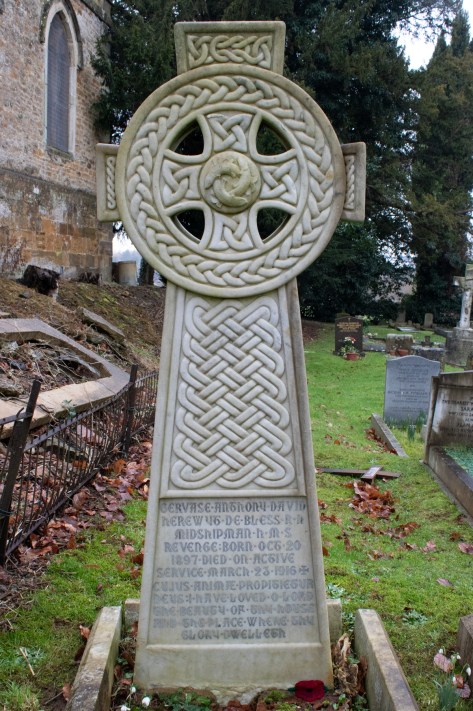
Tag Archives: London

Private Frank Cattermole

Private Frank Cattermole

Frank James Cattermole was born in 1899 in the Australian town of Jeparit, Victoria. The third of eight children, his parent were William and Amelia Cattermole.

When Frank completed his schooling, he found work as a baker’s assistant but, when war broke out in Europe, he was keen to step up and play his part. He enlisted on 1st February 1917, joining the Australian Imperial Force.

After a year’s training on home soil, Private Cattermole’s unit – the 48th Battalion of the Australian Infantry – set off from Sydney on 22nd March 1918. The troop ship he was assigned to – A54 HMAT Runic – would take two months to reach its destination, London. Frank spent three weeks of the journey admitted to the ship’s hospital, although the condition is unclear.

Once disembarked, Private Cattermole was marched to the ANZAC camp in Codford, Wiltshire. He arrived there on 24th May 1918, to begin preparations for a move to the Western Front. This was not to happen, however, as he was admitted to the camp hospital on 1st June, suffering from bronchitis.

Over the next two weeks , Frank’s condition worsened, and eventually his body was too weak to take any more. He passed away on 14th June 1918, aged just 18 years old.

Thousands of miles from home, Frank James Cattermole was laid to rest alongside others from his battalion, in the ANZAC extension to St Mary’s Churchyard, Codford.


Private Frank Cattermole
(from findagrave.com)
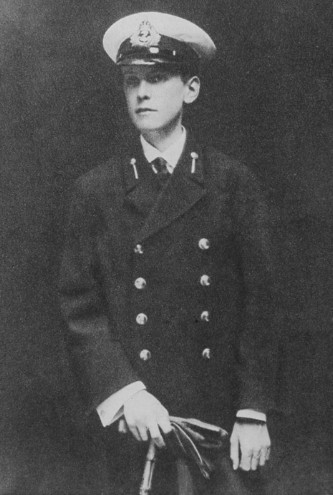
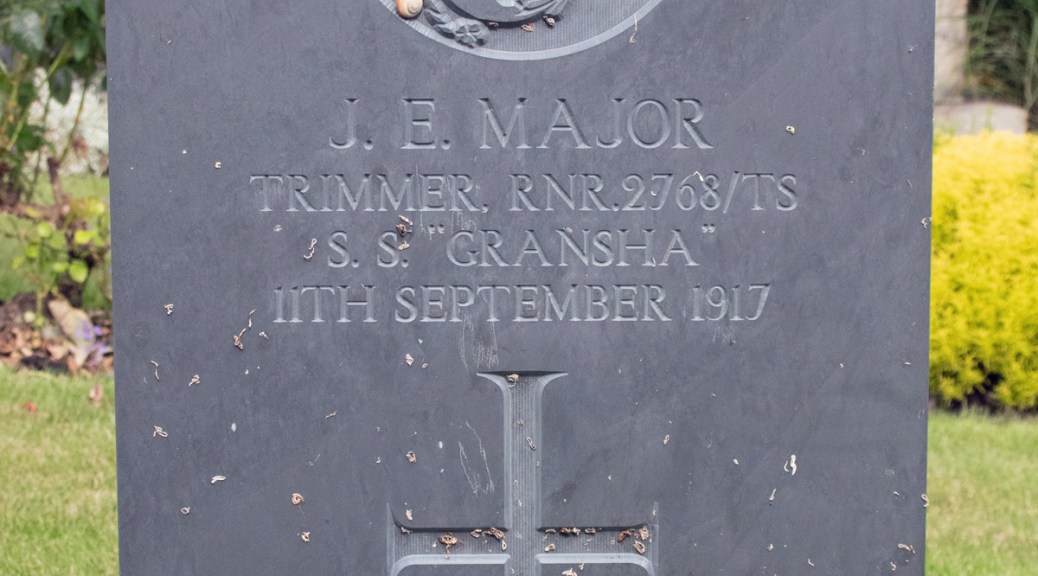
Leading Seaman William Coombes

Leading Seaman William Coombes

William Henry Marsh was born on 6th September 1879 in Whitstable, Kent. An only child, his parents were William and Maria Marsh, and, based on the census records, his early life seemed to have lacked some stability.

The 1881 census recorded William and his mother living on Beach Walk in the town. Marias was recorded as being a mariner’s wife. By 1891, William and his father was living with Maria’s sister and son. Still a mariner, with his son also working as a seaman, William Sr was listed as being a widower.

A decade on, and William Jr’s life had taken a different turn and the 1901 census listed him living on Whitstable High Street. Working as a labourer in the harbour, he is recorded as having a wife, Julia, and a two-year-old son, also William. Sadly, there is no further information about either of them.

The next document for William Jr is his First World War service papers. It shows that he enlisted on 10th March 1915, his previous time at sea making him an ideal candidate for the Royal Naval Reserve. His is noted as being 5ft 7ins (1.7m) tall, with blue eyes and a fresh complexion. He also had a tattoo of clasped hands on his right forearm. The most interesting thing about this document, however, is the fact that William had chosen to go by the surname of Coombes.

Given the rank of Leading Seaman, William would spend the next couple of years serving mainly on shore, at bases in London and Devonport. By the spring of 1918, while attached to the SS Eastville, he was admitted to the Royal Naval Dockyard in Chatham, Kent. Suffering from anaemia and malaria, the conditions would take his life. He died on 19th March 1918, at the age of 38 years old.

The body of William Henry Coombes was laid to rest in the naval section of Woodlands Cemetery, Gillingham, Kent, not far from the dockyard he would have known.


William’s will left £114 (around £8200) to his widow Julia, who was by now living in Leeds, Yorkshire. At his request, however his war pension, however, was given to his aunt, Mrs Rose Rout, of Hull, Yorkshire.


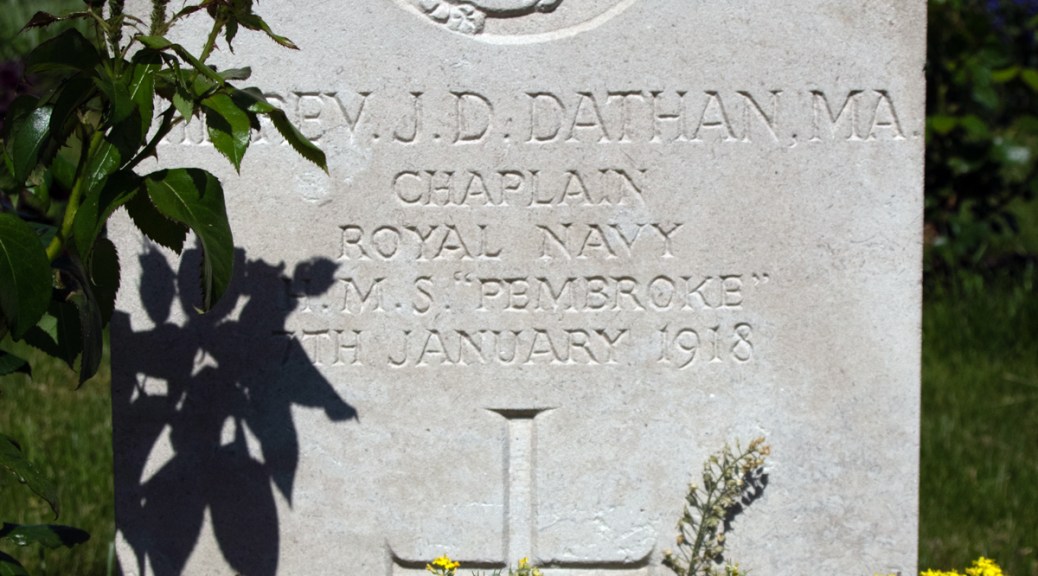
Reverend Joseph Dathan

Reverend Joseph Dathan

Much regret has been felt… at the death of Rev. JD Dathan MA, chaplain to the Royal Marines, at the age of 50 years. His death was due to pneumonia, caused by catching a chill while doing temporary duty… at the [Royal Naval Hospital, Chatham, Kent]. The eldest son of Captain JC Dathan RN, the deceased gentleman was educated at Christ’s Hospital and Cambridge, where he obtained the degree of MA. He entered the Royal Navy as a chaplain in 1896, and served on the China Station during the Boxer riots. For five years he was chaplain of Bermuda Dockyard and Hospital. He also served commissions in HMS Monmouth, Goliath and Russell. He was posted to the Royal Marine Barracks in July 1914, but on the outbreak of war he was appointed to HMS Formidable, and was transferred from the ship a week before she was lost. He was subsequently sent tot he Dardanelles for service in the Implacable at the first landing in April 1915. Later he joined the Italian Fleet, and was subsequently recalled to the Royal Marine Barracks. Three of the deceased officer’s brothers – Paymr.-in-Chief Ellis Dathan, Com. Hartley Dathan, and Eng.-Com. William Dathan – are serving in the Royal Navy.

[Naval & Military Record and Royal Dockyards Gazette: Wednesday 16th January 1918]

Joseph Duncan Dathan was born in 1866 in Halifax, Nova Scotia. The second of seven children, his parents were Joseph and Emma Dathan.

By the time of the 1891 census, the Dathan family had moved back to Britain. Joseph Sr and Emma were living in Portsea, Hampshire, while the younger Joseph was studying at Christ’s Hospital. The next return, taken in 1901, found him having taken up a role as curate at St John’s Church in Ipswich, Suffolk. He was, by this point, living on Foxhall Road on the western edge of the town.

On 25th February 1904, Joseph married Alicia Cane. The daughter of a vicar, she lived in Ipswich, and the couple married in the local parish church. By this point, Joseph was based in Portsmouth, Hampshire, and this is where the young couple set up home. Alicia gave birth to their first child, John, that November. The couple’s second son, Joseph, was born in 1906 and their third, daughter Alicia, was born in Bermuda while the family were stationed out there with Reverend Dathan’s work.

Joseph’s connection to the navy continued much as the newspaper reported. He died from pneumonia on 7th January 1918: he was 51 years of age.

Reverend Joseph Duncan Dathan was laid to rest in the naval section of Woodlands Cemetery in Gillingham, Kent, a place he would have known well, given its proximity to the Royal Naval Dockyard in Chatham, Kent, where he had been based.


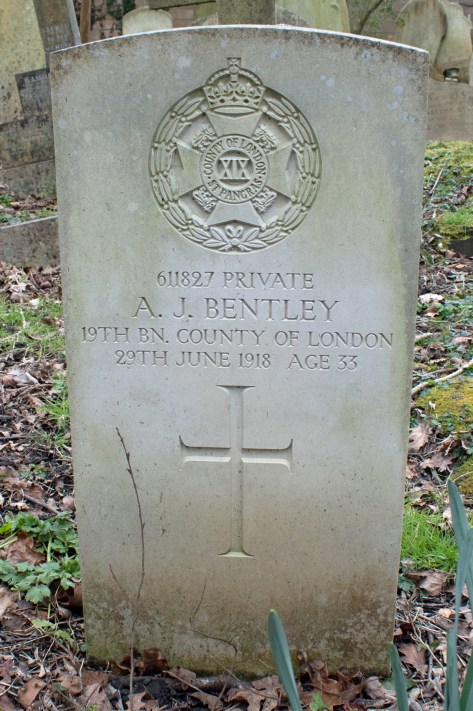
Private Albert Bentley

Private Albert Bentley

Albert John Bentley was born in St Pancras, Middlesex, in the spring of 1885. The second of six children, his parents were John and Eleanor (also known as Elizabeth) Bentley. John was a piano maker, and the family lived at 27 Hampshire Street in St Pancras.

When his father died in 1910, Albert had already started to follow in his footsteps. The following year’s census recorded him living with his mother and three younger siblings. Employed as an organ builder, his was one of three wages being brought into the household.

Albert stepped up to play his part when war broke out. Full details of his military service have been lost to time, but it is clear that he enlisted in the London Regiment, and was assigned to the 1st/19th (County of London) Battalion (St Pancras).

It is unclear whether or not Private Bentley spent any time overseas. By the summer of 1918, however, he had fallen ill, and was admitted to a military hospital in Shoreham-by-Sea, Sussex. He succumbed to a combination of influenza and pneumonia on 28th June 1918: he was 33 years of age.

The body of Albert John Bentley was taken back to Middlesex for burial. He was laid to rest in the sweeping grounds of Highgate Cemetery.


Lieutenant Thomas Prior

Lieutenant Thomas Prior

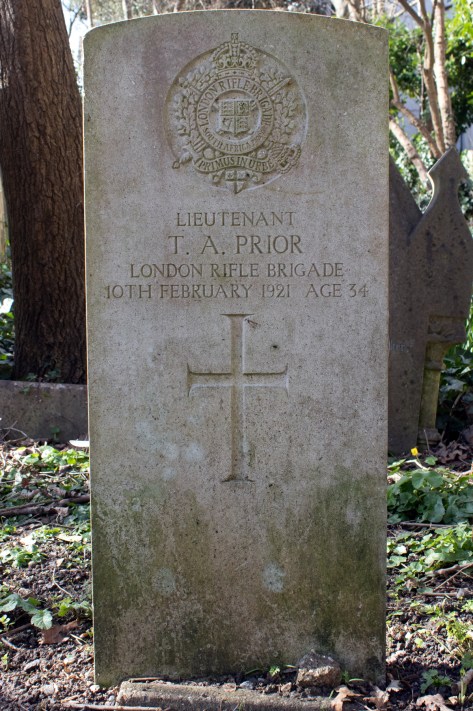
Thomas Ashley Prior was born in Islington, Middlesex, at the start of 1886. The third of seven children, he was the only son to Thomas and Ellen Prior. Thomas Sr was a colonial produce broker agent and, at the time of the 1891 census, the family were living in rooms at 115 Sussex Road.

Over the following years, the family lived together, but moved homes. By 1901 they were living at 1 Blythwood Road, Islington; ten years later they had set up home at 10 Oakfield Road, Stroud Green. By this point Thomas Sr was listed as being a rubber broker. Four of the children were employed in respectable trades: Thomas Jr as a bullion refiner’s clerk, his older sisters as a paper merchant’s clerk and a saleswoman for the court dressmaker. The youngest employed sibling, 22 year old Margaret, was also a clerk, for an estate agent. The family had a live in servant, Alice Charles, supporting them.

War rose its ugly head in 1914, and Thomas Jr stepped up to play his part. He was already a volunteer in army and, as a later military history confirms, he threw himself into a more permanent role:

PRIOR, THOMAS ASHLEY. Enlisted 1909. Served continuously and went to France with 1st Batt. Nov. 1914-May 1915 (wounded). 2nd Lieut. 28/9/15. Served in France again with 1st Batt. March-June 1916 and Nov. 1916-June 1918. Lieut. 1917. Sports. Member of Brighton March and Marathon Teams. Died 1921.

[The History of The London Rifle Brigade 1859-1919]

Thomas’ regiment – the London Rifle Brigade – was actually the 5th Battalion of the London Regiment. Based on his unit’s time abroad, it is likely what Thomas was wounded at Ypres – possibly during the Battle of St Julien. On his return to the front, he would have fought at Arras and Ypres in 1917, and at the Somme (Arras) the following year.

Lieutenant Prior’s return to Britain is not documented. HIs mother, Ellen, had died in 1912, and his father followed in 1918. The London City Directory for 1920 recorded him as living at 8 Oakfield Road, a double-fronted Victorian terrace within sight of Finsbury Park.

Thomas Ashley Prior died on 10th February 1921. Just 34 years of age, the cause of his passing is not clear. He was laid to rest in Highgate Cemetery, not far from his last recorded address.


Stoker John Webb

Stoker John Webb

John Robert Webb was born at the start of 1894, and was the youngest of eight children to William and Catherine Webb . William’s work as a wharf labourer found the family in Wapping, East London, and this is where John was born.

According to the 1901 census, the Webbs were living in rooms at 1 Meeting House Alley, close to the docks. William, Catherine and John were still living there in the next census, taken in 1911. By this point, John was 17 years of age, and employed as an office youth.

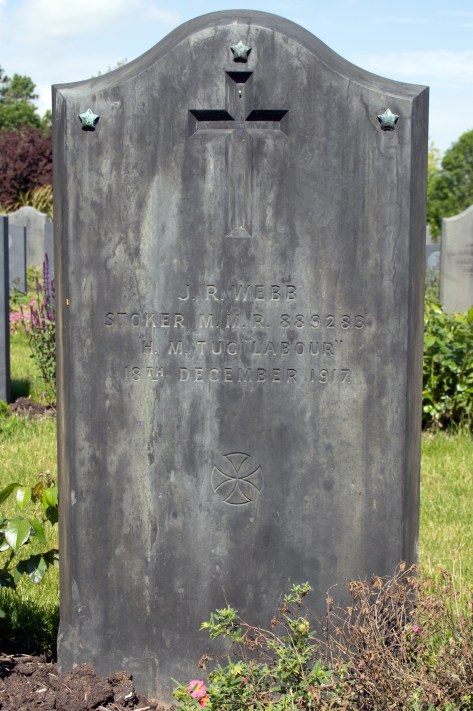
Over the next few years, John’s trail goes cold. By the time war broke out, he had changed careers, and was working as a Stoker for the Mercantile Marine Service. The boat he was assigned to – a tug named Labour – was based out of Chatham in Kent.

Sadly, there is only one more document connected to Stoker Webb, and that relates to his passing. His pension record confirms that he died on 18th December 1917 from an illness. While the location of his passing is unclear, it is likely to have been either at the Royal Naval Hospital in Chatham, or the town’s dockyard. He was 23 years of age.

The body of John Robert Webb was laid to rest in the military section of Woodlands Cemetery, Gillingham, Kent.


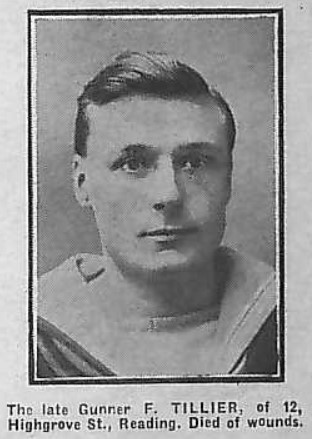
Leading Seaman Frederick Tillier

Leading Seaman Frederick Tillier

Frederick Francis Charles Vizzard was born on 12th December 1894 in Ottershaw, Surrey. The younger of two children, his parents were nurseryman Frederick Vizzard and his wife, Frances.

Details of Frederick Jr’s life are a challenge to unpick. Frederick Sr had died in 1909, and is seems that from this point on, he used his mother’s maiden name, Tillier, as his own. He found work as a labourer, and this is what he was doing when war broke out.

By this point Frederick had moved to Reading, Berkshire, and he was living in a small terraced house at 12 Highgrove Street. He enlisted in the Royal Naval Division on 18th October 1915, and was mobilised six months later.

Frederick’s records show that he was 5ft 7.5ins (1.71m) tall, with brown hair and grey eyes. He joined as an Able Seaman, which would suggest some previous experience, although there are no records to confirm this.

Able Seaman Tillier’s time in the navy seems to have been spent on shore. He was initially sent to Portsmouth, Hampshire, where he served on HMS Victory and HMS Excellent. On 19th December 1916, Frederick was reassigned to the Royal Naval Volunteer Reserve as a Leading Seaman, and sent to HMS President, the unit’s shore base near Tower Bridge in London.

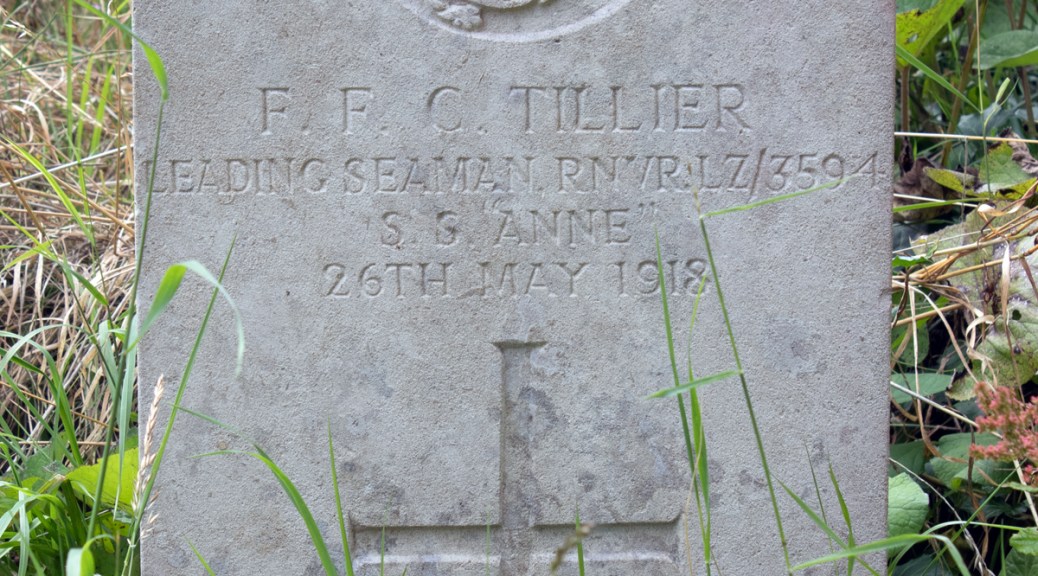
Frederick would remain attached to HMS President for the next couple of years. The next entry on his service papers states that he was admitted to the Cottage Hospital in Dartmouth, Devon, as he was very seriously injured. What those injuries were, and how he received them is unclear, but Leading Seaman Tillier would succumb to them on 26th May 1918. He was 23 years of age.

Frederick Frances Charles Tillier was laid to rest in the graveyard of St Clement’s Church in Dartmouth.


Leading Seaman Tillier
(from ancestery.co.uk)

Corporal Alexander Sturrock

Corporal Alexander Sturrock

Alexander Albert Sturrock was born in the autumn of 1877. The second of two children, he was the only son of Alexander and Elizabeth Sturrock. Alexander Sr was a plasterer from Scotland, while his wife had been born in Bristol. It was in the Pimlico area of Middlesex, however, that the couple would raise their two children: Alexander and his older sister Eleanor.

The 1891 census found the family living at 253 Wellington Buildings, on Ebury Bridge Road. According to the next census, however, they had taken rooms at 52 Warriner Gardens, south of the Thames in Battersea.

By 1901, the Sturrocks had moved north again, and were living at 7 Fulham Place in Paddington. One of three families in the house, Alexander Sr and Elizabeth shared the rooms with their son and Eleanor’s son, Leslie. Alexander Sr was still working as a plasterer, while his son was now employed as a clerk.

Alexander Jr married Edith Concanen in 1910. A widow, she had a son, Douglas, and the three of them lived in her family home on Camden Road, Sutton, Surrey. Alexander was working as a commercial accountant, and at some point in the next five years, the family moved to Paignton, Devon.

When war came to Europe, Alexander stepped up to play his part. He enlisted in Exeter on 17th November 1915, and joined the Devonshire Regiment. His service records note that he was 5ft 11ins (1.8m) tall and weighed 185lbs (83.9kg). He was also recorded as having Edith’s name tattooed on his left forearm.

Private Sturrock was mobilised the following June, and was attached the 3rd (Reserve) Battalion. He was promoted to Lance Corporal in August 1916, and transferred to the 8th (Service) Battalion. Shipped to France in December, he would spend the next eighteen months overseas.

Alexander had ongoing issues with his health, however, and was hospitalised at least three times with diarrhoea. In July 1918, he was transferred to the Labour Corps, and reassigned to home soil. Promoted to Corporal by this point, he was attached to the 114th unit, although it is unclear where he served.

Corporal Sturrock’s health continued to dog him. The Armistice signed, he was medically discharged with nephritis on 14th June 1919, and returned home. Sadly, his reunion with Edith was not to be a lengthy one. Alexander passed away on 25th July 1919: he was 41 years of age.

Alexander Albert Sturrock was laid to rest in Paignton Cemetery, overlooking the town he had most recently called home.


Private William Hasley

Private William Hasley

William George Hasley was born on 14th June 1897. He was the oldest of three children to William and Sarah Hasley. William Sr, a former soldier, worked as a commissionaire, and the family lived at 11 Coach & Horses Yard, St James, Westminster.

Things had changed by 1900, and William Sr was employed as an engineer’s labourer. The family had moved to Dorset, setting up home in the village of Bourton, and their daughter, Susan, was born there at the turn of the century. Susan Sr came from just up the road in Zeals, Wiltshire, and it is likely that she was staying there when her youngest child, Sidney, was born in 1902.

By the time of the 1911 census, the family of five were living at Beach Cottage, Bourton. William Sr was drawing his army pension, but still employed at the engineering foundry; his eldest son, while still at school, was also listed as a news boy, possibly selling the periodicals to villagers.

War came to Europe in the summer of 1914, and William Jr was quick to step up and play his part. Giving up his job as an engineer’s fitter, enlisted on 1st September 1914, and joined the Somerset Light Infantry. His service records show that he stood 5ft 8.5ins (1.74m) tall, and weighed 124lbs (56.3kg). Private Hasley was noted as having brown hair, brown eyes and a sallow complexion. He also had a scar on the tip of the middle finger of his left hand.

Assigned to the 3rd (Reserve) Battalion, Private Hasley’s unit moved to Devonport, Devon, at the start of 1915. It was here that he contracted tuberculosis, which would ultimately lead to his medical discharge from the army in July. He served just 308 days.

At this point, William’s trail goes cold. It is likely that he returned to Bourton, although he had regular check-ups by the army inspection board. He was deemed totally incapacitated by the illness on 3rd January 1917.

William George Hasley’s lung condition would seal his fate. He passed away on 23rd March 1917: he was just 19 years of age. He was laid to rest in Bourton Cemetery.


Stoker 1st Class Joseph Hawke

Stoker 1st Class Joseph Hawke

Joseph Hawke was born in Paignton, Devon, on 8th January 1887. Details of his early life are lost to time, although the 1891 census suggests that he was one of five children to Maria Hawke, who had been widowed by that point. The family had taken rooms at 104 Pembroke Street in Devonport.

When he finished his schooling, Joseph initially found work as a packer. However, possibly driven by his proximity to the Devon dockyards, he soon stepped up to take a job in the Royal Navy. Joining the training cruiser HMS Northampton, he was given the rank of Boy 2nd Class, as he was under the age to enlist.

Over the next few years, Joseph proved his mettle. In May 1904 he was promoted to Boy 1st Class and, when he came of age on 8th January 1895, he was formally inducted into the Royal Navy, taking the rank of Ordinary Seaman. His service papers show that he was 5ft 3ins (1.6m) tall, with fair hair, hazel eyes and a fresh complexion. It was also noted that he a mole on his right shoulder and abdomen, a scar on his chin, and tattoo marks on the back of his left hand and on his right forearm.

Ordinary Seaman Hawke would serve on three ships in total. On 26th February 1906 he became a Stoker 2nd Class, a role change that might be seen as a semotion, although his records suggest he was of very good character. By November 1906 Joseph had become Stoker 1st Class, but within twelve months, he gave up his life at see, buying himself out of the Royal Navy.

This change of heart may have been driven by love as, on Christmas Day 1908, he married Ellen Saunders, in Tower Hamlets, London. Their wedding certificate gives Joseph’s father’s name as cabinet maker George Hawke, but doesn’t suggest that he is deceased.

The document also gives Joseph’s job as a stoker, later confirmation suggesting that he was employed by the electrical works in Paignton, Devon. Joseph and Ellen would go on to have five children – Marie, Joseph, Albert, Harry and Ellen – between 1909 and 1917.

When war broke out, Joseph was called upon to play his part once more and, as part of the Royal Naval Reserve, he was assigned to HMS Gibraltar in November 1914. Over the next four years, he would serve as a Stoker 1st Class on four more ships, each time returning to HMS Vivid, the Royal Naval Dockyard in Devonport, in between voyages.

By the spring of 1918, Joseph’s health was struggling. He was medically dismissed from active service on 22nd May, and returned home to Paignton. His condition was to worsen, however, and on 17th October 1918 he passed away froma combination of dysentery and influenza. He was 31 year of age.

Joseph Hawke was laid to rest in Paignton’s sweeping cemetery, not far from his family home in Laura Terrace.