Tag Archives: malaria

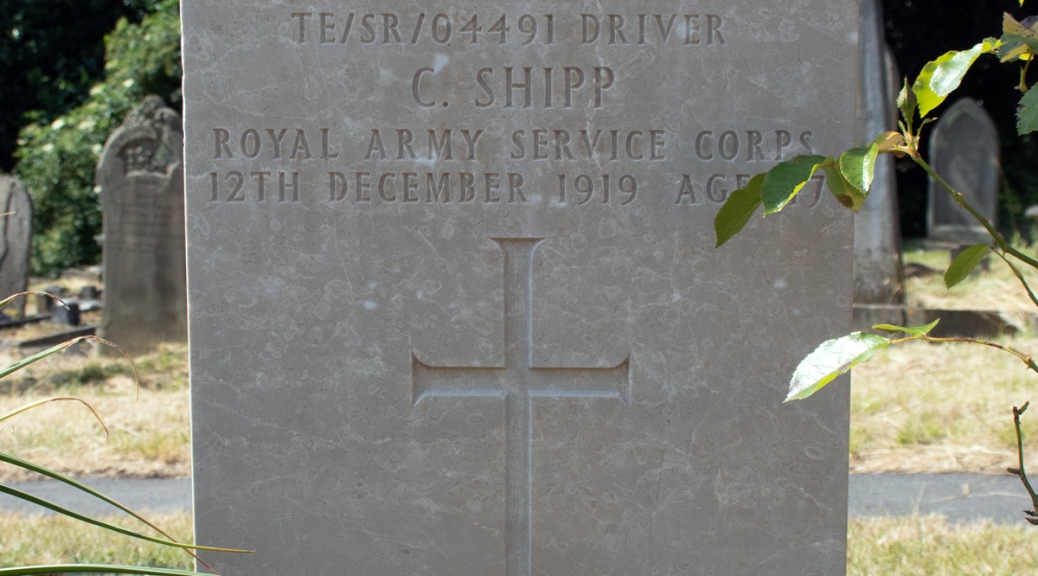
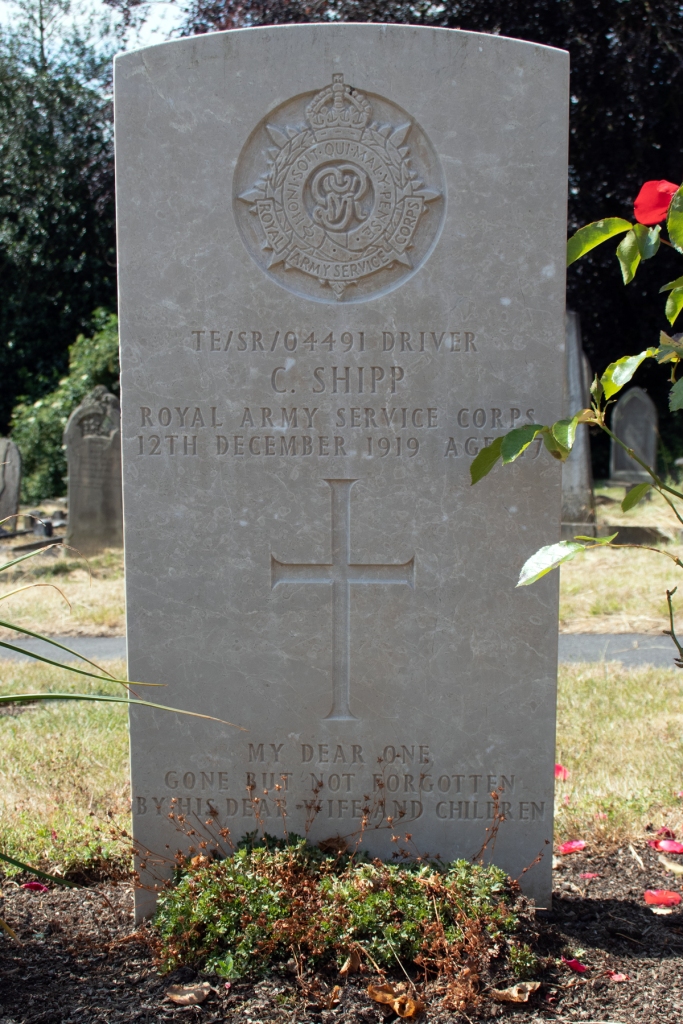
Driver Charles Shipp

Driver Charles Shipp

The early life of Charles Shipp is a challenge to unpick. Born Charles Morgan in Bath, Somerset, in 1872, his father was also called Charles. He found work as a labourer when he finished school.

Charles sought a life of adventure, however, and on 7th January 1890, he enlisted in the army, joining the South Wales Borderers. Private Morgan’s service records show that he was 5ft 5.5ins (1.66m) tall and weighed 116lbs (52.6kg). He had brown hair, grey eyes and a fresh complexion, with tattoos of crossed flags, a crown and VR on his left forearm.

Private Morgan spent three years on home soil, and is recorded as being based in North Camp Barracks in Farnborough, Hampshire, in the 1891 census. His battalion was sent to Egypt in December 1892 and spent the next three years overseas, moving to Gibraltar in the spring of 1895. The only details available for his time abroad relate to a couple of hospital admissions – for a fever in Cairo in August 1894, and for gonorrhoea in Gibraltar in the autumn of 1895. He returned to Britain at the end of November that year.

Charles appears to have been based in South Wales when he returned home and, on 20th December 1896, he married Lottie Walters in Llandough Parish Church. Interestingly, while the new bride’s father’s details are recorded – naval pensioner James Walters – Charles’ have been intentionally left blank. This is also the first document on which his surname is recorded as Shipp, so there seems to have been a deliberate distancing from his family at this point.

Charles was still committed to his military career. He served on home soil until January 1897, when he was placed on reserve, having completed seven years’ service. This respite was not to be for long, however, as he was recalled on three years later, and sent to South Africa, to fight in the Second Boer War.

Private Shipp, as he was now known, served in South Africa for more than two years, and was awarded the Johannesburg, Cape Colony, 1901 and 1902 clasps. In August 1902, he returned to Britain, and was formally stood down from army service.

Charles and Lottie moved to Bath, and set up home in a small cottage in Locksbrook Road. They went on to have seven children, all of them girls and, by the time of the 1911 census, Charles was working as a carter for the local gas works. His heart seems always to have been with his military career, however, and, when war broke out in 1915, he saw this as an opportunity to play his part once more.

On 25th October 1915, Charles enlisted in the Royal Army Service Corps as a Driver. His was not to be a war fought on home turf, and within a month, he was in the Mediterranean, potentially back in Egypt again. In April 1916, his battalion moved to Salonika, and he spent the next three years in Northern Greece.

Charles contracted malaria in the autumn of 1917, and this resulted in a hospital admission for just over two months. He returned to his unit, but spent another couple of months in a Macedonian hospital the following year when the condition recurred.

Driver Shipp survived the war, and returned to Britain in April 1919. His health was again suffering, and he was formally discharged from the army on medical grounds on 29th April.

At this point, Charles’ trail goes cold. He returned home to Lottie and their daughters, but there is nothing to account for the the last eight months of his life. He passed away on 12th December 1919, at the age of 47 years of age.

Charles Shipp was laid to rest in Bath’s majestic Locksbrook Cemetery, not far from where his family lived.


Major Montgomerie Boyle

Major Montgomerie Boyle

Montgomerie Boyle was born on 20th March 1859 in Hendon, London. The youngest of three children, his parents were John and Jane Boyle. John was a barrister, and the family lived in some comfort – the 1861 census found them living in a house in Harrow, Middlesex, with four live-in servants and a groom.

[Montgomerie] joined the South Notts Yeomanry 22 years ago. Subsequently he obtained an appointment at Weston-super-Mare, under the Somerset Territorial Force Association, and did much useful work in co-ordinating the Army Service Corps in the county.

Taunton Courier and Western Advertiser: Wednesday 2nd April 1919

In the spring of 1891, Montgomerie married Constance Smith. She was a banker’s daughter from Nottingham, and the couple tied the knot in Basford, now a suburb of the larger city. They went on to have a daughter, Marion, who was born the following year.

By the 1901 census, the young family had moved to Timsbury, Somerset. Montgomerie was recorded as living on his own means, and the family had a retinue of servants to support them. A decade later, they had moved into the manor house in Staple Fitzpaine, Somerset. Montgomerie was now listed as a Captain in the Army Service Corps.

Storm clouds were gathering over the continent and, when war broke out, Captain Boyle was called back into active service.

…he was stationed with his Regiment on the East Coast for twelve months, and then went to France, where he remained for six months. He was re-called for service with the Mechanical Transport Section of the Army Service Corps in German East Africa, contracted malaria at the end of fifteen months and was invalided home. On his recovery he was despatched to the Egyptian front, and was with the British troops in Jerusalem. He became ill while there, and, on going down to the base at Cairo, was for a month in the Citadel Hospital, where he was treated for a malignant disease. By slow stages, first in a hospital ship, then in a Red Cross train through France, he was conveyed to [Le] Havre. Here, curiously enough, the doctor in charge of the hospital ship upon which he was placed happened to be… an old friend and medical attendant. Major Boyle landed at Southampton, and went immediately to the 3rd London General Hospital at Wandsworth [Surrey], where he was examined by an eminent specialist. His condition was serious but on Monday week last he arrived at his old home, where, despite the devoted care of his wife and daughter, he passed away quietly.

Taunton Courier and Western Advertiser: Wednesday 2nd April 1919

Major Montgomerie Boyle passed away on 27th March 1919, a week after his sixtieth birthday. He was laid to rest in the quiet graveyard of St Peter’s Church, on the outskirts of the grounds of the manor house the Boyles had made their home ten years before.

When Constance died ten years later, at the age of 70 years old, she was laid to rest in the family plot, reunited with her late husband once more.


Major Montgomerie Boyle
(from findagrave.com)

Private Walter Lane

Private Walter Lane

Walter Frederick Lane was born in Sidcup, Kent, in the early part of 1893. The younger of two children, his parents were Frederick and Caroline Lane. Frederick was a carman and the transient nature of his work meant that the family moved on a regular basis.

The 1901 census found them in Eltham, Kent, while ten years later the family of three – Walter’s older sister having moved on – were boarding in Harton Street, Deptford. By this point, Walter was 17 years of age, and he was also working as a carman. (It is interesting to note that the earlier census recorded Walter’s parents by their first names, while the 1911 document used their middle names – Walter and Kate: transient work allowing for reinvention, perhaps?)

Walter sought a more permanent career, and, on 17th March 1913, he enlisted in the army. Full details of his military career have been lost to time and, in fact, most of his service details come from his discharge papers.

Walter enlisted in the Queen’s Own (Royal West Kent Regiment), although, as Private Lane, he was not formally mobilised until March 1914. When war broke out, his battalion, the 1st/5th, was sent to India, and he remained there for the duration of the war.

Private Lane’s time in the army was not without incident. He contracted malaria in 1915, and while he initially recovered, the condition was to continue to dog him over the following years.

By 1917 Walter’s troop was based in Jabalpur, Madhya Pradesh, but in December that year, the battalion set sail from Bombay for Basra, Mesopotamia.

While in Iraq, he had a couple of run-ins with his superiors. On 22nd December 1917 he was stopped a week’s pay for ‘disobeying an order: putting his equipment on a transport waggon’ and ‘losing by neglect his equipment.’ On 18th February 1918, a further 28 days’ pay was deducted for ‘making away with regimental necessaries (1 towel)’ and ‘neglecting to obey an order.’

During this time, though, Walter’s health was regularly impacted when malaria caught up with him. His discharge documents recorded that he had an attack about once a month, which lasted four or five days each time. In the end, he was released from active service, and left the army on 19th February 1919.

Walter had been discharged while admitted to the Dispersal Hospital in Brighton. His health did not improve, however, and he was soon moved to Somerset for respite care. It was here that he passed away on 7th August 1919. He was 26 years of age.

Walter Frederick Lane was laid to rest in the Holy Trinity Churchyard, Newton St Loe, Somerset.


My thanks go to Liz at the local parish office for her help in unpicking the details of Walter’s passing.

Thanks also go to Tim Hill, who has been researching the graves in the Newton St Loe churchyard.


Driver Frederick Coombes

Driver Frederick Coombes

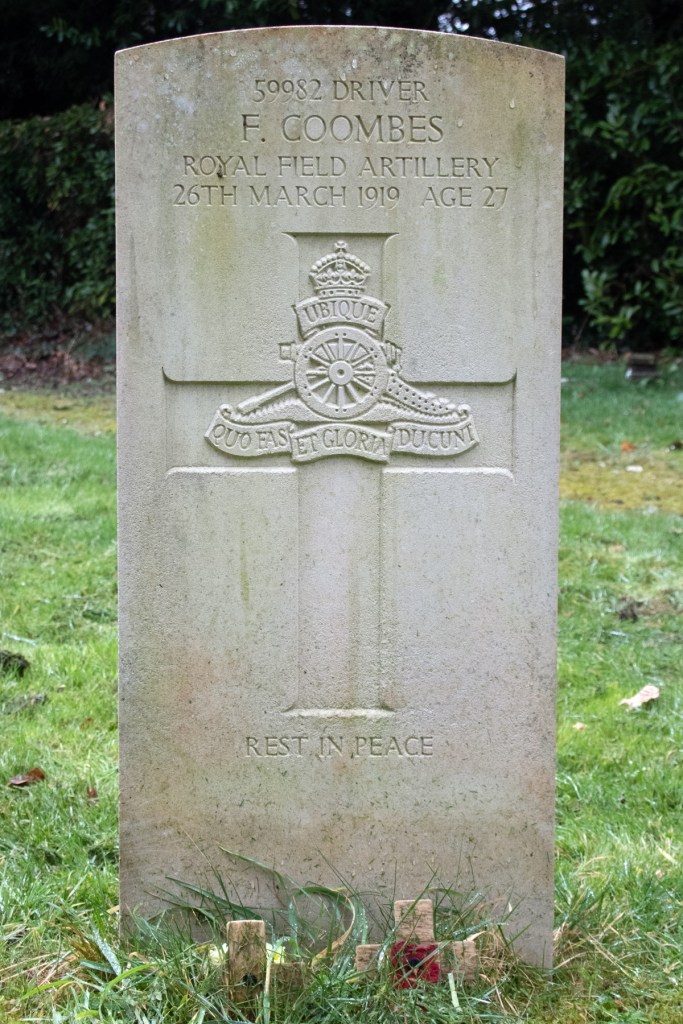
Frederick Walter Coombes was born in 5th July 1891 in Chard, Somerset. He was the oldest of eight children and his parents were mason’s labourer Walter Coombes and his wife, Sarah.

The family moved to nearby Crewkerne and, when he left school, Frederick found work as a weaver. He quickly realised, however, that he needed a career, and the the military could offer one. On 18th October 1909, he enlisted in the the Royal Field Artillery, signing up for three years with the regiment, followed by nine years on reserve.

Frederick’s service record confirms the man he had become. His medical examination gave his height as 5ft 6ins (1.68m) and his weight as 139lbs (63kg). He was noted as having brown hair, hazel eyes and a fresh complexion. He was also recorded as having a tattoo of a man’s head on the back of his right wrist and a small scar on his left hip.

After a year on home soil, Driver Coombes was sent to South Africa. He was to spend a little over two years in the country, the 1911 census recording him at the Roberts Heights Barracks in Transvaal, as part of the 98th Battery.

When his initial three year contract came to an end, Frederick was placed on reserve status and returned home. His trail goes cold for a couple of years, but when war was declared in 1914, he was immediately brought back into active service.

By the middle of August 1914, Driver Coombes was on the Western Front in France. Within a matter of weeks he was caught up in the Retreat from Mons, and was gassed in the process.

He soon recovered and, in December 1915 his troop was moved to Mesopotamia, modern-day Iraq. Within a month, Frederick fell ill again, having contracted malaria. He was treated at the base and, eventually remained in the Middle East for a year.

By December 1916 Frederick was on the move again, this time to India. His lungs had had a battering by this point, however, and he fell ill once more, this time having developed tuberculosis. Initially treated in India, by February 1917 he had been medically evacuated back to Britain. The condition was seen as unlikely to improve, and he was eventually discharged from the army as being no longer fit enough to serve.

Driver Coombes’ medical report confirmed that the condition was fully the result of his army service, and treatment at a sanatorium was recommended. His last day with the Royal Field Artillery was 7th May 1917: his career had lasted 7 years 202 days.

Again, Frederick’s trail goes cold at this point. It seems likely that he would have returned to Somerset and would possibly had been admitted to a medical facility for treatment and recuperation. The next record for him is that of his death, which happened at home on 26th March 1919. He was just 27 years of age.

Frederick Walter Coombes was laid to rest in Crewkerne’s Townsend Cemetery.


Driver Frederick Coombes

Able Seaman Jesse Baber

Able Seaman Jesse Baber

Jesse Baber was born on 28th February 1889 and was the youngest of thirteen children to John and Jane Baber. John was a farm labourer from Westcombe in Somerset, and it was in this village that he and Jane raised their family.

Jesse chose not to follow his father and siblings into farm work and instead, on 6th October 1906, he enlisted in the Royal Navy. As he was underage for full service at the time, he was given the rank of Boy 2nd Class and sent to HMS Ganges, a training establishment on the outskirts of Ipswich, Suffolk. His service records confirm that he was 5ft 5.5ins (1.66m) tall at the time of joining. He was also noted as having dark brown hair, grey eyes and a fresh complexion, with a mole on his right cheek being highlighted as a distinguishing mark.

Boy Baber spent six months at HMS Ganges, and was promoted to Boy 1st Class for his commitment. He was then transferred to HMS London, a dreadnaught battleship for a further six months. During his time on board, Jesse came of age, and was formally enrolled in the Royal Navy with the rank of Ordinary Seaman.

Over the next eight years, Jesse served on eleven different vessels, sailing between his British base of HMS Vivid in Devonport and the East Indies. His service seems to have generally been very good – he was promoted to Able Seaman in February 1909 – although he did spend five days in the brig in July 1912 for reasons unrecorded.

When war broke out, the ships that Able Seaman Baber served on patrolled the waters of the Mediterranean. In the summer of 1916, while on board HMS Dartmouth, he contracted malaria. Jesse was admitted to a hospital in Malta, where he remained for six weeks, and was then sent on leave home to recover.

He arrived at Castle Cary [in Somerset] on the evening of the 23rd August, on a visit to his sister, in a very serious condition, being practically in a state of collapse. Medical attention was immediately obtained, but his condition was hopeless, and he lay in an unconscious condition until Friday September 1st, when he expired, death being due to meningitis, following malaria.

[Shepton Mallet Journal: Friday 15th September 1916]

Jesse Baber was 27 years old when he passed away. He was laid to rest in the quiet graveyard of St Mary’s Church in Batcombe, not far from where his mother, who was now 74 years old, was living.


Private William Hughes

Private William Hughes

William Thomas Hughes was born on 4th August 1898 in Llangollen, Denbighshire. One of twins, he was also one of seven children to William and Margaret Hughes. William Sr was a bricklayer and the family lived on Fron Bache, a land to the south of the town, leading into the hills. The Hughes’ baptised their first five children on the same day – 5th October 1904 – in the parish church.

Little further information on young William’s life remains. When war broke out, he stepped up to play his part: details of when have been lost to time, but, according to later records, he had enlisted by December 1917.

Private Hughes joined the Royal Welch Fusiliers, and was assigned to one of their depots, possibly on the North Wales coast. Certainly this is where he was based by the spring of 1918 as, in May of that year, he was admitted to the Red Cross Hospital in Colwyn Bay, having contracted malaria.

Tragically, this condition was to get the better of him: Private Hughes passed away on 7th May 1918, at the tender age of just 20 years old.

William Thomas Hughes was brought back to Llangollen for burial He was laid to rest in the graveyard of the town’s St John’s Church.


Sergeant James Owen

Sergeant James Owen

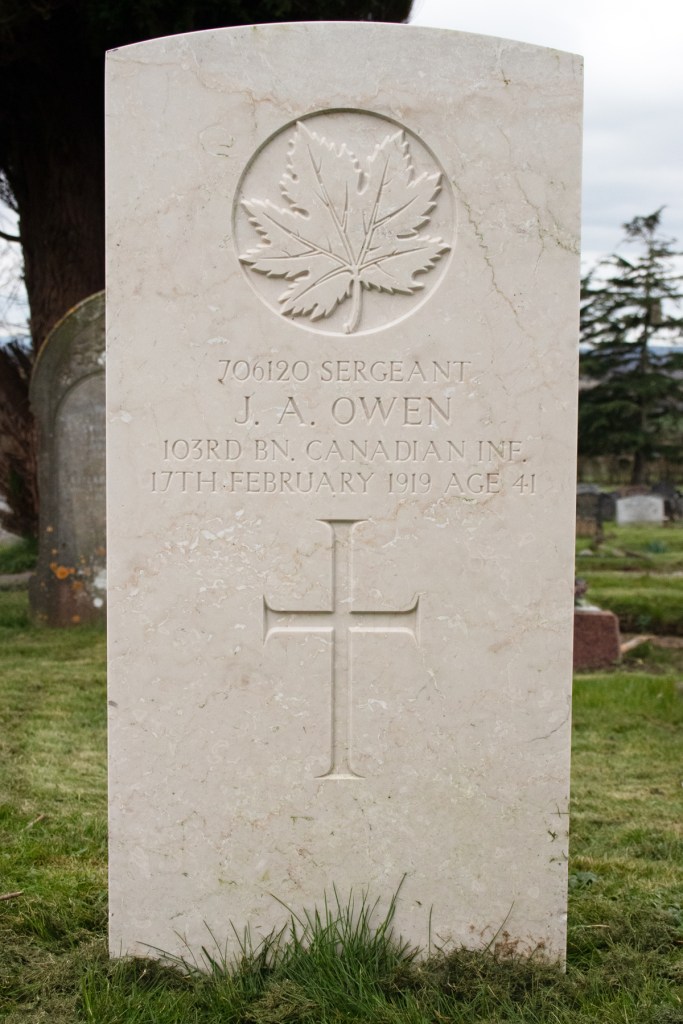
James Alfred Owen was born on 4th August 1877 and was the middle of three children to James and Sarah Owen. James Sr was a woodman from Herefordshire, who had moved the family to Radnor in mid-Wales.

James Jr’s early life has been lost to time, but by the time he turned 30, he had emigrated to Canada. He settled in the west coast town of Prince Rupert and found work as a salesman. On 28th January 1910 he married Hattie Whidden: the couple went on to have three children – Annie, Louisa and Dorothy.

War was coming to Europe, and James wanted to play his part for King and Country. He enlisted on 4th December 1915, joining the 103rd Battalion of the Canadian Infantry. His service records show that he stood 5ft 9ins (1.75m) tall and weighed 156lbs (70.8kg). His physical development was recorded as ‘average’, he had a ruddy complexion, brown hair and brown eyes. It was also noted that he had a birthmark in his left groin and his teeth were poor and required attention.

Private Owen departed for England in July 1916 and was assigned to the Oxney Camp in Hampshire. He was promoted to Corporal and then to Sergeant and, over the next few years, he remained in England. He was primarily based in barracks at Bramshott – also in Hampshire – though did spend time in Seaford in Sussex.

Sergeant Owen survived the war, but was admitted to the Ripon Military Hospital on 8th February 1919, having contracted bronchitis and malaria. The hospital didn’t have any specific expertise in contagious diseases, so it is likely that his move to Ripon was one stage of his move back to Canada.

Sadly, the conditions proved too much for James. He passed away on 17th February 1919, at the age of 41 years of age.

James Alfred Owen’s body was brought to Castle Cary in Somerset, where his sister Eleanor lived with her family. He was laid to rest in the town’s cemetery.


Private William Hammacott

Private William Hammacott

William Henry Hammacott was born on 11th January 1892 and was the oldest of four children. His parents were labourer George Hammacott and his wife Ellen; both were born in Chudleigh, Devon, and this is where they raised their family.

When William left school he too found work as a labourer, but war was coming to Europe, and he was keen to play his part. Full details of his service haven’t survived, but he had enlisted in the 5th Battalion of the Devonshire Regiment by 1915, and served on home soil.

Private Hammacott survived the war and earned the Victory, British and Territorial Force Medals for his service. During his time, he contracted malaria and was discharged from the army on medical grounds on 29th March 1919.

William returned home, and his trail goes cold for the next year. It is likely that his bout of malaria left him particularly vulnerable: he passed away on 4th May 1920, having contracted pneumonia. He was just 28 years old.

William Henry Hammacott was laid to rest in Chudleigh Cemetery.


Sergeant Herbert Rendell

Sergeant Herbert Rendell

Herbert George Rendell was born in the summer of 1886, the oldest of six children to George and Catherine Rendell. George was a twine maker from West Coker, near Yeovil in Somerset, and it was in this village that he and Catherine raised their young family.

While he initially found work as a labourer when he left school, the lure of a better life and career proved too much for Herbert and, in June 1905, he enlisted in the Royal Engineers as a Sapper. He spent three years spent on home soil, working hard and earning a Good Conduct medal for his service. During his tour of duty, he contracted pneumonia, spending five weeks in hospital in Chatham, Kent, over Christmas 1905, but fully recovering.

In September 1908, Herbert was sent to Singapore for a three-year tour of duty with the 21st Company. His body was not accustomed to the different environment, and he was hospitalised three times for malaria and myalgia, as well as two bouts of gonorrhoea in 1908 and 1910.

In December 1911, Sapper Rendell returned home, where he served for a further three years before war broke out in the summer of 1914. Having been promoted to Lance Corporal, and after a short bout in hospital following a reaction to his cowpox vaccination, he was sent to Egypt.

Assigned to the 359th Water Company, he would have been charged with constructing and maintaining the supply pipes to and from the Front Line and for his work was soon promoted to Corporal.

In the spring of 1918, the now Sergeant Rendell was transferred to the 357th Water Company, and found himself in Palestine, where he stayed until the end of the war. He came home on leave in April 1919, and it was here that, once again, he contracted pneumonia.

Sadly, Sergeant Rendell was not to recover from the lung condition for a second time; he passed away at his parents’ home on 9th April 1919, at the age of 32 years old.

Herbert George Rendell was laid to rest in Yeovil Cemetery, not far from the village where he was born.


Lance Corporal Albert Adams

Lance Corporal Albert Adams

Albert James Adams was born in Somerset in September 1878, the fifth of ten children to Robert and Mary. Robert was a mason, who sadly passed away when Albert was only 11 years old. Mary lived on as the head of the household, and by the 1901 census, she had four of her five sons living with her, three of them also stone masons.

Albert had taken a different route in life, and found work as a postman. He married Annie King, a young woman from Taunton, in 1910, and they set up home in the village of Selworthy near Minehead. Albert was the village postman, and the young couple lived there with their sons – Albert and Robert – and Mary.

When war came, Albert enlisted, joining the 6th Battalion of the Devonshire Regiment. While his military records are scattered, his battalion served in India and Mesopotamia; during their three years in the Middle East, the 6th Battalion lost twice as many men to illness – influenza, pneumonia, malaria – as to enemy action.

Lance Corporal Adams was not immune to sickness; while I have been unable to unearth exact dates for his military service, his cause of death is recorded as malaria and pneumonia. He passed away on 9th February 1919, at the age of 40 years old.

Albert James Adams lies at rest in St John’s Cemetery in Bridgwater, Somerset.


Albert James Adams from Ancestry.com