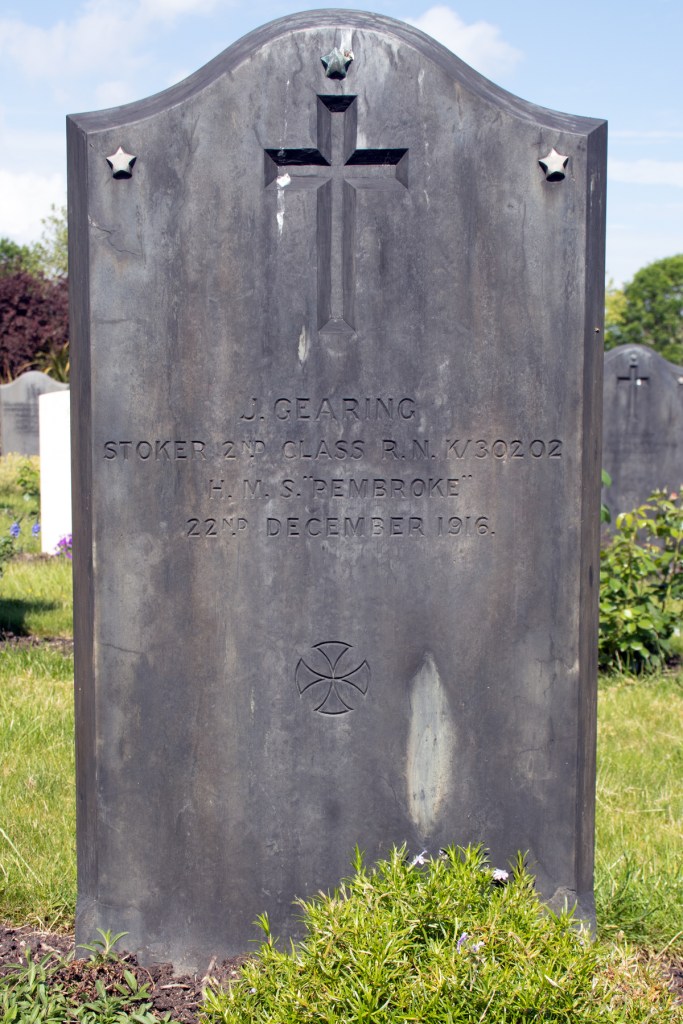
John Gearing was born in Paddington, Middlesex, on 12th August 1894. There is little concrete information about his early life, although a later document confirms he was the son of Mrs E Gearing, of 5 York Place, Hammersmith.
John was working as a fireman when war was declared. When he was called upon to serve his King and Country, he chose to enlist in the Royal Navy, joining up on 5th January 1916. His service records show that he was 5ft 9.5ins (1.76m) tall, with brown hair, blue eyes and a fresh complexion.
Stoker 2nd Class Gearing was initially sent to HMS Pembroke, the Royal Naval Dockyard in Chatham, Kent, for his training. He would remain attached to the base, and was assigned to HMS Victorious, the dockyard’s repair ship, from April 1916.
John’s time in the navy was not to be a lengthy one. Transferred back to HMS Pembroke in September, it seems that his health was becoming affected by the work he was doing. He was admitted to the Royal Naval Hospital in Chatham, suffering from what was later identified as carcinoma of the intestines. He passed away from the condition on 22nd December 1916, aged just 22 years old.
John Gearing was laid to rest in the Woodlands Cemetery, Gillingham, not far from the naval base he had come to call home.
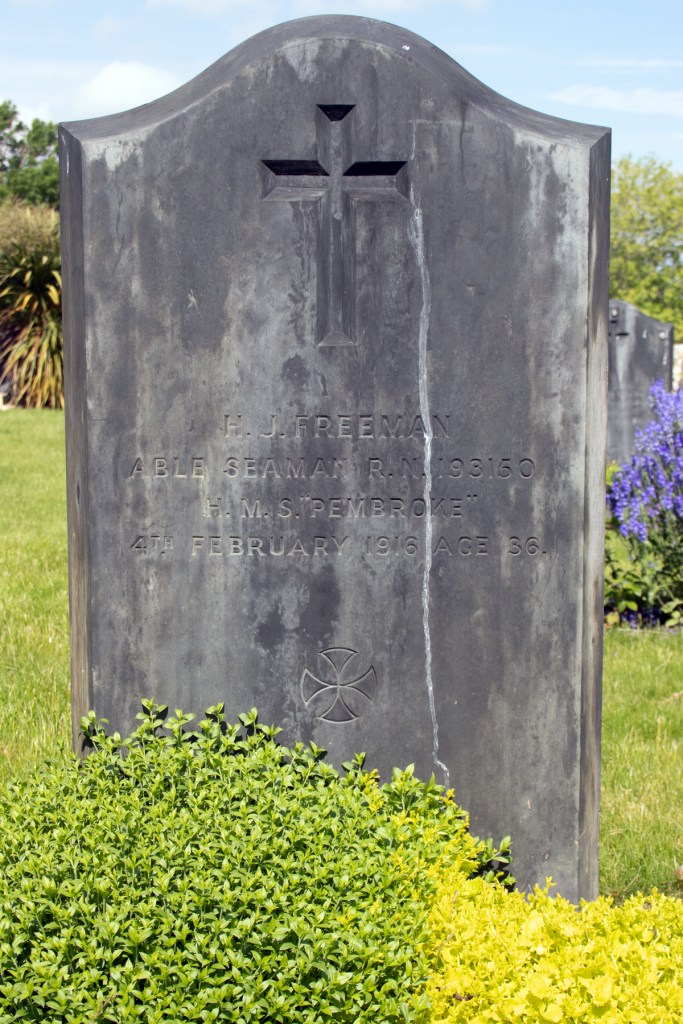
Horace James Freeman was born in Hackney, East London, on 16th September 1879. The second of five children, his parents were Archibald and Mary Freeman. According to the 1891 census, Archibald was employed as a carman, but the next document had him listed simply as a ‘traveller’.
When he completed his schooling, Horace found work as a baker’s assistant. He sought bigger and better things, however, and, on 13th February 1897, he enlisted in the Royal Navy. His service records show that he was 5ft 5.5ins (1.66m) tall, with brown hair, hazel eyes and a fresh complexion.
A few months under full age, Horace was initially given the rank of Boy 2nd Class. He was sent to the training ship HMS Northampton, and seemingly impressed his superiors, rising to Boy 1st Class within a couple of months. He moved to another training vessel, HMS Calliope, in July 1897, and was serving on board when he came of age that September.
Now formally inducted into the Royal Navy, Ordinary Seaman Freeman began what was to be an eighteen year career at sea. He would become based at HMS Pembroke, the Royal Naval Dockyard in Chatham, Kent, and went on to serve aboard nine ships during his time.
Promoted to the rank of Able Seaman in October 1899, Horace’s time in the navy was not to be without incident. He spent eight separate periods of time in the cells, 158 days in total. Full details of his misdemeanours are lost to time, but at least on at least one occasion he was placed in the brig for refusing orders.
On Christmas Day 1911, Horace married Sarah Byatt. She was a bricklayer’s daughter from Tottenham, and the couple went on to have two children: Clifford, born in 1913, and Leslie, born two years later.
While Sarah was looking after their young family, Horace spent a lot of his time at sea. As time moved on, however, he was based at HMS Pembroke for longer spells, and it was while he was in Chatham early in 1916 that fate befell him.
The body of Horace J Freeman, an able seaman of the RFR, who had been missing from his ship since February 25th, was found floating in South Lock at Chatham Dockyard on Saturday.
[South Eastern Gazette: Tuesday 11th April 1916]
Little additional information is available about Horace’s death, and it is unclear how he had fallen into the lock. He was 36 years of age.
The body of Able Seaman Horace James Freeman was laid to rest in Gillingham’s Woodlands Cemetery, not far from the naval base he had called home for so long.
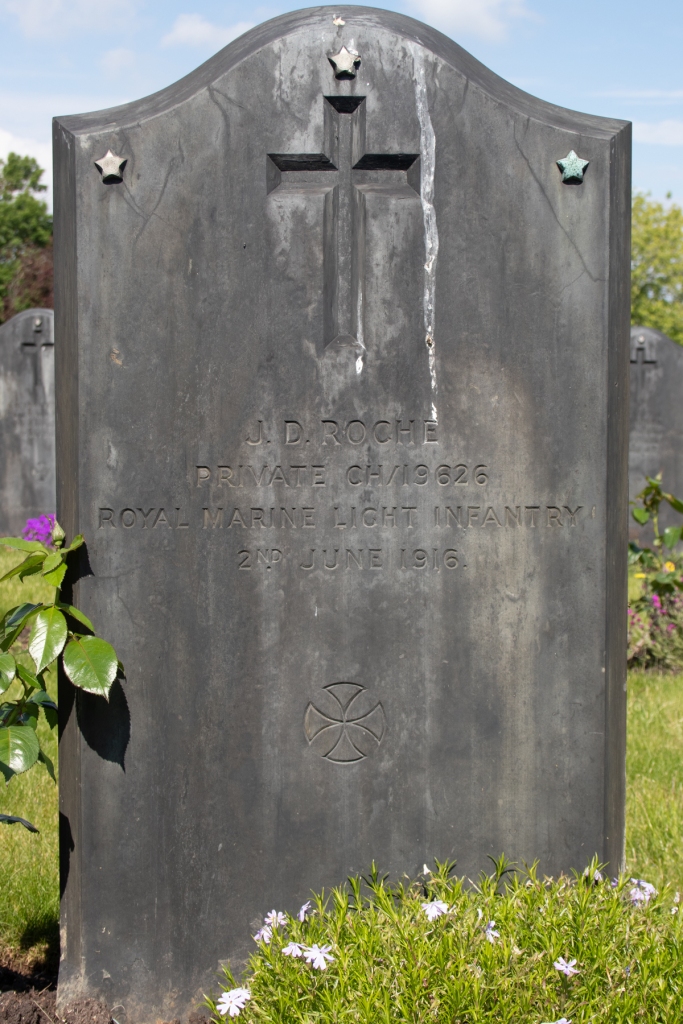
In the middle of the military section of the Woodlands Cemetery in Gillingham, Kent, is a headstone commemorating the life of John David Roche.
Details of John’s life are a challenge to piece together, although a later document gives his next-of-kin as Mrs E Roche of 108 Osnaburgh Street, Regent’s Park, London. There is a baptism record from 1897 for John David Roche, whose mother’s name was given as Lizzie. John’s father is listed as David, and the christening took place in Chelsea. There are no other records or census returns to give any further family background.
John’s time in military service is also hard to determine. That he joined the Royal Marine Light Infantry is clear, although when he enlisted and where he served are sadly lost to time.
Details of Private Roche’s passing are also unclear. He is noted as having died of disease, although the specific cause is not detailed. Given the location of his burial, it seems likely that he passed either at the Royal Naval Dockyard in Chatham, Kent, or at the hospital in the town connected to it.
John David Roche passed away on 2nd June 1916. If the baptism was correct, he was a day short of his 19th birthday.
Anyone who attended the funeral of Captain George Lee, IMT (late Rifle Brigade), held in the churchyard of his old home, Yetminster, on Wednesday could not but have been impressed by the wonderful sense of peace and rest that pervaded the place. After a life of unique adventure in Africa, India, America, and Canada his worn and suffering body was laid to rest beside his beloved father. The solemn service was taken by his uncle, Red. EHH Lee (vicar of Whitchurch Canonicorum) and his cousin, Rev. E Hertslet (vicar of Ramsgate), and Rev. MJ Morgan (vicar of Yetminster), there being also present his old schoolfellow, Rev. J Lynes, and Rev. Hall, curate of Yetminster. Besides the chief mourners Captain Lee’s mother, sister and brother-in-law, there were many friends present and numerous villagers who had known him from boyhood. The coffin was attended throughout the service and for many hours before by his most faithful servant and friend, Rajab Ali Khan, who was with his master through India, Persia, Beluchistan, and Afghanistan, and came to England as his personal attendant when Captain Lee was sent home on sick leave. After the service in the churchyard Rajab, through the kindness of Mr Hall, who translated for him, was able to tell everybody what his master had been to him.
Dorset County Chronicle: Thursday 9th September 1920
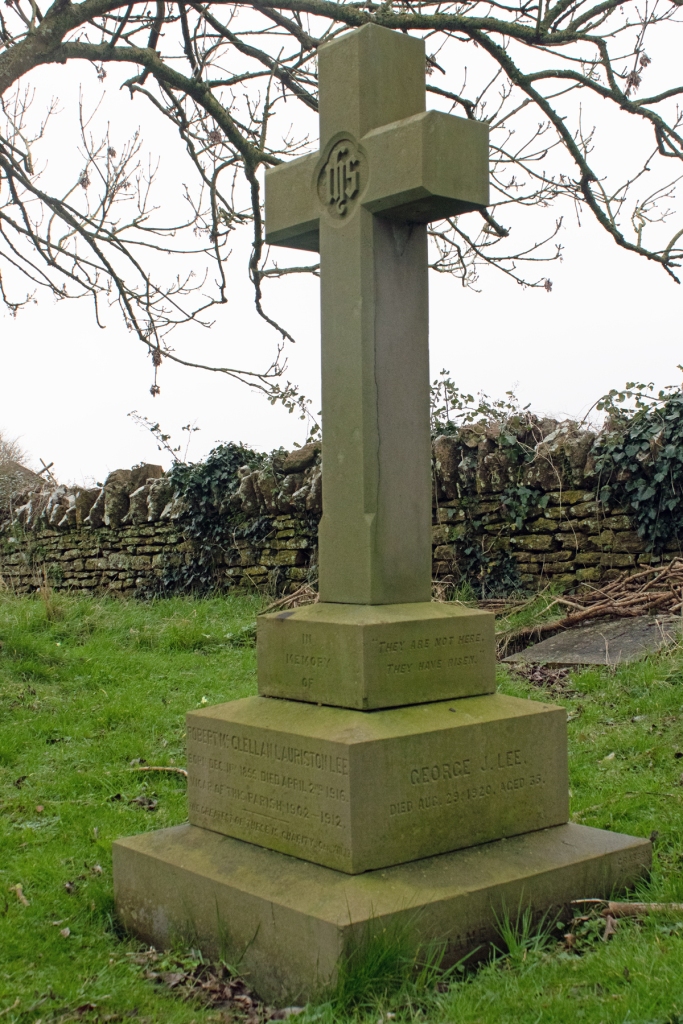
George Johnston Lee was born in the summer of 1886, the second of four children to Reverend Robert Lee and his wife, Elizabeth. Robert was the vicar of St George’s Church in Fordington, Dorset, when George was born, but moved west to Toller Porcoram not long after he was born.
Tantalisingly little information about George’s early life remains. He does not appear on the 1901 or 1911 census records, and it is likely that he was already away travelling the world by this point. It seems clear that he followed a military, rather than a clerical, career and, by the end of the First World War he was serving in the Indian Army Reserve of Officers. Attached to the Rifle Brigade, George had reached the rank of Captain.
George’s father had become ill in the early 1910s, and having moved to St Andrew’s Church in Yetminster, he retired from the post in 1912. He and Elizabeth moved to Dorchester, but when he passed away in 1916, at the age of 59, his last wishes were to be buried in Yetminster, the village having held a special place in his heart.
Captain Lee survived the First World War, but, as the newspaper report suggests, he became unwell. George had contracted amoebic dysentery, and returned to England to recuperate. The condition was to prove too severe, and he passed away in London on 29th August 1920, at the age of 34 years old.
In accordance with the family’s wishes, George Johnston Lee’s body was taken back to Dorset, and he was laid to rest next to his father, in the tranquil St Andrew’s Churchyard, Yetminster.
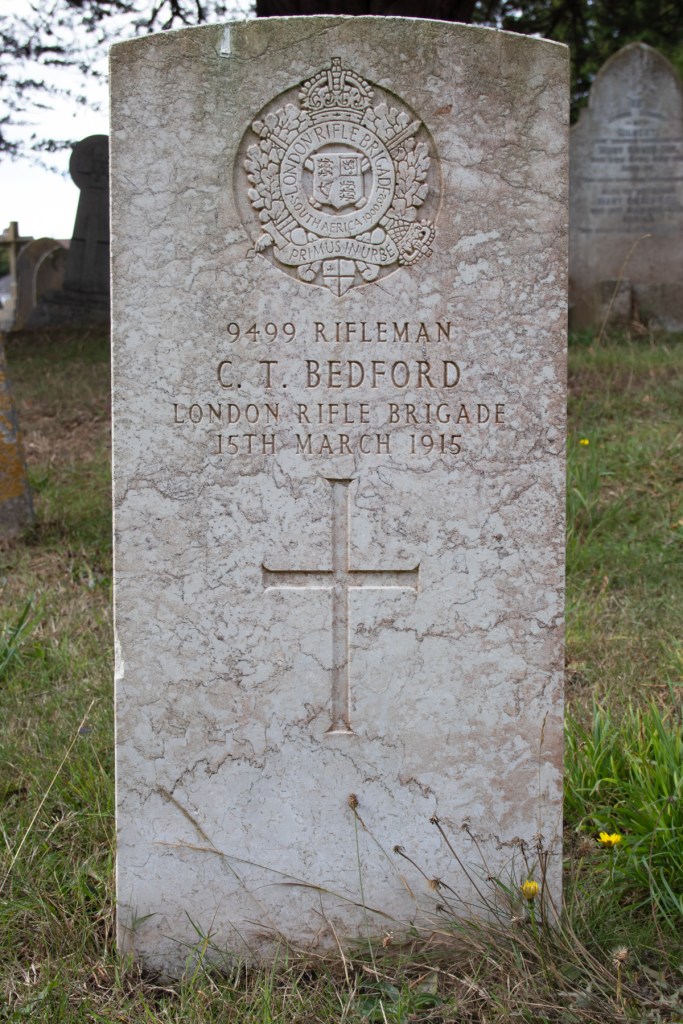
Conrad Thomas Bedford was born on 8th August 1891 in Bowes Park, Middlesex. The younger of two children, his parents were Thomas and Clara Bedford. Thomas was a bank clerk, who had a strong focus on education and, after his untimely death in 1899, aged just 40, Clara was keen to ensure that her only son received the best.
Conrad was educated at Seaford College in Sussex, and was boarding there at the time of the 1901 census. Whilst there, he served in the College Cadet Corps, which was attached to the Royal Sussex Engineers, and by the time he left, in 1909, he had taken the rank of Corporal.
When he completed his schooling, Conrad found work as a clerk in the London Joint Stock Bank, and soon volunteered for the London Rifle Brigade. When war broke out, he willingly stepped up to serve his country, and became attached to the regiment’s 5th Battalion.
The 1/5th (City of London) Battalion (London Rifle Brigade), to give the London Regiment’s unit it’s full title, fought on the Western Front, and Rifleman Bedford arrived in the Wallonia region of Belgium on 4th November 1914.
Early in 1915, Conrad was based near Ploegsteert, when, at around 2am on 27th February, he was shot in the right shoulder. He was medically evacuated to Britain, and admitted to the American Women’s War Hospital, in Paignton, Devon. While his injury was treated, sepsis set in, and Rifleman Bedford succumbed to it: he passed away on 15th March 1915, at the age of 23 years old.
Surprisingly, Clara did not bring her son back to London, where she was living. Instead, Conrad Thomas Bedford was laid to rest in Paignton Cemetery, not far from where he had breathed his last.
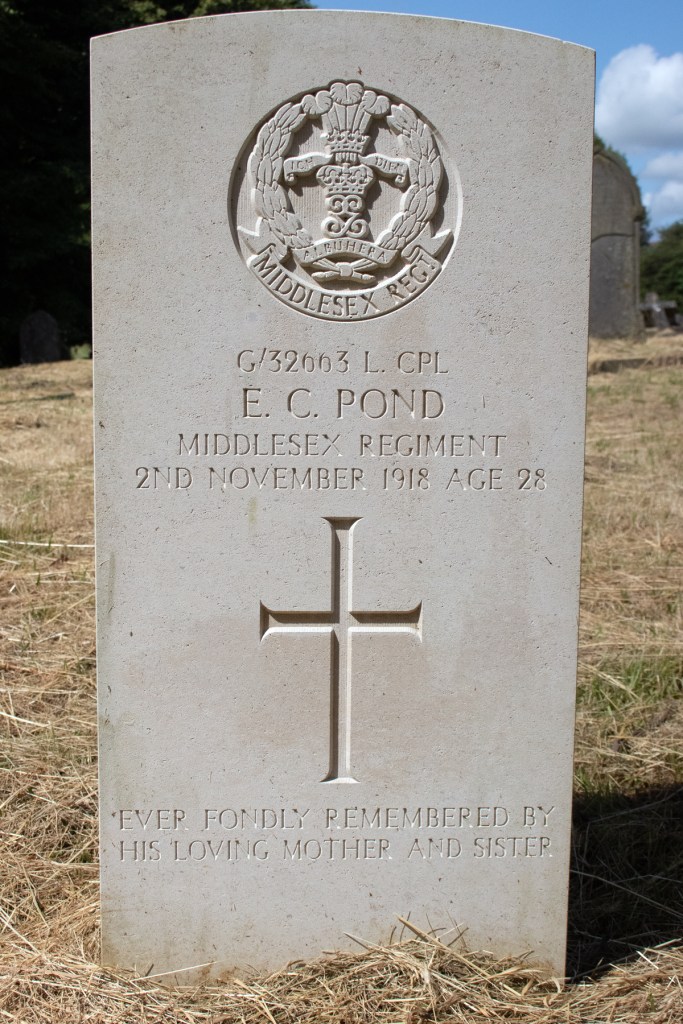
Ernest Charles Pond was born in the autumn of 1889 in Bath, Somerset, and was the younger of two children. His father, Charles, who worked as a wheelchairman, died in 1904, leaving his mother, Eliza, to raise the Ernest and his older sister, Daisy, on her own.
The 1911 census shows the determination the Pond family had in the wake of Charles’ death. Eliza had opened up a tea room in River Street Place, and was living above the business with Daisy and two servants. Daisy, meanwhile, was employed as a school teacher, something she had been doing for at least ten years. Ernest had left Bath, and headed for London: he had taken a room in a house in Tufnell Park, and was working as a furniture designer.
When war came to Europe, Ernest was called upon to play his part. Sadly, full details of his service have been lost to time, but it is clear that he had enlisted by the summer of 1918. He joined the Middlesex Regiment, and was assigned to the 6th (Reserve) Battalion. His unit formed part of the Thames and Medway Garrison, and there is no evidence that Ernest spent any time overseas.
By the autumn of 1918, Ernest had risen to the rank of Lance Corporal. With the war coming to an end, he fell ill, however, and was admitted to a military hospital in Chatham, Kent. Details of his illness are unclear, but it was severe enough that he succumbed to it: he passed away on 2nd November 1918, at the age of 28 years old.
The body of Ernest Charles Pond was taken back to Somerset for burial. He was laid to rest in Bath’s sweeping Locksbrook Cemetery, not far from where his father was buried.
The funeral of Mr Henry Hutchings, the Zulu war veteran, who died suddenly at Lower Weston on Tuesday, took place on Saturday afternoon…
The principal mourners were: Mrs Hutchings (widow), Sergt. Hutchings (son)(who wore the Mons ribbon and a Zulu war medal), Mr AE Adams (step-son), Mrs A Hutchings (daughter-in-law), Mr David Adams (step-son), and Mrs Emily Pickworth (step-daughter).
In order to attend the funeral Mr AE Adams had returned from France, where he has been carrying out work for a local firm.
Bath Chronicle and Weekly Gazette: Saturday 16th February 1918
Tracking down Henry Hutchings’ early life is a bit of a challenge, but working backwards through census records sheds some light onto his later years.
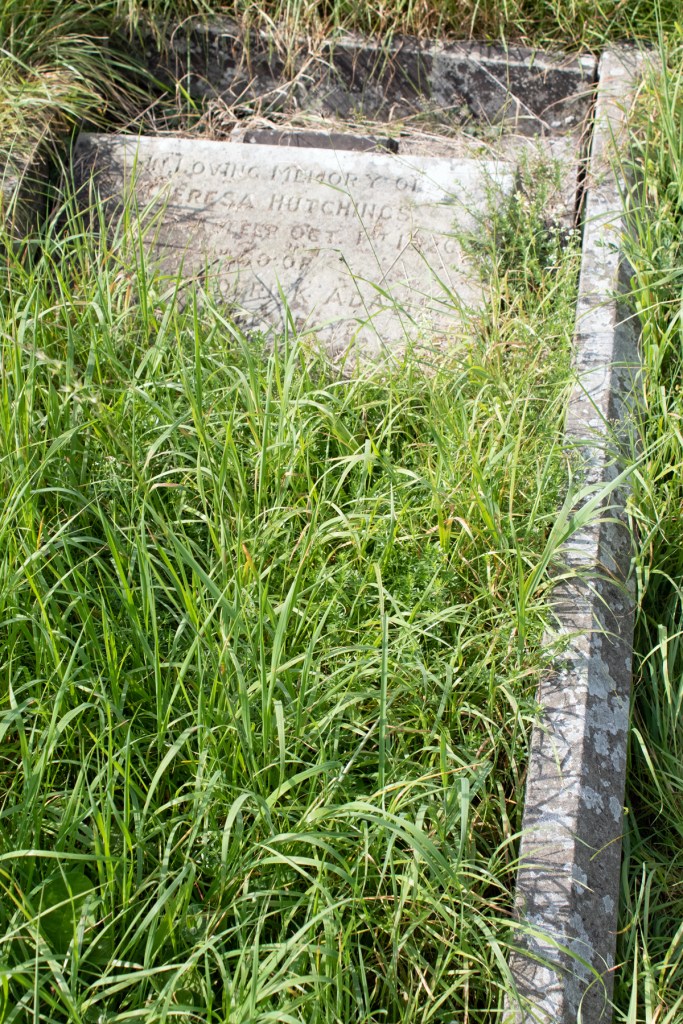
The Commonwealth War Graves Commission record states “Hutchings, Pte. Henry, 14475. Royal Defence Corps. 5th Feb., 1918. Age 59. Husband of Theresa Hutchings… Served in the Zulu War (1877-79) with Army Service Corps.”
The 1911 census recorded Henry and Theresa living in Shepherd’s Bush, Hammersmith. The document confirms they had been married for less than a year and, unusually, suggests both were twice married. Henry had been born in Notting Hill, and was employed as a smith’s hammerman. Theresa was born in Byfleet, Surrey, and the couple were living with Henry’s son, Henry Jr, and Theresa’s daughter, Alice.
Turn the clock back ten years, and the 1901 census tells a more confused story. Henry was living in Edmonton, Middlesex, where he was employed as a general labourer. Theresa is noted as being his wife – in contrast to the later census return – and the couple were living in Gilpin Crescent with Henry’s sons – Henry Jr, Edward and Sidney – and Theresa’s two children – Alice and Albert.
Going back a further ten years leads to a dead end. Neither Henry nor Theresa are readily identifiable on the 1891 census, even though both should have had their older children by that point.
An 1877 military record confirms Henry’s earlier time in the army. It was in July of that year that he enlisted, joining the Army Service Corps. At 18 years of age, he had been working as a carman, but a dedicated career is what he sought out. His record confirms he was 5ft 4ins (1.63m tall, with brown hair, blue eyes and a fresh complexion. Henry lists his next of kin as brother Robert Hutchings, although, again further family details are lost in the mists of time.
Private Hutchings spent twelve years in the army. After eighteen months on home soil, he was dispatched to South Africa, as the later newspaper report suggests, and spent a year overseas. He returned home in March 1880, and was stood down to reserve status until the end of his contract in July 1889.
The documentation uncovers details of Henry’s second period of time in the military. He enlisted in the Royal Defence Corps in September 1915, and was based at Alexandra Palace in London. His time there was limited, however, as he began to show signs of heart disease. By the following summer, Private Hutchings suffered from breathlessness and chest pains, to the point where he was medically discharged from service on 21st August 1916.
Henry and Theresa had moved to Somerset by January 1917, presumably for the cleaner air that their home in Bath would provide. This was not to be enough, however. Henry died a little over a year later, at the age of 59 years old.
Henry Hutchings was laid to rest in the sweeping grounds of Locksbrook Cemetery, Bath. He was to be reunited with Theresa when she passed away in 1926.
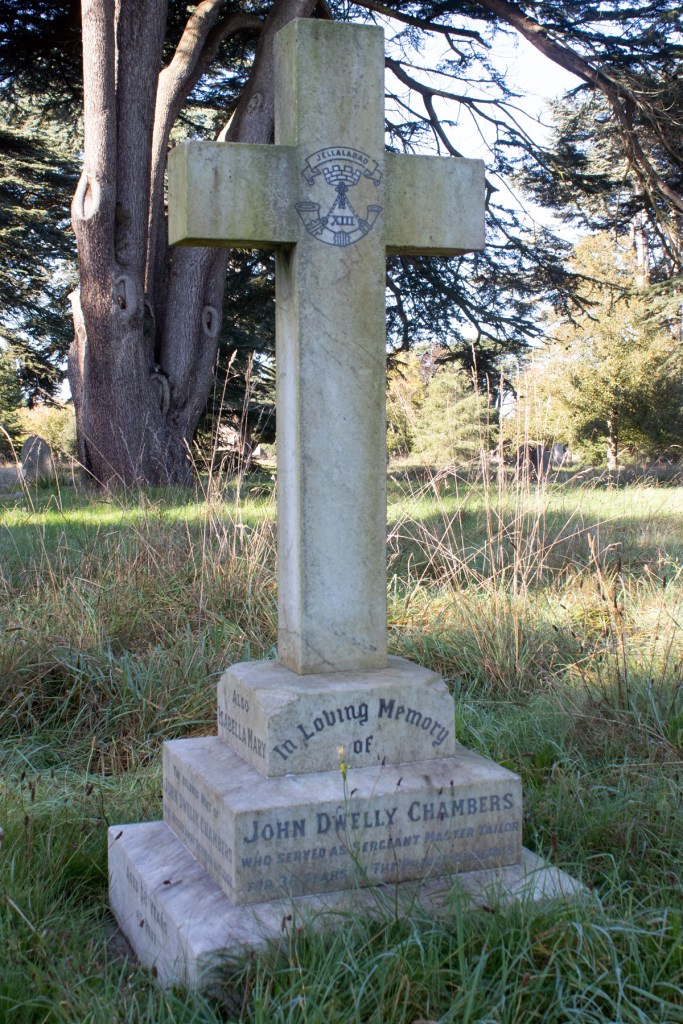
John Dwelly Chambers was born on 21st August 1846, in Holborn, Middlesex. The second of four children, his parents were John and Sarah Chambers. John Sr was a tailor, and this was a trade into which his oldest son followed.
Unusually, John Jr travelled widely with his work and, by the late 1860s, he was based in Devon. It was here that he met and, on 5th March 1870, married Isabella Smith. She was born in Exeter, and couple initially made a life for themselves there.
The 1881 census return shows just how far the family moved in the coming years. John and Isabella were to have nine children: their first, Louise, was born in Exeter a hear after their marriage. The second child, son John, was born in Armagh, Ireland, though; their third, Emily, was born in Glasgow; while their fourth, George, was born in Surrey. It was only by the time their fifth and sixth children, Thomas and Charles, were born that they family returned to Devon. Their youngest three children – Percy, Victoria and Ivor, were all born in Somerset, when the family had settled in Taunton.
The reason for these moves seem to have been because his tailoring work was for the army. The 1891 census found the family living in army barracks, where John was listed as being a soldier. Ten years on, and John was recorded as being a Lance Sergeant in the Somerset Light Infantry, the Chambers’ still being billeted in barrack accommodation in Taunton.
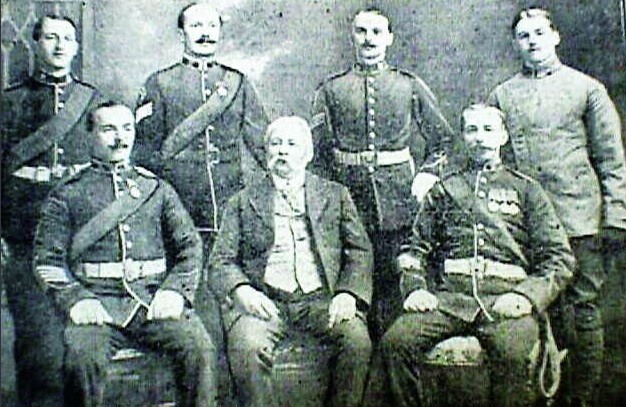
By this point, Percy, now 17 years of age, was employed as a gunsmith, and a later photo suggests that all six of John’s sons went into the army.
Isabella died in 1906, at the age of 58: the following year, John married Elizabeth Dunning, a widow with her own children to raise. The 1911 census found the extended family living in the barracks: John, Elizabeth, Ivor and Elizabeth’s two daughters, Kate and Beatrice. John, by now, was listed as being a master tailor (military), Ivor was now a gunsmith, and the two girls were employed as a book binder and dressmaker respectively.
John had officially been discharged from the army by this point, but it seems likely that the outbreak of war brought him back into service. His life over the next few years is largely undocumented, but it is fair to assume that Serjeant Chambers was called back to the army, possibly to train newer recruits in the trade he had been working in for decades.
John Dwelly Chambers died of a heart attack on 2nd August 1915: he was just short of his 69th birthday. John was laid to rest in the sprawling St Mary’s Cemetery in Taunton, not far from the barracks to which he had devoted his life.
Serjeant John Chambers (seated middle, with his sons) (from ancestry.co.uk)
Louis Theobald was born on 27th January 1898 in Soho, Middlesex. There is little information available about his early life, and the only document that can be directly connected to him is his military service records.
Louis enlisted in the Royal Navy on 7th September 1915. He had been working as a miner at the time, and the document gives an insight into the man he was. He stood 5ft 5ins (1.65m) tall, had brown hair, brown eyes and a fresh complexion. The service records also confirm that he had a tattoo on his right arm.
Stoker 2nd Class Theobald was sent to HMS Pembroke, the Royal Naval Dockyard in Chatham, Kent, for his training. He spent three months there, before being given his first posting, on board the minesweeper HMS Alyssum. He remained on board for three months, before transferring to the cruiser HMS Wallington in February 1916.
Louis’ health was starting to be impacted by this point: he had developed bronchitis, probably exacerbated by heat and dust of the confined engine room he worked in. By April 1916 he was transferred back to HMS Pembroke, and within two months, he was medically discharged from service.
Stoker 2nd Class Theobald had been admitted to the Royal Naval Hospital in Chatham by this point, and his health began to deteriorate. He passed away from a combination of bronchitis and empyema on 15th September 1916: he was just eighteen years of age.
Louis Theobald was laid to rest in the Roman Catholic section of the Woodlands Cemetery in Gillingham, Kent, not far from the dockyard where he had been based.
Albert Graham Sweetland was born on 6th January 1895 in Kensington, Middlesex. The oldest of seven children, his parents were mechanical engineer Albert Sweetland and his wife, Edith.
A work ethic was instilled into Albert Jr from an early age. By the time of the 1911 census, he had been sent to Truro, Cornwall, where he worked as a servant to the Faull family, tending to their poultry.
Albert was set on developing a life for himself and, in the next few years, he emigrated to Australia. He settled in the town of Liverpool, now a suburb of Sydney, and found work as a station hand. War was on the horizon, however, and people of the empire were called upon to serve their King.
Albert enlisted on 22nd January 1916, joining the 18th Battalion of the Australian Infantry. His service records tell a little about the man he was becoming. He was 5ft 7ins (1.7m) tall, and weighed 143lbs (64.9kg), with fair hair, blue eyes and a fair complexion. The document also notes that he was a Methodist, and that he had tried to enlist in the British army before emigrating, but that a slight defect in his right eye had prevented him.
Private Sweetland set sail for Europe on 9th April 1916. His unit sailed via Suez, reaching Folkestone, Kent, that November. His time back in Britain was to be brief, however: within a matter of days he was in Etaples, France.
Albert was thrown into the thick of things. On 5th May 1917, he was wounded while fighting at Arras. He was shot in the legs, and medically evacuated to Britain for treatment and recuperation. He was to remain on home soil for the next year, before returning to his unit in June 1918.
On 3rd October 1918, Private Sweetland was injured during the Battle of the Beaurevoir Line. His unit’s push forward was initially successful, but ultimately failed to capture the the village. The German forces attacked with gas, and Albert was caught up in it, receiving a gun shot wound to his back.
By the time Beaurevoir was in Australian hands three days later, more than 430 Allied soldiers had been killed. Albert was awarded the Military Medal for his bravery during the battle.
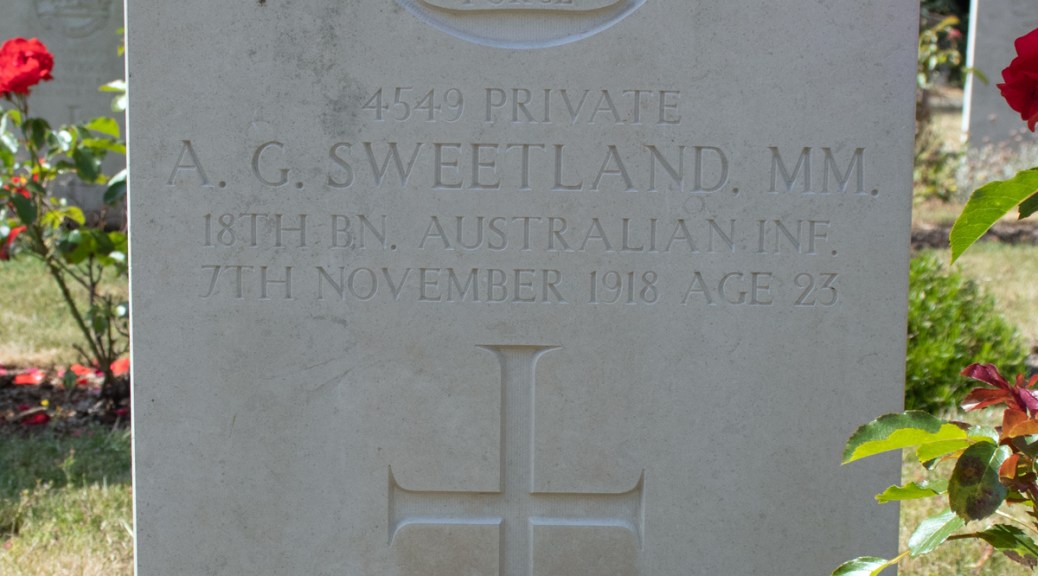
Private Sweetland was medically evacuated to Britain once more, and was admitted to Bath War Hospital for treatment. This time, however, he was not to be as luck as he had been eighteen months previously. He died on 7th November 1918, from a combination of appendicitis, pneumonia and heart failure. He was just 23 years of age.
Albert Graham Sweetland was laid to rest in the military section of Bath’s Locksbrook Cemetery, not far from the facility where he had passed. His parents and his sister Winifred attended the funeral.












 Death and Service