Category Archives: Isle of Wight

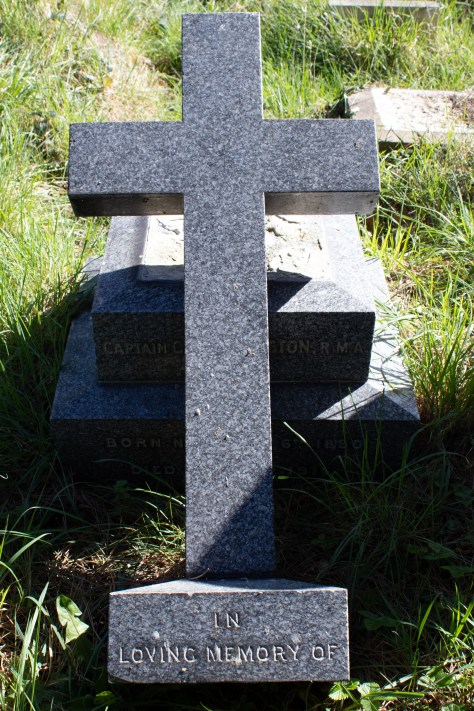
Captain Guye Lushington

Captain Guye Lushington

Guye Wellesley Lushington was born in India on 6th November 1880. The oldest of four children, his parents were James and Bessie Lushington. James was a worked in the Bombay Uncovenanted Civil Service and, while it’s not possible to track his location through census records, by the time of the 1891 census, Bessie had returned to Britain with the children. The document found them living at 31 Clarendon Street in Bedford, Bedfordshire.

Guye’s background stood him in good stead when it came to building a career. His chosen profession was the army and, by January 1898 he had landed a commission in the Royal Marine Artillery. Lieutenant Lushington continued to do well and, on 13th March 1908, he received a promotion to Captain.

Full details of Guye’s military service have been lost to time, but by the time war broke out, he was attached to the dreadnought battleship HMS Bellerophon. The stress of the Great War was to take its toll, however, and he was diagnosed with neurasthenia. In 1916, he was admitted to the King Edward Convalescent Home at Osborne House, on the Isle of Wight. Captain Lushington’s condition, however, was to worsen.

The Isle of Wight Coroner yesterday held an inquest respecting the death of Captain George [sic] Wellesley Lushington, 35, of the Royal Marine Artillery, sone of Mr James Law Lushington, of Briar Bank, Grove-road, Worthing [West Sussex], who was found dead… on Tuesday, having apparently thrown himself over an iron staircase fire escape into the courtyard.

Colonel Douglas Wardrop, house governor and medical superintendent, said the deceased arrived at Osborne House from Haslar on the 5th inst… He was rather depressed and worried about his loss of will power. He had been four years on the “Bellerophon” and on active service with the Grand Fleet. There was nothing in the deceased’s manner to suggest suicide. He slept on the top floor of the south wing. At two o’clock on Tuesday morning, the night nurse reported that the deceased had not slept in his room. Search was made, and the deceased was found lying in the courtyard between the kitchen and the south wing. He must have jumped from the fire escape – which was an iron staircase with platforms outside each landing – onto the flag stones below, a distance of 45 feet. His skull was smashed to pieces. There was a railing 3 feet 6 inches high round the staircase, and deceased could not have accidentally fallen over.

Two letters were found in deceased’s room, one addressed to his father and the other to his sister. His father identified the writing. The letter to the deceased’s father was as follows:

“Osborne House, Sunday.

“My dear pater, Since I broke down a month ago, I feel I shall never pick up again. I am afraid this will rather surprise you, but I cannot stand the tension any longer. I am always wondering what is going to happen to me. Give my love to Daisy. If one has to die, it is better quickly than slowly. With lots of love – GUYE”

Nursing sister Arkins, who had charge of the deceased, said he was quiet, bur showed no suicidal tendency.

Lieutenant George Stewart Manisty, of the Indian Army Reserve, attached to the 7th Bengal Lancers, said he played bridge with the deceased up till 10:30 on Monday night, and for three nights running. Deceased seemed quite friendly and in good spirits.

A verdict of “Suicide while of unsound mind” was returned.

The Coroner said that was the third suicide within a week on the Isle of Wight, either directly or indirectly due to the war.

[Sussex Daily News: Thursday 11th May 1916]

Captain Lushington’s full state of mind on the night he took his life will never be know. The family had suffered three early deaths in a matter of years: Guye’s oldest sister, Violet, had died in 1899, at the age of 18; his brother Hubert had died in 1905 at the age of 19; his mother Bessie passed away in 1911 at the age of 58. Guye had taken his life on 8th May 1916, aged 35 years old.

The body of Guy Wellesley Lushington was taken to Worthing, West Sussex, for burial. He was laid to rest in the town’s Broadwater Cemetery.


Chief Yeoman of Signals Charles Welling

Chief Yeoman of Signals Charles Welling

Charles James Welling was born on 23rd October 1860, and was the oldest of three children to Charles and Ann Welling. The Wellings were a military family, Charles Sr employed as a Serjeant Instructor of Musquetry in the Parkhurst Barracks on the Isle of Wight when his son was born.

Ann had been born in South Africa while her Irish parents were based out there. She and Charles Sr married in Farnham, Surrey, presumably where the families were based by that point.

Charles Jr’s mother died in 1863, just a month after giving birth to his youngest sibling. His father married again, to Sarah Ash, and by 1871, the Wellings were living in barracks at the School of Musketry in Hythe, Kent.

Being his father’s son, Charles Jr was set to make his own mark on the world and, on 21st January 1876, he joined the Royal Navy. Too young to formally enlist, he was given the rank of Boy 2nd Class, and sent off to HMS Impregnable, the shore base in Devonport, Devon, for his training.

Over the next eighteen months, Boy Welling learnt his trade, spending time at HMS Ganges – another shore base near Ipswich, Suffolk – and the sloop HMS Penguin. It was here that Charles came of age in 1878, and he officially joined the Royal Navy with the rank of Ordinary Seaman. His service papers show that he was just 4ft 10.5ins (1.49m) tall, with light brown hair, blue eyes and a fair complexion.

Ordinary Seaman Welling career was to take a turn in 1880, when he began training as a signaller. His initial contract with the navy was for ten years, and, by the time that came to an end in May 1889, he had served on eight ships in all, rising through the ranks from Signalman 3rd Class, to Signalman 2nd Class in August 1881 and Qualified Signalman seven years later.

When Charles’ term of service came to an end, he immediately renewed it, and with the new contract came a promotion to Leading Signalman. The next decade saw him travel the world, returning to HMS Pembroke, the Royal Naval Dockyard in Chatham, Kent, in between voyages. His commitment to the role paid off: in March 1894 he was promoted to 2nd Class Yeoman of Signals. Just eight months later he took the rank of Yeoman of Signals.

It was around this time that Charles married the love of his life, Harriet Carlaw. Born in London, the couple exchanged vows in St Pancras, Middlesex, on 13th January 1894 and had a son, also called Charles, the following year.

Charles’ naval career continued its upward trajectory, and on 1st March 1898, he was awarded the rank of Chief Yeoman of Signals. By this point HMS Pembroke had become his permanent base and, at the end of his contract in 1899, he was stood down to reserve status.

The 1901 census shows what may have been a downward step for the Wellings: it recorded the family living in rooms at 136 Bayham Street, Camden, Middlesex, where Charles was working as a messenger.

Opportunities come in the most unexpected of places, however, and the following census found them living at Pier House, Sunderland, Tyne and Wear, where Charles was employed as a lighthouse keeper.

By this point, Charles had been invalided out of the navy for medical reasons. The writing on his service papers is unclear, and his dismissal seems to have been as a result of disease of gestes, possibly the neurological disorder dystonia.

When war broke out in 1914, however, anyone with experience was called upon to play their part. Given his age at the time, it seems likely that Charles volunteered for service, reporting to HMS Pembroke on 2nd August 1914. He was given his old rank of Chief Yeoman of Signals, and remained at the naval base for the next two years.

Charles’ health was definitely suffering by this point, and he was admitted to the Royal Naval Hospital in Chatham, in September 1916. Suffering from the heart condition endocarditis, this would take his life. He passed away on 16th September, at the age of 55 years old.

With Harriet still living in Sunderland, Charles’ body was laid to rest in Woodlands Cemetery, Gillingham, Kent, not far from the base he had called home for so long.


Charles and Harriet’s son had also stepped up to play his part when war broke out. Enlisting in the Royal Engineers, Pioneer Welling soon found himself in the Middle East. While serving in Palestine, he contracted malaria, and passed away from the condition on 16th October 1918. Charles was just 23 years of age, and was laid to rest in Haifa War Cemetery.

It is tragic to note that Harriet had lost her husband and her son within two years.


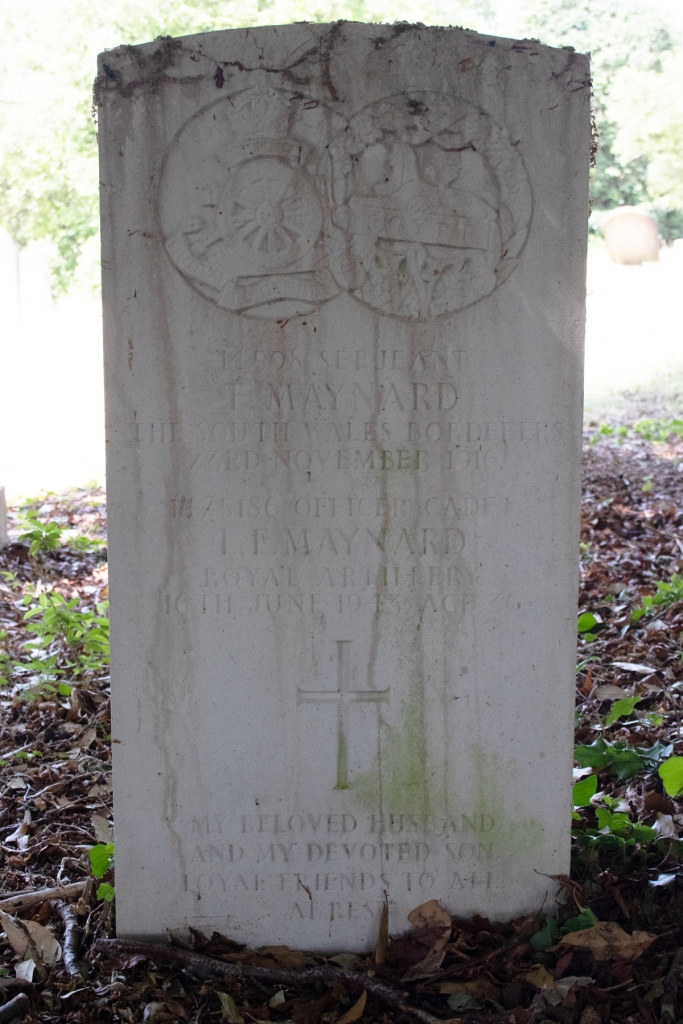
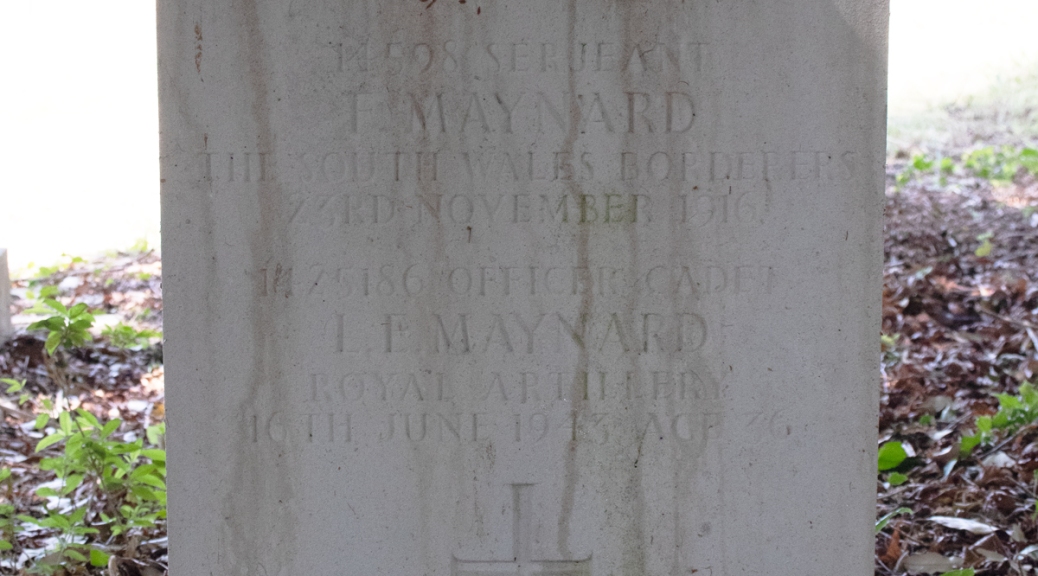
Serjeant Fred Maynard

Serjeant Fred Maynard

Details of Fred Maynard’s early life are a challenge to piece together. His First World War service records give his age as 44 years old when he enlisted in September 1914, and confirm his place of birth as Melksham, Wiltshire.

A newspaper report of his funeral gives the name of three brothers – Charles, Frank and Arthur – while only one census return, from 1881, provides a potential match for the family. This suggests Fred’s parents were iron fitter Alfred Maynard and his wife, Deborah, and gives the family’s address as Waterworks Road in Trowbridge.

Fred joined the army in the autumn of 1888. Initially assigned to the Gloucestershire Regiment, he had transferred to the Wiltshire Regiment by the following spring. Private Maynard showed a commitment to duty: in December 1890 he was promoted to Lance Corporal, rising to Corporal in the summer of 1893.

Fred was stood down to reserve status after his seven years’ active duty, but was recalled to the army in December 1899, when war broke out in South Africa. Promoted to Serjeant, he was sent to fight in the Boer War, and was mentioned in dispatches on 2nd April 1901 for special and meritorious service in South Africa. He was stood back down to reserve status in October 1901.

On 21st November 1895, Fred had married Louisa Card. The couple set up home in Trowbridge, but soon moved to London. They went on to have six children: Ernest, Nora and Leslie, who were all born in the London; and Arthur, Martha and Stuart, who were born in Cardiff, the family having moved to Wales by 1910.

The army was not finished with Fred, however, and, within weeks of war breaking out in the summer of 1914, he was called back into service. Given the rank of Serjeant again, he was attached to the South Wales Borderers. Fred was 44 years of age by this point, his service records confirming that he stood 5ft 8ins (1.73m) tall, weighed 164lbs (74.4kg) and had brown hair and hazel eyes.

Attached to one of the regiment’s depots, it seems unlikely that Fred saw service overseas this time around. He was discharged from the army on 1st September 1916 and this seems to have been on medical grounds. Later documents suggest that Serjeant Maynard had been diagnosed with carcinoma of the pylorus, or stomach cancer.

Fred returned to Cardiff, but his time back home was to be short. He was admitted to the Lansdown Road Military Hospital, and passed away on 23rd November 1916. He was 46 years of age.

It seems that Fred’s brother’s had some sway in his funeral. Instead of being laid to rest in Cardiff, where Louisa and the children were living, he was, instead, buried in the Locksbrook Cemetery, Bath, Somerset. His sibling Charles, who was a sergeant in Bath City Police, lived in the city, as did another brother, Frank.


Fred’s headstone also commemorates his and Louisa’s son, Leslie. He had joined the army in the 1920s and, in the summer of 1943, was in Yorkshire, undergoing officer training.

The death of an officer cadet through the accidental discharge of a rifle whose bolt had jammed was described at an inquest…

Captain WH Price said he was in charge of an exercise on the moors which involved the used of small arms and the firing of live ammunition. A squad of cadets lay on the ground in front of a trench firing over a range. All finished firing except Cadet Frank Holroyd, who said his bolt had hammed while firing a second round. [Price] told him to release the bolt by knocking the cocking piece up and back.

This attempt failed, and he told Holroyd to get back into the trench, turn the rifle magazine upwards, place the butt on the side of the trench, and kick the bolt down with his foot. While Holroyd was doing this he noticed Maynard standing in the trench about 4ft away from Holroyd and on his right-hand side.

Captain Price said he saw the rifle was pointing down the range when Holroyd kicked the butt. The cartridge suddenly exploded and Maynard dropped into the trench, shot in the head, and was dead when they reached him.

[Bradford Observer: Saturday 19th June 1943]

Officer Cadet Leslie Maynard was 36 years of age when he was killed. His body was taken back to Somerset for burial: he was laid to rest in the same grave as Fred, father and son reunited after 27 years.


Louisa remained somewhat elusive as time wore on. Fred’s military records confirm that she had moved from Cardiff to the Isle of Wight by 1922. By the time of her son’s death, she was living in Sidcup, Kent.


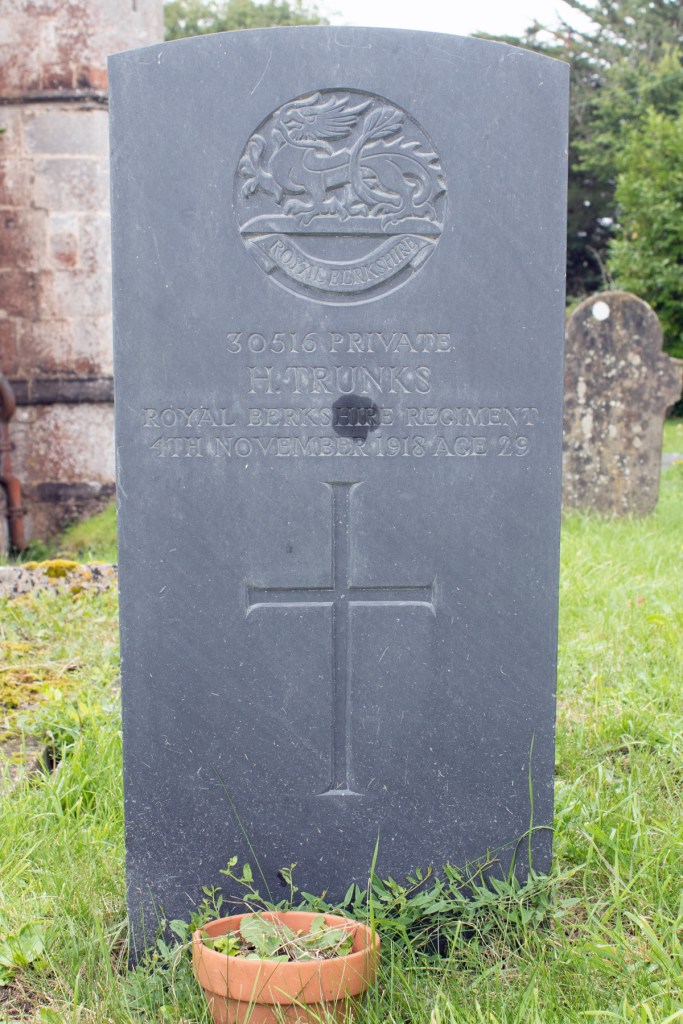
Private Herbert Trunks

Private Herbert Trunks

Herbert Henry Trunks was born in Williton, near Watchet, Somerset, in the spring of 1888. One of fourteen children, his parents were George and Rosa. George was a labourer in a timber yard, but when Herbert left school, he found work as a labourer in a paper mill.

On 10th June 1911, Herbert married Lily Sully at St Decuman’s Church in Watchet. Four years Herbert’s senior, she was a labourer’s daughter: the couple went on to have three children: Lilian, Henry and Dorothy.

Herbert was called up to serve his country on 5th June 1916. Assigned to the Royal Berkshire Regiment, his service records confirm that he was 5ft 9ins (1.75m) tall, and weighed 135lbs (61.2kg). He soon found himself in France, leaving for the continent on 20th September 1916.

Attached to the 13th Labour Battalion, Private Trunks spent the next 15 months overseas, returning to Britain in February 1918 for medical treatment. He was suffering from albuminuria, a side effect of kidney disease, and was hospitalised for a couple of months.

When he had recovered, Private Trunks was transferred to the 397th Home Service Company. He was based on the Isle of Wight, but his health had been impacted, and he came down with pneumonia. He was admitted to Parkhurst Military Hospital on the island on 28th October 1918, but died there just a week later, on 4th November. He was 30 years of age.

Herbert Henry Trunks was taken back to Somerset for burial. He was laid to rest in the peaceful graveyard of St Decuman’s Church, where he had been married just seven years before.


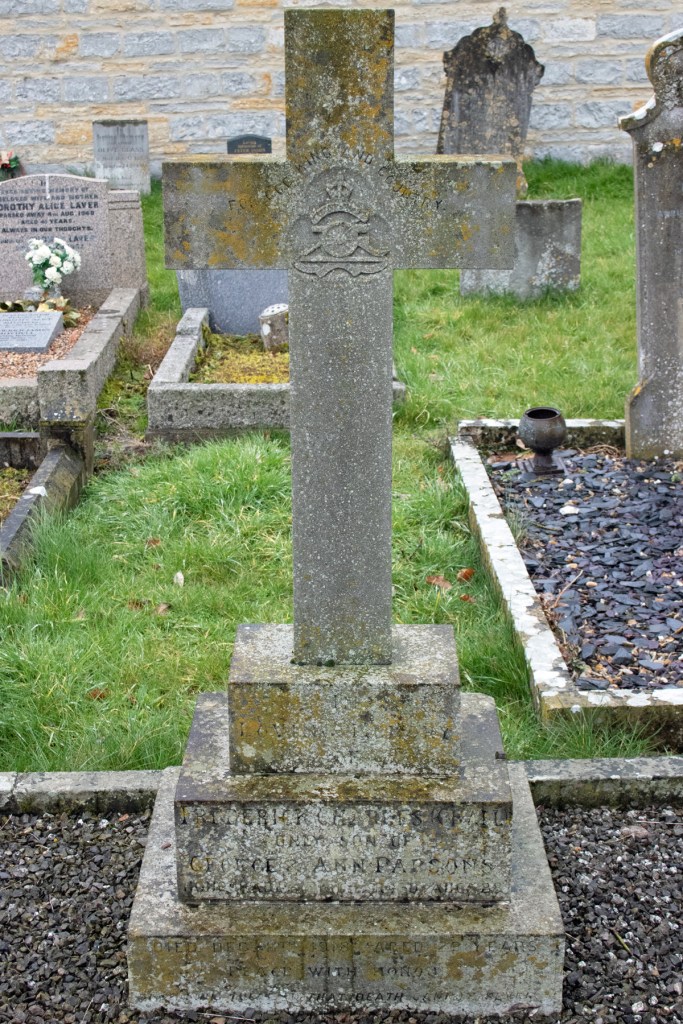
Driver Frederick Parsons

Driver Frederick Parsons

Frederick Charles Harold Parsons was born in 1889, the older of two children to George and Ann Parsons. George was a general labourer from Drayton in Somerset, and this is where he and Ann raised their young family.

Ann’s mother, Elizabeth, was a constant presence in the family’s lives, moving in with them when her own husband, William, died. The 1911 census found a packed family home, with George, Ann, Frederick, Elizabeth, Ann’s widowed brother Joseph and her nephew Robert all living under the same roof.

Frederick – who was known by the nickname Chall – was working as a grocer’s assistant by this point, but when war broke out, he was quick to step up and serve his King and Country. He enlisted on 2nd September 1914, joining the Royal Field Artillery as a Driver. His service records note that he was 5ft 6ins (1.68m) tall and weighed 116lbs (52.6kg). He had dark hair, brown eyes and a dark complexion, and had a scar below his left eye.

For the first ten months of Driver Parsons’ service, he remained on home soil. He was finally sent to France in the summer of 1915 and spent nearly two-and-a-half years overseas. Towards the end of that time, he began to have issues with his kidneys, and was posted back to the UK for treatment.

Initially admitted to Milton Hospital in Portsmouth, Chall was then moved to the VAD Hospital in Ryde on the Isle of Wight. He was initially diagnosed as having kidney stones, but was subsequently found to have enlarged kidneys. He was placed on furlough in May 1918, before being medically discharged from service at the end of August.

At this point, Chall’s trail goes cold. He appears to have returned home to Drayton, as it was in nearby Langport that his death was subsequently registered. He died on 11th December 1918, at the age of just 29 years old.

Frederick Charles Parsons was laid to rest in the family plot in St Catherine’s Churchyard, Drayton.


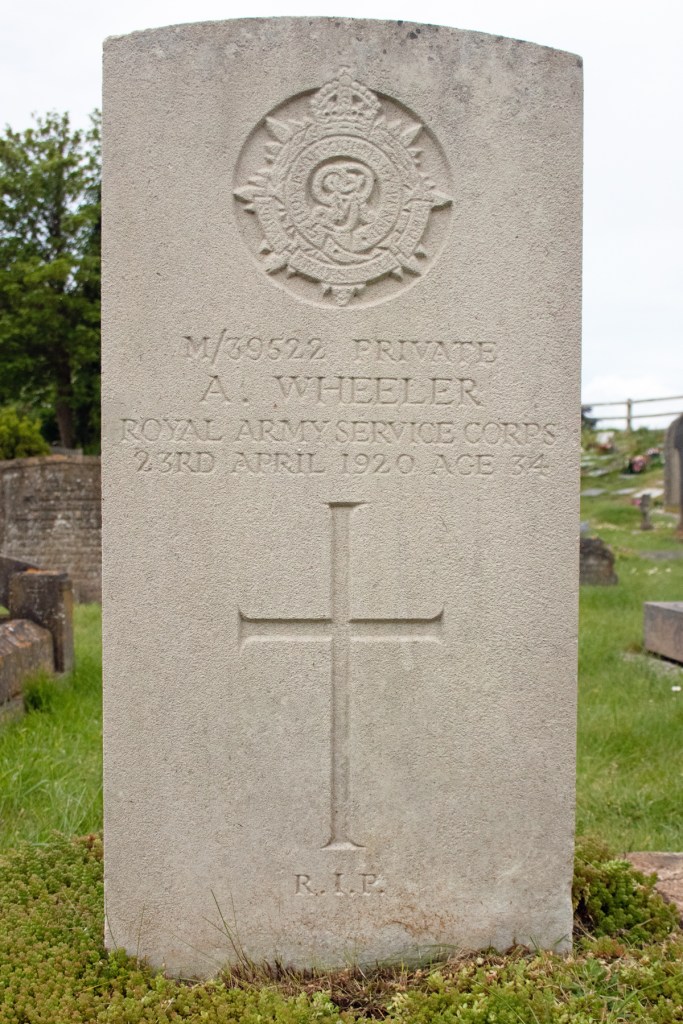
Private Alfred Wheeler

Private Alfred Wheeler

Alfred Wheeler was born in Binstead, on the Isle of Wight, in the summer of 1886. One of three children, his parents were John, a labourer from the Isle of Wight, and his wife Emily.

When he left school, Alfred found work at the London City Mission in Ventnor. By this point, tragically, both of his parents had passed away, and the young siblings were finding their own ways in life.

The 1911 census found Alfred living with his uncle back in Binstead. His trade was given as a Motor Car Driver for the local Carriage & Motor Works; while he was obviously brought up with a spiritual side, he seems to have had a sense of adventure too.

When war broke out, Alfred was keen to do his bit. He enlisted in the Gloucestershire Regiment and was attached to the 1st Battalion. Sent to France within weeks of the war commencing, Private Wheeler was awarded the Victory and British Medals and the 1914 Star.

With his background with cars, Alfred subsequently transferred over to the Royal Army Service Corps in the 615th Motor Transport Company. While full dates are not readily available, the 615th were formed in January 1916, so it was likely after this that Private Wheeler moved across. The company were based in Dublin, and it was in Ireland that he saw out the remainder of the conflict.

On 11th July 1919, Alfred married Rose England. She was the daughter of an organ tuner from Bristol, although there is no obvious connection to Clevedon for him. It seems likely, therefore, that the couple may have met around through the church, possibly as Private Wheeler was travelling between Ireland and Hampshire.

Alfred wasn’t demobbed as soon as the war ended, remaining part of the Royal Army Service Corps through until 1920. It was while he was in Ireland that he contracted influenza. Admitted to hospital in Dublin, he sadly succumbed to the condition on 23rd April 1920. He was 34 years old.

Alfred Wheeler’s body was brought back to England. He lies buried in St Andrew’s Churchyard in Clevedon, Somerset.