Category Archives: London

Reverend George Sweet

Reverend George Sweet

George Charles Walrond Sweet was born on 4th December 1889, the oldest of three children to Reverend Charles Sweet and his wife Maud. A Church of England vicar, Charles moved around with his work, and, when George was born, he was based in Winterborne Kingston in Devon.

George was sent away to school, and, by the time of the 1901 census, Charles and the family had moved to Milton Lilbourne in Wiltshire, to tend the local flock.

After school, George studied at Oxford, then followed in his father’s footsteps by taking holy orders, and was soon appointed rector of Symondsbury, Dorset.

When war broke out, his calling was to serve in the Royal Army Chaplain’s Department. Details of his time during the conflict are unclear, although by the spring of 1919, he was attached to the headquarters of the Army of the Rhine.

It was here that he met Phyllis Squire Hickson, who was serving as a Nurse in the Queen Mary’s Auxiliary Army Corps. The couple fell in love and, in June 1919 they returned to England to marry. The wedding occurred on 6th August 1919, and the newlyweds set off on honeymoon the following day.

On his honeymoon tour, the Revd. George C Walrond Sweet… was drowned on Thursday evening in the Cherwell at Oxford, in the presence of his wife.

Mr and Mrs Sweet engaged a punt at Tims’s boathouse and went for a trip on the river. On returning about seven o’clock, when within 300 yards of the boathouse, the punt pole was embedded in the mud and, in attempting to dislodge it the pole broke.

Mr Sweet fell on the side of the boat and then over-balanced into the river. His wife tried to reach him, but without success, and then jumped into a second punt and from that into another boat, but failed to reach him, and he disappeared. The body was not recovered until a quarter of an hour had elapsed, and life was then extinct.

Mr Sweet, who was an MA of Keble College, was only married on Wednesday at St James’s Church, West Hampstead…

[Phyllis’ father] Mr William Hickson… said his daughter became engaged to Mr Sweet in France. He did not meet him until last Tuesday. They came to England to be married. Mr Sweet met with a bicycle accident some years ago and [he] understood from his daughter that her husband was unable to swim or take any active exercise, but while he had been in France his health had much improved.

It was stated [at the inquest] that Mr and Mrs Sweet had been married only one day when the accident occurred and Dr Brooks, a university coroner, said that the tragedy was one of the saddest that had ever come under his notice.

Taunton Courier and Western Advertiser: Wednesday 13th August 1919

The inquest confirmed that the punt pole had broken about 2.5ft (0.76m) from the top. When George was dragged from the river, artificial respiration was carried out for around 50 minutes, but proved unsuccessful. The inquest returned a verdict of accidental death. George was just 29 years of age.

Reverend George Charles Walrond Sweet’s body was brought to Somerset for burial. He was laid to rest in the graveyard of Holy Cross Church in Sampford Arundel, more than likely because he or his father had been vicars there.


This was the second tragedy to befall the Sweet family. George’s younger brother, Leonard, had been schooled in Sherborne, then at the Military College in Sandhurst. He joined the 1st Battalion of the Hampshire Regiment as Second Lieutenant on 5th February 1913, and was promoted to full Lieutenant in September 1914, and Captain in October 1915.

Captain Sweet was then attached to the 29th Squadron of the Royal Flying Corps, and gained his wings at the British Flying School in Le Crotoy, France, in August 1915. On 22nd June 1916, he was on patrol duty over the British lines, when he was involved in a skirmish, and his plane crashed, killing him instantly. He was just 23 years of age.

Captain Leonard Sweet was laid to rest at the Lijssenthoek Military Cemetery in Poperinge, near Ypres.

Captain Leonard Sweet
(from findagrave.com)

Phyllis Sweet never remarried. By the time of the 1939 England and Wales Register, she was living in Bridport, Dorset, and working as a political organiser and speaker. She passed away in August 1944 in Cannock, Staffordshire, at the age of 63 years old.


Private George Dove

Private George Dove

George Dove was born in Wincanton, Somerset, on 4th December 1883. One of five children, his parents were farm labourer George Dove and his wife, Jane.

George Jr did not follow his father into farm work: the 1901 census found him boarding with a family in Radstock, working in one of the coal mines in the area. Ten years later, he was living back with his family, employed as a groom.

His work with horses stood him in good stead when war was declared. George enlisted early on, and was assigned to the 19th (Queen Alexandra’s Own Royal) Hussars as a Private. By October 1914, he was in France, returning to England with his squadron the following spring.

At some point during the conflict, Private Dove transferred to the Reserve Regiment of Cavalry. He was posted to the 5th Regiment, which trained men for the Northumberland Hussars and Yorkshire Dragoons, amongst others.

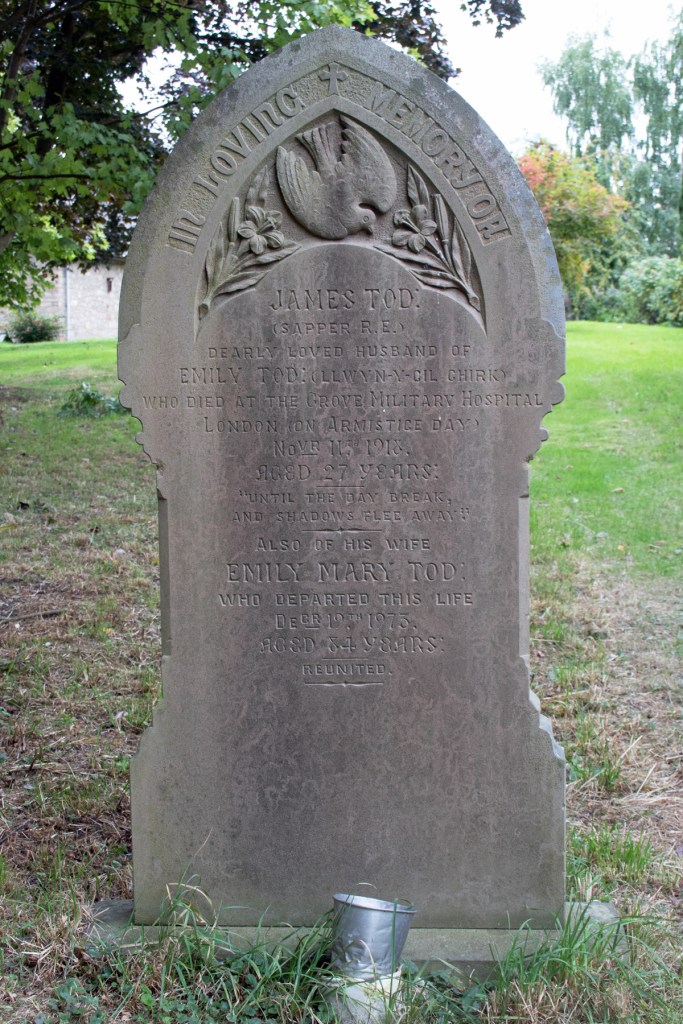
Further details of George’s life are scarce; at some point, he married a woman called Emily, although records of the couple’s wedding no longer exist. The only thing that can be confirmed is that George was admitted to the Bermondsey Military Hospital in Surrey, where he passed away on 24th October 1918. He was 34 years old.

The body of George Dove was brought back to Somerset for burial. He lies at rest in the cemetery in his home town, Wincanton.


Deck Hand Alexander MacGregor

Deck Hand Alexander MacGregor

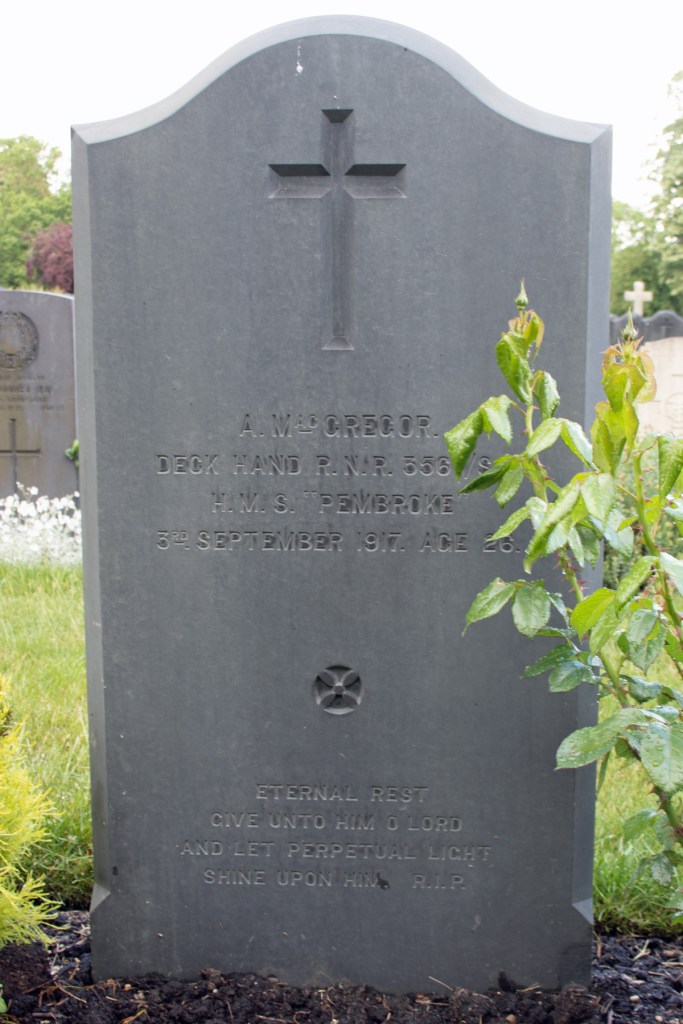
Alexander MacGregor was born on 1st January 1890 in the Scottish village of Acharacle. The oldest of eleven children, his parents were Dugald and Mary MacGregor.

There is little concrete information about Alexander’s early life, but, by the outbreak of war, he had moved to London. He married a woman called Bridget in around 1916: the couple settled in Battersea, and went on to have a son, Peter, who was born in December 1916.

Alexander had, by this point, signed up to play his part in the European conflict. He joined the Royal Naval Reserve as a Deck Hand on 1st December 1915. His service records confirm that he was 5ft 7.5ins (1.71m) tall, had grey eyes and a medium complexion. The section of the Royal Navy that he joined suggests that he had had previous sea-faring experience (given the proximity of his home village to the Argyll coast, this is not surprising).

Deck Hand MacGregor’s was assigned to HMS Pembroke, the Royal Naval Dockyard in Chatham, Kent. Details of his military service are unclear, but he spent just under two years at the dockyard. By the summer of 1917, the base was a busy and cramped place, and Alexander found himself billeted in temporary accommodation set up in the barracks’ Drill Hall.

On the night of the 3rd September, the German Air Force conducted the first night time raid on England. Chatham came in the firing line, and the Drill Hall received a direct hit. Deck Hand MacGregor was among those to be killed. He was just 27 years of age.

Alexander MacGregor was laid to rest in the Woodlands Cemetery in nearby Gillingham, along with the other victims of the Chatham Air Raid.


Stoker 1st Class Edmund Walsh

Stoker 1st Class Edmund Walsh

Edmund Walsh was born on 11th September 1884 and was one of eleven children – eleven sons – to James and Christiana Walsh. James was a builder and plasterer from Chelsea, London, while his wife was from nearby Marylebone. The family lived in Treverton Street, North Kensington: by the time of the 1911 census, James and Christina were living in two rooms with seven of their children – the oldest of whom were in their twenties.

Edmund, however, had moved on. The same census found him living in two rooms in Rackham Street, not far from his parents. He was sharing the house with his wife, Lilian Walsh, who he had married five years before, and his brother-in-law, Thomas Culverhouse. All three were bringing in some money – Edmund and his brother-in-law were working as labourers, while Lilian was employed as a shirt machinist.

War was coming to Europe and, in March 1915, Edmund was called upon to play his part. He enlisted in the Royal Navy as a Stoker 2nd Class, and was sent to HMS Pembroke, the Royal Naval Dockyard in Chatham, Kent, for training. Edmund’s service records show that he was 5ft 6ins (1.68m) tall, had auburn hair, grey eyes, a fair complexion and a scar on his left eyebrow.

Stoker Walsh’s first posting was on board the gunboat HMS Halcyon. He served there until 5th September 1915, when he was recorded as “run”. Edmund was caught (or handed himself in, it is unclear) on 13th October, and was sentenced to three months’ detention back at HMS Pembroke.

On his release in January 1916, Stoker Walsh returned to duties at the dockyard, before being given a second posting on board the cruiser HMS Bonaventure. He spent just over a year on board, gaining a promotion to Stoker 1st Class in the process. At the end of his time on board, however, Edmund was again sentenced to detention for being absent from duty. The Bonaventure had returned to HMS Pembroke by this point, and this is where he served 28 days in the cells.

Stoker 1st Class Walsh was released back to duties on 17th June 1917, and remained at HMS Pembroke. The Dockyard was a busy and cramped place that particular summer, and he was billeted to temporary accommodation set up in Chatham Drill Hall.

On the night of 3rd September, the town came under attack from a German air raid, and the Drill Hall received a direct hit. Stoker Walsh was among those to be killed that night. He was a week short of his 32nd birthday.

Edmund Walsh was laid to rest in the Woodlands Cemetery in Gillingham, Kent, alongside the other victims of the Chatham Air Raid.


Stoker 1st Class Edmund Walsh
(from ancestry.co.uk)

Stoker 1st Class Sidney Seymour

Stoker 1st Class Sidney Seymour

Sidney Seymour was born on 5th April 1895 in Islington, London, the son of Elizabeth Seymour. Sadly, as his was a common name in the area, there is little concrete information about his early life, and is it not until his military service that anything specific can be confirmed.

Sidney was working as a clockmaker when he signed up. He enlisted on 29th April 1913, joining the Royal Navy as a Stoker 2nd Class on a twelve year contract.

Sidney was initially sent to HMS Pembroke, the Royal Naval Dockyard in Chatham, Kent. He trained for nine months at the dockyard, before being given his first posting on board the battleship HMS Dominion. Stoker Seymour spent more than three years on board: during this time he was promoted to Stoker 1st Class, but also spent two weeks in the cells for an unrecorded reason.

In July 1917 Sidney returned to HMS Pembroke; that summer was a busy time for the base, and Stoker 1st Class Seymour found himself billeted in overflow accommodation set up in the barracks’ Drill Hall.

On the night of 3rd September, Chatham came under attack from a German air raid, and the Drill Hall received a direct hit. Stoker Seymour was injured, and died of his injuries in hospital the following day. He was 22 years of age.

Sidney Seymour was laid to rest in the Woodlands Cemetery in Gillingham, Kent, alongside the other victims of the Chatham Air Raid.


Captain William Rowell

Captain William Rowell

William Cecil Rowell was born on 29th November 1892 in Wolborough, Newton Abbot, Devon. He was the youngest of three children to architectural surveyor Spencer Rowell and his wife, Annie.

The 1911 census recorded that William had left the family home to study to be a civil servant, and was boarding with a family in Fulham, London. His studies complete, he was driven by a need to serve his country and, on 22nd January 1913, aged just 20 years old, he enlisted in the Loyal North Lancashire Regiment.

Full details of his service are not available, but it is clear that he was committed to his purpose. He was promoted to Second Lieutenant soon after enlisting, rose to full Lieutenant in November 1914, and Captain a year later. It’s not possible to pinpoint where he served, he was wounded twice and, after his second recovery, he made a transfer to the Royal Flying Corps (later moving to the new Royal Air Force when it was founded in 1918).

Captain Rowell was based at Bekesbourne Airfield in Kent. He qualified as a pilot with 50 Squadron in October 1918, but was injured when, on the 12th November, his Sopwith Camel collided with the hanger. William was admitted to the Military Hospital in nearby Canterbury, but the injuries to his leg proved too severe for it to be saved, and he underwent an amputation in January 1919.

Tragically, while the initial prognosis was good, within a few weeks sepsis set in; Captain Rowell passed away on 22nd May 1919, aged just 26 years old.

William Cecil Rowell’s body was brought back to Devon for burial. He was laid to rest in the family plot in the graveyard of St Mary’s Church in Wolborough.


Lieutenant Alan Lloyd

Lieutenant Alan Lloyd

Alan Edward Lloyd was born in around 1899, the second of five children – all boys – to William and Edith Lloyd. Both of his parents were Welsh, and his older brother was born in Cardiff. Railway clerk William moved around the country with work, however, and Alan was born in Lydney, Gloucestershire, his younger brother in Paddington, London, and his two youngest siblings were born in Windsor, Berkshire.

There is little information about Alan’s early life; what is clear is that, by the autumn of 1918, he had been in the army, reaching the rank of Lieutenant. He transferred across to the newly formed Royal Air Force and, in December that year was training as a Flight Cadet at Shotwick Airfield near Chester.

On the 4th December, Alan was flying his Sopwith Camel, when he got into a flat spin; the aircraft crashed and Alan was killed. He was just 19 years old.

Alan Edward Lloyd was brought to Devon – where his family were now living – for burial. He was laid to rest in the graveyard of All Saints Church in Highweek, near Newton Abbot.


Lieutenant Alan Lloyd
(from ancestry.co.uk)

Seaman George Gunn

Seaman George Gunn

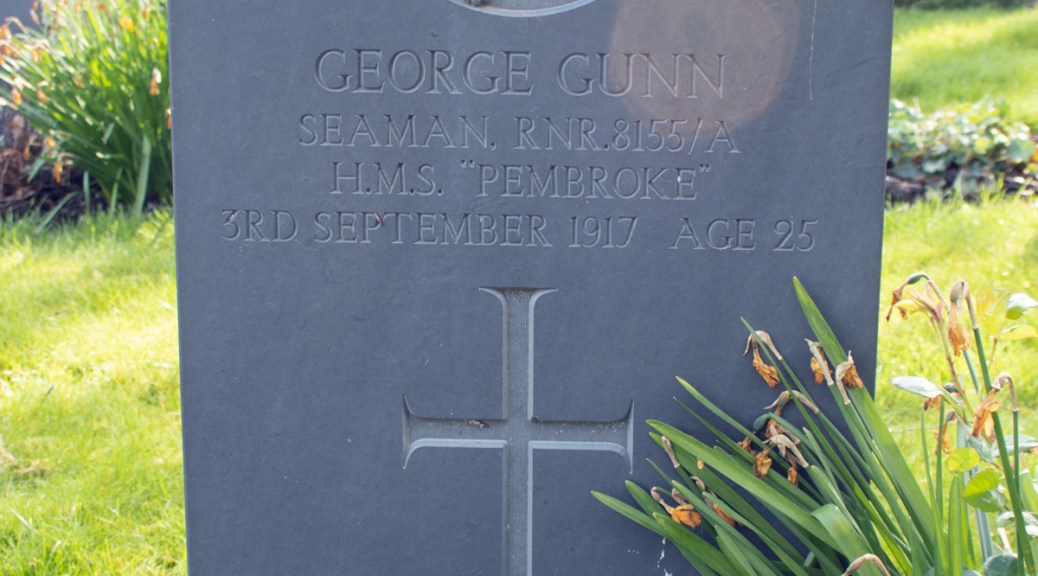
George Gunn was born on 15th October 1891, the middle of three children to William and Hughina Gunn. The family lived in the hamlet of Skerray on the North Scottish coast.

Sadly, there is little information about George’s life. When was broke out, he enlisted in the Royal Naval Reserve, which suggests that he had experience of going to sea, although this is likely, because he lived in a coastal village.

George’s service records show that he was 5ft 10.5ins (1.79m) tall, had grey eyes and a fresh complexion. Under ‘personal marks’ the document noted that he had a dimple in his chin.

Seaman Gunn spent most of his time on land; he was initially posted to HMS Pembroke, the Royal Naval Dockyard in Chatham, Kent. In June 1915, however, he was assigned to the minelayer HMS Orvieto, and spent the next year patrolling the North Sea.

By the spring of 1916, George was back in Chatham; by August he was on the move again, this time to London, where he spent twelve months at HMS President, the Royal Naval Base in London. He returned to HMS Pembroke on 3rd September 1917, a move that was to prove fatal.

The base was a particularly busy place that summer, and George was billeted in overflow accommodation in the barracks’ Drill Hall.

That night, Chatham was bombarded by a German air raid, and the Drill Hall received a direct hit. Tragically, Seamen Gunn was among those killed. He was just 24 years old and has been at HMS Pembroke for a matter of hours.

George Gunn’s body, along the other victims of the Chatham Air Raid, was laid to rest in the Woodlands Cemetery in Gillingham, more than 500 miles from home.


Stoker 1st Class John Green

Stoker 1st Class John Green

John Green was born in Putney, London, on 9th September 1895. He was one of eight children to cab driver Albert Green and his wife, Bridget. When he left school, John found work as an errand boy, but clearly wanted bigger and better things.

On 8th October 1913, he enlisted as a Stoker 2nd Class in the Royal Navy. His naval records confirm that he was 5ft 4ins (1.62m) tall, had brown hair, brown eyes and a fresh complexion. He was also noted as having a scar on the side of his right eye.

While John’s service records confirm his date of birth as that above, other documents suggest that his year of birth was 1897. This would have meant he would have been to young to enlist in the Royal Navy when he did, although it was not unusual for keen sailors to add a year or so to their age to ensure they were accepted.

Stoker 1st Class Green was initially sent to HMS Pembroke – the Royal Naval Dockyard in Chatham, Kent – for training. He spent six months there, before being assigned to the dreadnought battleship HMS Vanguard. He spent three-and-a-half years on board her, and gained a promotion to Stoker 1st Class in the process.

In August 1917, John returned to Chatham Dockyard. HMS Pembroke was a busy and cramped place that particular summer, and he was billeted to temporary accommodation set up in Chatham Drill Hall.

On the night of 3rd September, the town came under attack from a German air raid, and the Drill Hall received a direct hit. Stoker Green was badly injured and admitted to the Chatham Naval Hospital; he succumbed to his injuries the following day, days short of (officially) his 22nd birthday.

John Green was laid to rest in the Woodlands Cemetery in Gillingham, Kent, alongside the other victims of the Chatham Air Raid.


Leading Seaman Edward Mudford

Leading Seaman Edward Mudford

Edward Short Mudford was born on 29th March 1898 in the Somerset village of Stratton-on-the-Fosse. He was one of nine children to Joseph and Mary Mudford.

Information about his early life is confusing: the 1901 census gives his name as Edwin, rather than Edward; his father appears to have died by this point, leaving Mary to raise the family alone. The 1911 census records Edward and a younger sister living in the Union Workhouse in Shepton Mallet, while Mary has apparently remarried and was living in Radstock with two of Edward’s siblings and a daughter from her second marriage, although her new husband is noticeable in his absence from the document.

From this shaky start, however, Edward sought a new life for himself. On 21st August 1913 he enlists in the Royal Navy. His service records show that he stood just 5ft 1ins (1.55m) tall, had fair hair, hazel eyes and a fresh complexion. Being under age at the time, he was given the rank of Boy 2nd Class.

Edward was initially sent to HMS Ganges, the naval training establishment outside Ipswich, Suffolk. Promoted to Boy 1st Class in February 1914, he was soon given his first posting, on the cruiser HMS Crescent.

After another short spell at HMS Vivid, the Naval Dockyard in Plymouth, Boy Mudford found himself on board HMS Thunderer. Edward spent nearly four years aboard the battleship, coming of age and gaining the rank of Ordinary Seaman, while also being promoted to Able Seaman in March 1916.

Edward returned to Plymouth in February 1918, and spent the next couple of years between there, Portsmouth and Woolwich Dockyards. He was again promoted, given the rank of Leading Seaman in September 1918.

Life at sea and in barracks took its toll, however, and, in in the spring of 1920, Leading Seaman Mudford contracted influenza and pneumonia. Sadly the conditions proved too much to bear: he passed away on 20th March 1920, a week shy of his 22nd birthday.

Brought back to Somerset, where, presumably some of his family still lived, Edward Short Mudford was laid to rest in the graveyard of St John the Baptist Church in Chilcompton.