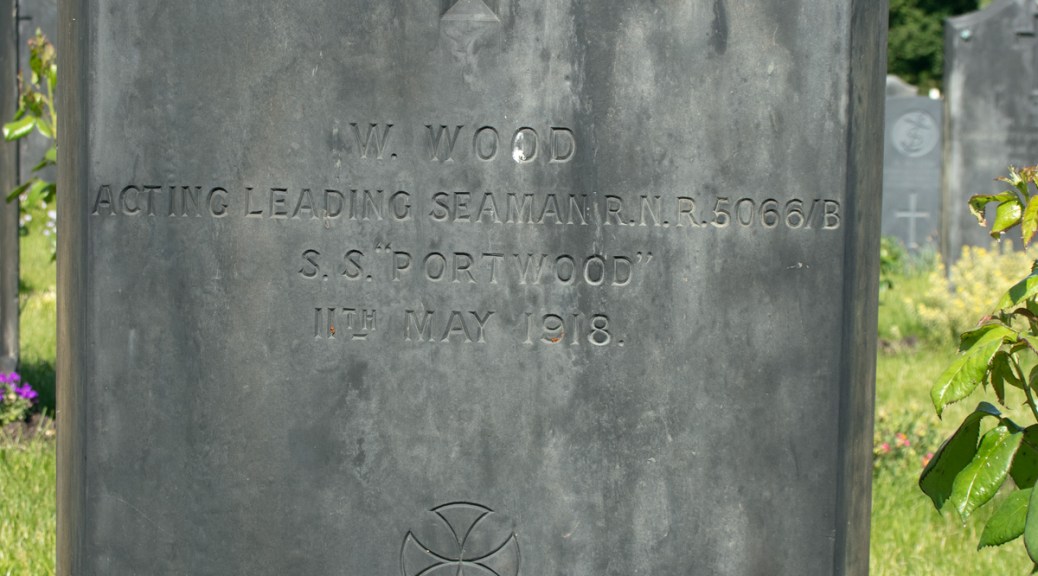
The life of William Wood, who is buried in Woodlands Cemetery in Gillingham, Kent, is a challenge to piece together. His headstone confirms that he held the rank of Acting Leading Seaman in the Royal Naval Reserve, and that he was assigned to SS Portwood at the time of his death.
Full service records for William have long since disappeared, but his pension ledger index card gives his widow as Catherine Rose Wood, of Greenfield Street in Govan, Scotland. It also suggests that the couple did not have any children under full age.
The Royal Navy and Royal Marine War Graves Roll provides William’s date of birth – 28th December 1887 – and goes on to suggest that he was born in London. Sadly, his name is far too common to narrow down census records, and there are no documents relating to his and Catherine’s marriage, so any additional family connections are also lost.
Acting Leading Seaman Wood’s entry on the pension ledger confirms his died of general paralysis of the insane, and his burial in the Gillingham cemetery would suggest that he had passed away in the Royal Naval Hospital in Chatham, Kent. He died on 11th May 1918, at the age of 29 years old.
William Wood was buried in the military section of Woodlands Cemetery, Gillingham, Kent.
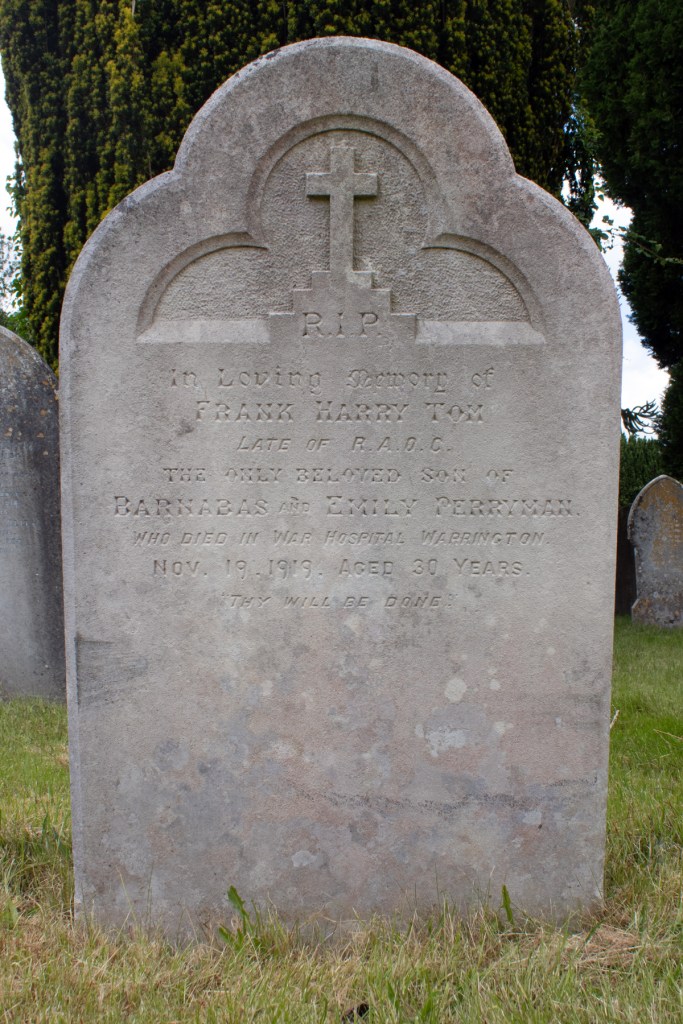
Frank Harry Tom Perryman was born in Axminster, Devon, on 16th October 1889. The third of six children – and the only boy – his parents were Barnabas and Emily. Barnabas was a carpenter and joiner, and the family lived in the centre of the town: first next door to the Red Lion Inn on Lyme Street, then around the corner on South Street.
By the time of the 1911 census, an opportunity had arisen to take Frank away from Devon. The document records him as one of four servants (in addition to a maid, butler and cook) for Eumenia Hime and her law student son, Stanley. Eumenia’s husband, Edward, was a merchant in Brazil, and their son had been born in Rio de Janeiro. Ste Georgian Croyland House on Cornwall Gardens in South Kensington, was the family’s London residence, and this is where young Frank was employed.
When war came to Europe, Frank was called upon to play his part. Sadly, his service records have been lost to time, but it is evident that he enlisted in the Royal Army Ordnance Corps. Private Perryman’s Medal Roll suggests that he served on home soil, and certainly by the end of the war – presumably while waiting to be demobbed – he was based in Cheshire.
In November 1919, Frank was admitted to the War Hospital in Warrington. Details are unclear, but it is likely that he had contracted one of the many lung conditions prevalent at the time. He passed away while still admitted on 19th November: he had not long turned 30 years of age.
The body of Frank Harry Tom Perryman was taken back to Devon for burial. He was laid to rest in Axminster Cemetery, on the outskirts of the town that had been his childhood home.
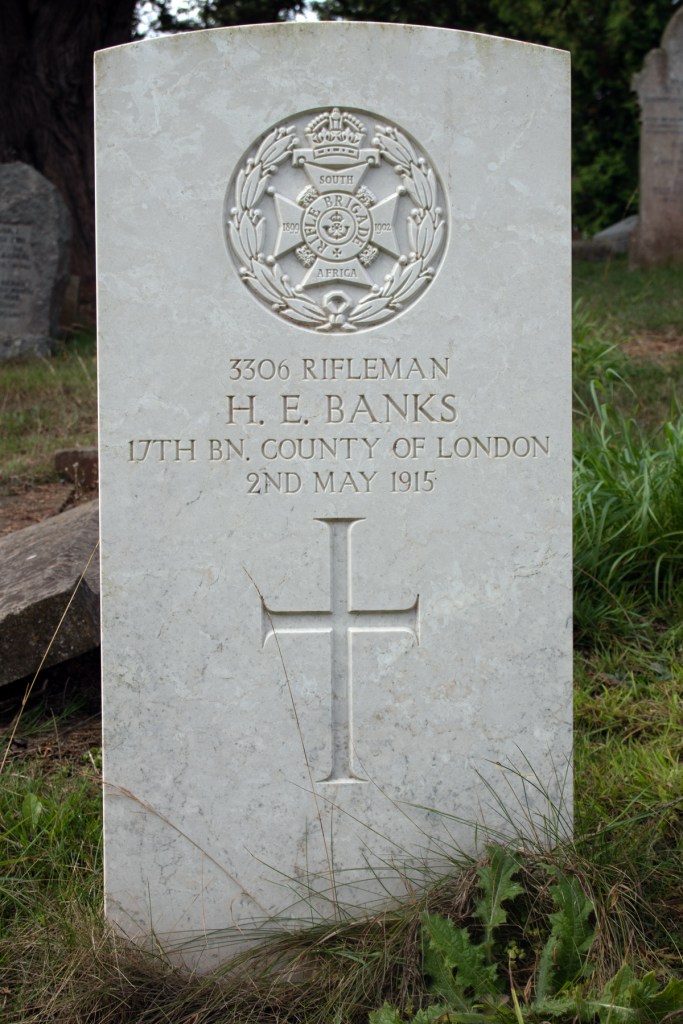
The early life of Henry Ernest Banks is destined to remain lost to time as there is little documentation available to corroborate details. The first concrete documentation for him is his marriage certificate, and this sheds lights onto the man he had become.
The wedding took place on 7th August 1905, and confirms that Henry was 19 years of age. His father was recorded as being James Banks who, by this point was deceased. He had been a chairmaker, and his son had followed in a similar type of work, being employed as a French polisher.
Henry’s bride was 19-year-old Blanche Hearnden, who was noted as being the daughter of deceased traveller William Hearnden. At the time of their marriage, the newlyweds were living at 13 Busby Street, Bethnal Green, London. Now long since gone, the road led directly to St Matthew’s Church, which is where their nuptials took place.
By the time of the 1911 census, Henry and Blanche were living with her mother in Whitechapel. They had had a child, son Ernest, the previous year, and the mixed household included Blanche’s three sisters and their children. Money must have been tight, but four members of the household were bringing in some money, Henry working as a French polisher, with two of his sisters-in-law working as a cigarette packer and a printer’s assistant. Blanche and her other sister were listed as housewives, while her mother, who was also called Blanche, was noted as being a charwoman.
When war broke out, Henry was called upon to play his part. Details of his military service are sketchy, but it is clear that he enlisted in the London Regiment, and was attached to the 17th (County of London) Battalion, which was also known as the Poplar and Stepney Rifles.
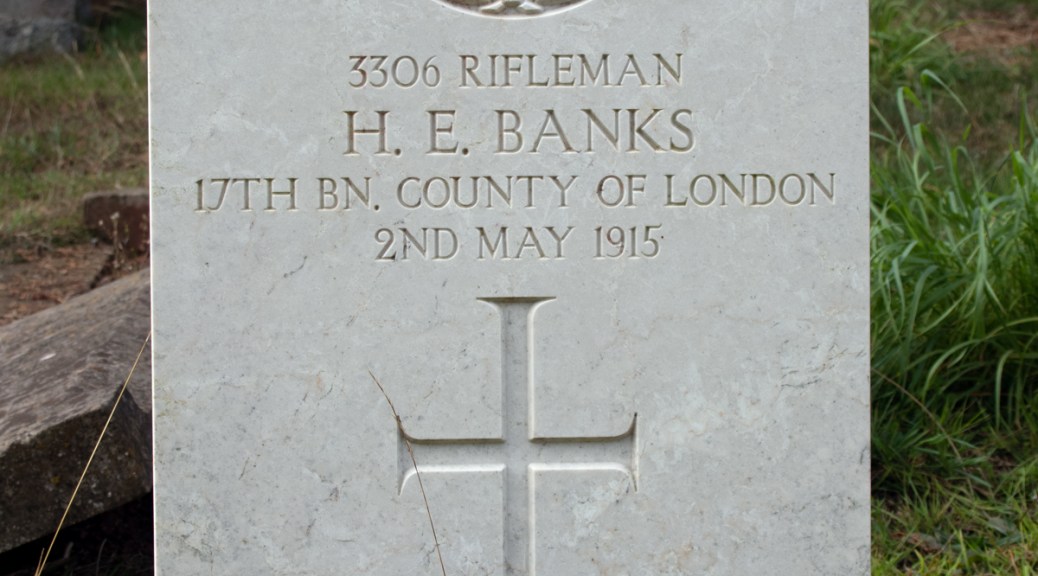
Rifleman Banks’ unit was sent to France on 9th March 1915. Within a matter of weeks, however, he was back in the UK, and appears to have been admitted to a hospital in Paignton, Devon.
Henry died on 2nd May 1915, and one record – his entry on the Grave Registration Form – that sheds a little light on Henry’s passing. It is noted being as a result of a strangulated hernia, although this is the only document that gives any details about his death. Henry was 28 or 29 years of age.
Henry Ernest Banks was laid to rest in Paignton Cemetery, Devon.
The early life of Henry Morris is difficult to pin down although later records suggest that his parents were William and Elizabeth from Bath, Somerset. A baptism record from December 1882 shows Henry Morris, with a mother called Elizabeth, but no father is noted, so there is no way to confirm any connection.
The first concrete information for Henry is the 1911 census: this records Henry Morris living with his wife, Eliza, their son, Henry Jr, and Eliza’s mother, Emma Derrick. He was working as a poulterer, employed by a fishmonger’s, with Eliza also working as a fish hawker. Henry and Eliza – who had married in 1905 – would go on to have a second child, Emma, who was born in November 1911.
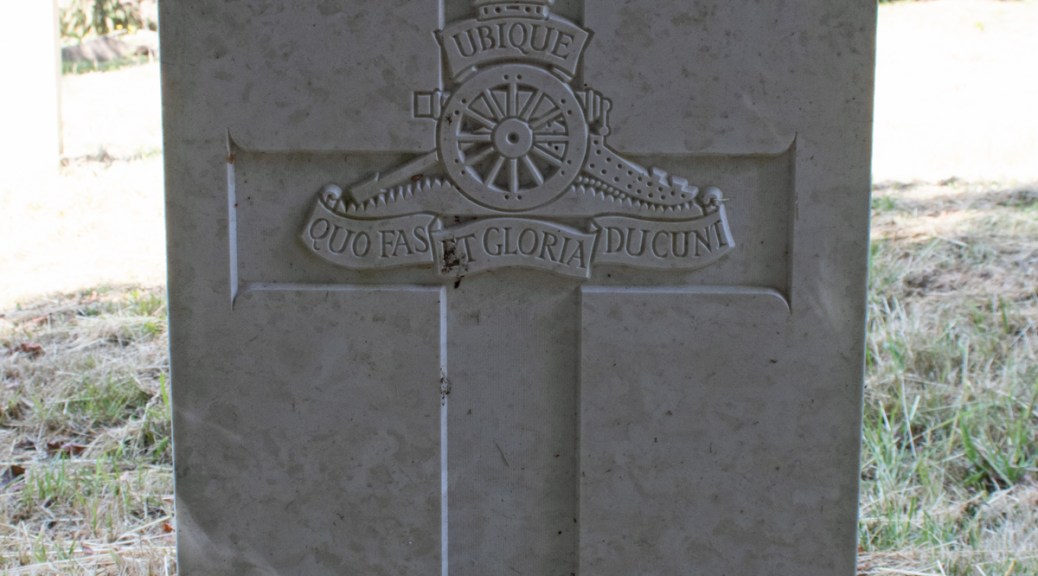
When war broke out, Henry stepped up to serve his King and Country. Full service records are lost to time, but it is clear that he had enlisted by the spring of 1916, joining the Royal Field Artillery as a Gunner. Documents suggest two different units in which he served: the 26th Division Ammunition Column and the 5th (Reserve) Brigade.
By the autumn of 1916, Henry was suffering from nephritis. He was admitted to the military hospital on Endell Street, London, but his condition was to prove fatal. He passed away on 24th November 1916: he was 32 years of age. With a few discrepancies, a newspaper article gave a little more information about his life:
Henry Morris, RFA, 67 Avon Street, died this morning… He was invalided home from Salonika, and arrived in London nine weeks ago, He was married, and leaves a widow and two children… For eleven years Driver Brooks worked for Mr Broadhurst, fishmonger, York Buildings, Bath, and joined the army sixteen months ago.
[Bath Chronicle and Weekly Gazette: Saturday 25th November 1916]
Henry Morris was taken back to Somerset for burial. He was laid to rest in Bath’s sweeping Locksbrook Cemetery.
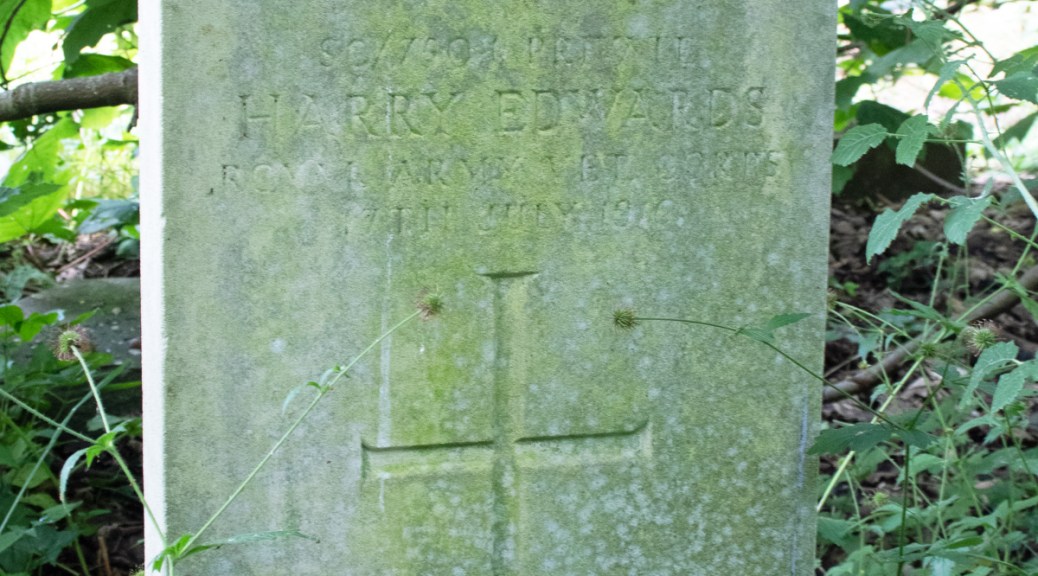
Harry Edwards was born early in 1855 in South London. One of eleven children, his parents were John and Sarah Edwards. John was a carpenter, and the family were raised in Bermondsey, first in a small terrace in Chapel Place, then sharing a slightly larger house in Grange Walk.
Much of Harry’s life is lost to time. He married Mary Ellerington on 27th July 1879: she was a tailor’s daughter from Southwark, and the couple set up home at 29 Newington Causeway. The marriage certificate confirmed that Harry was employed as a warehouseman at the time, and their daughter, Amelia, was born the following spring.
A later document suggests that Harry went on to join the army, fighting as part of the South Africa Campaign. Sadly, however, his service records are lost to time, and so it is not possible to confirm when and for how long he served. Certainly, there is no mention of the family in the census returns from 1881 to 1911, so he may well have been overseas.
The next records available for Harry are those relating to his military service during the First World War. He enlisted early in 1915, joining the Royal Army Veterinary Corps. He found himself in France by mid-April, and was awarded the British and Victory Medals and the 1915 Star for his service.
Private Edwards came down with bronchitis in the spring of 1916: he was medically evacuated to Britain for treatment, and was admitted to the Bath War Hospital in Somerset. It seems that Harry’s age was against him: he passed away from the condition on 17th July 1916, at the age of 61 years old.
Harry Edwards’ family may have been unable to afford the cost of bring him back to London for burial. Instead, he was laid to rest in the sweeping Locksbrook Cemetery, not far from the hospital in which he had breathed his last.
John Merritt was born on 17th August 1880 in Shoreditch, London, and was the youngest of three children to James and Emily Merritt. James was a dock labourer, who passed away when his son was just four years old. Emily remarried the following year, having a child with her new husband, George Wise, in 1888.
When he completed his schooling, John found work as a stoker. However, he sought bigger and better things and, on 21st February 1898, he enlisted in the Royal Marine Light Infantry. Not yet eighteen years old, his service records show that he was 5ft 5.5ins (1.64m) tall, with grey eyes, brown hair and a fresh complexion. His service records also record a couple of tattoos: an anchor on his left forearm, and a crossed heart on his right.
Over the next two decades, Private Merritt sailed and saw the world. Primarily based out of the Royal Naval Dockyard in Chatham, Kent, he served on ten ships in all. His superiors obviously thought highly of him, as his records note his character and ability as very good throughout his service.
On 3rd July 1909, John married Harriett Wise. She was a lighterman’s daughter from East London, who was working as a cork cutter when the couple exchanged their vows. They went on to have two children: Florence, who was born in 1910, and Reginald, who came along six years later.
By the time war was declared in the summer of 1914, John seems to have been mainly shore-based, his time being split between Chatham and Portsmouth, Hampshire.
On 7th March 1917, Private Merritt was on board the gunboat HMS Spey, which was carrying out diving operations in the Thames Estuary. At 4 o’clock in the afternoon, in “bitterly cold and boisterous conditions” [Whitstable Times and Herne Bay Herald: Saturday 24th March 1917], the ship lost an anchor, and the decision was made to return to base at Sheerness, Kent. Another vessel, the HMS Belvedere, was close by and turned towards the Spey, and, despite trying to avoid a collision, the smaller ship was struck a glancing blow.
The Spey was 40 years old, and the impact sheered numerous rivets from the side. Water gushed in, and the gunboat sunk beneath the Thames within a matter of minutes. Some of the crew had managed to escape on a life raft, but it was not fitted with lights or flags. The boat drifted and was not found until five hours later, partially submerged: all on board had died.
In total, twenty of the thirty-seven crew perished on that March afternoon, including Private Merritt. He was 36 years of age.
It would seem that Harriett was unable to cover the cost of bringing her late husband’s body back to London for burial. Instead, John Merritt was laid to rest in Woodlands Cemetery in Gillingham, Kent, not far from the naval base in Chatham which he had called home for so long.
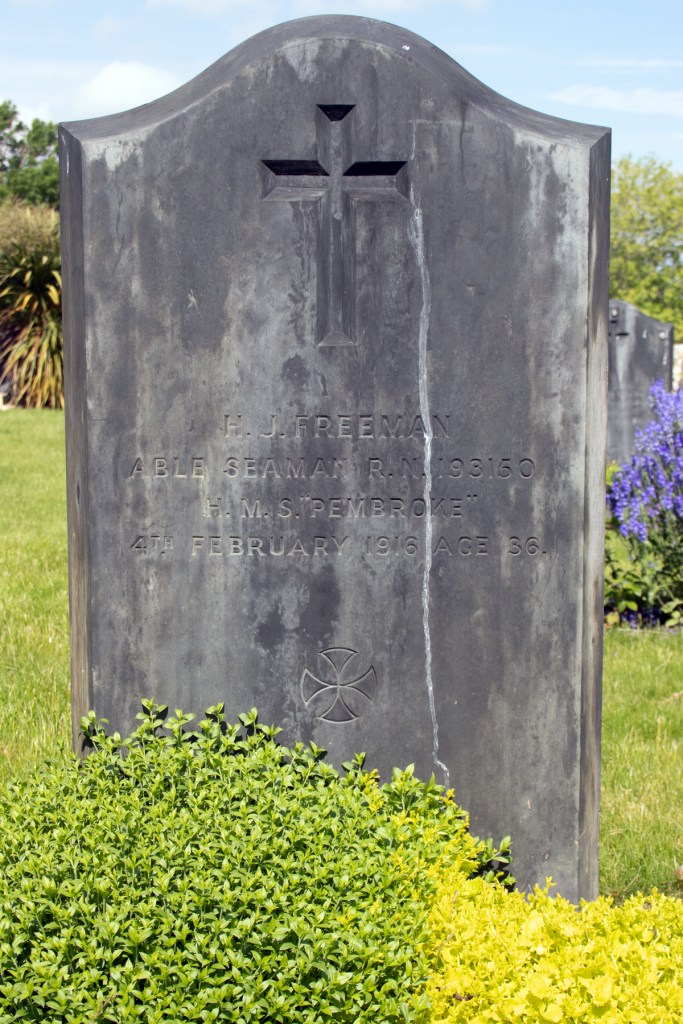
Horace James Freeman was born in Hackney, East London, on 16th September 1879. The second of five children, his parents were Archibald and Mary Freeman. According to the 1891 census, Archibald was employed as a carman, but the next document had him listed simply as a ‘traveller’.
When he completed his schooling, Horace found work as a baker’s assistant. He sought bigger and better things, however, and, on 13th February 1897, he enlisted in the Royal Navy. His service records show that he was 5ft 5.5ins (1.66m) tall, with brown hair, hazel eyes and a fresh complexion.
A few months under full age, Horace was initially given the rank of Boy 2nd Class. He was sent to the training ship HMS Northampton, and seemingly impressed his superiors, rising to Boy 1st Class within a couple of months. He moved to another training vessel, HMS Calliope, in July 1897, and was serving on board when he came of age that September.
Now formally inducted into the Royal Navy, Ordinary Seaman Freeman began what was to be an eighteen year career at sea. He would become based at HMS Pembroke, the Royal Naval Dockyard in Chatham, Kent, and went on to serve aboard nine ships during his time.
Promoted to the rank of Able Seaman in October 1899, Horace’s time in the navy was not to be without incident. He spent eight separate periods of time in the cells, 158 days in total. Full details of his misdemeanours are lost to time, but at least on at least one occasion he was placed in the brig for refusing orders.
On Christmas Day 1911, Horace married Sarah Byatt. She was a bricklayer’s daughter from Tottenham, and the couple went on to have two children: Clifford, born in 1913, and Leslie, born two years later.
While Sarah was looking after their young family, Horace spent a lot of his time at sea. As time moved on, however, he was based at HMS Pembroke for longer spells, and it was while he was in Chatham early in 1916 that fate befell him.
The body of Horace J Freeman, an able seaman of the RFR, who had been missing from his ship since February 25th, was found floating in South Lock at Chatham Dockyard on Saturday.
[South Eastern Gazette: Tuesday 11th April 1916]
Little additional information is available about Horace’s death, and it is unclear how he had fallen into the lock. He was 36 years of age.
The body of Able Seaman Horace James Freeman was laid to rest in Gillingham’s Woodlands Cemetery, not far from the naval base he had called home for so long.
Anyone who attended the funeral of Captain George Lee, IMT (late Rifle Brigade), held in the churchyard of his old home, Yetminster, on Wednesday could not but have been impressed by the wonderful sense of peace and rest that pervaded the place. After a life of unique adventure in Africa, India, America, and Canada his worn and suffering body was laid to rest beside his beloved father. The solemn service was taken by his uncle, Red. EHH Lee (vicar of Whitchurch Canonicorum) and his cousin, Rev. E Hertslet (vicar of Ramsgate), and Rev. MJ Morgan (vicar of Yetminster), there being also present his old schoolfellow, Rev. J Lynes, and Rev. Hall, curate of Yetminster. Besides the chief mourners Captain Lee’s mother, sister and brother-in-law, there were many friends present and numerous villagers who had known him from boyhood. The coffin was attended throughout the service and for many hours before by his most faithful servant and friend, Rajab Ali Khan, who was with his master through India, Persia, Beluchistan, and Afghanistan, and came to England as his personal attendant when Captain Lee was sent home on sick leave. After the service in the churchyard Rajab, through the kindness of Mr Hall, who translated for him, was able to tell everybody what his master had been to him.
Dorset County Chronicle: Thursday 9th September 1920
George Johnston Lee was born in the summer of 1886, the second of four children to Reverend Robert Lee and his wife, Elizabeth. Robert was the vicar of St George’s Church in Fordington, Dorset, when George was born, but moved west to Toller Porcoram not long after he was born.
Tantalisingly little information about George’s early life remains. He does not appear on the 1901 or 1911 census records, and it is likely that he was already away travelling the world by this point. It seems clear that he followed a military, rather then a clerical, career and, by the end of the First World War he was serving in the Indian Army Reserve of Officers. Attached to the Rifle Brigade, George had reached the rank of Captain.
George’s father had become ill in the early 1910s, and having moved to St Andrew’s Church in Yetminster, he retired from the post in 1912. He and Elizabeth moved to Dorchester, but when he passed away in 1916, at the age of 59, his last wishes were to be buried in Yetminster, the village having held a special place in his heart.
Captain Lee survived the First World War, but, as the newspaper report suggests, he became unwell. George had contracted amoebic dysentery, and returned to England to recuperate. The condition was to prove too severe, and he passed away in London on 29th August 1920, at the age of 34 years old.
In accordance with the family’s wishes, George Johnston Lee’s body was taken back to Dorset, and he was laid to rest next to his father, in the tranquil St Andrew’s Churchyard, Yetminster.
In the graveyard of St Lawrence Church in Jersey, stands an imposing monument. The dedication reads “Here reposeth Stanley de Beaudenis Syvret, Lieut. 3rd Royal Scots Fusiliers. Only son of Albert de Beaudenis Syvret. Died 14th May 1918 at Queen Alexandra’s Military Hospital as a result of his campaign during Somme Advance July 1916. Aged 27”.
Stanley de Beaudenis Syvret was born in South America in 1891. He was the only child of Anthony and Amy, both of whom were born in Jersey. Records for South America are not available, but by the time of the 1911 census, the family were living in Stamford Hill, London. Anthony was employed as an attendance officer for London County Council schools, while Stanley had found work as a clerk for a wool broker.
At this point, Stanley’s trail goes a bit hazy. The 3rd (Reserve) Battalion of the Royal Scots Fusiliers was based in Scotland for the whole of the conflict, so it is likely that he was transferred to that battalion after being injured.
There is little additional information for Lieutenant Syvret. He was brought back to Jersey after his death, and lies at rest in the churchyard close to his family home.
Ernest Charles Pond was born in the autumn of 1889 in Bath, Somerset, and was the younger of two children. His father, Charles, who worked as a wheelchairman, died in 1904, leaving his mother, Eliza, to raise the Ernest and his older sister, Daisy, on her own.
The 1911 census shows the determination the Pond family had in the wake of Charles’ death. Eliza had opened up a tea room in River Street Place, and was living above the business with Daisy and two servants. Daisy, meanwhile, was employed as a school teacher, something she had been doing for at least ten years. Ernest had left Bath, and headed for London: he had taken a room in a house in Tufnell Park, and was working as a furniture designer.
When war came to Europe, Ernest was called upon to play his part. Sadly, full details of his service have been lost to time, but it is clear that he had enlisted by the summer of 1918. He joined the Middlesex Regiment, and was assigned to the 6th (Reserve) Battalion. His unit formed part of the Thames and Medway Garrison, and there is no evidence that Ernest spent any time overseas.
By the autumn of 1918, Ernest had risen to the rank of Lance Corporal. With the war coming to an end, he fell ill, however, and was admitted to a military hospital in Chatham, Kent. Details of his illness are unclear, but it was severe enough that he succumbed to it: he passed away on 2nd November 1918, at the age of 28 years old.
The body of Ernest Charles Pond was taken back to Somerset for burial. He was laid to rest in Bath’s sweeping Locksbrook Cemetery, not far from where his father was buried.