Category Archives: Royal Navy

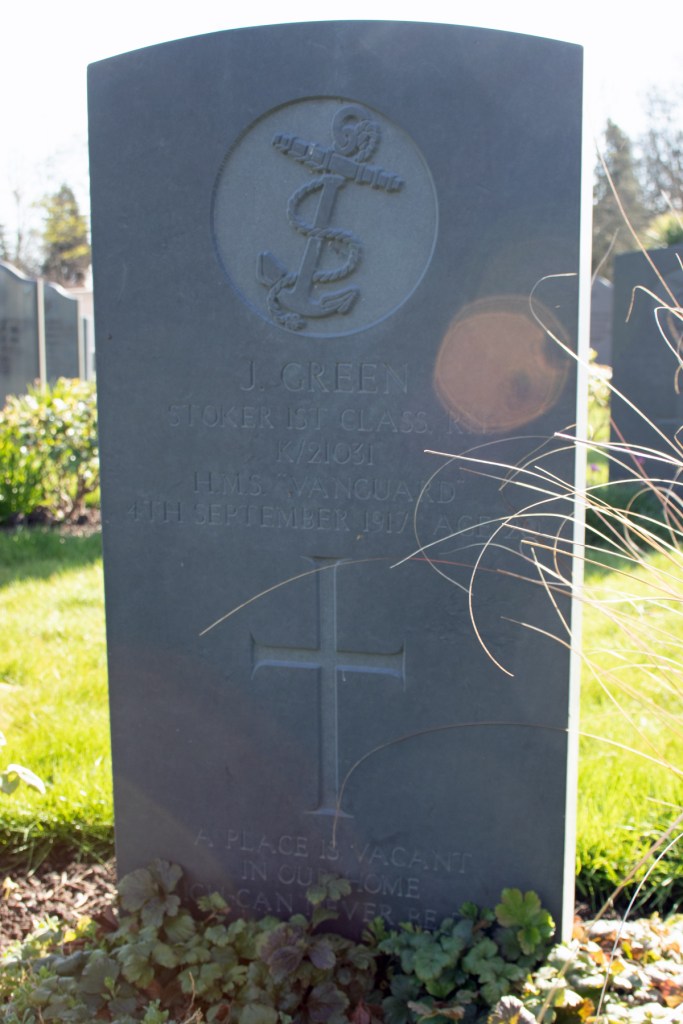
Stoker 1st Class John Green

Stoker 1st Class John Green

John Green was born in Putney, London, on 9th September 1895. He was one of eight children to cab driver Albert Green and his wife, Bridget. When he left school, John found work as an errand boy, but clearly wanted bigger and better things.

On 8th October 1913, he enlisted as a Stoker 2nd Class in the Royal Navy. His naval records confirm that he was 5ft 4ins (1.62m) tall, had brown hair, brown eyes and a fresh complexion. He was also noted as having a scar on the side of his right eye.

While John’s service records confirm his date of birth as that above, other documents suggest that his year of birth was 1897. This would have meant he would have been to young to enlist in the Royal Navy when he did, although it was not unusual for keen sailors to add a year or so to their age to ensure they were accepted.

Stoker 1st Class Green was initially sent to HMS Pembroke – the Royal Naval Dockyard in Chatham, Kent – for training. He spent six months there, before being assigned to the dreadnought battleship HMS Vanguard. He spent three-and-a-half years on board her, and gained a promotion to Stoker 1st Class in the process.

In August 1917, John returned to Chatham Dockyard. HMS Pembroke was a busy and cramped place that particular summer, and he was billeted to temporary accommodation set up in Chatham Drill Hall.

On the night of 3rd September, the town came under attack from a German air raid, and the Drill Hall received a direct hit. Stoker Green was badly injured and admitted to the Chatham Naval Hospital; he succumbed to his injuries the following day, days short of (officially) his 22nd birthday.

John Green was laid to rest in the Woodlands Cemetery in Gillingham, Kent, alongside the other victims of the Chatham Air Raid.
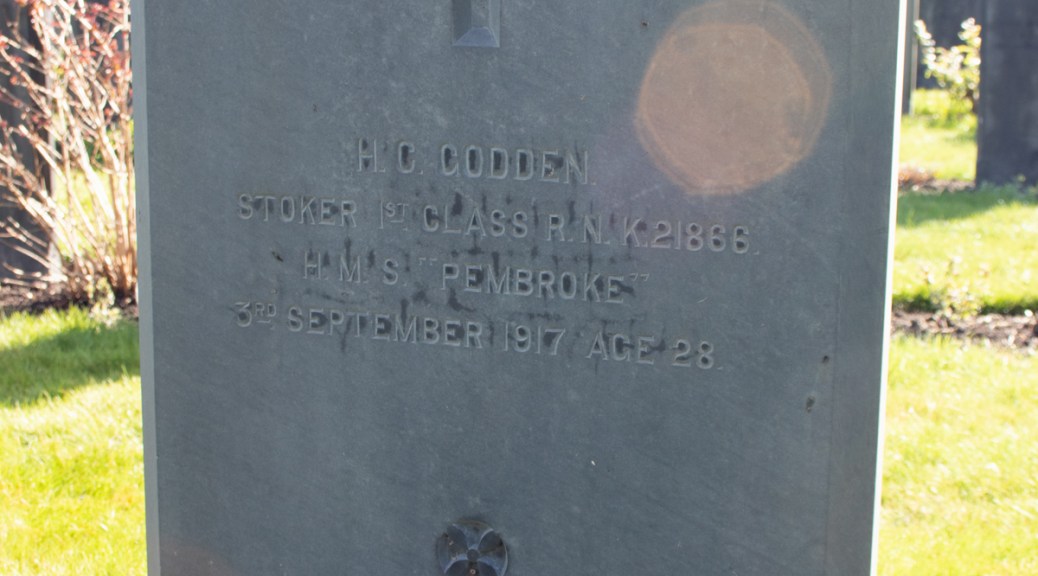

Stoker 1st Class Horace Godden

Stoker 1st Class Horace Godden

Horace Cecil Godden was born on 8th February 1889 in the Suffolk village of Boxford. He was one of eleven children to Charles and Sarah Ann Godden. Charles was a butcher and pig trader, and butchering was a trade that Horace also got into on leaving school.

He was after bigger and better things, however, and on 23rd January 1914, he enlisted in the Royal Navy. as a Stoker 2nd Class. His service records show that he stood 5ft 3ins (1.59m) tall, had brown hair, brown eyes and a fresh complexion. Horace was also noted as having a scar on the back of his left hand.

Stoker Godden was initially sent to HMS Pembroke – the Royal Naval Dockyard in Chatham, Kent – for training. His first sea-going assignment was on board the gunboat HMS Jason and, during his first year with the navy, he served on three ships in total.

Horace was promoted to Stoker 1st Class in December 1914, and served on board another two ships before returning to Chatham in November 1915. His time was not without incident, however, and he spent time in the brig on two separate occasions – for 7 days in May 1915, and for two weeks that October – although his crimes are not recorded.

In March 1916, Stoker 1st Class Godden returned to sea once more, this time on board the sloop HMS Cadmus. He came back to Chatham the following February, and then remained at the HMS Pembroke.

That summer, the Royal Naval Dockyard was packed to capacity, and Horace was billeted in temporary accommodation put in place at Chatham Drill Hall. On the night of the 3rd September 1917, during a German air raid, the Hall received a direct hit and Stoker 1st Class Godden was among those to be killed. He was just 27 years of age.

Horace Cecil Godden was laid to rest, along with the other victims of the Chatham Air Raid, in the Woodlands Cemetery in Gillingham, Kent.


Stoker 1st Class William Ferrett

Stoker 1st Class Robert Ferrett

William Robert Ferrett (known as Robert) was born on 14th December 1889, and was the oldest of three children to William and Annie. William was a farm labourer from Dorset; Annie was born in Camberwell, South London, but, by the time Robert was born, the couple had settled in Kingsbury, Middlesex, where they raised their family.

Robert also took up labouring work in a washhouse when he left school, and had left home by the time of the 1911 census. He was recorded as boarding with James and Sarah Kemp in Willesden Green. There may have been an ulterior motive for him as, that summer, he married their daughter, Daisy. There may have been an ulterior motive for the marriage as well as, later that year, the couple had the first of their two children, who they named William.

War was on the horizon and, in the spring of 1915, Robert enlisted, joining the Royal Navy as a Stoker 2nd Class. His service records show that he stood just 5ft 1.5ins (1.56m) tall, had brown hair, brown eyes and a medium complexion. He was also noted as having tattoos on both arms and a scar on his forehead.

Stoker Ferrett’s first posting was at HMS Pembroke, the Royal Naval Dockyard in Chatham, Kent. After three months’ training, he was assigned to the battleship HMS Vanguard, on board which he spent the next two years. While he was promoted to Stoker 1st Class during this time, it was not all plain sailing. The records show that Robert spent two separate periods of time in the brig – 14 days in December 1916, and a further 14 days in June 1917 – although his misdemeanours are unclear.

In June 1917, soon after his second imprisonment, Stoker Ferrett was transferred back to HMS Pembroke. The dockyard was particularly busy that summer and Robert found himself billeted in temporary accommodation in Chatham Drill Hall.

On the night of the 3rd September, the German Air Force conducted the first night time raid on England. Chatham came in the firing line, and the Drill Hall received a direct hit. Stoker 1st Class Ferrett was badly wounded and was taken to the Royal Naval Hospital in the town. His injuries proved too severe, however, and he passed away the following day. He was 27 years of age.

Robert Ferrett was laid to rest in the Woodlands Cemetery in nearby Gillingham, along with the other victims of the Chatham Air Raid.
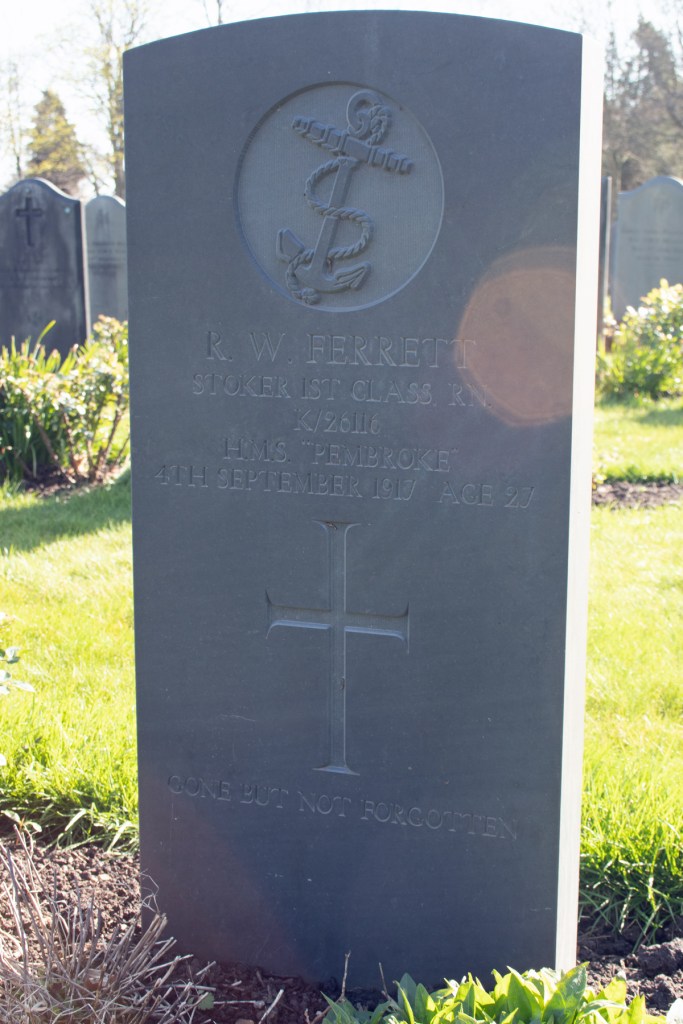

Robert’s younger brother, Robert Frederick Ferrett, also fought in the Great War. He served as a Private in the 7th Battalion of the London Regiment, but was killed at the Somme on 23rd July 1918, aged just 21 years old. He was laid to rest in the Pernois Cemetery in Picardie.


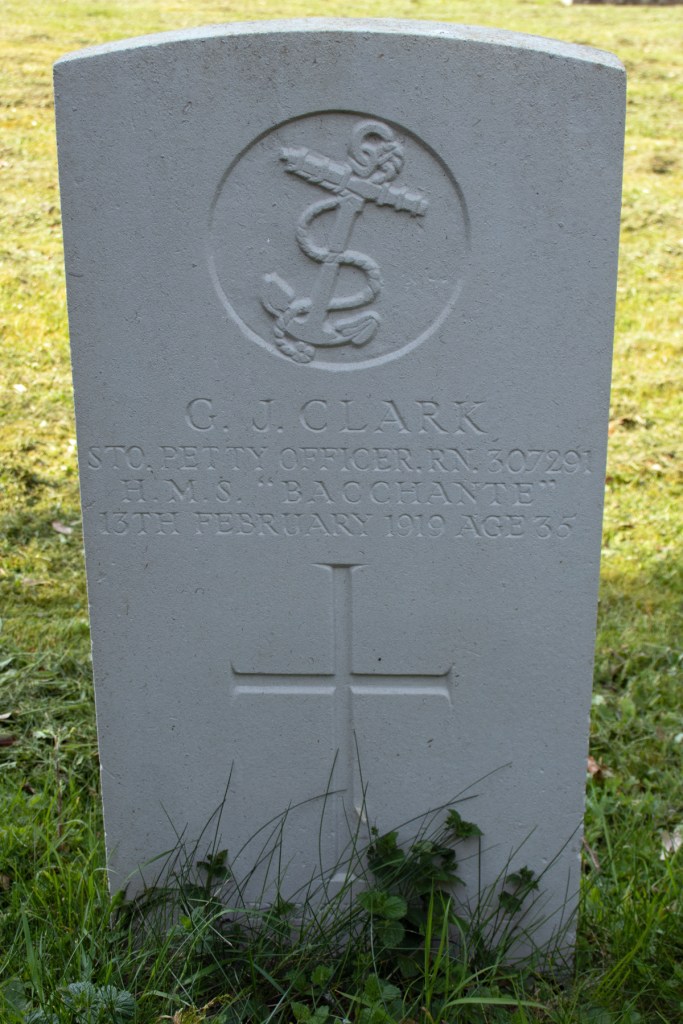
Stoker Petty Officer Gilbert Clark

Stoker Petty Officer Gilbert Clark

Gilbert John Clark was born in Bedminster, Somerset – now a suburb of Bristol – on 6th January 1884. He was one of eleven children to Jonah and Elizabeth Clark. Jonah was a coal miner from Devon, who travelled to find work. He and Elizabeth left Devon for Somerset in the early 1880s, before moving to Glamorgan, South Wales in 1891. This seemed not to last long, however, and, by 1895, the family were living back in Bristol.

The 1901 census recorded Jonah and Gilbert’ older brother, William, working the mines. Gilbert, however, had found different employment, working instead as a labourer for a brick maker. This did not turn out to be a long-term career for him, however, and, on 25th August 1904 he enlisted in the Royal Navy as a Stoker 2nd Class.

Gilbert’s service records show that he was 5ft 3ins (1.6m) tall, had black hair, dark brown eyes and a dark complexion. He was also noted to have a number of tattoos on his left arm, including a woman’s head, a figure of a woman and a cross with a man, crossed hands with a flower, a snake heart and an arrow.

Stoker 2nd Class Clark enlisted for a period of twelve years, and was initially based at HMS Vivid, the Naval Barracks in Devonport. After his training, he was given his first posting, on board HMS Barfleur. He quickly transferred, however, and in April 1905 was assigned to the battleship HMS Vengeance.

Gilbert’s three years on Vengeance were mixed. During that time, he spent two separate periods in the cells. The first, in February 1906, was for desertion, and resulted in ten days in the brig. The second, in August that year meant he was locked up for a further five days although the misdemeanour this time is not documented. This second period in the brig seemed to bring Gilbert to his senses, however, and the rest of his time on board Vengeance seems blemish-free, and even gave him a promotion to Stoker 1st Class.

The remainder of Gilbert’s twelve years’ service saw him assigned to a further eight vessels; between voyages he returned to the Devonport Naval Base. He also received a further two promotions: Leading Stoker in May 1912, and Stoker Petty Officer in February 1914.

War was imminent, by this point, and, at the end of his initial contract, he volunteered to remain in the Royal Navy for the period of the hostilities. After a six-month posting in Devon, Stoker Petty Officer Clark served on three more vessels. It was while he was on board HMS Bacchante, however that he fell ill with influenza. The ship was moored at the Royal Naval Dockyard in Chatham, Kent, at the time and he was admitted to the RN Hospital in the town.

Sadly, Gilbert’s influenza turned to pneumonia and proved too much for his body to bear. He passed away from the lung conditions on 13th February 1919, at the age of 35 years old.

Gilbert John Clark’s body was brought back to Somerset for burial. He was laid to rest in the graveyard of St John the Baptist Church in Peasedown St John, where his parents were then living.


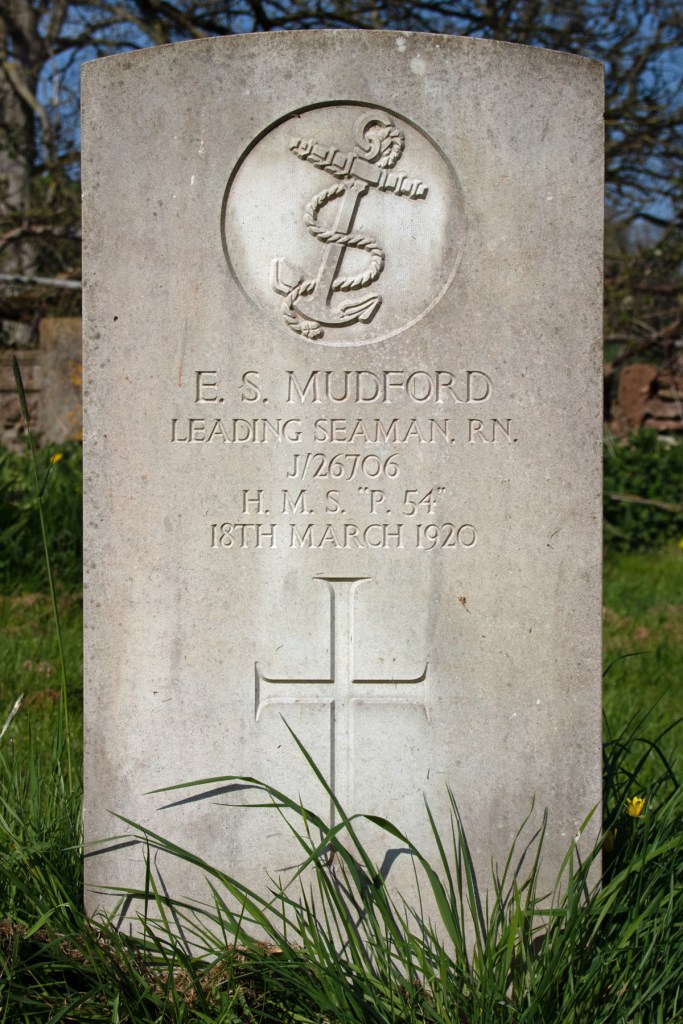
Leading Seaman Edward Mudford

Leading Seaman Edward Mudford

Edward Short Mudford was born on 29th March 1898 in the Somerset village of Stratton-on-the-Fosse. He was one of nine children to Joseph and Mary Mudford.

Information about his early life is confusing: the 1901 census gives his name as Edwin, rather than Edward; his father appears to have died by this point, leaving Mary to raise the family alone. The 1911 census records Edward and a younger sister living in the Union Workhouse in Shepton Mallet, while Mary has apparently remarried and was living in Radstock with two of Edward’s siblings and a daughter from her second marriage, although her new husband is noticeable in his absence from the document.

From this shaky start, however, Edward sought a new life for himself. On 21st August 1913 he enlists in the Royal Navy. His service records show that he stood just 5ft 1ins (1.55m) tall, had fair hair, hazel eyes and a fresh complexion. Being under age at the time, he was given the rank of Boy 2nd Class.

Edward was initially sent to HMS Ganges, the naval training establishment outside Ipswich, Suffolk. Promoted to Boy 1st Class in February 1914, he was soon given his first posting, on the cruiser HMS Crescent.

After another short spell at HMS Vivid, the Naval Dockyard in Plymouth, Boy Mudford found himself on board HMS Thunderer. Edward spent nearly four years aboard the battleship, coming of age and gaining the rank of Ordinary Seaman, while also being promoted to Able Seaman in March 1916.

Edward returned to Plymouth in February 1918, and spent the next couple of years between there, Portsmouth and Woolwich Dockyards. He was again promoted, given the rank of Leading Seaman in September 1918.

Life at sea and in barracks took its toll, however, and, in in the spring of 1920, Leading Seaman Mudford contracted influenza and pneumonia. Sadly the conditions proved too much to bear: he passed away on 20th March 1920, a week shy of his 22nd birthday.

Brought back to Somerset, where, presumably some of his family still lived, Edward Short Mudford was laid to rest in the graveyard of St John the Baptist Church in Chilcompton.


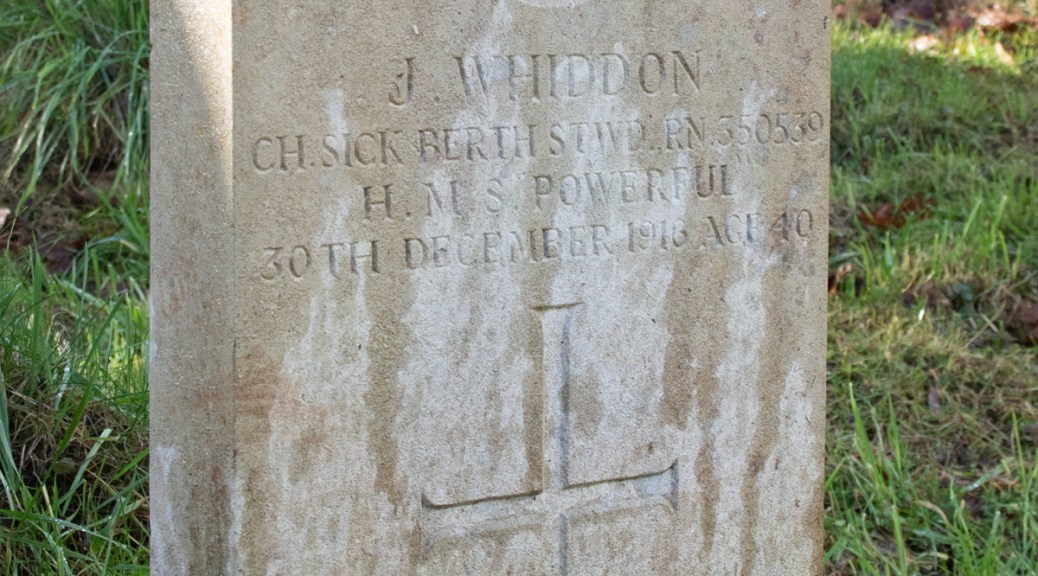
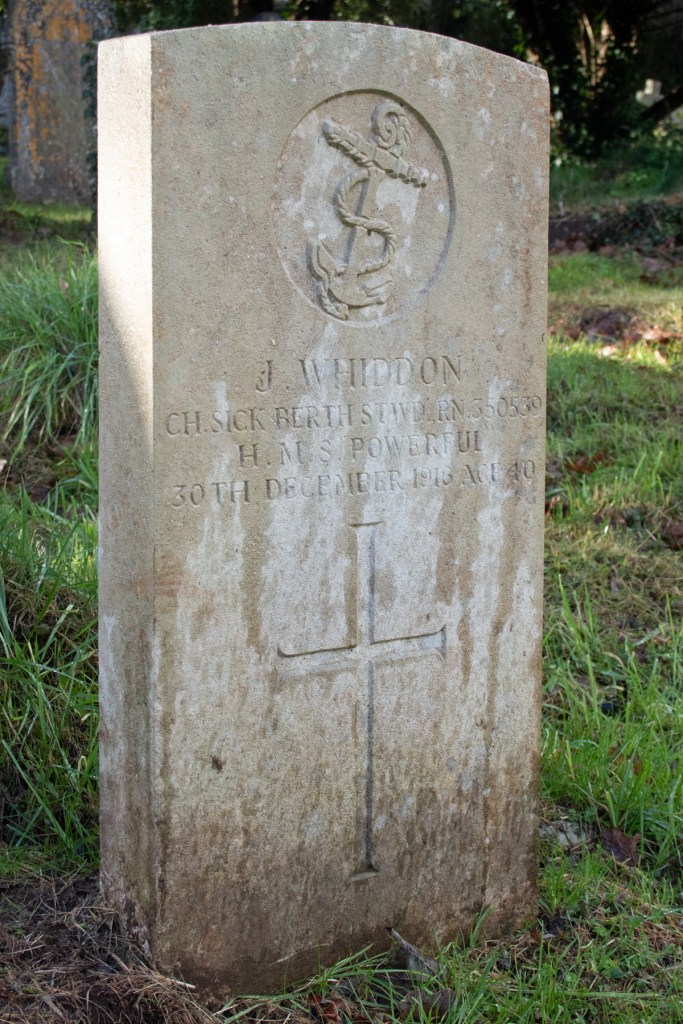
Chief Sick Berth Steward John Whiddon

Chief Sick Berth Steward John Whiddon

John Whiddon was born on 15th January 1876 in the Devon town of Ashburton and was one of seven children to John and Elizabeth Whiddon. John Sr was a general labourer, but when he left school, his son found work as a baker’s apprentice.

John was keen to better himself and so, at the age of 21, he enlisted in the Royal Navy. His service records confirm that he enlisted on 21st July 1897 for a period of 12 years. He was recorded as standing 5ft 6in (1.67m) tall, with light brown hair, blue eyes and a fair complexion.

John’s role was as a Sick Berth Assistant and, over the next few years he had a number of different postings. While some were on sea-going vessels, the majority of his time on shore. He served at the Haslar Hospital in Portsmouth, Plymouth Hospital and at HMS Vivid, the Royal Naval Dockyard in Devonport.

Sick Berth Assistant Whiddon certainly worked hard, though, and this paid off. In 1902 he was promoted to Sick Berth Steward and, in 1909, when his contract came to an end, he volunteered to stay on. Over the next seven years, John continued to do his duty, both on shore and at sea, and was again promoted, this time to Chief Sick Berth Steward.

At some point John married a woman called Catherine; sadly there is no information about her, other than that she had passed away by 1916.

In the autumn of 1916, John was serving on board HMS Powerful, when he contracted pneumonia. He was brought ashore and admitted to the Royal Naval Hospital in Plymouth, but sadly passed away from the illness on 30th December 1916. He was 40 years of age.

John Whiddon was brought back to Ashburton for burial. He lies at rest in the graveyard of St Andrew’s Church there.


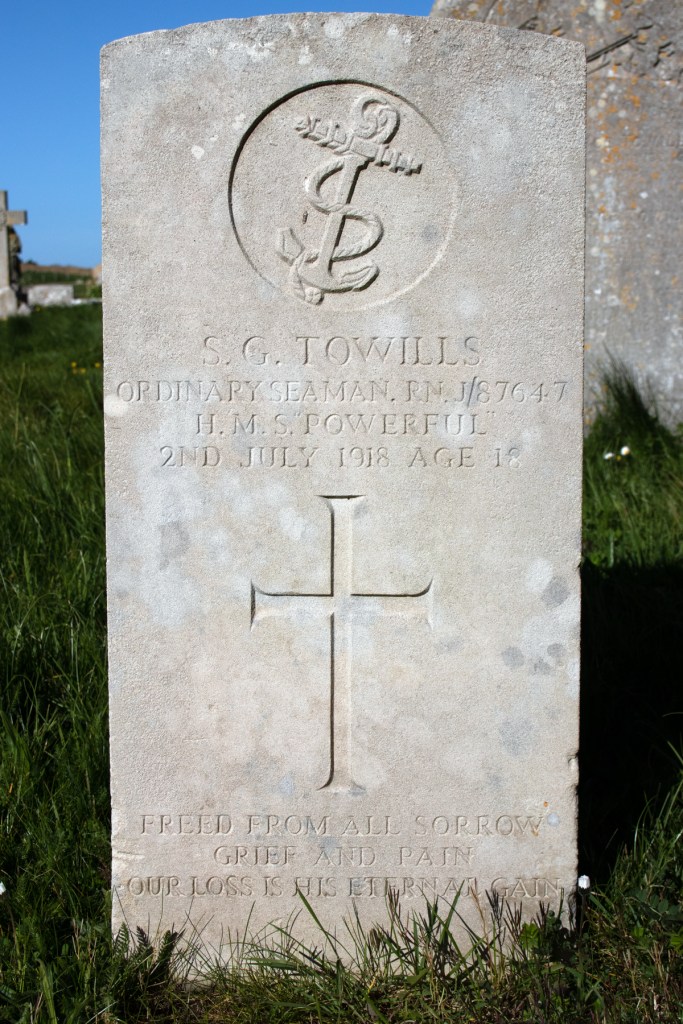
Ordinary Seaman Sidney Towills

Ordinary Seaman Sidney Towills

Sidney George Towills was born in Soho, London, on 14th May 1900. He was the youngest of two children to Henry and Maria Towills. Both had been born in Dorset, but Henry had found work as a constable for the Metropolitan Police and they had moved to London by the early 1890s.

The 1901 census recorded the family as living in Plaistow, but ten years later the family had moved back to Dorset, and were ensconced back in Maria’s home village of Abbotsbury.

When war broke out, Sidney was only 14 years old. He wanted to play his part, however, and as soon as he was able to enlist, he did so. He joined the Royal Navy on 9th April 1918 and, because of his age, was given the rank of Boy 2nd Class.

Sidney’s service records show that he was 5ft 9ins (1.75m) tall, had brown hair, blue eyes and a health complexion. He was assigned to the cruiser HMS Powerful and, on his eighteenth birthday, just over a month after enlisting, he was awarded the rank of Ordinary Seaman.

Tragically, Ordinary Seaman Towills’ service was not destined to be a long one. In June, he was admitted to the Royal Naval Hospital in Plymouth with empyema, a lung disease; he passed away from the condition on 2nd July 1918. He was barely 18 years of age and had served in the Royal Navy for 96 days.

Sidney George Towills was brought back to Abbotsbury for burial. He was laid to rest in the graveyard of St Nicholas’ Church in the heart of the village.


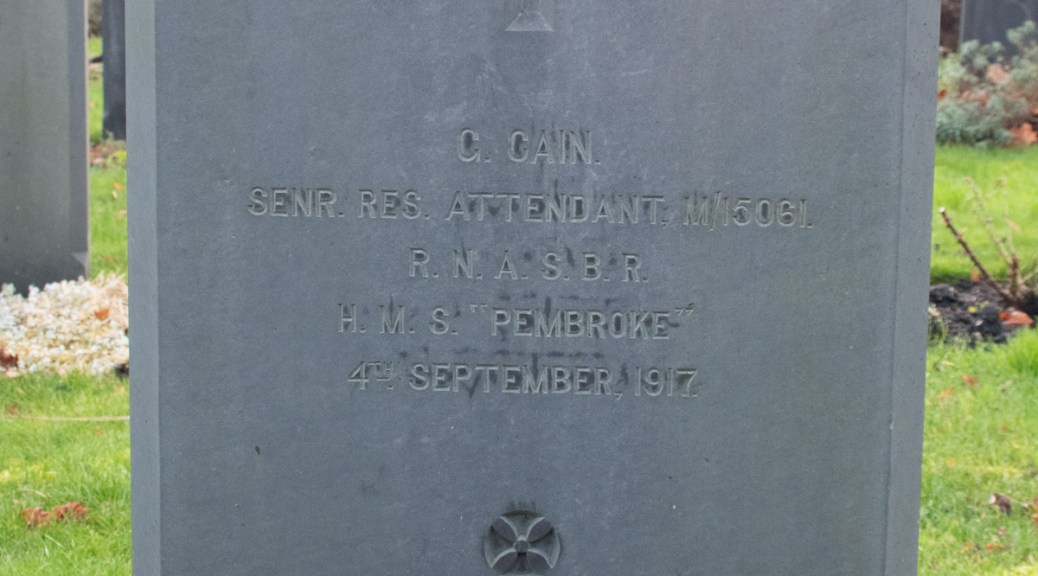
Senior Reserve Attendant George Cain

Senior Reserve Attendant George Cain

George Cain was born on 27th December 1896, and was one of eleven children to Edward and Florence Cain. Edward was a house painter from Richmond in Surrey, who passed away when George was a child, leaving Florence to raise the family. She found work as a shopkeeper in the town, and, when he left school, George was apprenticed to a printer to help bring in some extra money.

He had moved on to compositing – setting type – when war broke out. With conflict raging in Europe, George felt the need to play his part and, on 31st July 1915, he enlisted in the Royal Navy. His records show that he was 5ft 7ins (1.7m) tall, had dark brown hair, brown eyes and a pale complexion.

George was given the rank of Junior Reserve Attendant, supporting medical staff in the navy’s sick bays. After a couple of weeks at HMS Pembroke, the Royal Naval Dockyard in Chatham, Kent, he was posted to the town’s main hospital, where he remained for just under two years, and where he received a promotion to Senior Reserve Attendant.

In July 1917, George was reassigned to HMS Pembroke. That summer was particularly busy for the base, and temporary accommodation was set up in the Drill Hall; this is where George found himself billeted.

On the night of 3rd September 1917, Chatham suddenly found itself in the firing line as a wave of German aircraft bombed the town. The Drill Hall received a direct hit, and Senior Reserve Assistant Cain was injured. He was admitted to the hospital at which he had worked just weeks before, but died of his wounds the following day. He was just 20 years old.

George Cain was laid to rest in the Woodlands Cemetery in nearby Gillingham, along with the other servicemen who had perished during the Chatham Air Raid that night.


Artificer 4th Class Claud McIntyre

Artificer 4th Class Claud McIntyre

Claud Millar McIntyre was born on 3rd June 1895, and was the youngest of three children to Alexander and Margaret McIntyre. Both of Claud’s parents – and his two older siblings – were born in Scotland, but the family moved to London in the early 1890s, and it was in Plaistow that Claud was born.

Alexander worked as an engineer at the Thames docks, and, when Claud left school, he followed his father into the same line of work. War was coming to Europe, however, and Claud was very keen on playing his part.

On 22nd December 1914, he enlisted in the Royal Navy. His boiler work obviously stood him in good stead, as he was employed as an Engine Room Artificer (ERA) 4th Class. Claud’s service records confirm that he stood 5ft 8ins (1.72m) tall, had dark brown hair, blue eyes and a fresh complexion. The document also gives his year of birth as 1893, which suggests that he may have lied about his age to get into the action.

The same record gives an indication of the harshness of the work Claud has been doing before joining up. Under Wounds, Scars or Marks, it was noted that he had a scar on the outside right thigh and on his right little finger. He also had lost the fingertip of his right hand.

ERA McIntyre’s training took place at HMS Pembroke, the Royal Naval Dockyard in Chatham, Kent. He was soon given a posting, however, and served at HMS Acteon, the shore-based establishment in Sheerness, for just over a year.

In August 1916, after a brief return to HMS Pembroke, ERA McIntyre was given a second posting, this time on board Q12, one of a number of the war’s most closely guarded naval secrets. The Q-boats (a code name referring to their home port of Queenstown in Ireland) were vessels designed to look like an easy target, but which actually carried hidden armaments. Understandably, little is known about the ship on which Claud served, or his time aboard; all that is documented is that he was assigned to her from 28th August 1916 to 30th April 1917, at which point he returned to HMS Pembroke.

Chatham Dockyard was particularly busy that summer, and the large number of extra servicemen meant that Claud was billeted in temporary accommodation in Chatham Drill Hall.

On the 3rd September 1917, the first night air raid carried out by the German Air Force bombarded the town, and scored a direct hit on the Drill Hall; ERA was injured that night, but died of his wounds the following day at the Fort Pitt Military Hospital. He was just 22 years of age.

Claud Millar McIntyre was laid to rest, along with the other victims of the Chatham Air Raid, in the Woodlands Cemetery, Gillingham.


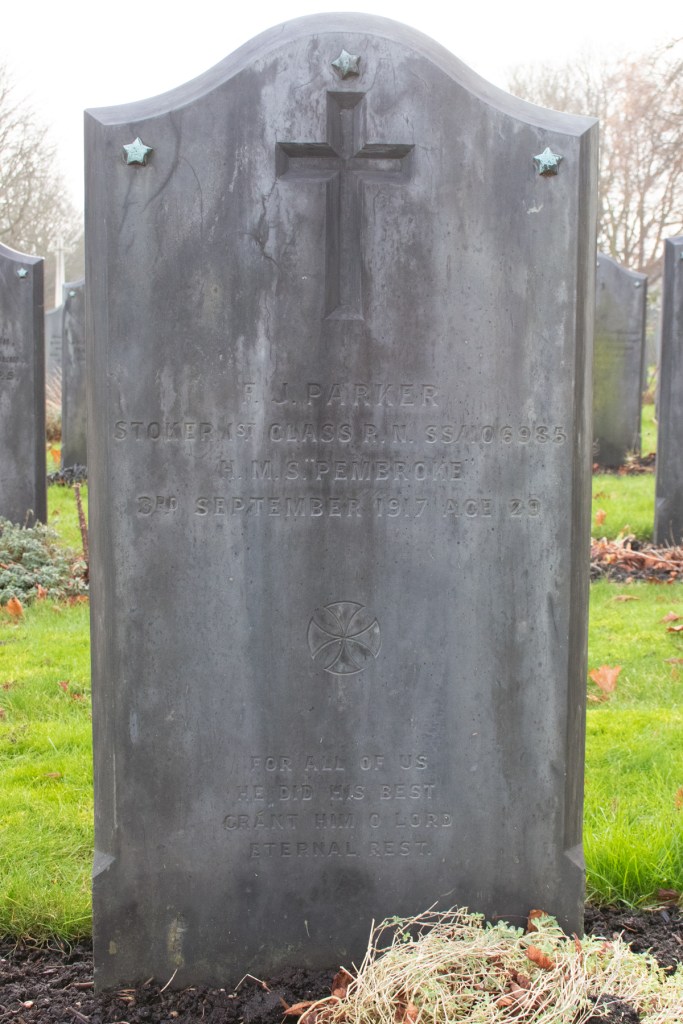
Stoker 1st Class Frederick Parker

Stoker 1st Class Frederick Parker

Frederick John Parker was born on 26th November 1889 in Wavertree, Liverpool. He was the oldest of four children to John and Ellen Parker, both of whom had been born in North Ireland, and had sought out a new life in the busy English port.

There is little concrete information about Frederick’s early life. What is clear is that he wound work as a painter when he left school, and enlisted in the Royal Navy on 22nd April 1908, as a Stoker. He joined the service for five years, and was places on reserve in 1913.

When war broke out, Stoker Parker was called into action again and, during his time back in the Royal Navy was based at HMS Pembroke, the shore-based establishment in Chatham, Kent.

The base was a bustling place during the war and, by the summer of 1917 temporary accommodation was set up in the barracks’ Drill Hall; this is where Frederick found himself billeted.

On the night of 3rd September 1917, Chatham suddenly found itself in the firing line as a wave of German aircraft bombed the town. The Drill Hall received a direct hit, and Stoker 1st Class Parker was amongst those to be instantly killed. He was 29 years old.

Ninety-eight servicemen perished during the Chatham Air Raid that night. They were buried in a mass funeral at the Woodlands Cemetery in nearby Gillingham. This, too, is where Frederick John Parker was laid to rest.