Category Archives: Role

Chief Stoker William Beadle

Chief Stoker William Beadle

William Henry Beadle was born in Heybridge, Essex, on 23rd April 1870. The youngest of three children his parents were William and Sophia Beadle. William Sr was a waterman-turned-labourer, and the young family lived with Sophia’s parents.

When Sophia died in 1875, her widow and their children remained with his in-laws. William Sr died in 1887, and by the time of the 1891 census, his son was living with his now widowed grandmother. The document notes that she was a pauper, but he was a moulder in the local iron works.

William sought bigger and better things and, on 13th August 1891, he enlisted in the Royal Navy as a Stoker 2nd Class. His service records show that, as 21 years of age, he was 5ft 8ins (1.72m) tall, with brown hair, grey eyes and a fresh complexion.

Stoker Beadle was initially sent to HMS Pembroke, the Royal Naval Dockyard in Chatham, Kent, for his training. He would spend the next six months split between there and HMS Wildfire, a shore establishment downriver at Sheerness.

In 1892, William spent six months on board the troop ship HMS Tyne. He returned to Chatham in July of that year, and was promoted to Stoker 1st Class. Over the course of the next eleven years, he would go on to serve on four ships, each time returning to his base port, HMS Pembroke.

William’s service record is pretty much mark free. He was confined to cells for seven days in October 1895, although his offence s unclear. In April 1896 he was promoted to Leading Stoker 2nd Class, and made Leading Stoker 1st Class three years later. In December 1902, while on board the cruiser HMS Diana, William was promoted again, to Acting Chief Stoker, and the following August, his initial contract of service came to an end.

By this point William was a married man. He married Clara Walford in Rochford, Essex, and, while the couple did not go on to have children, there is little additional information about her.

William re-enlisted as soon as his initial twelve-year contract came to an end. In December 1903 he was promoted to Chief Stoker, and he remained at this rank until he war formally retired on 16th August 1913. He had spent more than two decades in the Royal Navy ,and travelled the world: the 1911 census recorded him as one of the crew of HMS Lancaster, moored in Malta.

Chief Stoker Beadle’s time away from the Royal Navy was not to be lengthy and, when war broke out less than a year later, he was called upon once more. He spent nine months back at HMS Pembroke, before being assigned to the new cruiser HMS Calliope. She would be William’s home for the nearly three years, and it was not until March 1918 that he came back to shore.

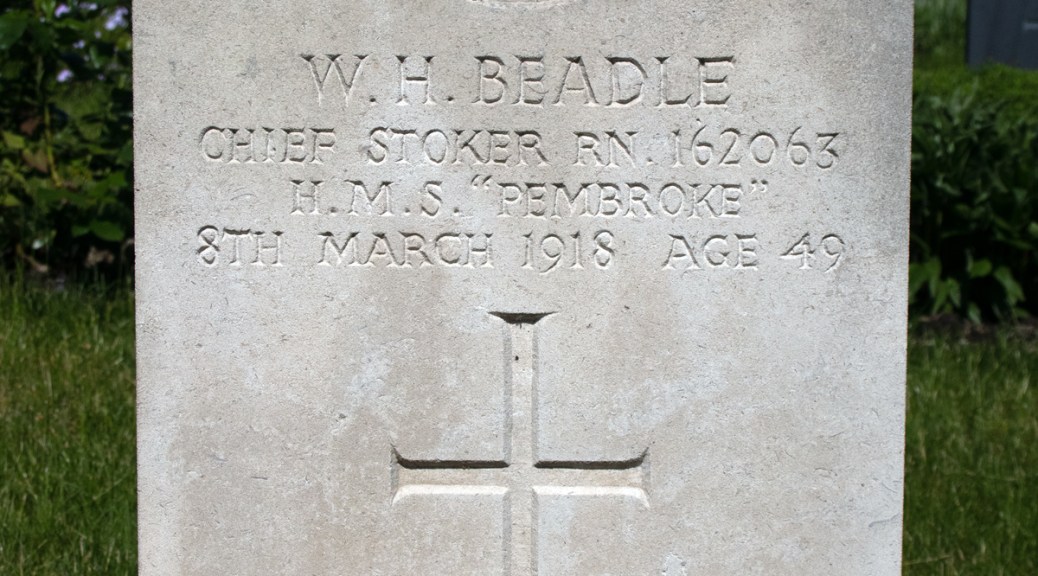
William’s return to Chatham seemed to coincide with a downturn in his health. He was admitted to the town’s Royal Naval Hospital with nephritis, and this is what would take his life. He died on 8th March 1918: he was 47 years of age.

William Henry Beadle was laid to rest in the military section of Woodlands Cemetery, Gillingham, not far from the naval base he had called home for so long.


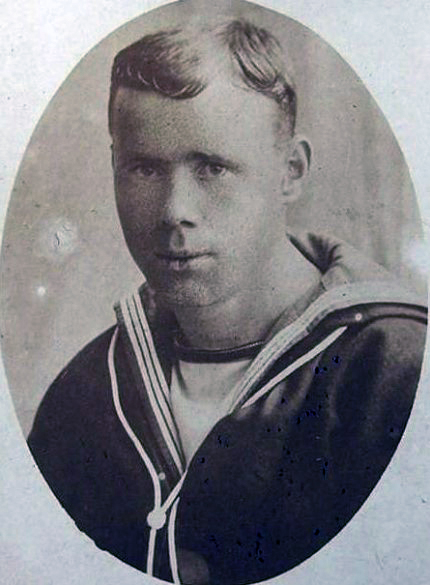
Able Seaman Arthur Crisp

Able Seaman Arthur Crisp

Arthur Edward Crisp was born in 16th March 1899 in the Norfolk village of South Creake. The youngest of six children, his parents were blacksmith Henry Crisp and his wife, Sarah.

When war broke out across Europe, young Arthur had already had some experience of seamanship, and was keen to play his part. He joined the Royal Navy on 7th April 1915 and, given his age, he was assigned the rank of Boy 2nd Class. Initially sent to HMS Powerful, he was trained there for three months, rising to the rank of Boy 1st Class.

On 26th July 1915, Arthur was assigned to the battlecruiser HMS New Zealand, and would remain on board for the next two years. During this time, he came of age, and was formally inducted into the Royal Navy as an Ordinary Seaman. His service records show that he was 5ft 5ins (1.65m) tall, with brown hair, grey eyes and a fresh complexion.

His stint on New Zealand also exposed him to naval warfare, as she was heavily involved in the Battle of Jutland in May 1916. Ordinary Seaman Crisp came through, however, and remained part of the battlecruiser’s crew for a further year.

After a short time on shore, where he was based at HMS Victory, the Royal Naval Dockyard in Portsmouth, Hampshire, Arthur’s next posting was on board HMS Wallington. A former trawler, she had been converted to a boom defence vessel, she protected the dockyard in Grimsby. In November 1917, while based in the Lincolnshire town, Arthur was promoted again, rising to Able Seaman.

The following March, Arthur moved again, and was assigned to HMS Attentive, the shore base for the Dover Patrol. He would not remain there for long, however, and was admitted to the Royal Naval Hospital in Chatham, Kent. He passed away on 17th March 1918, from an intriguing combination of gunshot wounds to his chest and pneumonia. He had turned 19 years old the day before.

The body of Arthur Edward Crisp was taken to nearby Gillingham for burial. He was laid to rest in the military section of the town’s Woodlands Cemetery.


Able Seaman Arthur Crisp
(from findagrave.com)

Leading Seaman Reuben Pearce

Leading Seaman Reuben Pearce

In the military section of Woodlands Cemetery, Gillingham, is a headstone marking the grave of Leading Seaman Reuben William Pearce. Little information is available about his early life, although later records suggest that he was born on 30th January 1875 in Plymouth, Devon.

When he completed his schooling, Reuben found work as a hawker. He had his heart set on bigger and better things, however, and, on 3rd June 1890, he signed up to the Royal Navy. Just fifteen years of age, he was too young to formally enlist, but he was accepted with the rank of Boy 2nd Class, and sent off to HMS Impregnable, the training ship based in nearby Devonport, for his induction.

Over the next two-and-a-half years, Boy Pearce learnt his trade. On 4th June 1891, he was promoted to the rank of Boy 1st Class, and the following February he was assigned to his first ship, the corvette HMS Boadicea. It was while he was on board the corvette that Reuben came of age, and he was officially inducted into the Royal Navy as an Ordinary Seaman. His service records show that he was 5ft 6ins (1.68m) tall, with brown hair, blue eyes and a ruddy complexion. He was noted as having an anchor and his initials tattooed on his left arm, with another anchor tattoo on his right.

Reuben enlisted for a twelve-year term of service. During this time, he served on nine vessels, returning to HMS Vivid, the Royal Naval Dockyard in between voyages. He had a mixed career, and, on 1st February 1894, was promoted to Able Seaman. In January 1896, he spent three days in cells, for an unrecorded offence.

In January 1900, whole aboard the gunvessel HMS Rambler, Reuben was promoted to Leading Seaman. Within a day, however, he was back in the cells, where he spent the next 72hrs. This led to an immediate demotion, and he found himself back as an Able Seaman.

When his contract came to an end, Reuben immediately re-enlisted, and he would go on to serve for another thirteen years. In July 1906, he was promoted to Leading Seaman once again, and seemed to have learned the error of his ways, retaining the rank until his passing.

On 15th September 1916, Leading Seaman Pearce was mentioned in despatches. for his service during the Battle of Heligoland Bight. The ship on which he was serving at the time, the battlecruiser HMS Tiger, was heavily involved.

Reuben remained on the Tiger for three-and-a-half years, and during this time, his valour was recognised again, when he was awarded the Medaglia di bronzo al valor militare (Bronze Medal for Military Valour) by the King of Italy. Again, details are unclear, but he was again mentioned in despatches for his service.

By the spring of 1918, Leading Seaman Pearce was billeted on board HMS Hindustan, which was being used as barracks ahead of a planned raised on Zeebrugge and Ostend. On 13th April an accident occurred, and he received a gun shot wound to his leg. This fractured his femur, and, despite being rushed to the Royal Naval Hospital in Chatham, Kent – not far from the dockyard where the Hindustan was moored – he passed away from his injuries later that day. Full details of the incident are unclear, but he was 43 years of age.

Reuben William Pearce was laid to rest in Woodlands Cemetery, Gillingham, not far from the port which had served as his final base.


Matron Jean Walker

Matron Jean Miles-Walker

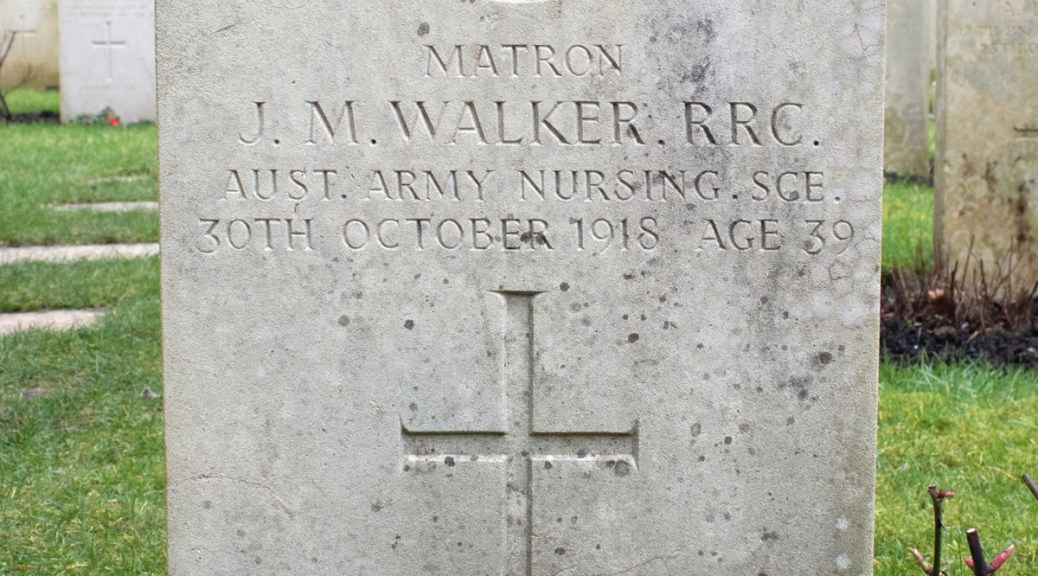
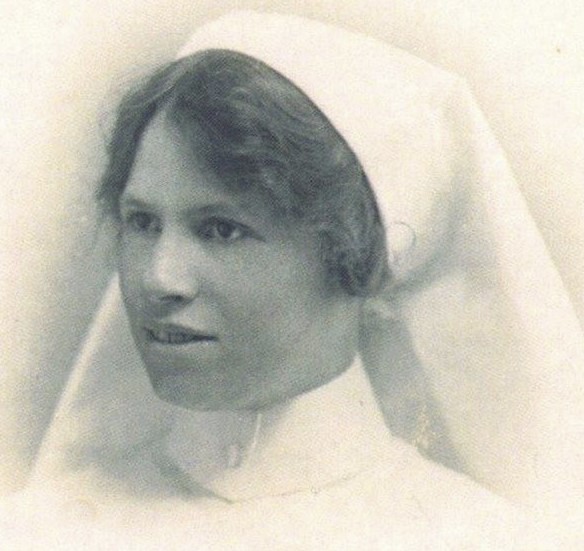
Jean Nellie Miles Walker was born in Hamilton, Tasmania, on 16th November 1878. Her parents were Arthur and Louisa Walker, and her surname moves from Walker to Miles-Walker, depending on the document. There is little information about Jean’s early life, but by 1906 she had taken up nursing.

When war broke out, Jean was quick to step up and help those who were fighting. Initially enlisting on 27th September 1914, she was assigned to a hospital ship a year later, arriving in Ismailia, Egypt, in January 1916.

Now a Sister in the Australian Army Nursing Service, Jean’s records shot the woman she had become. At 36 years of age, she was 5ft 10ins (1.78m) tall, and weighed 128lbs (58kg). She had dark brown hair, brown eyes and a dark complexion.

Over the next couple of years, Sister Walker moved to where she was needed. By September 1916 she was attached to the No. 15 General Hospital in Alexandria, by the end of the year saw her in the 3rd Australian Auxiliary Hospital in London. Jean’s service records note that she was mentioned in despatches on 1st October 1916, but there is no clarification about why she was recognised.

Jean was promoted to Matron in the summer of 1917, and over the next year, she spent time at hospitals in both Britain and France. By the autumn of 1918, she had moved to the No. 1 Australian General Hospital in Sutton Veny, Wiltshire. It was while based here that she fell ill, contracting a fatal combination of influenza and pneumonia.

Sister Walker passed away in the Sisters’ Quarters on 30th October 1918. She was just a couple of weeks short of her 40th birthday.

Jean Nellie Miles Walker was laid to rest in the grounds of St John’s Church, Sutton Veny, close to the hospital in which she had served.


Matron Jean Walker
(from findagrave.com)

Sister Fanny Tyson

Sister Fanny Tyson

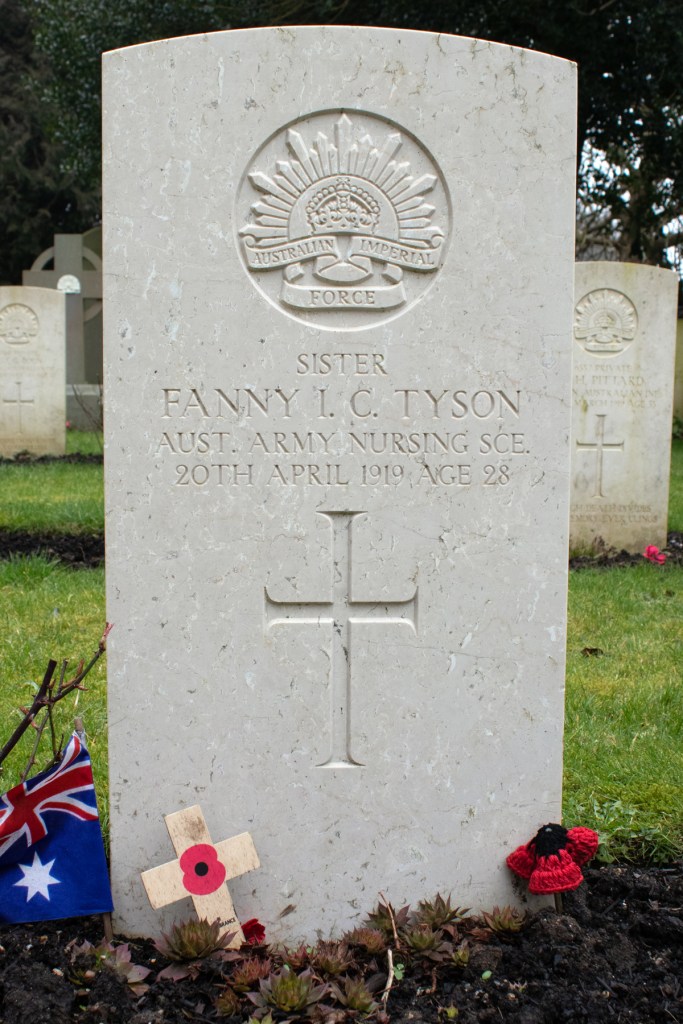
Fanny Isobel Catherine Tyson was born in Balranald, New South Wales, Australia, in 1890, and was the fourth of ten children to John and Teresa Tyson.

There is little information about Fanny’s early life, but when she finished her schooling, she went into the medical profession, and, by October 1911 she was working as a nurse at Bendijo Public Hospital. She became a staff sister and, when war broke out, she stepped up to support the troops being sent to Europe.

On 20th May 1915, Fanny enrolled in the Australian Army Nursing Service and by the following spring, she was on her way across the world. Arriving in France on 6th April 1916, she soon made her way to Rouen. For the next fourteen months Staff Nurse Tyson was attached to the No. 1 Australian General Hospital, but in the summer of 1917, she transferred to the No. 10 Stationary Hospital in Saint-Omer.

Fanny was committed to her job, which would have been traumatic at the best of times. She moved to Dieppe in February 1918, and in the closing weeks of the war, she transferred to Britain, working at the 2nd Australian General Hospital in Southall, Middlesex. On 1st October 1918 she was promoted to the rank of Sister.

Fanny would remain in Britain through the Armistice and beyond. On 20th April 1919, she was admitted to the No. 1 Australian General Hospital in Sutton Veny. Her service records do not confirm what had taken her to Wiltshire, but it seems likely that she was either accompanying wounded soldiers being transferred to Southall, or was training or supporting nurses there.

Sister Tyson had suffered a cerebral haemorrhage. She passed away that evening, as the age of 28 years old.

Fanny Isobel Catherine Tyson was laid to rest in the grounds of St John’s Church, Sutton Veny. She was buried alongside the soldiers her unit had made comfortable in their last days.


Sister Fanny Tyson
(from findagrave.com)

Private Harry Holder

Private Harry Holder

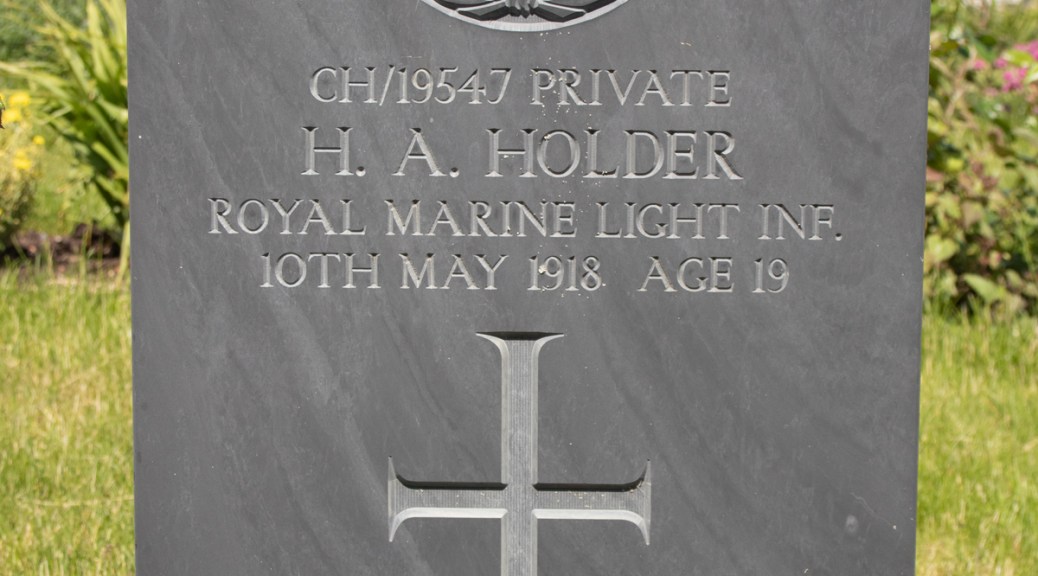
Harry Alfred Holder was born in the summer of 1899, and was the older of two children – both boys – to Harry and Kate. Harry Sr had been widowed a couple of years before, and the extended family included four half-siblings for his new family.

The family had rooms at 16 Warner Street in Southwark, Surrey. By the time of the 1911 census, gad fitter Harry Sr had been widowed a second time, and he and three of his sons were sharing the house with William and Hannah Gayzer and widower Edward Maude.

Harry Jr would have been 15 years old when war broke out, and so too young to serve. He would eventually enlist, however, and had joined the Royal Marine Light Infantry by the spring of 1918. The only documentation relating to his service is his entry on the Commonwealth War Graves Commission Register: Took part in the operations against Zeebrugge on board HMS “Iris II” on 23rd April, 1918.

One of two Mersey ferries to take part in the Zeebrugge raid – the other being called Daffodil – Iris attempted to come alongside the port’s mole, or breakwater, to offload the troops she had on board. An initial attempt to boor failed, and when she came alongside again, a shell burst through the deck where nearly 60 marines were preparing to land. Forty-nine were killed and the rest, including Private Holder, were badly injured.

Iris managed to make her way back to Chatham, Kent, where the Royal Navy had a major dockyard. Most of the survivors were moved to a Royal Naval Hospital in London, but Harry’s injuries were to prove too severe: He succumbed to them on 10th May 1918: he was just 19 years of age.

The body of Harry Alfred Holder was laid to rest in the Naval section of Woodlands Cemetery, Gillingham, Kent, not far from the port in which he had come ashore.


Captain Robert Graves

Captain Robert Graves

Robert Kennedy Grogan Graves was born on 1st January 1878. An announcement in the local newspaper confirmed that “at Baronne Court, County Tipperary, the wife of Lieutenant-Colonel W. Grogan Graves, 82nd Regiment, of a son (prematurely).” Robert was the older of two children, while his parents were William Graves, a Justice of the Peace in Ireland, and his wife, Georgianna Graves.

William died in 1890, and Georgianna moved the family to London. The 1891 census found her residing at the Golden Hotel in St Martin in the Fields, while her two boys, Robert and his younger brother, Geoffrey, were boarding students at Francis Napier’s classics school on Shooter’s Hill Road in Kidbrooke, Kent.

Robert found his calling through education. He studied medicine, and by January 1896 he was a student at St George’s Hospital in Tooting, Surrey.

By 1906 Robert had set himself up in an infirmary on Southgate Street in Gloucester, Gloucestershire. That same year, he married Kathleen Schofield: the couple went on to have two children, Robert Jr in 1912, and Bernard the following year.

Graves, Robt. Kennedy Grogan, Scison Lodge, Clevedon, Somerset (Tel. 11 Y Clevedon) – MRCS, LRCP London 1904; (St Geo.); Hon, Med, Off. Clevedon Cott. Hosp.; Med. Off Mutual Insur. N.Y. & Clevedon Hydro. Estab.; late Sen. Ho. Surg. & Asst. Ho. Surg., & Surg. Gloucester Co. Infirm., & Asst. Med. Regist. & Obst. Clerk St Geo. Hosp.

[The Medical Directory, 1910]

Robert had set himself up well during his life. The 1911 census found him and Kathleen – who was better known by her middle name, Gladys – living in their 17-room house on Linden Road in Clevedon. They afforded themselves three servants, including a housemaid, a cook and a motor driver. By the outbreak of war, Robert has an entry in the town’s Kelly’s Directory, and seemed to be a focal member of the community, joining the local Grand Lodge in September 1908.

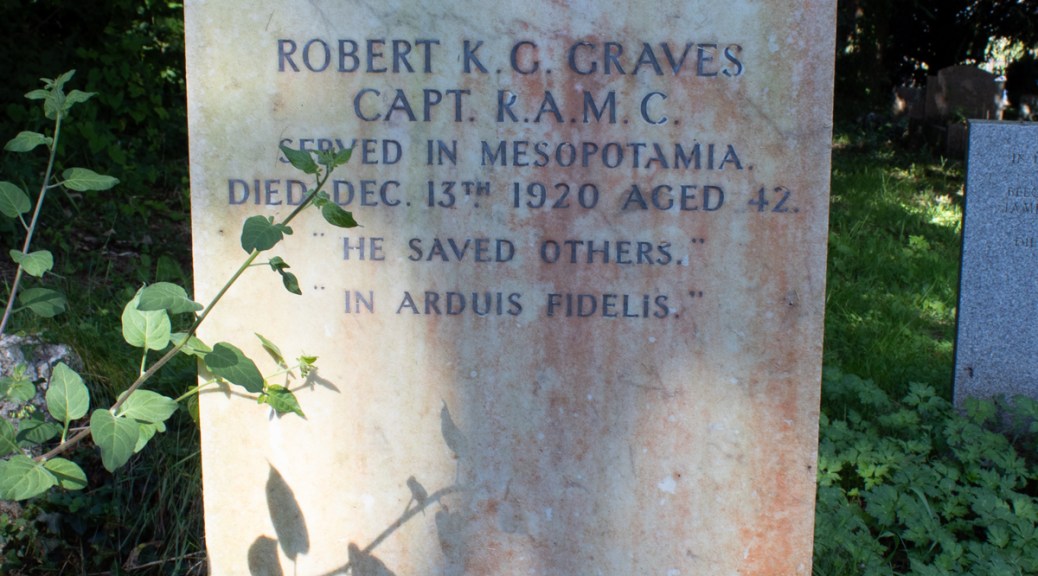
Robert’s time in the army, is hard to piece together. He joined the Royal Army Medical Corps as a Captain, and appears to have been connected to the air force. His headstone suggests that he served in Mesopotamia, but when and exactly where, however, is lost to time.

After the war, Robert returned to Britain. Leaving the Somerset coast, however, he and Kathleen appear to have set themselves up in Dorset. He died, through causes not detailed, on 12th December 1920, at 42 years of age. His entry on the probate register states:

GRAVES Robert Kennedy Grogan of 1 Charnwood Chambers Seabourne-road West Southbourne Hampshire died 12 December 1920 at The Grange Buckfastleigh Devonshire…

It is unclear whether Charnwood Chambers was his working address, with The Grange being the family’s official home, or if Buckfastleigh served as a place of convalescence.

Robert Kennedy Grogan Graves left an estate totalling £370 14s 7d (approximately £21,100 today) to Kathleen. He was buried in the graveyard of Holy Trinity church, Buckfastleigh.


Stoker 2nd Class Herbert Andrews

Stoker 2nd Class Herbert Andrews

Herbert Andrews was born on 9th December 1890 in the Devon village of Buckfastleigh. One of nine children, his parents were William and Elizabeth Andrews. William worked at a local woollen factory, and the family initially lived on Silver Street in the village before moving to Market Street by the turn of the century.

Herbert does not appear on the 1911 census, and at this point William and Elizabeth, both in their 60s, were living on their own. Interestingly, the census inadvertently reveals neither may have been able to write: the return was completed by James Dyer, who lived at 5 Plymouth Road in the village.

The next document available for Herbert relates to his military service. When war broke out, he seems to have quickly stepped up to play his part, giving up his job as a gardener to enlist in the Royal Navy on 7th January 1915. His records confirm that he was 5ft 11ins (1.8m) tall, with black hair, hazel eyes and a fresh complexion. He was also noted as having an operation scar for appendicitis.

Stoker 2nd Class Andrews was initially sent to HMS Vivid, the Royal Naval Dockyard in Devonport, for training. This did not seem to go smoothly, and on 9th May he was detained for 21 days for disobeying orders and being insolent.

On 6th June, Herbert was assigned to the battleship HMS Marlborough. Again, however, this posting did not last for long, and mental health issues may have come to the surface. By 1st July 1915, Stoker Andrews was back ashore in the Royal Naval Hospital in Plymouth, Devon. Within a matter of weeks, he was medically discharged from the navy, and was “discharged to Exminster Asylum on 1.9.15 as a dangerous lunatic.”

At this point, Herbert’s trail goes cold. He passed away on 21st August 1916, at the age of 25 years old. It seems likely that he was still admitted to the mental institution when he died, as his death was registered in Exeter.

Herbert Andrew’s body was taken back to Buckfastleigh for burial. He was laid to rest in the graveyard of the town’s Holy Trinity Churchyard, alongside his brother, Henry, who had died fifteen years before.


Private Arthur Shute

Private Arthur Shute

Arthur Henry Shute was born on 13th February 1893 in Buckfastleigh, Devon. The younger of two children, he was the only son to Henry and Elizabeth Shute. Henry was a baker, and this trade soon took the family to Cirencester, Gloucestershire, where they had set up home by the time of the 1901 census.

Cirencester certainly suited the Shute family, and they remained at 107 Dyer Street for at least ten years. Arthur was set on learning the business, and the 1911 census found him as one of four apprentices to George Cox, a flour confectioner based in Hastings, Sussex.

New things were on the horizon, however, and Henry was evidently set on a better life for his family. On 10th May 1912, the family boarded the SS Victorian, destined for a fresh start in Canada. The Shutes eventually set up home at 118, 4 Avenue West in Calgary, Henry becoming a chef, and Arthur a baker.

Within a few years, the world was at war, and Arthur would step up to play his part. He enlisted on 13th September 1915, and wold be assigned to the Canadian Army Service Corps. His service records show that he was 6ft 0.5ins (1.84m) tall, with dark brown hair, brown eyes and a dark complexion. The document also highlighted three years’ voluntary service with the 5th Gloucestershire Regiment.

Private Shute’s unit arrived back in Britain on 6th November 1915. Sent to a base in Shorncliffe, Kent, Arthur was transferred to the 3rd Field Bakery, taking up a role suited to his skills. In March 1916, his unit was sent to France, and he remained there for the next five months.

Arthur’s time in the army seems to have been beset by illness. He was admitted to hospital on 12th August 1916, having come down with influenza, and he was medically evacuated to Britain to recuperate. Arthur would not be discharged for another six weeks, and only returned to the base in Shorncliffe on 3rd October.

From this point on, Private Shute remained on British soil, and he would remain in Shorncliffe for the remainder of the conflict and beyond the Armistice. In January 1919, he was admitted to the No. 14 Canadian General Hospital in Eastbourne, again suffering from influenza, but this time the condition would prove to be fatal. He passed away on 5th February 1919, a week short of his 26th birthday.

With his immediate family living thousands of miles away in Canada, Arthur Henry Shute’s body was taken back to the town of his birth for burial. He was laid to rest in the graveyard of Holy Trinity Church in Buckfastleigh.


Ship’s Corporal 1st Class Thomas Barnes

Ship’s Corporal 1st Class Thomas Barnes

Thomas Henry Barnes was born on 19th September 1878 in the Devon village of Blackawton. One of four children, his parents were Thomas and Thirza Barnes. Thomas Sr was a farmworker who passed away in 1890: the following year’s census found Thirza and her three younger children living in Silver Street, Buckfastleigh, Devon.

Keen to earn enough money to support his mother, Thomas found work on a farm. He sought a career, however, and, on 11th March 1896, he enlisted in the Royal Navy. Six months short of the age to formally join up, he was given the rank of Boy 2nd Class, and was sent to the training ship HMS Northampton. He spent those six months wisely, however, rising to Boy 2st Class in June and was given the rank of Ordinary Seaman when he came of age in September.

By this point, Thomas had been moved to HMS Vivid, the Royal Naval Dockyard in Devonport. His service records show that he was 5ft 5.5ins (1.66m) tall, with brown hair, blue eyes and a fair complexion. He was also noted as having a tattoo of an anchor on his right arm.

Over the next few weeks, Ordinary Seaman Barnes moved from Vivid to HMS Victory, the Navy’s dockyard in Portsmouth, Hampshire, and back again. On 13th January 1897 he was given his first formal posting, on board the cruiser HMS Bellona, and from here his naval career flourished.

Thomas’ initial contract of service was for twelve years, and during this time he proved a committed and determined young man. During the term of his enlistment, he served on six ships, returning to Devonport between voyage. He did not rest on his laurels, either, and worked his way through the ranks. In August 1898 he was promoted to Able Seaman, and in May 1902 he made Leading Seaman.

Away from the sea, love was blossoming for Thomas. In January 1903 he married Alice Percy. The daughter of a paper mill fitter, she would spend her married life with her parents, while her husband was away at sea.

Leading Seaman Barnes’ career continued its upward trajectory: in April 1904 he was promoted again, this time to Petty Officer 2nd Class. When his contract came to an end in September 1908, it was inevitable that he would renew it. His service records show that, at 30 years of age, he was now 5ft 8ins (1.73m) tall.

In February 1909, Thomas was promoted to Petty Officer 1st Class: at this point he was serving on his ninth ship, HMS Ramillies. With his next move, to the armoured cruiser HMS Suffolk, came another change in rank. The now Ship’s Corporal 1st Class Barnes’ career was doing well, and his annual reviews confirmed this, regularly highlighting a character that was very good.

By August 1915, Thomas had spent nearly two years aboard the battleship HMS Temeraire. She would go on to play a role in the Battle of Jutland, but Ship’s Corporal Barnes would not be there. Disembarked to HMS Vivid on 13th August, he was subsequently admitted to the Royal Naval Hospital in Plymouth, suffering from a cerebral thrombosis. This would prove fatal: he died on 26th October 1915, at the age of 37 years old.

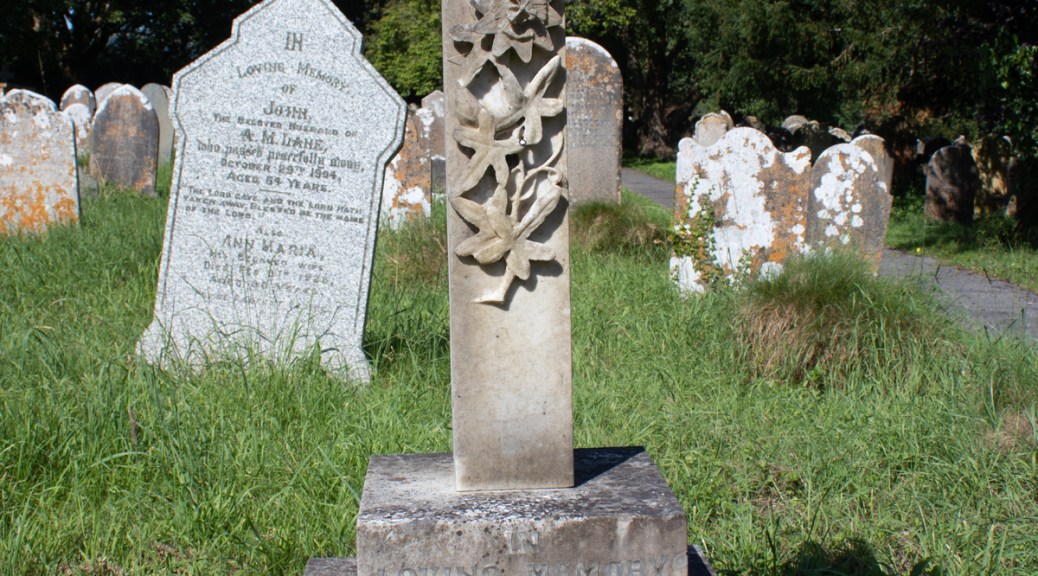
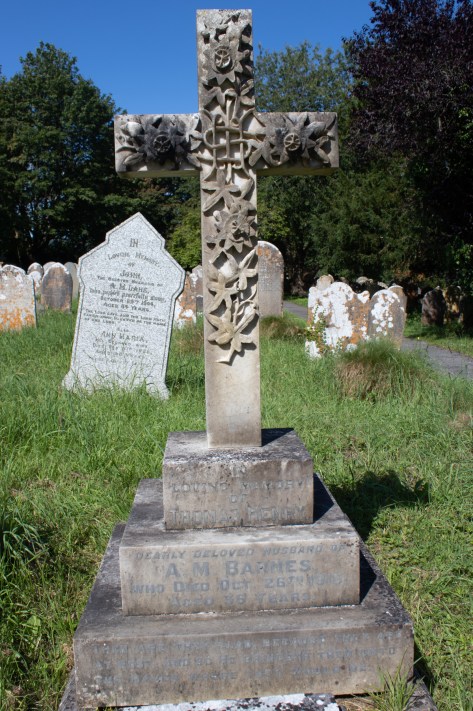
The body of Thomas Henry Barnes was taken back to Buckfastleigh for burial. He was laid to rest in the village’s Holy Trinity Churchyard.