Joseph Arthur Barnes was born in the spring of 1887, and was the youngest of four children to George and Hannah Barnes. George was a farm labourer from Longbridge Deverill, Wiltshire, and this is where he and Hannah – or Anna – raised their family.
When he completed his schooling, Joseph found work as a horseman on the farm, alongside his older brother, George. On 30th July 1913, he married Minnie Ring, a furniture maker’s daughter from the village. The couple exchanged vows in the parish church.
War was on the horizon, and a little over a year after their marriage, Joseph stepped up to play his part. He joined the Wiltshire Regiment and was assigned to the 3rd Battalion. Private Barnes was sent to Dorset for training, but his time in the army would not be a lengthy one.
Joseph contracted pneumonia, and was admitted to hospital in Weymouth. The condition would provide to severe, however, and he passed away on 9th April 1915: he was 27 years of age.
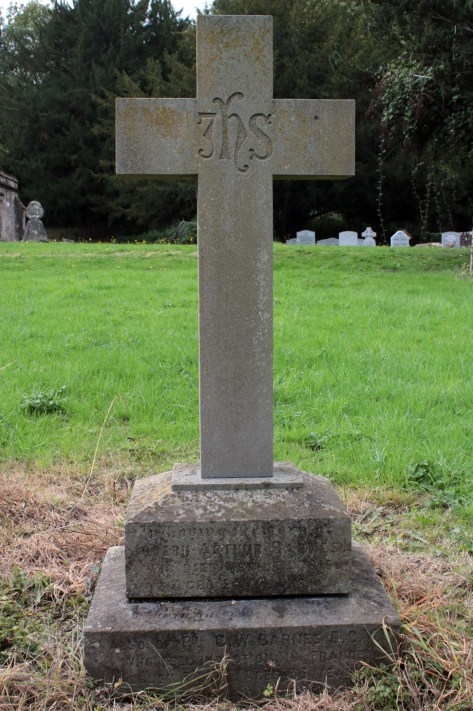
The body of Joseph Arthur Barnes was taken back to Wiltshire for burial: he was laid to rest in the tranquil surrounds of St Peter & St Paul’s Church, Longbridge Deverill.
Joseph’s brother George also served in the First World War. Assigned to the 1st Battalion of the Wiltshire Regiment, he served on the Western Front. Private Barnes was killed in action on 5th August 1917, at the age of 33. He is commemorated on the Menin Gate.
Ernest Henry Mitchell was born in the autumn of 1889 in Worthing, West Sussex. The second of five children, he was the eldest son of Frederick and Rhoda Mitchell. Frederick was a baker and confectioner, and the family lived in and around the town centre. The 1891 census found them at 29 West Buildings; ten years later they were living at 7 Clifton Road; the 1911 census recorded the family at 62 Chapel Road.
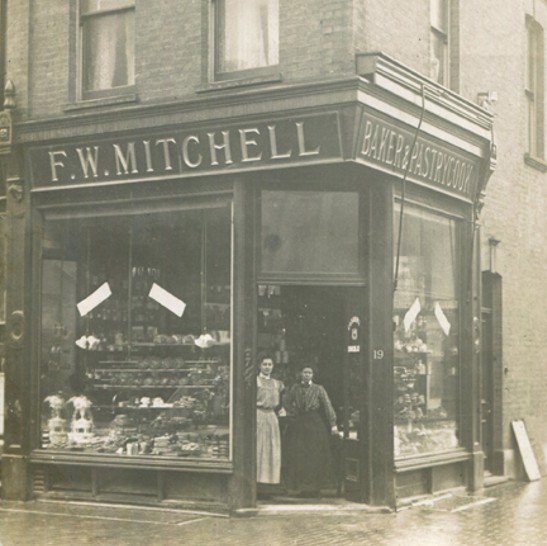
By this point, FW Mitchell’s was a well known bakery, and would remain so through to the 1960s. The Chapel Road shop was bombed during the Second World War, and the family moved the business to North Road.
The 1911 census showed what the bakery has become. Frederick and Rhoda were running the business, while their three sons – Ernest, Reginald and Frederick Jr – were also involved. Their eldest daughter, Rhoda Jr, was an elementary school teacher, while their youngest child, Edgar, was still at school. The Chapel Road property was a bustling affair: the Mitchells employed four live-in servants: Emily Lyon, Annie Dannage, and Mabel Swan as shop assistants, and Edith Blunden as a domestic.
FW Mitchell’s bakery, Worthing
Away from work, Ernest showed other talents. “He was possessed of musical inclinations, and was at one time a member of the Choir of the Congregational Church, as well as of the Choral Society.” [Worthing Gazette: Wednesday 31st October 1917]
In January 1913, Ernest married Constance Banwell. She was the eldest daughter of nurseryman Henry Banwell and his wife, Ellen, and lived on Christchurch Road, not far from the Mitchells’ shop.
When war broke out, Ernest stepped up to serve his country. His service records show that, while he enlisted on 9th December 1915, he was not formally mobilised until March 1917. As a Trooper, he was assigned to the Household Battalion, and, after a brief period of training, he soon found himself in the thick of things.
The Household Battalion fought at Arras in the spring of 1917, but it was at Passchendaele that Ernest’s war was to come to an end. Wounded in the leg on 6th October – just three months after arriving in France – he was medically evacuated to Britain for treatment. Admitted to No. 2 War Hospital in Birmingham, he initially recuperated, but pneumonia took over and Trooper Mitchell succumbed. He passed away on 26th October 1917, at the age of 28 years old.
The body was removed from Birmingham, arriving in Worthing at midnight on Monday; and the internment took place at the Cemetery yesterday afternoon [20th October]. Among those who attended the ceremony were two soldier brothers of the deceased – RA Mitchell, who is in the Royal Flying Corps; and FE Mitchell, of the Middlesex Regiment. Still another brother is serving his Country in a Military capacity. This is Fred Mitchell, formally Organist of the Congregational Church, who is in the Army Service Corps, and was unable to be present yesterday, for he is now in Hospital in Wiltshire.
[Worthing Gazette: Wednesday 31th October 1917]
Ultimately, Ernest Henry Mitchell would be the only one of his siblings to pay the ultimate price while serving his country. He was laid to rest in the family plot in Broadwater Cemetery, on the then outskirts of the home town.
Ernest’s headstone also pays tribute to Alan Frederick Gill, who died in April 1925. This was his sister Rhoda’s child, who died at just four-and-a-half years old.
Benjamin Hoskins was born in Axminster, Devon, in the autumn of 1870. The oldest of six children, his parents were labour William Hoskins and his dressmaker wife, Elizabeth.
When he finished his schooling, Benjamin found work as a plumber and glazier. In 1893, he married Emma Sprackling: the couple set up home on Whitpot Lane, and would go on to have seven children. Benjamin turned his hand to house painting, and this would bring him in a wage until war broke out in 1914.
Full details of Benjamin’s military service have been lost to time. What can be confirmed is that he had enlisted by March 1915, and voluntarily stepped up to play his part. Private Hoskins joined the 3rd/4th Battalion of the Devonshire Regiment, and was billeted in Bournemouth, Dorset.
By September 1915, Benjamin had been admitted to the 2nd Southern General Hospital in Portsmouth, Hampshire. He was suffering from arterial sclerosis, which had been aggravated by his time in the army, and this had led to heart failure. Private Hoskins died on 24th September 1915: he was 45 years of age.
Benjamin Hoskins’ body was taken back to Devon for burial. He was laid to rest in Axminster Cemetery, not far from where his family still lived.
Benjamin and Emma’s oldest son, Reginald, also served during the First World War. He had found work as a shop assistant when he finished school, and joined the 5th (Service) Battalion of the Duke of Edinburgh’s Wiltshire Regiment when war broke out.
By August 1915, Private Hoskins’ unit was in Gallipoli, and it was here that he was killed in action. Reginald died on 30th November 1915: he was just 21 years of age. He was laid to rest in the Green Hill Cemetery in Turkey.
Father and son were both lost to the Great War within two months of each other: Emma had lost a husband and son in a matter of weeks.
William Reginald Karslake was born in the spring of 1867 in the Surrey village of Westcott. The oldest of three children, his parents were William and Annie Karslake. William Sr was the vicar of the village’s Holy Trinity Church, and the family had a retinue of five servants to look after the household.
By the time of the 1891 census, the Karslakes had moved to Eastbourne in East Sussex. Their house, on the corner of Carlisle and Granville Roads, was a grand affair, and, while William Jr’s siblings, Henry and Mary, were 22 and 19 years old, there was still a live-in retinue of four staff to support them. William Jr is absent from this record, and he may well have been studying in Oxford at the time.
In the autumn of 1896, William Jr married Laura McKenzie. She was an admiral’s daughter who had been born in Glasgow, but their couple exchanged vows in Faringdon, Berkshire. The 1911 census found the family living in the 19-room Moorend Court in the Herefordshire village of Mathon. The couple had two children – Sam and Bridget – by this point and had a governess, parlourmaid, two housemaids, a kitchen maid and a cook to keep them in the right lifestyle.
The census recorded William’s employment as ‘formerly resident land agent’, which suggests he may have spent time overseas before marrying. His father had passed away by this point, and his brother Henry had taken up holy orders.
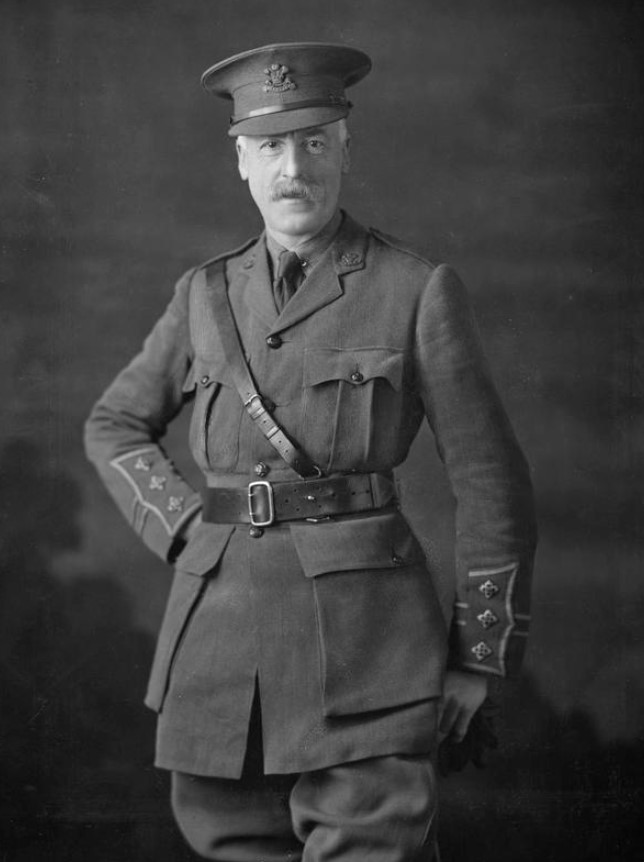
When war was declared, William was quick to volunteer his services. Initially acting as a driver for the British Red Cross, he found himself in France within weeks of the conflict starting. By January 1915, Lieutenant Karslake was moved to the Balkans, and at this point seems to have transferred to the Pembroke Yeomanry.
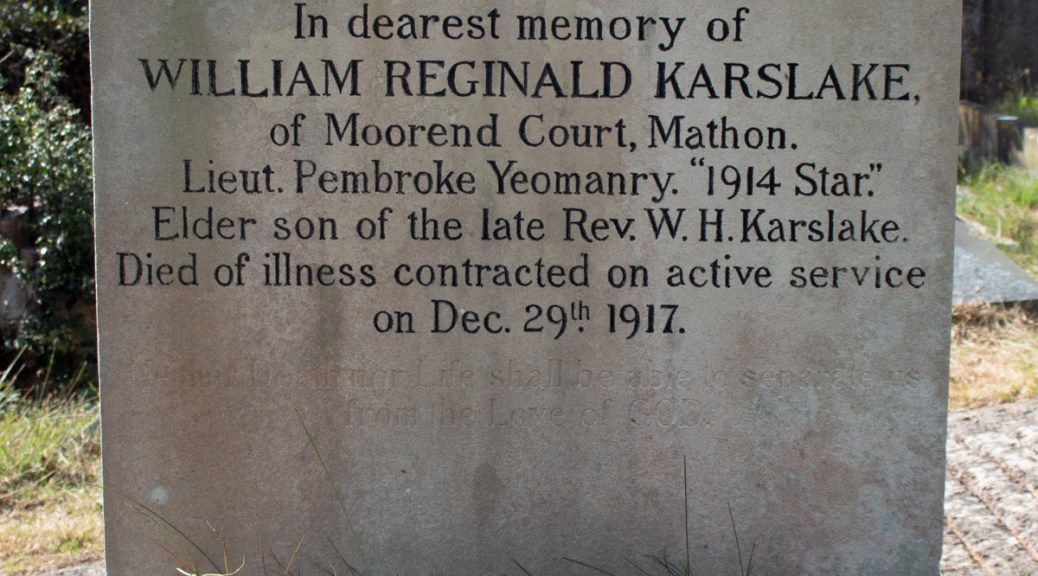
Little additional information is available to William. He passed away following an illness on 29th December 1917: he was 50 years of age.
It would seem that William Reginald Karslake was either hospitalised in Devon, or that there are additional family connections in the area. He was laid to rest in Paignton Cemetery, far from his substantial Herefordshire home.
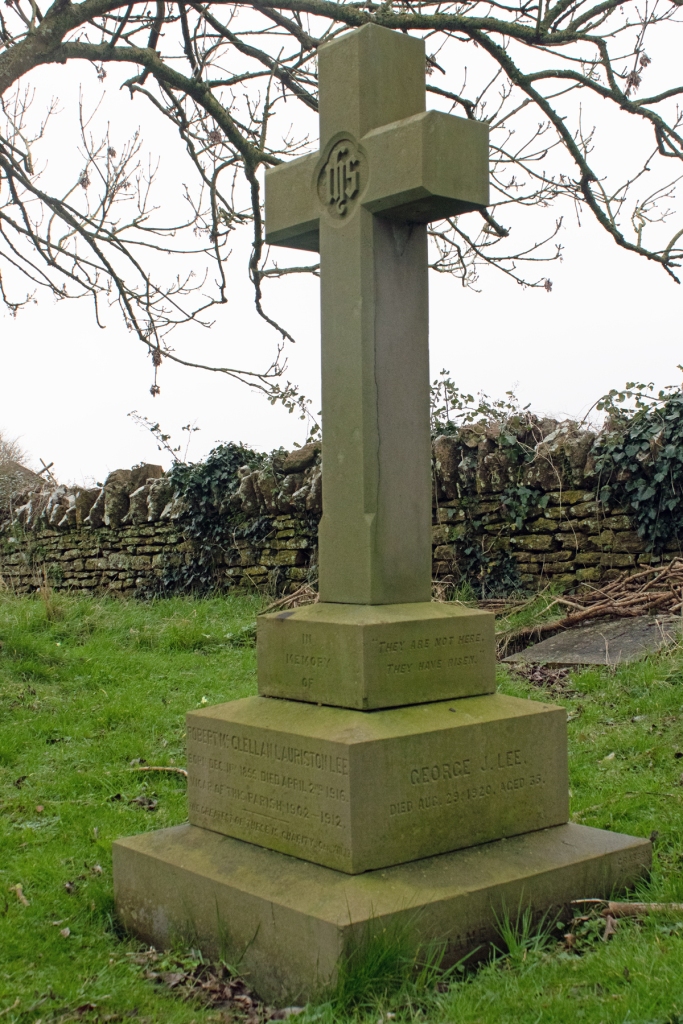
Anyone who attended the funeral of Captain George Lee, IMT (late Rifle Brigade), held in the churchyard of his old home, Yetminster, on Wednesday could not but have been impressed by the wonderful sense of peace and rest that pervaded the place. After a life of unique adventure in Africa, India, America, and Canada his worn and suffering body was laid to rest beside his beloved father. The solemn service was taken by his uncle, Red. EHH Lee (vicar of Whitchurch Canonicorum) and his cousin, Rev. E Hertslet (vicar of Ramsgate), and Rev. MJ Morgan (vicar of Yetminster), there being also present his old schoolfellow, Rev. J Lynes, and Rev. Hall, curate of Yetminster. Besides the chief mourners Captain Lee’s mother, sister and brother-in-law, there were many friends present and numerous villagers who had known him from boyhood. The coffin was attended throughout the service and for many hours before by his most faithful servant and friend, Rajab Ali Khan, who was with his master through India, Persia, Beluchistan, and Afghanistan, and came to England as his personal attendant when Captain Lee was sent home on sick leave. After the service in the churchyard Rajab, through the kindness of Mr Hall, who translated for him, was able to tell everybody what his master had been to him.
Dorset County Chronicle: Thursday 9th September 1920
George Johnston Lee was born in the summer of 1886, the second of four children to Reverend Robert Lee and his wife, Elizabeth. Robert was the vicar of St George’s Church in Fordington, Dorset, when George was born, but moved west to Toller Porcoram not long after he was born.
Tantalisingly little information about George’s early life remains. He does not appear on the 1901 or 1911 census records, and it is likely that he was already away travelling the world by this point. It seems clear that he followed a military, rather than a clerical, career and, by the end of the First World War he was serving in the Indian Army Reserve of Officers. Attached to the Rifle Brigade, George had reached the rank of Captain.
George’s father had become ill in the early 1910s, and having moved to St Andrew’s Church in Yetminster, he retired from the post in 1912. He and Elizabeth moved to Dorchester, but when he passed away in 1916, at the age of 59, his last wishes were to be buried in Yetminster, the village having held a special place in his heart.
Captain Lee survived the First World War, but, as the newspaper report suggests, he became unwell. George had contracted amoebic dysentery, and returned to England to recuperate. The condition was to prove too severe, and he passed away in London on 29th August 1920, at the age of 34 years old.
In accordance with the family’s wishes, George Johnston Lee’s body was taken back to Dorset, and he was laid to rest next to his father, in the tranquil St Andrew’s Churchyard, Yetminster.
William Edward Wakeford was born on 18th April 1885, the oldest of seven children to William and Theresa. William Sr had been born in East London and was a labourer for the engineering company Vickers. Theresa came from south of the Thames, in Greenwich, and it was in South East London that the Wakefords raised their family.
When he left school, William Jr found work as an assistant to a corn dealer. He was set on a better life and career, however, and, on 1st June 1906, at the age of 20, he enlisted in the Royal Navy with the rank of Stoker 2nd Class.
William learnt on the job; he was initially assigned to HMS Acheron and, during his initial five-year term of service, he served on five further vessels, rising to the rank of Stoker 1st Class as a result of his hard work. In between his voyages, however, he was based at HMS Pembroke, the Royal Naval Dockyard at Chatham, Kent.
When his contract came to an end in May 1911, Stoker Wakeford was assigned to the Royal Naval Reserve. With war looming, however, this did not turn out to be for long and, when hostilities begun in 1914, he was called back into action. He was assigned to the battleship HMS Cornwallis, and spent more than two years on board. During this time, the ship saw action in the Eastern Mediterranean, primarily the Dardanelles Campaign, and the fighting around Gallipoli.
By the start of 1917, Stoker Wakeford was back on dry land, and based at HMS Pembroke. For a variety of reasons, that was a particularly busy year at the dockyard, and temporary additional accommodation was set up at the Chatham Drill Hall nearby; this is where William found himself billeted.
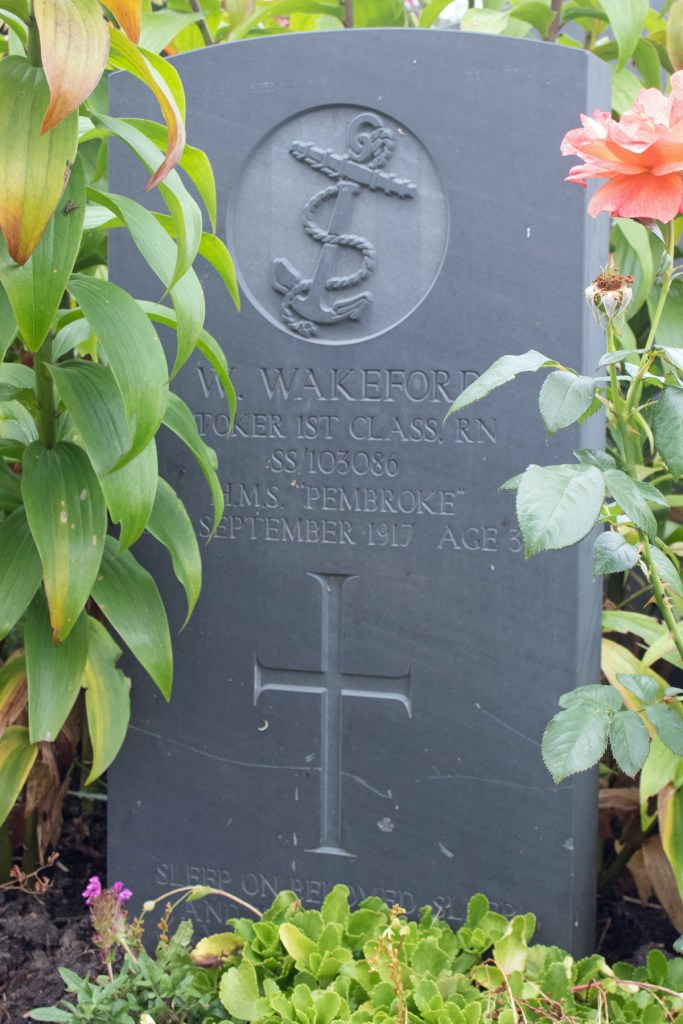
On the 3rd September 1917, the German Air Force carried out its first night air raid: Chatham was heavily bombed and the Drill Hall received a direct hit; Stoker 1st Class Wakeford was among those killed instantly. He was 32 years of age.
William Edward Wakeford was laid to rest, along with the other victims of the Chatham Air Raid, in the Woodlands Cemetery, Gillingham.
William’s younger brother Cecil also fought in the Great War. Serving as a Private in the 2nd Battalion Royal Inniskilling Fusiliers, he saw fighting on the Western Front. Caught up in the Battle of St Quentin in March 1918, he was killed as the regiment were cut off by German advances. He was just 22 years old. He was laid to rest in France, and is commemorated at the Pozières Memorial.
Joseph Beha was born on 16th June 1891, in the Yorkshire town of Whitby. He was the middle of five children to Joseph and Alice Beha, and had a half-sister, through his mother’s previous relationship.
Joseph Sr was a labourer in the local shipyard, and the family had moved to Hartlepool by the time his son had reached 10 years old. The sea had a definite draw for Joseph Jr, and by his twentieth birthday he had enlisted in the Royal Navy as a Stoker 2nd Class.
The service records show Joseph Jr stood 5ft 3.5ins (1.61m) tall, had brown eyes, dark hair and a fresh complexion. His land base was HMS Pembroke, the alternative name for the Royal Naval Dockyard at Chatham, Kent, and it was here that he received his initial six months’ training.
Stoker Beha’s first sea posting was HMS Falmouth, a light cruiser, on board which he served for more than eighteen months, gaining a promotion to Stoker 1st Class in the process. Over the next few years, he was posted to two further ships and, by the time the First World War broke out, was serving on the armoured cruiser HMS Lancaster.
While his record suggests he was of generally good character, Joseph’s time was totally without blemish. He served time in the cells on three separate occasions – for five days in 1913, fourteen days in 1915 and ten days in 1917 – although no evidence of his misdemeanours remains.
The summer of 1917, found Stoker Beha back on dry land in Chatham. HMS Pembroke was a particularly busy place at that point in the war and temporary accommodation was set up. Joseph found himself billeted at The Drill Hall, away from the main barracks.
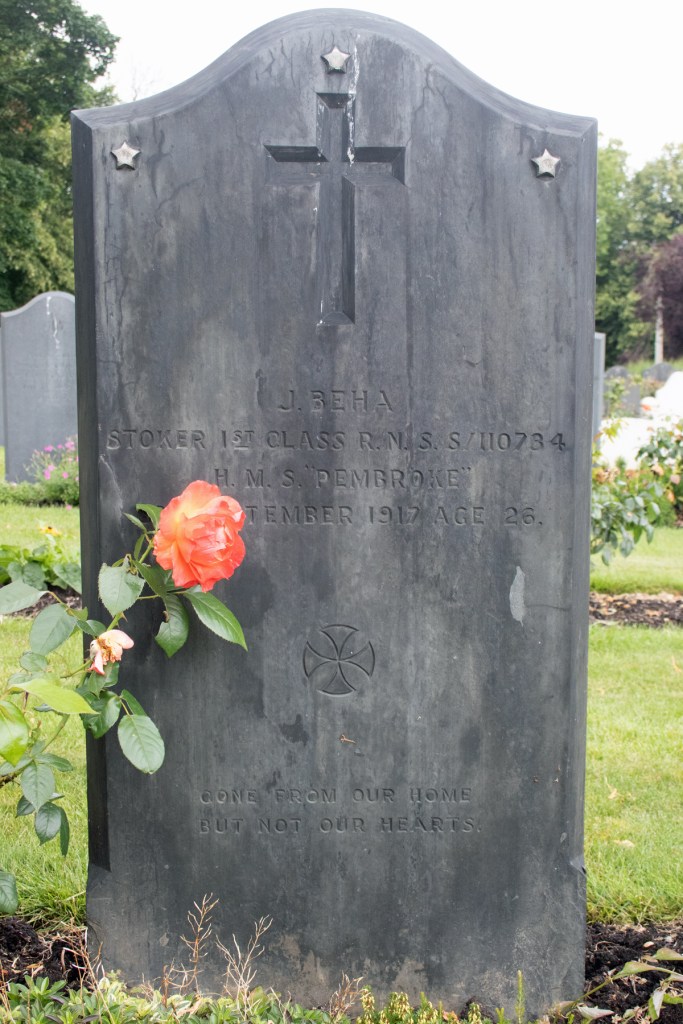
On the night of 3rd September 1917, Chatham suddenly found itself in the firing line, as the German Air Force launched a bombing raid. One of the bombs landed squarely on the Drill Hall, and Stoker Beha was killed instantly. He was just 26 years old.
Ninety-eight servicemen perished during the Chatham Air Raid that night. They were buried in a mass funeral at the Woodlands Cemetery in nearby Gillingham. This, too, is where Joseph Beha was laid to rest.
Stoker 1st Class Joseph Beha (from Chatham Air Raid, Vol. 2 by Marcus Bedingfield)
George Wilfred Simpson was born early in 1882, the second of seven children to Robert and Mary Simpson. Robert was a shipbuilder from Yorkshire, and the family were raised in Thornaby, on the River Tees near Middlesbrough.
Details of George’s early life are a bit patchy, but when he left school he found work as a warehouseman. He met Florence Unwin, who was born in Stockton-upon-Tees, and they married in the spring of 1906. They young couple set up home in the town and went on to have four children, all boys.
When the war came to Europe, George wanted to do his part. His full service records are not available, but he enlisted in the Royal Naval Reserve as a Stoker at some point during the conflict. By the summer of 1917, he was based at HMS Pembroke, the Royal Naval Dockyard in Chatham, Kent.
The base was a particularly busy place at that point in the war and additional accommodation was desperately needed. Stoker Simpson found himself billeted at Chatham Drill Hall, away from the main barracks.
On the night of 3rd September 1917, Chatham suddenly found itself in the firing line, as the German Air Force launched a bombing raid. One of the bombs landed squarely on the Drill Hall, and Stoker Simpson was killed. He was just 35 years old.
Ninety-eight servicemen perished during the Chatham Air Raid that night. They were buried in a mass funeral at the Woodlands Cemetery in nearby Gillingham. This, too, is where George Wilfred Simpson was laid to rest.
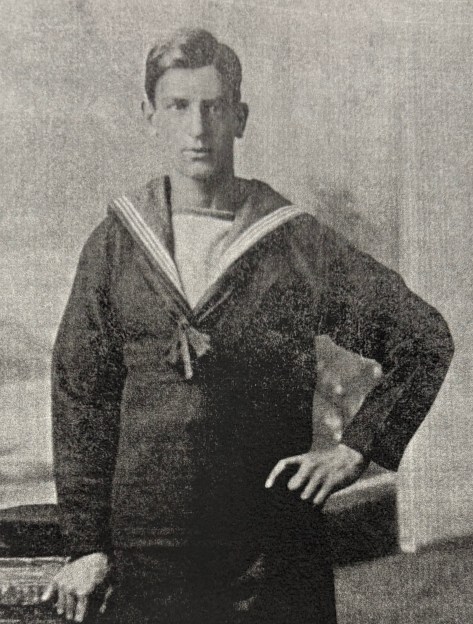
John William Hammond was born on 24th March 1899 in the Kent coastal town of Gravesend. One of eight children, his parents were James (who was known as Robert) and Margaret Hammond. Robert had been an army man all his life: by the time John was born, he had retired from the Royal Field Artillery and was supporting his family with his Corporal’s pension.
The 1911 census records the family of nine as living in a small terraced house on the outskirts of Gravesend. Robert had found employment as a customs watcher (or collector).
When he left school, John found work at the docks, labouring to bring in some extra money for the family. By this time, war had been declared, and, keen to do his bit for King and Country, on 13th January 1916 he volunteered for the Royal Navy as a Stoker.
John’s enlistment papers give a little more insight into him. He was recorded as standing 5ft 6.5ins (1.69m) tall, with brown hair, blue-grey eyes and a fresh complexion. His was noted as having vaccination marks on his left arm and a scar on his left knee. But the most telling part of his service papers is that he gives his year of birth as 1897: he was sixteen years old – and underage – when he joined up, so adding two years to his age ensured he was accepted.
Stoker 2nd Class Hammond’s first posting was just down the coast at HMS Pembroke, the Royal Naval Dockyard in Chatham. He spent five months there, learning his trade, before being given his first ocean-going assignment.
John’s first ship was the battleship HMS Swiftsure which, over the next eleven months, acted as convoy support for the Atlantic shipping lanes. By the time he arrived back in Kent in April 1917, John had travelled to and from Africa and had been promoted to Stoker 1st Class.
Back at HMS Pembroke, Stoker Hammond had had an unblemished record. This changed when, in August he was detained for 21 days, although his misdemeanour is not clear.
During that summer of 1917, the Naval Dockyard was a busy place. When its barracks reached capacity, Chatham Drill Hall was called into use as temporary accommodation and, having been released from detention, this is where John found himself billeted.
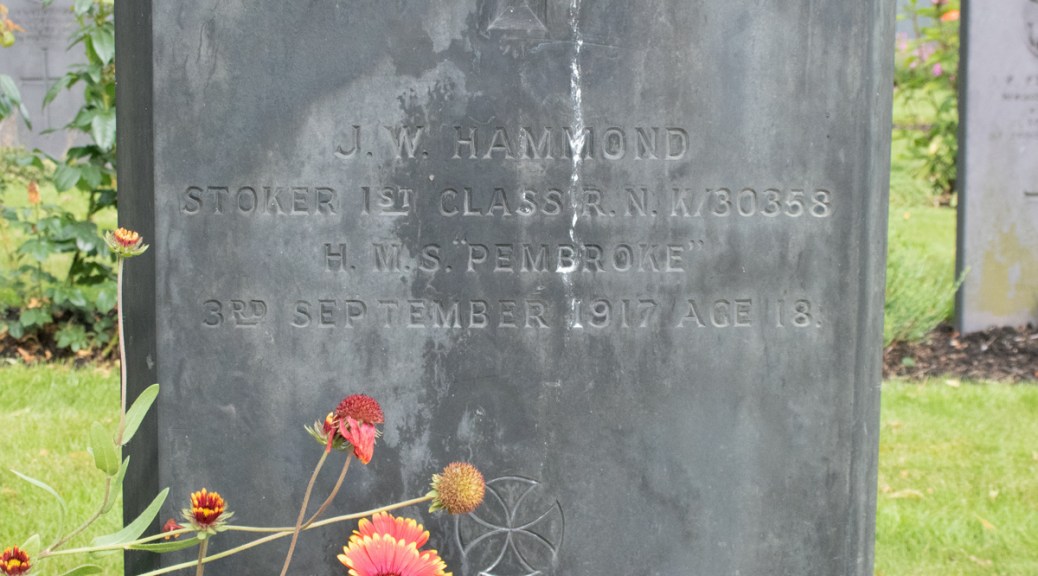
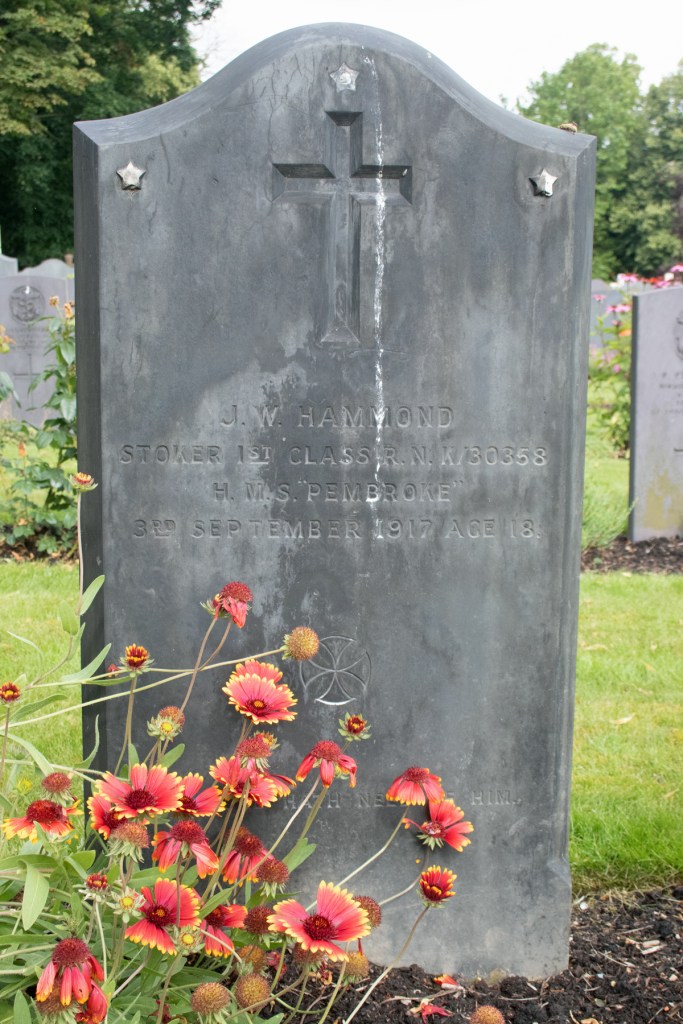
The German Air Force was suffering significant losses during the daylight raids it carried out. In an attempt to stem the flow of casualties, the decision was taken to trial night time raids and, on 3rd September 1917, Chatham found itself in their line of fire. The Drill Hall that Stoker Hammond was sleeping in received a direct hit, and he was killed. He was just 18 years old.
The 98 servicemen who perished during the Chatham Air Raid that night were laid to rest in the Woodlands Cemetery in nearby Gillingham. This, too, is where John William Hammond was buried.
William Gladstone Jennings was born in Kent, in the summer of 1898, the only child of James and Emma Jennings. James was a marine engineer in the Naval Dockyard in Chatham, and it was here that the family lived.
Sadly, due to his age, and the lack of military service documentation, there is little written about William’s life. He was still at school by the time of the 1911 census, and the next records available confirm that he enlisted in the army. The date for this is not available, but it would have been by May 1917 at the latest and he seems to have enlisted with the surname Hickson, which was possibly his mother’s maiden name.
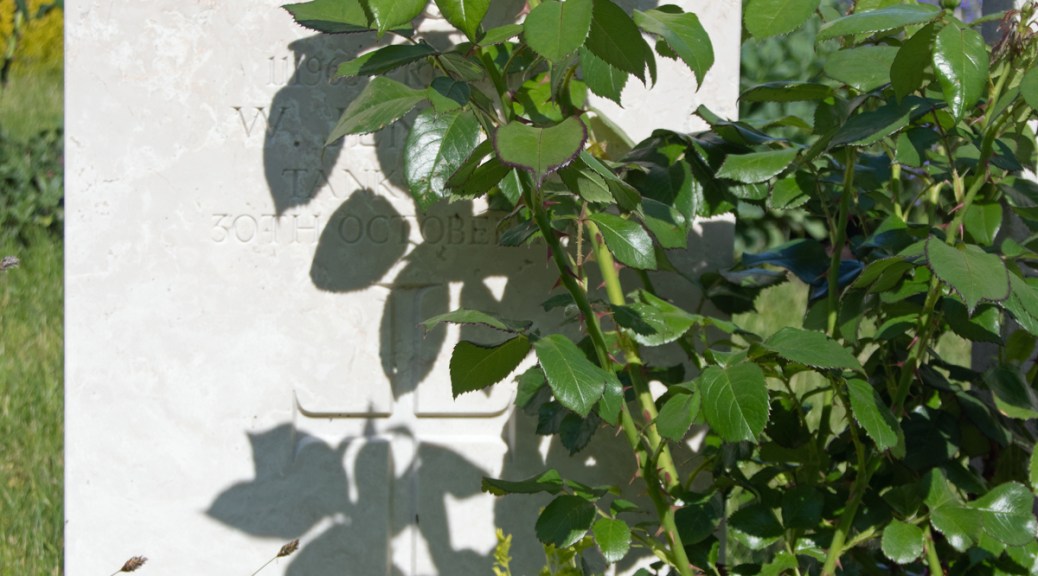
Private Jennings transferred to the Tank Corps when it was formed in July 1917. What his specific role was is lost to time, but it appears that his time in the regiment was short. The next available document is the Army Register of Soldiers’ Effects; this confirms that William passed away on 30th October 1917, in the Military Hospital in Woolwich.
There is no confirmation of the cause of his death, but Private Jennings was just 19 years old.
William Gladstone Jennings was brought back to his home town for burial, and he lies at rest in the Woodlands Cemetery in Gillingham.











 Death and Service