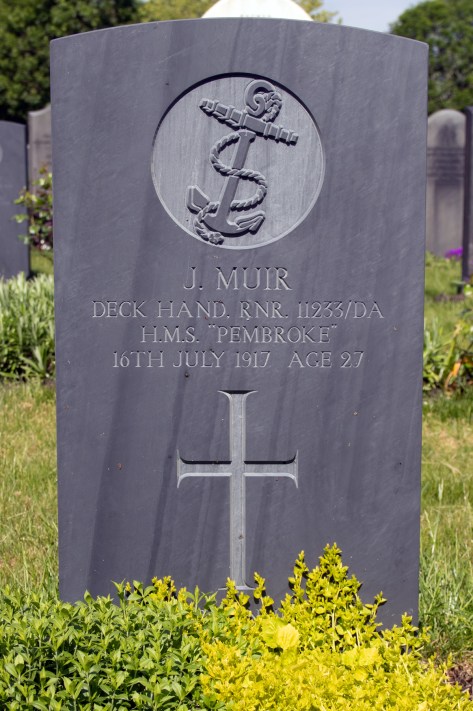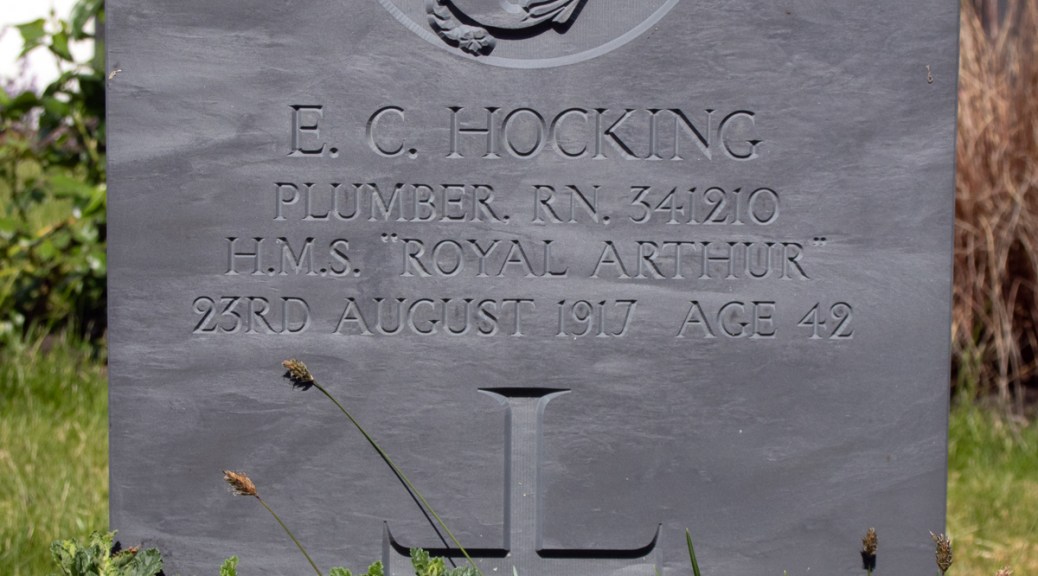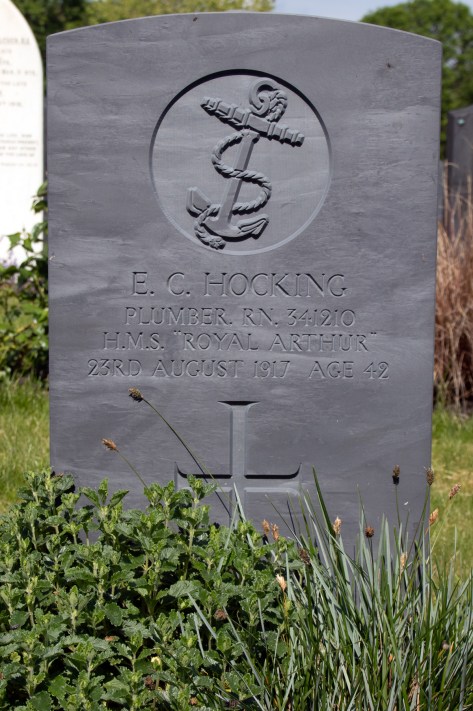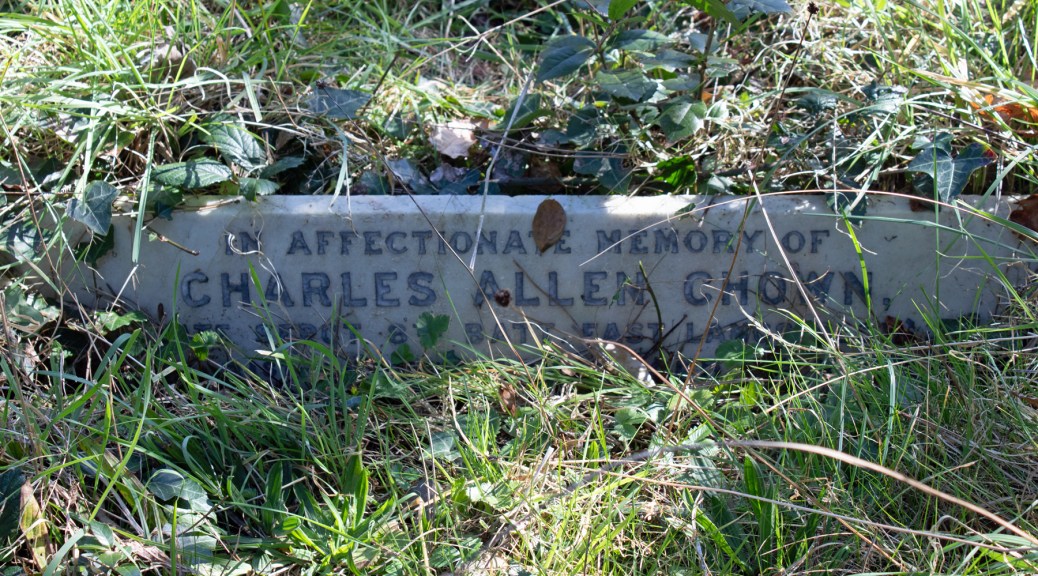
Tag Archives: 1917

Private John Kelland

Private John Kelland

John Bodley Kelland was born on 4th June 1895 in Otakeho, on New Zealand’s North Island. The fifth of eight children, his parents were George and Mary Kelland. George died in 1902, and John’s mother married again: she and new husband Albert Bowers would have two further children.

There is little additional information available about John’s early life. He found work as a carrier when he left school, and by the time war broke out he was living in the town of Taumarunui. In his spare time, he seems to have volunteered for a local army brigade.

John formally enlisted on 24th July 1916. He joined up in Trentham, and was assigned to the New Zealand Wellington Regiment. His service records show that he was 5ft 9ins (1.75cm) tall and weighed 152lbs (68.9kg). A Roman Catholic, he had brown hair, grey eyes and a dark complexion.

Attached to B Company of the 19th Reinforcements, Private Kelland left his home country on 15th November 1916. He spent the next ten weeks on board the troop ship Tahiti, finally disembarking in Devonport, Devon, on 29th January 1917. From there his unit marched to Sling Camp near Bulford, Wiltshire, where many of the ANZAC troops were billeted.

Private Kelland’s time there was to be limited. His health had been impacted during the sea voyage, and he was admitted to the No. 3 New Zealand General Hospital in Codford, Wiltshire, on 8th February. Suffering from pneumonia, his condition worsened: he passed away on 8th February 1917, at the age of just 21 years old.

John Bodley Kelland was thousands of miles from home. He was laid to rest alongside his comrades in the newly-extended graveyard to St Mary’s Church in Codford.


Private John Kelland
(from findagrave.co.uk)

Private Edward Boland

Private Edward Boland

Edward James Boland was born on 14th August 1885 in the town of Darfield, on New Zealand’s South Island. Details of his early life are sketchy, but he was the fourth of nine children to Francis and Annie Boland.

When he finished his schooling, Edward found work as a farm labourer. In 1906, he married Ellen – or Nellie – Shea: their first child, son Raymond, was born the same year, and they would go on to have three more children by the time war was declared.

On 18th June 1916, Edward answered the call to serve the Empire. Enlisting in Trentham, he joined the New Zealand Canterbury Regiment as a Private. His service record notes that he was 5ft 8.5ins (1.74m) tall and weighed 144lbs (65.3kg). A Catholic, he had light brown hair, blue eyes and a fair complexion. A scar on his right thigh was also recorded as a distinguishing mark.

On 16th October 1916, Private Boland left from Wellington on board the steam ship Willochra. His unit – the 18th Reinforcements – arrived in Devonport, Devon, ten weeks later. They were then marched to their base at Sling Camp near Bulford, Wiltshire.

The journey from New Zealand, impacted Edward’s health. At the end of January 1917, he was admitted to the 3rd NZ General Hospital in Codford, Wiltshire, suffering from broncho-pneumonia. His condition deteriorated and would take his life. Private Boland died on 4th February 1917: he was 31 years of age.

As he was thousands of miles from his home, Edward James Boland was instead laid to rest in the newly extended graveyard attached to St Mary’s Church in Codford.


Private Edward Boland
(from findagrave.co.uk)

Rifleman Bertram Winterburn

Rifleman Bertram Winterburn

Bertram Winterburn was born in the city of Hutt, on New Zealand’s North Island, on 23rd April 1877. The oldest of eleven children, his parents were Arthur and Ada Winterburn. Arthur was a postmaster from South Island, and it would be here that he and Ada would raise their family.

There is little concrete information about Bertram’s life. The 1913 Post Office Directory records him as working as a labourer, and living in Otaki, a town back on North Island. He seems to have moved wherever the work took him, however, and, by the time war broke out, he was living in Hunterville, 110km (68 miles) further north.

Bertram stepped up to serve the empire when the call came. He enlisted in Trentham on 27th June 1916, and was assigned to the New Zealand Rifle Brigade.

Rifleman Winterburn left from Wellington on board the steam ship Willochra on 16th October 1916. His unit – H Company, 18th Reinforcements – would not arrive in Devonport, Devon, until 29th December. They were then marched to their base at Sling Camp near Bulford, Wiltshire.

The journey from New Zealand, would take its toll on the new recruits, with many falling ill before, or shortly after, they arrived. Bertram would not be immune from this and, at the end of January 1917, he was admitted to the 3rd NZ General Hospital in Codford, suffering from influenza. His condition worsened, developing into bronchitis, and this would take his life. Rifleman Winterburn died on 4th February 1917: he was 39 years of age.

Thousands of miles from his home, Bertram Winterburn was laid to rest in the newly extended graveyard attached to St Mary’s Church in Codford.


Fleet Surgeon Edward Ward

Fleet Surgeon Edward Ward

Edward Copley Ward was born in Charleville, County Cork, Ireland, on 2nd November 1862. The middle of three children, his parents were Thomas and Elizabeth Ward. Thomas died in 1868, and there is scant information about Edward’s life until he reached his early 20s.

It is clear that he had a focus on education, and a leaning towards the medical side of things. By December 1883, he had qualified as a Master Surgeon at the Royal University of Ireland, and was licenced in midwifery through the King & Queen’s College of Physicians.

Edward was not one to rest on his laurels, however, and he soon tasked himself to a naval career. On 21st August 1900 he was recorded on the Navy Lists as being a Fleet Surgeon, although there is little specific information about this service at this time.

MARRIAGES: WARD-CROWE

October 28, by special licence, at Kill Church… Staff-Surgeon Edward C Ward, RN, to Eleanor, daughter of the late Michael F Crowe, JP, of Melfield, Blackrock, County Dublin.

[Northern Whig: Saturday 1st November 1902]

Edward and Eleanor’s trail goes cold again at this point, and it is not until the 1911 census that we are able to pick them up again. By this point, Eleanor, now 45 years old, is living with four of her sisters, Kate, Charlotte, Isabella and Susanna in a house in Monkstown, Dublin. The family are supported by a domestic servant, Mary Collins.

Edward, meanwhile, was serving on board the battleship HMS Jupiter, which was moored in Weymouth Bay, Dorset. There were 548 crew members on board, and the now Fleet Surgeon Ward was one of seventeen commissioned officers, serving under Rear Admiral Arthur Limpus.

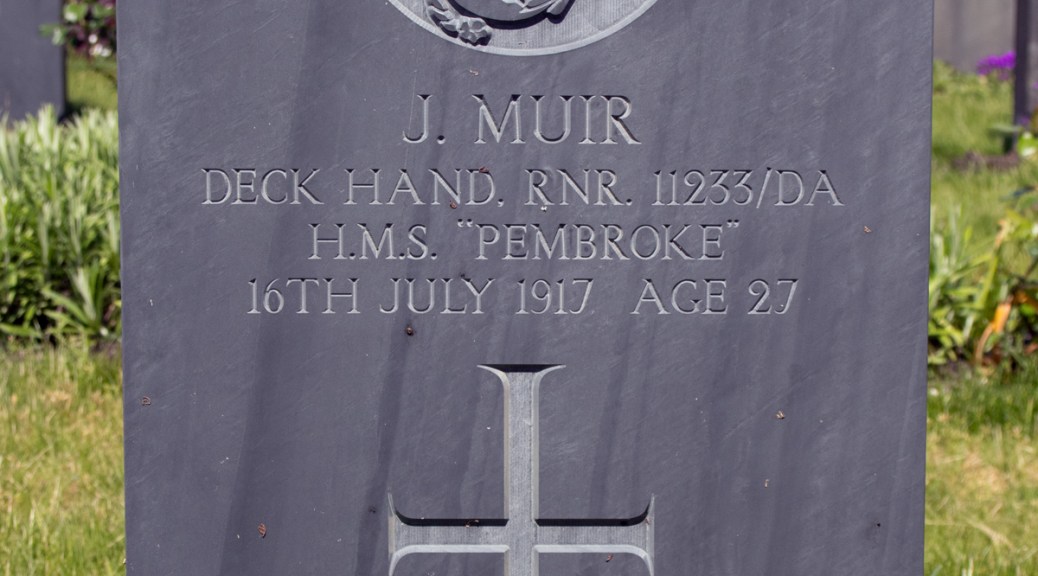
Over the next three years, Edward would serve on six further ships, but, by the time war was declared in the summer of 1914, he found himself shore-based. From December of that year, he served at HMS Pembroke, the Royal Naval Dockyard in Chatham, Kent. His role: to oversee the treatment of incoming wounded troops, and their preparation for onward transport to whichever hospital they would end up.

Fleet Surgeon War would spend the next three years fulfilling this task, but, by the summer of 1917, it would be Edward himself who needed support. Admitted to the Royal Naval Hospital in Chatham, he was suffering from tubercular disease of the kidney, and it would be this condition to which he would succumb. He passed away on 7th August 1917, at the age of 54 years old.

The body of Edward Copley Ward was laid to rest with a simple headstone in Woodlands Cemetery, Gillingham, Kent, not far from the dockyard he had come to know as home.


Interestingly, when Edward’s estate went to probate, he left his estate – worth £1257 7s 11d (approximately £111,500 in today’s money) to Geoffrey Holt Stillwell, with no mention of Eleanor. Geoffrey was a member of a banking family from the south of England, who served as a Lieutenant Colonel in the 4th Hampshire Regiment.


Fleet Surgeon Edward Ward
(from ancestry.co.uk)

Chief Stoker Walter Pankhurst

Chief Stoker Walter Pankhurst

Walter William Pankhurst was born on 21st March 1867, and was the third of four children – and the only son – to Thomas and Harriet Pankhurst. Thomas was a farm labourer from Staplehurst, Kent, but he and Harriet raised their family in Murston, to the east of Sittingbourne.

Walter initially followed his father into farm work, but he sought a bigger and better life and, on 3rd December 1888, he enlisted in the Royal Navy. His service records show that, at 21 years of age, he was 5ft 7ins (1.7m) tall, with dark hair, hazel eyes and a ruddy complexion.

Given the rank of Stoker 2nd Class, Walter was sent to HMS Pembroke, the Royal Naval Dockyard in Chatham, Kent, for his training. In the summer of 1889 he was given his first posting, on board the gunboat HMS Pigmy, and she would remain his home for the next three-and-a-half years.

When he joined up, Walter had committed to twelve years’ service, and this time was not wasted. By the time his contracted came up for renewal, he had served on three further ships, returning to Chatham in between voyages. He had also progressed through the tanks, to Stoker 1st Class in January 1890, Leading Stoker 2nd Class in March 1897 and, with the renewal of his service, to Leading Stoker 1st Class in February 1901.

On 15th June 1904, Walter married Ellen Goddard. A gardener’s daughter from Eastling, Kent, by the time of their wedding, she was working as a domestic servant for a chemist in Hampstead, Middlesex. The couple exchanged their vows in St Stephen the Martyr’s Church, Hampstead, Ellen’s sister Susan acting as one of the witnesses.

Back in the Navy, Walter’s career continued its progression. Regularly noted as being of very good character, within three months of his wedding he was promoted to Acting Chief Stoker. By October 1905 the role was formalised, and he would end his naval career in December 1910 as Chief Stoker.

Stood down to reserve status, Walter made the move to civilian life. The 1911 census found him and Ellen living at 95 Glencoe Road, Chatham, a small terraced house with just four rooms. The couple had had three children by this point, and Susan was also living with them. A naval pensioner, Walter was still employed by the navy, and was working as a bootmaker’s labourer in the dockyard.

When war was declared in the summer of 1914, Chief Stoker Pankhurst was called into service once more. For the next couple of years he would be based at HMS Pembroke, either working in the dockyard’s boiler rooms or training new recruits.

In the spring of 1917, Walter was taken ill. He was suffering from haematemesis, and the condition was to prove his undoing. He passed away on 22nd May 1917, at the age of 50 years old.

The body of Walter William Pankhurst was laid to rest in the naval section of Woodlands Cemetery, Gillingham, a few miles from where Ellen was now living on Luton Road, Chatham.


By the time Walter passed, he and Ellen had had four children. His widow never remarried, but when she died, on 7th April 1961, she was buried alongside her husband. She was 90 years of age.

The couple’s eldest daughter, Nancy, remained a spinster throughout her life, initially supporting her mother after Walter died. Nancy was buried with her parents, when she died in 1995: she was also 90 years old.


Deck Hand John McDonald

Deck Hand John McDonald

Born in Laxay (Lacasaigh) on the Isle of Lewis, Scotland, John Murdo McDonald was the son of Donald and Maggie McDonald. He can be readily identified on the 1901 census, which suggests that he was born in January of that year. The family do not appear on the 1911 census, and John’s trail quickly goes cold.

When war broke out, it would seem that John stepped up to play his part. He joined the Royal Naval Reserve – suggesting that he had some seafaring experience, but his service papers have been lost to time. There are at least four John Murdo McDonalds born around 1901, who all served in the Royal Naval Reserve. None of their service numbers match that of John’s, however.

By the summer of 1917, Deck Hand McDonald was serving on board the motor drifter Ocean’s Gift. The boat, little more than a trawler requisitioned by the Royal Navy, was used as a patrol ship around the Thames Estuary.

That July, John was admitted to the Royal Naval Hospital in Chatham, Kent. He was suffering from tuberculosis, and this would ultimately take his life. He died on 2nd July 1917, aged just 17 years old.

The Isle of Lewis was an unimaginable distance from Kent, and so the body of John Murdo McDonald was not returned to his family. Instead, he was laid to rest in the naval section of Woodlands Cemetery in Gillingham, Kent, not far from the dockyard in Chatham, that had briefly been his home.


Stoker John Webb

Stoker John Webb

John Robert Webb was born at the start of 1894, and was the youngest of eight children to William and Catherine Webb . William’s work as a wharf labourer found the family in Wapping, East London, and this is where John was born.

According to the 1901 census, the Webbs were living in rooms at 1 Meeting House Alley, close to the docks. William, Catherine and John were still living there in the next census, taken in 1911. By this point, John was 17 years of age, and employed as an office youth.

Over the next few years, John’s trail goes cold. By the time war broke out, he had changed careers, and was working as a Stoker for the Mercantile Marine Service. The boat he was assigned to – a tug named Labour – was based out of Chatham in Kent.

Sadly, there is only one more document connected to Stoker Webb, and that relates to his passing. His pension record confirms that he died on 18th December 1917 from an illness. While the location of his passing is unclear, it is likely to have been either at the Royal Naval Hospital in Chatham, or the town’s dockyard. He was 23 years of age.

The body of John Robert Webb was laid to rest in the military section of Woodlands Cemetery, Gillingham, Kent.


Ordinary Seaman Thomas Fleet

Ordinary Seaman Thomas Fleet

Thomas Fleet was born on 3rd February 1879 in Kingswear, Devon, and was the sixth of nine children to Thomas and Emma. Thomas Sr was a fish dealer, and the family lived on Lower Street over the river in Dartmouth. Most of the family were involved in the fish industry, and by the time of the 1901 census, Thomas Jr was also working as a fisherman.

On Christmas Day 1901, Thomas Jr married Hannah Jury. She was a farm labourer’s daughter from Torquay, Devon. The couple married in Hannah’s home town, but settled back in Dartmouth. They had five children – Reginald, Elspeth, Edith, Florence and Thomas – and set up home in a five-roomed house on Victoria Road.

By the time of the 1911 census, Thomas had changed jobs, and was working as a yachtsman. The following year, Reginald died, at the age of just 9 years old. It is unclear how he died, but he passed in August 1912, and was buried on 2nd September, in St Clement’s Churchyard, Dartmouth.

When war broke out, Thomas would be called upon to serve. Unsurprisingly, given his job, he joined the Royal Navy, enlisting on 30th March 1917 as an Ordinary Seaman. His service records show that, at 5ft 2ins (1.57m) tall, he had brown hair, blue eyes and a fresh complexion.

Ordinary Seaman Fleet was sent to HMS Vivid, the Royal Naval Dockyard in Devonport, Devon, for his formal training. Tragically, however, his time in the service was to be a brief one. He contracted lobar pneumonia and was admitted to the barracks’ sick quarters. He passed away from heart failure on 13th May 1917, at the age of 38 years old.

The body of Thomas Fleet was taken back to Dartmouth for burial. He was laid to rest in the family plot in St Clement’s Churchyard, reunited with his oldest son, Reginald.


Air Mechanic 2nd Class Jack Gauntlett

Air Mechanic 2nd Class Jack Gauntlett

Jack Wallis Gauntlett was born in Burbage, Wiltshire, in the spring of 1898. The oldest of four children, his parents were George and Florence Gauntlett. On Jack’s baptism record, George gives his trade as a yeoman, while later census records confirm he was a farmer.

Jack was baptised in St Mary’s Church in Stapleford, near Salisbury, some distance south of Burbage, and, given that his parents had no connection to that area, it seems that his father’s work took the family around the county. The 1901 census record found them Gauntletts back in Burbage, but by the time of the 1911 return, they had moved to Middleton Farm in Norton Bavant.

When war broke out, Jack stepped up to serve his country. He enlisted in the Royal Flying Corps in January 1917 and, as an Air Mechanic 2nd Class, was sent to Farnborough, Hampshire, for training.

Much sympathy is felt with Mr and Mrs FG Gauntlett, of Middleton Farm, in the loss they have sustained by the death of their eldest son, JW Gauntlett… He came home three weeks ago on leave before proceeding to France, and was then sickening for measles and had bronchitis. He was taken to Sutton Veny military hospital and died there on Friday from an attack of pneumonia.

[Wiltshire Times and Trowbridge Advertiser: Saturday 19th May 1917]

Jack Wallis Gauntlett was just 19 years of age when he died on 11th May 1917. He was buried in the family plot in All Saints’ Churchyard, Norton Bavant.


Corporal George Collins

Corporal George Collins

The funeral of Corporal GH Collins, of the Royal Engineers, who died at Devonport at the age of 46, took place at Tiverton, where his mother and stepfather and sister reside. Corporal Collins’s wife and two children are at present in India. He had been in the army since 1899, and served in the South African War, for which he received the Queen’s and King’s medals with four clasps. He went to India in 1902, where he remained until the outbreak of the present war, when he came to France with his regiment. Corporal Collins was wounded, losing two fingers. He afterwards contracted fever, from which he died. The funeral was accorded military honours.

[Exeter and Plymouth Gazette – Monday 29 October 1917]

George Henry Collins was born in West Anstey, Devon, and was the son of George and Harriett Collins. There is little additional information about his early life available, and his was not an uncommon name in the area at the time.

George married Stella Euphrasia Constance O’Leary on 11th October 1911. At the time he was stationed in Myanmar, and the couple exchanged vows in the town of Maymyo, to the west of Mandalay. They would go on to have two children: Mary was born in August 1912, with Gertrude arriving the following November.

When the First World War broke out, it seems that Corporal Collins initially joined the Devonshire Regiment, but soon transferred to the Royal Engineers. Documentation suggests that he was assigned to the Special Brigade Depot at Saltash, Cornwall. However, this may have been the unit he was nominally allocated to when arrived in Britain for treatment to his injuries.

Frustratingly, there is little additional information available about George’s life. He died on 21st October 1917 was laid to rest in Tiverton Cemetery.