Tag Archives: Egypt

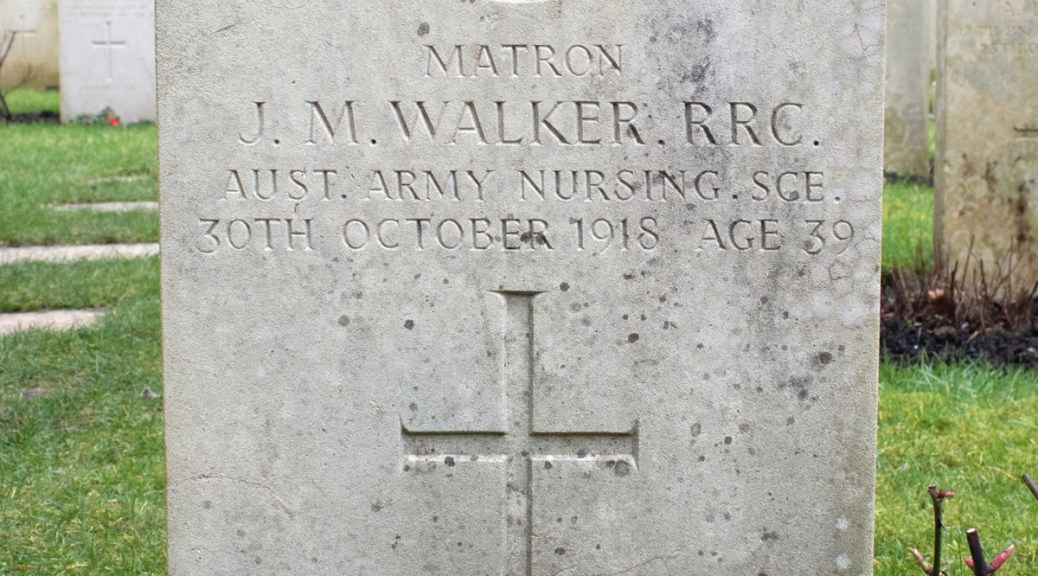
Matron Jean Walker

Matron Jean Miles-Walker

Jean Nellie Miles Walker was born in Hamilton, Tasmania, on 16th November 1878. Her parents were Arthur and Louisa Walker, and her surname moves from Walker to Miles-Walker, depending on the document. There is little information about Jean’s early life, but by 1906 she had taken up nursing.

When war broke out, Jean was quick to step up and help those who were fighting. Initially enlisting on 27th September 1914, she was assigned to a hospital ship a year later, arriving in Ismailia, Egypt, in January 1916.

Now a Sister in the Australian Army Nursing Service, Jean’s records shot the woman she had become. At 36 years of age, she was 5ft 10ins (1.78m) tall, and weighed 128lbs (58kg). She had dark brown hair, brown eyes and a dark complexion.

Over the next couple of years, Sister Walker moved to where she was needed. By September 1916 she was attached to the No. 15 General Hospital in Alexandria, by the end of the year saw her in the 3rd Australian Auxiliary Hospital in London. Jean’s service records note that she was mentioned in despatches on 1st October 1916, but there is no clarification about why she was recognised.

Jean was promoted to Matron in the summer of 1917, and over the next year, she spent time at hospitals in both Britain and France. By the autumn of 1918, she had moved to the No. 1 Australian General Hospital in Sutton Veny, Wiltshire. It was while based here that she fell ill, contracting a fatal combination of influenza and pneumonia.

Sister Walker passed away in the Sisters’ Quarters on 30th October 1918. She was just a couple of weeks short of her 40th birthday.

Jean Nellie Miles Walker was laid to rest in the grounds of St John’s Church, Sutton Veny, close to the hospital in which she had served.


Matron Jean Walker
(from findagrave.com)
Private James Burge

Private James Burge

James Thomas Burge was born in Plymouth, Devon, in the summer of 1887. The oldest of five children, his parents were sawyer James Burge and his wife, Alice. James Sr moved the family to where the work took him: by the time of the 1901 census, the Burges had lived in and around the Plymouth area, including Devonport and Stonehouse. They settled in Ashburton, Devon, and the document found them living on Mill Lane.

When James Jr finished his schooling, he found work as a mill hand. By 1911, he had moved to Buckfastleigh, and was living with the Crook family on Silver Street. Henry Crook was a mason’s labourer, while he and his wife Bessie had three children, Hilda, Ada and Ruby. Living with them when the census was taken, were Bessie’s widowed brother Samuel, his daughter, Bessie, and three boarders, including James.

There are two intriguing things about this census document. The first is that of James’ employment. While he was recorded as being a mill hand, it is evident from his service records that he had enlisted in the 5th (Prince of Wales’) Battalion of the Devonshire Regiment by this point. He had completed training on Salisbury Plain in August 1910, and would undertake further instruction in the summer of 1911, but in between times, he remained on reserve status, and would have needed to earn money.

The second point of interest is that his service records noted that, by the time he was formally mobilised in August 1914, he was married to a woman called Hilda, who lived on Silver Street in Buckfastleigh. While there are no documents available to fully confirm this, it seems likely that this Hilda was Hilda Crook, the daughter of the family James was boarding with in 1911.

Once embodied, Private Burge’s time in the army took him around the world. By October 1914, his unit had been sent to India, and he would remain there for the next eighteen months. After a two-month stint on home soil, he returned to India, before his unit moved to Egypt in March 1917.

On 7th November 1917, while advancing on the enemy forces in Gaza James was struck in his right leg by a fragment of shell. He was wounded near the top of his fibula and, after initially being treated in the field hospital, he was evacuated to Alexandria, Egypt, for treatment. He was operated on, but from that point on had difficulty walking.

Private Burge was transferred to the 4th Reserve Depot, but his injury prevented him from undertaking many of the duties required of him. He was recommended for permanent transfer to England. Ultimately, however, his wound proved too severe, and he was formally discharged from military service on 25th February 1919.

At this point, James’ trail goes cold. He returned to Buckfastleigh, but would not be back on civvy street for long. He passed away on 22nd May 1919, at the age of 31 years old.

James Thomas Burge was laid to rest in the graveyard of Holy Trinity Church, in the Devon town he had made his home.


Driver William Protheroe

Driver William Protheroe

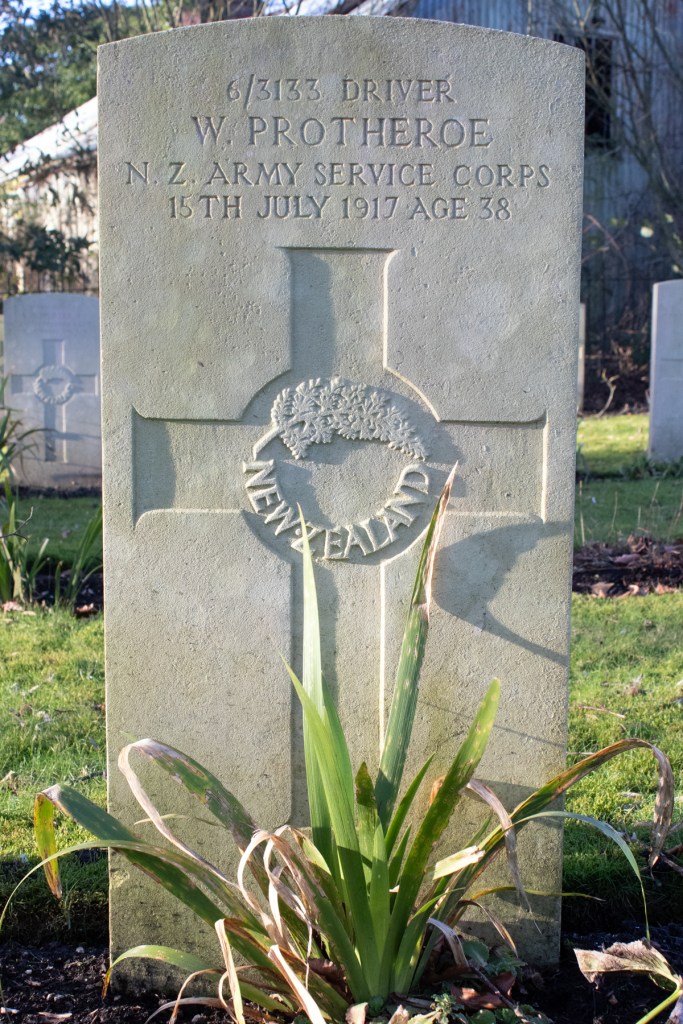
William Protheroe was born in Rangiora, New Zealand, on 3rd January 1878. One of eleven children, his parents were Welsh-born Alexander Protheroe and his English wife, Mary.

There is little concrete information about William’s early life, but later documentation gives his trade as ‘traveller’, and confirms his marriage to Elizabeth Marshall in 1906, although she had passed away by the summer of 1915.

When the Empire was called upon to support Britain in the First World War, William stepped up to play his part. He enlisted on 14th June 1915, and was initially assigned to the Canterbury Infantry Regiment. His service records confirm that at 36 years of age, he was 5ft 9.5ins (1.77m) tall, and weighed 156lbs (70.8kg). William had brown hair, grey eyes and a fair complexion.

After his initial training, William was sent to Europe. On 18th November 1915, he arrived in Suez, and it was here that he transferred to the New Zealand Army Service Corps as a Driver. By the following spring he was on the move again, and he arrived in France in May 1916.

Driver Protheroe was dispatched to a field hospital, as he had contracted influenza, but was well enough to re-join his unit after a few weeks. December 1916 proved eventful for William. He was admitted to hospital in Wimereux, France, the records for the time confirming that he was suffering from rheumatism. Intriguingly, a corresponding entry advises that ‘Soldier was on duty at time of accident and in no way to blame.’

Medically evacuated to Britain, William was admitted to the No. 1 New Zealand General Hospital in Brockenhurst, Hampshire. He spent the month of January 1917 there, before moving to the ANZAC camp near Codford, Wiltshire.

Driver Protheroe would remain in Codford for the next few months. His health was still causing some concern, however, and he was admitted to the camp hospital on 30th June. William was suffering from nephritis, and this was the condition to which he would ultimately succumb. He passed away on 15th July 1917, at the age of 39 years old.

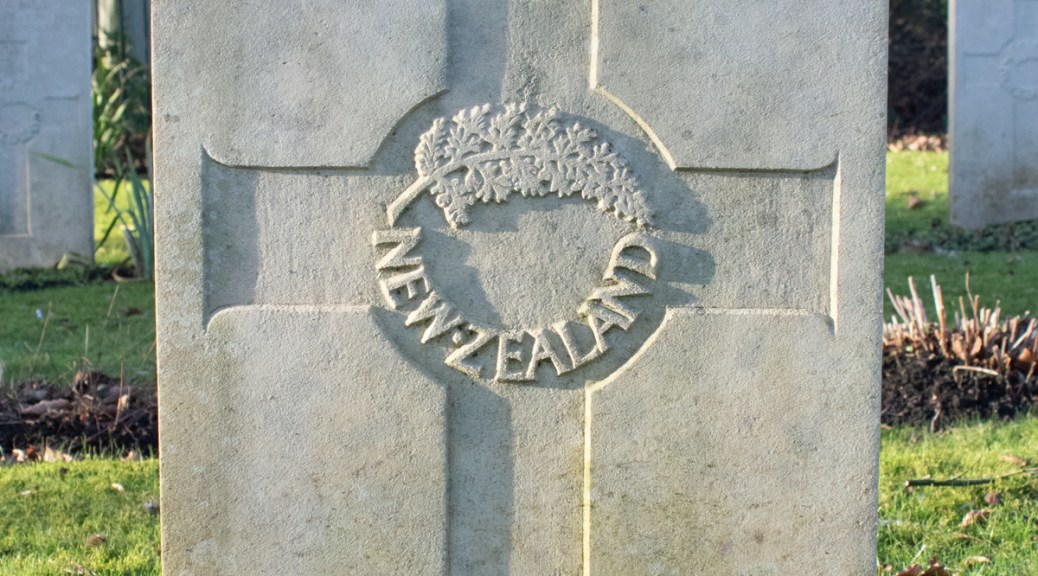
William Protheroe was laid to rest in the graveyard extension of St Mary’s Church, Codford, Wiltshire, alongside fallen colleagues from his regiment.


Private Andrew Wishart

Private Andrew Wishart

Andrew Anderson Wishart was born in Mokoreta, New Zealand, on 9th July 1896. The fourth of eight children, his parents were George and Agnes Wishart.

There is little information available about Andrew’s early life, but when he completed his schooling, he found work in the local sawmills, not an uncommon trade for the rural southern part of the country. In his spare time, he enlisted in the cadets, and had spent a year with them when he stepped up to join the war effort.

Andrew signed up on 19th November 1915, and was assigned to the 1st Battalion of the New Zealand Otago Infantry Regiment. His service records show the mad he had become: he gave his age as 20 years old (he was, in fact, only 19), he was 5ft 10.5ins (1.79m) tall and weighed 166lbs (75.3kg). He was initially trained near Wellington, and seemed to enjoy his freedom, as he spent a month in hospital in Trentham, suffering from gonorrhoea.

Private Wishart’s battalion set out from Wellington on 1st April 1916, arriving in Suez a month later. After three weeks’ pause in Egypt, his unit continued on to France, disembarking in Etaples on 28th May, and heading for the Western Front. Andrew soon found himself in the thick of the action.

The 1st Battalion was heavily involved at the Somme in the summer of 1916, and Private Wishart was not to come out unscathed. He was wounded on 30th September, and evacuated for treatment, first to Rouens, then to Britain. Wounded in the left thigh, he was admitted to the 1st New Zealand Hospital in Brockenhurst, Hampshire, and would end up spending two months there.

In December 1916, Private Wishart moved to the ANZAC camp in Codford, Wiltshire. He remained on site for the next few months, although this time was not without incident, as he was admitted to the camp hospital for with venereal disease once more.

Andrew returned to camp on 10th April 1917, but his health seems to have been impacted. He became jaundiced, and was once again admitted to the camp hospital. Atrophy of the liver was identified, and the condition would prove too severe for his body to recover from. He died on 10th July 1917, the day after his 21st birthday.

Andrew Anderson Wishart was laid to rest in the extension to St Mary’s Churchyard in Codford, Wiltshire, not far from the base he had called his home.


Andrew’s younger brother James had also enlisted in the Otago Regiment when war broke out. As a Private, he was assigned to the 2nd Battalion, his path followed a similar one to that of his older sibling. He was killed in action on the Western Front on 15th November 1916, aged just 18 years old.

Private James Wishart is buried in the Cité Bonjean Military Cemetery in Armentieres.

Private James Wishart
(from findagrave.com)
Private Francis Chick

Private Francis Chick

Francis Frederick Chick was born in the spring of 1886 in Axminster, Devon. One of eight children, his parents were brickmaker Edwin (or Edward) Chick and his wife, Elizabeth.

When he completed his schooling, Francis found work as a sawyer’s apprentice. However, he wanted bigger and better things and, on 19th November 1900, he enlisted in the army. At 14 years of age, he was just short of 5ft (1.52m) in height, and had fair hair, blue eyes and a fresh complexion.

Initially enlisting in the Royal Marine Light Infantry, Boy Chick was to serve three years in the naval division. The 1901 census found him based at the East Stonehouse Barracks in Devonport, Devon, where he was a Bugler.

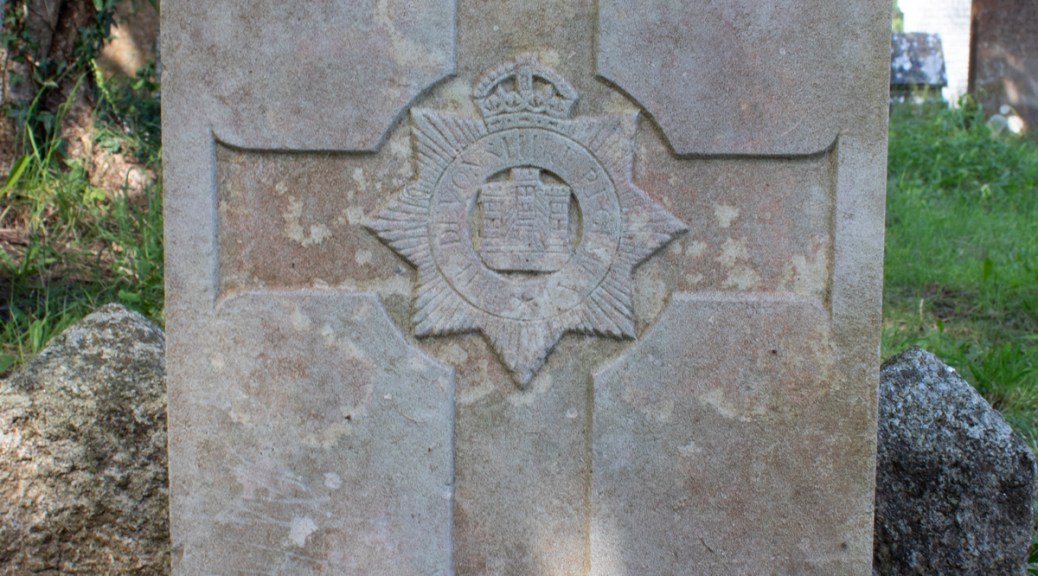
In September 1903, Francis transferred across to the Devonshire Regiment, remaining within the band structure. He came of age in March 1904, and, as a Private, he took on the role of Drummer. By the start of 1909, his unit had moved overseas, and the next census, taken in 1911, found Private Chick billeted in St George’s Barracks in Malta.

Francis remained in Malta for three years, and moved to Egypt with his unit in January 1912. By this point, having completed nearly twelve years’ service, he elected to stay on and renewed his contract. While serving in North Africa, he completed his induction into the Camel Corps, although by the end of the year, he was back on home soil after nearly four years abroad.

At this point, Francis seems to fall off the radar. It is unclear whether his move back to Britain was because he had been placed on reserve status, or due to medical reasons. To add to the mystery, when war broke out, he did not re-join the Devonshire Regiment, but enlisted in the London Regiment instead. He was assigned to the 22nd (County of London) Battalion, but later records note a connection to the 22nd (Wessex and Welsh) Battalion of the Rifle Brigade.

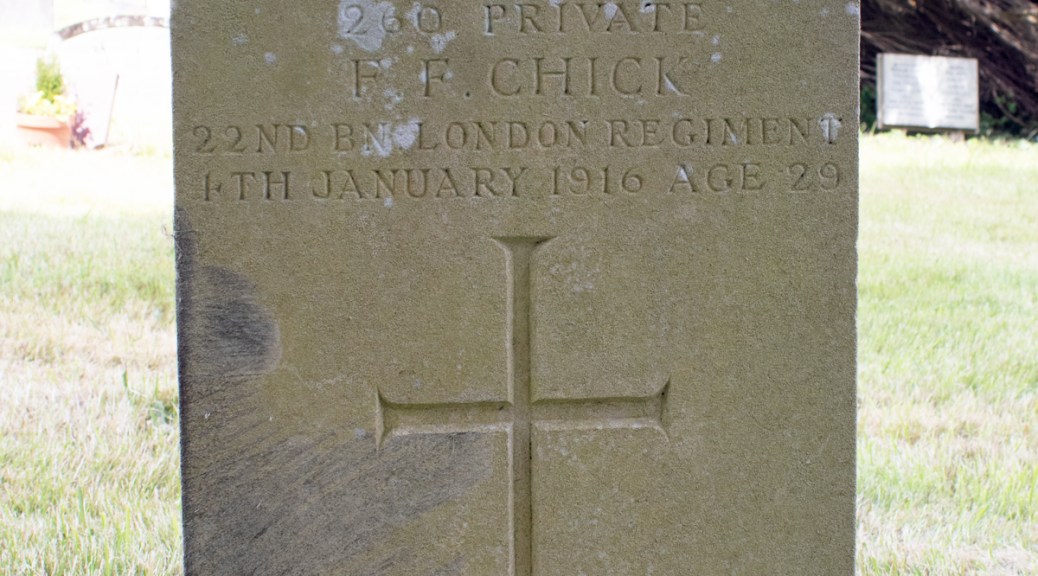
Private Chick was in Buckinghamshire by the winter of 1915/16, and it was here that he became unwell. Admitted to hospital in Aylesbury, he died of pneumonia on 4th January 1916: he was 29 years of age.

The body of Francis Frederick Chick was taken back to Devon for burial. He was laid to rest in the cemetery of his home town, Axminster.


Private Reginald Payne

Private Reginald Payne

Reginald Payne was born on 27th January 1898 in Milverton, Somerset. He was the third of five children – and the oldest son – to Thomas and Mary Payne. Thomas was a dairyman, and both he and Mary were from Devon: the family moved back to the county after Reginald was born, and, by the time of the 1911 census, they had settled in the village of Halberton.

Reginald, at this point, was still in school, and there is little information about his life. When war broke out, he volunteered to serve his country, but, with no military records remaining, the only point of reference for him is a newspaper report of his funeral.

Quite a gloom was cast over Halberton when it became known that Pte. Reginald Payne, eldest son of Mr & Mrs T Payne, of Brimery Dairy, had passed away at the Military Hospital, Devonport. Deceased, who enlisted in 1916 in the Hussars, and was attached to the 1st City of London Yeomanry, proceeded to Egypt, and whilst there he underwent two operations for appendicitis. He returned to England after recovering, and was sent to Ireland, where he had a return of the old trouble, and was again operated on four times, and then sent to Devonport, where he passed away.

[Western Times: Friday 6th February 1920]

Reginald Payne was a day over 22 years of age when he passed away. He was taken back to Halberton for burial, and was laid to rest in the peaceful St Andrew’s Churchyard.


Lieutenant Colonel Cecil Stevens

Lieutenant Colonel Cecil Stevens

Cecil Robert Stevens was born in Arrah, India, on 14th March 1867. One of six children, his parents were Charles and Mary Stevens. Charles was a civil servant who had been born in the South Sea Islands, while Mary has been born in Bengal.

The family appear to have moved to the United Kingdom by the late 1870s. Census records for them are a bit sparse, but the 1881 document found Mary living in Honiton, Devon, with four of Cecil’s siblings and three servants. Cecil, meanwhile, was a boarding student at Malvern College, Worcestershire.

By 1891, Cecil had moved to St Columb in Cornwall. He was boarding at a hotel on Fore Street, and was employed as a general medical practitioner.

Charles was later rewarded for his service to the Empire, and received a knighthood. The 1901 census found him residing in Harcourt Terrace, Kensington, Middlesex, while his wife, now Dame Mary Stevens, was visiting a friend from India in Devon. Sir Charles died at home in 1909, following a bout of influenza.

Cecil, meanwhile, had been making his own way in the world. A qualified surgeon, he married Katharine Duff, a nurse from Aberdeen. They went on to have two children, son Cecil Jr and daughter Mignonette.

On 29th July 1893, Cecil joined the Indian Medical Service as a Lieutenant. Three years later, he was promoted to Captain, and in July 1905, he rose to the rank of Major. His commitment to duty is evident: he spent many years overseas, separated from his wife and young family, and in January 1913, was promoted to the rank of Lieutenant Colonel.

Cecil’s time in the Indian Medical Service was not without danger. In 1895, he was involved in the Relief of Chitral, for which he received a medal and clasp. He was caught up in the Tirah Campaign of 1897/98, and received a further two clasps for his role.

Lieutenant Colonel Stevens’ role during the First World War is lost in the mists of time. Given his role in the Indian Medical Service, it is likely that he served overseas, but he returned to Britain after the war, coming by way of Egypt.

By the autumn of 1919, he was back in Devon, at the family home on Elmsleigh Park Road in Paignton. His health was failing at this point, having come down with diabetes while in North Africa. him. Cecil passed away on 18th November 1919: he was 52 years of age.

Cecil Robert Stevens was laid to rest in the sprawling grounds of Paignton Cemetery.


Lieutenant Colonel Stevens’ will left £4123 13s 10d (around £180,000 today) to his sister-in-law, Alice Duff.

Katharine outlived her husband by only eight years. She passed away on 22nd December 1927 at the Field Officers’ Quarters in Gibraltar: she was 61 years of age.


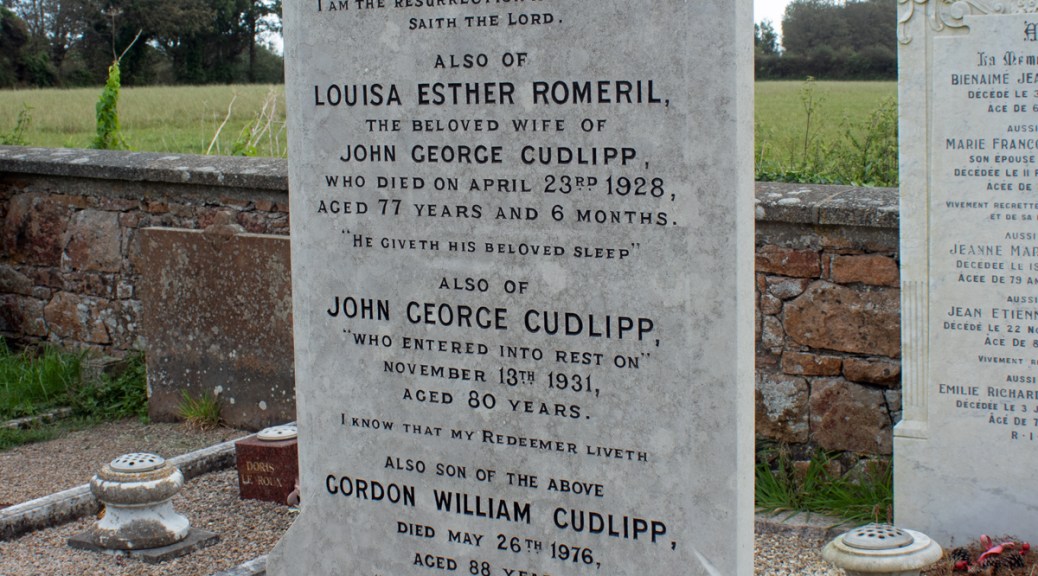
Gunner Herbert Cudlipp

Gunner Herbert Cudlipp

Herbert Henry Cudlipp was born in St Peters, Jersey, in around 1891. He was one of ten children to farmers John and Louisa Cudlipp. The family had moved to Mont à L’Abbé, on the outskirts of St Helier, by the time of the 1911 census, at which point the whole family were involved in the farm in one way or another.

Little information is available about Herbert’s military life. He enlisted in the Royal Garrison Artillery at some point during the war, and was attached to the 38th Siege Battery. The unit was based in Egypt from December 1915, and later moved to France. However, records are unclear as to when and where Gunner Cudlipp served.

Details of Herbert Henry Cudlipp’s later life are also lost to time. Herbert survived the war, but died on 4th June 1919, at the age of 28 years old. He was laid to rest in the family plot in Macpela Cemetery, St John’s, Jersey.


Gunner Herbert Cudlipp
(from ancestry.co.uk)

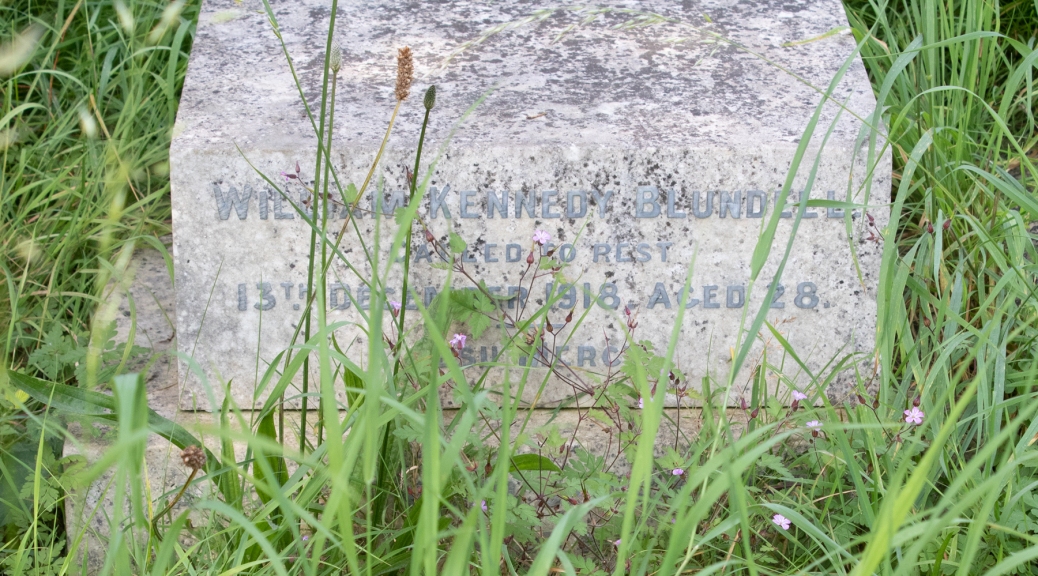
Captain William Blundell

Captain William Blundell

William Kennedy Blundell early life seems anything but ordinary. Born in Cardiff, Glamorgan, in the summer of 1890, he was the only child to bank clerk Edmund Blundell and his wife, Annie. Edmund was born in Staplegrove, Somerset, while Annie had grown up in Lahore, India.

The 1891 census found William living with his maternal grandparents James and Edith Kennedy in the Walcot area of Bath, while his parents were firmly based in Cardiff. Edmund died the following year, so it is possible that he was placed out of the way while Annie tended to her husband (along with her sister-in-law and a domestic servant).

By the time of the next census return, Annie and William were reunited, and were living in Avenue Road, Wimborne Minster, Dorset. Anne was living off her own means, and had a servant, Emily Chaffey, to hep look after the home.

Both Annie and her son disappear from the 1911 census. It is likely that William had embarked on a military career by this point, and may have been serving overseas. Sadly, his trail goes cold, but scraps of later information help identify some of what became of him.

By the outbreak of the First World War, he was serving in the Bedfordshire Regiment. He was based in Egypt from January 1916, and rose to the rank of Captain by the end of the conflict. By 1918, he was attached to the 12th (Transport Workers) Battalion, and was back in Britain.

Captain Blundell was in Sussex by the time of the armistice, and it was here that he fell ill, contracting pneumonia. He was admitted to the General Eastern Hospital in Brighton, but the condition was to prove too severe. He passed away on 13th December 1918, at the age of 28 years old.

William Kennedy Blundell’s body was taken back to Somerset for burial. He was laid to rest in the sweeping grounds of Locksbrook Cemetery in Bath.


Driver John McClymont

Driver John McClymont

John McClymont was born in Cowra, New South Wales, Australia, in 1865. Full details of his early life are lost to time, but later documents confirm that his mother was called Sophia.

Most of the information relating to John’s life comes from his army service records. These confirm that he enlisted on 13th September 1915, and that he was assigned to the 8th/20th unit of the 5th Australian Infantry Brigade. He was noted as being a labourer when he joined up, with brown hair, blue eyes and a fresh complexion. The record confirms that he stood 5ft 10ins (1.78m) tall, and weighed 169lbs (76.7kg).

Private McClymont arrived in Egypt in February 1916, and transferred to the 2nd Battalion of the Australian Imperial Force. He was initially based at Tel-el-Kebir camp, close to Cairo. From here on in, he seems to have been beset with poor health, and had numerous hospital admissions for heart ailments and haemorrhoids.

By April 1916, John’s unit had arrived in France, and his commitment to the job was not to go unrewarded. On 13th July 1916, he was appointed to the role of Acting Sergeant, and just three months later, he was reassigned to the 1st Australian Infantry Brigade Headquarters, where he was mustered as a Driver.

He was still battling health issues, however, and, in 18th August 1917, he was admitted to a hospital in Boulogne with heart disease. Within a month, Driver McClymont had been medically evacuated to Britain for treatment, and he was taken to Bath War Hospital in Somerset. It was here that he was diagnosed with diabetes, and, having slipped into a diabetic coma, it was here that he passed away, on 9th October 1917. He was 42 years of age.

With all of his family on the other side of the world, John McClymont was laid to rest in the military section of Bath’s Locksbrook Cemetery.