Edwin James Ward was born at the start on 3rd December 1879 in London. The oldest of four children, his parents were William and Emma Ward. William, who was a printer, had also been born in London, and the family lived initially in rooms on Trafalgar Street, Walworth, then Hardaker Street in Shoreditch.
There are tantalising gaps in Edwin’s life, and it is a challenge to piece together what happened to him after the 1891 census. He disappears from the records for nearly two decades, and is it likely that he had enlisted in the Royal Marine Light Infantry, and spent time overseas.
On 21st August 1908, Edwin married a woman called Kate. There is no further information available about her, although the couple went on to have a daughter, Kitty, who was born in Portsmouth on 13th November 1911.
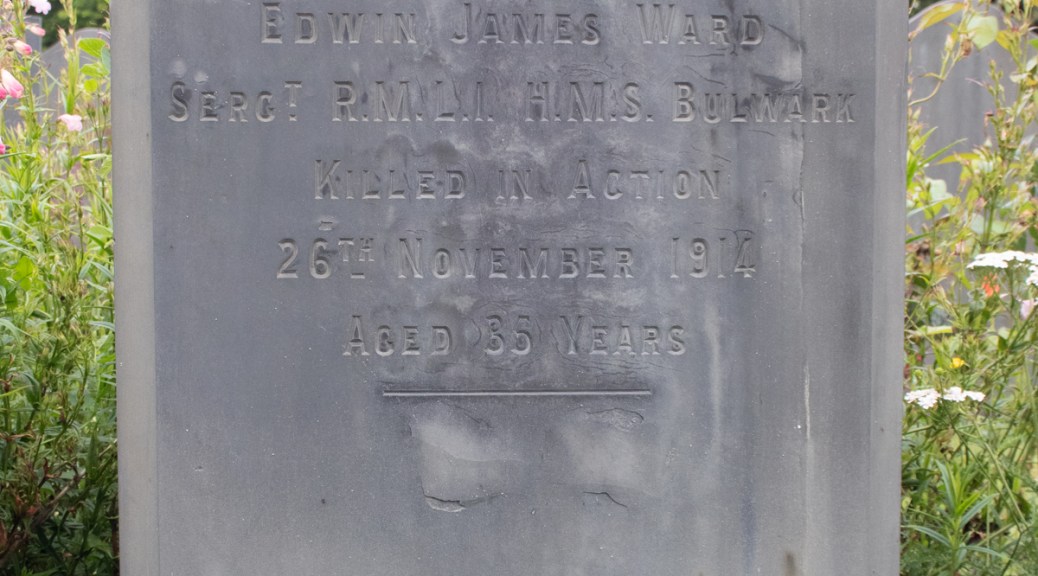
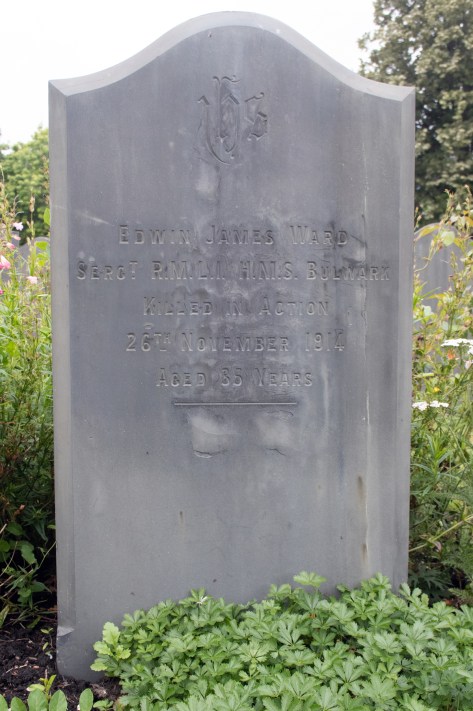
Edwin’s trail goes cold again at this point. He appears to have risen through the ranks with the Royal Marines and, by the summer of 1914, was a Sergeant. He was assigned to the battleship HMS Bulwark, and was on board on the 26th November 1914, when she was moored close to Sheerness, Kent. That morning, an explosion ripped through the ship, sinking it and killing more than 740 people. Sergeant Ward was amongst them: he was 34 years of age.
The body of Edwin James Ward was laid to rest in a marked grave in the naval section of Woodlands Cemetery, Gillingham, Kent.
The life of Thomas Henry Wilson is challenge to piece together, and it is only through fragmented documents that the trail can be uncovered.
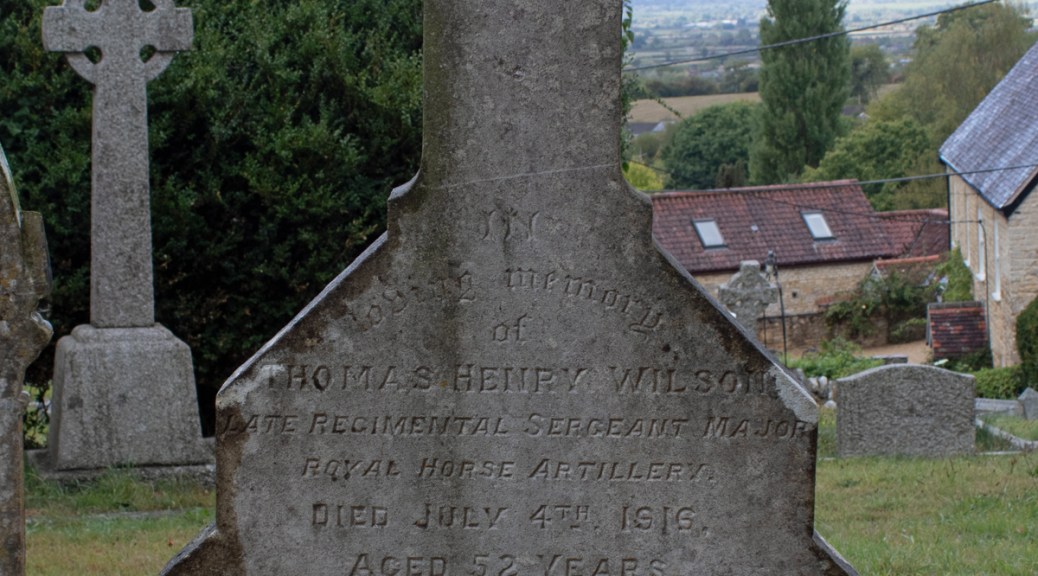
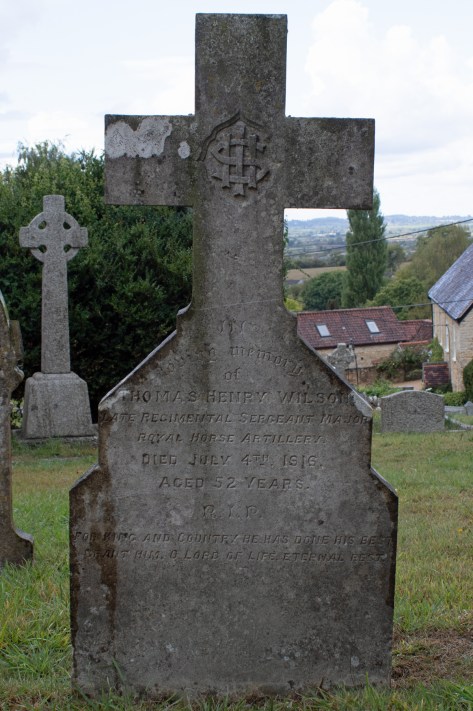
Thomas’ headstone confirms he was a Regimental Sergeant Major in the Royal Horse Artillery, and that he died on 4th July 1916, at the age of 52.
The Commonwealth War Graces Commission’s records confirm that he was married to Mary Ann Wilson (née Ralph), who lived in West Stour, Dorset. The couple’s wedding took place in Holy Trinity Church, Woolwich, Kent, on 14th February 1888. The marriage certificate gives their fathers’ names – farriers Charles Wilson and James Ralph. The document also confirms Thomas’ role as a a Sergeant in the RHA, and gives his age as 27, and Mary’s as 21.
The Wilsons’ appearance in the the census records is a little sporadic. They are not recorded on the 1891 census, but ten years later, they were living in Bilston, Staffordshire. They were listed as being caretakers of the town’s Conservative Club on Church Street. Their ages are given as 41 and 31, and Mary’s place of birth is given as Kington Magna, Dorset.
By 1911, Thomas and Mary had moved to London, and were boarding at the house of Joseph and Rosetta Johnson, at 5 Knivet Road in Fulham, Middlesex. Thomas was listed as being an army pensioner, while Mary was employed as a domestic cook.
At this point, Thomas’ trail goes cold. It is likely that he was called upon when war broke out, but there are no records to confirm where or how he served. He passed away in July 1916, and was laid to rest in All Saints’ Churchyard, Kington Magna, which would suggest that he and Mary had moved there to be closed to her family.
Frederick John James was born in Willesden, Middlesex, in the spring of 1890. The oldest of six children, his parents were William and Louisa James. Louisa was William’s second wife, his first, Emily, having died in 1887. Frederick had ten half-siblings from this first marriage.
William was a fishmonger: the 1891 census recorded the family at 159 York Road, Battersea, Surrey. Ten years later, they had moved over the river, and were living to 46 Artizans Dwellings, Hammersmith, Middlesex.
Frederick’s father had passed away by the time of the 1911 census. The document recorded his mother residing at 18 Western Terrace, Notting Hill, Middlesex. She lived with three of her children – Ben, Alice and Grace – and was doing char work to bring in a little money.
Frederick, however, was already carving out a career in the army for himself. The same census recorded him as one of 250 troops billeted in Fyzabad, India, where he was a Private in the 2nf Battalion of the East Yorkshire Regiment.
Private James’ military career lacks some detail, and can only be picked up around the time of his passing. By this point, he had switched regiments, and was a Corporal in the 8th (Service) Battalion of the Somerset Light Infantry. He is also noted as being married to a woman called Frances Esther New: the couple had married in 1913, although there is no other information about her.
In the summer of 1917, Corporal James’ unit was caught up in the fighting at Passchendaele. Frederick was initially reported missing, but was later declared as being killed in action on 4th October 1917. He was 27 years of age.
The body of Frederick John James was laid to rest in the Zandvoorde British Cemetery, Ypres.
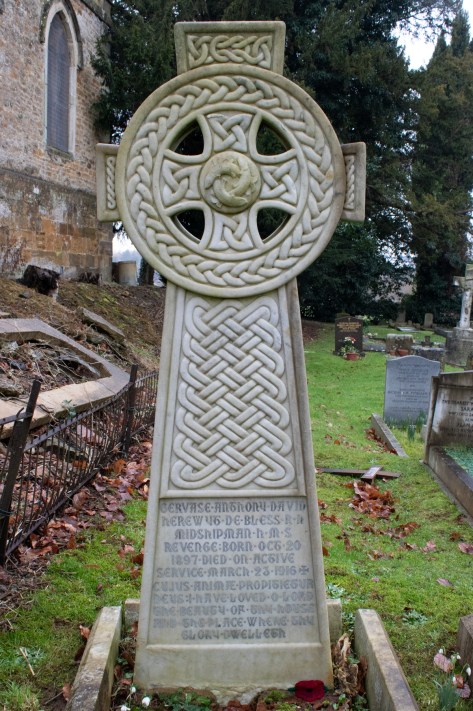
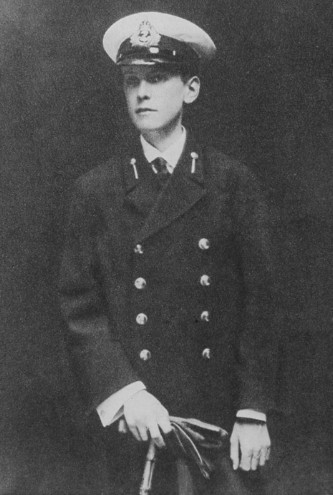
Gervase Anthony David Herewyt de Bless was born on 20th October 1897 in Westminster, Middlesex. One of two children, he was the surviving son of barrister Alfred de Bless and his wife Maud, born Maud Cary-Elwes. Both were renowned families – Maud’s brother going on to become the Bishop of Northampton. The family do not appear in the 1901 census, but by 1911 Gervase’s parents were living at 156 St James’ Court, with French lady’s maid Henriette Forestier.
Alfred died not long after the census was taken. Gervase, meanwhile, was installed as a boarder at Downside College, Somerset. One of 168 students, he was taught by twelve schoolmasters and a handful of Roman Catholic priests from the local abbey.
An exceptionally clever boy of very active minds and many interests, during his time in the School he distinguished himself in all branches of study, winning the Gregorian Medal in 1912. He passed the Higher Certificate three times, twice gaining distinction in French and twice in Roman History. For three years he played in the Junior Cricket Eleven, which he captained in 1912. From 1908 to 1912 he sang in the choir as a treble, and he took a leading part with much success in “The Gondoliers,” and in “HMS Pinafore.” In 1914 he was Editor of The Raven, and he was on the committee of the Petre Library. In this year also he was awarded the Higher Certificate Latin Prose Prize given by St Gregory’s Society. On leaving Downside he spent two terms at Cambridge under the tuition of Mgr Barnes. Sensitive and somewhat retiring, and with health far from robust, he faced the situation created by the war with splendid courage, and obtained a cadetship in the Royal Navy. A skilful angler, fishing had ever been his favourite recreation, and on this pleasant pastime he wrote some charming verses which were afterwards collected in a little booklet.
[Baliol College War Memorial Book]
Gervase was given the rank of Midshipman in February 1916, and was assigned to the battleship HMS Revenge the following month. Before his posting he had suffered a bout of influenza, and had a relapse within days of boarding. He died from a combination of influenza and diabetes on 23rd March 1916, just two days after joining Revenge. He was just 18 years of age.
…rites of the Church… were administered to him by Dom Jerome Tunnicliffe, of St Mary’s, Liverpool, a monk of Downside.
[Baliol College War Memorial Book]
The body of Gervase Anthony David Herewyt de Bless was taken to Northamptonshire for burial. He was laid to rest in the ground of St Andrew’s Church, Great Billing, the last resting place of the Cary-Elwes family and de Bless families.
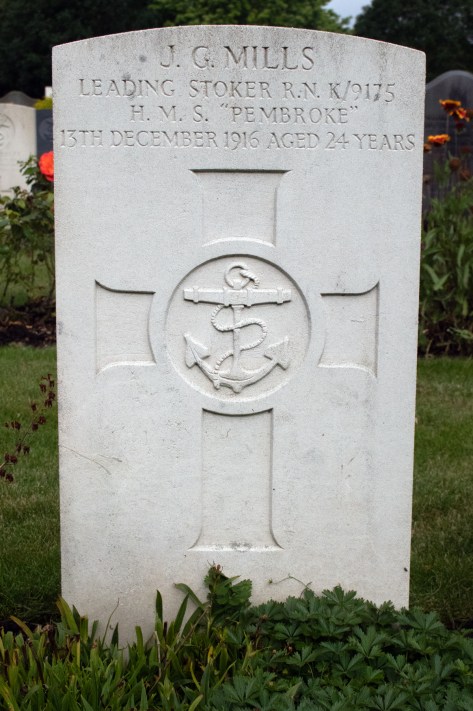
James George Mills was born on 5th August 1891 in Poplar, Middlesex. One of nine children, his parents were Robert and Emily Mills. Robert was a bricklayer, and by the time of the 1901 census, they had settled in Lochnager Street.
Robert had died by 1911, and Emily was left to raise their children alone. That year’s census return found them living in rooms at 1 Cobden Street, with three of the children – including James – old enough to be earning a wage.
James had enlisted in the Royal Navy the year before, and was employed as a Stoker 2nd Class. His service papers show that he was 5ft 5ins (1.65m) tall, with light brown hair, blue eyes and a fair complexion. He was also noted as having a small scar on his right cheek.
Stoker Mills would come to be based at HMS Pembroke, the Royal Naval Dockyard in Chatham, Kent, during his career. He served on a number of ships and, by the time he was promoted to Stoker 1st Class in October 1911, he had spent time on board the cruisers HMS Vindictive and HMS Foresight.
With his promotion came a move, and James was assigned to HMS Acteon, the navy’s new torpedo school based in Sheerness, Kent. From here on in, much of his time seems to have been spent on land, and in January 1914, he moved to HMS Dido, also in Sheerness.
This move to the navy’s land bases seems to have coincided with James’ life away from his career. On 26th December 1912, he married Classina Steenbergen, a Dutch national, whose parents had moved to Barking, Essex in the late 1890s. The couple would go on to have two children: daughters Clasina and Iris.
James’ dedication to the Royal Navy began to pay off, with his annual reviews noting a very good character and a superior ability. In May 1915 he was promoted to Acting Leading Stoker, with the position being formalised that November.
By this point, however, James’ health was becoming impacted. He was admitted to the naval hospital in Chatham in December 1916, suffering from a malignant growth on his pancreas. The condition would prove fatal: he died on 13th December, at the age of just 25 years old.
The body of James George Mills was laid to rest in Woodlands Cemetery, Gillingham, Kent, not far from the naval base he had known so well.
Classina now had two young children to support on her own. She married again in the spring of 1920, her new husband being cabinet maker William Walter Hermann. The couple went on to have three children: Walter, Pearl and James.
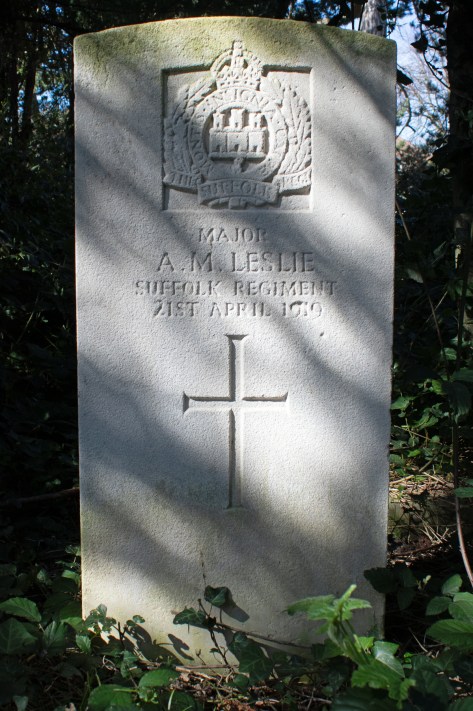
Alexander Augustus Maurice Leslie was born in France in 1852. One of five children, his parents were Government Secretary of State Francis Leslie and his French wife, Josephine.
Alexander’s mother died when he was 8 years old, by which point the family had moved back to Britain. Francis had set up home in Ealing, Middlesex, and they were living at 15 Castlebar Road, a Victorian villa.
When he completed his schooling, Alexander sought out a military life. The 1881 census recorded him as a Lieutenant in the Suffolk Regiment, living in St Helier, Jersey. He had married the year before, to Louisa Cumming, a surgeon’s daughter from Devon. They had a son, Maurice, by this point, and a daughter, Ida, was born the following year.
Lieutenant Leslie’s service records are sparse, but a later newspaper report fills in some of the gaps: “Leslie’s military experience, which extended… over a period of about 25 years, included participation in the Egyptian campaign in 1884, and service on the West Coast of Africa, in Jamaica, and in India.” [Worthing Gazette: Wednesday 30th April 1919]
During her husband’s time overseas, Louisa raised the children back home in Devon. She passed away in 1901, but which point, Alexander had retired with the rank of Captain. That year’s census found him living with Maurice and Ida at 14 Spencer Hill in Wimbledon, Surrey, a large detached villa. Maurice, now 20 years of age, was working as an accountant’s clerk, and the family had a live-in servant called Rose.
The next census record, from 1911, recorded Alexander living in rooms at 46 Leinster Gardens, Paddington. A substantial Georgian property, his landlady was Eveline Giradet, whose other residents included a barrister and a banker. Alexander’s occupation was now noted as Retired Major in the British Army.
From this point, Alexander’s trail grows cold. It is likely that he was called upon to play a part in the global conflict that broke out in 1914, though exactly when and how he did so is unclear. Records suggest he was admitted to Queen Alexandra’s Military Hospital on Millbank, Middlesex on 28th September 1916, suffering from syphilis. He only remained there for a couple of days, and his increasing age and health may have led to his retirement from duty.
For the past four years Major Alexander Maurice Leslie, who was for a period of a quarter of a century connected with the Royal Sussex Regiment, had been a resident of Worthing, and a brief intimation was given in the last issue… that he had died suddenly.
The circumstances were duly investigated by… the Deputy Coroner for West Sussex, on Wednesday afternoon, the inquiry taking place at the Central Fire Station, in High-street.
Evidence of identification was given by Colonel Francis Seymour Leslie… late of the Royal Engineers, who stated that the deceased, who was his brother, had lived at Worthing for the past four years, more or less all the time, though he had no permanent address…
Mrs Ethel William, a widow, at whose house… Major Leslie had lodged, stated that he had complained of indigestion and ate light food. On Monday evening he had his supper at half-past seven o’clock, going upstairs about half an hour later. About nine o’clock witness went to his room and found him lying in bed in great agony, and he exclaimed: “Oh, my poor heart!” Witness gave him some hot water to drink and sent for a doctor.
Dr Bernard Lees stated that he was sent for, but he found Major Leslie was dead when he got to the house. He had since made a post-mortem examination, which showed that the stomach and intestines were much distended, and there were signs of chronic gastric catarrh. The heart was fatty, but the valves were healthy. Death was due to syncope, the result of acute indigestion and the fatty condition of the heart.
A verdict of “Death from natural causes” was recorded.
[Worthing Gazette: Wednesday 30th April 1919]
[It should be noted that Alexander had been attached to the Suffolk Regiment throughout his military career. The error in the newspaper report is likely because of the Sussex town he had moved to in the mid-1910s.]
Alexander Augustus Maurice Leslie was 67 years of age when he passed away on 21st April 1919. His body was laid to rest in Broadwater Cemetery, to the north of the town he had called his home for more than four years.
Frederick Harold Millis was born in Marylebone, Middlesex, on 18th March 1896, and was one of five children to horse keeper William Millis and his wife Emily. Details of his early life are a challenge to piece together – he does not appear on the 1901 census, although Emily and his siblings are recorded at 1 Linhope Street.
William died in 1908, and by the time of the 1911 census, Emily had moved to Brighton, Sussex, where she was living at 49 Bernard Street with Frederick and two of his brothers. Fred was 15 years old by this point, and was working as a telegraph messenger, while his older sibling Alfred was working as a draper’s assistant.
Frederick sought a better life for himself, and, on 28th January 1913, he signed up to the Royal Navy. Being under age, he was given the rank of Boy 2nd Class, and was sent to HMS Vivid, the Royal Naval Dockyard in Devonport, Devon, for his training.
After just three months, Frederick was promoted to Boy 1st Class, and just a few weeks later was assigned to the battleship HMS Prince of Wales. In October 1913, he was moved to another battleship, HMS Bulwark, and it was here that he was formally inducted into the navy.
The now Ordinary Seaman Millis signed up for twelve years’ service, and his papers note that he was 5ft 8ins (1.73m) tall, with dark brown hair, dark brown eyes and a fresh complexion. He was also recorded as having a clasped hands tattoo on his right forearm and another of a sailor on his left arm.
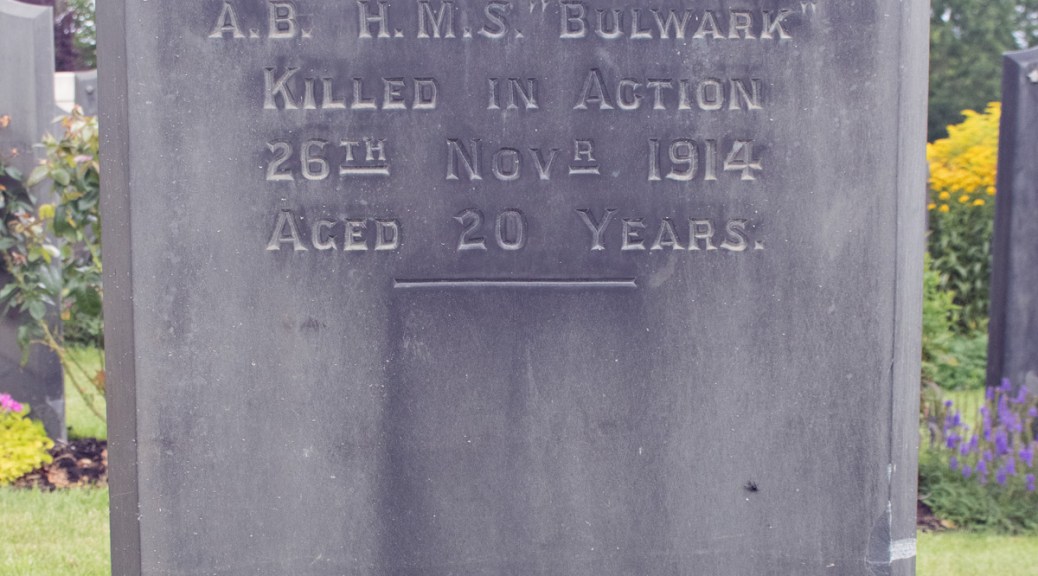
Ordinary Seaman Millis would remain on board HMS Bulwark for a year. The battleship was part of the Channel Fleet, tasked with patrolling and defending Britain’s southern coast. On 26th November 1914, she was moored in the River Medway, close to Sheerness, and was being stocked with shells and ammunition. That morning, some poorly stowed cordite charges overheated, detonating the shells stored nearby. The resulting explosion ripped through the battleship, and more than 740 crew were killed. Frederick was amongst those whose bodies were recovered and identified: he was 18 years of age.
The bodies that were recovered from the tragedy were taken to the Woodlands Cemetery in nearby Gillingham and laid to rest. Frederick Harold Millis was buried alongside his colleagues in a marked grave.
Frederick’s headstone suggests he held the rank of Officer’s Steward: this seems to be an error, and possible a mis-interpretation of the initials of Ordinary Seaman.
Bertram William Warner was born on 16th February 1895 in Greenford, Middlesex. The youngest of four children, his parents were jobbing gardener Henry Warner and his wife, Elizabeth.
Bertram began working with his father after he completed his schooling, but he had his heart set on bigger and better things. A life at sea drew him in and, on 7th February 1913, he enlisted in the Royal Navy. His service records show the young man he had become: he was 5ft 2ins (1.58m) tall, with dark hair, grey eyes and a fair complexion.
Initially taken on as a Boy 2nd Class, Bertram was sent to HMS Vivid, the Royal Naval Dockyard in Devonport, Devon, for his training. His records outline his ability and commitment to the role. On 28th May 1913, as he moved to the training ship HMS Prince of Wales, he was promoted to Boy 1st Class. On 8th August he was deemed to be of age, and officially inducted into the Royal Navy.
On 4th October, Ordinary Seaman Warner was transferred to the pre-dreadnought battleship HMS Bulwark. Based in Portland, Dorset, at the start of the First World War, she would form part of the Channel Fleet patrolling and defending Britain’s southern coast. Bertram was continuing to prove his mettle and, on 13th October 1914, just eighteen months after initially joining the navy, he was promoted again, to Able Seaman.
Bertram was on board Bulwark on the 26th November 1914, when she was moored close to Sheerness, Kent. That morning, some poorly stowed cordite charges overheated, detonating some of the hundreds of shells stored shells nearby. The resulting explosion ripped through the battleship, killing more than 740 people. Able Seaman Warner was amongst those killed whose bodies were recovered and identified: he was 19 years of age.
The body of Bertram William Warner was taken to Woodlands Cemetery in Gillingham, Kent, and laid to rest alongside his colleagues.
Charles William Harris was born in Wingham, near Canterbury, Kent, on 19th July 1879. The fourth of eleven children, his parents were Charles and Kate Harris. Charles Sr was a carpenter and builder, and his son was to follow in his stead.
By the time of the 1901 census, however, Charles Jr had stepped out on his own. He had moved to London, and was boarding with the Hurley family, in rooms at 408 Bethnal Green Road, Middlesex.
On 1th June 1902, Charles Jr, now a plumber, married Esther Danton. An engine driver’s daughter from Kent, she was four years her new husband’s senior. The couple set up home at 5 Leatherdale Street in Mile End, and had two children: daughter Lilian was born in 1905, with son George following three years later.
When war broke out, Charles was called upon to play his part. He enlisted in the Royal Naval Air Service as an Air Mechanic, and was quickly promoted to Leading Mechanic. His service records show that, when he joined up on 15th June 1916, he was 5ft 7.5ins (1.71m) tall, with light brown hair, blue eyes and a fresh complexion.
Leading Mechanic Harris would be based out of HMS President, the umbrella name for the Royal Navy’s London bases. He spent time working at Wormwood Scrubs, and, in February 1917, was moved to Kingsnorth, Kent.
What happened next is summed up in a simple statement on Charles’ service papers: “26th May 1917 Accidentally killed by explosion of gas holder.” There is no further information, and nothing in the media about the incident. Leading Mechanic Harris was 37 years of age.
The body of Charles William Harris was taken to the Woodlands Cemetery, Gillingham, Kent. He was laid to rest in the naval section of the burial ground.
Tragedy was to strike again just two years later, when Charles and Esther’s daughter also passed away:
Much sympathy and respect were shown at Holy Trinity Church, Springfield, when the funeral of Lily Harris, the fourteen-year-old daughter of Mrs and the late Mr CW Harris took place. Deceased’s father, who was chauffeur to the Bishop of Chelmsford, lost his life in the war while serving with the RNAS, and this fact added to the regret felt by the parishioners at the further sad loss sustained by his widow, who is now left with only one little boy. The funeral procession included a large number of the scholars of the Springfield Day and Sunday Schools, with Mr R Coward of the day school, and practically every child carried a floral tribute. There was also a large attendance of neighbours and friends, including children, assembled at the church. The Bishop of Chelmsford officiated… [and] gave a touching address to the church, speaking particularly to the children; and his lordship also performed the last sad rites at the graveside.
[Essex Newsman: Saturday 29th November 1919]
There is no evidence of any connection between Charles and the Bishop of Chelmsford: as far as the records show, he was never a chauffeur, working as a builder, plumber and gas fitter before enlisting.
Richard Henry Jenkins was born on 7th April 1878 in Soho, Middlesex. The youngest of seven children, his parents were glazier George Jenkins and his wife, Emma. The 1881 census found the family living in rooms at 2 Church Street, but they disappear from both of the next two census returns.
The next document for Richard is his service record. He gave up his job as a labourer to join the Royal Navy as a Stoker 2nd Class, on 27th November 1905. His papers note that he was 5ft 5.5ins (1.66m) tall, with dark brown hair, grey eyes and a fresh complexion.
Stoker Jenkins was sent to HMS Acheron, a torpedo boat, for his training. Over the term of his five-year contract, he would spend time on three further vessels, but it was HMS Pembroke, the Royal Naval Dockyard in Chatham, Kent, that would become his on-shore home. Promoted to Stoker 1st Class in Mary 1907, he was stood down to reserve status then his contract ended in 1910.
By this point, Richard was married. He exchanged vows with widow Mary Ann Bunyon, on 11th April 1909. The same age as her husband, she had a son, Edward, from her previous marriage, and the couple set up home in Clerkenwell. The 1911 census found them living in rooms at 3 Roberts Place. They shared their home with their first child and Mary’s mother and sister.
When war broke out, Richard was called upon to play his part once more. Sent back to HMS Pembroke on 2nd August 1914, he seems to have spent the next couple of years on shore. His papers note that he was wounded on 26th June 1915, but no further information is available.
On 15th May 1917, Stoker 1st Class Jenkins was assigned to the monitor ship HMS Roberts. She has spent time in the Mediterranean, but by the time Richard joined her crew, she was put to use as a guard ship off the Norfolk coast.
A case of very determined suicide was inquired into at the Royal Naval Hospital, Gillingham, on Saturday last, by Mr CB Harris (County Coroner) and a jury. It appeared from the evidence that Richard Henry Jenkins, a stoker petty officer [sic], of the Royal Fleet Reserve, had been depressed and in a morose state of mind for some days, reference being made in a letter to an alleged unpleasantness at his home. On October 4th, when the vessel was at sea, Jenkins cut his throat with a savage slash of his own razor, and them jumped through a port-hole. The Coroner remarked that it was extraordinary that the man should have had sufficient strength to get through the port-hole after inflicting such a severe wound upon himself. A verdict of suicide during temporary insanity was returned.
[Sheerness Guardian and East Kent Advertiser: Saturday 13th October 1917]
Richard Henry Jenkins was 39 years of age when he took his life. His body was laid to rest in Woodlands Cemetery, Gillingham, Kent, not far from HMS Pembroke.
There is no further information about the alleged unpleasantness at home. The 1921 census recorded Mary living in Clerkenwell with their two children and her mother.
Stoker 1st Class Richard Jenkins (from ancestry.co.uk)







 Death and Service