Tag Archives: war

Serjeant Frederick Reid

Serjeant Frederick Reid

Frederick William Reid was born in January 1876 in Liverpool, Lancashire. Little information is available for his early life, and his trail only really becomes traceable when he joined the Royal Irish Regiment at the age of 16 years old.

Frederick’s service records confirm that his mother was called Elizabeth, who lived in Bedminster, near Bristol. He was already volunteering for the regiment when he enlisted, and was working as a musician when he joined up. His papers confirm that he was 5ft 4ins (1.63m) tall, and weighed 112lbs (60.8kg). He had brown hair, hazel eyes and a fresh complexion.

Frederick was given the rank of Drummer when he joined up and was attached to the Royal Irish Regiment’s 3rd Depot. He spent more than seven years on home soil, rising to the rank of Corporal in May 1898. The following January he reverted to the rank of Private at his own request, but his superiors obviously saw something in him, and he was supported in a new role – Lance Corporal – just a month later.

In October 1899, however, Frederick’s life was to take a new turn, when he was sent to India with his troop.

Corporal Reid was based in Lahore, and had found the life that he was seeking. Over the next forty months, he successfully took on a variety of clerical roles. He was promoted to Lance Sergeant in October 1901 and given oversight of the Officers’ Room.

In March 1903, Frederick returned to Britain. With the move came a further promotion, to the rank of full Sergeant, again, overseeing the Officer’s Room. He seems to have been based in Gloucestershire by this point, as, on 18th November 1903, he married Isabella Jane Parke at a Registry Office in Bristol. There is no further record for the young couple, however, so the new Mrs Reid is destined to remain a mystery.

Frederick was destined to return to India, and in January 1905, that is exactly what he did. His regiment returned to Lahore, and he was given the role of Clerk Steward at one of the Lawrence Memorial Asylum. The name is misleading, as the asylums were a series of four military-style boarding schools across India. Sergeant Reid’s records do not confirm which of the four he was attached to, but it would have been Sanawar, Mount Abu, Lovedale or Ghora Gali.

Given his military background, it seems that the role of clerk was something Frederick settled into quite happily. He was recalled back to army service in November 1909, and, within seven months, he requested a discharge from the army. This was granted, as he had, by this point, completed more than eighteen years’ service.

Frederick remained in India, however, and on 28th September 1913, he married Elizabeth Marshall in Lahore. They had two children, Florence, who was born in Quetta on 2nd September 1914, and Lily, who was born on 1st January 1916 in Lahore.

War had come to the world by this point, and in spite of his age – he was 39 by now – Frederick felt it only right to step up and play his part again. On 28th October 1914, he enlisted again, and was assigned to the 1st Battalion of the Duke of Wellington’s (West Riding Regiment). His new medical noted that he was 5ft 7ins (1.7m) tall, and weighed in at 9st (57.2kg). His complexion was recorded as pale, while he had a number of tattoos on his left forearm: the crossed swords, harp and crown of the Royal Irish Regiment, along with the initials VR.

While part of the West Riding Regiment, Sergeant Reid was attached to the 3rd Mule Corps of the Indian Supply & Transport Corps. He was involved in arranging provisions for the various battalions who needed them.

By March 1916, his battalion had been sent to Salonika, and it was here that Frederick contracted tuberculosis. Medically evacuated to Britain, he was admitted to the Southwark Military Hospital. He was confirmed as no longer being medically fit for army service and was discharged on 16th August 1916. His medical report noted that he “is anxious to have sanatorium treatment, but is not an insured man, owing to having been stationed in India.”

On his discharge, Frederick moved to Weston-super-Mare, Somerset, which is where his mother was by now living. His wife and children also came to live in England and, the family settled in Pawlett, near Bridgwater.

After leaving the army, Frederick’s trail goes cold. The next confirmation of his life is that of his passing. He died on 12th October 1919, presumably from his lung condition. He was 43 years of age.

Frederick William Reid, who had been born in Liverpool, who had had two separate careers in the army, and who had lived and married in India, was laid to rest in the peaceful graveyard of St John the Baptist’s Church in Pawlett, Somerset.

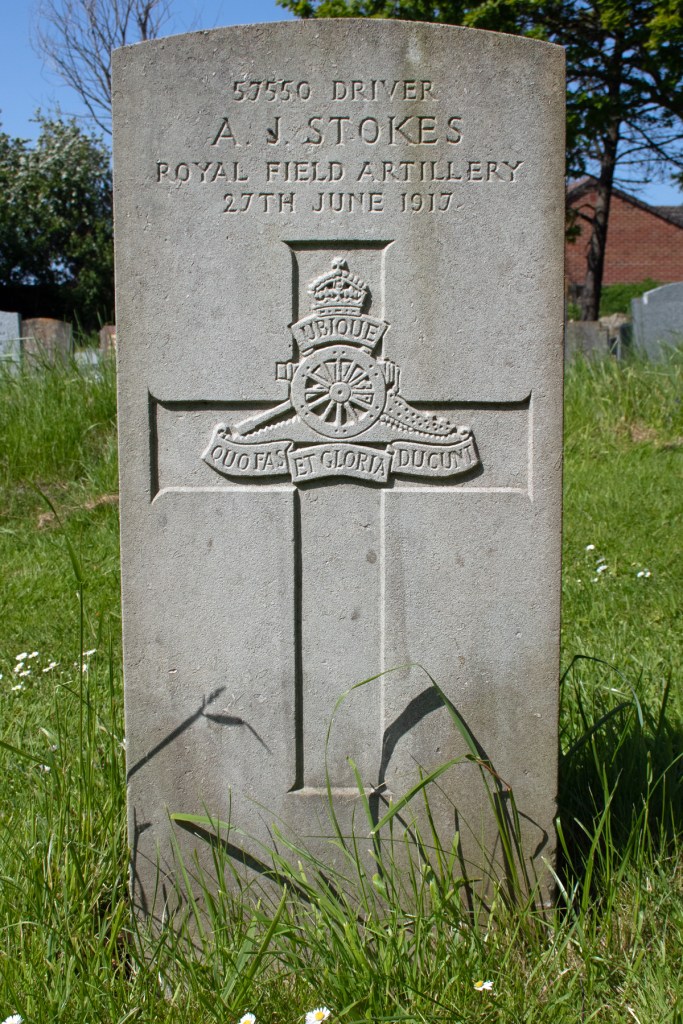
Driver Albert Stokes

Driver Albert Stokes

Albert John Stokes was born in the autumn of 1878, the fourth of seven children to John and Mary Ann Stokes. John was a cord winder from Puriton in Somerset, and it was in the village, in the house next to his parents, that he and Mary Ann raised their young family.

By the 1890s, John had turned his hand to boot making. When he finished his schooling, however, Albert found more manual work, and by the time he got married in 1903, he was working as a quarry labourer.

Albert’s wife was Minnie Nichols, a cooper’s daughter, who lived just up the road from the Stokes family. They married in Bridgwater Registry Office on Christmas Eve 1903. The newlyweds set up home in a small cottage in Puriton, and went on to have six children, although only four survived childhood.

When war came to Europe, Albert was one of the first to join up. He enlisted on 7th December 1914, and was assigned to the Royal Field Artillery as a Driver. His service records give an insight into the man he had become: he was 5ft 7ins (1.7m) tall, weighed in at 136lbs (61.7kg) and was of good physical development.

Driver Stokes spent the next eight months on home soil. He was sent to France on 21st July 1915, and was involved in the fighting at Loos. It was here, that he developed a persistent cough and, by October, he was back on home soil. That winter Albert contracted influenza, which then developed into haemoptysis.

While Driver Stokes did recover, he was admitted to the Voluntary Aid Detachment Hospital in Bishops Stortford in May 1916, having come down with influenza once more. He was transferred to the 1st Eastern General Hospital in Cambridge for a medical assessment, and this led to an eventual discharge from the army in August.

Albert returned to Somerset after leaving the Royal Field Artillery, although his trail does go cold. He was at home when he passed away on 27th June 1917, at the age of 39 years old. The cause of his passing is not recorded, but it is likely to have been as a result of a repeat of the conditions that had led to him leaving the military.

Albert John Stokes was laid to rest in the peaceful graveyard of St Michael’s Church in his home village of Puriton.


Ordinary Seaman Bertie Clark

Ordinary Seaman Bertie Clark

Bertie Baden Clark was born on 5th August 1900 in the hamlet of Dunball, near Puriton in Somerset. The third of seven children, his parents were quarry and cement works labourer George Clark and his wife, Bessie.

When war came to Europe, George stepped up to play his part. Despite being 44 years old, he enlisted in the Royal Army Service Corps on 4th November 1915 and, within a year, was in France. He remained posted at the No. 4 Remount Depot until October 1918.

“On the morning of the 1st October 1918, I left the 26th Squadron 4 Base Remount Depot riding a horse and leading one to exercise about a mile & half from the Squadron while proceeding by the side of the railway line my horse was frightened by the whistle of a railway engine & ran away with me throwing me to the road and stepping on my right ankle.”

Private Clark was initially treated at the No. 2 Canadian General Hospital, but was soon invalided back to Britain and placed on furlough until being formally demobbed from the army early in 1919.

Bertie, meanwhile, could see the excitement of the war passing him by. Determine to play is part before it was too late, he gave up his job as a labourer on 13th July 1918 and enlisted in the Royal Naval Volunteer Reserve.

Given the rank of Ordinary Seaman, his service records confirm that he was 5ft 6in (1.68m) tall (1in, or 2.5cm, taller than his father), with dark brown hair, grey eyes and a fresh complexion. He was noted as having a scar on his right knee.

Bertie was sent to HMS Victory, the Royal Naval Dockyard in Portsmouth, Hampshire, for training. Tragically, this was to be his only posting. He was admitted to the dockyard hospital early in October, suffering from double pneumonia and influenza. The condition was to take his life, and he passed away on 10th October 1918, at the age of just 18 years old.

Bertie Baden Clark’s body was brought back to Somerset for burial. He was laid to rest in the quiet graveyard of St Michael’s Church in Puriton, the funeral attended by his family, including his recently returned father, George.


Private Frederick Chilcott

Private Frederick Chilcott

Frederick Chilcott was born in Bridgwater, Somerset, early in 1867. He was the fifth of thirteen children to labourer and kiln worker Henry Chilcott and his wife, Ellen.

When he finished his schooling, Frederick also found labouring work. He wanted bigger and better things, however, and the opportunity for a career in the army offered him just that. On 14th January 1888 he enlisted in the Royal Artillery. His service records confirm he was 5ft 6ins (1.68m) tall, and weighed 119lbs (54kg). He was noted as having dark brown hair, dark hazel eyes and a fresh complexion. He also had a scar on his forehead and a tattooed dot on his right forearm.

Frederick was initially given the rank of Driver and was assigned to the regiment’s 3rd Brigade Depot. He was sent to India in February 1889, and remained there until November the following year, when his troop returned to Britain.

Back on home soil Frederick’s role changed and he was given the rank of Gunner. On 1st January 1892, he was promoted to Acting Bombardier, but, on his own request, he reverted to his previous rank just three months later. On 15th January 1895, Gunner Chilcott was stood down to reserve status, having completed seven years’ service.

On 16th April 1895, Frederick married Eliza Stockham. She was a labourer’s daughter from the village of Puriton, to the north of Bridgwater, and it was here that the couple settled. Living in a small cottage, they went on to have six children between 1898 and 1911.

Frederick’s time in the army, however, wasn’t quite done. With the Second Boer War breaking out, he was recalled to the now Royal Field Artillery in January 1900. Sent to South Africa, Gunner Chilcott remained overseas for a year and was recognised for his commitment in the campaign.

Frederick returned to Britain on 3rd January 1901, and was finally stood down from the army in March that year, having fulfilled his twelve years’ contract. He returned home to Puriton, his service records noting that his character was ‘very good’.

The 1911 census found Frederick employed as a labourer in the local cement works. He and Eliza living in a small cottage in Puriton with four of the children (their oldest son was with Eliza’s parents, while she was pregnant with their youngest).

Conflict was knocking on England’s shore by this point, and when conflict broke out, Frederick appears to have stepped up to play his part once more. He was 47 years old when war was declared and, as such, would not have been required to enlist. Full details of his service are no longer available, but he had certainly joined the Army Veterinary Corps by the summer of 1917.

Private Chilcott is likely to have remained on home soil, but towards the end of his service was based in Curragh, County Kildare, Ireland. It was while here, on 23rd December 1917, that he suffered an aneurysm, passing away in the town’s military hospital as a result. He was 50 years of age.

Frederick Chilcott’s body was brought back to Somerset for burial. He was laid to rest in the quiet graveyard of St Michael’s Church in his home village, Puriton.


Rifleman Walter Radford

Rifleman Walter Radford

Walter Samuel Radford was born in the summer of 1899, the oldest of eight children to William and Florence Radford. William was a farm labourer from Churchstanton, Somerset, but by the time Walter was born, the family had moved to Chedzoy, near Bridgwater.

Chedzoy was also where William’s parents lived, and the two families’ cottages were just three doors apart. Oddly, even though he was the oldest child, Walter was raised by his grandparents, Frank and Anna, and is recorded as living with them in both the 1901 and 1911 censuses.

Walter was just 15 years old when war came to Europe, and so was too young to enlist. He bided his time, though, and had joined up by the summer of 1918. He was assigned to the 1st Battalion of the Royal Irish Rifles, and was sent to the Western Front in the closing months of the conflict.

Caught up in the final advance in Flanders, Rifleman Radford was injured, possibly during the action of Ooteghem. He was medically evacuated to Britain for treatment, but died of his injuries while admitted to a hospital in London. He passed away on 26th November 1918, aged just 19 years old.

Walter Samuel Radford was brought back to Somerset for burial. He was laid to rest in the peaceful graveyard of St Mary’s Church in Chedzoy.


Interestingly, while Walter’s pension ledger gave his father, William, as the recipient, the Army Register of Soldiers’ Effects noted his grandmother, Anna, as the recipient of his belongings.


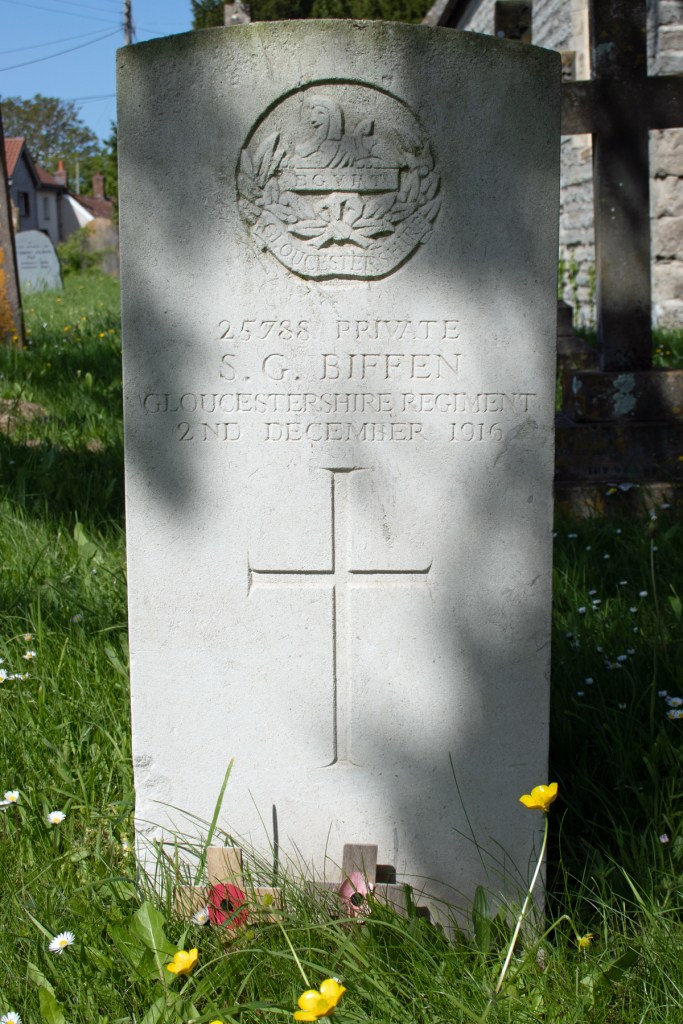
Private Stanley Biffen

Private Stanley Biffen

Stanley George Oliver Biffen was born in the autumn of 1894 in the Somerset village of East Huntspill. He was the second child to Oliver and Fanny Biffen, although his older sibling, sister Florence, had passed away at just three months of age.

Oliver was a carter and farm labourer, and the family went where the work was. The 1901 census found them living in Eastover, Bridgwater, Fanny’s widowed father, George, also living there. Ten years later, the four of them had moved to the village of Stawell. Stanley had finished his schooling, and had also taken up farm work.

When war came, Stanley stepped up to play his part. Full details of his service are lost to time, but he had enlisted in the Army by the spring of 1915. He initially joined the 1st Battalion of the Somerset Light Infantry, and by May that year, was in France.

It is not possible to track Private Biffen’s movements during the conflict, but he did transfer across to the Gloucestershire Regiment at some point. Assigned to the 7th (Service) Battalion, his was a troop that served at Gallipoli and in North Africa, although there is no evidence that Stanley fought in there.

The only other concrete evidence available for Private Biffen relates to his passing. By the autumn of 1916, he had been admitted to the 1st Western General Hospital in Fazakerley, Liverpool. He was suffering from phthitis, or tuberculosis, and this was the condition that was to get the better of him. He passed away on 2nd December 1916, at the age of just 22 years old.

The body of Stanley George Oliver Biffen was brought back to Somerset for burial. He was laid to rest in the quiet graveyard of Stawell Church.


Stanley’s parents had now lost both of their children, and this is likely to have taken a toll on them. Fanny passed away in December 1924, at the age of 64 years old. Oliver died just a year later aged 54 years old.


Ordinary Seaman Herbert Fry

Ordinary Seaman Herbert Fry

Herbert Austin Fry was born on 30th January 1889 in the Somerset village of Moorlinch. He was the fifth of ten children and his parents were Joseph and Ellen Fry. Joseph was a farmer, and by the time Herbert was just two years old, the family had moved to Sutton Farm, in nearby Sutton Mallet.

The whole family chipped in to play their part on the farm, and, even before he finished his schooling, this was something that Herbert was also destined to do.

When war came to Europe, Herbert was keen to play his part. He enlisted in the Royal Naval Volunteer Reserve on 7th September 1916 as an Ordinary Seaman. His service records give a hint as to the young man he had become: he was 5ft 11ins (1.8m) tall, with sandy hair, blue eyes and a fair complexion.

Ordinary Seaman Fry was initially sent to HMS Victory – the Royal Naval Dockyard in Portsmouth, Hampshire – for training. Over the next year, he was given two sea-going postings, before returning to HMS President in London in September 1917.

On 31st October, Herbert boarded SS Dunrobin, a merchant ship. Having sailed to Almeria in Spain, she was returning to Britain, with a cargo of iron ore and grapes. On 24th November 1917, while 49 miles (79km) south-west of The Lizard in Cornwall, the Dunrobin was torpedoed by a German submarine. She sunk, and 31 lives – including that of Ordinary Seaman Fry – were lost. Herbert was 28 years of age.

Herbert Austin Fry’s body was recovered and brought back to Somerset for burial. He was laid to rest in the peaceful Sutton Mallet Churchyard.


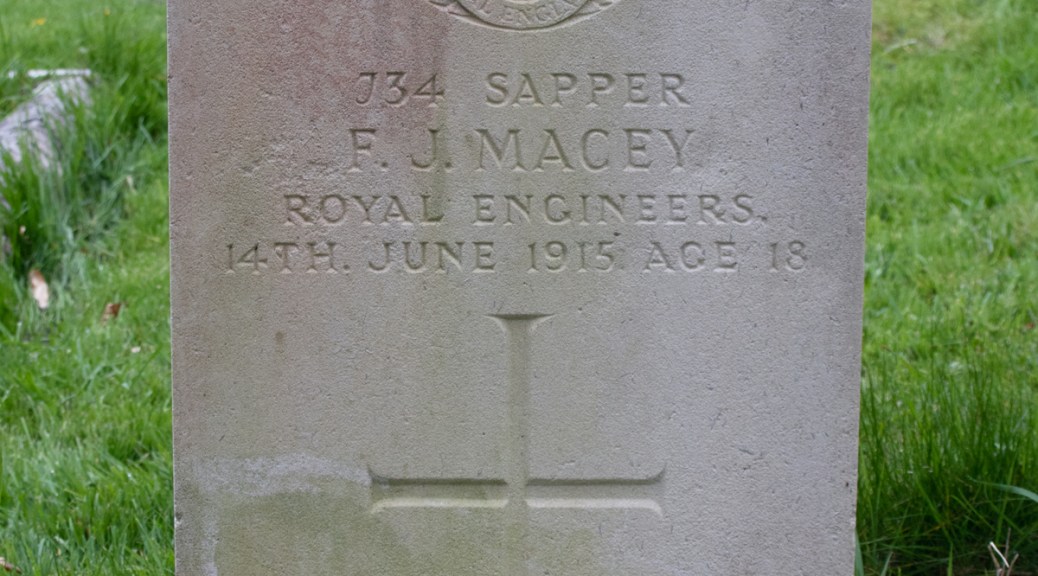
Sapper Frederick Macey

Sapper Frederick Macey

Frederick John Macey was born in the spring of 1897, the fourth of five children to James and Rose. James was a labourer from Hampshire, Rose was born in Ireland, but the children were born and raised in Monkton Combe, Somerset.

When war broke out, Fred stepped up to play his part. He enlisted in the Royal Engineers, and was assigned to the 503rd Field Company. Full details of his military service are lost to time, so it is not possible to identify whether Sapper Macey served overseas – Malta, where part of the regiment were based – or on home soil – in and around Ipswich, Suffolk.

Wherever he was based, Fred was injured, and he was sent to a military hospital in Guildford, Surrey, for treatment. Sadly, his wounds were to prove too severe, and he passed away on 14th June 1915, aged just 18 years old.

Frederick John Macey’s body was brought back to Somerset for burial. He was laid to rest in the peaceful graveyard of St Michael’s Church, in his home village of Monkton Combe.


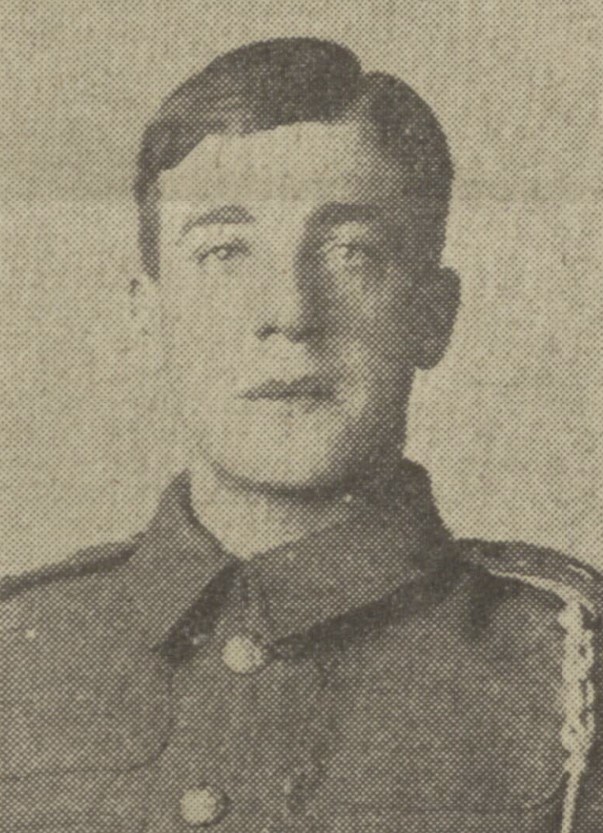
Sapper John Macey
(from britishnewpaperarchive.co.uk)

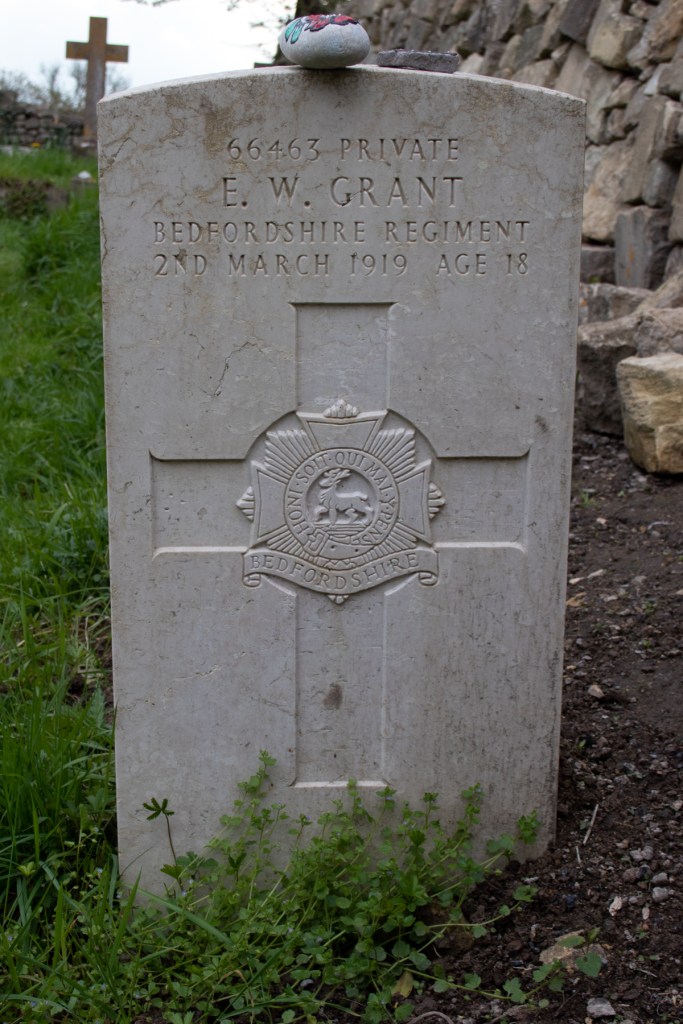
Private Eric Grant

Private Eric Grant

Eric William Grant was born at the start of 1901, the middle of three children to Ernest and Annie Grant. Ernest was a carpenter from Bath, Somerset, and it was here they he and Annie raised their young family.

Little information is available about Eric’s young life. When war came to Europe, his father joined up, enlisting in the Royal Engineers as a Sapper. Keen not to miss out, Eric also signed up, lying about his age to ensure he was accepted.

When he joined in February 1916, Private Grant was assigned to the 52nd (Graduated) Battalion of the Bedfordshire Regiment. Full details of his service are lost to time, but towards the end of the war, Eric was based in East Anglia.

It was here, in early 1919, that Private Grant fell ill. He was admitted to the Norfolk War Hospital, but whatever his condition, it proved fatal. He passed away on 2nd March, aged just 18 years old.

Eric William Grant’s body was brought back to Somerset for burial. He was laid to rest in the peaceful graveyard of St Michael’s Church, Monkton Combe, where the family now living.


Despite her understandable concern at seeing her husband and son go off to war, and for Eric to die because of it, Annie was to be reunited with Ernest. Again, full details of his service are lost, but the 1939 Register found him and Annie living with their daughter and Ernest’s brother in Bathavon, Somerset.

Annie passed away in 1947, at the age of 73. Ernest lived on until 1952, having lived to 76 years old. Both were buried in St Michael’s Churchyard, reunited with their son at last.


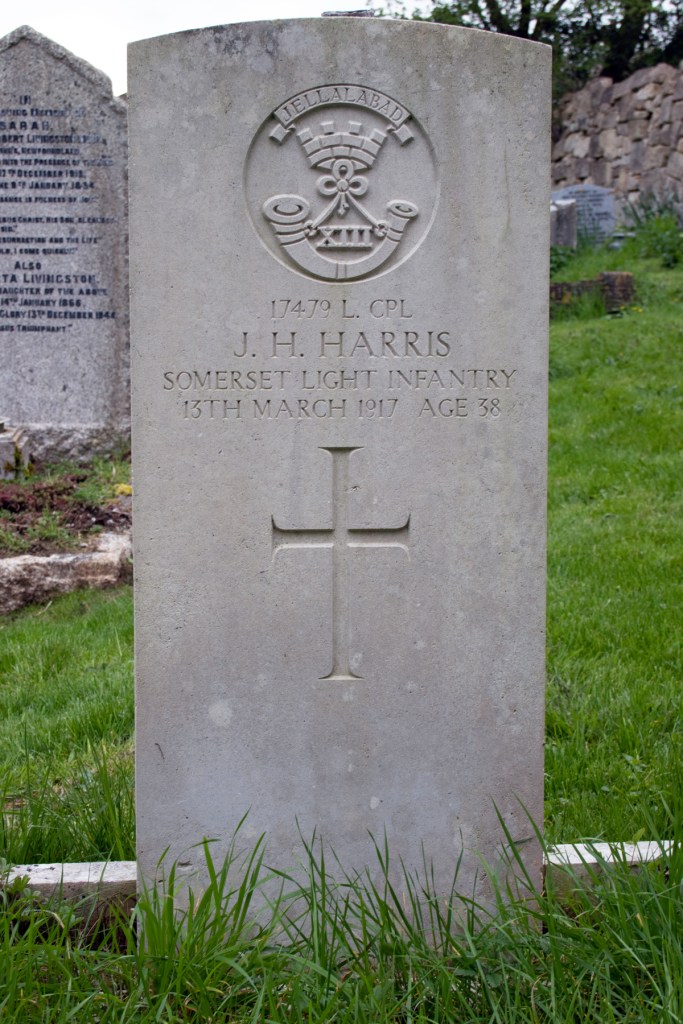
Lance Corporal John Harris

Lance Corporal John Harris

John Henry Harris was born at the turn of 1879, the oldest of eight children to John and Florence Harris. John Sr was a mason’s labourer from Somerset, and his and Florence’s three oldest children were born in Bishop’s Hull, near Taunton. By 1890, however, the family had moved to Monkton Combe, on the outskirts of Bath, presumably to follow John Sr’s work, and this is where they settled.

When John Jr completed his schooling, he followed in his father’s trade and when the 1901 census return was completed, he was employed as a mason’s labourer, while his father had moved into carpentry.

Florence died in April 1901, and six years later, John Sr remarried. His new wife was Ann Gibbs, and the couple went on to have three children, new half-siblings to John Jr.

In the autumn of 1905, John Jr married in Eliza Mundy, a cowman’s daughter from Monkton Combe. The couple settled in a small cottage on Mill Lane, and had a son, Frank, who was born in 1907. By this point, John had found new employment as a gardener to the local vicar, Reverend Pitcairn.

When war came to European shores, John quickly stepped up to enlist. He joined the 7th Battalion of the Somerset Light Infantry and arrived in France in July 1915 after his training.

Private Harris was wounded during the opening weeks of the Battle of the Somme, but recovered and returned to the Front Line. He was promoted to the rank of Lance Corporal, but in March 1917 he was wounded again. “A piece of his steel helmet was driven into his head at the temple, and little hope of his recovery was entertained from the first.” [Bath Chronicle and Weekly Gazette: Saturday 24th March 1917]

Medically evacuated to Britain, Private Harris was admitted to a hospital in Stockport, Cheshire. His “wife (who has been dangerously ill in hospital), Mr John Harris (his father) and a sister proceeded to Stockport, but, unfortunately, did not arrive until shortly after death had occurred.” [Bath Chronicle and Weekly Gazette: Saturday 24th March 1917]

Private Harris passed away on 13th March 1917, at the age of 38 years of age.

John Henry Harris’ body was brought back to Monkton Combe for burial and he was laid to rest in the peaceful graveyard of St Michael’s Church, his funeral being officiated over by his former employer, Reverend Pitcairn.


Eliza went on to marry again, wedding Walter Giggs in 1921. The couple went on to have a daughter, Margery, who was born two years later. Eliza lived on until 1949, when she died at the age of 69 years old. She was also laid to rest in St Michael’s Churchyard.