Tag Archives: wounded

Ordinary Seaman Bertie Clark

Ordinary Seaman Bertie Clark

Bertie Baden Clark was born on 5th August 1900 in the hamlet of Dunball, near Puriton in Somerset. The third of seven children, his parents were quarry and cement works labourer George Clark and his wife, Bessie.

When war came to Europe, George stepped up to play his part. Despite being 44 years old, he enlisted in the Royal Army Service Corps on 4th November 1915 and, within a year, was in France. He remained posted at the No. 4 Remount Depot until October 1918.

“On the morning of the 1st October 1918, I left the 26th Squadron 4 Base Remount Depot riding a horse and leading one to exercise about a mile & half from the Squadron while proceeding by the side of the railway line my horse was frightened by the whistle of a railway engine & ran away with me throwing me to the road and stepping on my right ankle.”

Private Clark was initially treated at the No. 2 Canadian General Hospital, but was soon invalided back to Britain and placed on furlough until being formally demobbed from the army early in 1919.

Bertie, meanwhile, could see the excitement of the war passing him by. Determine to play is part before it was too late, he gave up his job as a labourer on 13th July 1918 and enlisted in the Royal Naval Volunteer Reserve.

Given the rank of Ordinary Seaman, his service records confirm that he was 5ft 6in (1.68m) tall (1in, or 2.5cm, taller than his father), with dark brown hair, grey eyes and a fresh complexion. He was noted as having a scar on his right knee.

Bertie was sent to HMS Victory, the Royal Naval Dockyard in Portsmouth, Hampshire, for training. Tragically, this was to be his only posting. He was admitted to the dockyard hospital early in October, suffering from double pneumonia and influenza. The condition was to take his life, and he passed away on 10th October 1918, at the age of just 18 years old.

Bertie Baden Clark’s body was brought back to Somerset for burial. He was laid to rest in the quiet graveyard of St Michael’s Church in Puriton, the funeral attended by his family, including his recently returned father, George.


Rifleman Walter Radford

Rifleman Walter Radford

Walter Samuel Radford was born in the summer of 1899, the oldest of eight children to William and Florence Radford. William was a farm labourer from Churchstanton, Somerset, but by the time Walter was born, the family had moved to Chedzoy, near Bridgwater.

Chedzoy was also where William’s parents lived, and the two families’ cottages were just three doors apart. Oddly, even though he was the oldest child, Walter was raised by his grandparents, Frank and Anna, and is recorded as living with them in both the 1901 and 1911 censuses.

Walter was just 15 years old when war came to Europe, and so was too young to enlist. He bided his time, though, and had joined up by the summer of 1918. He was assigned to the 1st Battalion of the Royal Irish Rifles, and was sent to the Western Front in the closing months of the conflict.

Caught up in the final advance in Flanders, Rifleman Radford was injured, possibly during the action of Ooteghem. He was medically evacuated to Britain for treatment, but died of his injuries while admitted to a hospital in London. He passed away on 26th November 1918, aged just 19 years old.

Walter Samuel Radford was brought back to Somerset for burial. He was laid to rest in the peaceful graveyard of St Mary’s Church in Chedzoy.


Interestingly, while Walter’s pension ledger gave his father, William, as the recipient, the Army Register of Soldiers’ Effects noted his grandmother, Anna, as the recipient of his belongings.


Sapper Frederick Macey

Sapper Frederick Macey

Frederick John Macey was born in the spring of 1897, the fourth of five children to James and Rose. James was a labourer from Hampshire, Rose was born in Ireland, but the children were born and raised in Monkton Combe, Somerset.

When war broke out, Fred stepped up to play his part. He enlisted in the Royal Engineers, and was assigned to the 503rd Field Company. Full details of his military service are lost to time, so it is not possible to identify whether Sapper Macey served overseas – Malta, where part of the regiment were based – or on home soil – in and around Ipswich, Suffolk.

Wherever he was based, Fred was injured, and he was sent to a military hospital in Guildford, Surrey, for treatment. Sadly, his wounds were to prove too severe, and he passed away on 14th June 1915, aged just 18 years old.

Frederick John Macey’s body was brought back to Somerset for burial. He was laid to rest in the peaceful graveyard of St Michael’s Church, in his home village of Monkton Combe.


Sapper John Macey
(from britishnewpaperarchive.co.uk)

Lance Corporal John Harris

Lance Corporal John Harris

John Henry Harris was born at the turn of 1879, the oldest of eight children to John and Florence Harris. John Sr was a mason’s labourer from Somerset, and his and Florence’s three oldest children were born in Bishop’s Hull, near Taunton. By 1890, however, the family had moved to Monkton Combe, on the outskirts of Bath, presumably to follow John Sr’s work, and this is where they settled.

When John Jr completed his schooling, he followed in his father’s trade and when the 1901 census return was completed, he was employed as a mason’s labourer, while his father had moved into carpentry.

Florence died in April 1901, and six years later, John Sr remarried. His new wife was Ann Gibbs, and the couple went on to have three children, new half-siblings to John Jr.

In the autumn of 1905, John Jr married in Eliza Mundy, a cowman’s daughter from Monkton Combe. The couple settled in a small cottage on Mill Lane, and had a son, Frank, who was born in 1907. By this point, John had found new employment as a gardener to the local vicar, Reverend Pitcairn.

When war came to European shores, John quickly stepped up to enlist. He joined the 7th Battalion of the Somerset Light Infantry and arrived in France in July 1915 after his training.

Private Harris was wounded during the opening weeks of the Battle of the Somme, but recovered and returned to the Front Line. He was promoted to the rank of Lance Corporal, but in March 1917 he was wounded again. “A piece of his steel helmet was driven into his head at the temple, and little hope of his recovery was entertained from the first.” [Bath Chronicle and Weekly Gazette: Saturday 24th March 1917]

Medically evacuated to Britain, Private Harris was admitted to a hospital in Stockport, Cheshire. His “wife (who has been dangerously ill in hospital), Mr John Harris (his father) and a sister proceeded to Stockport, but, unfortunately, did not arrive until shortly after death had occurred.” [Bath Chronicle and Weekly Gazette: Saturday 24th March 1917]

Private Harris passed away on 13th March 1917, at the age of 38 years of age.

John Henry Harris’ body was brought back to Monkton Combe for burial and he was laid to rest in the peaceful graveyard of St Michael’s Church, his funeral being officiated over by his former employer, Reverend Pitcairn.


Eliza went on to marry again, wedding Walter Giggs in 1921. The couple went on to have a daughter, Margery, who was born two years later. Eliza lived on until 1949, when she died at the age of 69 years old. She was also laid to rest in St Michael’s Churchyard.


Sergeant Albert Ferris

Sergeant Albert Ferris

Albert Edward Ferris was born in the spring of 1884, one of six children to Charles and Juliana. Charles was quarryman turned farm labourer from Gloucestershire, but it was in the village of Claverton, near Bath, that the family were born and raised.

When he finished his schooling, Albert found work as a baker, but soon sought out a career in the military. On 2nd January 1903 he enlisted in the Royal Marine Light Infantry as a Private. His services records show that he was 5ft 6ins (1.68m) tall, with brown hair, blue eyes and a fair complexion.

Based out of Plymouth, over the next nine years Private Ferris served on four different ships and was recognised as having a very good character and an ability to match.

In 1910, Albert married Eliza Jane Warren, a mason’s daughter from Monkton Combe. The 1911 census found Albert on board the armoured cruiser HMS Cumberland, while Eliza was living with her parents. Military life was taking a toll on married life and, on 6th December 1911 bought an end to his naval career and was ‘discharged by purchase’.

Returning to Somerset, Albert found employment as a motor-man with Bath Electric Tramways. He and Eliza settled into married life, but war was on the horizon and things were to change.

At the outbreak of war, [Albert] promptly responded to his country’s call, and enlisted in the [Somerset Light Infantry], as a Private. When his battalion was sent to France, he distinguished himself in a short time by his excellent work as a sniper, speedily earning his first stripes as a consequence. With his battalion he participated in the heavy fighting around the Ypres district, over an extended period, without sustaining any serious injury. Later his battalion was moved further down the line to take part in the “Great Push,” where, for meritorious conduct, he was… promoted to Sergeant in the field…

Bath Chronicle and Weekly Gazette: Saturday 7th October 1916

Sergeant Ferris’ luck was not to last, however, and things took a turn in September 1916.

In the… fighting around Delville Wood… Sergt, Ferris was severely wounded in the right thigh by a machine-gun bullet. One of his officers gave him the best first-aid treatment possible under the circumstances, and later he crawled nearly three miles in an endeavour to reach the nearest field dressing station. Through loss of blood, shock, and general exhaustion he was on the point of collapse when picked up by a field ambulance, after which he was transferred to the base and later to Tooting Military Hospital, where, despite skilled treatment and the greatest care, septic poisoning intervened and he passed away…

Bath Chronicle and Weekly Gazette: Saturday 7th October 1916

Sergeant Ferris died while admitted in the Surrey hospital on 4th October 1916. He was just 32 years of age.

The body of Albert Edward Ferris was brought back to Somerset for burial. He was laid to rest in the peaceful graveyard of St Michael’s Church, Monkton Combe.


Serjeant Joseph Smith

Serjeant Joseph Smith

Joseph Smith was born at the beginning of 1879 in Bath, Somerset. The fifth of six children – all boys – his parents were William and Sarah Smith. William was a carpenter and, while he did not follow in his father’s trade, Joseph found employment as a house painter when he left school.

Joseph married Alice May Martin in 1896: the couple were young, the groom being a year older than the bride, and they went on to have a daughter, Dorothy, who was born the following year. The newlyweds moved into a small, terraced house in Bath with Alice’s mother and sister, both of whom were widowed, and Alice’s nephew.

The 1911 census found the extended family living in larger home away from the centre of the city. Joseph was still employed as a house painter, Dorothy had left school and was apprenticed to a dressmaker. Alice looks to have been looking after the household, while her mother and sister were both living on their own means.

In his spare time, Joseph was also a member of staff at Bath’s Theatre Royal. He was sporty, with a keen interest in football and partial to a game of cricket. He was also very connected to St Stephen’s Church in the city, and was involved in parish life.

War was coming to Europe, and Joseph stepped up to play his part. Full details of his military service are lost to time, but from his gravestone and linked records, it is clear that he enlisted in the 6th Battalion of the Somerset Light Infantry. Further details are outlined in a contemporary newspaper report:

Though married, he was anxious to enlist practically as soon as the war began: and on January 16th, 1915, he offered himself for service, and was at once accepted. He did not leave England till 16th August [1916]. He had been selected for inclusion in 32 drafts on various occasions prior to that date; but had been obliged to remain behind from illness or some other cause. When he actually sailed, it was not as a member of a draft, but as one of five sergeants who had volunteered for special service.

Bath Chronicle and Weekly Gazette: Saturday 28th October 1916

Sergeant Smith made it to the Western Front, and was entrenched at the Somme. The newspaper report picks up on what happened next:

He was wounded in September, being struck by a bullet while leaving the trench preparatory to advancing. The bullet struck him in the thigh, and severed an artery… After doing what he could with his first-aid dressing, Sergt. Smith crawled some three miles from the firing line amid bursting shells. After five hours of this painful progress he was picked up by a stretcher party.

Bath Chronicle and Weekly Gazette: Saturday 28th October 1916

Sergeant Smith was medically evacuated to Britain for treatment, and was admitted to the 3rd Western General Hospital in Cardiff. Alice and Dorothy were a constant presence as his bedside, but the wound was to prove too severe, and he passed away at the hospital on 25th October 1916. He was 38 years of age.

Joseph Smith was brought back to Bath for burial. He was laid to rest in the Lansdown Cemetery, overlooking the city he called home.
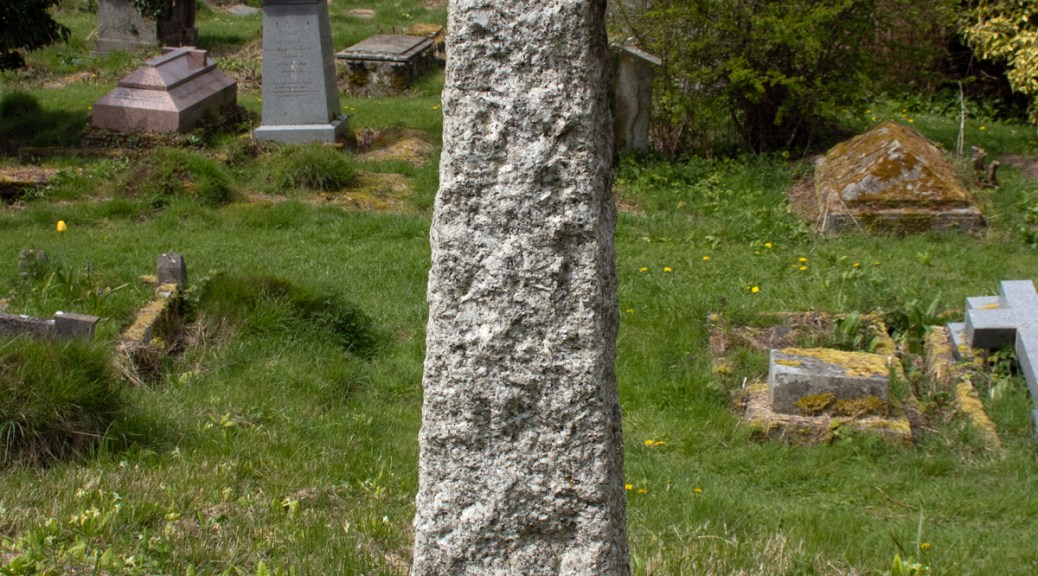

Lieutenant Colonel Charles Holroyd-Smyth

Lieutenant Colonel Charles Holroyd-Smyth

Charles Edward Ridley Holroyd-Smyth was born in Ballynatray, Co. Waterford, Ireland, on 16th August 1882. The seventh of nine children, his parents were John and Harriette Holroyd-Smyth. John was a colonel in the army and, while from a a renowned family, there is actually little documented about Charles’ early life.

Given his father’s military career, it seemed natural for Charles to follow suit. His service records are tantalisingly elusive, but he certainly served in South Africa during the Second Boer War at the turn of the century.

When war broke out, Charles took up the rank of Captain in the 3rd Dragoon Guards (Prince of Wales’ Own). He set sail for France on 1st November 1914, and he found himself in the very thick of the fighting, where his battalion fought at Ypres, Loos and Arras. His conduct during the war earned him both the Distinguished Service Order and a Military Cross.

On 29th October 1916, Charles married Norah Layard, the daughter of another army officer, who had been born in Ceylon. Charles was soon back in France, however, and was promoted to Lieutenant-Colonel, and given command of the 15th Battalion of the Durham Light Infantry.

Over the course of 1918, Lieutenant-Colonel Holroyd-Smyth led his troop in the Battles of Bapaume, Messines, Kemmel and Aisne. However, it was during the Battle of Epehy that he was badly wounded. Initially treated on sight, he was quickly evacuated back to Britain for further treatment.

Lieutenant-Colonel Holroyd-Smyth was admitted to the Royal Victoria Hospital in Netley, Southampton, but his wounds were to prove too severe. He passed away on 23rd September 1918, at the age of just 36 years of age.

The body of Charles Edward Ridley Holroyd-Smyth was brought back to Somerset, where Norah was living. His funeral, at St Stephen’s Church, in Bath, was marked with some ceremony, and he was laid to rest in Lansdown Cemetery, overlooking the city.


(from ancestry.co.uk)

Charles’ death came just nine days after the passing of his mother, back in Waterford. He and Norah didn’t have any children, although tragically a newspaper report from July 1918 did note a birth: “On the 3rd July, at East Hayes House, Bath, the wife of Lieutenant-Colonel CE Holroyd-Smyth MC, a son (stillborn).” [Bath Chronicle and Weekly Gazette: Saturday 13th July 1918]


Private Henry Barnes

Private Henry Barnes

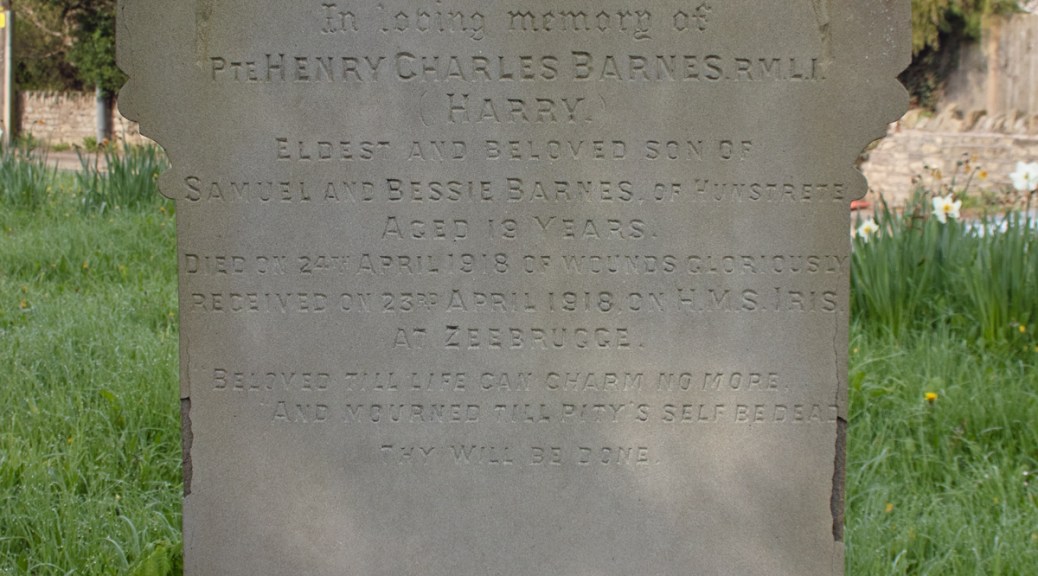
Hunstrete, Pensford was plunged into sorrow, not unmixed with pride, when is became known that one of its lads Pte. HC Barnes, RMLI… had played a hero’s part in the now famous Zebrugge raid, where he was severely wounded in the head and shoulder, from which wounds he subsequently succumbed in Chatham Naval Hospital. Before joining up at the age of 17 years and two months he was employed to look after the famous poultry of Mr HLF Popham, of Hunstrete House, taking all the honours at the Crystal Palace during one show. He was first sent to Salonika but was invalided home with malaria and was on board the Iris during the raid. The deceased lad, who was 19, was brought home and his body laid to rest at St Peter’s, Marksbury.

Somerset Guardian and Radstock Observer: Friday 10th May 1918

Henry Charles Barnes was born on 5th December 1898 in the Somerset village of Hunstrete. Also known as Harry, he was the oldest of six children to coal hewer Samuel Barnes and his wife Elizabeth, who was better known as Bessie.

After his recovery from malaria, Private Barnes was assigned to HMS Iris, a Mersey ferry requisitioned by the Royal Navy for support in the planned raid on Zeebrugge.

On 23 April 1918, Iris was towed across the English Channel to Zeebrugge by HMS Vindictive; she was carrying a couple of platoons of the 4th Battalion of the Royal Marines as a raiding party. When the Vindictive neared Zeebrugge she cast the ferry aside. Iris tried to pull up to the breakwater under heavy fire in order to off-load the raiding parties which were on board. She sustained heavy fire and a shell burst through the deck into an area where the marines were preparing to land. Forty-nine men were killed, while others, including Harry, were badly injured.

Medically evacuated to Britain, Private Barnes was admitted to the Royal Naval Hospital in Chatham, Kent, but his injuries were too severe, and he died on the day after the raid.

Henry Charles Barnes was laid to rest in the graveyard of St Peter’s church in Marksbury, the parish church for the family’s home in neighbouring Hunstrete.


Private Arthur Moore

Private Arthur Moore

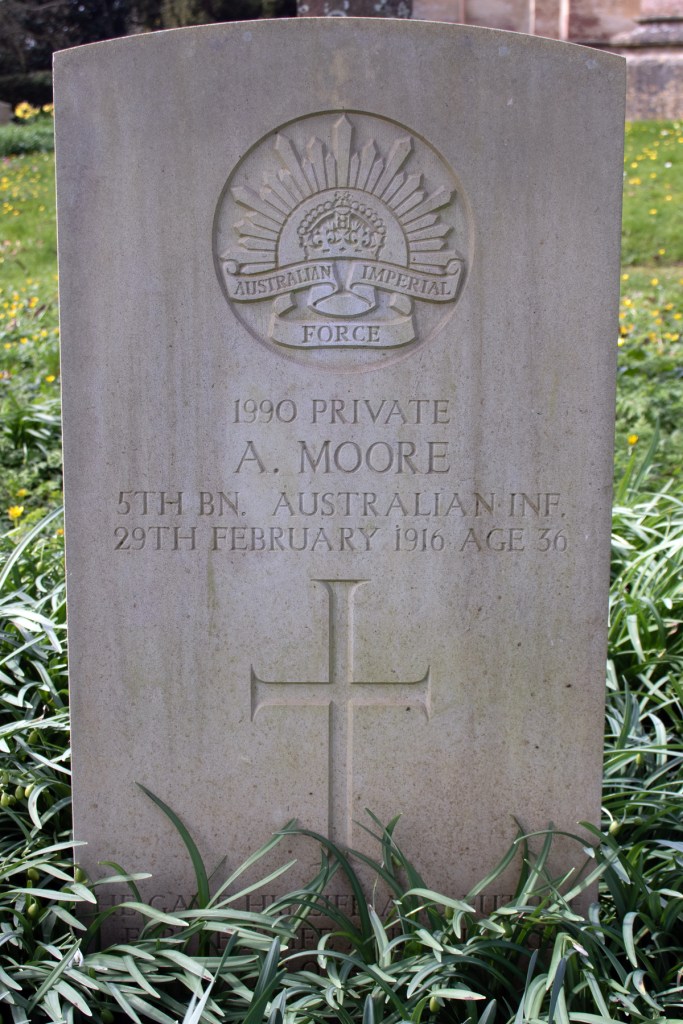
On Wednesday 1st March, the relatives of Private Arthur Moore, formerly of Whatley, heard with great regret the sad news that he had passed away. Private Moore, who belonged to the 5th Battalion Australian Expeditionary Force, left Whatley about fourteen years ago for Australia, where he lived until last year. When war broke out he was among the first in Australia to respond to the call of the Motherland. After undergoing his training he was sent to the Dardanelles, and there with many other brave Anzac received what was to prove his death wound, being shot in the head last August by a Turkish sniper. He was brought to King George’s Hospital, London, where he remained for some time and was thence sent to a convalescent home at Isleworth. But three weeks ago his friends, who were expecting him home, were alarmed to hear that he had been sent to the hospital to be again operated on, the wound not having satisfactorily healed. The operation took place on February 28th, but was not successful, as he never rallied, and died the next day… So has passed away another who had tried to do his duty, another of Britain’s many sons who are dying that England may liv. May he rest in peace!

Somerset Standard: Friday 17th March 1916

Arthur Moore had been born in Warminster, Wiltshire, in around 1880, and was the son of Henry Albert and Elizabeth Thurzia Moore. Little further information about his early life is available, but some details can be gleaned from his service records.

Private Moore enlisted on 12th January 1915 in Colac, Victoria, around 150km west of Melbourne. His service records note that he was working as a barman, and that he had spent five years volunteering in the Yeoman Cavalry. Arthur’s medical report confirmed he was 5ft 8ins (1.73m) tall and weighed 168lbs (76.2kg). He had fair hair, blue eyes and a fair complexion.

Arthur gave his next-of-kin as Francis Moore, possibly his brother, but his service documents also noted that his father had died by the time he enlisted and recorded his mother’s details as well.

The Somerset Standard summarised Private Moore’s military career, cut tragically short when the Turkish sniper attacked. After he passed, Arthur’s body was brought back to Somerset for burial. He was laid to rest next to his father, in the quiet graveyard of Holy Trinity Church in Chantry, not far from the family home.


Corporal Austin Raison

Corporal Austin Raison

Austin Neal Raison was born in the spring of 1896 in Crewkerne, Somerset. The eighth of thirteen children, his parents were bootmaker Charles Raison and his wife, Lucy.

Austin’s siblings found a variety of trades, from dressmakers and costumiers to grocers and stationers. When Austin left school, however, he was apprenticed to a printer, a career laid our in front of him.

When war came to Europe, Austin joined the Royal Fusiliers. Full details of his military service have been lost to time, but a local newspaper, reporting on his funeral, provided a summary of his war experience:

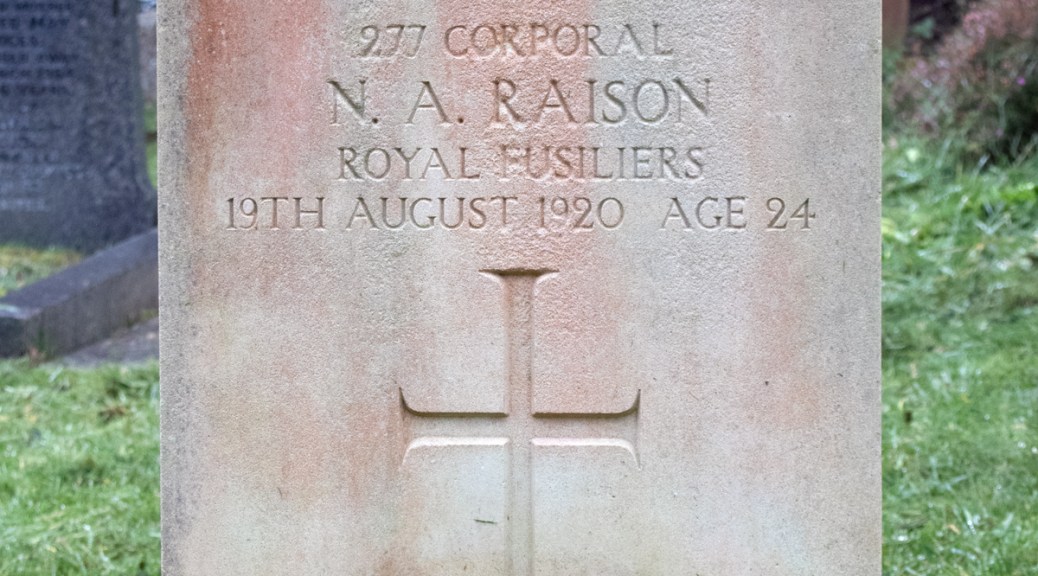
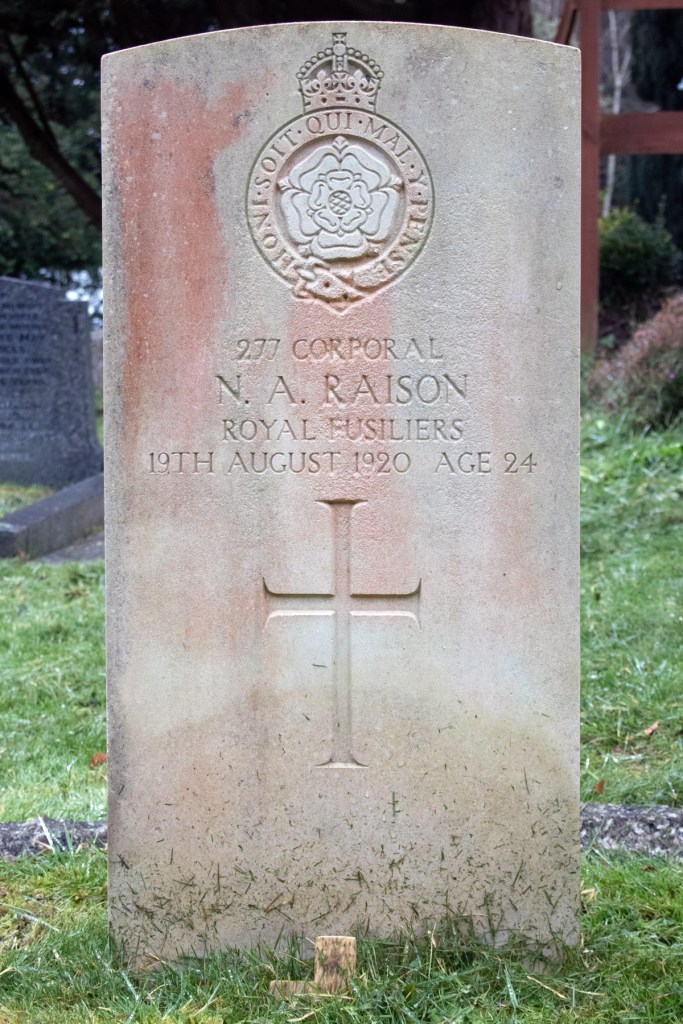
The funeral took place at the Cemetery on August 24 of Corporal Austin Neal Raison… who died on the previous Thursday from wounds received in action. Deceased was 24 years of age and in September 1914, he volunteered for service in the Army, joining the Royal Fusiliers. He went to France in October 1915, and took part in most of the important battle from that date until he was severely wounded in the retreat from Cambrai. He returned home, and everything possible was done for him, but he never recovered health, and gradually sank, dying at his father’s house to the sorrow of all who knew him.

Western Chronicle: Friday 3rd September 1920

Corporal Austin Neal Raison died on 19th August 1920. He was laid to rest in the Townsend Cemetery, Crewkerne, within sight of the family home.


The Commonwealth War Graves Commission gives Corporal Raison’s name as Neal Austin, while all other records, including his service documents, confirm his name as Austin Neal.