Category Archives: Hertfordshire

Able Seaman F Hall

Able Seaman F Hall

In Highgate Cemetery, Middlesex is a headstone dedicated to Able Seaman F Hall, who served in the Mercantile Marine during the First World War.

Able Seaman Hall served on board the cargo ship SS Cairndhu, which transported coal from Northumberland to Gibraltar. At 9pm on 15th April 1917, while 25 miles west of Beachy Head, Sussex, she was torpedoed by the German submarine U-40.

Cairndhu immediately began to list, and her captain, Robert Purvis, ordered all 38 of his crew into the lifeboats. He took charge of one of the boats, while the Third Mate, Thomas Healy, was given responsibility for the second.

The German submarine, captained by Oberleutnant Karl Dobberstein, had moved away, but returned a few minutes later. In a seemingly deliberate act, it rammed into Healy’s boat, cutting it in half and throwing most of those on board into the water.

A passing ship reached the site and rescued what remained of the Cairndhu’s crew. Eleven men had been lost.

What role Able Seaman Hall had in the incident is unclear. The survivors were taken to safety in the Sussex port of Newhaven, and it is evident that he was one of those who had perished.

Able Seaman Hall’s name does appear on the Register of Deaths of Passengers and Seaman at Sea. This confirms his connection with the Cairndhu, and give his age as 20 years old. His birthplace is noted as Hertfordshire, and records his last address as 7 Clarendon Road, Leeds, Yorkshire. However, even with this additional information it has not been possible to pinpoint any exact details about his life, or his connection to the North London cemetery in which he was buried.


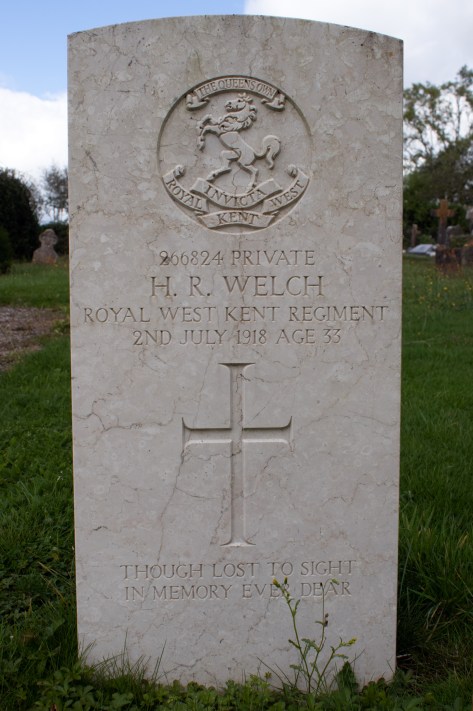
Private Horace Welch

Private Horace Welch

Horace Ralph Welch was born in Mere, Wiltshire, in the autumn of 1884. The middle of seven children, his parents were John and Ellen Welch. John was a silk drier, and the family lived in Water Street, close to the town centre.

John died in 1895, and Ellen was left to bring up the family on her own. Her older children found work, and Horace was employed by John Runtz, stock broker and Justice of the Peace. The family lived at 131 Lordship Road, Stoke Newington and employed two live-in servants other than Horace, who worked as a page.

On 11th November 1916, Horace married Beatrice Batchelor. Born in Watford, Hertfordshire, she was the daughter of an engine driver and, at the point she exchanged vows, she was working as an assistant in a boot shop. Horace was now employed as a butler, and the couple set up home in Watford. They went on to have a daughter, Eileen, in the summer of 1917.

By this point, Horace has stepped up to play his part in the conflict that was raging across Europe. He enlisted on 12th December 1916 – just four weeks after marrying Beatrice – and was initially assigned to the Kent Cycle Corps.

Private Welch would spend the best part of two years on home soil, before being shipped off to France in April 1918. By now he had been transferred to the Queen’s Own (Royal West Kent Regiment).

Horace was only overseas for a matter of a fortnight, before he became unwell. Medically evacuated to Britain for treatment, he was admitted to the Voluntary Aid Detachment Hospital in his home town, Mere. Suffering from appendicitis, he was operated on, but died from peritonitis soon afterwards. Private Welch passed away on 2nd July 1918: he was 33 years of age.

Horace Ralph Welch was laid to rest in Mere Cemetery, on the outskirts of the town.


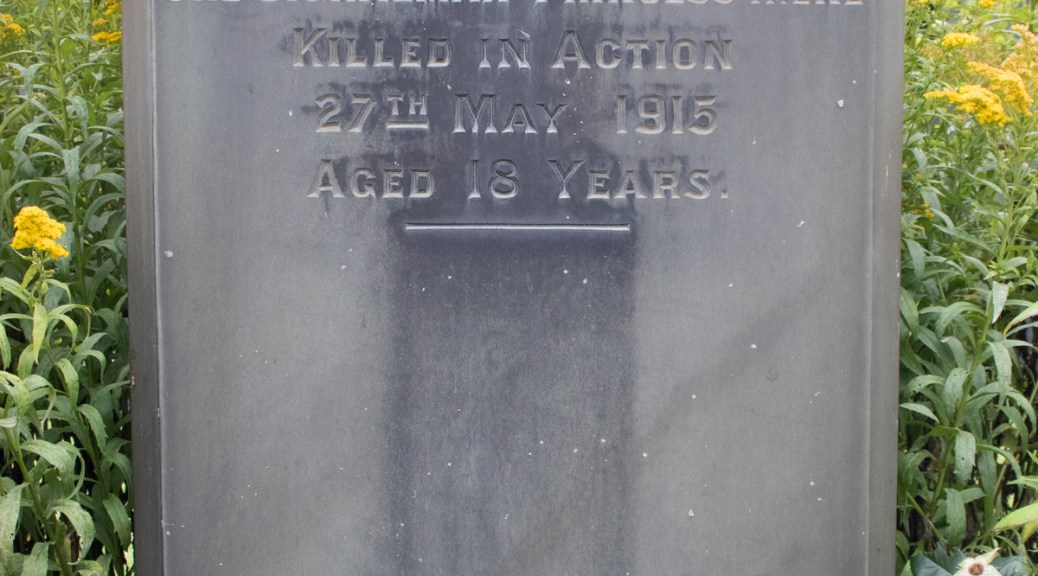
Ordinary Signalman Frederick Timms

Ordinary Signalman Frederick Timms

Frederick James Timms was born on 21st January 1897 in Watford, Hertfordshire. One of ten children – and the oldest surviving boy – his parents were Frederick and Rosina Timms. Frederick Sr was a farm labourer, but when his son completed his schooling, he found work with a blacksmith.

Frederick Jr wanted bigger and better things, however, and, on 18th April 1913, he enlisted in the Royal Navy, set on a life at sea. As he was below the age to be a full recruit, he was given the rank of Boy 2nd Class, and was sent to HMS Ganges, the navy’s training base on the outskirts of Ipswich, Suffolk, for his induction.

During his initial training, Boy Timms seems to have had some educational affinity. Seven months after enlisting, he was moved to the signal corps, and ranked as Signal Boy accordingly. In April 1914, a year after enlisting, he was transferred to HMS Victory, the Royal Naval Dockyard in Portsmouth, Hampshire, for posting. He was assigned to the battleship HMS Duncan, his first formal service at sea.

Over the next year, Frederick served on three further ships, coming of age on board the cruiser HMS Latona. Now formally inducted into to the Royal Navy, he was assigned the rank of Ordinary Signalman.

In March 1915, Frederick was transferred again, to HMS Princess Irene, an ocean liner built in 1914 for the Canadian Pacific Railway. With the outbreak of the war, she was requisitioned by the Royal Navy, and converted to a minelayer. In the spring of 1915, she was involved in laying a minefield to the north west of Heligoland, but spent much of her time in and around the Thames Estuary.

On the morning of 27th May 1915, Princess Irene was moored in the Medway Estuary and was being loaded with mines in preparation for a mission. At 11:14am, she exploded and disintegrated, taking two neighbouring barges with her. More than 250 crew – including Ordinary Signalman Timms – were killed. He was just 18 years of age.

Frederick James Timms body was laid to rest in the Woodlands Cemetery in Gillingham, Kent, alongside some of the other crew whose bodies had been rescued and identified.


Frederick’s death was the second tragedy to strike the Timms family in less than a fortnight. Back in Hertfordshire, Rosina had been pregnant with her eleventh child. On 16th May, she had had an internal haemorrhage, which resulted in the loss of both mother and child.


Private Henry Preece

Private Henry Preece

The early life of Henry George Preece is a challenge to piece together.

The Commonwealth War Graves Commission give his father’s name as Edwin Preece, and suggest that the was the landlord of the George Hotel in Milverton.

The Army Register of Soldier’s Effects give the sole beneficiary of Henry’s estate as his sister Bessie.

The census record of 1911 appears to link the three members of the family, but give only a tenuous connection to Somerset. Edwin was a Coachman from Nunney, but the family – including Edwin’s wife Elizabeth, and two children, Henry and Bessie – were all living in Bayford, Hertfordshire, where the siblings had been born in 1900 and 1902 respectively.

It seems likely that the Preece family moved to Somerset not long after the census was taken, and this is potentially when Edwin took up his new role in Milverton.

War broke out in 1914, and Henry stepped up to play his part. He enlisted in the Devonshire Regiment, and was assigned to the 2nd Battalion. Full service details are lost to time, but Private Preece had joined up by April 1918.

Henry’s trail goes cold again at this point. He was admitted to a military hospital in Chatham, Kent, in the autumn1918, although the reason for this is unclear. He passed away there on 29th October: he was just 19 years of age.

The body of Henry George Preece was taken back to Somerset for burial. He was laid to rest in the graveyard of St Michael’s Church in Milverton.


Lieutenant Arthur Devas

Lieutenant Arthur Devas

Arthur Edward Devas was born in Devizes, Wiltshire, on 29th July 1877. One of ten children, his parents were Reverend Arthur Devas and Louisa. Arthur Sr was chaplain at the County House of Correction, the prison a short walk away from the family home, over the Kennet and Avon Canal. The 1881 census showed the Devas’ were living to the south of the town centre, and were supported by three servants.

Arthur standing as a vicar’s son earned him an education. He was sent to the prestigious Haileybury College in Hertfordshire. When his father died in 1901, he felt a pull to see more of the world, and joined the army. Enlisting in the Essex Regiment in September 1902, he was taken on as a Second Lieutenant.

Promoted to the rank of full Lieutenant in January 1906, the next census, in 1911, recorded Arthur at the Warley Barracks in Billericay. When war broke out in August 1914, he was based in Mauritius: he remained there for the next five months, before his battalion – the 1st – were brought back to England.

Setting up camp in Banbury, Oxfordshire, the aim was to train the battalion in readiness for an assault in Gallipoli. For Lieutenant Devas, however, this was not to be. He had fallen ill on the journey back to Blighty and, having contracted typhoid, he was admitted to the 3rd Southern General Hospital in Oxford. He died at the hospital on 15th February 1915, at the age of 37 years old.

Louisa and some of her children had moved to Minehead, Somerset, after her husband’s death, and this is where Arthur Edward Devas’ body was brought for burial. He was laid to rest in the extensive Minehead Cemetery, to be reunited with his mother when she passed away some eighteen years later.


Flight Cadet Claude Rawlings

Flight Cadet Claude Rawlings

Claude John Howard Rawlings was born on 5th November 1896 in the Monmouthshire village of Aberbeeg. One of three children, his parents were Sidney and Alice Rawlings. Sidney was a brewer from Bath, Somerset, while Alice was born in the Welsh village and this is where the couple raised their family.

By the time of the 1911 census, Claude had been sent to Weston-super-Mare, Somerset, and was a boarding student at the Brynmalyn Private School to the north of the town centre. His heritage would not have been out of place, though, as nine of the 25 live-in students were from Wales. Claude’s parents seemed to have taken the opportunity to visit Sidney’s mother in Bath, a possible prequel to them moving back to Somerset permanently.

Claude completed his schooling at Brynmalyn the following year, and took up a place as an agricultural student in Broadstone, Dorset. When war broke out, however, he was called upon to play his part.

Details of Claude’s military service are sketchy, but he initially enlisted in the Gloucestershire Regiment and was assigned to the 4th (City of Bristol) Battalion. The regiment service in France and Italy from 1915 onwards, but there is no evidence of Private Rawlings serving anywhere other than on home soil.

Claude wanted greater things, and was drawn to a life in the sky. In the spring of 1918, he transferred to the Royal Air Force, and was attached to 125 Squadron. Sent to Fowlmere Airfield near Royston, Hertfordshire, Flight Cadet Rawlings began his training. Over the next couple of months, he learnt to fly a Royal Aircraft Factory R.E.8 biplane.

Flight Cadet Rawlings was dong a routine practice flight on 12th August 1918, when, during a left hand turn, the aircraft’s side slipped and nose dived. The plane crashed to the ground, and Claude was killed instantly. He was just 21 years of age.

The body of Claude John Howard Rawlings was brought back to Somerset for burial. He was laid to rest in Bath Abbey Cemetery.


Flight Cadet Claude Rawlings
(from britishnewspaperarchive.co.uk)

Claude’s grave was a family plot, and he was reunited with his parents when Alice and Sidney died in 1933 and 1945 respectively.


The inscription on the family headstone gives Claude’s date of death as October 1918. All other records confirm the crash took place on 12th August, and that he died at the scene.


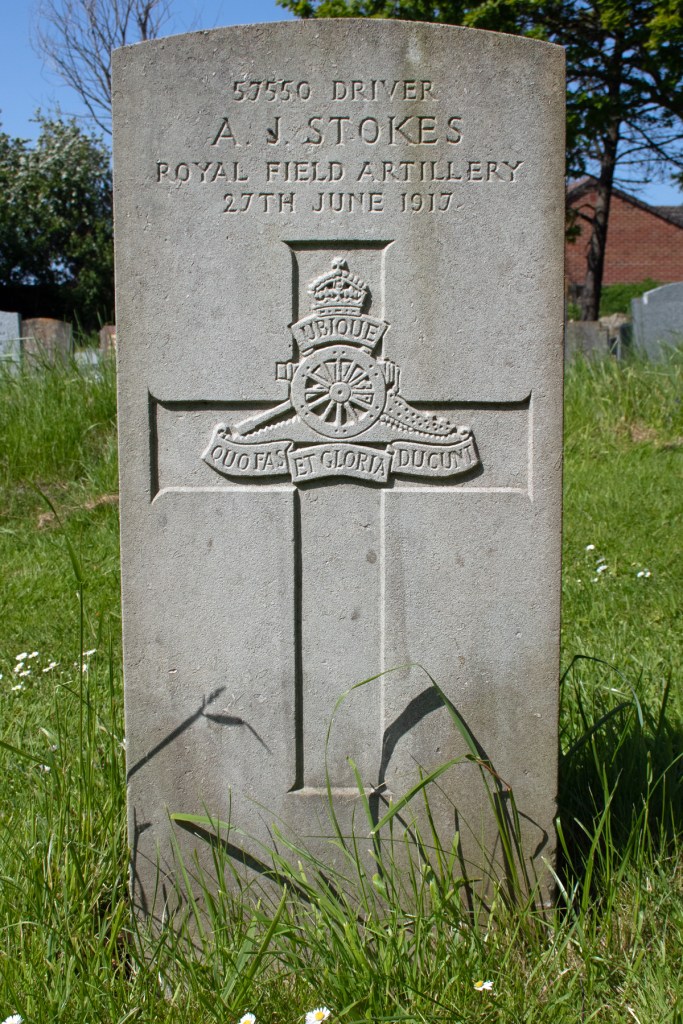
Driver Albert Stokes

Driver Albert Stokes

Albert John Stokes was born in the autumn of 1878, the fourth of seven children to John and Mary Ann Stokes. John was a cord winder from Puriton in Somerset, and it was in the village, in the house next to his parents, that he and Mary Ann raised their young family.

By the 1890s, John had turned his hand to boot making. When he finished his schooling, however, Albert found more manual work, and by the time he got married in 1903, he was working as a quarry labourer.

Albert’s wife was Minnie Nichols, a cooper’s daughter, who lived just up the road from the Stokes family. They married in Bridgwater Registry Office on Christmas Eve 1903. The newlyweds set up home in a small cottage in Puriton, and went on to have six children, although only four survived childhood.

When war came to Europe, Albert was one of the first to join up. He enlisted on 7th December 1914, and was assigned to the Royal Field Artillery as a Driver. His service records give an insight into the man he had become: he was 5ft 7ins (1.7m) tall, weighed in at 136lbs (61.7kg) and was of good physical development.

Driver Stokes spent the next eight months on home soil. He was sent to France on 21st July 1915, and was involved in the fighting at Loos. It was here, that he developed a persistent cough and, by October, he was back on home soil. That winter Albert contracted influenza, which then developed into haemoptysis.

While Driver Stokes did recover, he was admitted to the Voluntary Aid Detachment Hospital in Bishops Stortford in May 1916, having come down with influenza once more. He was transferred to the 1st Eastern General Hospital in Cambridge for a medical assessment, and this led to an eventual discharge from the army in August.

Albert returned to Somerset after leaving the Royal Field Artillery, although his trail does go cold. He was at home when he passed away on 27th June 1917, at the age of 39 years old. The cause of his passing is not recorded, but it is likely to have been as a result of a repeat of the conditions that had led to him leaving the military.

Albert John Stokes was laid to rest in the peaceful graveyard of St Michael’s Church in his home village of Puriton.


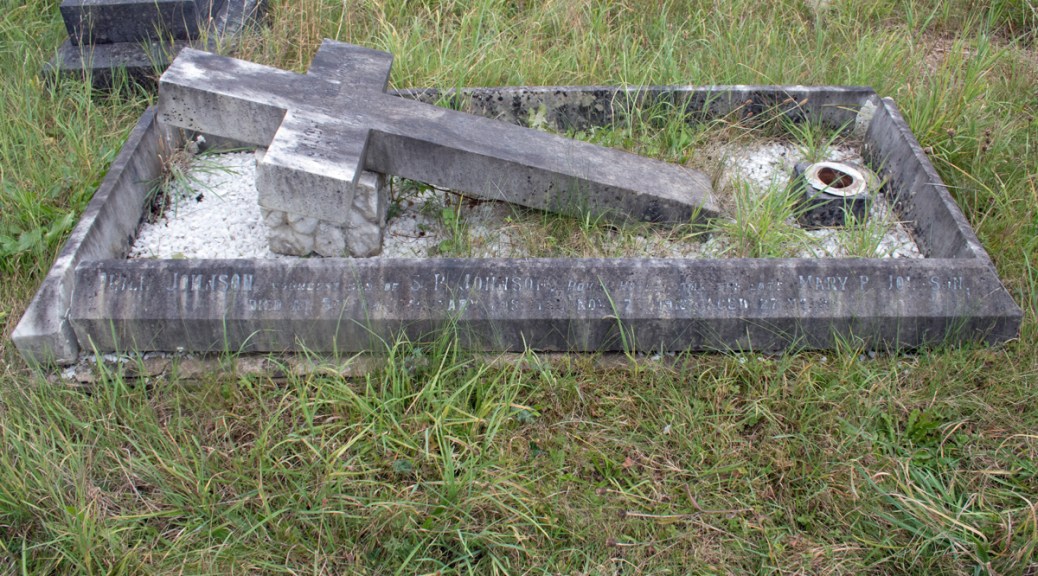
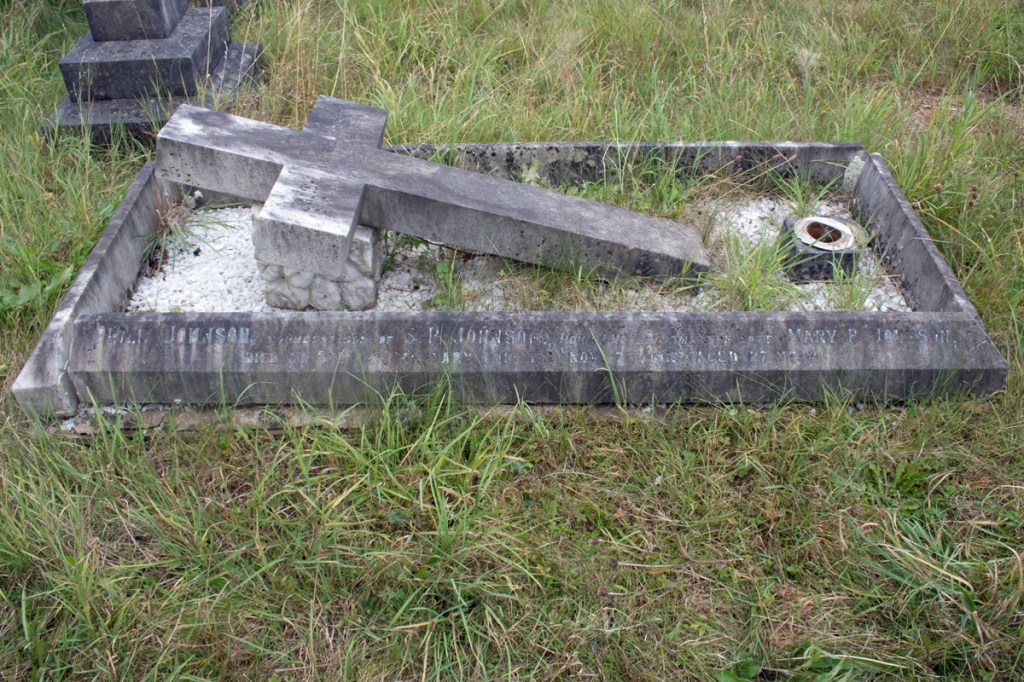
Private Philip Johnson

Private Philip Johnson

Philip Johnson was born in the summer of 1891 in Wrexham, Denbighshire. One of eight children his parents were Samuel and Mary Johnson. Samuel was a wine merchant from Scotland, while Mary had been born in Cheshire. When Philip was born the family were living and running the town’s Lion House inn on the High Street.

Mary died in 1897 and, in 1909 Samuel moved his family on. He bought the Royal Hotel in Llangollen, which occupied a large plot on the riverside, and which included a large garden.

The Royal Hotel was a busy business: to look after the guests, there were eleven members of staff living in. This was to be a Johnson family business, however, with Philip’s older sibling Elizabeth managing the hotel with her father, his brother Samuel Jr assisting, his sister Ethel acting as bookkeeper and Philip himself managing the bar.

In the spring of 1914, Philip married Elizabeth Kelsall, whose family ran the Eivion Hotel, down the road from The Royal. The couple set up home in the town – possibly even still living at Samuel’s hotel – and had two children.

When war came to Europe, Philip stepped up to play his part. Sadly, full details of his military service are lost to time, although it is clear from other documents that he had enlisted in the Royal Army Service Corps.

For The Royal Hotel, this was a challenging time. By December 1916, two of Samuel’s sons – including Philip – were away on service, as were nine of the hotel’s seventeen staff. Samuel applied for Samuel Jr’s exemption from war service on the basis that he was the hotel’s manager, but this was refused. A year later, he applied for another of the hotel’s servant’s, an Evan Edwards, exemption, but again this was refused.

Philip, meanwhile, was attached to the 728th Coy of the Motor Transport section of the Royal Army Service Corps. His troop served the RE Signal Service Training Centre, but it is unclear whether he saw any action overseas. By the end of the war, however, he was based in Hitchin, Hertfordshire.

With winter closing in, illness became rife in the cramped condition of army barracks. Private Johnson contracted pneumonia, and was admitted to the Bedford Military Hospital, not far from where he was based. Sadly, the lung condition was to get the better of him, and he succumbed to it, passing away on 7th November 1918, aged just 27 years old.

Philip Johnson’s body was brought back to Wales for burial. He was laid to rest in a family plot in the graveyard of St John’s Church in his adopted home town of Llangollen.


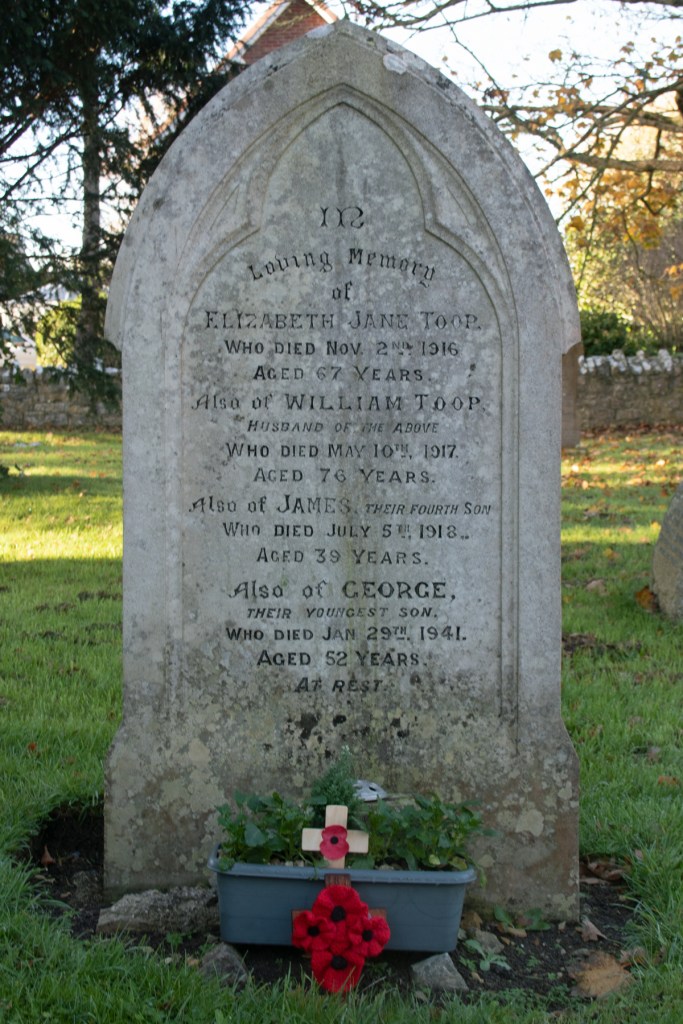
Lance Corporal James Toop

Lance Corporal James Toop

James Toop was born in the Somerset village of Galhampton on 13th January 1879. He was the fifth of eleven children to William and Elizabeth Toop. William was a farm labourer, and James followed his father’s line of work when he left school.

James disappears from documents for a while, only surfacing again in October 1914, when he enlisted for army service. At this point, he was working as a bricklayer, and notes that he had previously served in the Somerset Light Infantry. He is recorded as being 5ft 8ins (1.73m) tall, weighing 136lbs (61.7kg). He had brown hair, grey eyes, and gave his religion as Congregationalist. James also lied about his age, saying that he was 29 years and 9 months when, in fact, he would have been closer to 36 years old when he joined up.

Sapper Toop was assigned to the Royal Engineers, and spent nine months on home soil, during which time he was promoted to Lance Corporal. On 18th July 1915 he went to France, but returned just five days later.

Admitted to the Royal Victoria War Hospital in Netley, Hampshire, James was recorded as suffering the stress of campaign. He was moved to Napsbury War Hospital, near St Albans in Hertfordshire, after a couple of weeks. This institution – formerly the Middlesex County Asylum – was where servicemen suffering from shell shock were sent for rehabilitation, and Lance Corporal Toop joined the near 2,000 other residents.

James’ diagnosis was recorded as being neurasthenia with depression and, in October 1916, he was medically discharged from the army. The medical report noted that he had “had nervous breakdown, complained of vomiting of his food. Had defective memory. Had religious mania 5 years before enlistment.” While his condition was not the result of his war service, the medical board recorded that his mental debility has been aggravated by the strain.

James falls off the radar again at this point. When he recovered, he returned to bricklaying for work. In 1916 his mother died, followed a year later by his father. Both were laid to rest in the family grave in St Mary Magdalene’s Church, Sparkford, Somerset.

James Toop died on 5th July 1918 at the age of 39 years old. He was also buried in the family plot, reunited with his parents far too soon.


Guardsman Sydney Proctor

Guardsman Sydney Proctor

Sydney Francis Proctor was born in the autumn of 1886 in the Hertfordshire town of Bushey. The middle of three children, his parents were George and Annie Proctor. George was a stationary engine driver, and Sydney found work at a local iron foundry – possibly working alongside his father – when he left school.

This was not to be Sydney’s long term career, however, as, by the time of the 1911 census, he had moved to West Sussex and settled in Cuckfield, near Haywards Heath. By this time he was working as a gardener, and was employed at the nearby Borde Hill estate.

It is likely that Sydney had made the move to Sussex a few years earlier, as the same document confirms that he was married to a London-born woman called Florence, who was five years his senior. The couple would go on to have a daughter, Frances, who was born in December 1912.

Sydney’s wartime service is a little sketchy. He enlisted in the Coldstream Guards in November 1914, and was assigned to the 4th Battalion. While full details of his service are not available, Guardsman Proctor certainly served overseas, and may have seen some of the fiercest fighting of the conflict, at Loos, Ypres and the Somme.

Guardsman Proctor survived the conflict, but paid a price. In October 1918, he was medically discharged from military service, as he was suffering from aortic regurgitation – a heart complaint. He returned home to Sussex, but this respite was not to be for long. Sydney passed away on 17th July 1919, at the age of 32 years old.

Sydney Francis Proctor was laid to rest in the cemetery of his adopted home town, Cuckfield.