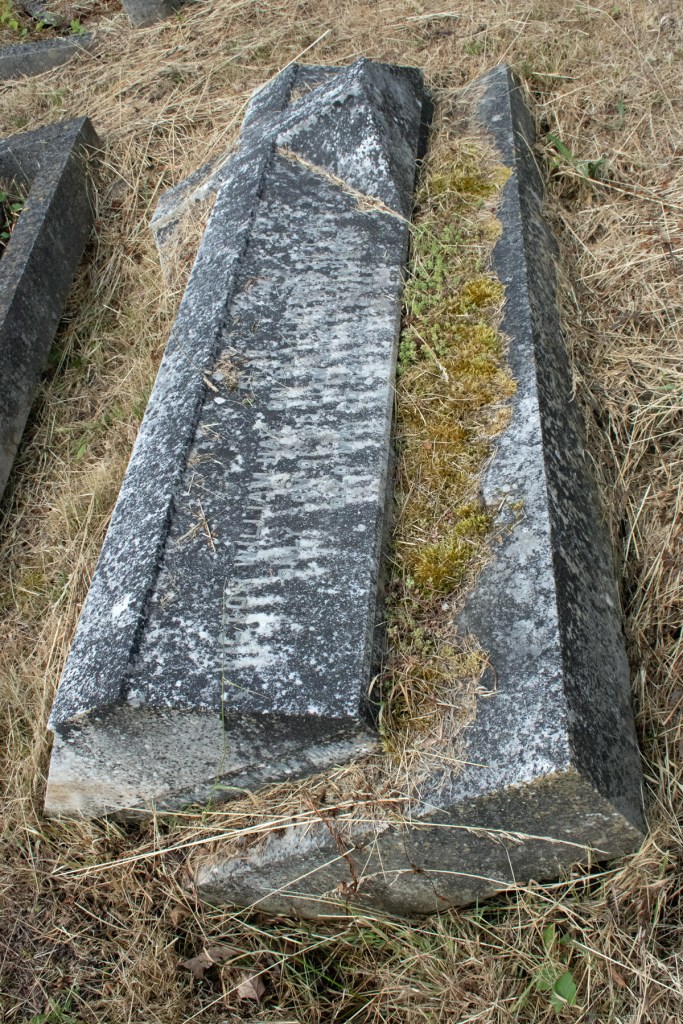
Samuel Edwin Powell was born at the start of 1876, the third of eight children to Samuel and Catherine Powell. Samuel Sr was a baker from Gloucestershire, and it was in the village of Leonard Stanley that the family were born and raised.
Much of Samuel Jr’s earlier life is undocumented, and he does not appear on either the 1891 or 1901 census returns. By the time of the next census, taken in 1911, he is recorded as living in Lewisham, Surrey.
The census noted that Samuel was employed as a commercial traveller in the chocolate industry. He was married to Stroud-born Ellen Hobbs, and had been since 1906. The couple had a son, Denis, who was a year old, and were living at 20 Hazelbank Road in Catford, with a domestic servant, Edith Price, helping Ellen while her husband was away working.
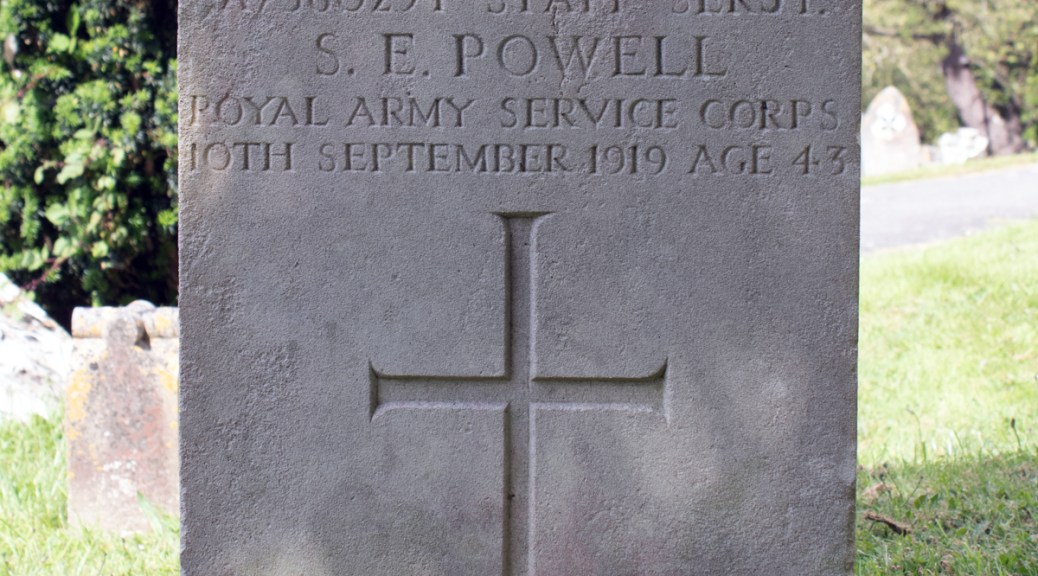
When war broke out, Samuel was called upon to play his part. He was enlisted in the Royal Army Service Corps, with the rank of Staff Serjeant, which would suggest that his absence from earlier documents was because of earlier military service.
There is little information about Samuel’s time in the army, other than that he was attached to the Clearing Office when the Armistice was declared.
The cause of Staff Serjeant Powell’s passing is not known, but the Army Register of Soldier’s Effects confirm that he died in Dorset on 10th September 1919. The connection to Dorset is unclear: he may have been serving in the area, or recuperating from an illness. He was 43 years of age.
Samuel Edwin Powell was laid to rest in Lyme Regis Cemetery, overlooking the seaside town.
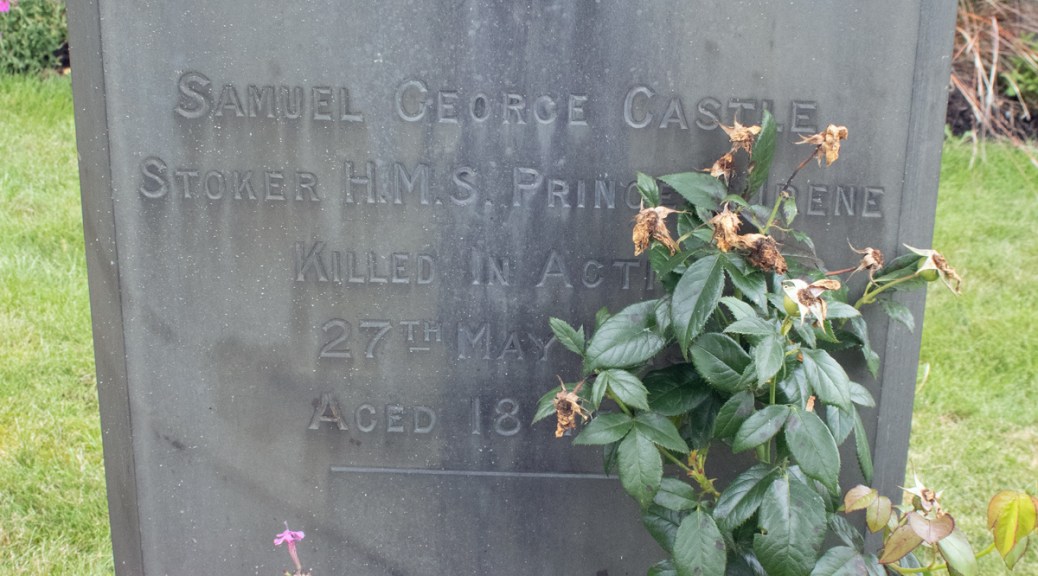
Samuel George Castle was born on 1st November 1896 in Battersea, Surrey. The third of ten children, his parents were Samuel and Louisa Castle. His father was a gas fitter turned blacksmith and, by the time of the 1911 census, Samuel Jr was working as an errand boy for Army & Navy Stores.
When war broke out, Samuel was quick to step up and serve his country. On 6th March 1915, he gave up his job – he was by then employed as an equipment maker – to enlist in the Royal Navy as a Stoker 2nd Class.
George was sent to HMS Pembroke, the dockyard in Chatham, Kent, for his training. His service records show that he was 5ft 4ins (1.62m) tall, with black hair, brown eyes and a fresh complexion.
Tragically, Stoker Castle’s time in the navy would not prove a lengthy one. By the end of May he was part of the crew of HMS Princess Irene, an ocean liner that had been put into service as a minelayer when war was declared. On 27th May 1915, a series of explosions ripped through the ship, killing more than 350 crew, Samuel included. He was just 18 years of age.
Samuel George Castle was laid to rest in Woodlands Cemetery, Gillingham, alongside the other victims of the disaster.
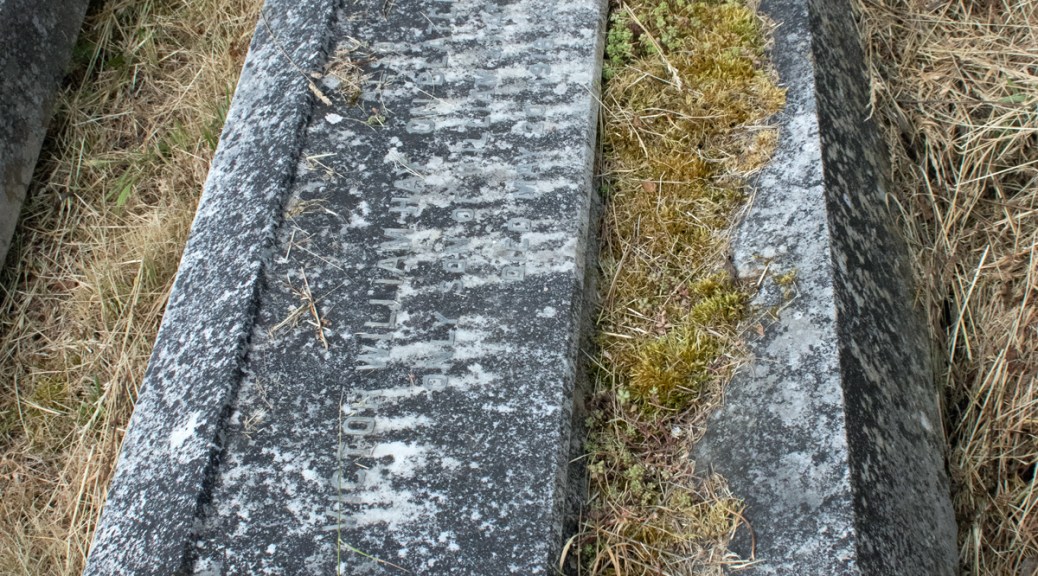
Victor William Haydon Blatchford was born in Bath, Somerset, on the 20th November 1897. The younger of two children, his parents were William and Kate Blatchford.
William was a draper, and the family lived in the bustling city centre, above the shop he and Kate ran. By the time of the 1911 census, the family were registered as living in 12 rooms at 52 & 53 Southgate Street. As well as the Blatchfords, four other people made up the household: draper’s assistants Edith Letts and Nellie Harris, milliner Florence Carke, and general domestic servant Ellen Heskins.
War came to Europe in the summer of 1914, and Victor was called upon to play his part. Full details of his military service have been lost to time, but a later newspaper report suggest he had enlisted early in 1916. William had died in October 1914, but it is unclear whether his son’s decision to enlist was related to his father’s passing.
Private Blatchford joined the Royal Army Service Corps, and was attached to the Mechanical Transport Depot in Norwood, Surrey. While information about his time in the regiment is no longer available, the same newspaper report hints at time spent overseas:
Private Victor WH Blatchford, ASC, MT, only son of Mrs William Blatchford, Okehampton Lodge, Kipling Avenue, died on May 20th, at Manor War Hospital, Epsom, from pneumonia, contracted in East Africa, after two years and three months’ active service. The funeral will be at Locksbrook Cemetery, and it is asked that no flowers be sent.
[Bath Chronicle and Weekly Gazette: Saturday 25th May 1918]
Victor William Haydon Blatchford died on 20th May 1918: he was just 20 years of age. He was laid to rest in Locksbrook Cemetery, Bath, alongside his father. When Kate passed away in 1941, she was also interred in the family plot.
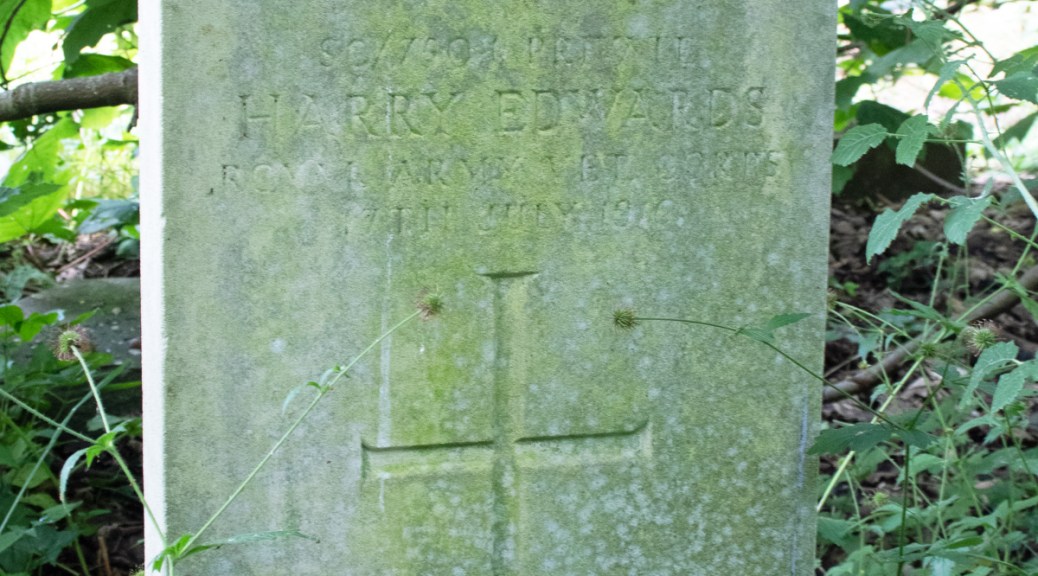
Harry Edwards was born early in 1855 in South London. One of eleven children, his parents were John and Sarah Edwards. John was a carpenter, and the family were raised in Bermondsey, first in a small terrace in Chapel Place, then sharing a slightly larger house in Grange Walk.
Much of Harry’s life is lost to time. He married Mary Ellerington on 27th July 1879: she was a tailor’s daughter from Southwark, and the couple set up home at 29 Newington Causeway. The marriage certificate confirmed that Harry was employed as a warehouseman at the time, and their daughter, Amelia, was born the following spring.
A later document suggests that Harry went on to join the army, fighting as part of the South Africa Campaign. Sadly, however, his service records are lost to time, and so it is not possible to confirm when and for how long he served. Certainly, there is no mention of the family in the census returns from 1881 to 1911, so he may well have been overseas.
The next records available for Harry are those relating to his military service during the First World War. He enlisted early in 1915, joining the Royal Army Veterinary Corps. He found himself in France by mid-April, and was awarded the British and Victory Medals and the 1915 Star for his service.
Private Edwards came down with bronchitis in the spring of 1916: he was medically evacuated to Britain for treatment, and was admitted to the Bath War Hospital in Somerset. It seems that Harry’s age was against him: he passed away from the condition on 17th July 1916, at the age of 61 years old.
Harry Edwards’ family may have been unable to afford the cost of bring him back to London for burial. Instead, he was laid to rest in the sweeping Locksbrook Cemetery, not far from the hospital in which he had breathed his last.
Henry Ridler was born in Henbury, Gloucestershire, in the summer of 1862. He was the middle of three children to Abraham and Harriet Ridler. Abraham was a farm labourer who moved the family for work to the Weston area of Bath, Somerset, not long after Henry’s younger brother, John, was born.
The oldest Ridler sibling, Joseph, worked as a cabinet maker, and by the time of the 1881 census, both Henry and John were apprenticed to him. Henry married Emma Stone on Christmas Eve 1882, and the couple would go on to have seven children.
The 1891 census found Henry and the family living at 5 Comfortable Place in Bath, one of a row of terraced cottages then, but now sandwiched between the River Avon and the busy A4. Henry and Emma had four children by this point – all daughters – and the house was split between them and mother-and-daughter dressmakers Lucy and Lucy Batt.
By the time of the 1901 census, the family were growing up, and had moved literally just around the corner, to 2 Onega Terrace. Set slightly back from the main road, this terraced house had six rooms, and was better suited to the growing family. Henry was still working as a cabinet maker at this point, while his three oldest daughters – Mabel, Lilian and Maude – were all employed, as a corset fanner, a kitchen maid and a nurse girl respectively.
The next census return, taken in 1911, recorded the Ridler family still living in the same house. Henry and Emma had been married for 28 years by this point, and, while 2 Onega Terrace may have had six rooms, they would have become very cramped by this point. Six of the children – aged between 14 and 27 – were still living at home, with everyone in the household but Emma bringing in a wage of sorts.
War was closing in by this point, and, despite his advancing years, Henry was drawn to serve his King and Country. He enlisted in the Royal Army Service Corps on 20th October 1915, a date that confirms he volunteered for duty, as conscription wasn’t introduced until the following year. Henry’s service records show that he was 5ft 6ins (1.68m) tall, with greying hair and blue eyes.
Private Ridler spent two periods of time overseas. In November 1915, his unit was sent to the Eastern Mediterranean, and he served in Salonika, Greece, for seven months. While there, he was hospitalised following an injury to his right knee. He was medically evacuated to Malta, before being posted back home in Britain to convalesce in Woodcote Park Hospital, Epsom, Surrey.
By the summer of 1916, Henry was deemed fit once more, and was sent abroad again, this time to the Western Front. Details of his time there are sketchy, although he seems to have been transferred tot he Labour Corps at some point. It appears that his previous injury flared up again, and he was eventually discharged from the army on medical grounds on 30th July 1918.
At this point, Henry’s trail goes cold. He returned to Bath, but it is unclear whether or not he was able to resume working. The next confirmed documentation for Henry’s life is that of his passing. While the cause is unclear, he breathed his last on 3rd June 1921: he was 58 years of age.
Henry Ridler was laid to rest in Bath’s sweeping Locksbrook Cemetery, a short walk from the family home in Onega Terrace.
Emma remained in the family home for the next 17 years. When she passed away in 1938, she was also laid to rest in Locksbrook Cemetery, not far from her late husband.
William Reginald Karslake was born in the spring of 1867 in the Surrey village of Westcott. The oldest of three children, his parents were William and Annie Karslake. William Sr was the vicar of the village’s Holy Trinity Church, and the family had a retinue of five servants to look after the household.
By the time of the 1891 census, the Karslakes had moved to Eastbourne in East Sussex. Their house, on the corner of Carlisle and Granville Roads, was a grand affair, and, while William Jr’s siblings, Henry and Mary, were 22 and 19 years old, there was still a live-in retinue of four staff to support them. William Jr is absent from this record, and he may well have been studying in Oxford at the time.
In the autumn of 1896, William Jr married Laura McKenzie. She was an admiral’s daughter who had been born in Glasgow, but their couple exchanged vows in Faringdon, Berkshire. The 1911 census found the family living in the 19-room Moorend Court in the Herefordshire village of Mathon. The couple had two children – Sam and Bridget – by this point and had a governess, parlourmaid, two housemaids, a kitchen maid and a cook to keep them in the right lifestyle.
The census recorded William’s employment as ‘formerly resident land agent’, which suggests he may have spent time overseas before marrying. His father had passed away by this point, and his brother Henry had taken up holy orders.
When war was declared, William was quick to volunteer his services. Initially acting as a driver for the British Red Cross, he found himself in France within weeks of the conflict starting. By January 1915, Lieutenant Karslake was moved to the Balkans, and at this point seems to have transferred to the Pembroke Yeomanry.
Little additional information is available to William. He passed away following an illness on 29th December 1917: he was 50 years of age.
It would seem that William Reginald Karslake was either hospitalised in Devon, or that there are additional family connections in the area. He was laid to rest in Paignton Cemetery, far from his substantial Herefordshire home.
Laurence Edward Horsnell la Vavasour dit Durell was born on 24th December 1894, one of seven children to Edward and Julia. Edward was born in Jersey, in the Channel Islands, but he and Julia were living in Camberwell, Surrey, when Laurence was born.
The census records from the time show a family who came to be divided. In 1901, Edward was working as an artificial limb maker, while Julia looked after their son and the house the family shared at 14 Kerfield Crescent.
By 1911, things had changed significantly. Edward was now employed as a grocer’s storeman, and he and Laurence – apprenticed to a carpenter – were living with his parents, Edward and Sarah, at their home in St Clement, Jersey. Julia, meanwhile, was still on the mainland, where she was employed as a housekeeper for Frederick Manford, a 31-year-old cinema attendant in Hastings. Laurence’s younger sister, Phyllis, was also living there.
Laurence seemed keen to carve out a career for himself and, on 3rd January 1913, he enlisted in the Royal Navy as a Ship’s Carpenter. His service records show that he was 5ft 8ins (1.72m) tall, with dark hair, blue eyes and a fresh complexion. He was first sent to HMS Victory, the Royal Naval Dockyard in Portsmouth, Hampshire, for his training.
Over the next five years, Ship’s Carpenter Durell served on six ships, and as war broke out in the summer of 1914, his role became more and more vital. In May 1917, while serving on board the cruiser HMS Castor, he was promoted to the rank of Shipwright 2nd Class.
During the summer of 1918, Laurence contracted pneumonia. He was transferred to the hospital ship Soudan, but the condition was to prove too severe. He passed away on 15th July 1918, at the age of 23 years of age.
Laurence Edward Horsnell la Vavasour dit Durell was taken back to Jersey for burial. He was laid to rest a family plot in St Clement Churchyard, not far from where his relatives still lived.
Frederick George China was born in Bath, Somerset, in the summer of 1885. He was the second of children to tailor George China and his wife, Gloucestershire-born Frances.
Frederick was working as a grocer’s assistant when his father died in 1906, at the age of 52. Determined to earn money for Frances and his three sisters, he left Somerset for work. The 1911 census recorded him as living in Worthing, West Sussex, boarding with the Vitler family. Percy was a baker’s assistant, and lived at 4, Tarring Road with his wife and two daughters. The census noted two visitors to the property, railway contractor Robert Puttock and his wife, Annie.
On 26th December 1912, Frederick married Lucy Hellier. Born in Midhurst, West Sussex, she was working as a confectioner’s shop assistant in Worthing’s Montague Street, boarding with the manager, Catherine Castle, her mother and her niece. The couple wed in Stanmer Parish Church, to the north of Brighton, which is where Lucy’s family were then living.
The newlyweds moved back to Bath, and Frederick took up a job as manager of the Widcombe branch of the Twerton Co-operative Society. Their only child, son Douglas, was born in February 1915.
By this point, war was raging across Europe, and Frederick stepped up to play his part. His full service details are no longer available, but he joined the Somerset Light Infantry in June 1916, and was assigned to the 7th Battalion.
He was in a battalion of the Somersets, who were heavily engaged at Langemarck, but he and his chum came safely through the severe fighting at that place. While returning, some time after, to the front trenches, he was knocked out by a shell, and received severe injuries. The spine was so badly hurt that, if he had survived, he would never have walked again.
[Bath Chronicle and Weekly Gazette – Saturday 29 September 1917]
Private China was medically evacuated to Britain for treatment, and he was admitted to King George’s Military Hospital in South London. Lucy and Frances travelled to Surrey to see him, and were with him when he passed, his wounds being too severe for him to survive. He passed away on 21st September 1917, at the age of 32 years of age.
The body of Frederick George China was aid to rest in Bath’s sweeping Locksbrook Cemetery, not far from where his father, George, was buried.
Private Frederick China (from britishnewspaperarchive.co.uk)
Frank Ernest Green was born in Stratford, Essex on 14th November 1889. One of nine children, his parents were printer’s compositor John Green and his wife, Susan. The family were raised in Leytonstone and, by the time of the 1911 census, they were living in a house in Elsham Road.
Frank found work as a clerk for a financial company when he finished his schooling. On 31st August 1912, he married sailor’s daughter Charlotte Greenland, who was four years his senior. The couple settled in Gibbon Road, Peckham, Surrey, where Frank continued his work.
When war broke out, Frank was called upon to play his part. On 3rd January 1917, he enlisted in the Royal Navy for the duration of the war. His service records show that he was 5ft 6.5ins (1.69m) tall, with brown hair, blue eyes and a fresh complexion.
Ordinary Seaman Green was initially sent to HMS Pembroke, the Royal Naval Dockyard in Chatham, Kent, for training. He spent short periods of time on two ships before being assigned to HMS Racoon, a Beagle-class destroyer,
Initially patrolling the Mediterranean, by the time Frank joined the crew the Racoon she was part of the Second Destroyer Flotilla, based from Northern Ireland. In January 1918, she struck harsh weather:
HMS Racoon, Lieut. George LM Napier RN, in command, struck some rocks off the north coast of Ireland at about 2am on the 9th [January], and subsequently foundered with all hands.
Nine of the crew had been left behind at her last port of call, and these are the sole survivors.
Seventeen bodies have been picked up by patrol craft, and are being buried at Rath Mullan. Five more bodies have been washed ashore, and are being buried locally.
All the next of kin have been informed.
Exeter and Plymouth Gazette – Monday 14 January 1918
Ordinary Seaman Frank Ernest Green was one of those to be washed ashore. He was just 28 years of age. He was laid to rest in the peaceful and picturesque graveyard of Ballintoy Church, County Antrim, not far from where he had come to land. He was buried next to two other crew members, Ship’s Cook Walter Griffin and Stoker 2nd Class Frederick Sarell.
The funeral of Mr Henry Hutchings, the Zulu war veteran, who died suddenly at Lower Weston on Tuesday, took place on Saturday afternoon…
The principal mourners were: Mrs Hutchings (widow), Sergt. Hutchings (son)(who wore the Mons ribbon and a Zulu war medal), Mr AE Adams (step-son), Mrs A Hutchings (daughter-in-law), Mr David Adams (step-son), and Mrs Emily Pickworth (step-daughter).
In order to attend the funeral Mr AE Adams had returned from France, where he has been carrying out work for a local firm.
Bath Chronicle and Weekly Gazette: Saturday 16th February 1918
Tracking down Henry Hutchings’ early life is a bit of a challenge, but working backwards through census records sheds some light onto his later years.
The Commonwealth War Graves Commission record states “Hutchings, Pte. Henry, 14475. Royal Defence Corps. 5th Feb., 1918. Age 59. Husband of Theresa Hutchings… Served in the Zulu War (1877-79) with Army Service Corps.”
The 1911 census recorded Henry and Theresa living in Shepherd’s Bush, Hammersmith. The document confirms they had been married for less than a year and, unusually, suggests both were twice married. Henry had been born in Notting Hill, and was employed as a smith’s hammerman. Theresa was born in Byfleet, Surrey, and the couple were living with Henry’s son, Henry Jr, and Theresa’s daughter, Alice.
Turn the clock back ten years, and the 1901 census tells a more confused story. Henry was living in Edmonton, Middlesex, where he was employed as a general labourer. Theresa is noted as being his wife – in contrast to the later census return – and the couple were living in Gilpin Crescent with Henry’s sons – Henry Jr, Edward and Sidney – and Theresa’s two children – Alice and Albert.
Going back a further ten years leads to a dead end. Neither Henry nor Theresa are readily identifiable on the 1891 census, even though both should have had their older children by that point.
An 1877 military record confirms Henry’s earlier time in the army. It was in July of that year that he enlisted, joining the Army Service Corps. At 18 years of age, he had been working as a carman, but a dedicated career is what he sought out. His record confirms he was 5ft 4ins (1.63m tall, with brown hair, blue eyes and a fresh complexion. Henry lists his next of kin as brother Robert Hutchings, although, again further family details are lost in the mists of time.
Private Hutchings spent twelve years in the army. After eighteen months on home soil, he was dispatched to South Africa, as the later newspaper report suggests, and spent a year overseas. He returned home in March 1880, and was stood down to reserve status until the end of his contract in July 1889.
The documentation uncovers details of Henry’s second period of time in the military. He enlisted in the Royal Defence Corps in September 1915, and was based at Alexandra Palace in London. His time there was limited, however, as he began to show signs of heart disease. By the following summer, Private Hutchings suffered from breathlessness and chest pains, to the point where he was medically discharged from service on 21st August 1916.
Henry and Theresa had moved to Somerset by January 1917, presumably for the cleaner air that their home in Bath would provide. This was not to be enough, however. Henry died a little over a year later, at the age of 59 years old.
Henry Hutchings was laid to rest in the sweeping grounds of Locksbrook Cemetery, Bath. He was to be reunited with Theresa when she passed away in 1926.