Category Archives: Lance Corporal

Corporal Cyril Allen

Corporal Cyril Allen

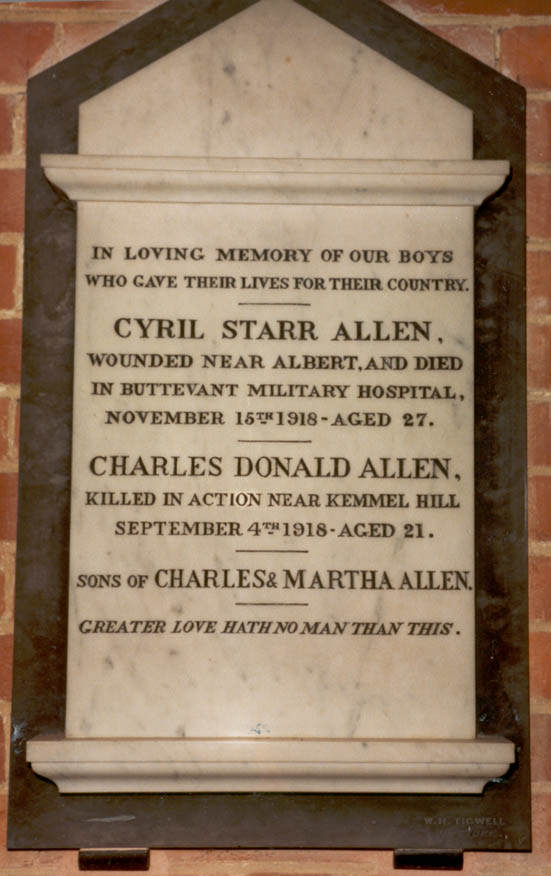
Cyril Starr Allen was born on 15th June 1891 in the village of Baughurst, near Tadley in Hampshire. He was the second youngest of five children to Charles and Martha Allen. Charles was a rate collector, and the family moved around the county during Cyril’s early years.

By the time Cyril left school, Charles had become an assistant bursar in Wootton, near Basingstoke. Cyril, meanwhile, had found similar administrative employment and was working as a clerk for a local land agent.

At the start of 1911, Cyril enlisted in the British Army. He joined the 4th Battalion of the Wiltshire Regiment as a Private and was soon based on Salisbury Plain. His service records confirm that he was 19 years and 7 months old, and stood at 5ft 5ins (1.65m) tall. Private Allen served for his initial term of four years, before being remobilised.

In November 1915, Cyril married Mabel Young. She was a printer’s daughter from Wiltshire, and the couple married in Salisbury, before settling down in Frome, Somerset. They went on to have a child, a daughter they called Kathleen.

Remobilised in the autumn of 1915 Private Allen received a series of promotions – to Lance Corporal, Corporal, Lance Sergeant and Sergeant, and, by June 1917, he found himself at the Front.

On 22nd April 1918, Cyril was injured, sustaining gunshot wounds to his shoulder and left arm. He was invalided back to England for treatment, and was hospitalised in the north of the country. He was then transferred to the Royal Welch Fusiliers with the rank of Corporal and sent to Ireland to continue his recovery and work light duties.

While in Ireland, Corporal Allen contracted influenza and was admitted to the Buttevant Hospital in County Cork. Sadly, in his weakened state, it was something he was to succumb to, and he passed away, with Mabel at his bedside, on 15th November 1918. He was just 27 years of age.

Cyril Starr Allen’s body was brought back to England; he was laid to rest in the graveyard of Christ Church in Frome, Somerset.


Corporal Cyril Allen (from ancestry.co.uk)

After the loss of her husband, Mabel went on to live her life. In 1923, she married James Burr, a draughtsman from Frome; they went on to have a child – a brother for Kathleen – called James.


Cyril’s two brothers, Winthrop and Charles, also fought in the First World War.

(from ancestry.co.uk)

Winthrop had emigrated to North America in 1911, but returned to Europe as part of the Canadian Expeditionary Force when war broke out.

Lance Corporal Charles Allen served with the 15th Battalion of the Hampshire Regiment. He fought on the Western Front and was killed near Kemmel Hill in Belgium on 4th September 1918. He was just 21 years old. Charles is commemorated at the Tyne Cot Memorial in Zonnebeke, Belgium.


Lance Corporal Henry Preece

Lance Corporal Henry Preece

Henry Thomas Preece was born in the summer of 1884, one of seven children to agricultural labourer Tom Preece and his wife, Sarah. Thomas had been born in the Somerset village of Nunney, and it was here that he raised his family.

When Henry left school, he chose not to follow in his father’s agricultural footsteps. By the time of the 1911 census, he was recorded as a baker and, as such, would have been at the heart of village life in Nunney.

Henry married local woman Ellen Stone in 1909, who was a dressmaker with her own account. The couple would go on to have four children between 1909 and 1916.

With war looming, Henry felt the need to play his part. He joined the King’s Royal Rifle Corps in January 1916 and, after training, was sent to France a couple of months later.

He was wounded on July 25th, when out with a wiring party erecting barbed wire obstacles. He received a gun-shot wound in the abdomen, which also injured the spinal cord and his back. He was first taken to the South African Hospital at the base, and after being there for several days he was removed to England and take to the Netley Hospital where he died…

Somerset Standard: Friday 8th September 1916

Lance Corporal Preece died on 3rd September 1916, at the age of 32 years old. His body was brought back to Nunney, where he was laid to rest in the family grave at All Saints’ Church.


Lance Corporal Henry Preece
(from britishnewspaperarchive.com)

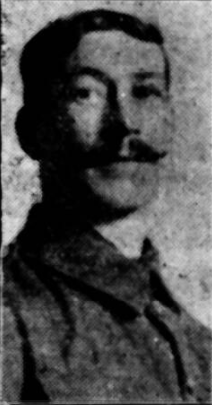
Lance Corporal Harry Cheeseman

Lance Corporal Harry Cheeseman

Harry George Cheeseman was born in the summer of 1893, one of eleven children to Charles and Sarah Cheeseman. Charles was an innkeeper, and ran the now-closed Red Lion Inn in Angmering, West Sussex for more than twenty years.

Harry did not follow in his father’s footsteps when he left school. Instead, he moved in with his older sister and her family in Horsham, where he worked as a roundsman on his brother-in-law’s dairy farm.

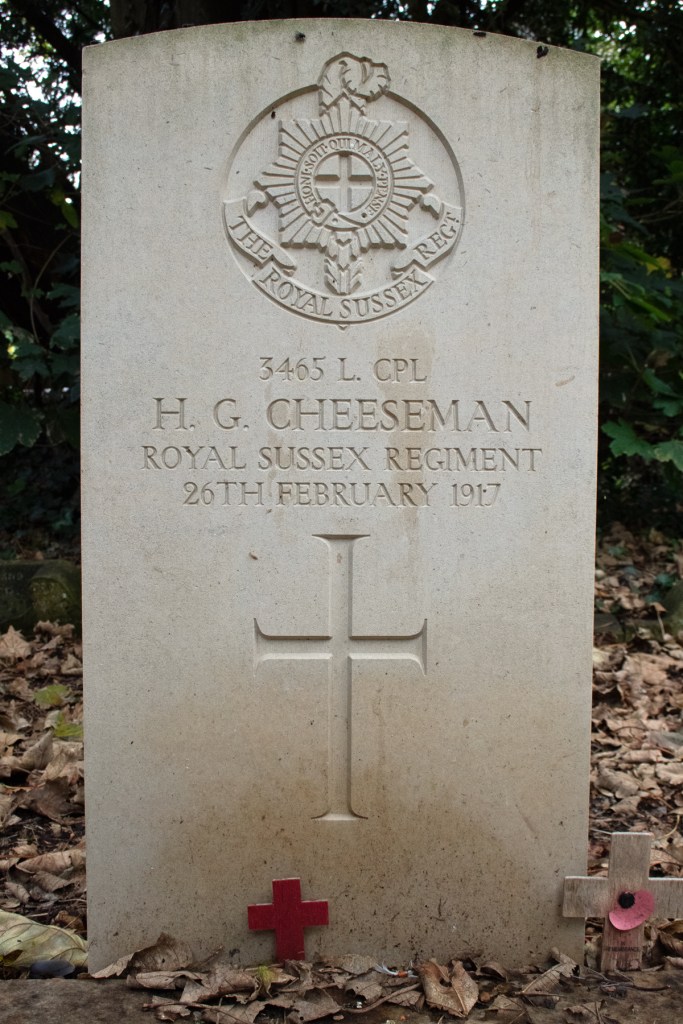
When war broke out, Harry was eager to enlist. He joined the Royal Sussex Regiment on 16th September 1914, and was assigned as a Private to the 9th (Service) Battalion.

Initially formed in Chichester, Private Cheeseman found himself moved to Portslade, then Shoreham, then Woking in Surrey, before eventually being sent to France at the beginning of September 1915. By this point, he had proved his worth and had been promoted to Lance Corporal.

Harry’s bravery shone through; in November 1915, while battle was raging, he brought an injured colleague into a field hospital and was about to rescue another when he himself was injured. His wound – a gun shot wound to the spine – was initially treated on site, but he was soon evacuated back to England.

Lance Corporal Cheeseman’s injuries proved to be life-changing. A later newspaper report stated that he had been “physically helpless” [Worthing Gazette: Wednesday 5th March 1917], so paralysis seems likely. Awarded the British and Victory Medals and the 1914 Star, he was medically discharged from the army in May 1916.

Harry returned home, but never really recovered from his injuries. He died on 26th February 1917, at the tender age of 23 years old. His funeral “which was of a most impressive character, was witnessed by five hundred people” [Worthing Gazette: Wednesday 5th March 1917], and he was laid to rest in the graveyard of St Margaret’s Church in his home town.


Stoker 1st Class Patrick Tynan

Stoker 1st Class Patrick Tynan

Patrick Tynan was born in Roscrea, Southern Ireland, on 9th June 1893. He was the eldest of four children to John and Anne Tynan, but sadly, there is no further information available for his early years.

Patrick’s story really picks up on 14th December 1915, when he joined the Royal Engineers as a Private. His service record states that he was living in Bangor, Gwynedd, and that he was a stall keeper at a fairground – a subsequent document noted his trade as a showman. He was noted to be 5ft 8ins (1.72m) tall, weighed 151lbs (68.5kg), and had numerous scars on his back.

Private Tynan did not stay in the UK for long. Assigned the new role of Driver, he was attached to the GHQ Signal Company and sailed from Devonport on 30th June 1916, bound for Mesopotamia. Arriving in Margil – the port connected to Basra – he was based here for more than a year, before moving north to Baghdad.

By this time, Patrick had risen to the rank of Lance Corporal, and was obviously a trustworthy member of the company. Towards the end of 1917, he had again been promoted, this time to Corporal.

During his time in modern day Iraq, Patrick was admitted to hospital a handful of times; there is little information on the conditions he suffered, but none appear to have been life threatening, as they were only for short periods. It’s also interesting to find that his service records confirm a month’s leave in May 1918, spent in India.

When the war came to a close, Corporal Tynan was still in the Middle East. Ready to be demobbed, his company moved to India and boarded the SS Chupra in Calcutta on 26th February 1919, bound for home.

Back in the UK, however, Patrick was not ready to give up the formal military life. Having returned to Gillingham in Kent, where the Royal Engineers were based, he initially found work as a tram conductor, but soon signed up for a five year term with the Royal Navy as a stoker.

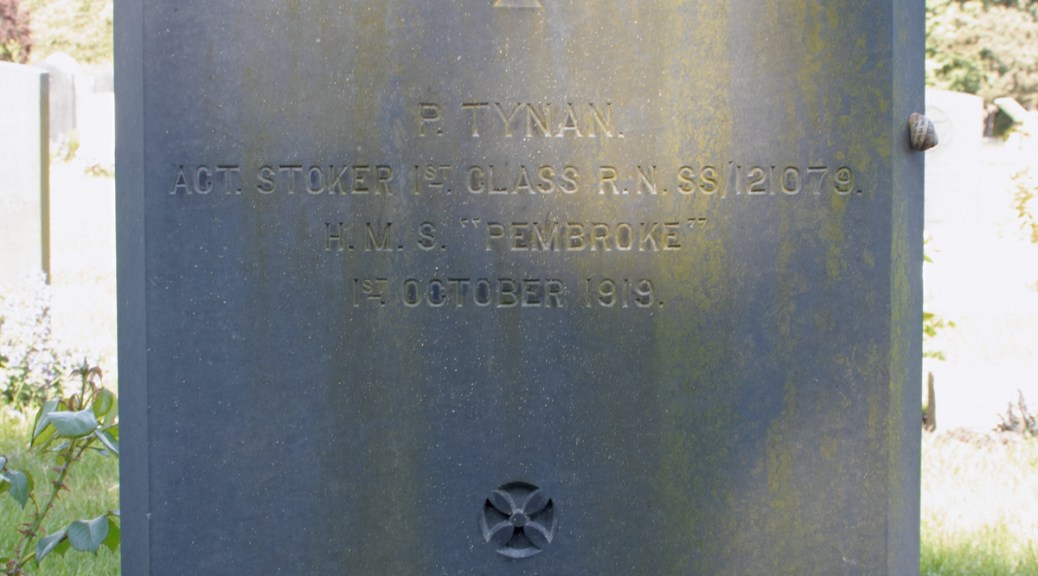
He was based on HMS Pembroke II, the shore-based establishment at Chatham Dockyard, but sadly, his time in the navy was to be a short one. Admitted to the Royal Naval Hospital in the town with pneumonia, he passed away form the condition on 1st October 1919. He was just 26 years old.

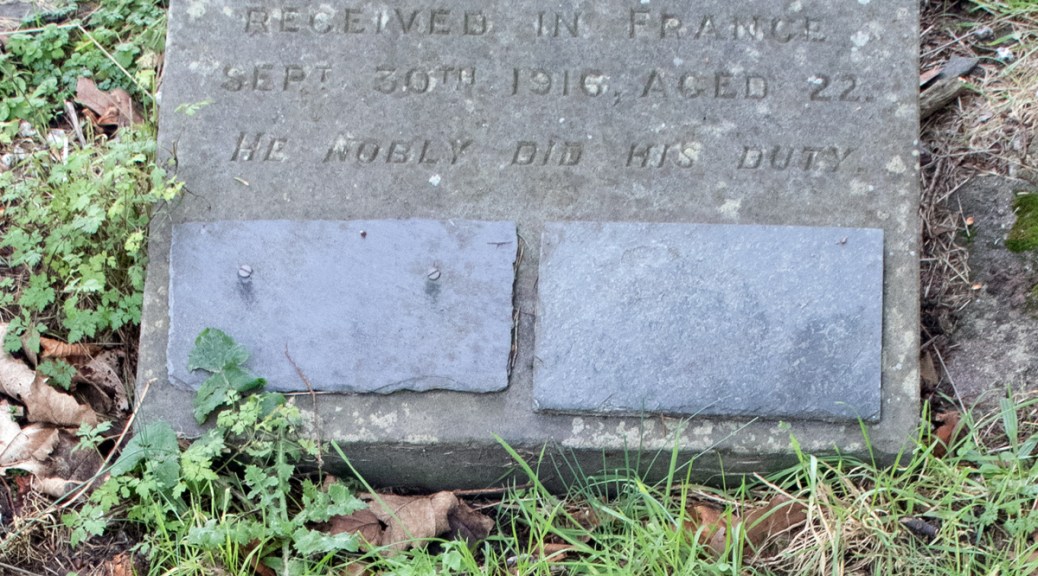
Patrick Tynan was laid to rest in the Woodlands Cemetery in Gillingham. He had a short but full life, something his modest gravestone doesn’t begin to hint at.


Sergeant Herbert Rendell

Sergeant Herbert Rendell

Herbert George Rendell was born in the summer of 1886, the oldest of six children to George and Catherine Rendell. George was a twine maker from West Coker, near Yeovil in Somerset, and it was in this village that he and Catherine raised their young family.

While he initially found work as a labourer when he left school, the lure of a better life and career proved too much for Herbert and, in June 1905, he enlisted in the Royal Engineers as a Sapper. He spent three years spent on home soil, working hard and earning a Good Conduct medal for his service. During his tour of duty, he contracted pneumonia, spending five weeks in hospital in Chatham, Kent, over Christmas 1905, but fully recovering.

In September 1908, Herbert was sent to Singapore for a three-year tour of duty with the 21st Company. His body was not accustomed to the different environment, and he was hospitalised three times for malaria and myalgia, as well as two bouts of gonorrhoea in 1908 and 1910.

In December 1911, Sapper Rendell returned home, where he served for a further three years before war broke out in the summer of 1914. Having been promoted to Lance Corporal, and after a short bout in hospital following a reaction to his cowpox vaccination, he was sent to Egypt.

Assigned to the 359th Water Company, he would have been charged with constructing and maintaining the supply pipes to and from the Front Line and for his work was soon promoted to Corporal.

In the spring of 1918, the now Sergeant Rendell was transferred to the 357th Water Company, and found himself in Palestine, where he stayed until the end of the war. He came home on leave in April 1919, and it was here that, once again, he contracted pneumonia.

Sadly, Sergeant Rendell was not to recover from the lung condition for a second time; he passed away at his parents’ home on 9th April 1919, at the age of 32 years old.

Herbert George Rendell was laid to rest in Yeovil Cemetery, not far from the village where he was born.


Lance Corporal Thomas Denmead

Lance Corporal Thomas Denmead

Thomas John Ambrose Denmead – better known as Jack – was born in Yeovil in the summer of 1896. The oldest of seven children, his parents were Thomas and Elizabeth Denmead. Thomas was a glover – the key industry in the Somerset town – who raised his young family in the middle of the town.

When he left school, Jack found work as a clerk at Petters’ Ltd, a local engine manufacturer and iron foundry. War was on the horizon, though, and he enlisted in the spring of 1916.

Jack joined the Gloucestershire Regiment, and was assigned to the 2nd/4th (City of Bristol) Battalion. He was sent to France in May 1916, and was involved in the Attack at Fromelles, part of the larger Somme offensive. He had started as a Private, but rose to the rank of Lance Corporal.

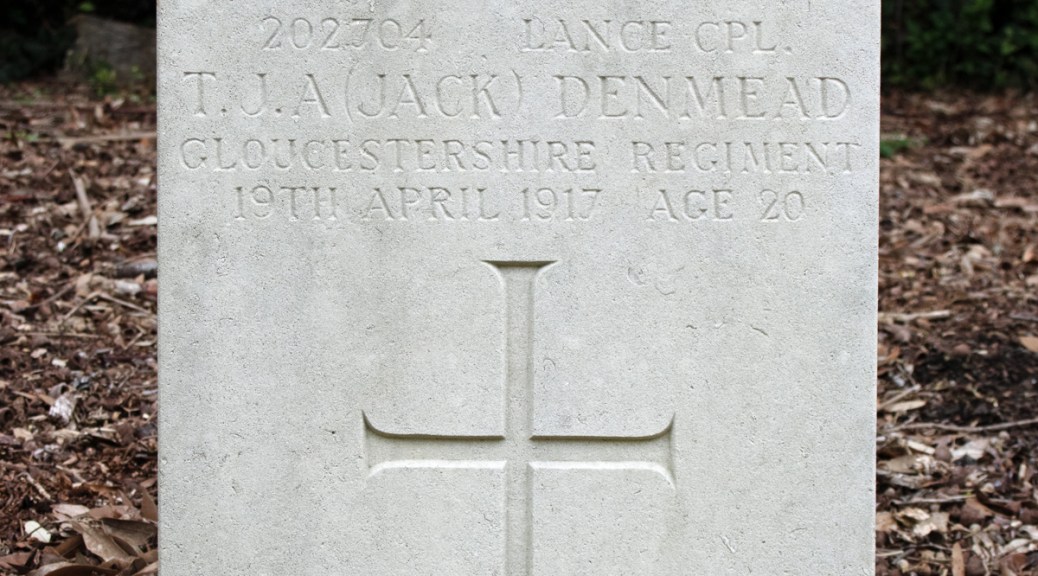
Towards the end of 1916, Jack fell ill. He was medically evacuated to the UK, and was admitted to the Royal General Infirmary in Paisley, Scotland. His condition was serious enough to need an operation, but the Lance Corporal sadly passed away not long after this treatment. He was just 20 years of age.

Jack’s body was brought back to Somerset for burial. He was laid to rest in the cemetery in his home town, Yeovil.


Serjeant Albert Romain

Serjeant Albert Romain

Albert William Romain was born in Gillingham, Kent, at the start of 1888, the middle of three children to Henry and Florence. Henry was a Sergeant in the Royal Engineers and is seemed inevitable that his son would follow suit.

Henry died in 1896, and was buried in the Grange Road Cemetery, Gillingham (now a public park). The 1901 census recorded Albert as a pupil at the Duke of York’s Royal Military Asylum in Chelsea. This was, in fact, a school for the children of soldiers, and it is likely that Albert was sent there to be educated when his father died.

The Royal Engineers obviously proved too great a lure for the young Albert. While full details of his service are not available, he had definitely enlisted early on, and was listed as a Lance Corporal in the Tempe barracks in Bloemfontein, South Africa in the 1911 census.

When war broke out, he was called back to Europe, as was on the Western Front by November 1914. Little further information on Albert is available – during the conflict he was assigned to D Company of the Royal Engineers, but the end of the war, he had become a Sergeant in the 1st Reserve Battalion.

In November 1918, back on UK soil, he was admitted to the Fort Pitt Military Hospital in Chatham, Kent. His condition is unclear, but sadly it was to be one to which he would succumb. Sergeant Romain died on 8th November 1918; he was just 30 years old.

Albert William Romain was laid to rest with his father in the Grange Road Cemetery. He is commemorated in the Woodlands Cemetery in his home town of Gillingham, Kent.


Company Sergeant Major Hugh Caston

Company Sergeant Major Hugh Caston

Hugh Charles Caston was born in Chelsea in the summer of 1881, the oldest of three children to Emily and Hugh Caston. Hugh Sr died in the late 1880, leaving Emily to raise the family on her own. She moved the family to Gillingham, Kent, to be near her family. She found work as a seamstress and took in boarders.

As the effective head of the family, Hugh obviously felt he had to earn a wage. On 1st August 1896, he enlisted in the Royal Engineers as a Bugler.

Hugh’s medical report shows he stood at 5ft 4.5ins (1.63m) tall and weighed 97lbs (44kg). He had a medium complexion, with brown eyes and brown hair. The report also gave his distinctive marks as being a scar on his forehead, a brown patch on his left buttock and that his eyebrows meet.

Initially too young for full active service, Hugh formally joined up on 1st June 1897. He spent more than five years on home soil, rising through the ranks from Sapper to Lance Corporal to 2nd Corporal. In May 1902, he was posted to Malta, returning home nearly two years later. Hugh’s promotions continued over the next decade, and, by the time war broke out, he had reached the rank of Company Sergeant Major.

By this point, Hugh had married, wedding Rochester woman Mary May Coast in September 1907. The couple went on to have two children, Hubert, who sadly died young, and Joan.

War came to Europe, and things took a turn for Company Sergeant Major Caston. He was admitted to Netley Hospital near Portsmouth, with mania:

Patient’s very restless, often gets ‘excited’ is thwarted in any way. Has a delusion that he is to be promoted to Major and that he possesses great wealth. He continually asks that his motor may be sent round to take him out, also that his tailor be sent for to rig him out. Stated this morning that he wished all the other patients be supplied with Egyptian cigarettes.

Medical Report on Hugh Caston, 20th January 1915

The medical officer went on to state that he did not consider that military service had in any contributed to the mania; he was dismissed from the army on medical grounds on 2nd February 1915, after nearly 20 years’ service.

Sadly, at this point Hugh’s trail goes cold. There is no documentation relating to his time after being discharged from the army and, tragically, after his death Mary was not granted a war pension, as he had served for less that six months during the First World War.

Hugh Charles Caston died on 18th June 1917, at the age of 36 years old. While the cause of his passing is lost to time, he was laid to rest in the Woodlands Cemetery in Gillingham, Kent.


Serjeant Major Percy Hawkins

Staff Serjeant Major Percy Hawkins

Percy Harry Hawkins was born in Waltham Green, London, in 1886. One of five children, all boys, his parents were Frederick and Elizabeth Hawkins. Frederick initially worked as a brewer’s collector – collecting rent from tenant pub managers on behalf of the brewery – before working as a tobacconist.

In July 1908, Percy married Gladys Parnell. Sadly, tragedy was to strike and, over the next couple of years both Elizabeth and Frederick passed away in 1909 and 1910 respectively.

By the time of the following year’s census, Percy and Gladys were boarding with a dispensing doctor (or GP), and his wife. Percy listed his occupation as a ‘traveller’, was probably employed as some kind of salesman.

Tragedy was to strike Percy again. Months after the couple had their first child in July 1911, Gladys also passed away, leaving him as a widower and single parent at just 26 years old.

From his later military documentation, it seems that Percy married again in August 1915, this time to a woman called Mildred, and, by September 1919, he had gone on to have three children in total; one boy and two girls.

When war broke out, Percy was quick to enlist. He joined up in Birmingham on 10th August 1914, and gave his profession as a commercial traveller. His records show that he was 28 years and 120 days old, stood 5ft 6ins (1.69m) tall and weighed 131lbs (59.5kg).

After initially joining the Royal Warwickshire Regiment, Private Hawkins was transferred to the Royal Army Service Corps, and was assigned to one of the supply companies.

Over the four years of the war, Percy served on home soil, and was promoted a number of times, rising from Private to Lance Corporal, Staff Sergeant to Quartermaster Staff Sergeant. In September 1917, he was again promoted, this time to Staff Sergeant Major, a position he held for the remainder of the conflict, and on into 1919, when he volunteered for an extra year’s service, rather than being demobbed.

In February 1920, Staff Serjeant Major Hawkins fell ill; he was admitted to the military hospital that had been set up in Brighton Pavilion, Sussex. The diagnosis was heart failure, and, sadly, it was to this that he was to succumb. He passed away on 20th February 1920, aged just 34 years old.

Percy’s family was, by this time, living down the coast in Worthing; his body was brought there for burial and he lies at rest in the Broadwater Cemetery in the town.


Lance Corporal Henry Greenfield

Lance Corporal Henry Greenfield

Henry James Greenfield was born in Brighton, Sussex, in July 1878, one of at least seven children to William and Anne Greenfield. Henry’s parents were from Worthing, who seem to have worked their way along the coast to Brighton by the mid-1870s, when his older brother George was born.

William was a bootmaker and, by the early 1880s, had brought his family back to Worthing, where they remained settled.

At this point, it is harder to pinpoint Henry’s life, as documentation becomes scarce and, with Greenfield being a common name in Sussex at the time, it is challenging to confirm that anything written relates to this specific Henry James Greenfield.

There is a 1901 census with a Henry James Greenfield from Brighton on it: this lists him as an Able Seaman aboard HMS Ramillies moored in Valetta, Malta. However, given that the Henry buried in Worthing served with the army, rather than the navy, it seems unlikely to be the same person (although not impossible).

The next document that can by specifically linked to the grave is Lance Corporal Greenfield’s entry on the Army Register of Soldier’s Effects. In addition to giving his rank, this expands on his service during the Great War.

He joined the Sherwood Foresters (Notts and Derby Regiment) at some point before July 1918, and was assigned to the 2nd Battalion. While there is no confirmation of where he fought, his battalion served on the Western Front for the duration of the conflict.

Henry survived the war, but was admitted to a hospital in Leith, near Edinburgh, where he passed away from ‘sickness’ on 31st December 1918. He was 36 years old.

The document stated that his effects were distributed to his six siblings; this suggests that William and Anne had both passed away by this point, and also indicates that Henry himself had not married.

Henry James Greenfield’s body was brought back to Worthing; he is buried at the Broadwater Cemetery to the north of the town.