Tag Archives: Northamptonshire

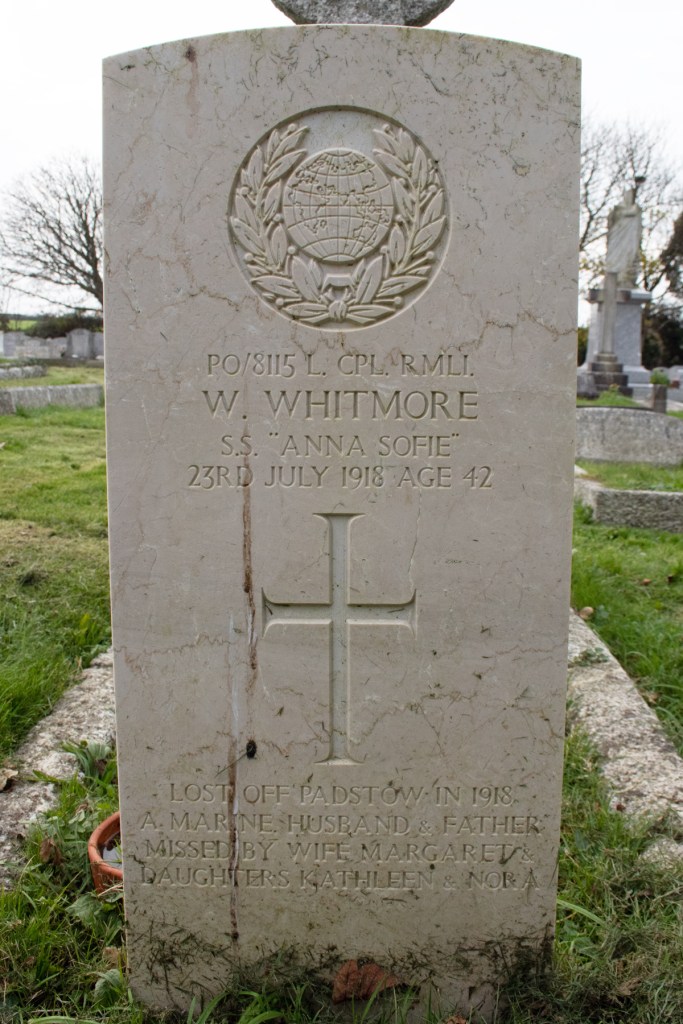
Lance Corporal William Whitmore

Lance Corporal William Whitmore

William Henry Whitmore was born in Stoke-on-Trent, Staffordshire, on 21st May 1875. One of nine children, his parents were William and Mary Whitmore. He was not the first of their sons to be called William – a brother born nine years previously was also called by that name, but he died when just a few months old.

William Sr was a journeyman joiner, and seems not to have played much of a part in his family’s life. The 1881 and 1891 census returns found Mary raising her children as the head of the household, and this seems to have paid a toll. By the time of the 1901 census, she was one of 150 patients at the North Staffordshire Infirmary in Stoke-on-Trent. She died in 1907, at the age of 67 years old.

William Jr, meanwhile, had been making a life for himself. On 28th August 1895, he enlisted in the Royal Marine Light Infantry, set on a career at sea. His service records confirm that he was 5ft 8ins (1.73m) tall, with brown hair, grey eyes and a fresh complexion. The document also highlights two tattoos on his left forearm, one of a crossed heart.

Private Whitmore was sent to Walmer in Kent for his initial training. He spent nine months on site, before moving to what would become his shore base, the Royal Naval Dockyard in Portsmouth. Over the twelve years of his contact, he would go on to serve on six ships, each time returning to the Hampshire port.

On 18th February 1904, William married Margaret Cook. She was the daughter of a farm labourer from Somerset, but the couple wed in the parish church of Eastry, near the Royal Marines base in Walmer.

William’s term of service came to an end in September 1907, and he was placed into the Royal Fleet Reserve. He and Margaret, together with daughter Kathleen, settled in Wellingborough, Northamptonshire. Their home was a small terraced cottage on Salisbury Road, close to the train station. William had found employment as a labourer in a blast furnace not far from home. A second child, daughter Nora, was born in 1910, and the family was complete.

Private Whitmore was called into service once more when war was declared. After initially returning to Portsmouth, he was assigned to the converted liner HMS Carmania, spending nearly two years on board. After a brief spell back on dry land, William found himself assigned to the steam ship SS Anna Sophie.

On 23rd July 1918, the ship was en route from Rouen to South Wales, when she was torpedoed the German submarine U-55 off Trevose Head, Cornwall. The Anna Sofie was sunk, and one member of the crew died. Others subsequently passed from their injuries, including the now Lance Corporal Whitmore. He was 43 years of age.

William Henry Whitmore’s body was recovered, but his family were unable to cover the cost of bringing him back to Northamptonshire for burial. Instead, he was laid to rest in Padstow Cemetery, in a shared grave with fellow crewman Gunner William Moore.


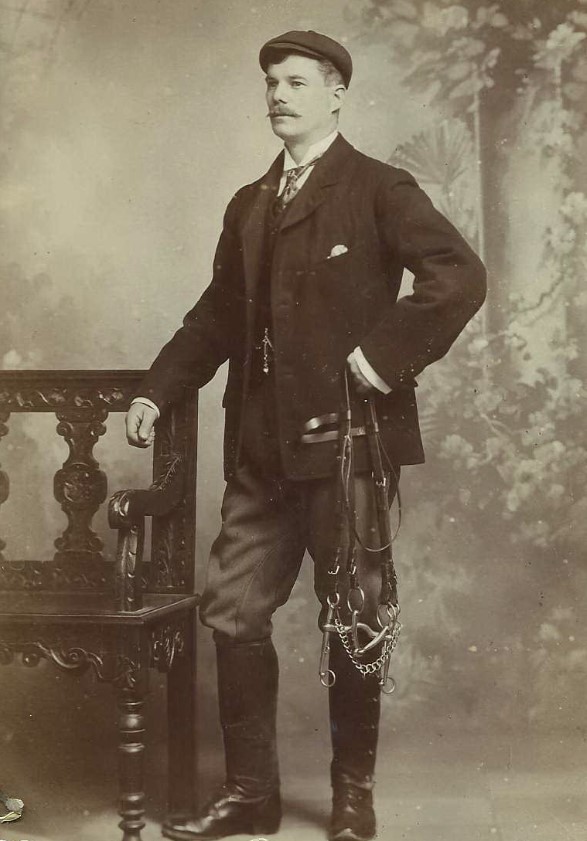
Lance Corporal William Whitmore
(from ancestry.co.uk)

Rifleman Reginald Murdin

Rifleman Reginald Murdin

Reginald John Murdin’s early life is one of contradictions. Born in 1899, his parents were George White and Lily Murdin, and he is recorded with both surnames in documents from the time. George was a iron ore labourer from Northamptonshire, and is was in Woodford, near Kettering, that the family were raised.

When he finished his schooling, Reginald followed George into iron ore and, by the time war broke out he was in the employ of the Islip Iron Company Ltd. Keen to play his part, Reginald enlisted in the King’s Royal Rifle Corps on 29th January 1916.

While it’s not possible to fully identify Rifleman Murdin’s service, he was certainly caught up on the Western Front by the autumn of 1918. It was here that he was injured by “a shell which burst about two yards from him, wounding him severely in the thigh.” [Midland Mail: Friday 15th November 1918]

Reginald was medically evacuated to Britain for treatment, and was admitted to the Bath War Hospital in Somerset. Sadly, his wounds were to prove to severe, and he passed away on 2nd November 1918: he was just 19 years of age.

Reginald John Murdin was laid to rest in the sweeping grounds of Bath’s Locksbrook Cemetery.


Rifleman Reginald Murdin
(from britishnewspaperarchive.co.uk)

Captain John Cooper

Captain John Cooper

John Bruce Cooper was born on 21st July 1869 in Croydon, Surrey. He was the oldest of eight children, all but one boys, to John and Maria Cooper. John Sr was a boot and shoe manufacturer whose business, by the time of the 1881 census, was employing around 600 people.

By 1901, the business was doing well. The family had moved to Northamptonshire, and were living at Delapré Abbey, on the outskirts of Northampton. They were now supported by fourteen servants living on site, while grooms, coachmen and gardeners were housed on the estate.

John Sr died in August 1906, while Maria passed away less than six months later. Their children, now aged between 25 and 37, went on to live their separate lives. Five of John Jr’s brothers remained in bootmaking, in Leicestershire, Northamptonshire and Surrey, while one of them, Philip, took holy orders. John, however, sought a different route.

In April 1907, John married Violet Mary Gordon in Kensington, London. She was the daughter of a general in the Indian Army, and had been born in Simla. The couple settled in a house in Basingstoke, Hampshire, and went on to have two children: Thomas and Richard. The 1911 census records the family residing in Daneshill Cottage, with two live-in domestics. By this point John was noted as being a dealer in motor cars.

When war broke out, John felt duty bound to serve his country. Little information about his military career remains documented, but a contemporary newspaper report of his funeral provides some indication of his service.

Captain Bruce Cooper… was formerly an officer of Territorial [Royal Army Medical Corps], being transport officer of the 2nd South-Western Mounted Brigade, and was stationed at Frome [Somerset]. Obtaining a commission in the [Army Service Corps], he was promoted captain, and was so proficient and zealous that he became Officer Commanding Vehicles at Bulford Camp, where he was held in the greatest esteem.

Bath Chronicle and Weekly Gazette: Saturday 27th November 1915

Captain Cooper fell ill in October 1915, and was suffering from phlebitis, or inflammation the veins. This was to prove fatal, and he passed away at the family home in Bath, Somerset, on 21st November 1915. He was 46 years of age.

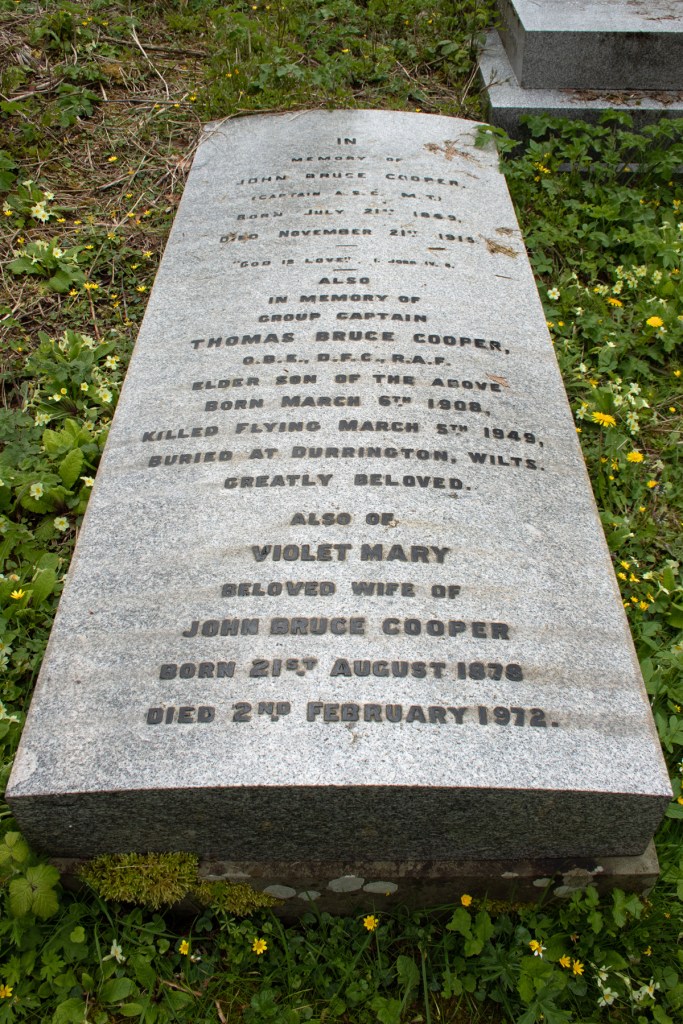
John Bruce Cooper was laid to rest in a family plot in the cemetery of Bath Abbey. His older son, Thomas was laid to rest with him, when he passed away in 1949. Violet was reunited with her husband and son when she was buried with them in 1972.


Captain John Cooper (from ancestry.co.uk)

Private Arthur French

Private Arthur French

Arthur John French was born on 3rd September 1889 in the Somerset village of Merriott. He was the youngest of three children to John and Annie French. John was a miller and baker in the village, and Arthur’s older brother Edward helped his father with the business. Arthur, however, followed a different path and, with Annie passing away in 1903, he had moved to London for work.

The 1911 census recorded Arthur boarding with his maternal aunt and uncle, who were both schoolteachers. He had found employment as a clerk in the head office of the National Telephone Company and shared the large terraced house with the couple, their son Alfred and their servant, Esther.

When war was declared, Arthur was in the first wave of those enlisting. He joined the Oxford & Bucks Light Infantry and, as a Private, was assigned to the 2nd/4th Battalion. Initially sent to Northampton for training, his troop soon came south again and, by April 1915, was based just outside Chelmsford, Essex.

Tightly-packed barracks, housing men from across the country soon became hotbeds for illness and disease, and Private French was not to be immune. He contracted meningitis, and was admitted to the 3rd London General Hospital in Wandsworth for treatment. Sadly he was to succumb to the condition, and he breathed his last on 16th April 1915, at the age of just 25 years old.

Arthur John French’s body was brought back to Somerset for burial. He was laid to rest in the graveyard of All Saints’ Church in his home village, Merriott.


Company Serjeant Major Henry Bird

Company Serjeant Major Henry Bird

Henry Sidney Bird was born on 2nd December 1884 in Penarth, Glamorgan. He was the second of two children to painter and glazier Frederick Bird and his wife Emma. Henry’s mother passed away when he was only eleven years old and, by the time of the 1901 census, he was boarding with a family in the town, and working as a domestic gardener.

The next census – in 1911 – found the family back together again. Henry’s brother Frederick Jr was the head of the household, and she and his family – wife, Eliza, and three children – shared their home with Henry and his father. Harry, by this time, was working as a ship’s fireman.

Little information remains about Henry’s military service. He joined up when war broke out, and records show that he had enlisted in the South Staffordshire Regiment by the start of 1916. Assigned to the 8th (Service) Battalion, it is likely that he soon found himself on the Front Line.

Henry’s bravery seems to have been without fault. He went on to reach the rank of Company Serjeant Major in his battalion and was awarded the Distinguished Service Medal. The citation confirmed this was for “conspicuous gallantry. When the enemy rushed an isolated trench he saved the situation by collecting bombs and superintending the erection of stops and barbed wire. During the whole operations he set a splendid example to his company.

Company Serjeant Major Bird’s battalion was caught up in the fighting at Ypres early in 1916 and, by the summer, was involved in the Battle of Albert. It was here that Henry was wounded, and he was quickly evacuated to Britain for medical treatment. Admitted to the General Hospital in Northampton, his wounds were to prove too severe, and he passed away from them on 18th July 1916. He was just 31 years of age.

Henry Sidney Bird’s body was brought back to Wales for burial: he was laid to rest in the graveyard of St Augustine’s Church in his home town of Penarth.


Private William Diamond

Private William Diamond

William Diamond was born in around 1888, although documentation relating to his life are tantalisingly absent. From what does remain, the following can be identified.

William was one of ten children, whose mother was Maryann (or Mary Ann) Diamond. His father had passed away by the time of the 1911 census, by which point the Maryann was living with six of her children, including William, in the village of Litton, on the north side of the Somerset Mendips.

When war broke out, William enlisted, and was assigned to the 15th Battalion of the Hampshire Regiment. Again, there is little documentation to confirm his military service; sadly, the next time Private Diamond appears in the records is to confirm his passing.

The local newspaper reported on his funeral:

The funeral took place on Sunday afternoon, at Litton, his native place, of Private W Diamond, 28 [sic], late of the Hampshire Regiment, who died in hospital in Northampton after a serious illness, after serving some seven months at the front.

Among the chief mourners was a younger brother in khaki (an elder one is now serving in India) and several officers of the AOF, of which deceased was a member.

Shepton Mallet Journal: Friday 24th August 1917

Private William Diamond passed away on 15th August 1917, at the age of 29 years old. He lies at rest in the churchyard of St Mary the Virgin, in Litton, Somerset.


Artificer William Brighton

Artificer William Brighton

William Brighton was born on 13th August 1877 in Peterborough, Northamptonshire. Sadly, details of his early life are lost to time, so his parents’ names, and details of any siblings are a mystery.

William chose a military life early on; he enlisted in the Royal Navy in October 1899 for twelve years’ service. Working as an Engine Room Artificer, he was an engine fitter and repairer on a number of vessels in his time, including the battleship HMS Repulse and the cruisers HMS Andromache and Scylla.

William married Lily Franklin in the autumn of 1904, and the couple went on to have three children; Mona, Lily and John. With William away at sea a lot of the time, Lily set up home in Gillingham, Kent, close to the shore facility – HMS Pembroke – where her husband was based.

The uncertainty around potential conflict meant that William extended his service when it initially came to an end in November 1911. He continued to serve on a number of vessels during the war and was based on a ship off the Scottish coast when he fell ill in May 1918.

William was transferred to the US Hospital in Strathpeffer, near Inverness, suffering from an abdominal aneurysm. Sadly the treatment did not work, and he passed away on 26th May 1918. He was 40 years old.

William Brighton lies at rest in the Woodlands Cemetery in Gillingham, Kent.


William Brighton (from ancestry.co.uk)