Tag Archives: Private

Private Frederick Finch

Private Frederick Finch

Frederick Henry Harvey Finch was born in 1876 in the Sussex village of Ripe. He was one of eleven children, born to James and Eliza Finch. James was an agricultural labourer, a trade into which most of his children, Frederick included, followed.

In the spring of 1900, Frederick married Ellen Maloney. She had been born in Fareham, Hampshire, and, by the time of the 1891 census, ages just nine years old, was recorded in the Union Workhouse in Portsea. The couple wed in Hailsham, and went on to have three children, Frederick Jr, Hilda and Herbert.

By now, Frederick had moved on from farm labouring, and was working as a groom and a gardener. Within ten years, however, he had moved the family to the coast and the village of Angmering; he had found new employment, working as a carter for a coal merchant.

Frederick continued in this line of work as war broke out, but was one of the first to join the village’s contingent of the Voluntary Training Corps. He seemed to be content with this and at the start of 1917, he enlisted in the armed forces, joining the Army Veterinary Corps.

Private Finch was sent to Woolwich for training, but within a matter of weeks fell ill. Admitted to the Royal Herbert Hospital, he passed away on 24th January 1917, at the age of 40. No specific cause of death is recorded, but a local newspaper report of his funeral suggests, rather disingenuously, that “his health, which was never very robust, proved unequal to the strain of Army life”. [Worthing Gazette: Wednesday 7th February 1917]

Frederick Henry Harvey Finch was brought back to Angmering for burial He lies at rest in the graveyard of St Margaret’s Church in the village.
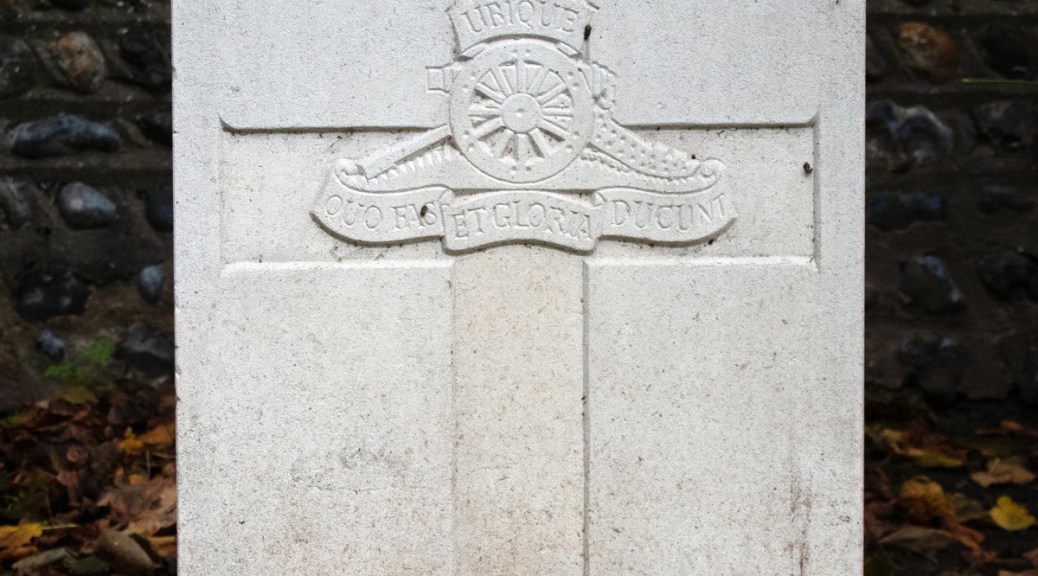

Gunner Percy Gast

Rustington

Percy Cyril Edward Gast was born in the West Sussex village of Nutbourne in 1889. His parents were William and Eliza Gast and he was one of sixteen children, seven of whom survived.

William was an agricultural labourer, and farming was the line of work the whole family went into; by the time of the 1911 census, they had moved to Rustington, near Worthing, where Percy was working as a cowman.

When war broke out, Percy enlisted, joining the Royal Garrison Artillery. His skillset soon identified, he was transferred over to the 696th Agricultural Company of the Labour Corps.

While full details of his time in the army are not readily available, Private Gast served his time on home soil. Towards the end of the war he contracted influenza and pneumonia and was admitted to the Mile End Military Hospital in Newham, East London.

Sadly, the lung conditions were to prove his undoing; Private Gast passed away on 20th November 1918, at the age of just 29 years old.

Percy Cyril Edward Gast’s body was brought back to Rustington for burial. He lies at rest in the graveyard of St Peter and St Paul’s Church in the Sussex village.


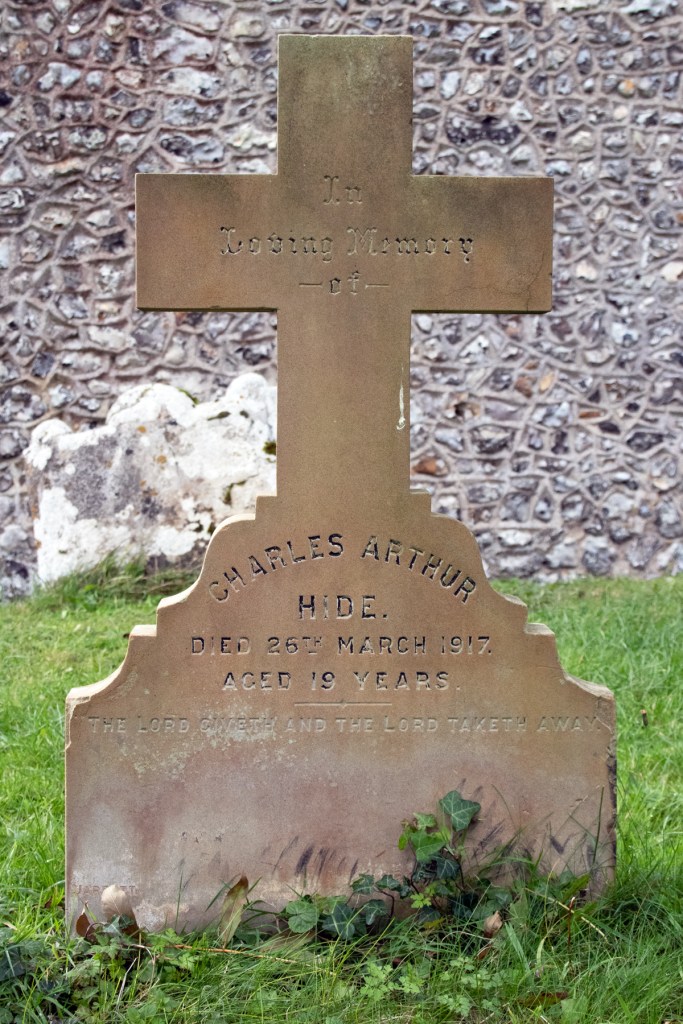
Private Charles Hide

Private Charles Hide

Charles Arthur Hide was born on 14th July 1897 and was the son of Ellen Edith Hide. The 1901 census found Charles living with his mother and her parents in the West Sussex village of Clapham. When Ellen’s father James died in 1909, local hurdle maker Alfred Daniels took her, Charles and her mother in as lodgers. Ellen subsequently married Alfred in 1916.

Charles, by this time, had left school and found employment with the railways. He started work on 22nd April 1913, earning 14s per week (around £55 a week in today’s money) as a porter at the station in Hove.

When war broke out, however, Charles felt the need to do his duty. He resigned from his job on 13th November 1914, and enlisted in the Royal Sussex Regiment as a Private. Charles was not alone in this: the employment records for Hove Station show that a number of other porters also handed in their notice around the same time.

Assigned to the 11th (Service) Battalion (also known as the 1st South Downs), Private Hide was initially based near Bexhill. His troop was then moved on, first to Maidstone in Kent, then to Aldershot, Hampshire. Whilst the battalion as a whole were shipped to France in 1916, there is no evidence that Charles went with them, and it seems that he may have served his time on home soil. Wherever he was based, he was awarded the Victory and British Medals for his time in the army.

At this point, details of Private Hide’s life become sketchy. He is only mentioned in one further document – the Army Register of Soldiers’ Effects – which confirms that he passed away at a military hospital in Epsom, Surrey, on 26th March 1917, although no cause is given. He was just 19 years of age.

Charles Arthur Hide’s body was brought back to Sussex for burial. He lies at rest in the quiet graveyard of St Mary the Virgin Church in his home village of Clapham.


Rifleman Arthur Langdon

Rifleman Arthur Langdon

Arthur William Langdon was born on 23rd December 1882, the son of Rose Langdon, from the Somerset village of Chiselborough. While Arthur’s father is lost to time, Rose married Frederick Hockey in 1886, and the couple went on to have three children – half-siblings to Arthur.

Arthur was destined for a life of adventure, and in 1902, at the age of 19, enlisted as a Rifleman in the King’s Royal Rifles, a career that was to last more than a decade.

On 13th April 1903, Arthur married Florence Beatrice Druce, who was also from Chiselborough. Noticeably absent from the marriage certificate was the name of the groom’s father; he was simply marked as ‘unknown’. The newlyweds would go on to have a son, also called Arthur, the following year.

Rifleman Langdon was soon destined for service overseas, however. After 18 months in South Africa, he returned to England for a year. He was sent to India for four years; it is likely that Florence went with him, or at least that Arthur returned home on leave during this time, as two further children – Henry and Reginald – were born in 1907 and the summer of 1910 respectively.

Arthur returned to England in February 1910, and remained on reserve home service – supplementing his income by working as a gardener – until the outbreak of the First World War. During this time he and Florence had two further children, Frederick, born in 1912, and Ivy, born just a month before war broke out.

With the start of the conflict, Rifleman Langdon was send to France as part of the British Expeditionary Force. After five months on the Western Front, he had a brief respite back in England, before being shipped back to France in May 1915, and on to Salonika in the Balkans that November.

Rifleman Langdon did not stay in Greece for long, however. Within a couple of months he was back in England and on 14th April 1916, he was discharged from the army on medical grounds. Sadly, details of the cause of his exit from the army are not detailed.

Arthur was not one to rest on his laurels, however, and continued work as a gardener and labourer. Military life wasn’t far away, though, and in June 1918, he enlisted again, this time joining the Royal Air Force as a Private.

Initially based at Long Sutton, Arthur moved to Edinburgh Castle in March 1919. Full details of his time there are lost, but he remained in Scotland until being demobbed at the end of April 1920.

Details of Arthur’s life back on civvy street are not available. All that can be confirmed is that he passed away on 28th February 1921, at the age of 38 years old. Arthur William Langdon was laid to rest in the graveyard of St Margaret’s Church in the Somerset village of Middle Chinnock, where his widow now lived.


Arthur William Langdon
(from ancestry.co.uk)

Private Edward Rendell

Private Edward Rendell

Edward Rendell was born in the Dorset town of Corfe Castle in 1894. His parents were Edward and Sophie Rendell, and he had two siblings, William and Agnes.

Sadly, little information on Edward Jr’s early life is available. His father was a farmer – or at least an agricultural labourer – and this is the line of work his son went into.

When war broke out, Edward Jr was quick to play a part, enlisting within a fortnight of hostilities being declared. He joined the 1st Battalion of the Dorsetshire Regiment as a Private and, after initial training, was sent out to the Western Front by March 1915.

Private Rendell’s battalion was involved in the fighting at Ypres and, on 19th April 1915, he was injured, receiving a gun shot wound to his left arm. Initially treated in the field, he was later transferred to a hospital in Boulogne, before being evacuated back to England to recover.

Reunited with his regiment, Edward was then shipped out to Gallipoli, arriving there in September 1915. While he is likely to have been involved in the fighting in Turkey, he did end up in hospital, but was suffering from influenza.

A couple of weeks later, he is recorded as being admitted to a hospital in Malta, although whether this was also because of the lung condition is not clear. Either way, Private Rendell was back in England by mid-December 1915, remaining in the country for six months.

In March 1916, he again returned to the fray and was posted back to the Western Front. Private Rendell spent a couple of months in battle until, on 21st June 1916, he received a gunshot and shrapnel wound to his thigh. The injury was serious enough for him to be medically evacuated back to England, and he was admitted to the Voluntary Aid Detachment Hospital at Norton-sub-Hamdon in Somerset.

Sadly, while his treatment may have bought Private Rendell some time, it seems that his wounds were too severe; he passed away on 30th July 1916 at the age of just 22 years old.

By this time both of Edward’s parents were dead; his next of kin was his sister, Agnes. While she was still living in Dorset, Edward was laid to rest in St Mary’s Churchyard in Norton-sub-Hamdon.


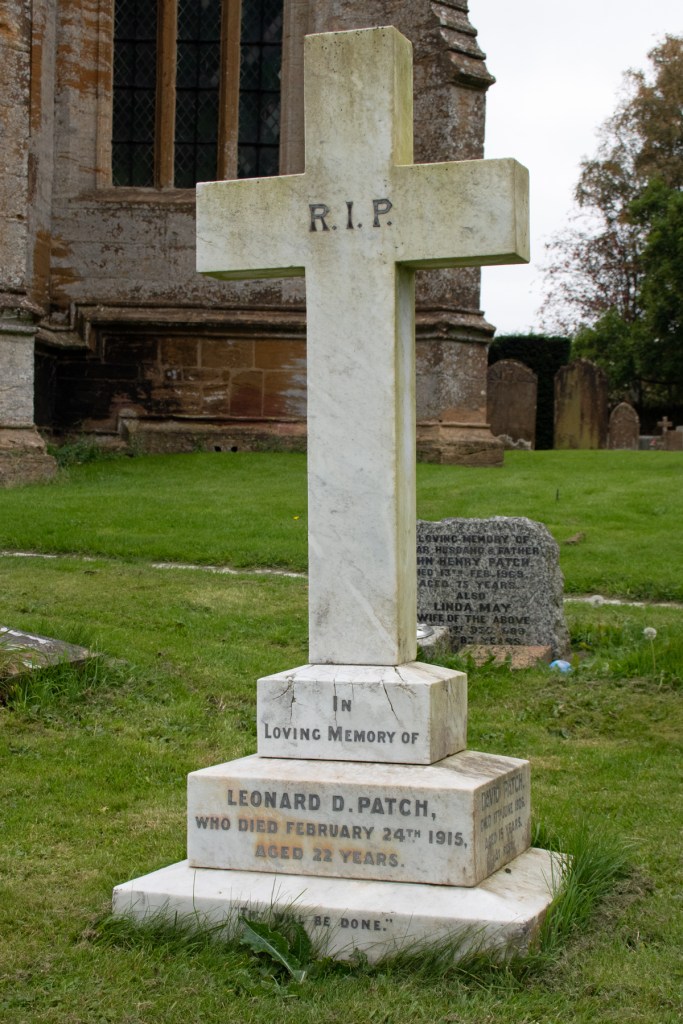
Private Leonard Patch

Private Leonard Patch

Leonard David Patch was born on 22nd October 1892, the oldest of four children to David and Fanny Patch from Norton-sub-Hamdon in Somerset. David was a stone mason, but when his eldest son left school, he found work as a carpenter.

When war came to Europe, Leonard was one of the first from the village to volunteer. Given the small size of Norton-sub-Hamdon, it seems likely that he would have done so with friends; many of the Pals Battalions were formed like this.

Leonard joined the Somerset Light Infantry as a Private, and was assigned to the 7th Battalion. He was sent to Woking, Surrey, for training and it was while he was billeted there that he contracted measles. Moved to the Military Isolation Hospital in Aldershot, he developed pneumonia, and passed away from the lung condition on 25th February 1915. He was just 22 years of age, and had seen no military action.

Private Patch’s body was brought back to his home village, where he was laid to rest in the graveyard of St Mary’s Church, where he had been baptised two decades before.


Of Leonard’s brothers, two saw active service.

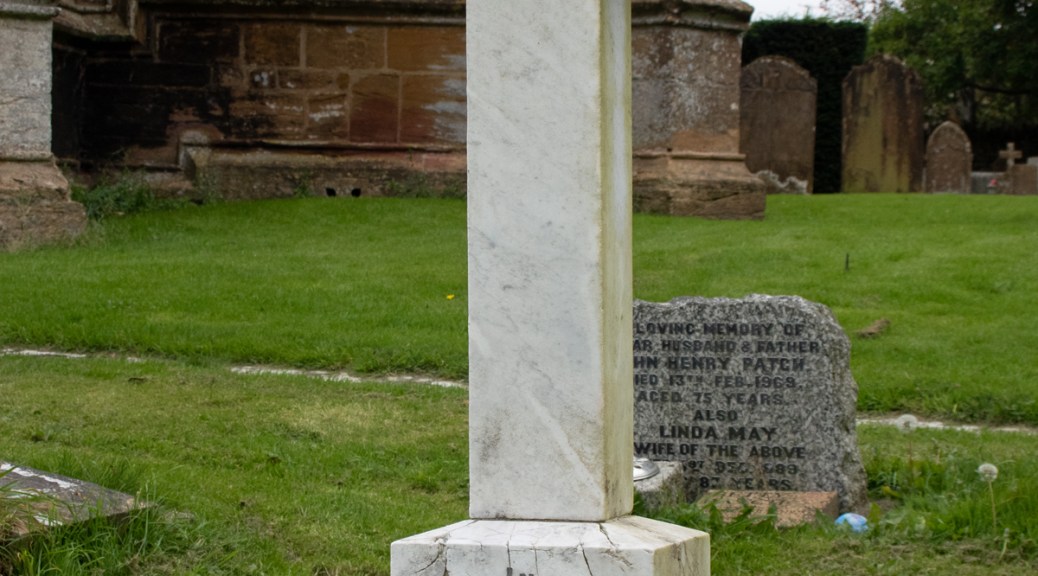
John Henry Patch, the second oldest of the siblings, served in the Royal Engineers, enlisting just ten months after his brother had died. He survived the war, married Linda Turner in Yeovil and went on to have a son, Norman. John passed away in February 1969, a few days after his 75th birthday.

Edward Lionel Patch – the third brother – served with the Devonshire Regiment. He too survived the war, marrying Honor Brown in 1923; they also had a son, called David. Edward passed away in Yeovil in 1966, aged 70 years old.

The youngest of the four brothers, Clarence William Patch, was born in 1899 and was lucky enough not to have seen military service. He married Emily Brown in 1924 and the couple had a daughter, Emmie. Sadly, she passed away as a babe-in-arms, and Emily was to follow soon after. In 1931, Clarence married again, this time to Emily Dyer; they went on to have a son, Douglas Leonard. Clarence passed away in 1945 at the age of just 46 years old.


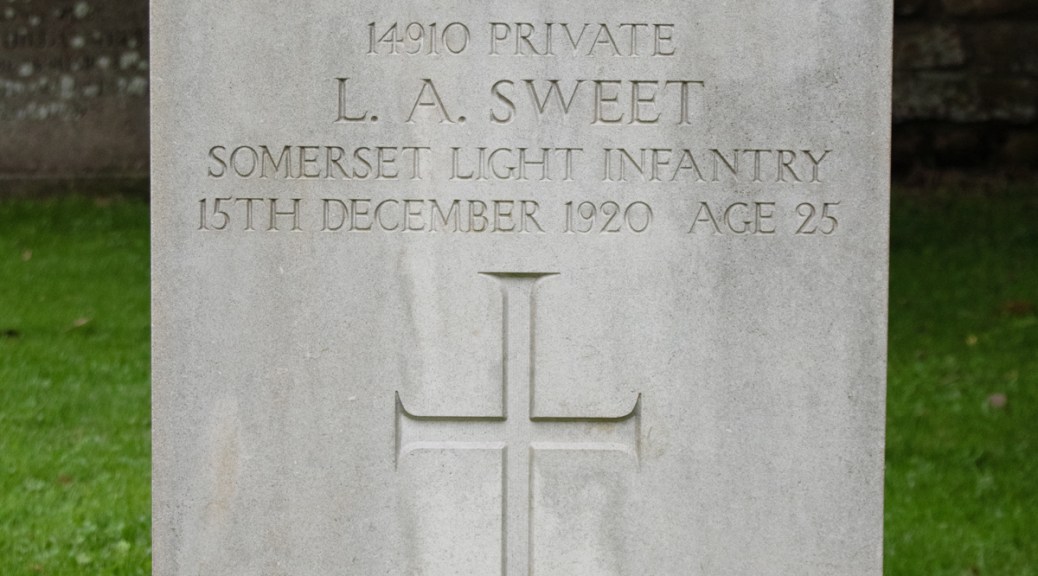
Private Lawrence Sweet

Private Lawrence Sweet

Lawrence Allen Sweet was born on 28th May 1895, one of fourteen children to Thomas and Caroline Sweet. Thomas was a farm labourer from Somerset, and the family were raised in the village of Norton-sub-Hamdon, near Yeovil.

Lawrence found work on the farm – the 1911 census shows him living with his now-widowed mother, where he was employed as an ‘improver to poultry house and building’. Three of his older brothers were also living there, and all were employed in farm work.

War was coming to Europe, and Lawrence played his part. Full details of his military service no longer remain, but those that remain confirm that he enlisted in the Somerset Light Infantry in the spring of 1915, and was assigned as a Private to the 6th (Service) Battalion of the Somerset Light Infantry.

Sent to France on 21st May, Private Sweet saw action on the Western Front. His regiment was involved in the Battles of the Somme, Arras and Ypres and he earned the Victory and British Medals and the 1915 Star for his service.

Towards the end of 1917, Lawrence contracted pleurisy; invalided home, he was ultimately discharged from the army on medical grounds the following January.

At this point, Private Sweet’s trail goes cold. The next document confirms that he passed away on 15th December 1920, at the age of 25 years old. No cause of death is evident, but is seems likely to have been connected to his previous lung condition.

Lawrence Allen Sweet was laid to rest in the graveyard of St Mary’s Church in his home village of Norton-sub-Hamdon.


Lawrence Sweet1
Lawrence Allen Sweet
(from ancestry.co.uk)

Private William Eglon

Private William Eglon

William Ernest Eglon (also known as Ernest William Eglon) was born in the Somerset village of Stoke-under-Ham (or Stoke-sub-Hamdon), in the spring of 1898. One of five children, his parents were stonemason Arthur Eglon and his glovemaker wife Sarah Elizabeth Eglon (who was better known as Bessie).

Unfortunately, little information on William’s early life remains documented. When war broke out, he was working at the Co-operative Bakery in the village. He was keen to do his bit, however, and enlisted in the Royal Army Service Corps as a Private not long after his eighteenth birthday.

Private Eglon was sent to serve in Essex, working as a baker in the Supply Section there. Within a couple of weeks of arriving, however, he was admitted to the Field Hospital in Chelmsford. He was suffering from an ear infection, and this turned out to be significant enough for him to be transferred to the Horton County of London War Hospital in Epsom.

William developed an abscess in the temporo sphenoidal region of his skull (in front of his right ear), which was operated on on the 27th May 1917. By this time meningitis had set in and, despite a second operation just over a week later, the conditions took hold.

Private Eglon passed away at 9:55am on 11th June 1917. He was just 19 years of age.

William Ernest Eglon’s body was brought back to Stoke-under-Ham for burial. He lies at rest in the family plot in the graveyard of St Mary’s Church in the village.


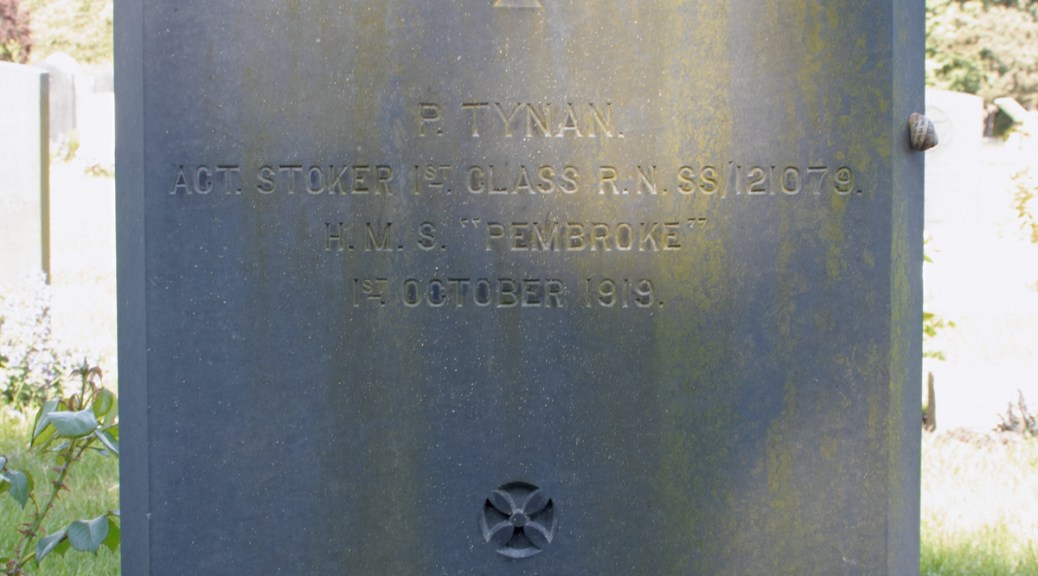
Stoker 1st Class Patrick Tynan

Stoker 1st Class Patrick Tynan

Patrick Tynan was born in Roscrea, Southern Ireland, on 9th June 1893. He was the eldest of four children to John and Anne Tynan, but sadly, there is no further information available for his early years.

Patrick’s story really picks up on 14th December 1915, when he joined the Royal Engineers as a Private. His service record states that he was living in Bangor, Gwynedd, and that he was a stall keeper at a fairground – a subsequent document noted his trade as a showman. He was noted to be 5ft 8ins (1.72m) tall, weighed 151lbs (68.5kg), and had numerous scars on his back.

Private Tynan did not stay in the UK for long. Assigned the new role of Driver, he was attached to the GHQ Signal Company and sailed from Devonport on 30th June 1916, bound for Mesopotamia. Arriving in Margil – the port connected to Basra – he was based here for more than a year, before moving north to Baghdad.

By this time, Patrick had risen to the rank of Lance Corporal, and was obviously a trustworthy member of the company. Towards the end of 1917, he had again been promoted, this time to Corporal.

During his time in modern day Iraq, Patrick was admitted to hospital a handful of times; there is little information on the conditions he suffered, but none appear to have been life threatening, as they were only for short periods. It’s also interesting to find that his service records confirm a month’s leave in May 1918, spent in India.

When the war came to a close, Corporal Tynan was still in the Middle East. Ready to be demobbed, his company moved to India and boarded the SS Chupra in Calcutta on 26th February 1919, bound for home.

Back in the UK, however, Patrick was not ready to give up the formal military life. Having returned to Gillingham in Kent, where the Royal Engineers were based, he initially found work as a tram conductor, but soon signed up for a five year term with the Royal Navy as a stoker.

He was based on HMS Pembroke II, the shore-based establishment at Chatham Dockyard, but sadly, his time in the navy was to be a short one. Admitted to the Royal Naval Hospital in the town with pneumonia, he passed away form the condition on 1st October 1919. He was just 26 years old.

Patrick Tynan was laid to rest in the Woodlands Cemetery in Gillingham. He had a short but full life, something his modest gravestone doesn’t begin to hint at.


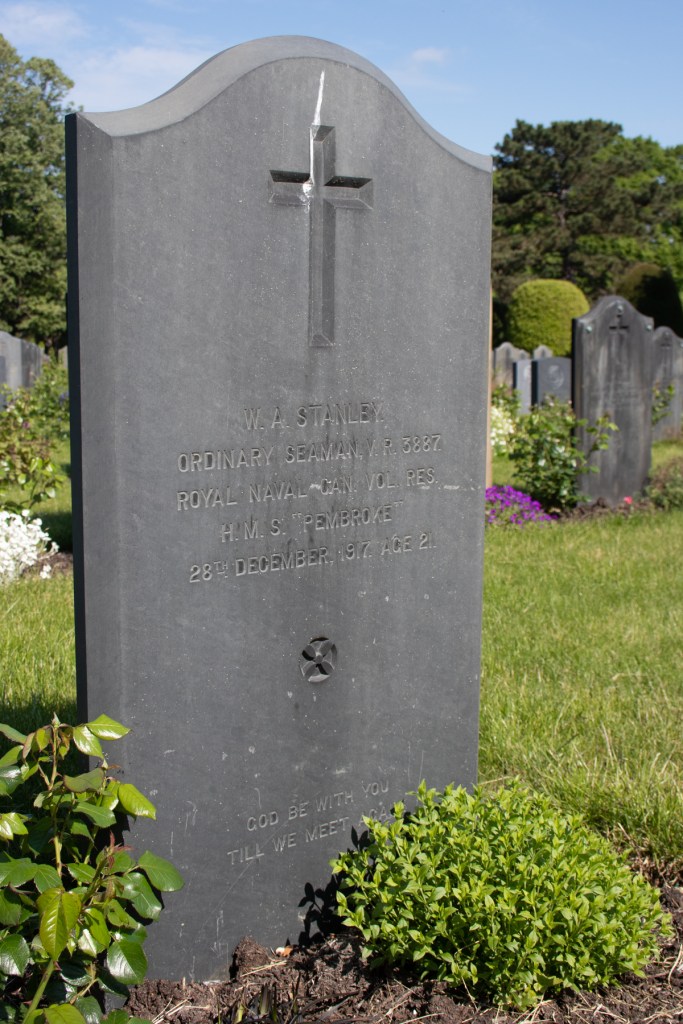
Ordinary Seaman William Stanley

Ordinary Seaman William Stanley

William Alfred Stanley is one of those names that seems destined to be lost to the annuls of time. Little documentation exists for his early life, but what there is gives some hints at a determined young man.

William was born in London to an Annie Stanley, who lived in the Kentish Town area of the city. At some point, he emigrated to Canada as, according to his wartime enlistment papers, he joined up in Ontario.

William enlisted in the Canadian Expeditionary Force on 5th November 1915, and was initially assigned to the 44th Battalion of the Canadian Infantry. His troop embarked for England in July 1916, and, on his arrival he was transferred to the 98th Battalion.

It was at this point that things too an unusual turn. With a few months, Private Stanley was again transferred, this time to the 19th Battalion, and then again to the 4th Reserve Battalion from where he was discharged from the Canadian Infantry in February 1917 for being underage.

At this point, William seems to have been undeterred.

The next record for him – in fact the memorial to him – is his headstone. This confirms that he had enlisted in the Royal Naval Canadian Voluntary Reserve as an Ordinary Seaman. He was based at HMS Pembroke, the shore establishment at Chatham Dockyard, but there is no other information for him.

Ordinary Seaman Stanley died on 28th December 1917, at the age of 21. (His previous military discharge might suggest that he was, in fact, younger than this, but that is conjecture on my part.) There is no record of a cause of death and nothing in contemporary newspapers to suggest anything out of the ordinary.

William Alfred Stanley was laid to rest in the Woodlands Cemetery in Gillingham, Kent, not far from the Naval Dockyard where he had been based.