Tag Archives: wounded

Corporal Francis Rich

Corporal Francis Rich

Francis Frederick Herbert Rich was born in Sherborne, Dorset, in the spring of 1896. The youngest of three children, his parents were Frederick and Alice Rich. Frederick was a grocer’s assistant, who had left Sherborne by the time of the 1901 census for Weston-super-Mare, Somerset, to find work. Alice remained with their children, but, by 1911, the family were back together and living in Bridgwater.

Frederick was now working as a grocer, and his two daughters were employed as pressers in a local blouse factory. Frederick, meanwhile, was apprenticed to an outfitter’s in the town.

War came to Europe, and Francis stepped up to service his King and Country. Full details of his time in the army are lost to time, but it is clear that he joined the Royal Engineers, and was attached to the 20th Territorial Force Depot. This was based in Pier Road, Gillingham, Kent, but it seems likely that he spent at least some time overseas.

A contemporary newspaper suggested that he worked as a dispatch rider for his battalion. The location of his passing – the Royal Victoria Hospital in Netley, near Southampton – would intimate that he had been brought there from the Western Front, having been wounded there.

Corporal Rich had been awarded the Military Medal before he passed, although again, the reason for this award is lost to the ages. He died, through causes unknown, on 16th May 1918, at the age of just 22 years old.

The body of Francis Frederick Herbert Rich was brought back to Somerset for burial. He was laid to rest in North Petherton Cemetery, not far from where his family still lived, on Taunton Road, Bridgwater.


Private Gilbert Hurford

Private Gilbert Hurford

Gilbert Henry Hurford was born in the spring of 1896, the second of five children to George and Elizabeth. George was a farmer from North Petherton, Somerset, but it was on Parsonage Farm, in nearby Kingston St Mary, that the family were raised.

Gilbert was helping his father on the farm when war broke out. At the time he was also a volunteer in the West Somerset Yeomanry, and in May 1916, he stepped up to play a full part in the conflict. His service records confirm that he was assigned to the 22nd (Service) Battalion of the Middlesex Regiment.

Private Hurford spent the first six months of his service on home soil, before being shipped off to Europe on 1st December 1916. He had not been in France for long when, on 10th February 1917, he was injured. His documents confirm this was a gun shot wound to his head, but, as he was treated on site, it thankfully appears not to have been too serious an injury.

Trouble struck a second time, however, on 4th September 1918, when Gilbert was injured again. This time his records confirm multiple gun shot wounds, and he was medically evacuated home for treatment. He was admitted to the 3rd Southern General Hospital in Oxford, and remained there for some three months.

This time, Private Hurford’s injuries proved too severe for his body to overcome. He passed away on 29th December 1918, at the age of just 22 years old.

Gilbert Henry Hurford’s body was brought back to Somerset for burial. He was laid to rest in the peaceful churchyard of St Mary’s Church, in his home village of Kingston St Mary.


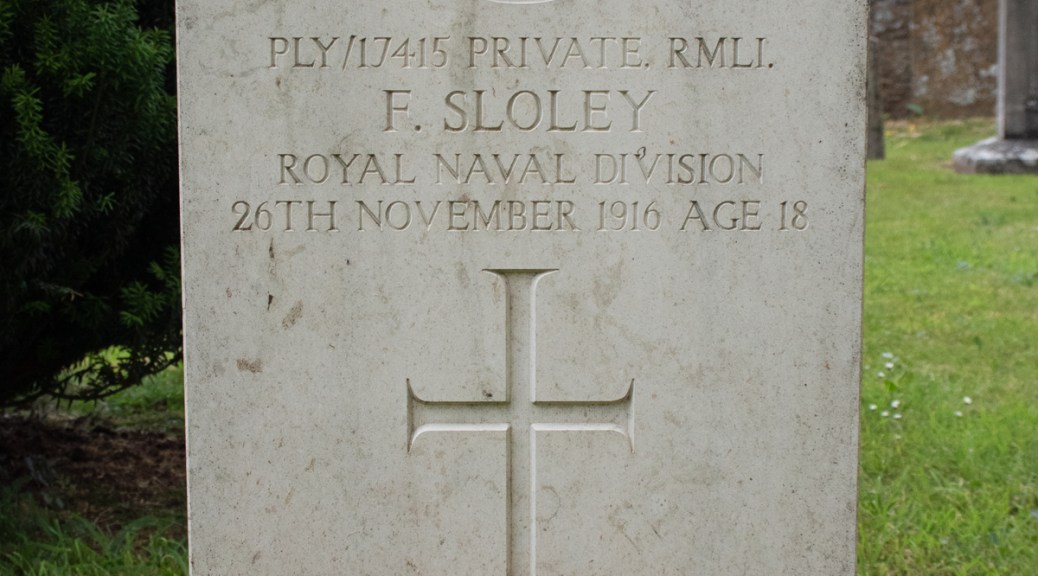
Private Frederick Sloley

Private Frederick Sloley

Frederick Sloley was born on 7th April 1897 in Kingston St Mary, Somerset, and was the fourth of nine children to Walter and Mary Jane Sloley. The family were farm workers and were living with Walter’s parents – also agricultural labourers – in the 1901 census.

After he finished his schooling, Frederick found began working with the horses on the farm. When war broke out, however, he saw an opportunity to serve his King and Empire, and enlisted in the Royal Marine Light Infantry. He joined up on 5th October 1914, and his service records show that he was 5ft 4ins (1.63m) tall, with black hair, grey eyes and a fresh complexion.

Private Sloley was initially sent to the Reserve Depot in Deal, Kent, for training, before moving to the Plymouth Division in Devon in March 1915. He records do not make it clear where he served specifically, but by 1916 he has fought in the Dardanelles and Mesopotamia.

It was while he was in the Eastern Mediterranean that Frederick was injured. Wounded in the spine by enemy gunfire, he was medically evacuated to Britain for treatment. Admitted to King George’s Hospital in London, surgery proved too late. Private Sloley passed away on 26th November 1916, at the age of just 19 years old. His mother, Mary, had managed to see him before he died.

The body of Frederick Sloley was brought back to Somerset for burial. He was laid to rest in the peaceful graveyard of St Mary’s Church in his home village of Kingston.


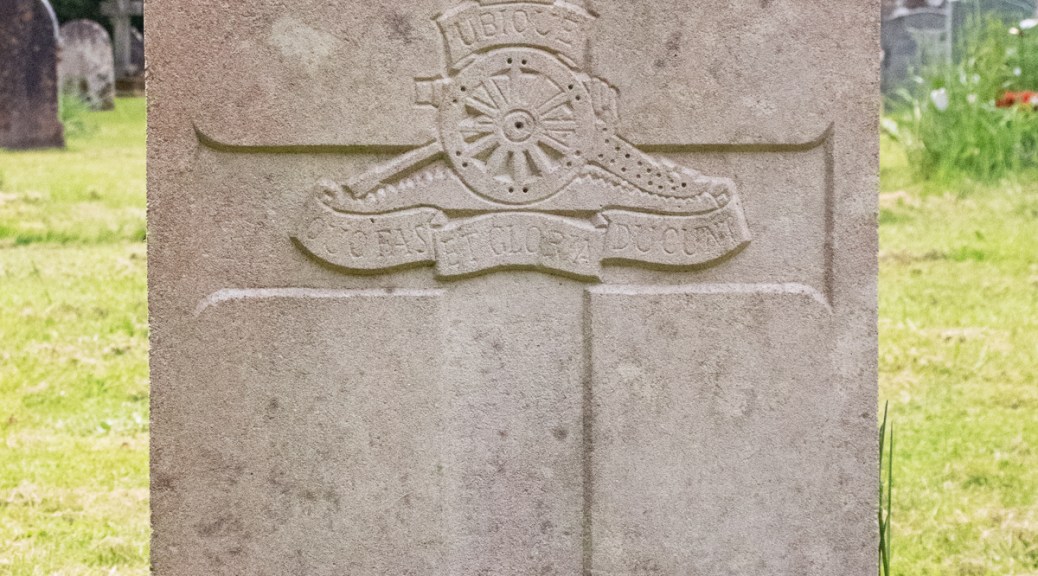
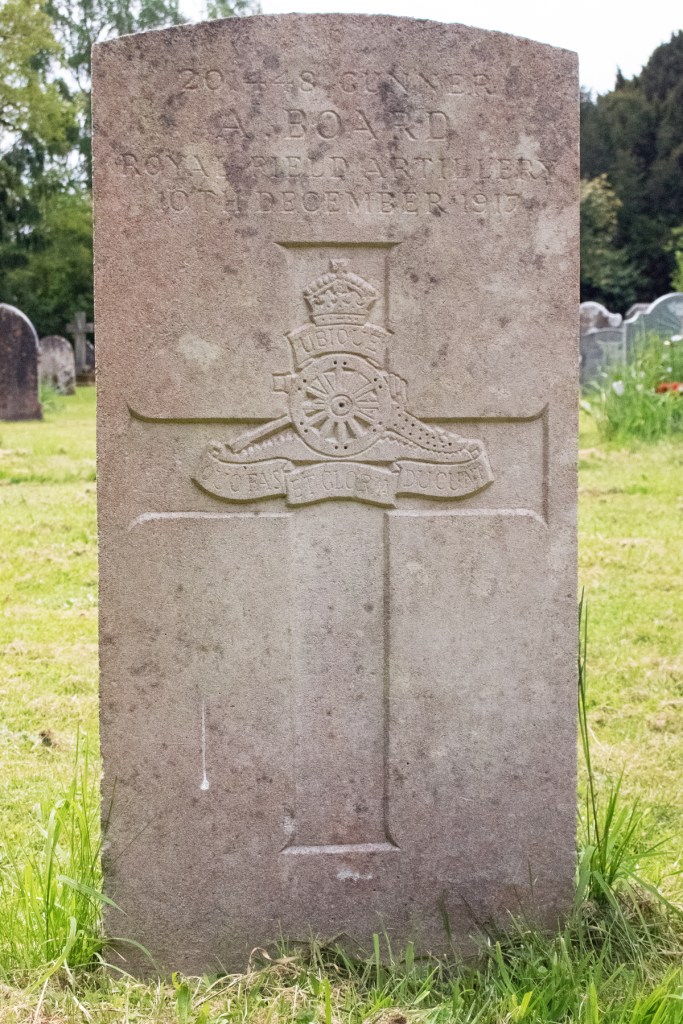
Gunner Albert Board

Gunner Albert Board

The funeral took place at Pitminster parish churchyard… of Gunner A Board, of the Royal Field Artillery, youngest son of Mr and Mrs W Board… who died in the 3rd Southern General Hospital, Oxford… from wounds received in action on 29th October. Deceased was only 21 years of age, and was buried with full military honours. Having been a former Boy Scout members of the Taunton and Trull Troops attended as a last tribute of respect and sympathy.

Taunton Courier and Western Advertiser: Wednesday 26th December 1917

Concrete information about the young life of Albert Board is destined to remain lost to time, but entries in the 1901 and 1911 censuses suggest that he had been born in Willesden, Middlesex. His parents were William and Annie Board, and the family moved to Pitminster, Somerset, at some point between the two documents.

One of seven children, by 1911 Albert had left school, and had found work as an errand boy. The youngest of the household, he was living with two older siblings – William, who was employed as a gardener; and collar making sister, Lily – and his parents. William, by this time, was working as a boot repairer.

When war came to Britain’s shores, Albert stepped up to play his part. He had enlisted in the Royal Field Artillery by the summer of 1917, and was attached to the 168th Brigade. Private Board fought on the Western Front, and may have been involved in the Arras Offensive of 1917.

Caught up in the fighting on 29th October, he was injured, and medically evacuated to Britain for treatment. He was admitted to the hospital in Oxford, but succumbed to his wounds on 10th December 1917. He was just 21 years of age.

Albert Board’s body was brought back to Somerset for burial. He was laid to rest with all due ceremony, in the quiet graveyard of Saint Mary and Saint Andrew’s Church, Pitminster.


Private John Cotterell

Private John Cotterell

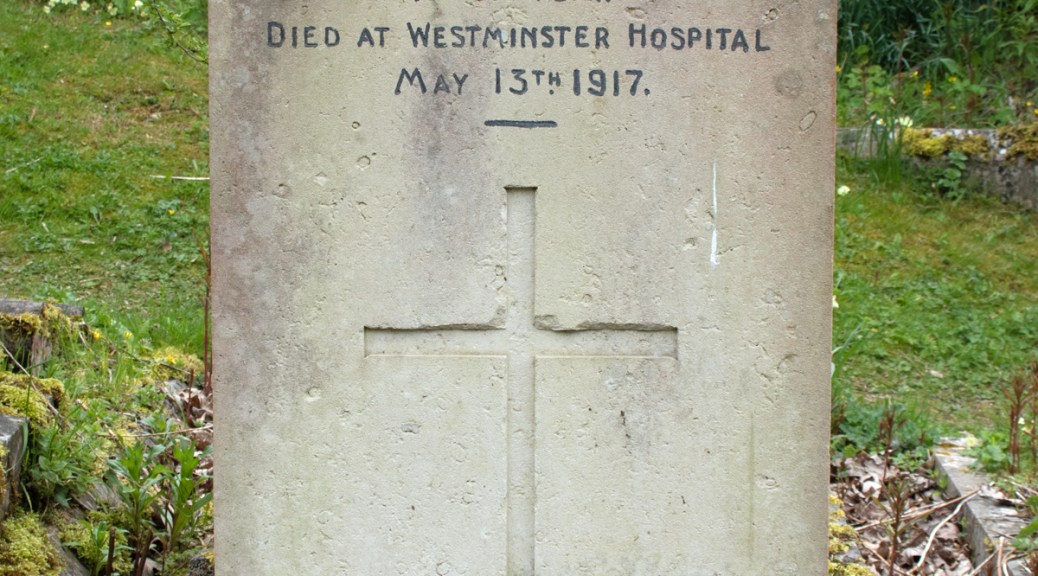
Much public interest was manifested in the funeral, on Thursday, of Private John St Clair Cotterell eldest son of Mr T Sturge Cotterell, JP, of Bath. Deceased, who was 26 years of age, was educated at Bath College, and left England to take up the life of a rancher in Canada. Here he joined the Alberta Rifles and saw service on the Western Front, where he was dangerously wounded in an attack on the Arras front on April 28th. He was, however, brought back to this country, only to succumb to his severe wounds in Westminster Hospital on Saturday. He leaves a widow and one child.

Bath Chronicle and Weekly Gazette: Saturday 19th May 1917

John St John Cotterell was born in Bristol, Gloucestershire, on 17th September 1891. One of six children, his parents were wallpaper manufacturer turned quarry manager Thomas Sturge Cotterell, and his wife, Edith. John remains noticeably absent from both the 1901 and 1911 censuses in which his parents and sibling – and servants – are recorded, so his early life is hard to piece together.

By 1908 John had emigrated to Canada to become a farmer. It was here that he met and married Gladys Nettleton. The couple settled in Alberta and had a daughter, Nellie, who was born in 1915.

When war came to Europe, John stepped up to play his part for King and Empire. He enlisted in the Canadian Expeditionary Force on 8th March 1916, and was assigned to the 192nd Overseas Battalion. Private Cotterell’s service records confirm that he was 5ft 5ins (1.65m) tall, weighed 117lbs (53kg) and had fair hair, grey eyes and a fair complexion.

Private Cotterell left Canada for Britain on 1st November 1916, arriving in Liverpool ten days later. He was transferred to the 9th (Service) Battalion of the Canadian Infantry, and barracked at St Martin’s Plain, near Folkestone in Kent. Early in 1917, he was moved to the 10th Battalion and, on 4th March was shipped off across the English Channel.

John’s arrival in France was not an auspicious one. Tightly packed barracks were a breeding ground for disease, and, by the time he had arrived in Le Havre, John had contracted mumps. He was laid up in a camp hospital for just over a month before returned to his battalion and heading to Arras.

Private Cotterell’s was severely injured in the fighting, and he received a gunshot wound to his spine. Medically evacuated to Britain, he was admitted to the Westminster Hospital in London. His medical report noted that his ‘1st lumbar vertebra [was] shattered and [spinal] cord [was] cut through‘. He had complete paralysis below the groin and that he was in a ‘hopeless condition‘. His injuries proved too severe, and he passed away on 13th May 1917, three days after being admitted. John was just 25 years of age.

John St Clair Cotterell’s body was brought back to Somerset for burial. He was laid to rest in Bath’s Abbey Cemetery.


Ordinary Seaman Bertie Clark

Ordinary Seaman Bertie Clark

Bertie Baden Clark was born on 5th August 1900 in the hamlet of Dunball, near Puriton in Somerset. The third of seven children, his parents were quarry and cement works labourer George Clark and his wife, Bessie.

When war came to Europe, George stepped up to play his part. Despite being 44 years old, he enlisted in the Royal Army Service Corps on 4th November 1915 and, within a year, was in France. He remained posted at the No. 4 Remount Depot until October 1918.

“On the morning of the 1st October 1918, I left the 26th Squadron 4 Base Remount Depot riding a horse and leading one to exercise about a mile & half from the Squadron while proceeding by the side of the railway line my horse was frightened by the whistle of a railway engine & ran away with me throwing me to the road and stepping on my right ankle.”

Private Clark was initially treated at the No. 2 Canadian General Hospital, but was soon invalided back to Britain and placed on furlough until being formally demobbed from the army early in 1919.

Bertie, meanwhile, could see the excitement of the war passing him by. Determine to play is part before it was too late, he gave up his job as a labourer on 13th July 1918 and enlisted in the Royal Naval Volunteer Reserve.

Given the rank of Ordinary Seaman, his service records confirm that he was 5ft 6in (1.68m) tall (1in, or 2.5cm, taller than his father), with dark brown hair, grey eyes and a fresh complexion. He was noted as having a scar on his right knee.

Bertie was sent to HMS Victory, the Royal Naval Dockyard in Portsmouth, Hampshire, for training. Tragically, this was to be his only posting. He was admitted to the dockyard hospital early in October, suffering from double pneumonia and influenza. The condition was to take his life, and he passed away on 10th October 1918, at the age of just 18 years old.

Bertie Baden Clark’s body was brought back to Somerset for burial. He was laid to rest in the quiet graveyard of St Michael’s Church in Puriton, the funeral attended by his family, including his recently returned father, George.


Rifleman Walter Radford

Rifleman Walter Radford

Walter Samuel Radford was born in the summer of 1899, the oldest of eight children to William and Florence Radford. William was a farm labourer from Churchstanton, Somerset, but by the time Walter was born, the family had moved to Chedzoy, near Bridgwater.

Chedzoy was also where William’s parents lived, and the two families’ cottages were just three doors apart. Oddly, even though he was the oldest child, Walter was raised by his grandparents, Frank and Anna, and is recorded as living with them in both the 1901 and 1911 censuses.

Walter was just 15 years old when war came to Europe, and so was too young to enlist. He bided his time, though, and had joined up by the summer of 1918. He was assigned to the 1st Battalion of the Royal Irish Rifles, and was sent to the Western Front in the closing months of the conflict.

Caught up in the final advance in Flanders, Rifleman Radford was injured, possibly during the action of Ooteghem. He was medically evacuated to Britain for treatment, but died of his injuries while admitted to a hospital in London. He passed away on 26th November 1918, aged just 19 years old.

Walter Samuel Radford was brought back to Somerset for burial. He was laid to rest in the peaceful graveyard of St Mary’s Church in Chedzoy.


Interestingly, while Walter’s pension ledger gave his father, William, as the recipient, the Army Register of Soldiers’ Effects noted his grandmother, Anna, as the recipient of his belongings.


Sapper Frederick Macey

Sapper Frederick Macey

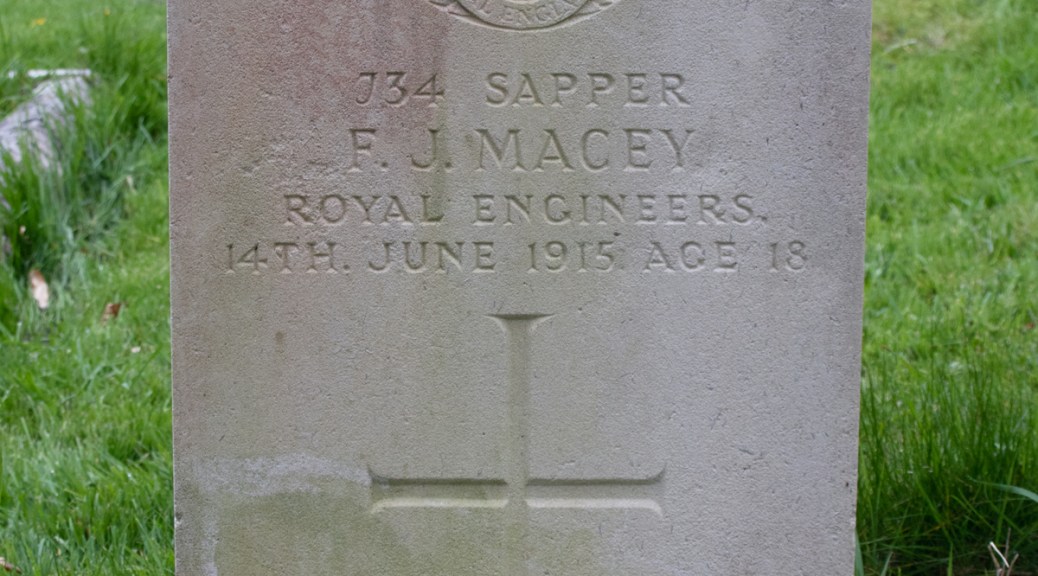
Frederick John Macey was born in the spring of 1897, the fourth of five children to James and Rose. James was a labourer from Hampshire, Rose was born in Ireland, but the children were born and raised in Monkton Combe, Somerset.

When war broke out, Fred stepped up to play his part. He enlisted in the Royal Engineers, and was assigned to the 503rd Field Company. Full details of his military service are lost to time, so it is not possible to identify whether Sapper Macey served overseas – Malta, where part of the regiment were based – or on home soil – in and around Ipswich, Suffolk.

Wherever he was based, Fred was injured, and he was sent to a military hospital in Guildford, Surrey, for treatment. Sadly, his wounds were to prove too severe, and he passed away on 14th June 1915, aged just 18 years old.

Frederick John Macey’s body was brought back to Somerset for burial. He was laid to rest in the peaceful graveyard of St Michael’s Church, in his home village of Monkton Combe.


Sapper John Macey
(from britishnewpaperarchive.co.uk)

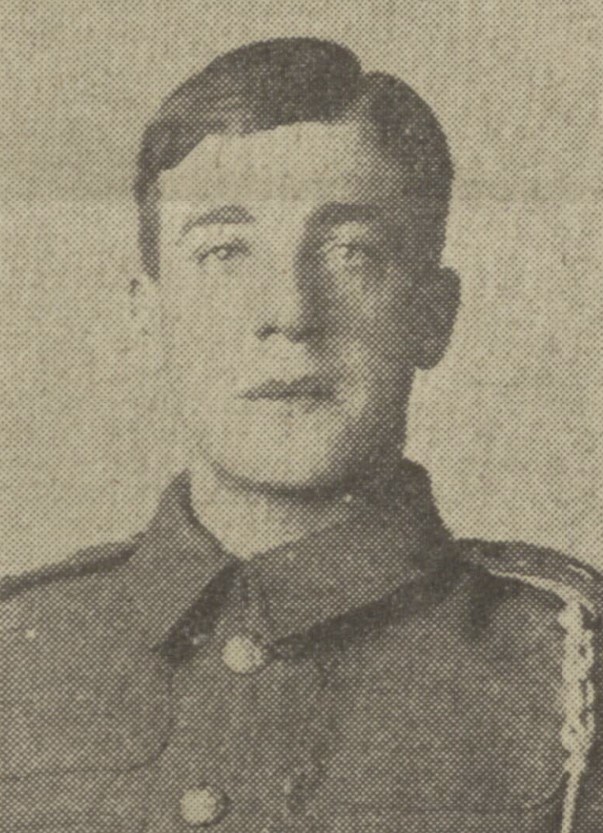
Lance Corporal John Harris

Lance Corporal John Harris

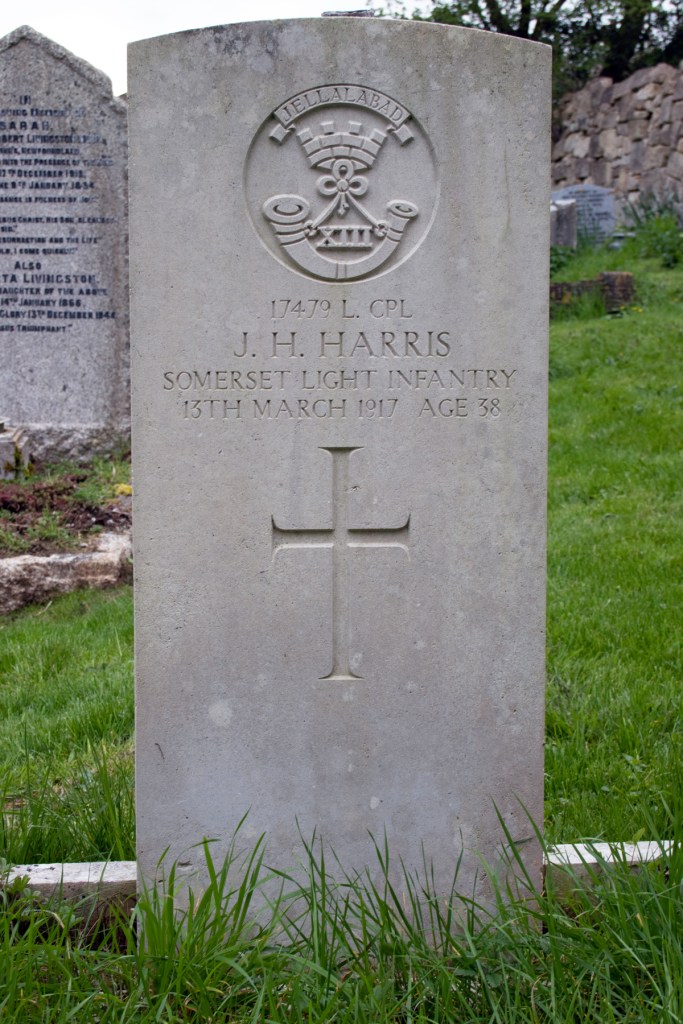
John Henry Harris was born at the turn of 1879, the oldest of eight children to John and Florence Harris. John Sr was a mason’s labourer from Somerset, and his and Florence’s three oldest children were born in Bishop’s Hull, near Taunton. By 1890, however, the family had moved to Monkton Combe, on the outskirts of Bath, presumably to follow John Sr’s work, and this is where they settled.

When John Jr completed his schooling, he followed in his father’s trade and when the 1901 census return was completed, he was employed as a mason’s labourer, while his father had moved into carpentry.

Florence died in April 1901, and six years later, John Sr remarried. His new wife was Ann Gibbs, and the couple went on to have three children, new half-siblings to John Jr.

In the autumn of 1905, John Jr married in Eliza Mundy, a cowman’s daughter from Monkton Combe. The couple settled in a small cottage on Mill Lane, and had a son, Frank, who was born in 1907. By this point, John had found new employment as a gardener to the local vicar, Reverend Pitcairn.

When war came to European shores, John quickly stepped up to enlist. He joined the 7th Battalion of the Somerset Light Infantry and arrived in France in July 1915 after his training.

Private Harris was wounded during the opening weeks of the Battle of the Somme, but recovered and returned to the Front Line. He was promoted to the rank of Lance Corporal, but in March 1917 he was wounded again. “A piece of his steel helmet was driven into his head at the temple, and little hope of his recovery was entertained from the first.” [Bath Chronicle and Weekly Gazette: Saturday 24th March 1917]

Medically evacuated to Britain, Private Harris was admitted to a hospital in Stockport, Cheshire. His “wife (who has been dangerously ill in hospital), Mr John Harris (his father) and a sister proceeded to Stockport, but, unfortunately, did not arrive until shortly after death had occurred.” [Bath Chronicle and Weekly Gazette: Saturday 24th March 1917]

Private Harris passed away on 13th March 1917, at the age of 38 years of age.

John Henry Harris’ body was brought back to Monkton Combe for burial and he was laid to rest in the peaceful graveyard of St Michael’s Church, his funeral being officiated over by his former employer, Reverend Pitcairn.


Eliza went on to marry again, wedding Walter Giggs in 1921. The couple went on to have a daughter, Margery, who was born two years later. Eliza lived on until 1949, when she died at the age of 69 years old. She was also laid to rest in St Michael’s Churchyard.


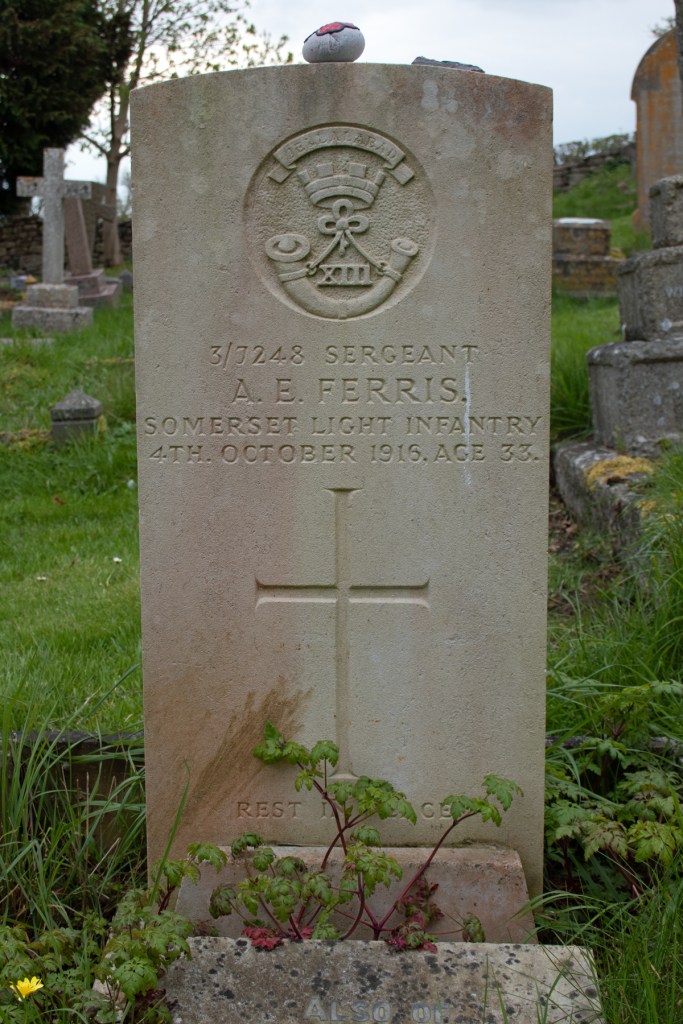
Sergeant Albert Ferris

Sergeant Albert Ferris

Albert Edward Ferris was born in the spring of 1884, one of six children to Charles and Juliana. Charles was quarryman turned farm labourer from Gloucestershire, but it was in the village of Claverton, near Bath, that the family were born and raised.

When he finished his schooling, Albert found work as a baker, but soon sought out a career in the military. On 2nd January 1903 he enlisted in the Royal Marine Light Infantry as a Private. His services records show that he was 5ft 6ins (1.68m) tall, with brown hair, blue eyes and a fair complexion.

Based out of Plymouth, over the next nine years Private Ferris served on four different ships and was recognised as having a very good character and an ability to match.

In 1910, Albert married Eliza Jane Warren, a mason’s daughter from Monkton Combe. The 1911 census found Albert on board the armoured cruiser HMS Cumberland, while Eliza was living with her parents. Military life was taking a toll on married life and, on 6th December 1911 bought an end to his naval career and was ‘discharged by purchase’.

Returning to Somerset, Albert found employment as a motor-man with Bath Electric Tramways. He and Eliza settled into married life, but war was on the horizon and things were to change.

At the outbreak of war, [Albert] promptly responded to his country’s call, and enlisted in the [Somerset Light Infantry], as a Private. When his battalion was sent to France, he distinguished himself in a short time by his excellent work as a sniper, speedily earning his first stripes as a consequence. With his battalion he participated in the heavy fighting around the Ypres district, over an extended period, without sustaining any serious injury. Later his battalion was moved further down the line to take part in the “Great Push,” where, for meritorious conduct, he was… promoted to Sergeant in the field…

Bath Chronicle and Weekly Gazette: Saturday 7th October 1916

Sergeant Ferris’ luck was not to last, however, and things took a turn in September 1916.

In the… fighting around Delville Wood… Sergt, Ferris was severely wounded in the right thigh by a machine-gun bullet. One of his officers gave him the best first-aid treatment possible under the circumstances, and later he crawled nearly three miles in an endeavour to reach the nearest field dressing station. Through loss of blood, shock, and general exhaustion he was on the point of collapse when picked up by a field ambulance, after which he was transferred to the base and later to Tooting Military Hospital, where, despite skilled treatment and the greatest care, septic poisoning intervened and he passed away…

Bath Chronicle and Weekly Gazette: Saturday 7th October 1916

Sergeant Ferris died while admitted in the Surrey hospital on 4th October 1916. He was just 32 years of age.

The body of Albert Edward Ferris was brought back to Somerset for burial. He was laid to rest in the peaceful graveyard of St Michael’s Church, Monkton Combe.