Category Archives: Bedfordshire

Captain Guye Lushington

Captain Guye Lushington

Guye Wellesley Lushington was born in India on 6th November 1880. The oldest of four children, his parents were James and Bessie Lushington. James was a worked in the Bombay Uncovenanted Civil Service and, while it’s not possible to track his location through census records, by the time of the 1891 census, Bessie had returned to Britain with the children. The document found them living at 31 Clarendon Street in Bedford, Bedfordshire.

Guye’s background stood him in good stead when it came to building a career. His chosen profession was the army and, by January 1898 he had landed a commission in the Royal Marine Artillery. Lieutenant Lushington continued to do well and, on 13th March 1908, he received a promotion to Captain.

Full details of Guye’s military service have been lost to time, but by the time war broke out, he was attached to the dreadnought battleship HMS Bellerophon. The stress of the Great War was to take its toll, however, and he was diagnosed with neurasthenia. In 1916, he was admitted to the King Edward Convalescent Home at Osborne House, on the Isle of Wight. Captain Lushington’s condition, however, was to worsen.

The Isle of Wight Coroner yesterday held an inquest respecting the death of Captain George [sic] Wellesley Lushington, 35, of the Royal Marine Artillery, sone of Mr James Law Lushington, of Briar Bank, Grove-road, Worthing [West Sussex], who was found dead… on Tuesday, having apparently thrown himself over an iron staircase fire escape into the courtyard.

Colonel Douglas Wardrop, house governor and medical superintendent, said the deceased arrived at Osborne House from Haslar on the 5th inst… He was rather depressed and worried about his loss of will power. He had been four years on the “Bellerophon” and on active service with the Grand Fleet. There was nothing in the deceased’s manner to suggest suicide. He slept on the top floor of the south wing. At two o’clock on Tuesday morning, the night nurse reported that the deceased had not slept in his room. Search was made, and the deceased was found lying in the courtyard between the kitchen and the south wing. He must have jumped from the fire escape – which was an iron staircase with platforms outside each landing – onto the flag stones below, a distance of 45 feet. His skull was smashed to pieces. There was a railing 3 feet 6 inches high round the staircase, and deceased could not have accidentally fallen over.

Two letters were found in deceased’s room, one addressed to his father and the other to his sister. His father identified the writing. The letter to the deceased’s father was as follows:

“Osborne House, Sunday.

“My dear pater, Since I broke down a month ago, I feel I shall never pick up again. I am afraid this will rather surprise you, but I cannot stand the tension any longer. I am always wondering what is going to happen to me. Give my love to Daisy. If one has to die, it is better quickly than slowly. With lots of love – GUYE”

Nursing sister Arkins, who had charge of the deceased, said he was quiet, bur showed no suicidal tendency.

Lieutenant George Stewart Manisty, of the Indian Army Reserve, attached to the 7th Bengal Lancers, said he played bridge with the deceased up till 10:30 on Monday night, and for three nights running. Deceased seemed quite friendly and in good spirits.

A verdict of “Suicide while of unsound mind” was returned.

The Coroner said that was the third suicide within a week on the Isle of Wight, either directly or indirectly due to the war.

[Sussex Daily News: Thursday 11th May 1916]

Captain Lushington’s full state of mind on the night he took his life will never be know. The family had suffered three early deaths in a matter of years: Guye’s oldest sister, Violet, had died in 1899, at the age of 18; his brother Hubert had died in 1905 at the age of 19; his mother Bessie passed away in 1911 at the age of 58. Guye had taken his life on 8th May 1916, aged 35 years old.

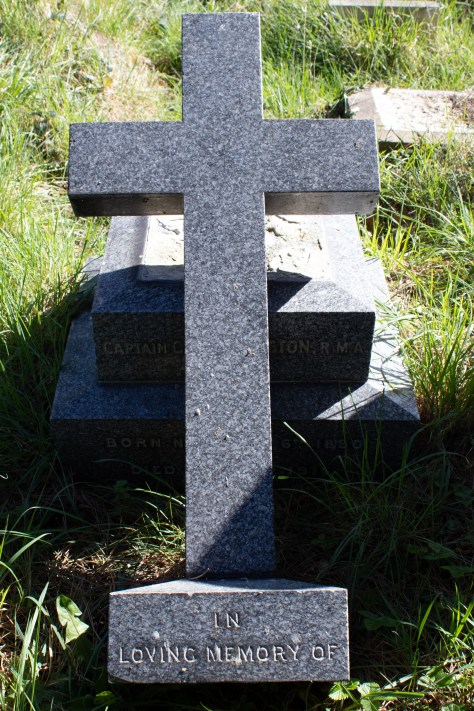
The body of Guy Wellesley Lushington was taken to Worthing, West Sussex, for burial. He was laid to rest in the town’s Broadwater Cemetery.

Sapper William Harris

Sapper William Harris

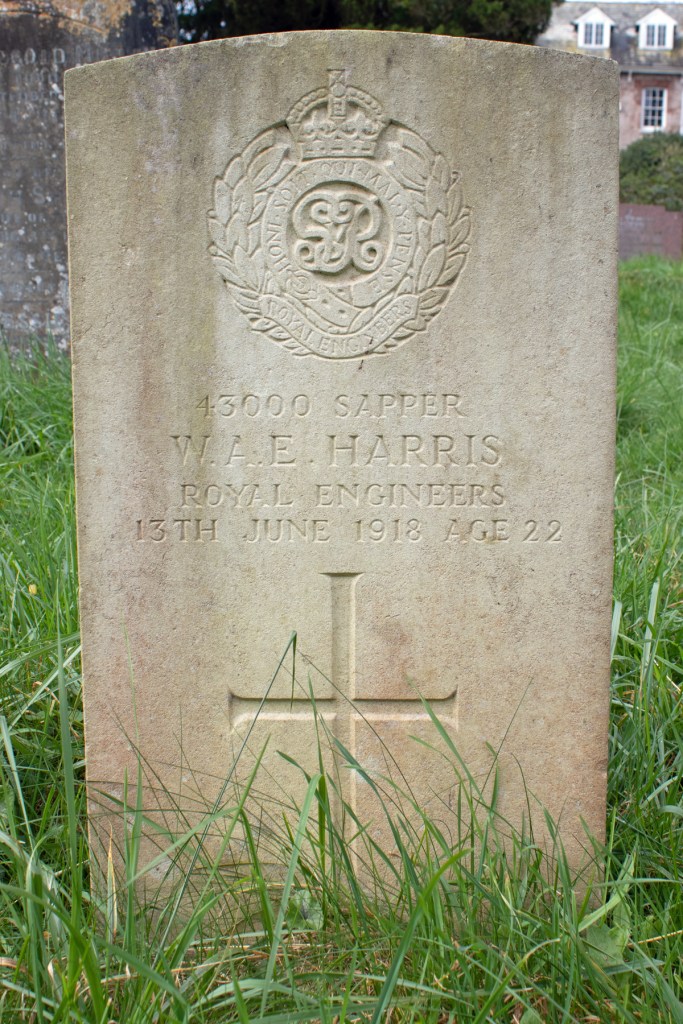
William Arthur Edward Harris was born in the spring of 1896 in Uffculme, Devon. The second of four children, his parents were William and Louisa. William Sr was a ganger on the railways, and by the time of the 1911 census, the family has moved to Halberton, near Tiverton, as that was where the work had moved to.

The same census return confirmed the work that William Jr had taken up, noting that he was an apprentice to an agricultural implement maker. This was not to last for long, however, as storm clouds were brewing over Europe.

When war broke out in the summer of 1914, William Jr was keen to play his part. He enlisted the following year, and his apprenticeship seems to have stood him in good stead. He joined the Royal Engineers as a Sapper, and was attached to the 77th Field Coy. His unit arrived in France on 15th July 1915.

Details of William’s time in the army is lost to time, but a newspaper report of his funeral sheds a little light on his time overseas: “Sapper Harris was among the first from Halberton to join up, and had seen much active service in France, being wounded at Arras on Sept. 16, 1917.” [Tiverton Gazette: Tuesday 25th June 1918]

Sapper Harris seems to have returned to Britain by the summer of 1918, although it is unclear whether he was on leave, based back in the UK or was being medically treated here. “At the early age of 22, [William] passed away in Kempston Military Hospital after a brief illness” [Tiverton Gazette: Tuesday 25th June 1918]

William Arthur Edward Harris had died in hospital in Bedfordshire on 13th June 1918. His body was taken back to Devon for burial, and he was laid to rest in the graveyard of St Andrew’s Church, Halberton.


Private Philip Johnson

Private Philip Johnson

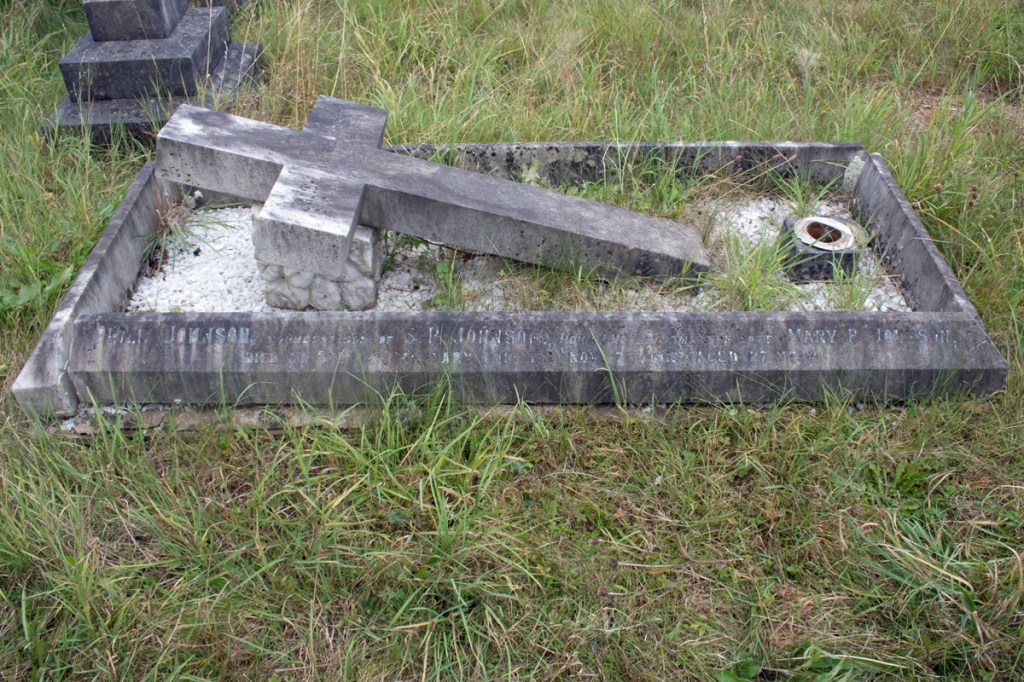
Philip Johnson was born in the summer of 1891 in Wrexham, Denbighshire. One of eight children his parents were Samuel and Mary Johnson. Samuel was a wine merchant from Scotland, while Mary had been born in Cheshire. When Philip was born the family were living and running the town’s Lion House inn on the High Street.

Mary died in 1897 and, in 1909 Samuel moved his family on. He bought the Royal Hotel in Llangollen, which occupied a large plot on the riverside, and which included a large garden.

The Royal Hotel was a busy business: to look after the guests, there were eleven members of staff living in. This was to be a Johnson family business, however, with Philip’s older sibling Elizabeth managing the hotel with her father, his brother Samuel Jr assisting, his sister Ethel acting as bookkeeper and Philip himself managing the bar.

In the spring of 1914, Philip married Elizabeth Kelsall, whose family ran the Eivion Hotel, down the road from The Royal. The couple set up home in the town – possibly even still living at Samuel’s hotel – and had two children.

When war came to Europe, Philip stepped up to play his part. Sadly, full details of his military service are lost to time, although it is clear from other documents that he had enlisted in the Royal Army Service Corps.

For The Royal Hotel, this was a challenging time. By December 1916, two of Samuel’s sons – including Philip – were away on service, as were nine of the hotel’s seventeen staff. Samuel applied for Samuel Jr’s exemption from war service on the basis that he was the hotel’s manager, but this was refused. A year later, he applied for another of the hotel’s servant’s, an Evan Edwards, exemption, but again this was refused.

Philip, meanwhile, was attached to the 728th Coy of the Motor Transport section of the Royal Army Service Corps. His troop served the RE Signal Service Training Centre, but it is unclear whether he saw any action overseas. By the end of the war, however, he was based in Hitchin, Hertfordshire.

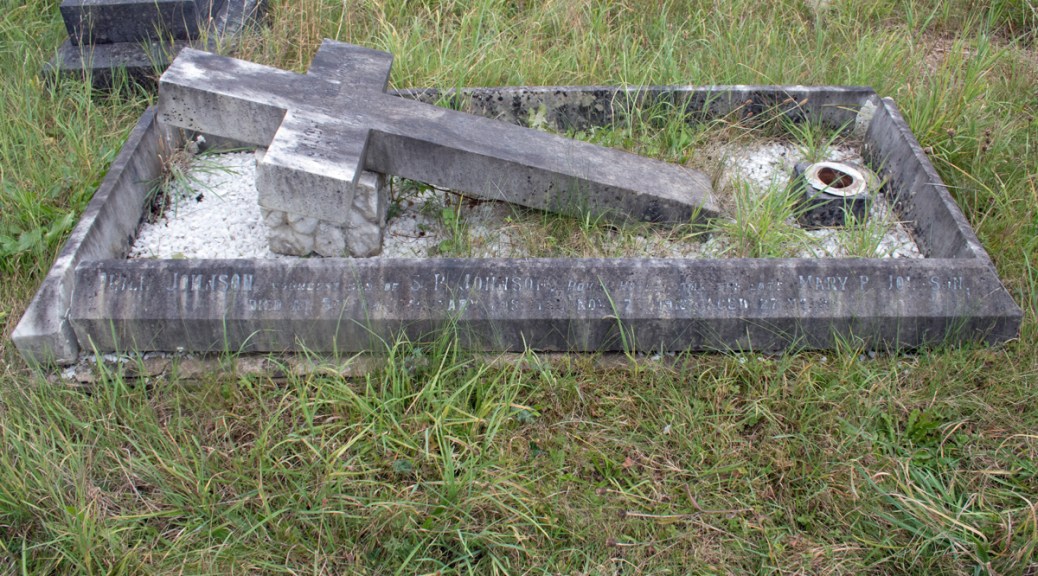
With winter closing in, illness became rife in the cramped condition of army barracks. Private Johnson contracted pneumonia, and was admitted to the Bedford Military Hospital, not far from where he was based. Sadly, the lung condition was to get the better of him, and he succumbed to it, passing away on 7th November 1918, aged just 27 years old.

Philip Johnson’s body was brought back to Wales for burial. He was laid to rest in a family plot in the graveyard of St John’s Church in his adopted home town of Llangollen.


Private William Jackson

Private William Jackson

Little concrete documentation remains about the life of William Henry Jackson. He was born in Bedford, Bedfordshire, on 6th February 1872, although it is not possible to identify who his parents were.

He married a woman called Edith in 1903, and the couple settled in her home town of Beeston, Nottinghamshire. By the time of the 1911 census, he was recorded working as an electrician’s labourer at the local telephone works, while Edith, who was five years his senior, earned extra money as a blouse finisher.

Information about William’s wartime efforts are also limited. He enlisted in the Royal Marine Light Infantry, and was assigned to the Chatham Division. He was given the rank of Private and based at the Royal Naval Dockyard in the Kent town.

The only other information available for Private Jackson is that he died on 16th September 1916, having contracted a combination of pneumonia and tuberculosis. He was 44 years of age.

William Henry Jackson was laid to rest in Woodlands Cemetery, Gillingham, not far from the dockyard in which he had served. His headstone gives the initial H, rather than W, although no documents suggest he went by any name other than William.


Stoker 1st Class Horace Sharp

Stoker 1st Class Horace Sharp

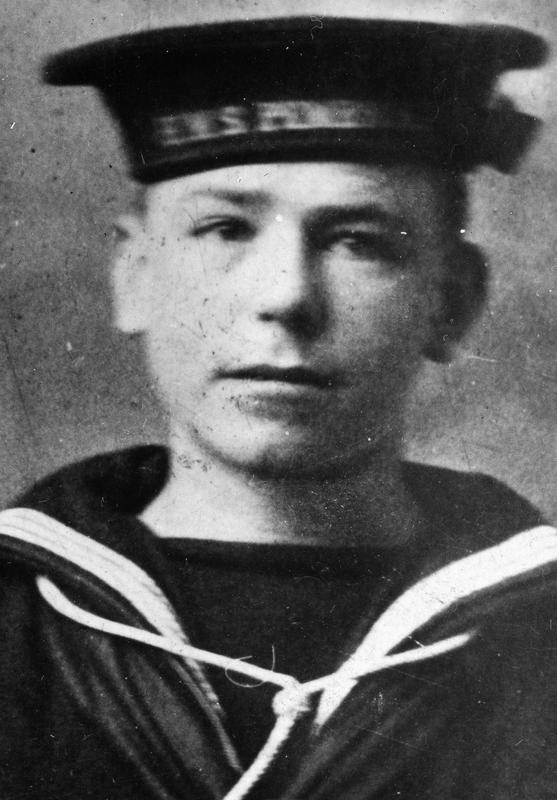
Horace Stanley Sharp was born on 13th April 1894, the oldest of eight children to Harry and Edith. Harry was a labourer from Luton in Bedfordshire, and this is where he and Edith raised their family.

When he left school, Horace found work at a local iron foundry, but he wanted more of a career and, on 25th February 1913, he enlisted in the Royal Navy as a Stoker 2nd Class. His service records confirm that he was 5ft 4ins (1.62m) tall, had brown hair, grey eyes and that he had a fair complexion.

Stoker Sharp was first posted to HMS Pembroke, the Royal Naval Dockyard in Chatham, Kent. Here he would have received his training, but, during this time, he went absent without authorisation, and, as a result, spent 24 days in the cells. It seems that his training was extended as a result of this, as he was not given his first posting – on board the cruiser HMS Sirius – until January 1914.

Over the next couple of years, Horace served on two further vessels – HMS Alert, where he gained a promotion to Stoker 1st Class, and HMS Swiftsure, where he was detained for a further five days. The reason for this second time in the brig is not recorded, but, as it coincided with the death of Horace’s mother, the cause seems likely to have been connected.

In 1916 he returned to HMS Pembroke, before being assigned to the brand new battlecruiser HMS Repulse, where he served for a year, taking part in operations in the Persian Gulf and the Dardanelles.

At the end of July 1917, Stoker 1st Class Sharp returned to Chatham once more. The base was particularly busy that summer, and the large number of extra servicemen meant that Horace was billeted in temporary accommodation in Chatham Drill Hall.

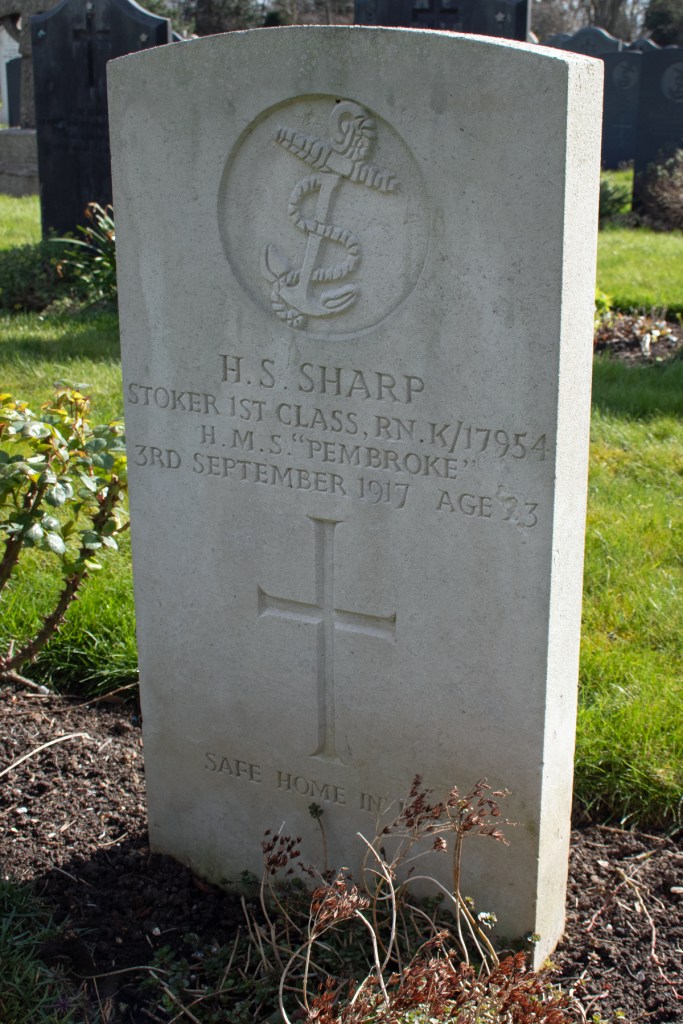
On the 3rd September 1917, the first night air raid carried out by the German Air Force bombarded the town, and scored a direct hit on the Drill Hall; Stoker 1st Class Sharp was among those killed that night. He was just 23 years of age.

Horace Stanley Sharp was laid to rest, along with the other victims of the Chatham Air Raid, in the Woodlands Cemetery, Gillingham.


Stoker 1st Class Horace Sharp
(from findagrave.com)

Horace’s younger brother Harry also fought in the First World War, serving a a Private in the 1st Battalion of the London Regiment. He was assigned to the 13th Battalion of the Royal Fusiliers, and fought at the 3rd Battle of Ypres in 1917.

He was wounded on 5th September 1917, receiving a gun shot wound in the back. Private Sharp was admitted to hospital, and died from his injuries later that day. He was just 20 years of age and passed away just two days after his older brother. He was laid to rest in the Reninghelst Military Cemetery in Belgium.


Driver Arthur Heathfield

Driver Arthur Heathfield

Arthur Heathfield was born in Shefford, Bedfordshire, early in 1897, the oldest child to Ellen Grace Heathfield. Ellen married William Lewis in 1903, and went on to have four children in total.

When he left school, Arthur found work as a farm labourer, but by this time, war was coming to Europe. Full details of his military career are not available, but he enlisted in the Royal Field Artillery at some point towards the end of 1914.

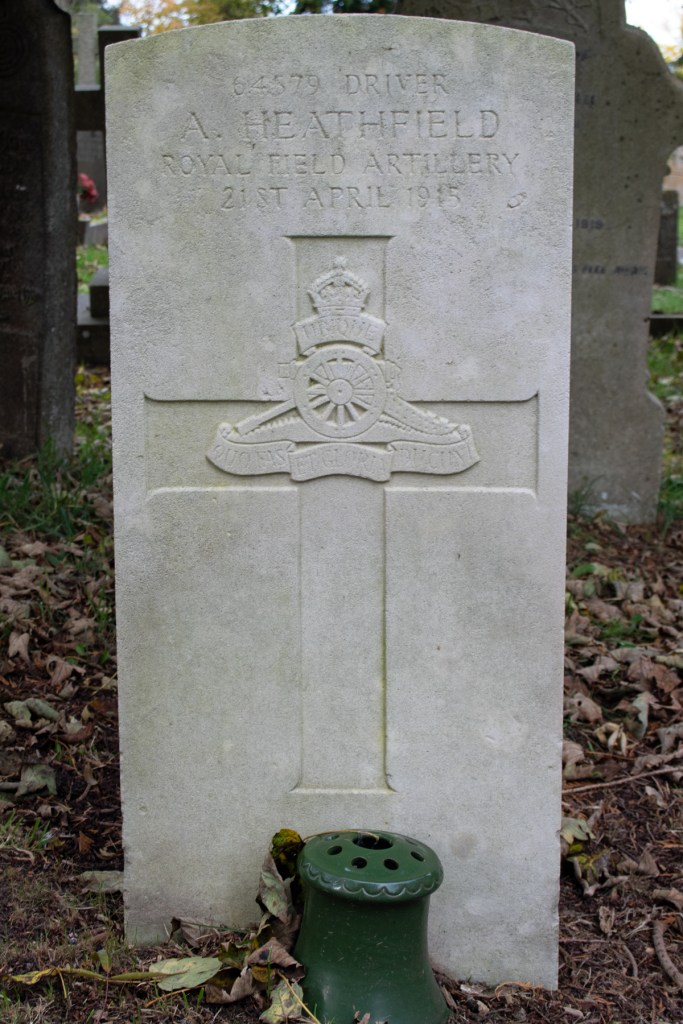
Driver Heathfield was assigned to the 14th Brigade, which saw fighting on the Western Front, although it is not possible to determine whether Arthur himself went overseas. What is certain is that, by the spring of 1915, he was admitted to hospital in Frome, Somerset, suffering from meningitis. Sadly, he was to succumb to the disease on 21st April. He had not long turned 18 years old.

Arthur Heathfield was laid to rest in the graveyard of Christ Church, in the town in which he died.


Private John Lodge

Private John Lodge

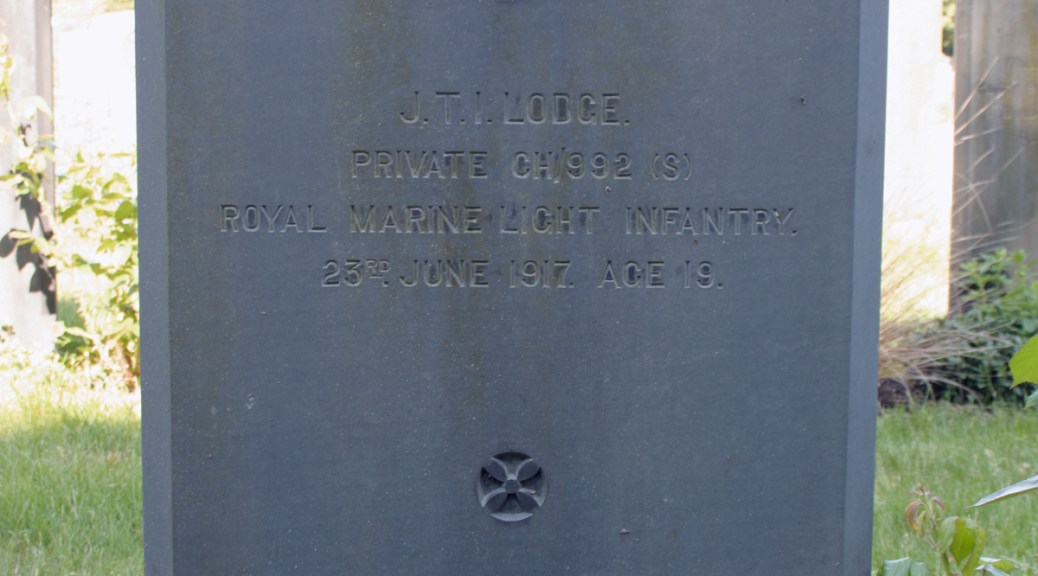
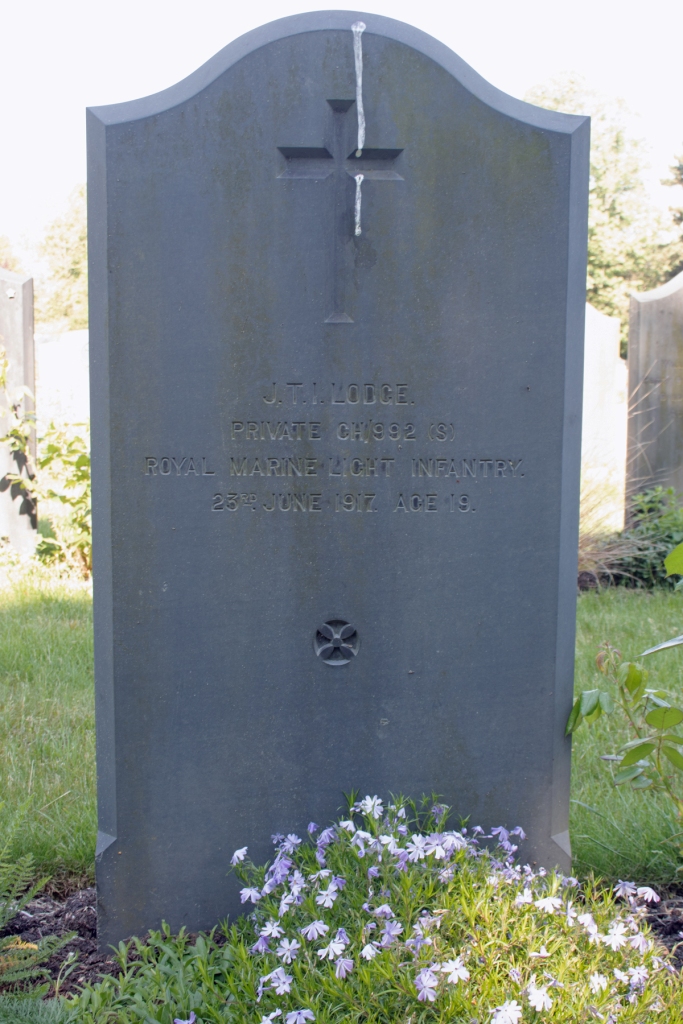
John Thomas Inskip Lodge was born in Shefford, Bedfordshire, on 31st January 1899, one of seven children to John and Florence Lodge (née Inskip). When his son was young, John Sr worked as a bead lace manufacturer, but by the time of the 1911 census, he had become the manager of a steam laundry.

Florence, by this time, had passed away, and in November 1911, John Sr married again, to Florence Yarnell. The couple would go on to have four children, John Jr’s half-siblings.

By this time, war was on the horizon, and John was eager to leave his laundry job and volunteer. He joined the Royal Marine Light Infantry on 4th September 1915, giving his date of birth as three years earlier in order to ensure he was accepted. His service record shows that he stood 5ft 4ins (1.62m) tall, had a fresh complexion, brown eyes and brown hair.

As a Private, John served with the Chatham Division of the regiment; he would have seen action in some of the key battles of the war, including at Gallipoli in 1915/16 and later on the Western Front. It was while he was fighting in France in September 1916 that he was injured, and he was medically evacuated back to England for treatment.

Private Lodge recovered, and served on in Chatham, Kent, where he was billeted at the naval barracks in the town. At the start of June 1917, he had some leave owing, and so visited his parents back in Bedfordshire. When he returned to Kent, he fell ill and was admitted to the Naval Hospital in the town. Sadly, John was not to recover; he passed away on 23rd June 1917, aged just 18 years old.

John Thomas Inskip Lodge was laid to rest in the Woodlands Cemetery in Gillingham, not far from the Chatham barracks at which he was based.


Lieutenant John Scrace

Lieutenant John Scrace

John Scrace was born on 31st July 1892 in Chatham, Kent, the oldest of five children to John and Adelaide Scrace. John Sr was a relieving officer for the Medway Board of Guardians, a role which involved “taking charge of poor or insane persons not otherwise cared for” [census1891.com]. Adelaide worked in a similar role, as an infant protection visitor.

It is fair to say, therefore, that John Jr had a very supportive childhood. He attended King’s School in Rochester, where he obtained a scholarship to Peterhouse College, Cambridge.

When war broke out, John was keen to do his part. Initially joining The Buffs (the East Kent Regiment), he transferred across to the newly-formed Royal Air Force in June 1918. By this point he had risen to the rank of Lieutenant, and, as part of his new RAF role, was based at Driffield in Yorkshire.

On 24th August 1918, the aircraft John was flying at the base, spun into the ground, and John was killed instantly. A subsequent inquest identified that “the cause of the accident was due to the fact that, for reasons unknown, part of the top of the left-hand plane of the machine crumpled up in the air and thereby [caused] the pilot to lose control of his machine.” [rafmuseumstoryvault.org.uk] Lieutenant Scrace was just 26 years of age.

John Scrace was buried in Christ Church Churchyard in Luton, Kent; he is commemorated in Woodlands Cemetery in nearby Gillingham.


Private Henry Cowles

Private Henry Cowles

In a quiet corner of a cemetery in Somerset stands a gravestone to Private HJ Cowles. It confirms that he passed away on 26th April 1920, and that he was in the Bedfordshire Regiment during the First World War.

Little additional information on HJ Cowles is available. One document, the Medal Roll Index Card, confirms his first name as Henry, and that he had initially joined the Somerset Light Infantry. He was awarded the British Medal for his war service.

Cowles is a fairly common name in the Somerset area, and, without any additional information – date of birth, familial connections – it is impossible to narrow down the name on the gravestone to a specific Henry Cowles from the area or beyond.

There is also nothing in any contemporary newspapers to suggest that Private Cowles’ passing was anything out of the ordinary.

Sadly, therefore, he remains a name lost to history. Henry J Cowles, whoever he was, and however he died, lies at rest in the Milton Cemetery in Weston-super-Mare, Somerset.


Private George East

Private George East

George East was born in 27th May 1879 to George and Agnes East. Agnes was George Sr’s second wife, which led to George Jr having four siblings and a further eight half-siblings. George’s father was a painter and handyman, who sadly passed away when his son was only seven years old.

Sadly, a lot about George remains a mystery, as a lot of documentation about him no longer exists. The snippets that are available give a tantalising glimpse into his life.

He married a woman called Jessie, and they had a daughter, Vera, who was born in July 1912.

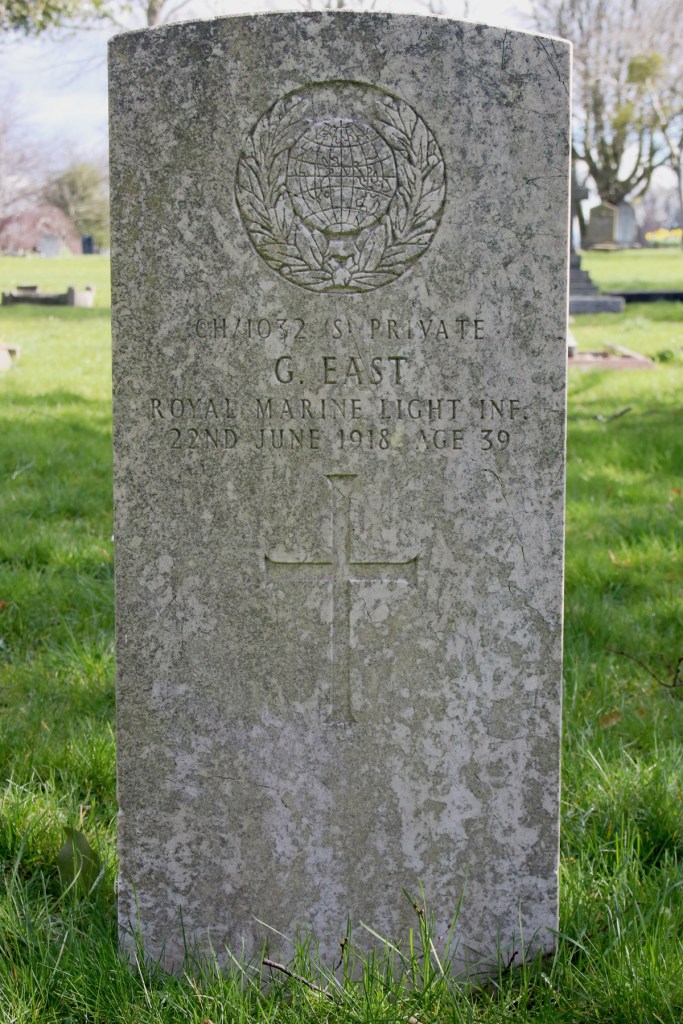
George enlisted in the Royal Marine Light Infantry on 29th September 1915, and served at the Naval Dockyard in Chatham, Kent. Private East was based there for most of the war, but fell ill, succumbing to stomach cancer on 22nd June 1918. He was 39 years old.

George East lies at peace in the Woodlands Cemetery in Gillingham, Kent.