Category Archives: Sussex

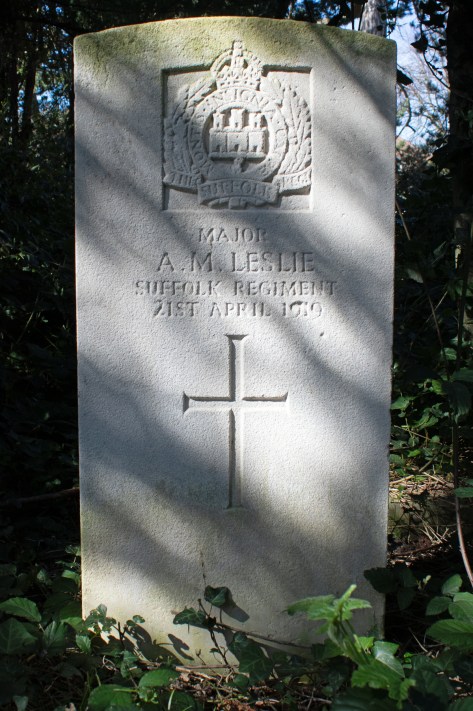
Major Alexander Leslie

Major Alexander Leslie

Alexander Augustus Maurice Leslie was born in France in 1852. One of five children, his parents were Government Secretary of State Francis Leslie and his French wife, Josephine.

Alexander’s mother died when he was 8 years old, by which point the family had moved back to Britain. Francis had set up home in Ealing, Middlesex, and they were living at 15 Castlebar Road, a Victorian villa.

When he completed his schooling, Alexander sought out a military life. The 1881 census recorded him as a Lieutenant in the Suffolk Regiment, living in St Helier, Jersey. He had married the year before, to Louisa Cumming, a surgeon’s daughter from Devon. They had a son, Maurice, by this point, and a daughter, Ida, was born the following year.

Lieutenant Leslie’s service records are sparse, but a later newspaper report fills in some of the gaps: “Leslie’s military experience, which extended… over a period of about 25 years, included participation in the Egyptian campaign in 1884, and service on the West Coast of Africa, in Jamaica, and in India.” [Worthing Gazette: Wednesday 30th April 1919]

During her husband’s time overseas, Louisa raised the children back home in Devon. She passed away in 1901, but which point, Alexander had retired with the rank of Captain. That year’s census found him living with Maurice and Ida at 14 Spencer Hill in Wimbledon, Surrey, a large detached villa. Maurice, now 20 years of age, was working as an accountant’s clerk, and the family had a live-in servant called Rose.

The next census record, from 1911, recorded Alexander living in rooms at 46 Leinster Gardens, Paddington. A substantial Georgian property, his landlady was Eveline Giradet, whose other residents included a barrister and a banker. Alexander’s occupation was now noted as Retired Major in the British Army.

From this point, Alexander’s trail grows cold. It is likely that he was called upon to play a part in the global conflict that broke out in 1914, though exactly when and how he did so is unclear. Records suggest he was admitted to Queen Alexandra’s Military Hospital on Millbank, Middlesex on 28th September 1916, suffering from syphilis. He only remained there for a couple of days, and his increasing age and health may have led to his retirement from duty.

For the past four years Major Alexander Maurice Leslie, who was for a period of a quarter of a century connected with the Royal Sussex Regiment, had been a resident of Worthing, and a brief intimation was given in the last issue… that he had died suddenly.

The circumstances were duly investigated by… the Deputy Coroner for West Sussex, on Wednesday afternoon, the inquiry taking place at the Central Fire Station, in High-street.

Evidence of identification was given by Colonel Francis Seymour Leslie… late of the Royal Engineers, who stated that the deceased, who was his brother, had lived at Worthing for the past four years, more or less all the time, though he had no permanent address…

Mrs Ethel William, a widow, at whose house… Major Leslie had lodged, stated that he had complained of indigestion and ate light food. On Monday evening he had his supper at half-past seven o’clock, going upstairs about half an hour later. About nine o’clock witness went to his room and found him lying in bed in great agony, and he exclaimed: “Oh, my poor heart!” Witness gave him some hot water to drink and sent for a doctor.

Dr Bernard Lees stated that he was sent for, but he found Major Leslie was dead when he got to the house. He had since made a post-mortem examination, which showed that the stomach and intestines were much distended, and there were signs of chronic gastric catarrh. The heart was fatty, but the valves were healthy. Death was due to syncope, the result of acute indigestion and the fatty condition of the heart.

A verdict of “Death from natural causes” was recorded.

[Worthing Gazette: Wednesday 30th April 1919]

[It should be noted that Alexander had been attached to the Suffolk Regiment throughout his military career. The error in the newspaper report is likely because of the Sussex town he had moved to in the mid-1910s.]

Alexander Augustus Maurice Leslie was 67 years of age when he passed away on 21st April 1919. His body was laid to rest in Broadwater Cemetery, to the north of the town he had called his home for more than four years.


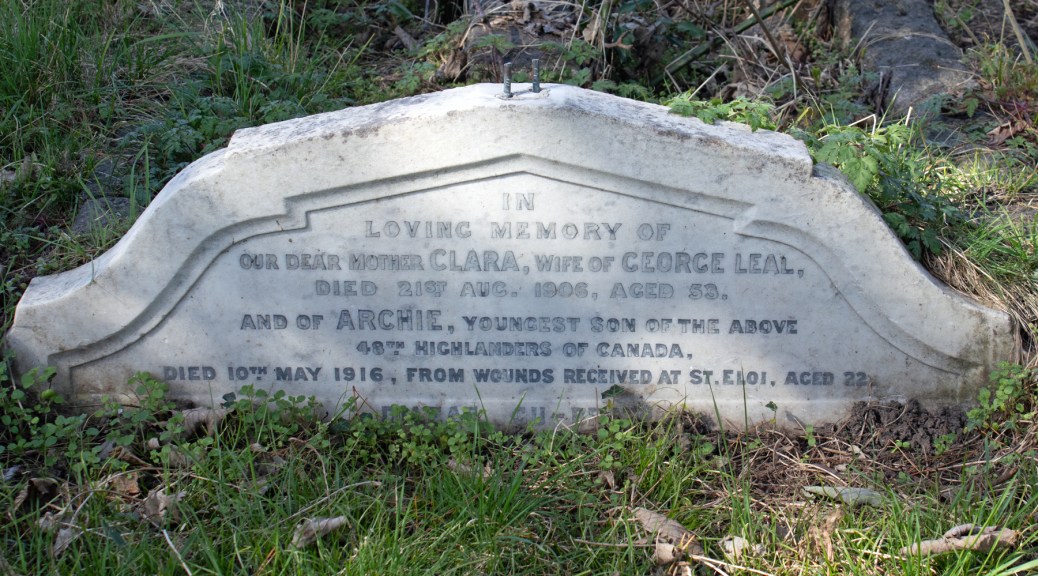
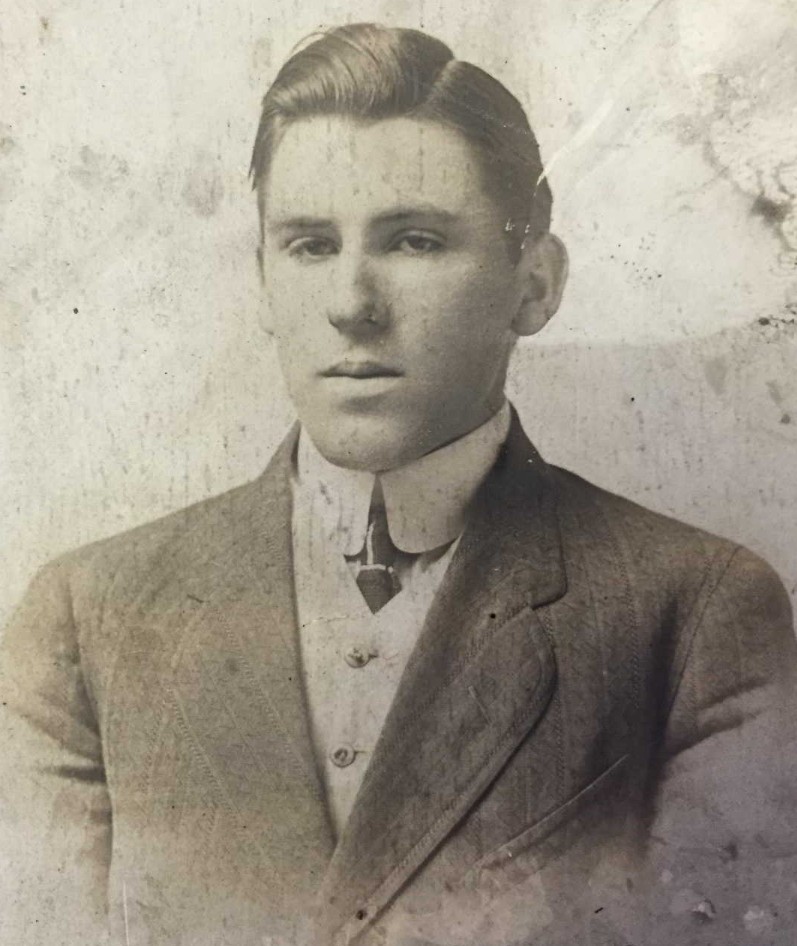
Private Archibald Leal

Private Archibald Leal

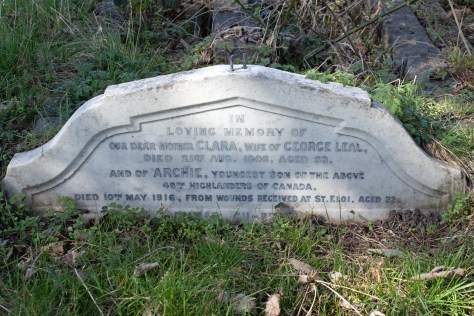
Archibald Edmund Leal was born in Tinwood, West Sussex on 13th September 1894. The youngest of six children, his parents were George and Clara Leal. George was a dairyman, and, by the time of the 1901 census, the family had moved to a terraced cottage at 66 Newland Road in Worthing.

Clara died in 1906, and Archibald – who was better known as Archie – and two of his siblings took the opportunity to seek a better life across the Atlantic. In 1910, the three of them – Archie, brother Phillip and sister Winifred – emigrated to Canada, settling in Breakeyville, to the south of Quebec.

Archie found work as a chauffeur, but when war was declared, he was quick to step up and serve his King and Empire. He enlisted on 10th September 1914, joining the Canadian Expeditionary Force as a Private. His service records show that he was 5ft 6in (1.67m) tall, with fair hair, brown eyes and a dark complexion. He was also noted as having “very many [acne] scars over [his] chest and back.”

Assigned to the 15th Battalion of the Canadian Infantry, Private Leal sailed to Britain, arriving at Tidworth Camp in Wiltshire on 12th February 1915. By April he was in France, and, on 28th July he was in a front line trench near the town of Ypres. A shell exploded nearby and, in seeking shelter, he badly twisted his ankle and back. Medically evacuated to Britain, Archie spent a month recuperating at the Royal Herbert Hospital in Woolwich, Kent, before returning to his unit in Wiltshire.

By December 1915, Private Leal was back on the Western Front and remained there for the next five months. In April his unit was on the front line, and he was injured in his right leg when a rifle grenade exploded. Archie was initially treated by a field ambulance, but his injury was such that evacuation to Britain was again necessary. He was admitted to the County of London War Hospital in Epsom, Surrey, but had contracted tetanus by this point. This was to prove fatal, and his body succumbed on 10th May 1916: he was 21 years of age.

The body of Archibald Edmund Leal was taken back to Worthing for burial. He was laid to rest with full military honours in the town’s Broadwater Cemetery. A local newspaper reported that “Private Leal, although not a Canadian, was possessed of true Colonial grit, and had had his full share of active service.” [Sussex Daily News: Wednesday 17th May 1916]


Private Archibald Leal
(from ancestry.co.uk)
Sergeant Charles Chown

Sergeant Charles Chown

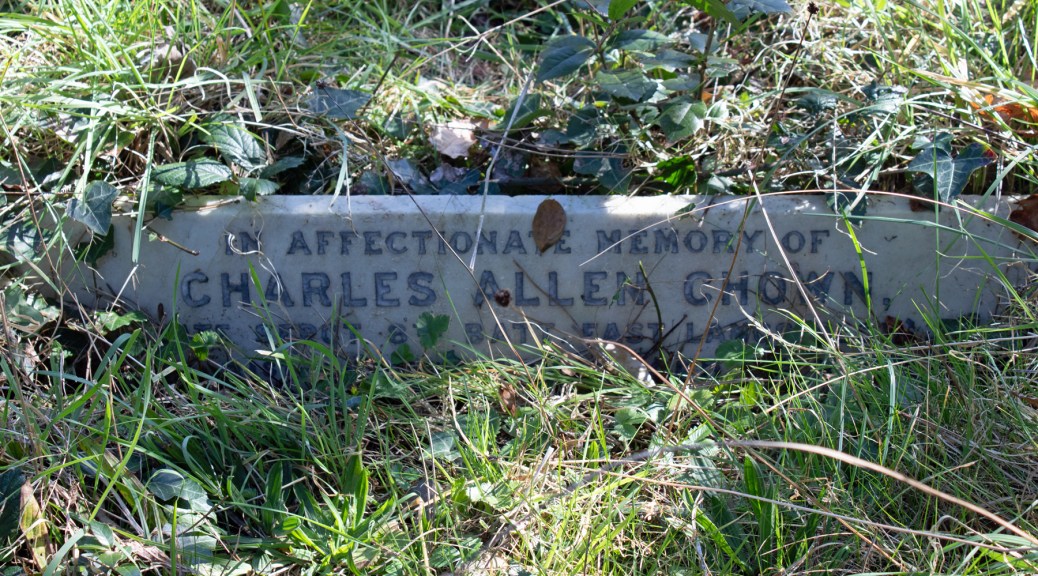
Charles Allen Chown was born in the Sussex village of Lyminster, at the start of 1882. The tenth of eleven children, his parents were Samuel and Mary Chown. Samuel was a general labourer, and when he passed away in 1898, Charles and his siblings rallied to support his now widowed mother.

The 1901 census found Mary, Charles and his brother Jesse living at 32 Lennox Road, Worthing, West Sussex. Jesse was employed as a brickmaker, while Charles had found work as a solicitor’s clerk. The family had two boarders, Helen and Rosie Bulbeck, and Charles’ niece, Minnie, was also staying with them.

Away from work, Charles was a music lover, and joined the local operatic society. In 1904 he appeared in a local version of Iolanthe, his “piece of portraiture being described as one of the successes of the occasion, for his facial play was good, and the drolleries of the character were displayed in an each and natural manner.” [Worthing Gazette: Wednesday 12th September 1917] In the following year’s Mikado, he took the role of the Lord High Executioner, and he was noted as being a “born comedian, with the most mobile countenance and a singularly dry form of humour…” [Worthing Gazette: Wednesday 12th September 1917]

By the time of the 1911 census, Charles had moved on with work, and moved out of home. Taking a room at 7 Tarring Road, Worthing, his landlords were Harold and Rose Ward. Still employed as a clerk, he was now employed by one of the estate agents in the town, although it is clear that his passion was elsewhere. When he joined up in the autumn of 1914, he gave his trade as musician.

Charles enlisted on 7th October 1914 in Ashton-under-Lyme, Lancashire. What took him north is unclear, although a theatre tour is a possibility. His service records note that he was 5ft 8.5ins (1.74m) tall and weighed 138lbs (62.6kg). He had dark brown hair, brown eyes and a sallow complexion.

Initially assigned to the Manchester Regiment, Private Chown was soon transferred to the 8th (Service) Battalion of the East Lancashire Regiment. He was obviously dedicated to his job: by the end of October 1914 he had been promoted to Lance Corporal, and within six weeks he rose to Sergeant.

In July 1915, Charles’ unit was dispatched to France. That autumn, they remained based near Tilques, in Northern France, but Sergeant Chown’s health was beginning to suffer. After just three months overseas, he was medically evacuated to Britain to receive treatment for pleurisy, and was hospitalised in Chatham, Kent.

When he recovered, Sergeant Chown was reassigned to the 10th Battalion of the East Lancashire Regiment, before being transferred to the 47th Training Reserve Battalion in September 1916. That winter, however, his health received a setback, and he contracted tuberculosis. He would spend the first half of the following year in hospitals in Aldershot in Hampshire, Sutton Veny in Wiltshire and, from May 1917, the 3rd Southern General Hospital in Oxford.

Sergeant Chown’s health would continue to deteriorate, and he was formally discharged from the army on 6th July 1917. He returned to Worthing, and his mother’s home, 2 Montague Place. Charles would eventually succumb to his medical condition, and he passed away on 31st August 1917, at the age of 35 years old.

The body of Charles Allen Chown was laid to rest in the family plot in Broadwater Cemetery, Worthing.


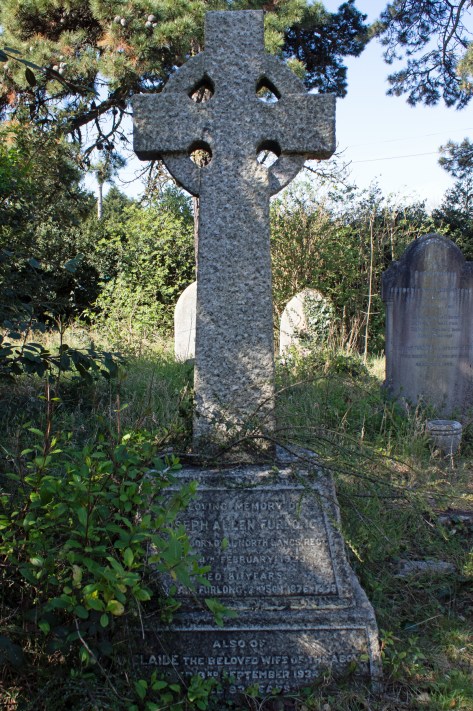
Lieutenant Allan Furlong

Lieutenant Allan Furlong

Allan Hyde Furlong was born the autumn of 1874, and was the oldest of seven children to Joseph and Adelaide Furlong. The place of his birth varies depending on which document you’re looking at, with census records suggesting he was born in Pembrokeshire, Wales, or Aldershot, Hampshire. His birth was registered in Eastry, Kent, however, so it is possible that this is where the family were based at the time.

Joseph was an officer in the North Lancashire Regiment, and his work meant the family moved time and time again. Allan’s younger siblings were born in Hampshire, Pembrokeshire and Athlone, Ireland. By the early 1880s, they had settled in Lancashire, the 1891 census recording them as living in the Fulwood Barracks in Preston.

Given his father’s military background, it is not surprising that Allan was drawn to follow suit. He took a different route, however, and enlisted in the Royal Naval Reserve. Midshipman Furlong took a commission on 27th August 1892, and would make a career out of the navy.

By the time war broke out, Allan was serving on board the SS Burma. In May 1915 he was promoted to Sub Lieutenant, and a further rise in rank – to full Lieutenant – followed in January 1918. He survived the war, and remained at sea through to the start of the new decade.

In March 1920, Lieutenant Furlong was admitted to the Royal Marine Infirmary in Deal, Kent, suffering from a combination of influenza and pneumonia. The conditions would get the better of Allan, and he passed away from them on 14th March 1920: he was 45 years of age.

Joseph and Adelaide were living in Worthing, West Sussex, by this point. Keen to bring their son home, the body of Allan Hyde Furlong was laid to rest in the town’s Broadwater Cemetery.


Trooper Ernest Mitchell

Trooper Ernest Mitchell

Ernest Henry Mitchell was born in the autumn of 1889 in Worthing, West Sussex. The second of five children, he was the eldest son of Frederick and Rhoda Mitchell. Frederick was a baker and confectioner, and the family lived in and around the town centre. The 1891 census found them at 29 West Buildings; ten years later they were living at 7 Clifton Road; the 1911 census recorded the family at 62 Chapel Road.

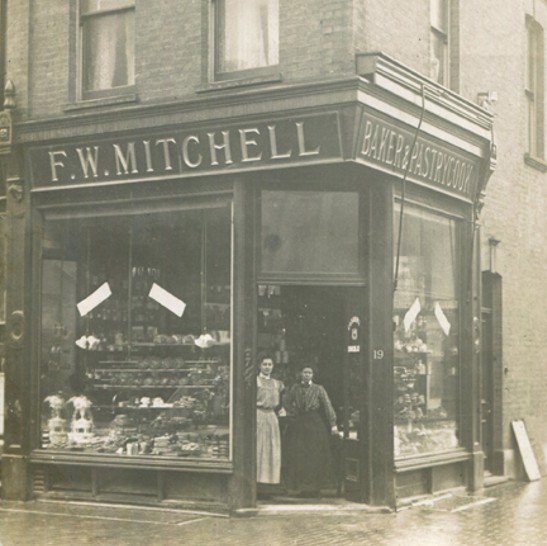
By this point, FW Mitchell’s was a well known bakery, and would remain so through to the 1960s. The Chapel Road shop was bombed during the Second World War, and the family moved the business to North Road.

The 1911 census showed what the bakery has become. Frederick and Rhoda were running the business, while their three sons – Ernest, Reginald and Frederick Jr – were also involved. Their eldest daughter, Rhoda Jr, was an elementary school teacher, while their youngest child, Edgar, was still at school. The Chapel Road property was a bustling affair: the Mitchells employed four live-in servants: Emily Lyon, Annie Dannage, and Mabel Swan as shop assistants, and Edith Blunden as a domestic.


FW Mitchell’s bakery, Worthing

Away from work, Ernest showed other talents. “He was possessed of musical inclinations, and was at one time a member of the Choir of the Congregational Church, as well as of the Choral Society.” [Worthing Gazette: Wednesday 31st October 1917]

In January 1913, Ernest married Constance Banwell. She was the eldest daughter of nurseryman Henry Banwell and his wife, Ellen, and lived on Christchurch Road, not far from the Mitchells’ shop.

When war broke out, Ernest stepped up to serve his country. His service records show that, while he enlisted on 9th December 1915, he was not formally mobilised until March 1917. As a Trooper, he was assigned to the Household Battalion, and, after a brief period of training, he soon found himself in the thick of things.

The Household Battalion fought at Arras in the spring of 1917, but it was at Passchendaele that Ernest’s war was to come to an end. Wounded in the leg on 6th October – just three months after arriving in France – he was medically evacuated to Britain for treatment. Admitted to No. 2 War Hospital in Birmingham, he initially recuperated, but pneumonia took over and Trooper Mitchell succumbed. He passed away on 26th October 1917, at the age of 28 years old.

The body was removed from Birmingham, arriving in Worthing at midnight on Monday; and the internment took place at the Cemetery yesterday afternoon [20th October]. Among those who attended the ceremony were two soldier brothers of the deceased – RA Mitchell, who is in the Royal Flying Corps; and FE Mitchell, of the Middlesex Regiment. Still another brother is serving his Country in a Military capacity. This is Fred Mitchell, formally Organist of the Congregational Church, who is in the Army Service Corps, and was unable to be present yesterday, for he is now in Hospital in Wiltshire.

[Worthing Gazette: Wednesday 31th October 1917]

Ultimately, Ernest Henry Mitchell would be the only one of his siblings to pay the ultimate price while serving his country. He was laid to rest in the family plot in Broadwater Cemetery, on the then outskirts of the home town.


Ernest’s headstone also pays tribute to Alan Frederick Gill, who died in April 1925. This was his sister Rhoda’s child, who died at just four-and-a-half years old.


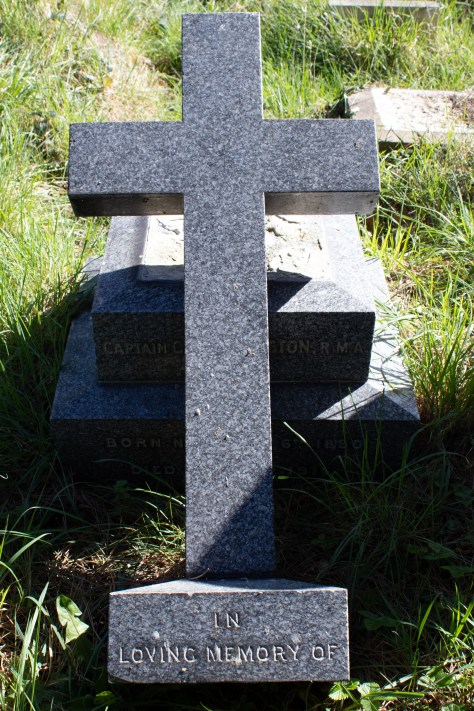
Captain Guye Lushington

Captain Guye Lushington

Guye Wellesley Lushington was born in India on 6th November 1880. The oldest of four children, his parents were James and Bessie Lushington. James was a worked in the Bombay Uncovenanted Civil Service and, while it’s not possible to track his location through census records, by the time of the 1891 census, Bessie had returned to Britain with the children. The document found them living at 31 Clarendon Street in Bedford, Bedfordshire.

Guye’s background stood him in good stead when it came to building a career. His chosen profession was the army and, by January 1898 he had landed a commission in the Royal Marine Artillery. Lieutenant Lushington continued to do well and, on 13th March 1908, he received a promotion to Captain.

Full details of Guye’s military service have been lost to time, but by the time war broke out, he was attached to the dreadnought battleship HMS Bellerophon. The stress of the Great War was to take its toll, however, and he was diagnosed with neurasthenia. In 1916, he was admitted to the King Edward Convalescent Home at Osborne House, on the Isle of Wight. Captain Lushington’s condition, however, was to worsen.

The Isle of Wight Coroner yesterday held an inquest respecting the death of Captain George [sic] Wellesley Lushington, 35, of the Royal Marine Artillery, sone of Mr James Law Lushington, of Briar Bank, Grove-road, Worthing [West Sussex], who was found dead… on Tuesday, having apparently thrown himself over an iron staircase fire escape into the courtyard.

Colonel Douglas Wardrop, house governor and medical superintendent, said the deceased arrived at Osborne House from Haslar on the 5th inst… He was rather depressed and worried about his loss of will power. He had been four years on the “Bellerophon” and on active service with the Grand Fleet. There was nothing in the deceased’s manner to suggest suicide. He slept on the top floor of the south wing. At two o’clock on Tuesday morning, the night nurse reported that the deceased had not slept in his room. Search was made, and the deceased was found lying in the courtyard between the kitchen and the south wing. He must have jumped from the fire escape – which was an iron staircase with platforms outside each landing – onto the flag stones below, a distance of 45 feet. His skull was smashed to pieces. There was a railing 3 feet 6 inches high round the staircase, and deceased could not have accidentally fallen over.

Two letters were found in deceased’s room, one addressed to his father and the other to his sister. His father identified the writing. The letter to the deceased’s father was as follows:

“Osborne House, Sunday.

“My dear pater, Since I broke down a month ago, I feel I shall never pick up again. I am afraid this will rather surprise you, but I cannot stand the tension any longer. I am always wondering what is going to happen to me. Give my love to Daisy. If one has to die, it is better quickly than slowly. With lots of love – GUYE”

Nursing sister Arkins, who had charge of the deceased, said he was quiet, bur showed no suicidal tendency.

Lieutenant George Stewart Manisty, of the Indian Army Reserve, attached to the 7th Bengal Lancers, said he played bridge with the deceased up till 10:30 on Monday night, and for three nights running. Deceased seemed quite friendly and in good spirits.

A verdict of “Suicide while of unsound mind” was returned.

The Coroner said that was the third suicide within a week on the Isle of Wight, either directly or indirectly due to the war.

[Sussex Daily News: Thursday 11th May 1916]

Captain Lushington’s full state of mind on the night he took his life will never be know. The family had suffered three early deaths in a matter of years: Guye’s oldest sister, Violet, had died in 1899, at the age of 18; his brother Hubert had died in 1905 at the age of 19; his mother Bessie passed away in 1911 at the age of 58. Guye had taken his life on 8th May 1916, aged 35 years old.

The body of Guy Wellesley Lushington was taken to Worthing, West Sussex, for burial. He was laid to rest in the town’s Broadwater Cemetery.


Lieutenant Frederick Bravery

Lieutenant Frederick Bravery

DISASTROUS FLYING ACCIDENT

Seven Airmen Killed

Lieutenant FJ Bravery’s “Great Skill and Fearlessness”

A sad bereavement has just been sustained by Mr & Mrs T Bravery, of 83, Chapel-road, in the death of one of their soldier sons, Lieutenant FJ Bravery, of the Royal Air Force, as the result of a flying accident near Birmingham in the early part of last week.

Together with a young Canadian Officer, Lieutenant Macbeth, of Toronto, and five air mechanics, Lieutenant Bravery was testing a large aeroplane, when, according to a farmer who was an eye-witness of the accident, the machine was seen to come nose down out of a cloud at great height.

The machine then righted itself and went about a mile, when it turned over while flying at a comparatively low altitude, and fell straight to earth, all seven occupants being instantaneously killed.

An inquest was held at a small town in the vicinity of the accident on Thursday afternoon, when evidence was given that both Lieutenant Macbeth (who was in charge of the machine) and Lieutenant Bravery were experienced pilots and accustomed to the type of machine they were flying, and that tests made with the machine before the flight was started were all satisfactory.

The Jury, in returning their verdict of “Accidental death” were unable to state the specific cause of the accident.

Lieutenant Bravery, who was only twenty-two years of age, joined the Army Pay Corps at the end of 1914, bur subsequently transferred to the Royal Flying Corps, where he had been engaged in flying for a little more than a year. A capable and experienced pilot, he had latterly been attached to the Central Dispatch Pool, where his duties mainly consisted of ferrying machines over to France; and his Commanding Officer, in a letter of sympathy to the bereaved parents, wrote that “he had done excellent work by his great skill and fearlessness. He was always popular and loved in his mess; and was absolutely unselfish, and a very brave gentleman.”

The funeral of the other victims of the tragedy took place on Friday near the scene of the accident: but the body of Lieutenant Bravery was brought home to Worthing, and was buried yesterday afternoon, at Broadwater Cemetery, with full Military honours.

[Worthing Gazette: Wednesday 28th August 1918]

Frederick James Bravery was born on 4th January 1896 in Brighton, Sussex. One of seven children, his parents were Thomas and Eugenie Bravery. Thomas was a pork butcher, and the 1901 census found the family lived at 3 Grenville Street in the centre of the town. Frederick and two of his sisters, meanwhile, were staying with their paternal grandparents on New Church Road in Aldrington.

By the time of the 1911 census, the Bravery family had taken a massive step up. They were now living in a 10-roomed Victorian villa at 15 Clermont Terrace in the Preston area of Brighton. Thomas was noted as having no occupation, and while three of Frederick’s older sibling were working – one as a milliner’s assistant, one as a chemist’s cashier and one as a clerk for a piano shop – their salaries would not have been enough to support such a change in status.

There is little that can be added to the newspaper’s account of Frederick’s military service. He seemed keen to enlist, and what remains of his army and air force documentation suggests that he added two years to his age. He was, therefore, just 22 years of age when he died, on 19th August 1918.

The body of Frederick James Bravery was laid to rest in Broadwater Cemetery, Worthing, Sussex, just a short walk from where his parents were now living in Chapel Road (Thomas now listed as being a sauce maker and pork butcher).


The newspaper report only highlighted the deaths of the two Lieutenants killed in the fatal accident. Alongside Lieutenant Bravery, the full list of crew lost were Air Mechanic 3rd Class George Greenland (buried at Tower Hamlets Cemetery Park, London); Air Mechanic 1st Class James May (buried in Basford Cemetery, Nottinghamshire); Air Mechanic 3rd Class Charles Offord (buried in Acton Cemetery, Middlesex); and Aircraftman 2nd Class Horrace Simmonds. Simmonds and Lieutenant Robert Macbeth were both laid to rest in St Michael’s Churchyard, Maxstoke, not far from the site of the crash.


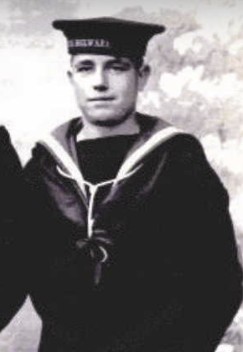
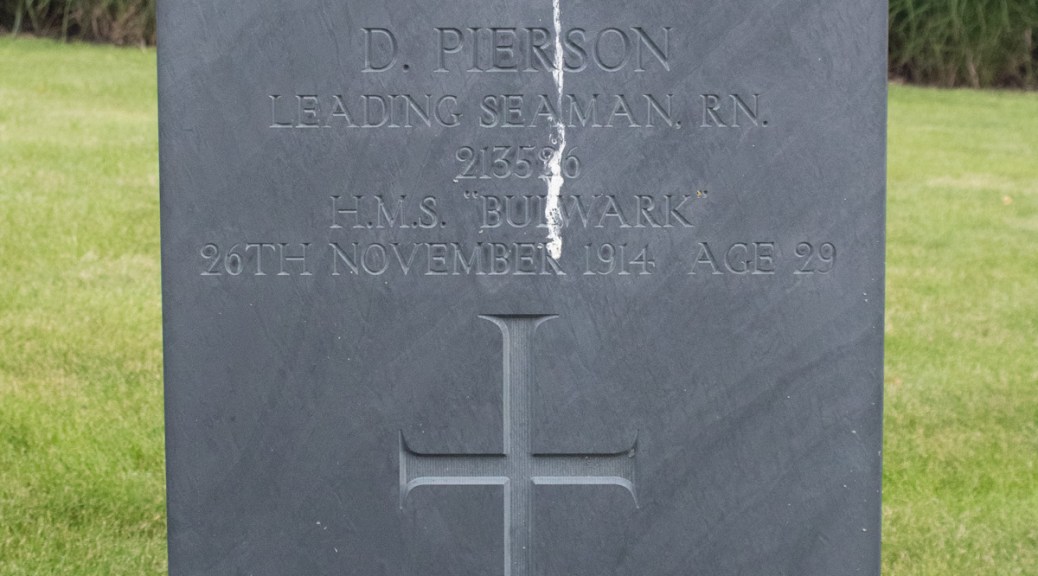
Leading Seaman Dan Pierson

Leading Seaman Dan Pierson

Dan Pierson was born in Liss, Hampshire, on 14th February 1884. One of eleven children, he was the third of four sons to Daniel and Annie Pierson. Daniel was an agricultural labourer, but his son wanted a more guaranteed career and, on 21st February 1901, he joined the Royal Navy.

Having only just turned 17, Dan was too young to formally enlist, and so was given the rank of Boy 2nd Class. He would spend the next year on training ships – HMS Northampton and HMS Calliope – and was also billeted at HMS Victory, the Royal Naval Dockyard in Portsmouth, Hampshire. Just two months after joining, he was promoted to Boy 1st Class and, when he came of age in February 1902, he was fully enrolled into the navy, and given the rank of Ordinary Seaman.

Dan was assigned to the gunboat HMS Redbreast by this point, and his service records show the young man he had become. He was 5ft 6ins (1.68m) tall, with dark brown hair, grey eyes and a fresh complexion. He also had two tattoos: one of a woman on his right arm, and another of a swallow on his left.

Ordinary Seaman Pierson’s contract was for twelve years and, over that time, he served on board eight different vessels. His annual reviews commented on his very good character and his superior ability, both of which backed up his progression through the ranks. On 11th June 1903, towards the end of his three years aboard Redbreast, he was promoted to Able Seaman, and on 1st December 1913, just a couple of months before the end of his initial term of service, he rose to Leading Seaman.

By this point, Dan had married. His new wife, Edith, was a railway worker’s daughter from Harting in Sussex. She was working as a housemaid for Reverend John Leake and his wife Helena at the time of their wedding.

When his contract came to an end, Leading Seaman Pierson immediately renewed it. His papers show that he had grown to 5ft 9.5ins (1.77m) in height but that he had been injured in the intervening years: it was noted that the little toe of his right foot was missing, and that he had a scar on his left leg.

By the time war broke out, Leading Stoker Pierson was assigned to the pre-dreadnought battleship HMS Bulwark. During the summer of 1914, she was one of the Channel fleet used to protect ships transporting troops across to France. He was on board Bulwark when, on the morning of 26th November 1914, an explosion ripped through the ship while it was moored near Sheerness, Kent, tearing it apart and sinking it. In all 741 souls were lost, Dan amongst them. He was 30 years of age.

Dan Pierson’s body was recovered and identified. He was laid to rest in Woodlands Cemetery, Gillingham, Kent, not far from Chatham Dockyard.


Edith’s brother Ernest Pay was also serving in the Royal Navy. Attached to HMS Bulwark as well, Leading Stoker Pay was also killed in the explosion: he was 28 years of age. Tragically for Edith and her parents, Ernest’s body was never recovered. His loss is commemorated on the Portsmouth Naval Memorial in Hampshire.


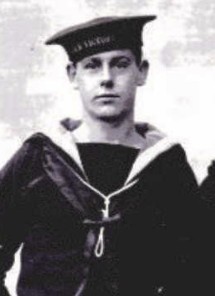
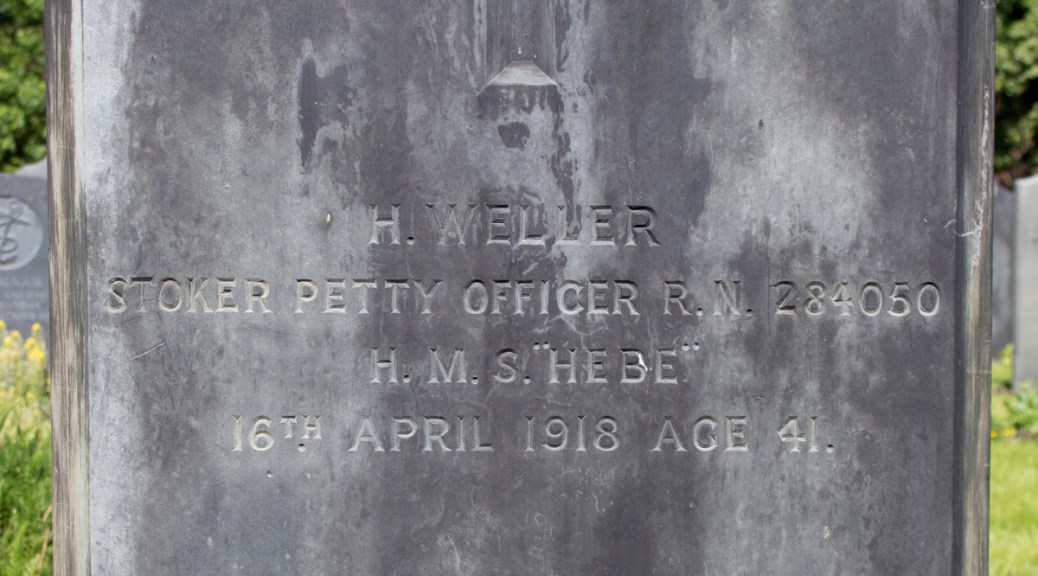
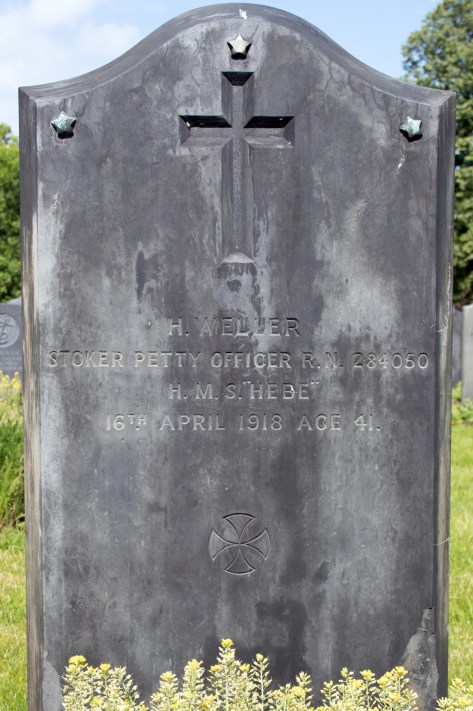
Stoker Petty Officer Henry Weller

Stoker Petty Officer Henry Weller

Henry Weller was born on 13th January 1877 in the village of Ashurst Wood, Sussex. The second of four children, his parents were John and Mary Weller. John was a farm labourer, and the 1881 census found the family living in a cottage on Brooklands Farm in East Grinstead.

Times look to have been tough for the Weller family. By the time of the next census, John, Mary and three of their children were lodging with Hartfield family. Henry, meanwhile, was living in Deptford, Kent, with James and Susannah Weller. He was noted as being a ‘cousin’, although his exact relationship is unclear. James’ nephew Joseph Weller, was also living with them. Just fourteen years of age, Henry was working as a general labourer, and the family were living at 21 Adolphus Street.

Labouring was an irregular way to being in money, and so Henry sought out a more regular career. On 18th November 1896 he signed up to the Royal Navy as a Stoker 2nd Class. His service records show that he was 5ft 4.5ins (1.64m) tall, with brown hair, brown eyes and a fresh complexion. He was also noted as having the letters HW tattooed on his left forearm, and shaking hands on his upper left arm.

Stoker Weller was sent to HMS Pembroke, the Royal Naval Dockyard in Chatham, Kent, for his training. He spent the next nine months split between there and HMS Wildfire – Sheerness Dockyard – learning his trade.

On 8th June 1897, Henry was assigned to the battleship HMS Victorious. Promoted to Stoker 1st Class three months after boarding, she would remain his home for the next three years. After a month aboard another battleship – HMS Revenge – he returned to Chatham.

Love blossomed and, on 8th July 1900, Henry married Alice Beldham, a dock worker’s daughter. The couple exchanged vows at All Saints’ Church, Rotherhithe, Kent, and moved in with Alice’s widowed father, George, at 12 Osprey Street. They went on to have three children: Henry, Harold and Ivy.

Newly settled, Henry seems to have voiced a preference to remain closer to home and, for the next couple of years he would remain based at HMS Pembroke. Alice relocated, and the family set up home at 51 King Edward Road, Gillingham, Kent. Close to the River Medway, the Wellers’ neighbours were all based at the docks, and, during her husband’s future absences, it is likely that Alice felt a sense of community.

After leaving HMS Pembroke, Henry was attached to the cruiser HMS Bacchante. Promoted to Leading Stoker 2nd Class, over the next six years, he would serve on three more ships, spending six-month stints back in Chatham in between assignments. In July 1903 he was promoted to Leading Stoker 1st Class, although he reverted to 2nd Class nine months later. Promoted again in June 1905, he took the rank of Stoker Petty Officer a year later.

Henry’s initial term of service came to an end in November 1908. He immediately re-enlisted, and remained in service until the spring of 1918.

By this point Stoker Petty Officer Weller had been assigned to the torpedo gunboat HMS Hebe for more than thirty months. Patrolling the North Sea coast, on 12th April, she moored at the Alexandra Dock in Hull, Yorkshire. A later inquest outlined what happened next:

Joseph Taylor, a chief petty officer, said that about 11:55pm… [Henry] and he were going from the town to their ship… Witness struck a match to light his pipe. [Henry] walked on for about two yards, and then disappeared. Witness raised the alarm, and went tot he bottom of the dry dock, into which he found [Henry] had fallen, a distance of about 50 feet. They did not know the docks, has they had only come in that morning… If he (witness) had not struck the match they would both have gone over.

[Hull Daily Mail: Wednesday 17th April 1918]

Alive, but severely concussed, Stoker Petty Officer Weller was quickly taken to a local hospital. He was operated on, but his injuries were too severe. Henry passed away on 16th April 1918: he was 41 years of age.

The body of Henry Weller was taken back to Kent for burial. He was laid to rest in Woodlands Cemetery, Gillingham, a short walk from where Alice and their children were still living.


Cadet Sergeant Henry Clark

Cadet Sergeant Henry Clark

Henry John Clark was born on 17th January 1885 in Tufnell Park, Middlesex. The oldest of five children, his parents were wire worker and brass finisher Henry Clark and his wife, Louisa.

The 1891 census found the family living at 51 Cromwell Avenue, Highgate, Middlesex, and this would certainly remain Henry Sr and Louisa’s house for the next ten to fifteen years at least. Henry Jr – who was better known as Jack – is missing from the 1901 census, but by the next document, taken in 1911, he had moved back in with the family.

By this point the Clarks were living in a thirteen-room house on Shepherd’s Hill, Highgate. Henry Sr was now listed as an employer, manufacturing fenders, fire guards and metal good generally, with Jack and his brother, Cyril, also working in the business. The family were supported by two servants, with Henry Sr’s niece and another boarder living with them. Tragically, the census records that Louisa had had five children, although only Jack and Cyril were still alive.

The family business, according to De Ruvigny’s Roll of Honour, Messrs. J Clark, Ltd, of High Street, Bloomsbury, and Jack was one of the directors. The publication also notes that, in his spare time, Jack was “a prominent and active member of the Kit Marlowe Dramatic Club, and the Vaudeville Dramatic Club, and was a popular member of the Highgate Special Constabulary, which body he joined as soon as it was formed.”

On 19th June 1912,Jack married Alice King. Born in Finsbury Park, she was the daughter of a wine and spirit valuer and merchant. The couple exchanged vows at St George’s Church, Hanover Square, London, and would go on to have a child, John, in 1916.

When war broke out, Jack was called upon to play his part. He enlisted on 4th December 1916, joining the Royal Garrison Artillery as a Gunner. His service papers note that he was just over 6ft 2ins (1.89m) tall, and weighed 159lbs (72.1kg).

Gunner Clark served with the British Expeditionary Force from March 1917, returning to home soil just three months later. He had obviously impressed his superiors, as he was sent to the No. 2 RGA Officers’ Cadet School in Uckfield, Sussex, to be trained as a Sergeant.

While here, however, Jack came down with pneumonia, and was admitted to the No. 2 Eastern General Hospital in Brighton. The condition was to get the better of him, sadly, and he passed away on 16th January 1918, the day after his 33rd birthday.

Henry John “Jack” Clark was taken back to Middlesex for burial. He was laid to rest in the majestic Highgate Cemetery, a short walk from his grieving family.


Cadet Sergeant Henry Clark
(from De Ruvigny’s Roll of Honour)