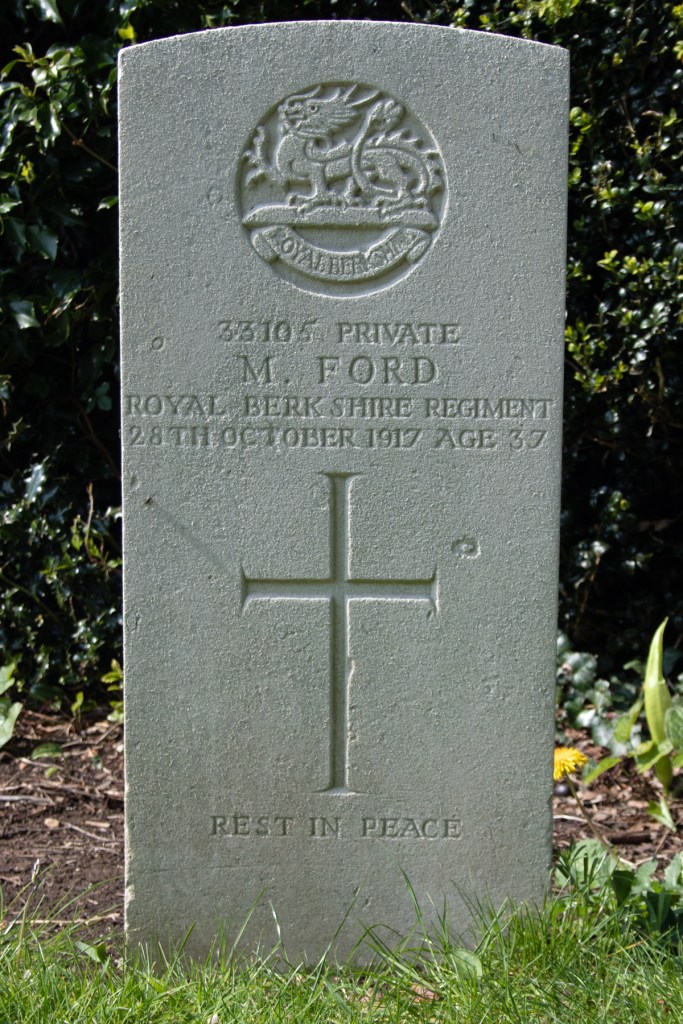
Mark Ford was born early in 1881 in Wellow, near Peasedown St John in Somerset. He was the youngest of eleven children, and the son of Thomas and Ellen Ford. Thomas was a coal miner, and this was a trade that his seven sons, including Mark, went into.
The 1901 census recorded Mark as boarding in a house in Abertillery, Monmouthshire, learning his trade. Within a few years, however, he was back in Peasedown St John. In the summer of 1910, he married local woman Emily Tucker and the couple set up home in Wellow, where they went on to have four children: George, Phyllis, Hubert and Ethel.
War was coming to Europe and, while records are scarce, it’s possible to build up a picture of the service Mark undertook. He initially enlisted as a Private in the Royal Berkshire Regiment, and was assigned to the 10th (Labour) Battalion. They were sent to France in June 1916, although it is not possible to confirm if Mark went at the same time.
His battalion became the 158th and 159th Labour Companies in April 1917, and it seems that Private Ford transferred to the former and, at this point, was definitely serving in France. That summer, he was wounded in the hip and head by an exploding shell and was medically evacuated to England for treatment.
Private Ford was admitted to the Military Hospital in York, where he lay injured for some time; long enough, thankfully, for Emily to make the journey to be with him. Sadly, his wounds were to prove too much: he passed away at the hospital on 28th October 1917, at the age of 36 years old.
Mark Ford’s body was brought back to Somerset for burial He was laid to rest in the churchyard of St John the Baptist, in Peasedown St John.
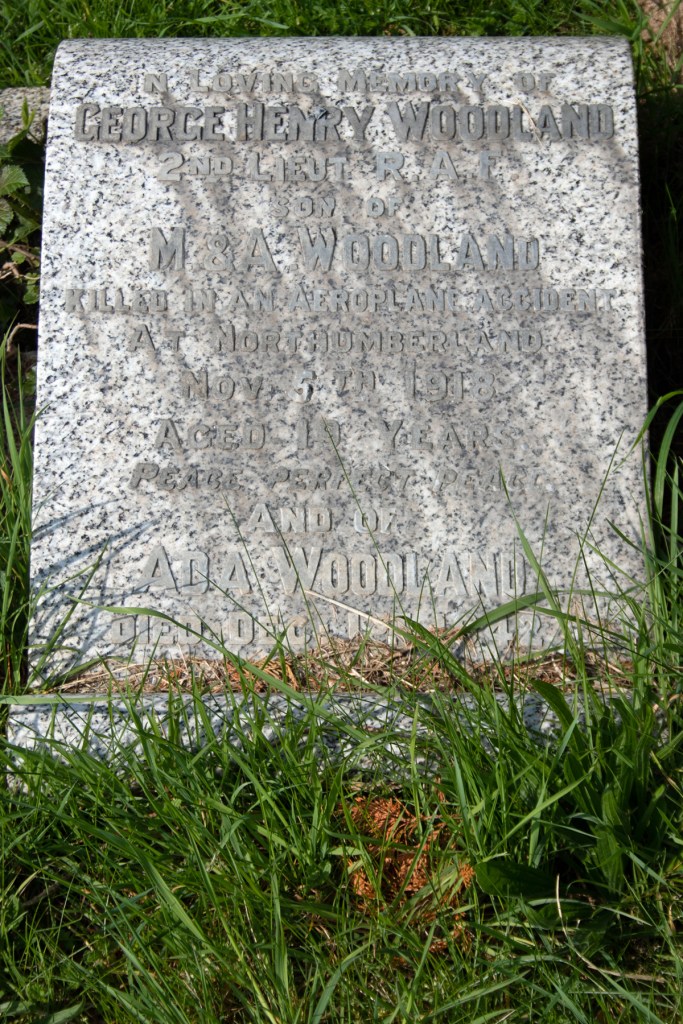
George Henry Woodland was born on 9th June 1899, and was one of six children – three boys and three girls – to Mark and Ada Woodland. Mark was a hewer in a coalmine in Radstock, Somerset, and this is where the family were raised.
George – who was better known as Harry – was still at school when war broke out. He had been taught at the Church of England School in his home town, before winning a scholarship to Shepton Mallet Grammar School. Having passed his exams there, he was taken on as a member of staff at his former school, before joining the army in June 1917 when he turned eighteen.
Initially joining the Infantry Training Reserve, Harry was subsequently transferred to the Royal Air Force. After training in Yorkshire for five months, he was transferred to the 52nd Training Depot Station at Cramlington Airfield in Northumberland.
Second Lieutenant Woodland returned home on leave in October 1918. This was the first time that he and his two brothers had been together since war had been declared – one had been serving in France, the other had been injured and was recuperating at a hospital in Bristol. Harry returned to Northumberland on 14th October.
On 5th November 1918, Harry was flying at the Cramlington base; shortly after take off, while carrying out a flat turn at a height of about 100ft, his aircraft stalled and nosedived, catching fire on impact. Tragically, Second Lieutenant Woodland and his passenger – Air Mechanic Ryder – were burnt to death. Harry was just 19 years of age.
George Henry “Harry” Woodland was brought back to Somerset for burial. He was laid to rest in the family plot in the graveyard of St Nicholas’ Church in his home town of Radstock.
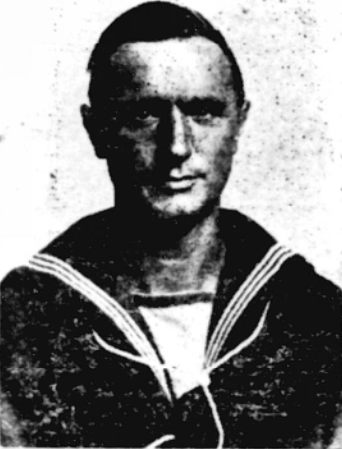
Second Lieutenant George Woodland (from britishnewspaperarchive.co.uk)
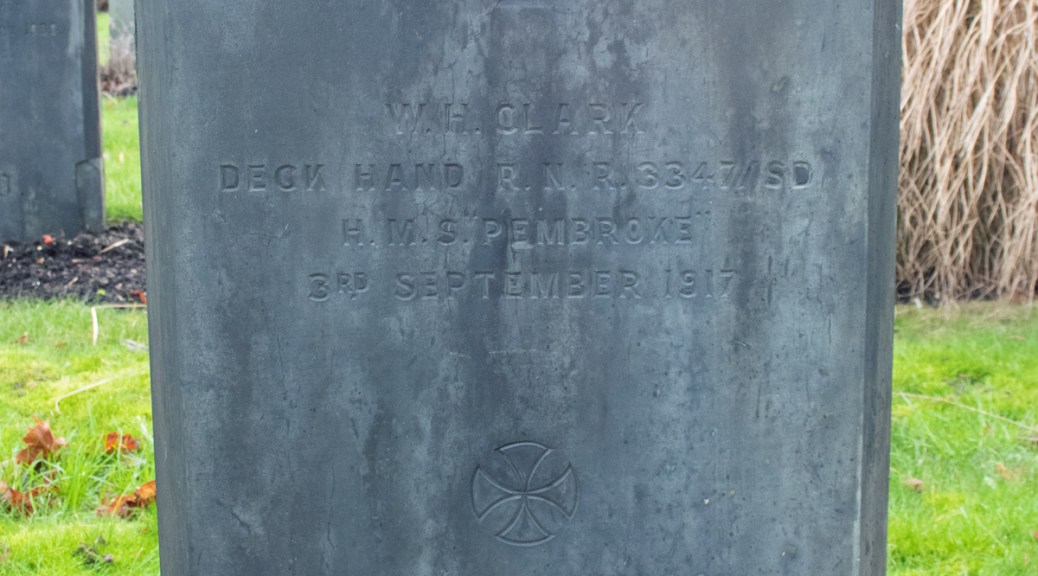
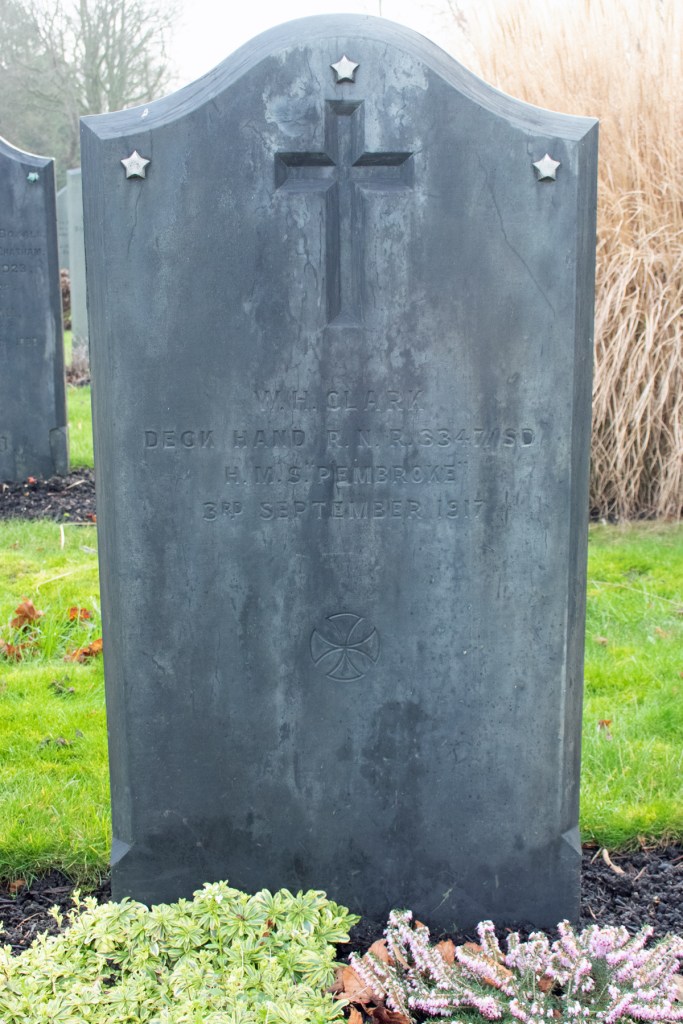
William Henry Clark was born in Whitby, North Yorkshire, on 15th March 1884 and was the younger of two children to James and Fanny Clark. Fisherman James drowned in September 1885, when the boat owned by his brothers-in-law – Robert and Mark Dryden – capsized.
Fanny and her children moved in with her Robert and her widowed mother, Martha, who was a lodging house keeper. In the spring of 1892, she married quarry labourer William Bennison. Her and James’ two children remained living with their grandmother; she went on to have three children with her new husband.
The 1901 census recorded young William working as a rivet heater in the local iron shipyard. He progressed in his work and, by the next census in 1911, remained living with his grandmother and uncle, but was working as a boilermaker in the shipyard.
When war broke out, William was called upon to play his part. While he had done engineering work, he also worked with his Uncle Robert on his fishing boat; this meant he was placed on reserve in the Royal Navy, and was not formally called upon as a Deck Hand until November 1915. Full details of his service are not available, but it is clear that he was based at HMS Pembroke – the Royal Naval Dockyard in Chatham, Kent – by the summer of 1917.
HMS Pembroke was a generally bustling place, but by the summer of 1917, it had exceeded capacity to the point where temporary accommodation was set up. William found himself billeted at The Drill Hall, away from the main barracks.
On the night of 3rd September 1917, Chatham suddenly found itself in the firing line, as the German Air Force launched a bombing raid. One of the bombs landed squarely on the Drill Hall, and Deck Hand Clark was killed. He was 33 years of age.
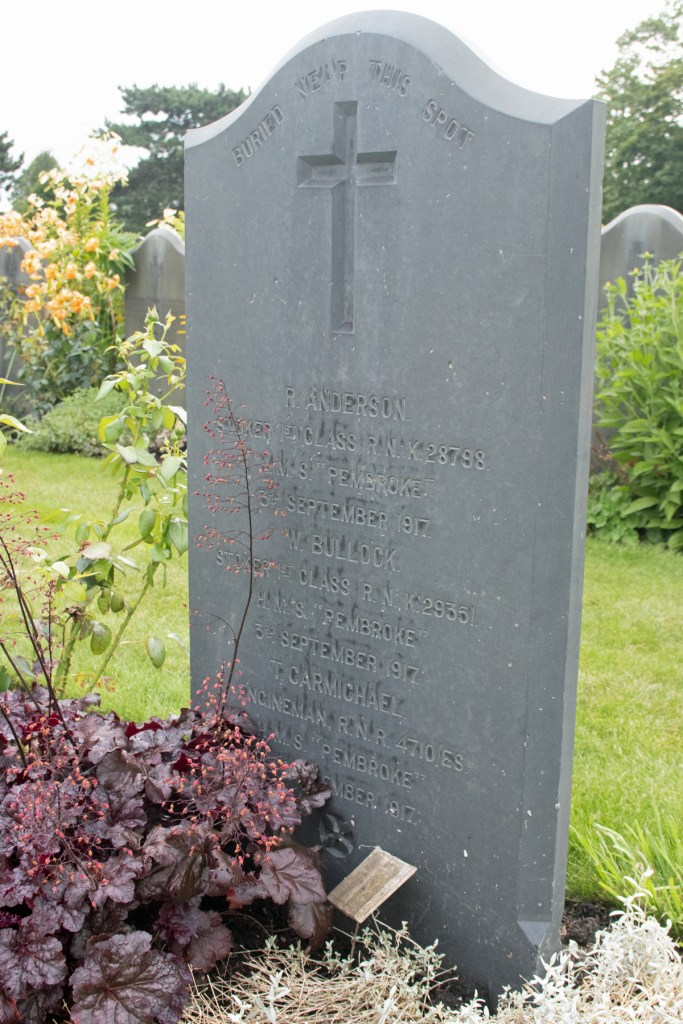
Ninety-eight servicemen perished during the Chatham Air Raid that night. They were buried in a mass funeral at the Woodlands Cemetery in nearby Gillingham. This is where William Henry Clark was also laid to rest.
Deck Hand William Clark (from britishnewspaperarchive.co.uk)
A local newspaper had reported on William’s father’s death:
FATAL COBLE ACCIDENT: SURVIVOR’S NARRATIVE
We append the personal account of Robert Dryden, who was capsized along with his two comrades, James Clark and Mark Dryden, in the fishing coble Ann Maria… off Robin Hood’s Bay, on the morning of Saturday, the 19th inst. The tale tells of the marvellous escape of the narrator and of the sad drowning of his two mates, who each leave a widow and two children. The survivor, who is a stout and healthy fellow, had his left leg amputated some years ago, and a wooden support substituted. The following is his account:
“We were coming in from the fishing grounds on Saturday morning in our coble under a three-reefed sail, with two hundred herrings. There was a stiff breeze blowing form the south-east, with occasional squalls, and it was very dark. We should be, I reckon, about two miles from land… I had just gone into her head to see how she was coming for the land, leaving Mark at the helm, when a puff of wind took her on the starboard quarter and sent her over. We were floated out, and she sank directly, each of us catching hold of an oar.
“Just then a steamer passed us, and we shouted, but could not get their attention, and we all swam about, talking to each other, and I told them to keep their hearts up. We all had knee boots on, and, poor Jim, I think he must have been caught by the cold, for about twenty minutes after he sank. He was a fine fellow, as fine a fellow as you would meet in the streets.
“Shortly after he had gone, poor fellow, a tug boat passed us with a black and flesh-coloured funnel. I was too exhausted to shout much, and had to swim across her bows to keep clear. When she had passed, poor Mark had disappeared. I could then see the land, and with the sea beating on my left shoulder I set out for it…
“I was very disheartened after losing my mates, and all I had – for the coble belonged half to me and half to my brother – nets, money, and, all together, about £60 had gone…
“After a long swim, I neared the shore, and swam for the Blue Rock, because I could not swim further to a calm spot. I found myself on the rock after being, I think, knocked senseless by the seas. I climbed the cliff – it’s a bad coast about here – and walked for about two miles before I met anyone…
“I was several times almost in despair when in the water, and was much distressed at having to return with such a sad tale… It’s a great loss to me. Jim was my brother-in-law, and was 29 years of age, and Mark was my cousin, and 23 years old. It’s thirteen years since I had my other narrow escape, and I would sooner go to the poor-house than go through such another time of it.”
By this melancholy accident, two families have been plunged into deep grief and dire poverty, and deserve the sympathy and practical support of all kind and well-to-do-people.
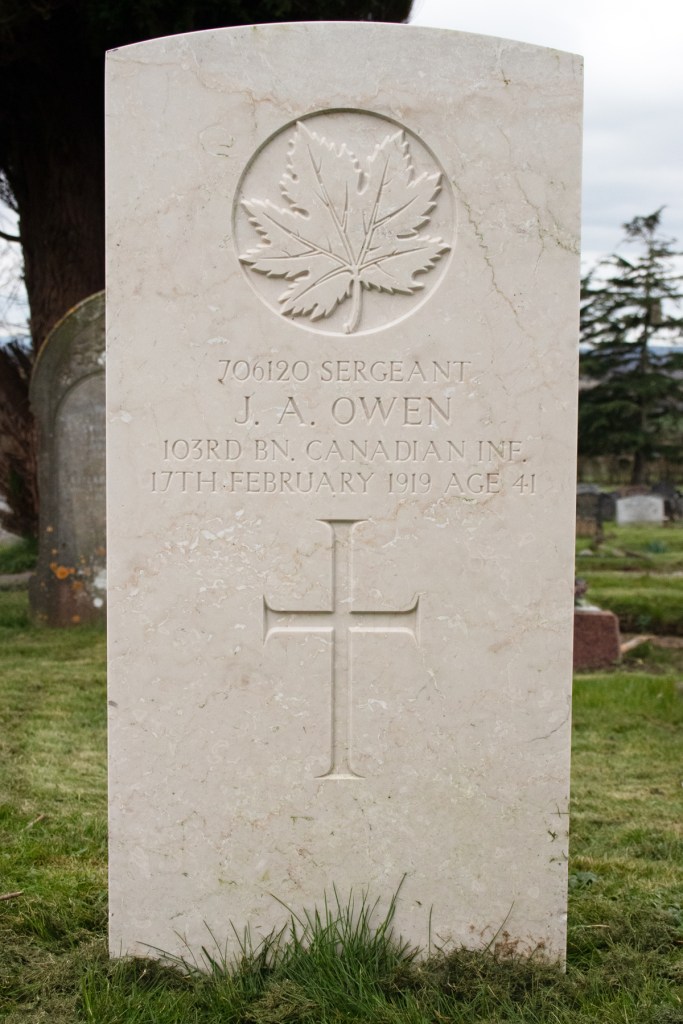
James Alfred Owen was born on 4th August 1877 and was the middle of three children to James and Sarah Owen. James Sr was a woodman from Herefordshire, who had moved the family to Radnor in mid-Wales.
James Jr’s early life has been lost to time, but by the time he turned 30, he had emigrated to Canada. He settled in the west coast town of Prince Rupert and found work as a salesman. On 28th January 1910 he married Hattie Whidden: the couple went on to have three children – Annie, Louisa and Dorothy.
War was coming to Europe, and James wanted to play his part for King and Country. He enlisted on 4th December 1915, joining the 103rd Battalion of the Canadian Infantry. His service records show that he stood 5ft 9ins (1.75m) tall and weighed 156lbs (70.8kg). His physical development was recorded as ‘average’, he had a ruddy complexion, brown hair and brown eyes. It was also noted that he had a birthmark in his left groin and his teeth were poor and required attention.
Private Owen departed for England in July 1916 and was assigned to the Oxney Camp in Hampshire. He was promoted to Corporal and then to Sergeant and, over the next few years, he remained in England. He was primarily based in barracks at Bramshott – also in Hampshire – though did spend time in Seaford in Sussex.
Sergeant Owen survived the war, but was admitted to the Ripon Military Hospital on 8th February 1919, having contracted bronchitis and malaria. The hospital didn’t have any specific expertise in contagious diseases, so it is likely that his move to Ripon was one stage of his move back to Canada.
Sadly, the conditions proved too much for James. He passed away on 17th February 1919, at the age of 41 years of age.
James Alfred Owen’s body was brought to Castle Cary in Somerset, where his sister Eleanor lived with her family. He was laid to rest in the town’s cemetery.
Leslie Harry Perkins was born on 15th June 1901, the only child to Harry and Rosalie. Harry was a solicitor’s clerk from Taunton in Somerset, and Leslie was born and raised in nearby Weston-super-Mare.
Given Leslie’s young age, there is very little documentation about his early life. When he left school, he found work as a motor fitter but, with war raging across Europe by this point, he was keen to put his skills to use.
On 9th October 1917, he enlisted in the Royal Flying Corps (RFC). His service records show that he stood 5ft 10ins (1.77m) tall and noted that he had three scars on his left hand. Because of his age, he was given the rather diminutive rank of Boy.
He worked in the Engine Repair Section just outside Sheffield, Yorkshire, and, transferred across to the RFC’s successor – the Royal Air Force – when it was formed on 1st April 1918.
It was here, in the autumn of 1918, that Boy Perkins contracted influenza. Sadly, like so many others of his generation, he was to succumb to the disease, and passed away in the camp’s hospital on 1st December 1918. He was just 17 years old.
Leslie Harry Perkins’ body was brought back to Somerset for burial. He was laid to rest in the family grave in Milton Cemetery, in his home town of Weston-super-Mare.
Thomas Carmichael was born on 19th December 1888, the older of two children to George and Elizabeth – Lizzie – Carmichael. George was an engine fitter from Hull, Yorkshire, and this is where he and Lizzie raised their young family.
Little further information is available for Thomas’ early life. He married a woman called Annie, but no documents remain to confirm when their wedding was. The couple settled in Hull, and went on to have two children, a girl and a boy.
War had his Europe by this point, and Thomas enlisted in the Royal Naval Reserve. He joined the Royal Naval Reserve as an Engineman on 16th May 1916, serving primarily at the shore-based establishments of HMS Pembroke (the Royal Naval Dockyard in Chatham, Kent), HMS Gunner (the Granton Naval Base in Edinburgh) and HMS Vivid (the Naval Dockyard in Devonport).
Engineman Carmichael arrived in Chatham in August 1917. The Dockyard was particularly busy that summer, and the large number of extra servicemen meant that Thomas was billeted in temporary accommodation in Chatham Drill Hall.
On the 3rd September 1917, the first night air raid carried out by the German Air Force bombarded the town, and scored a direct hit on the Drill Hall; Engineman Carmichael was among those killed. He was just 28 years of age.
Thomas Carmichael was laid to rest, along with the other victims of the Chatham Air Raid, in the Woodlands Cemetery, Gillingham. Tragically, the Navy Death Records state that he was Buried as unidentified in one of the following graves: 516, 522, 642, 735, 935, 937 or 948.
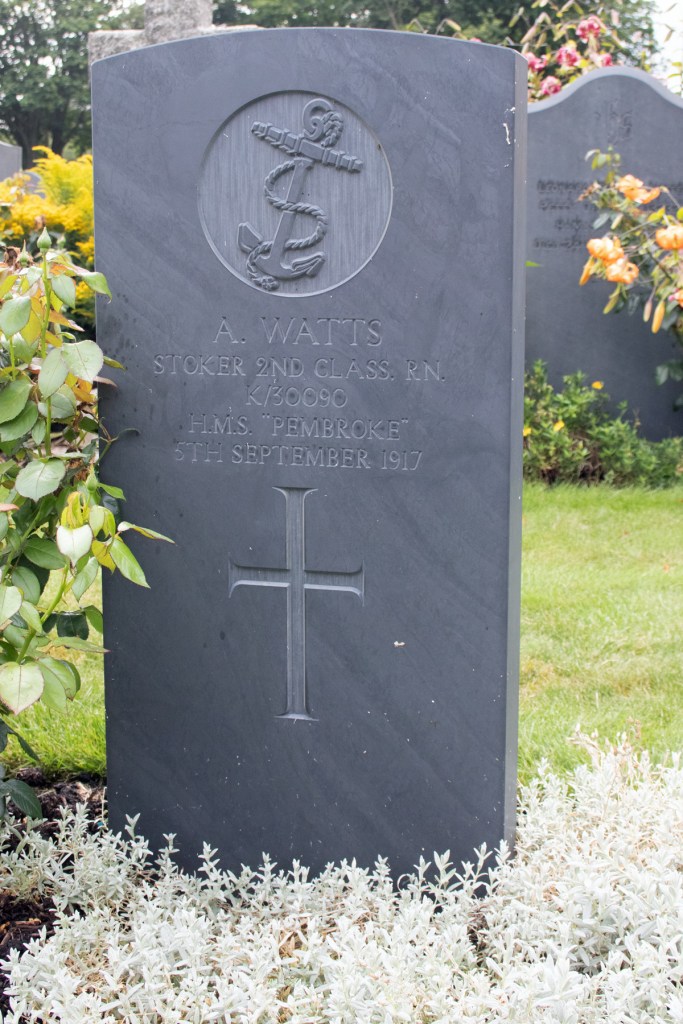
Alfred Watts was born on 16th April 1897 in Marylebone, Middlesex. His mother was called Polly, but there is little further information about his early life.
When he left school, he became a seaman, although in what capacity is not entirely evident. What can be confirmed is that, on 24th November 1915, with war raging across Europe, he decided to make this his full career, and enlisted as a Stoker 2nd Class in the Royal Navy.
Alfred’s military records show that he stood 5ft 4ins (1.63m) tall, had brown eyes, dark brown hair and a fresh complexion. He was also noted as having a birthmark on his right breast.
Alfred’s first posting was at HMS Pembroke, the Royal Naval Dockyard in Chatham, Kent. He spend four months training here, before being assigned to HMS Wallington, a depot shop that served in the Humber Estuary.
On 6th September 1916, in the column marked Discharged is one word: Run. It seems that, for whatever reason, he deserted his post, and having been rounded up nearly three weeks later, he was taken back to Chatham under police guard. He was imprisoned, and only returned to his duties on 30th October.
Stoker Watts was given another posting, on board the battleship HMS Dominion, but again absconded in June 1917, and was detained for a further three weeks, this time at HMS Victory, the dockyard in Portsmouth.
Within a month, Alfred was transferred back to Chatham. HMS Pembroke was a busy place that summer and temporary accommodation was put in place. Chatham Drill Hall was brought into service for this purpose, and Alfred found himself billeted there.
On the 3rd September 1917, the German Air Force carried out its first night air raid: Chatham was heavily bombed and the Drill Hall received a direct hit. Stoker 2nd Class Watts was among those badly injured. He was taken to hospital, but died of his wounds two days later. He was just 20 years of age.
Alfred Watts was laid to rest, alongside the other victims of the Chatham Air Raid, in the Woodlands Cemetery, Gillingham.
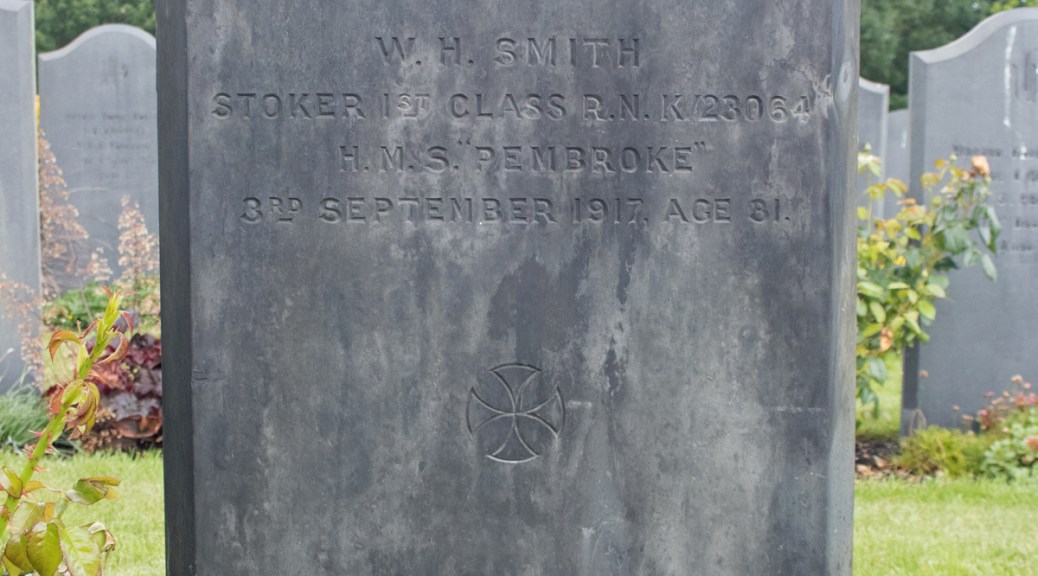
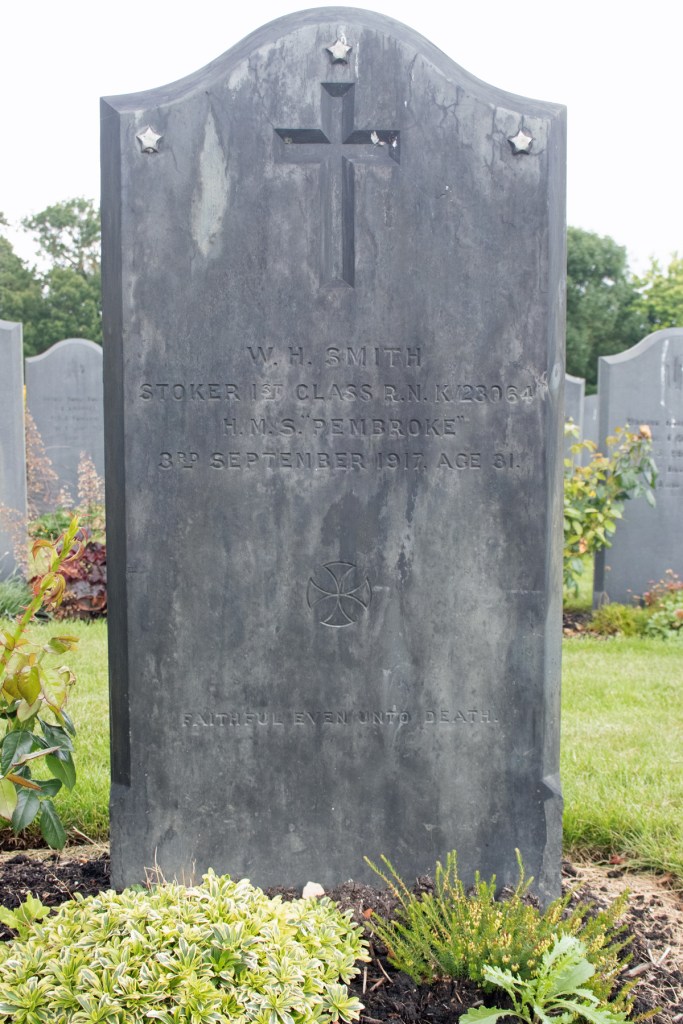
William Hardwick Smith was born in Slingsby, Yorkshire, on 12th April 1887, the oldest of four children to John and Sarah Smith. John was a house painter, but William had his sights set a seafaring career.
By the summer of 1909, he had enlisted in the Royal Navy. He gave his previous profession as seaman, and his place of birth as Manchester, but there is no documentation to confirm either his previous role, or to challenge his Yorkshire birth.
Joining the navy as a Stoker 2nd Class, his service records give his height as 5ft 8.5ins (1.74m) and show that he had auburn hair, grey eyes and a fresh complexion. William had a number of tattoos as well, including a ship and anchor, clasped hands and heart, a woman’s head and bird and the words “True Love” and “W Smith” on his right forearm.
During his initial five years’ service, Stoker Smith served on six different vessels, attaining the rank of Stoker 1st Class in the process. His career was not entirely without problems, however, and his records show that he was detained for 28 days for being AWOL in 1911, and imprisoned again for a further twelve days two years later.
As his term of service came to an end, the storm clouds of war were knocking on England’s shores, and William volunteered for a further seven years. During this time, he was primarily based at HMS Pembroke, the Royal Naval Dockyard at Chatham, Kent, although he was also assigned to the depot ship HMS Dido. Again, his time on board saw him spend two further periods in the brig, although his exact misdemeanours are lost to time.
Back at HMS Pembroke in the summer of 1917, William found himself in an overly packed base. He was billeted in the Chatham Drill Hall, which was being used as temporary accommodation.
On the 3rd September 1917, the German Air Force carried out its first night-time air raid. They scored a direct hit on the Drill Hall; Stoker 1st Class Smith was amongst those killed instantly. He was 30 years old.
William Hardwick Smith was laid to rest, alongside the other victims of the Chatham Air Raid, in the Woodlands Cemetery, Gillingham.
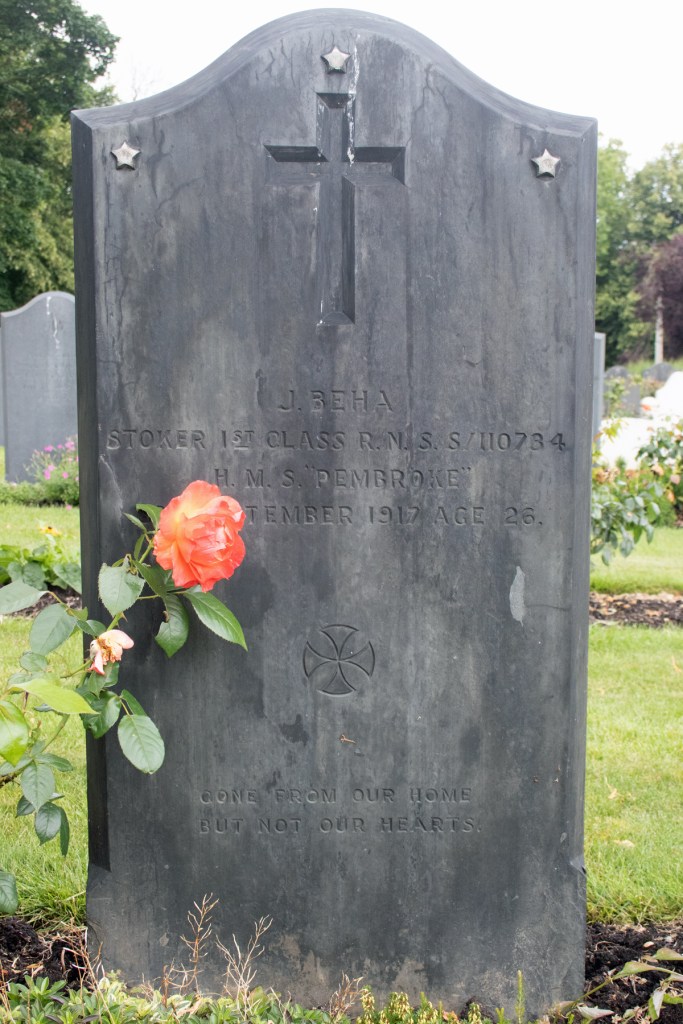
Joseph Beha was born on 16th June 1891, in the Yorkshire town of Whitby. He was the middle of five children to Joseph and Alice Beha, and had a half-sister, through his mother’s previous relationship.
Joseph Sr was a labourer in the local shipyard, and the family had moved to Hartlepool by the time his son had reached 10 years old. The sea had a definite draw for Joseph Jr, and by his twentieth birthday he had enlisted in the Royal Navy as a Stoker 2nd Class.
The service records show Joseph Jr stood 5ft 3.5ins (1.61m) tall, had brown eyes, dark hair and a fresh complexion. His land base was HMS Pembroke, the alternative name for the Royal Naval Dockyard at Chatham, Kent, and it was here that he received his initial six months’ training.
Stoker Beha’s first sea posting was HMS Falmouth, a light cruiser, on board which he served for more than eighteen months, gaining a promotion to Stoker 1st Class in the process. Over the next few years, he was posted to two further ships and, by the time the First World War broke out, was serving on the armoured cruiser HMS Lancaster.
While his record suggests he was of generally good character, Joseph’s time was totally without blemish. He served time in the cells on three separate occasions – for five days in 1913, fourteen days in 1915 and ten days in 1917 – although no evidence of his misdemeanours remains.
The summer of 1917, found Stoker Beha back on dry land in Chatham. HMS Pembroke was a particularly busy place at that point in the war and temporary accommodation was set up. Joseph found himself billeted at The Drill Hall, away from the main barracks.
On the night of 3rd September 1917, Chatham suddenly found itself in the firing line, as the German Air Force launched a bombing raid. One of the bombs landed squarely on the Drill Hall, and Stoker Beha was killed instantly. He was just 26 years old.
Ninety-eight servicemen perished during the Chatham Air Raid that night. They were buried in a mass funeral at the Woodlands Cemetery in nearby Gillingham. This, too, is where Joseph Beha was laid to rest.
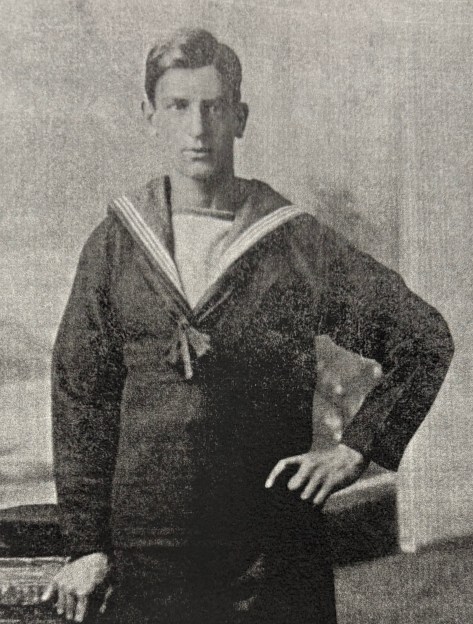
Stoker 1st Class Joseph Beha (from Chatham Air Raid, Vol. 2 by Marcus Bedingfield)
George Wilfred Simpson was born early in 1882, the second of seven children to Robert and Mary Simpson. Robert was a shipbuilder from Yorkshire, and the family were raised in Thornaby, on the River Tees near Middlesbrough.
Details of George’s early life are a bit patchy, but when he left school he found work as a warehouseman. He met Florence Unwin, who was born in Stockton-upon-Tees, and they married in the spring of 1906. They young couple set up home in the town and went on to have four children, all boys.
When the war came to Europe, George wanted to do his part. His full service records are not available, but he enlisted in the Royal Naval Reserve as a Stoker at some point during the conflict. By the summer of 1917, he was based at HMS Pembroke, the Royal Naval Dockyard in Chatham, Kent.
The base was a particularly busy place at that point in the war and additional accommodation was desperately needed. Stoker Simpson found himself billeted at Chatham Drill Hall, away from the main barracks.
On the night of 3rd September 1917, Chatham suddenly found itself in the firing line, as the German Air Force launched a bombing raid. One of the bombs landed squarely on the Drill Hall, and Stoker Simpson was killed. He was just 35 years old.
Ninety-eight servicemen perished during the Chatham Air Raid that night. They were buried in a mass funeral at the Woodlands Cemetery in nearby Gillingham. This, too, is where George Wilfred Simpson was laid to rest.











 Death and Service