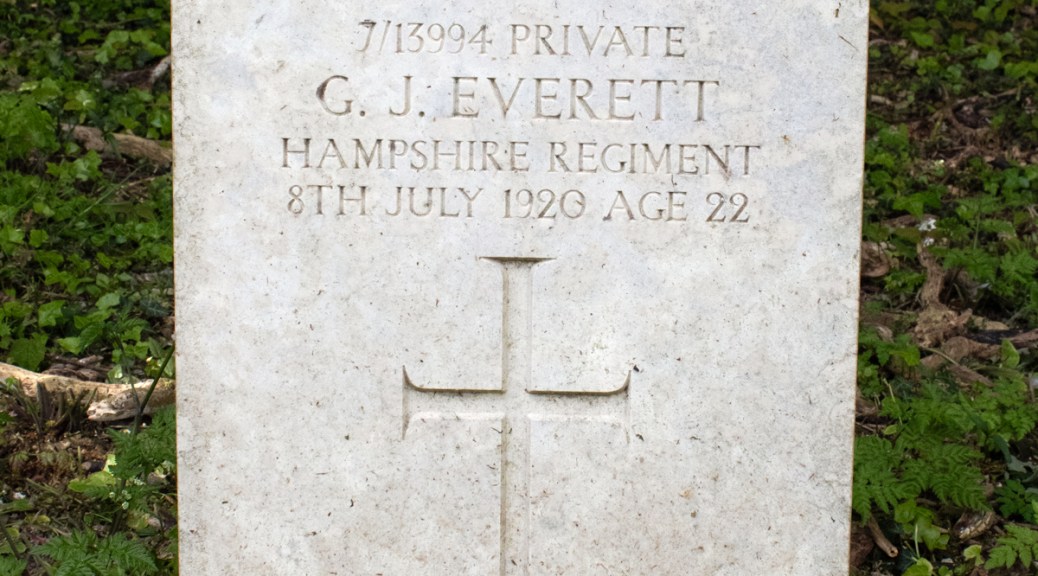
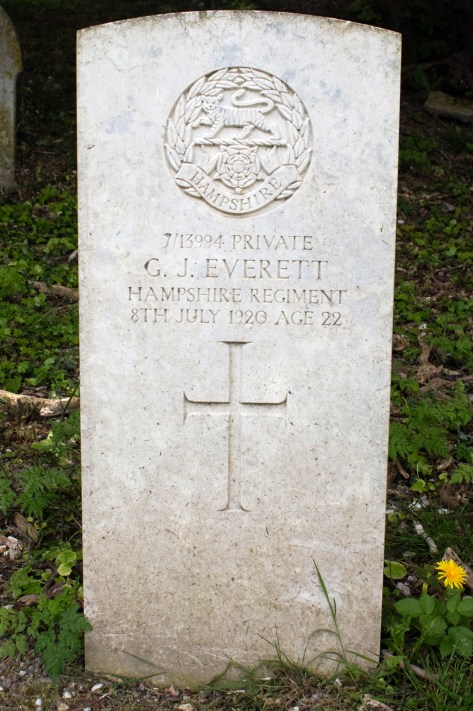
George James Everett was born in Fordington, Dorset, on 3rd July 1898. The fifth of six children, his parents were Frank and Jane Everett. Frank was a shepherd, and farm work was a trade into which at least two of George’s older siblings went.
George was only sixteen at the outbreak of the First World War, and so had to bide his time before he could serve his country. This he did, however, enlisting in the Hampshire Regiment on 24th July 1916. Assigned to the 52nd (Graduated) Battalion, he was sent to Canterbury, Kent for his training.
Private Everett’s time in the army was not to be as much of an adventure and he might have hoped. He spent his time on home soil, and, by the end of 1917, his health wasn’t standing up to the rigours of army life. George had contracted tuberculosis, and the contagious health condition led to his discharge from the military service on 5th December.
At this point, George’s trail goes cold. He returned to home to recuperate, and back at home, he fell in love. Amelia Aylen had been born in Beckenham, Kent, and it seems that she may have moved to Dorset to live with her brother, , Thomas, who had found farm work there. George and Amelia married in Blandford Forum on 3rd March 1919, and had a son, George Jr, that September.
George’s health would ultimately get the better of him. He passed away from tuberculosis and exhaustion on 8th July 1920: he had turned 22 years old just a few days before.
The body of George James Everett was laid to rest in the graveyard of St Peter’s Church in the village of Pimperne, to the north of Blandford.
As George and Amelia had been married after his discharge from the army, she was not eligible for his war pension. The 1921 census found her working as a servant for a retired army major in Wiltshire, while George Jr was being raised by her brother’s family.
Charles George Compton was born in the Broadwater area of Worthing, West Sussex in 1882. One of five children, his parents were Charles and Eliza Compton. Charles Sr was a shoe maker, but when he finished his schooling, his son found work as a bricklayer.
There is little detailed information about Charles’ early life, but in 1901 he married a woman called Lilian. They went on to have three children, and, by the time of the 1911 census, they had set up home at 47 Newland Road, Worthing.
Charles sought to make a better life for his family, and, on 31st January 1913, he boarded the SS Osterley, bound for Australia. He set up home at 1 Orange Lane, in Norwood, a suburb of Adelaide, and, at some point soon afterwards, Lilian and the children joined him.
War was declared in the summer of 1914, and the Empire was called on to play its part. On 28th March 1917, Charles enlisted, becoming a Private in the Australian Infantry. His service papers show that he was 5ft 6ins (1.68m) tall, and weighed 154lbs (69.9kg). He was noted as having brown hair, hazel eyes and a medium complexion. He had two tattoos: one on his left forearm and another on his left hand.
After a few months’ training, Private Compton’s unit boarded the HMAT A30 from Adelaide, to make the journey back to Britain. His unit – the 10th Training Battalion – disembarked in Plymouth on 25th August 1917, and made its way to Larkhill Camp on the edge of Salisbury Plain, Wiltshire.
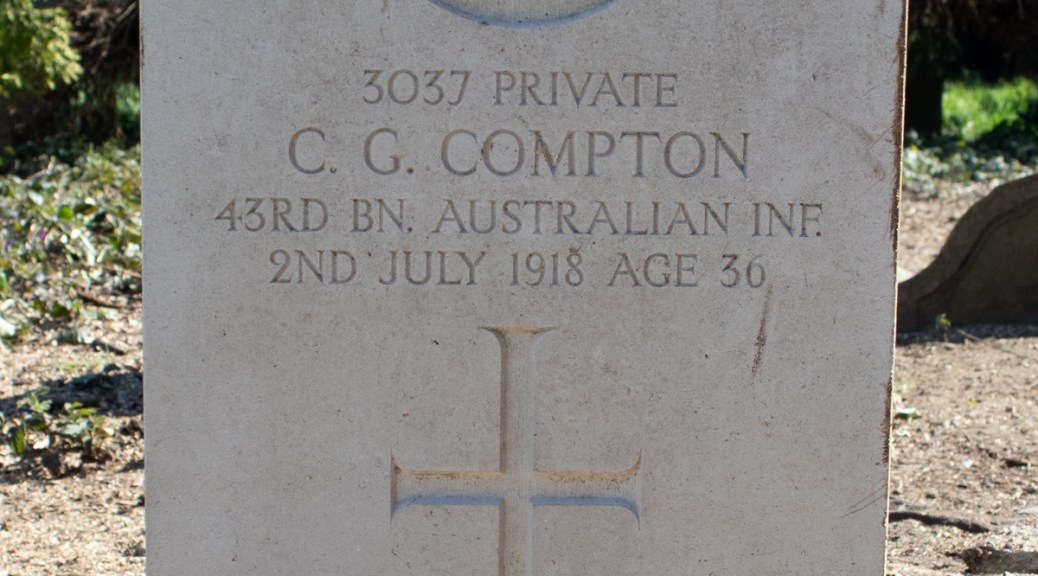
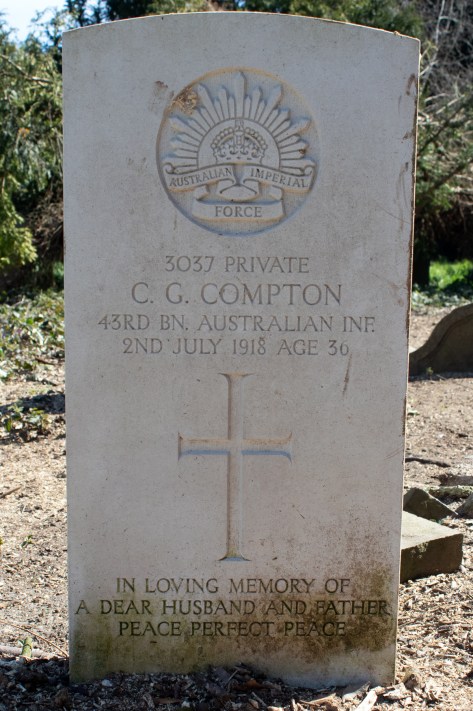
Over the next few months, Private Compton undertook further training, and would be transferred to the 43rd Battalion of the Australian Infantry. On 30th May 1918 he was admitted to Hurdcott Hospital, near Fovant, Wiltshire, suffering from influenza. The condition would eventually prove fatal: Charles passed away on 2nd July, at the age of 36 years old.
There was another Military funeral locally on Saturday.
The deceased soldier in this case was Private Charles George Compton, and the place of interment was the Cemetery at Broadwater. Private Compton, a member of an old Worthing family… was a member of the Australian Force…
The deceased worked for the Corporation before leaving Worthing for Australia, where his wife and two children are now living.
[Worthing Gazette: Wednesday 10th July 1918]
Charles George Compton was laid to rest in Broadwater Cemetery, not far from where his family were still living.
Private Charles Compton (from findagrave.com)
Lilian was now thousands of miles from home and family. Grieving the loss of her husband, the communication from the Army on his passing would provide her with some comfort:
Thanking you for all your kindness in sending my husband things on to me. You don’t know how greatefull I feel when I received letters saying how kind the nurses all were to him through his illness. All I wishes I could have been their, but it was not to be. I now close thanking you all.
[Letter to battalion: 14th January 1919]
Lilian would move to Lincoln Street, Adelaide: her new home she would name Worthing after her home town.
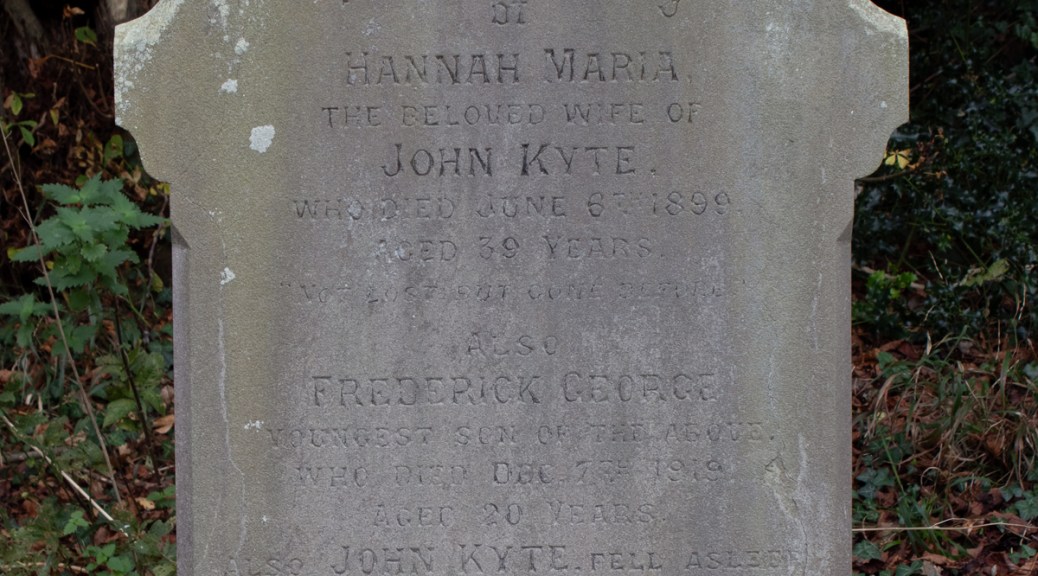
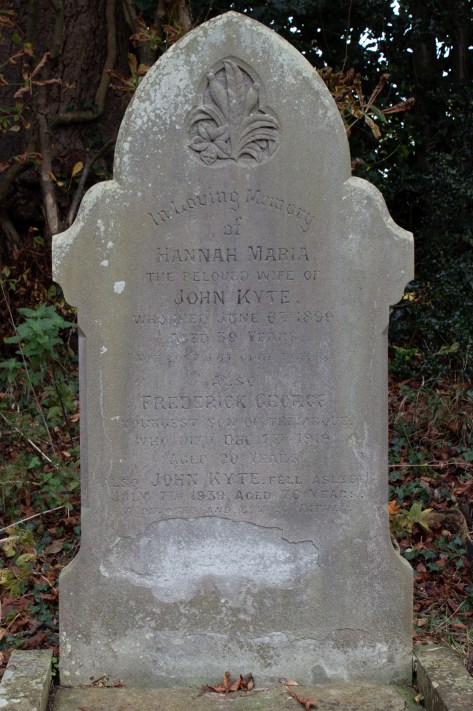
Frederick George Kyte was born on 23rd January 1899. The youngest of five children, his parents were Wiltshire-born market gardener John Kyte, and his wife, Esther. Frederick’s mother had been born in Chelsea, Middlesex, but it was in John’s home county where the family lived, on 16 Wine Street, Bradford on Avon.
Education was important to John and Esther. The 1911 census found his older brothers working as clerks, one to a rubber works, the other to a solicitor.
In his spare time, Frederick was a chorister and the local parish church, and was ‘an enthusiastic member of the Church Lads’ Brigade’ [Wiltshire Times and Trowbridge Advertiser: Saturday 13th December 1919] When he completed his schooling, he also found work as a clerk, and was employed by a local insurance broker.
On 13th January 1915, Frederick joined the Wiltshire Regiment, and, as a Bugler, was attached to the 8th Battalion. He was only 15 years of age, but remained with the unit for the next two years, until he was invalided out of the army for medical reasons.
After some time he partially recovered, and resumed his occupation as an insurance agent, but took to his bed some three months ago.
[Wiltshire Times and Trowbridge Advertiser: Saturday 13th December 1919]
The lung condition Frederick had contracted would be the one to which he would ultimately succumb. He passed away in the family home on 7th December 1919, aged just 20 years old.
The body of Frederick George Kyte was laid to rest in the family plot in Bradford on Avon cemetery.
The newspaper report provides some further information about Frederick’s brothers. Both also served in the army, and both rose to the rank of Serjeant.
The eldest [Edward] is now with HM Forces in Palestine, whilst the younger, Herbert, who was mentioned in despatches and awarded the Military Medal for good work during the retreat, is demobilised.
[Wiltshire Times and Trowbridge Advertiser: Saturday 13th December 1919]
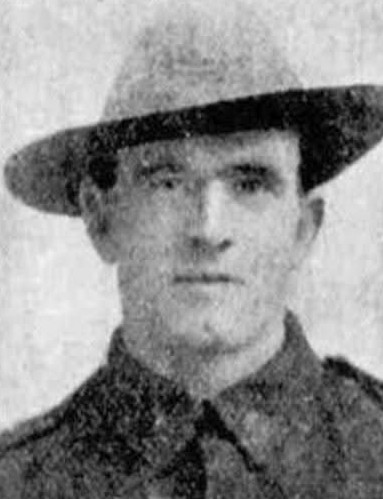
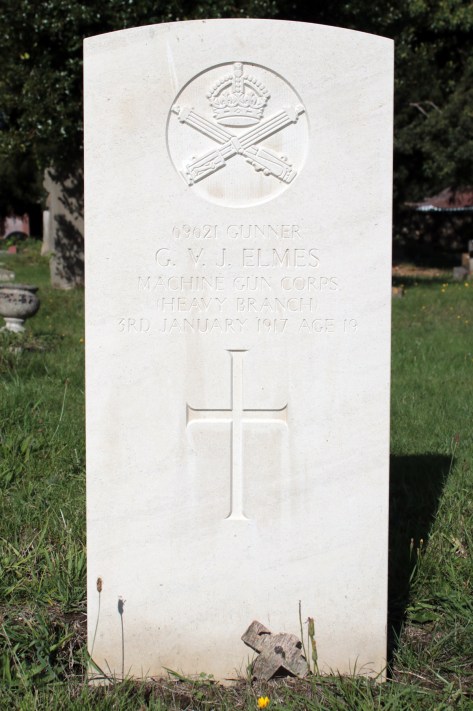
George Victor Jim Elmes was born in the autumn of 1897 in the village of Derry Hill, between Calne and Chippenham in Wiltshire. One of six children, his parents were Nelson and Hannah Elmes. Nelson was a shepherd, and when George completed his schooling, he found work as a labourer on the same farm. Money must have been tight, and the 1901 and 1911 census returns both show that the family had taken in boarders for a little extra.
There is little further documentation about George’s life. He would enlist in the Machine Gun Corps at some point after June 1917, and would undertake his training in Dorset.
The death took place at the Trowbridge Red Cross Hospital on Wednesday of Gunner George Elmes, Machine Gun Corps. Gunner Elmes, whose home is at Chippenham, was travelling thence from Bovington Cap on Monday when he was found to be seriously ill at Trowbridge. Dr Bond conveyed him to the hospital in his motor car, but he got rapidly worse and died on Wednesday. He was going to Chippenham to visit his mother, who is seriously ill.
[Wiltshire Times and Trowbridge Advertiser: Saturday 6th January 1917]
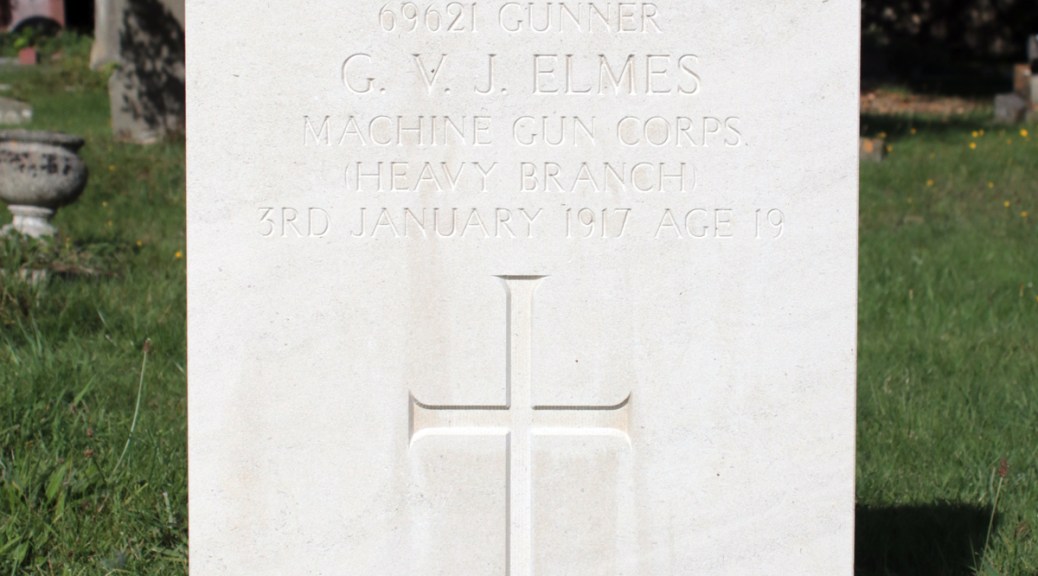
George Victor Jim Elmes died on 3rd January 1917: he was just 19 years of age. Hannah passed away soon after her son: she was 55 years old.
With two funerals to pay for, money must have been incredibly tight for Nelson and the rest of the family. While Hannah was buried locally, the body of George Elmes was laid to rest in Trowbridge Cemetery, not far from the hospital to which he had been taken when he fell ill.
Edward Joseph Hollis was born in the village of Cogges, Oxfordshire, in the spring of 1876. The youngest of four children, his parents were Joseph and Rebecca Hollis. Joseph was a blacksmith, who died shortly before Edward’s birth, leaving a son who would never know his father.
Rebecca had children to raise, and did so while continuing her job as a gloveress. The 1881 census found the family living on Oxford Road, with her widowed father, cowman James, also residing at the house.
Edward remained living with his mother through to the 1901 census, records suggesting that they stayed living in the same property. By this point, Rebecca had give up her work making gloves, and was listed as a charwoman. Her son, however, had found employment as a gardener’s assistant.
Rebecca died in 1902, at the age of 60 years old. Soon after, her son moved to Wiltshire, having found work as a labourer in Trowbridge. On 20th January 1907, he married local woman Rose Banks in the parish church. A cloth worker, she was nine years her new husband’s junior. The couple set up home at 9 Court Street, to the south of the town centre, and went on to have three children, daughters Elsie, Margaret and Bessie.
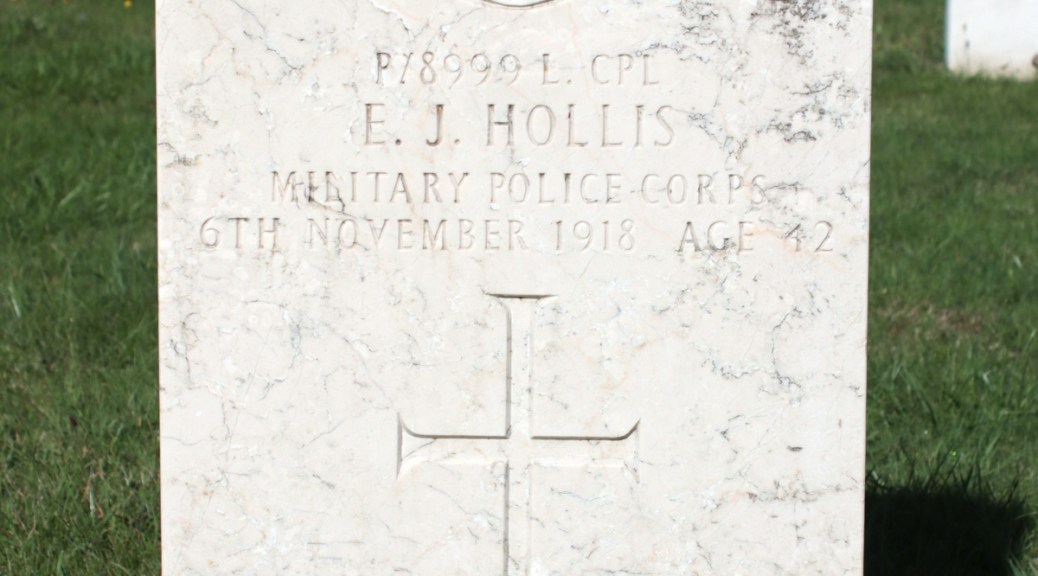
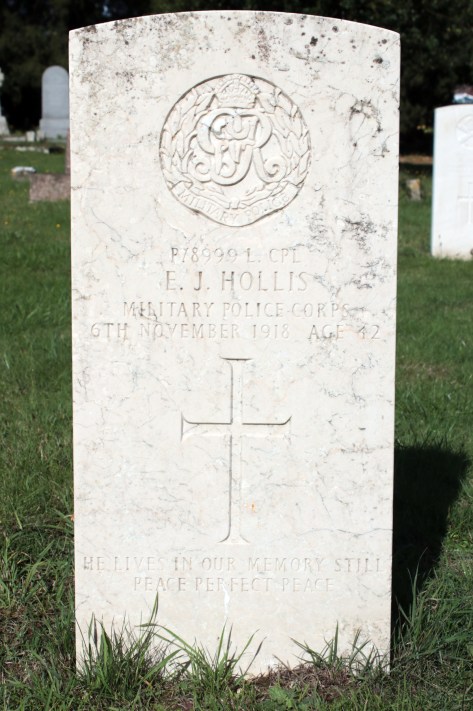
War broke out in the summer of 1914, and Edward stepped up to play his part. There is little information about his time in the military, but it is clear that he had enlisted by the summer of 1918. He saw the war out as a Lance Corporal in the Military Police Corps, and was based at Chiseldon Camp, near Swindon, Wiltshire.
While there, Edward’s health was becoming impacted. He was admitted to the camp hospital with a combination of influenza and bronchial pneumonia, but his heart gave out. He died on 6th November 1918, at the age of 42 years old.
The body of Edward Joseph Hollis was taken back to Trowbridge for burial. He was laid to rest in the town’s cemetery.
Like her mother-in-law before her, Rebecca was now a widow, with young children to raise. She took the risk of emigrating, and moved the family to Ontario, Canada. Here she met farmer James Morgan, and the couple married on 5th July 1920. She died in 1918, also aged 42.
Her and Edward’s legacy were their children. All three married and had families in Canada.
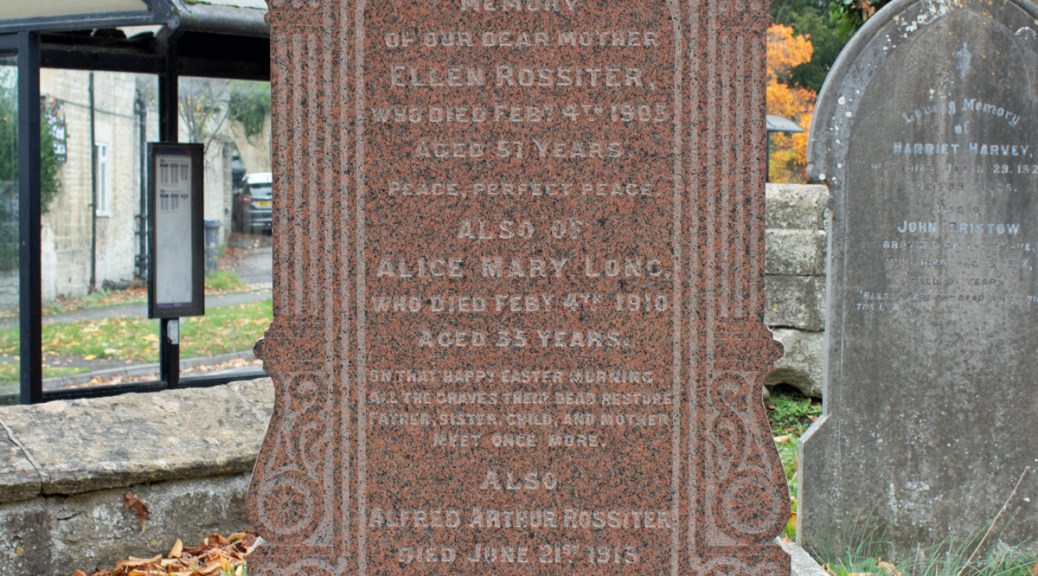
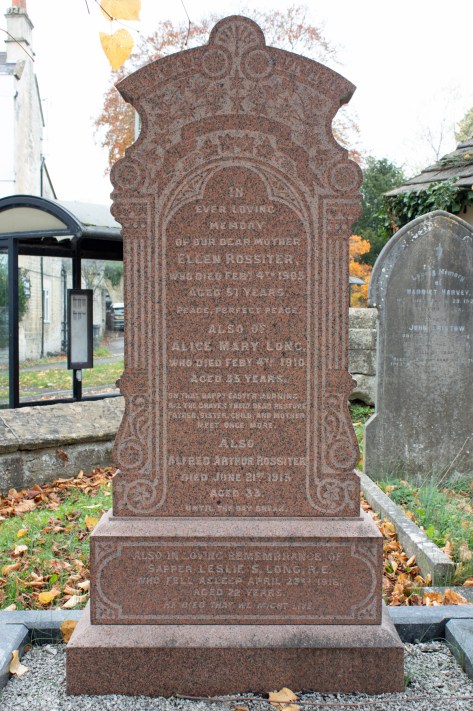
Leslie Stanfield Long was born in Bradford on Avon, Wiltshire, on 15th November 1893. He was an only child, the son of Albert and Alice Long. Albert ran a building company and, at the time of the 1901 census, the young family were living at 46 Newtown, a terraced house to the west of the town centre.
Alice died in 1910, at the age of 35, and was laid to rest in the graveyard of Christ Church, Bradford on Avon. Albert remarried, to a woman called Emeline, and the next census found the family living at 8 St Margaret’s Villas, a large detached property to the south of the town. Also recorded on the census were Albert’s niece, Beatrice, and domestic servant Gladys Stone. Leslie had completed his schooling by this point, and was working as an apprentice motor care repairer.
When war broke out, Leslie was quick to step up and play his part. He enlisted on 14th September 1914, and was assigned to the Royal Engineers as a Sapper. His service records show that he was 5ft 11ins (1.8m) tall, with good vision and good physical development. He was attached to the 1st/1st Wessex Field Company, and found himself in France before the year was out.
Sapper Long would spend the next six months in France, but would be medically discharged from the army on 23rd June 1915. There is no evidence that he was injured, so the likelihood is that he fell ill with a contagious illness such as tuberculosis. He returned home, and would remain there until the following spring.
Leslie Stanfield Long’s health was obviously impacted: he passed away at home on 25th April 1916, at the age of just 22 years old. He was laid to rest alongside his mother in the family plot in Christ Church graveyard.
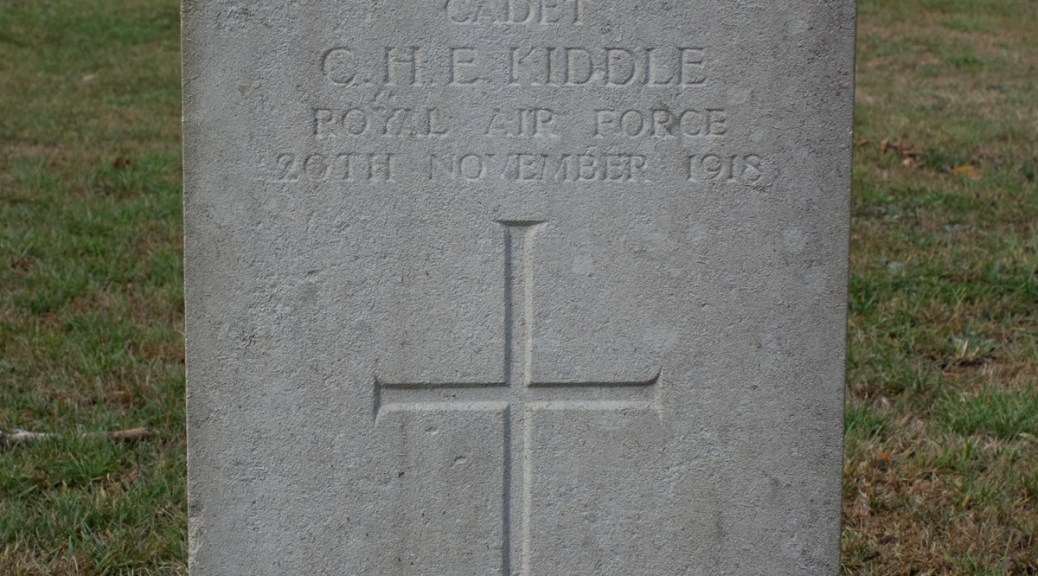
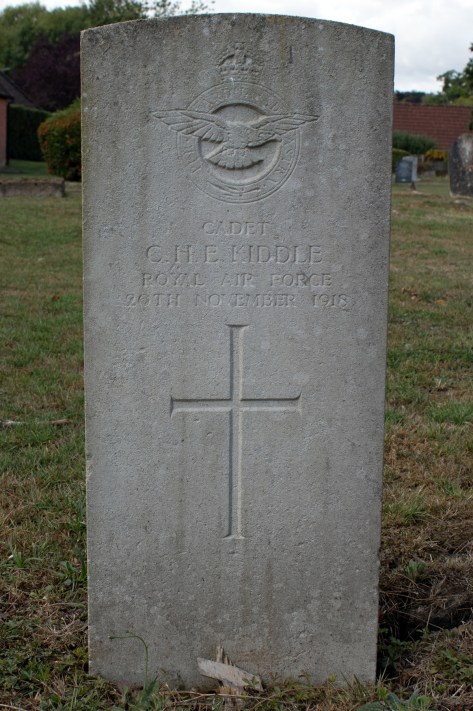
Clifford Henry Evan Kiddle was born on 10th November 1900, and was the youngest of five children to Fred and Martha. Fred was a wheelwright from East Stour, Dorset, and it was here that the Kiddle family were born and raised.
The 1911 census makes for interesting reading. Fred is missing from it, and Martha is recorded as married, and at a house on Victoria Road in Gillingham, Dorset. Her son Leonard is living with her, as are three of her nephews, and a boarder, John Samways.
Clifford, meanwhile, had moved to the village of Penselwood in Wiltshire. His two sisters, Ellen and Sarah, were employed as elementary school teachers there, and their young brother had relocated with them.
When war broke out, Clifford was just a boy. He was keen to play his part as soon as he could, however, and, on 8th October 1918, he gave up his job as a chemist’s apprentice to enlist in the Royal Air Force. Cadet Kiddle’s service papers show that he was 5ft 8ins (1.72m) tall, and had brown hair, hazel eyes and a fresh complexion.
Clifford was sent to Kent for his training, but his time as an airman was to be brief. He was admitted to Shorncliffe Military Hospital with pneumonia, but the condition would prove too much. He died on 20th November 1918, ten days after his eighteenth birthday.
The body of Clifford Henry Evan Kiddle was taken back to Dorset for burial. He was laid to rest in Gillingham Cemetery, not far from where his family were living.
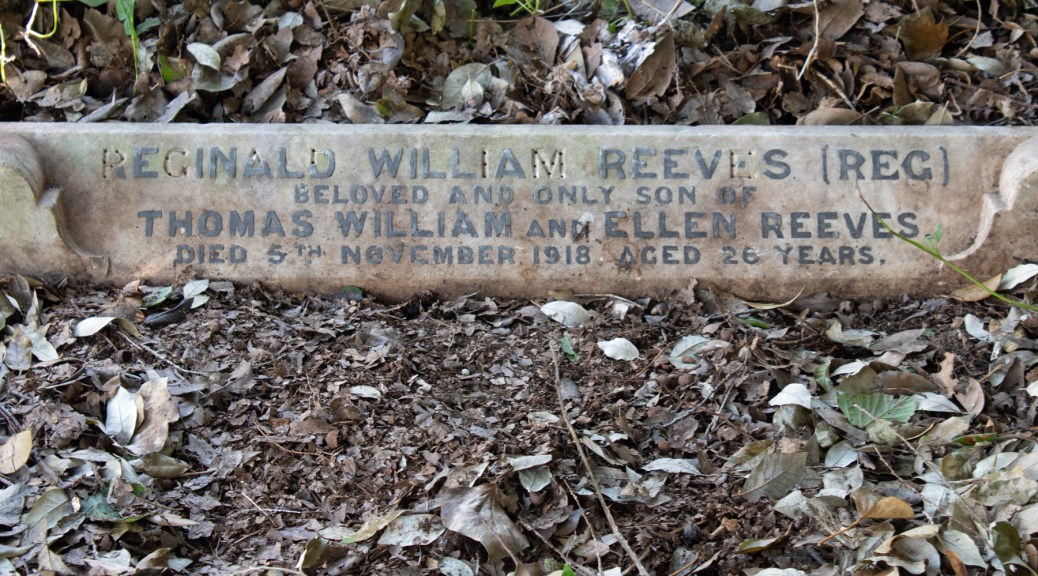
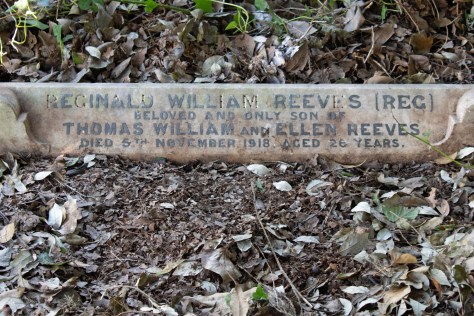
Reginald William Reeves was born in the summer of 1892. The older of two children – his sister Doris passed when she was just six years of age – his parents were Thomas and Ellen Reeves. Thomas was an ironmonger, and the family lived above the shop at 167 Montague Street, Worthing, West Sussex.
Reginald also took up metalwork, becoming his father’s apprentice. The 1911 census notes that the family had moved a short distance, and were now living at 153 Montague Street. A later advert in the Worthing Gazette highlighted special value gas mantles that were double strength and all British made, being sold by TW Reeves & Son, Ironmongers at 135 Montague Street, the family having moved even closer to the town centre.
When war broke out, Reginald would step up to serve his country. Full details of his time in the conflict have been lost, but it is clear that he served as a Private in the Royal Sussex Regiment, and was assigned to the 6th Battalion. The unit was based in Britain and Ireland during the war, and it seems that Private Reeves would not have spent any time in the thick of battle.
By the autumn of 1918, Reginald was back in Worthing, although his trail is pretty hard to follow. He died at a house on Shakespeare Road on 5th November through causes unknown; he was 26 years old.
The body of Reginald William Reeves was laid to rest in Broadwater Cemetery, to the north of Worthing, his parents thanking well-wishers for their sympathy in that week’s edition of the local newspaper.
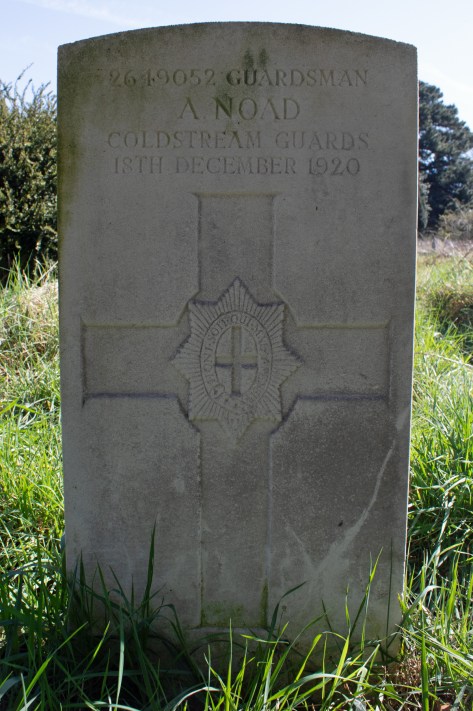
Arthur Noad was born in Wiltshire in January 1888, the younger of two children to butcher Joseph Noad and his wife, Cecilia.
On Friday one of the largest attended funerals for years past took place at [Rode]. It was that of Mr Joseph Noad, youngest son of Mr John Noad, butcher, of Lower Street.
[Wiltshire Times and Trowbridge Advertiser: Saturday 21th April 1888]
The now widowed Cecilia was left in a precarious position, with two young children to raise. But a solution was at hand:
MESSRS. HARDING & SONS are instructed by the Executors of the Will of the late Mr Joseph Noad, to SELL by AUCTION.. the whole of the Valuable LIVE & DEAD STOCK, Comprising:
HORSES: Powerful Grey Gelding, 8-years-old; Grey Mare, 7-yrs.-old, in foal; promising Black Filly, rising-yrs.-old…
PIGS: 10 capital Stores
IMPLEMENTS & MACHINES, &c: Spring wagon, nearly new; 2 spring traps, nearly new; spring cart… 3 sets trap and 1 set thrill harness, saddle and bridle, covered sheep rack… hurdles… chaff machine… turnip cutter, meal bins, hog tubs, iron and wood pig troughs, cake breaker, oat bruiser, horse rake, 6 large meat hampers and other effects…
Quantity of Maize, Potatoes, Barley Straw; stack of prime Pasture Hay, with liberty of removal.
[Trowbridge Chronicle: Saturday 21st April 1888]
Cecilia sold up and moved on and, by the time of the 1891 census, she and the boys were on Lower Street, Southwick, near Trowbridge, next door to her late husband’s sister and family, and her former mother-in-law.
She was unable to support herself indefinitely on the proceeds of the auction, however, and, in the summer of 1899, she married again, to commercial piano tuner Samuel Haskell. The next census return, taken in 1901, found the family still living next to Arthur’s aunt and grandmother: just thirteen years of age, his occupation was listed as a monitor at school (although this was subsequently crossed out).
Arthur would set out to carve his own path in life. By the time of his early 20s, he had left home, and taken on work as a grocer’s assistant in Hungerford, Berkshire. His accommodation was the gasworks on Charnham Street, as he was boarding with the manager and his family.
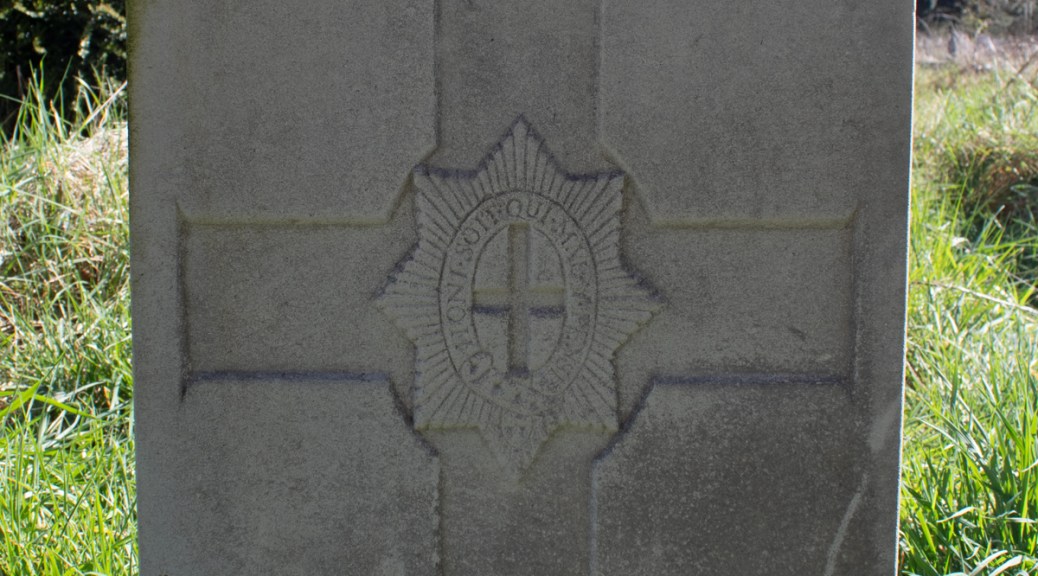
When war broke out, Arthur was quick to step up, joining the Coldstream Guards on 22nd December 1914. Sadly, there is little information about his time in the army, but it is clear that he was lucky to survive the conflict.
Arthur’s older brother, Henry, had joined the Royal Naval Volunteer Reserve, and rose to the rank of Able Seaman. When the war began, there were too many sailors for ships, and so he was re-assigned to the Nelson Battalion of the Royal Naval Division. Henry found himself on the Western Front, and was caught up at Arras and Ypres. He was killed on 31st December 1917, during the action of the Welsh Ridge, and was buried at Flesquières Hill British Cemetery, near Cambrai.
Guardsman Noad married Amelia May in the spring of April 1916: the daughter of a woodsman from Longparish, Hampshire, sadly there is little additional information about her. The couple did go on to have a child together, daughter Kathleen, who was born on 4th April 1918.
There is little further information about Arthur’s life. He survived the conflict and, when peace returned to Europe, he relocated to Worthing, West Sussex. There is little confirmation as to why this move happened: the 1939 Register records Amelia and Kathleen living on Meadow Crescent to the east of the town, but it isn’t clear who went there first.
The last documents for Arthur Noad relate to his passing. He died on 18th December 1920 at the age of 33 years old. He was laid to rest in Broadwater Cemetery, to the north of Worthing.
Amelia had lost her husband, but Cecilia had now lost both of her sons, and had outlived two husbands, Samuel having passed away nine years earlier. The 1921 census found her still living on Lower Street, Southwick. She lived until the age of 87, and passed away in Lothingland, Suffolk.
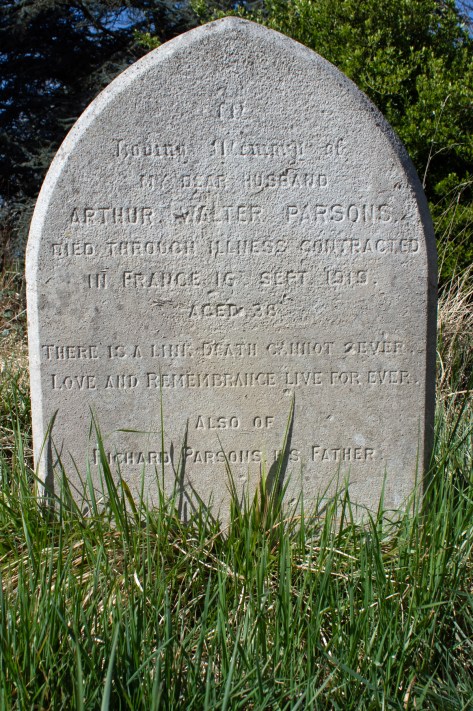
Arthur Walter Parsons was born in Broadwater, West Sussex, in the autumn of 1881. The fourth of nine children, his parents were Richard and Clara Parsons. Richard was a carter, and by the time of the 1891 census, the family had moved into Worthing, and were living at 64 Montague Street, a stone’s throw from the sea.
Richard died in 1899, and the following spring, Arthur married Emily Eagleton. She was the daughter of a domestic servant, and seems to have been born in Poplar Workhouse, Middlesex. The 1891 census found her as a boarding student at St Agatha’s Home Institute in Great Barlow, Cambridgeshire, but by the time here and Arthur exchanged vows, she too was living in Worthing. Their marriage certificate shows that Emily was three years older than her husband, and that he was working as a carter, and living at 23 Clifton Road when they married.
The next census record, taken in 1901, recorded the Parsons living at 25 St Dunstan’s Road in Tarring. Arthur was a carter, and the couple shared their home with Alice, Emily’s daughter and Arthur’s stepdaughter.
By the time of the next census, Arthur and Emily had moved closer to the town centre, and were living at 96 Station Road. Arthur was still employed as a carter – possibly connected to the railway at the end of his road – and was supporting his wife and their three children – Alice (now called Edith), Arthur and Hilda.
When war broke out, Arthur stepped up to play his part. His service papers have been lost to time, but it is clear that he enlisted in the Royal Field Artillery as a Driver, presumably because of his experience with horses. By 27th June 1915, he found himself in France. It is unclear exactly how or where Driver Parsons served, but his unit had moved to Mesopotamia by the start of 1916.
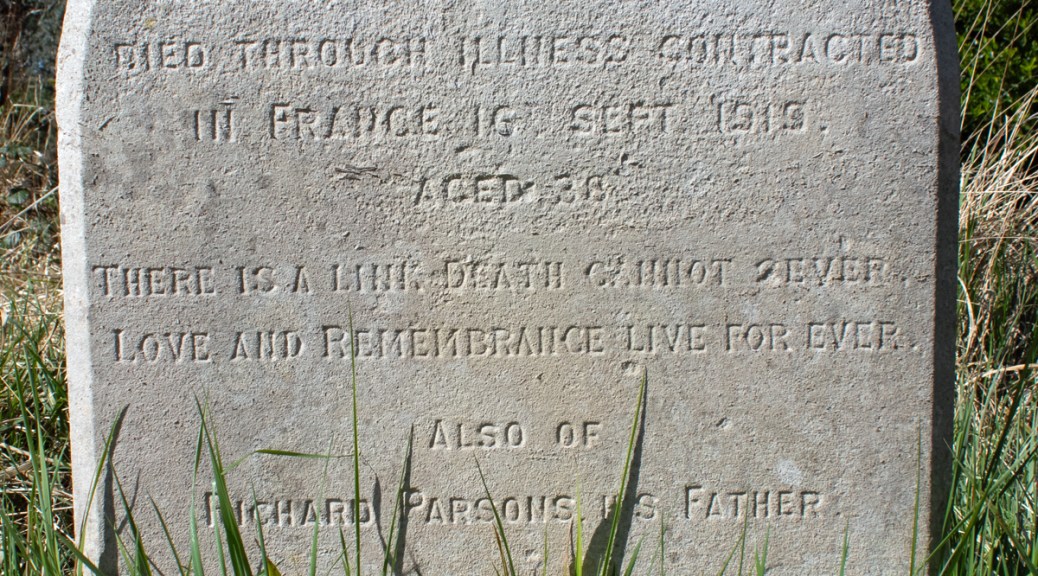
Arthur survived the war, and returned home to his family, which now included another son, Cecil, who had been born in 1915. It would seem that Driver Parsons’ health had become impacted, however, and he would be discharged from the army in 1919. That autumn, on 16th September, he would breath his last, passing away at the age of 38.
The body of Arthur Walter Parsons was laid to rest in Broadwater Cemetery, a short walk from where his grieving family still lived, in Station Road.
Emily was pregnant when her husband died: son Ronald Walter Parsons was born in December 1919. She would find love again, and married railway porter Arthur Browning in December 1929. The 1930 Register found them living at 81 Tarring Road, Worthing with her daughter Rose and son, Cecil.
The Second World War would bring Emily further tragedy. Ronald, who had never known his father, was serving in the Royal Navy, and attached to the destroyer HMS Grenville. She struck a mine off the Essex coast on 19th January, and he was killed. He was just 20 years of age.
The following year, Emily’s husband Alfred also died, passing away at home at the age of 66. Emily lived another eight years, and died in the spring of 1949, aged 69 years old.