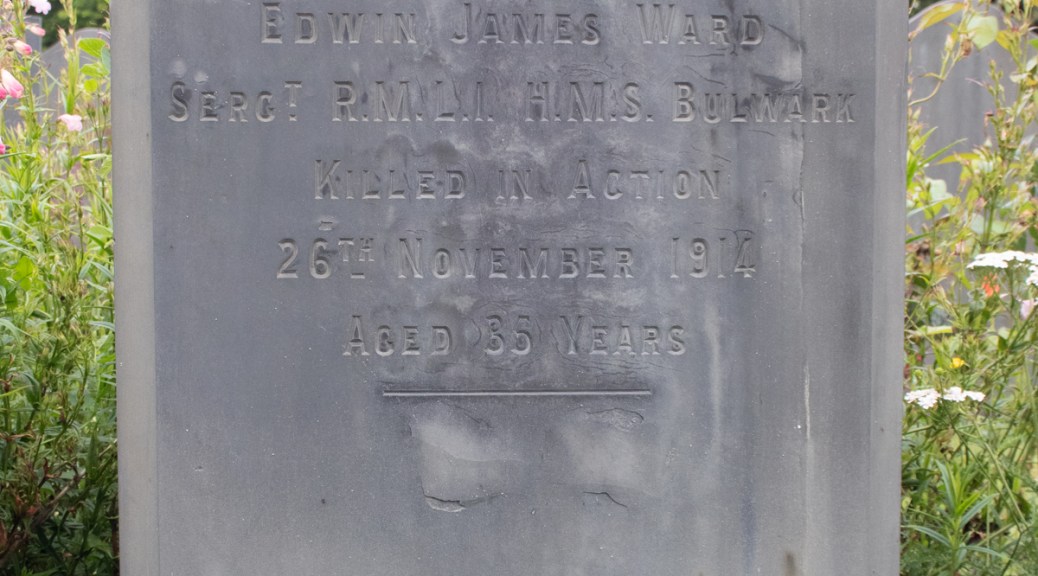
Edwin James Ward was born at the start on 3rd December 1879 in London. The oldest of four children, his parents were William and Emma Ward. William, who was a printer, had also been born in London, and the family lived initially in rooms on Trafalgar Street, Walworth, then Hardaker Street in Shoreditch.
There are tantalising gaps in Edwin’s life, and it is a challenge to piece together what happened to him after the 1891 census. He disappears from the records for nearly two decades, and is it likely that he had enlisted in the Royal Marine Light Infantry, and spent time overseas.
On 21st August 1908, Edwin married a woman called Kate. There is no further information available about her, although the couple went on to have a daughter, Kitty, who was born in Portsmouth on 13th November 1911.
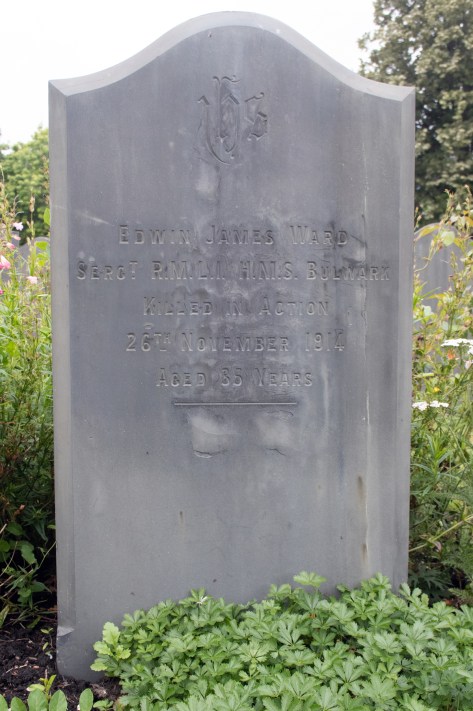
Edwin’s trail goes cold again at this point. He appears to have risen through the ranks with the Royal Marines and, by the summer of 1914, was a Sergeant. He was assigned to the battleship HMS Bulwark, and was on board on the 26th November 1914, when she was moored close to Sheerness, Kent. That morning, an explosion ripped through the ship, sinking it and killing more than 740 people. Sergeant Ward was amongst them: he was 34 years of age.
The body of Edwin James Ward was laid to rest in a marked grave in the naval section of Woodlands Cemetery, Gillingham, Kent.
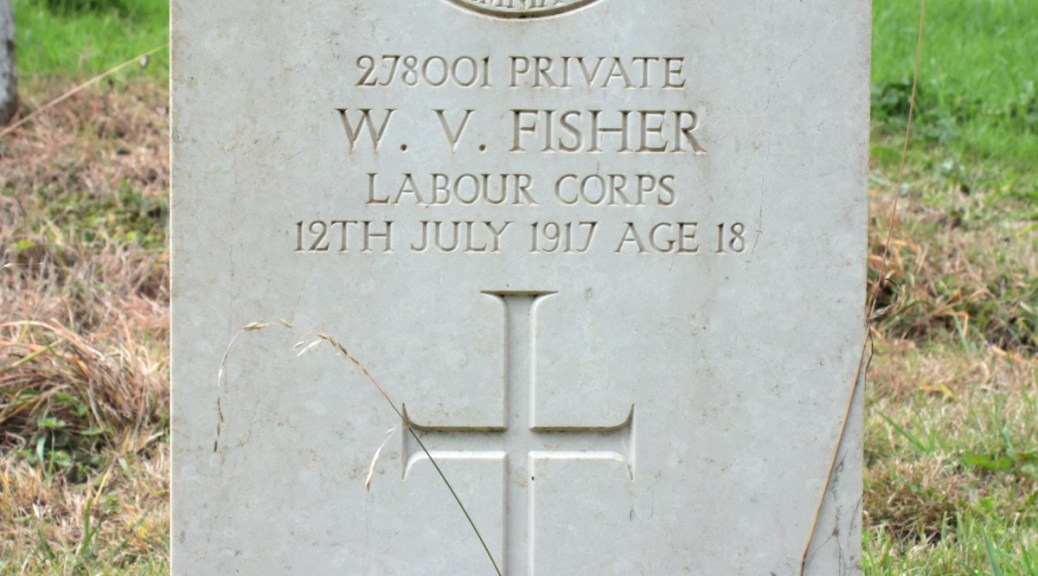
William Victor Fisher was born in Battersea, Surrey, at the beginning of 1899. The youngest of nine children, his parents were William and Julia Fisher. William Sr was a blacksmith and farrier, and, when William was born, the family were living in rooms at 9 Gladstone Street.
Julia died in 1902, and William Sr was was left to raise the children on his own. This he seemed to have done well, and by the time of the 1911 census, he was still living in the same house, with five of his children. William Jr’s eldest brother, Mark, was assisting their father in the business.
When war broke out, William Jr was still at school. However, he was keen to play his part and enlisted on 29th August 1915, lying abut his age to do so. As happened at the time, the recruiting officer took the age he stated – 19 years, 255 days – as being correct. He was assigned as a Private in the Royal West Surrey Regiment, and remained in Battersea for training.
Private Fisher’s time in the army was to be a brief one, but it was not without incident. He was confined to barracks for three days on 12th October, when he lost a pair of boots. Just a month later, he was reprimanded again for being absent without leave for nearly six hours on 17th November: he was again confined to barracks, this time for four days.
William’s lie was to catch up with him, and, on 27th November 1915, he was discharged for giving an incorrect age on his recruitment papers.
Two years later, William stepped up to play his part once more. This may have been a result of the death his older brother – Francis. A Private in the 2nd Battalion of the Royal Fusiliers, he was killed in action on the Western Front on 28th February 1917: he was just 20 years of age.
Details of William’s second stint in the army have been lost to time, but it is clear that he was initially assigned to the 46th Training Reserve Battalion. Private Fisher then transferred to the 626th Home Service Employment Company of the Labour Corps, and was billeted in Wiltshire.
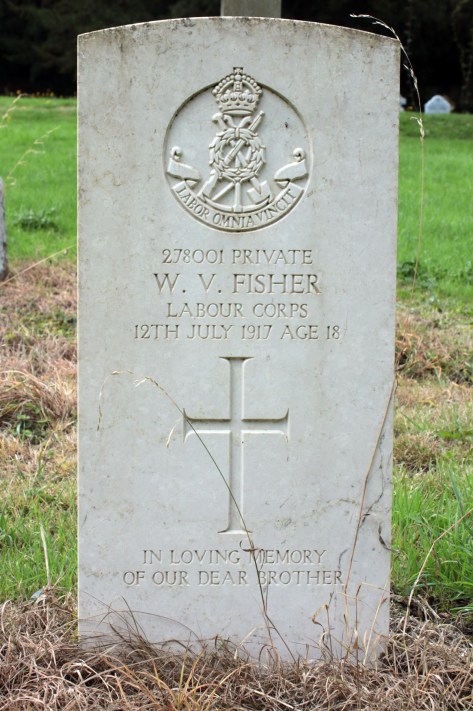
Tragically, Private Fisher’s time in the army was also to be brief. His entry in the British Register of Soldiers’ Effects show that he died on 12th July 1817, and, intriguingly, that the cause was asphyxiation. His death certificate confirms that this was asphyxia from inspiration of vomited matter, and that he died at No. 12 Camp in Longbridge Deverill: he was just 18 years of age.
The body of William Victor Fisher was laid to rest in the tranquil grounds of St Peter & St Paul’s Church, not far from where he had passed away.
Frederick John James was born in Willesden, Middlesex, in the spring of 1890. The oldest of six children, his parents were William and Louisa James. Louisa was William’s second wife, his first, Emily, having died in 1887. Frederick had ten half-siblings from this first marriage.
William was a fishmonger: the 1891 census recorded the family at 159 York Road, Battersea, Surrey. Ten years later, they had moved over the river, and were living to 46 Artizans Dwellings, Hammersmith, Middlesex.
Frederick’s father had passed away by the time of the 1911 census. The document recorded his mother residing at 18 Western Terrace, Notting Hill, Middlesex. She lived with three of her children – Ben, Alice and Grace – and was doing char work to bring in a little money.
Frederick, however, was already carving out a career in the army for himself. The same census recorded him as one of 250 troops billeted in Fyzabad, India, where he was a Private in the 2nf Battalion of the East Yorkshire Regiment.
Private James’ military career lacks some detail, and can only be picked up around the time of his passing. By this point, he had switched regiments, and was a Corporal in the 8th (Service) Battalion of the Somerset Light Infantry. He is also noted as being married to a woman called Frances Esther New: the couple had married in 1913, although there is no other information about her.
In the summer of 1917, Corporal James’ unit was caught up in the fighting at Passchendaele. Frederick was initially reported missing, but was later declared as being killed in action on 4th October 1917. He was 27 years of age.
The body of Frederick John James was laid to rest in the Zandvoorde British Cemetery, Ypres.
Joseph James Nicholls was born in Battersea, Surrey, on 19th October 1889. There is frustratingly little information about his early life, although what remains legible on his service records confirm his mother’s name was Jenny, and he had five siblings: brothers William and Jack, and sisters Martha, Rose and Sarah.
On 8th May 1911, Joseph married Lavinia Tutte in St Mary’s Church, Battersea. She was the daughter of a boiler cleaner, and their marriage certificate provides a little more insight into the new groom’s background. His father is named as Joseph James Nicholls, a farrier who had died before his son married. Joseph Jr was working as a carman, and the couple were living at 43 Lombard Road. The couple would go on to have two children, daughters Jane and April.
When war broke out, Joseph was quick to step up. He enlisted 14th September 1914, just six weeks or so into the war, giving up his job as a carman to do so. He was 5ft 9ins tall and weighed 133lbs: he had brown hair, brown eyes and a fresh complexion. He was also noted as having a mole on his left arm.
Assigned to the King’s Royal Rifle Corps, he spent the next ten months training at Larkhill Camp, Wiltshire. During this time, he went AWOL (from 5:30pm on 24th May to 6:30pm on 9th June 1915), and forfeited 17 days’ pay.
On 23rd July 1915, Rifleman Nicholls was dispatched to France with his unit – A Company of the 12th (Service) Battalion. There is little information available about where he served, although his unit landed near Saint Omer, and trained in camps around Fleurbaix. He was admitted to hospital for four days on 19th February 1916 for an undocumented illness, but this was not to impact his readiness for battle.
On 2nd March 1916, Rifleman Nicholls was wounded in the right shoulder, and admitted to the camp hospital. His injuries would prove too severe, however, and he succumbed to them on 4th March 1916. He was 26 years of age.
Joseph James Nicholls was laid to rest in the Essex Farm Cemetery near Ypres, Belgium.
Joseph was the first husband of my maternal great great aunt.
Walter James Ricketts was born in the summer of 1893, the fifth of ten children to James and Elizabeth (and, tragically, the first to survive childhood). James was a farm labourer from the Herefordshire village of Dilwyn, and this is where the family were born and raised.
When he completed his schooling, Walter found work as a groom. The 1911 census recorded him as living at the Moorhampton Hotel, seven miles (11km) to the south west of his home. His employer, Edith Pearman, is recorded as a hotel keeper and farrier, and he was one of two live-in staff.
Walter married Lucy Godwin in the spring of 1918. The oldest daughter of a clerk, she had been born in Lugwardine, near Hereford. By the time the couple married, Walter had enlisted in the army, and was serving in the Royal Field Artillery.
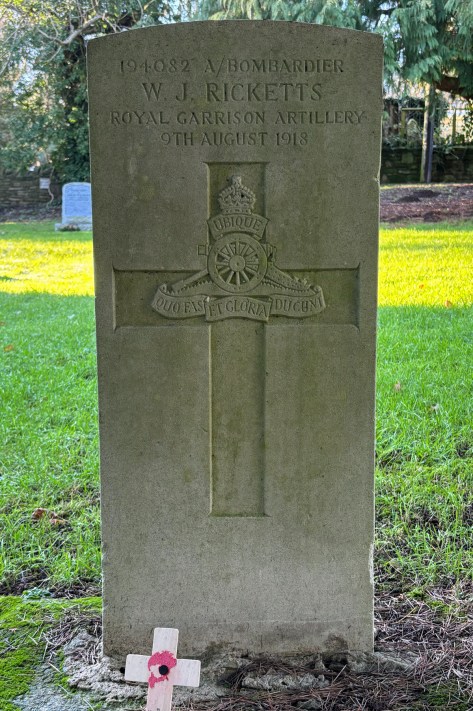
Full details of Gunner Ricketts’ service have been lost, but it is clear that he made the move to the Royal Garrison Artillery at some point. By the summer of 1918, the newly promoted Acting Bombardier was attached to the 57th Company, and based at a gun station in Dulwich, Surrey.
The only other record for Walter is his Pension Ledger card. This confirms that he died on 9th August 1918, following accidental contact with an electric current. There is no further information about the incident, but he was 25 years of age when he died.
The body of Walter James Ricketts was taken back to Herefordshire for burial. He was laid to rest in the tranquil setting of St Mary’s Churchyard in his home village, Dilwyn.
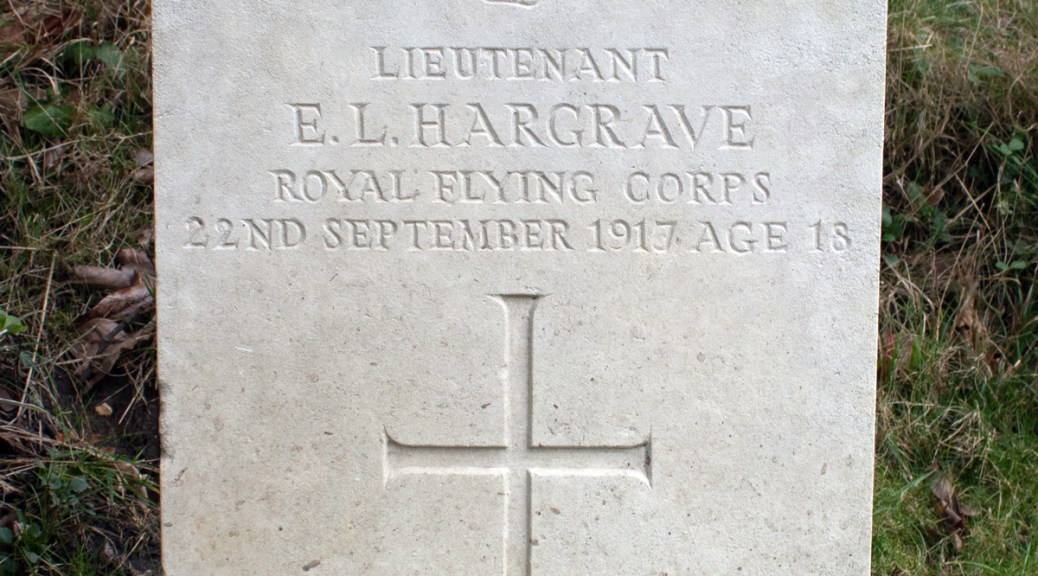
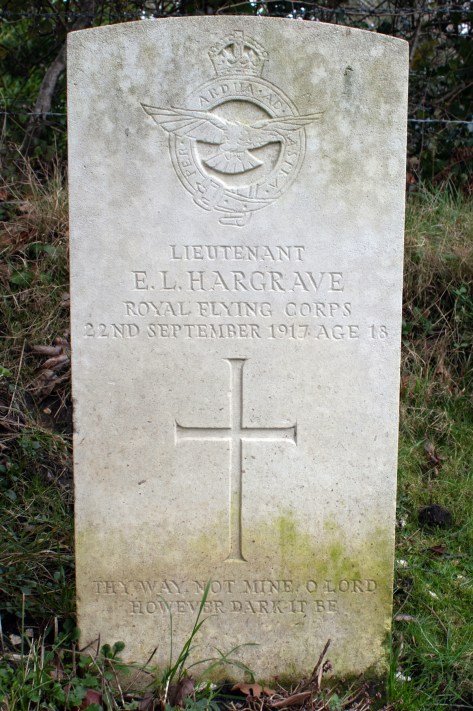
Ernest Lawton Hargrave was born in the spring of 1899 in Clapham, Surrey. One of three children, his parents were Ernest and Ada Hargrave. Ernest Sr was a letterpress machine mender from Leeds, Yorkshire, but when he died in 1910, Ada was left to raise her children alone.
The 1911 census found Ada working as a boarding house keeper. The property she ran – a seven-roomed property at 65 Elspeth Road, Battersea, Surrey – was home to her and her two surviving children. Alongside them lived five boarders – Walter Bland (of no employment), William Gray (a clerk at the Scottish Office), Norman Pierce (an engineer’s draughtsman), William Henderson (a temporarily unemployed government clerk) and Maria Baugh (living on her own means). Edgar Gray – possibly William Gray’s father – was also visiting at the time the census was taken.
When war broke out, Ernest was 15 years of age. Too young to enlist straight away, his Medal Roll Index Card notes that he took a commission as a Second Lieutenant. Initially added to the General List, he was soon assigned to the Royal Flying Corps and sent to 79 Squadron in Hampshire.
Training to be a pilot, Second Lieutenant Hargrave practiced in an Avro 504J biplane. By 22nd September 1917, he had completed six solo flights, totalling 16 hours. That day he was under instruction, when the accident that was to take his life occurred. A later report reached the verdict that an error of judgement on Ernest’s part caused the aircraft to crash:
[He was] climbing too steeply with an insufficient bank, thus stalling the wash. As the wash was only 175ft from the ground he failed to recover and struck the ground practically nose-on. Passenger met his death through being jammed between the engine and petrol tank.
Ernest Lawton Hargrave was just 18 years of age when he was killed. His body was laid to rest in the peaceful graveyard of St Paul’s Church, East Boldre, not far from the airfield he had so briefly called home.
While the Commonwealth War Graves Commission records give Ernest’s rank as Lieutenant, other documents suggest he held the rank of Second Lieutenant when he died.
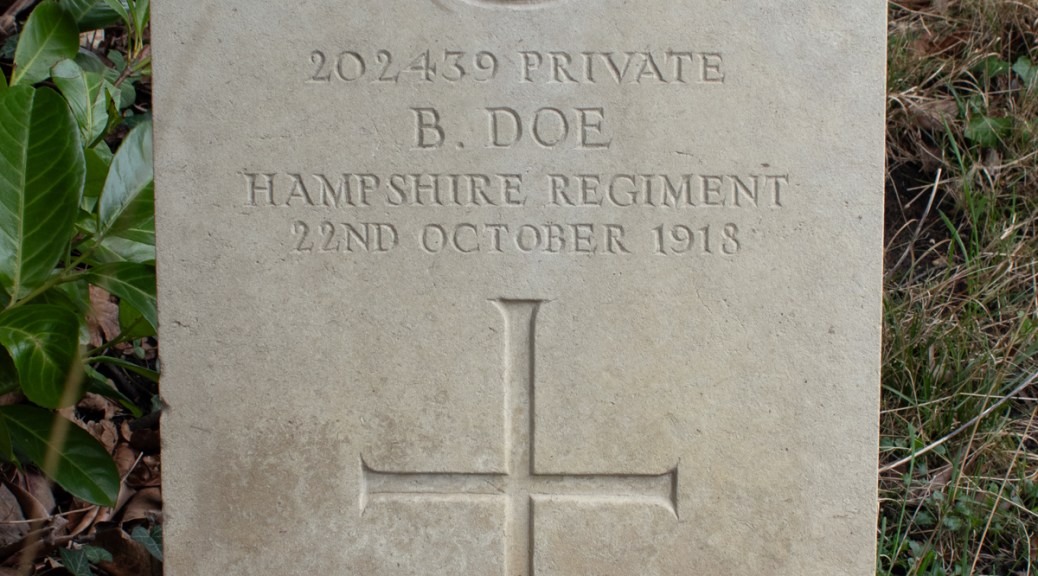
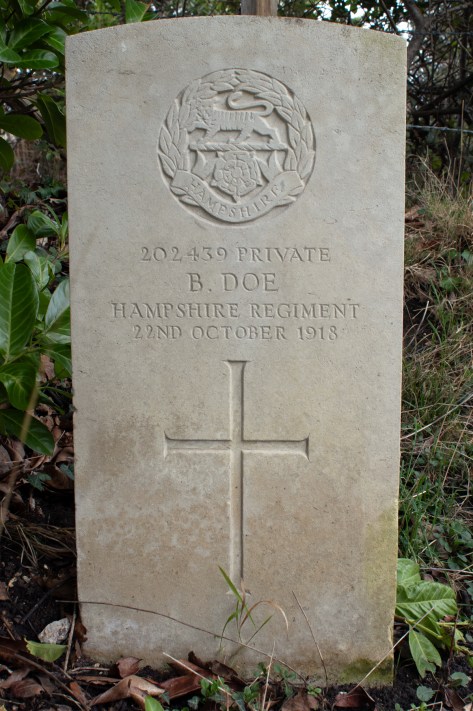
Bert Doe was born in Woking, Surrey, in 1881. One of twelve children, his parents were France and Louisa Doe. Francis – who went by his middle name, John – was a general labour and, over the years, his work took the family across the south of England. The 1891 census found the Does living in the village of Sopley, Hampshire, and this is where they seemed to settle.
There are large gaps in Bert’s early life, On 19th April 1916, he married Ellen Lackey. She was a broom maker’s daughter from Lyndhurst, Hampshire, and the couple had a son, Francis, who had been born a few weeks before they exchanged vows.
By the summer of 1918, Bert had enlisted in the army. He was attached to the Hampshire Regiment, but at some point had transferred over to the 441st Agricultural Company of the Labour Corps. Moves of this nature were often a way to rehabilitate injured or sick servicemen, and it is apparent that Private Doe fell into the latter category.
In October 1918, Bert had fallen ill with a combination of influenza and pneumonia. He was admitted to the Union Infirmary in Winchester, Hampshire, but the conditions were to prove too severe. He died on 22nd October 1918, at the age of 37 years old.
It would seem that Ellen was living in the East Boldre area of the New Forest by this point, and it was in the village’s St Paul’s Churchyard that her husband was laid to rest.
With a young son to raise, Ellen moved back in with her parents, Silas and Anna Lackey. The 1921 census found them living in Warsash Road, Sarisbury, Hampshire. Silas was employed as a labourer, while two of Ellen’s brothers were working as hawkers. Shockingly to today’s mindset, the census document records the family as ‘gipsies’.
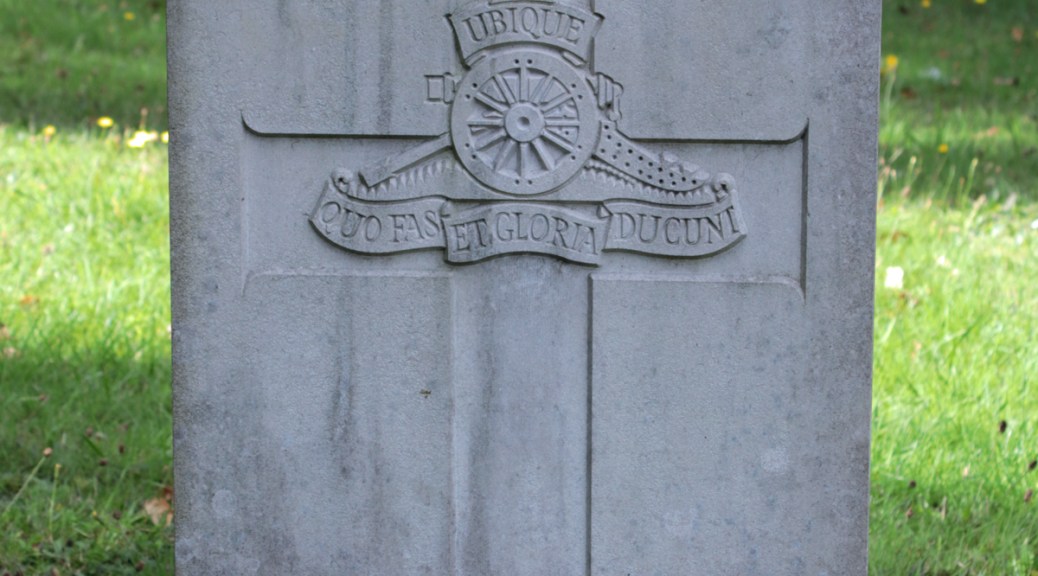
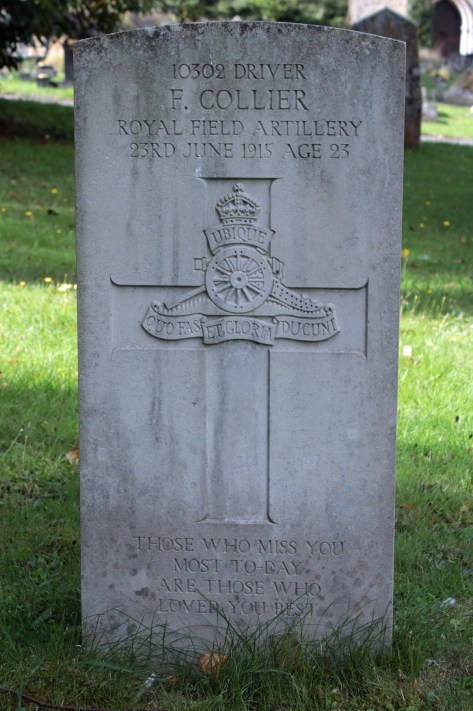
Frederick William Collier was born in the autumn of 1891. The oldest of four children, his parents were weavers Frederick and Annie Collier. Annie died in 1899, and her widow re-married. The 1911 census found the extended family – Frederick Sr, new wife Rose, Frederick Jr, two of his siblings and his three half-siblings – living at 30 New Prospect Buildings, Westbury, Wiltshire, their home town.
When Frederick Jr completed his schooling, he found work as a grocer’s labourer. War broke out in 1914, however, and he felt drawn to play his part. Full details of his military service have been lost to time, but it is clear that he had enlisted early in the conflict, and certainly by the start of 1915.
Driver Collier was assigned to the Royal Field Artillery, and was attached to the 59th Brigade Ammunition Column. He was sent to Surrey for training, unbeknownst to his unit, in preparation for the Gallipoli campaign. Frederick, however, was not to get his chance to be involved.
Frederick William Collier… died on Wednesday last week from injuries received while attempting to stop horses which were stampeding in his camp, the Ammunition Column, 59th Brigade, at Milford (Surrey)… Collier… was well known in Westbury, and was popular amongst his comrades, and the greatest sympathy is extended to his parents in their bereavement. The young fellow died the same day the accident happened in the hospital at Aldershot.
[Wiltshire News: Friday 2nd July 1915]
Driver Frederick William Collier succumbed to his injuries on 23rd June 1915. He was 23 years of age. His body was taken back to Wiltshire for burial, and he was laid to rest in Westbury Cemetery, not far from where his grieving parents still lived.
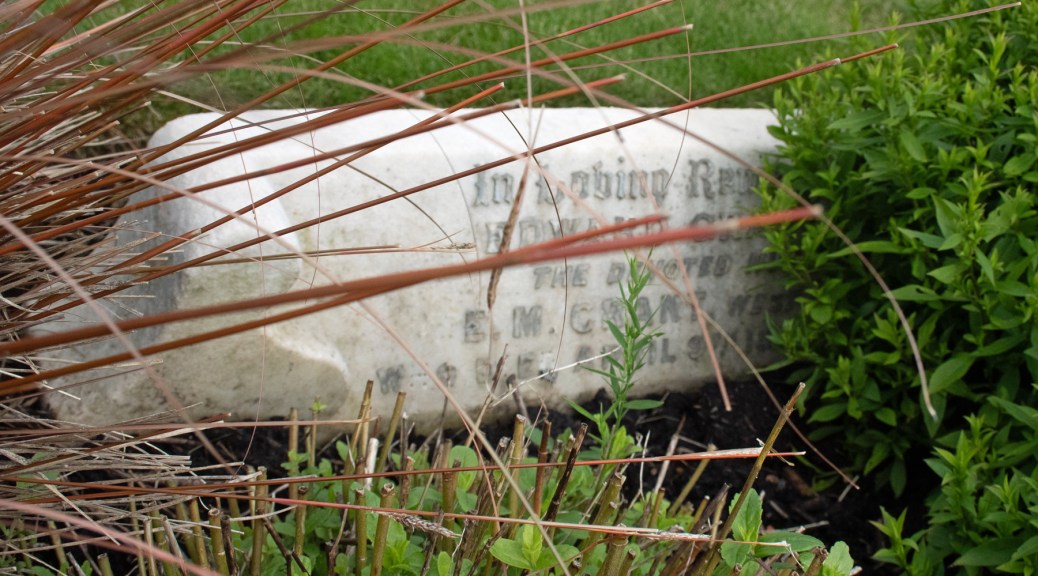
The early life of Edward Grant is a challenge to piece together. Born on 14th May 1863 in Newington, Surrey, he was the son of Thomas and Eliza Grant. The family do not appear on any census records, and it is only when Edward joined the Royal Navy in 1878 that he appears on any documents.
Edward’s service papers tell the story of a young man focused on his career. Underage when he joined up, he was given the rank of Boy 2nd Class, and sent to HMS Impregnable, the school ship based in Devonport, for his initial training. He remained on board for over a year, and rose to Boy 1st Class during that time.
Edward’s first full sea-going assignment was on board the screw corvette HMS Ruby. He would be assigned to her for eighteen months, during which time he came of age. Formally inducted into the Royal Navy, he took the rank of Ordinary Seaman. His service records show that he was a little over 5ft (1.53cm) tall, with brown hair, great eyes and a fair complexion.
Ordinary Seaman Grant’s contract was for ten years. During this time, his commitment to the job was clear: serving on a total of right vessels, he was promoted to Able Seaman in December 1882, Leading Seaman in October 1888 and Petty Officer 2nd Class in December 1889.
When his contract came to an end, Edward did not hesitate to re-enlist. He completed another decade of service, spending much of that time as a Boatman for the Coastguard on the Northumbrian coast.
It was while he was serving in Crastor that he met Elizabeth Smailes. She was a grocer’s daughter from nearby Dunstan, and the couple married in Alnwick on 14th February 1893. Edward and Eliabeth would go on to have five children, all girls, between 1896 and 1907.
By the time of the 1901 census, the Grants family were living in the Royal Naval Reserve Barracks in Hartlepool, County Durham. That November Edward was formally stood down to reserve status, having completed 20 years with the Royal Navy.
The 1911 census found Edward and the family living at the Guardians Offices at Hart Road in Hartlepool. A naval pensioner, he was employed as a caretaker for the town’s Board of Guardians, and the accommodation came with the job. Also living with them was Elizabeth’s mother, 83-year-old widow, Jane Smailes.
When war broke out, Edward stepped up to play his part once more. Now 51 years of age, he took on the role of Petty Officer 2nd Class once more: his papers show that he was now 5ft 5.5ins (1.66m) tall and had tattoos of a sailor woman and the words True Love on his left arm.
Petty Officer Grant remained firmly shore based, and was billeted at HMS Pembroke, the Royal Naval Dockyard in Chatham, Kent. He served for three years, and was promoted to Petty Officer 1st Class in May 1916.
On 9th April 1917, Edward Grant collapsed at his barracks. His passing was quick: he died of an aortic aneurysm and haemorrhage. He was 53 years of age. His body was laid to rest in the naval section of Woodlands Cemetery in Gillingham, not far from the naval base he had known for so many years.
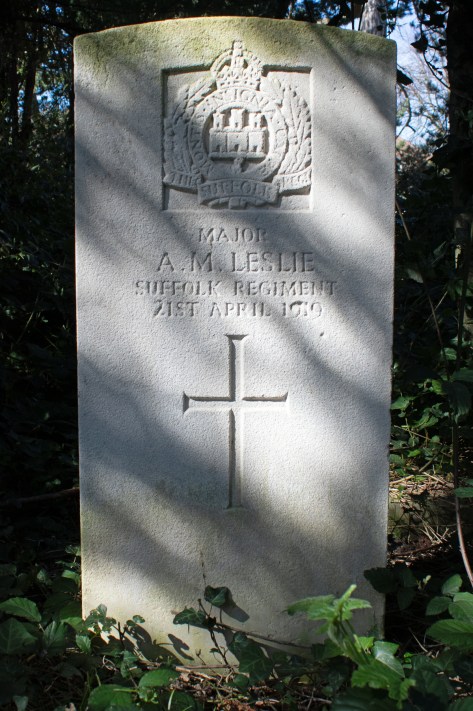
Alexander Augustus Maurice Leslie was born in France in 1852. One of five children, his parents were Government Secretary of State Francis Leslie and his French wife, Josephine.
Alexander’s mother died when he was 8 years old, by which point the family had moved back to Britain. Francis had set up home in Ealing, Middlesex, and they were living at 15 Castlebar Road, a Victorian villa.
When he completed his schooling, Alexander sought out a military life. The 1881 census recorded him as a Lieutenant in the Suffolk Regiment, living in St Helier, Jersey. He had married the year before, to Louisa Cumming, a surgeon’s daughter from Devon. They had a son, Maurice, by this point, and a daughter, Ida, was born the following year.
Lieutenant Leslie’s service records are sparse, but a later newspaper report fills in some of the gaps: “Leslie’s military experience, which extended… over a period of about 25 years, included participation in the Egyptian campaign in 1884, and service on the West Coast of Africa, in Jamaica, and in India.” [Worthing Gazette: Wednesday 30th April 1919]
During her husband’s time overseas, Louisa raised the children back home in Devon. She passed away in 1901, but which point, Alexander had retired with the rank of Captain. That year’s census found him living with Maurice and Ida at 14 Spencer Hill in Wimbledon, Surrey, a large detached villa. Maurice, now 20 years of age, was working as an accountant’s clerk, and the family had a live-in servant called Rose.
The next census record, from 1911, recorded Alexander living in rooms at 46 Leinster Gardens, Paddington. A substantial Georgian property, his landlady was Eveline Giradet, whose other residents included a barrister and a banker. Alexander’s occupation was now noted as Retired Major in the British Army.
From this point, Alexander’s trail grows cold. It is likely that he was called upon to play a part in the global conflict that broke out in 1914, though exactly when and how he did so is unclear. Records suggest he was admitted to Queen Alexandra’s Military Hospital on Millbank, Middlesex on 28th September 1916, suffering from syphilis. He only remained there for a couple of days, and his increasing age and health may have led to his retirement from duty.
For the past four years Major Alexander Maurice Leslie, who was for a period of a quarter of a century connected with the Royal Sussex Regiment, had been a resident of Worthing, and a brief intimation was given in the last issue… that he had died suddenly.
The circumstances were duly investigated by… the Deputy Coroner for West Sussex, on Wednesday afternoon, the inquiry taking place at the Central Fire Station, in High-street.
Evidence of identification was given by Colonel Francis Seymour Leslie… late of the Royal Engineers, who stated that the deceased, who was his brother, had lived at Worthing for the past four years, more or less all the time, though he had no permanent address…
Mrs Ethel William, a widow, at whose house… Major Leslie had lodged, stated that he had complained of indigestion and ate light food. On Monday evening he had his supper at half-past seven o’clock, going upstairs about half an hour later. About nine o’clock witness went to his room and found him lying in bed in great agony, and he exclaimed: “Oh, my poor heart!” Witness gave him some hot water to drink and sent for a doctor.
Dr Bernard Lees stated that he was sent for, but he found Major Leslie was dead when he got to the house. He had since made a post-mortem examination, which showed that the stomach and intestines were much distended, and there were signs of chronic gastric catarrh. The heart was fatty, but the valves were healthy. Death was due to syncope, the result of acute indigestion and the fatty condition of the heart.
A verdict of “Death from natural causes” was recorded.
[Worthing Gazette: Wednesday 30th April 1919]
[It should be noted that Alexander had been attached to the Suffolk Regiment throughout his military career. The error in the newspaper report is likely because of the Sussex town he had moved to in the mid-1910s.]
Alexander Augustus Maurice Leslie was 67 years of age when he passed away on 21st April 1919. His body was laid to rest in Broadwater Cemetery, to the north of the town he had called his home for more than four years.



 Death and Service