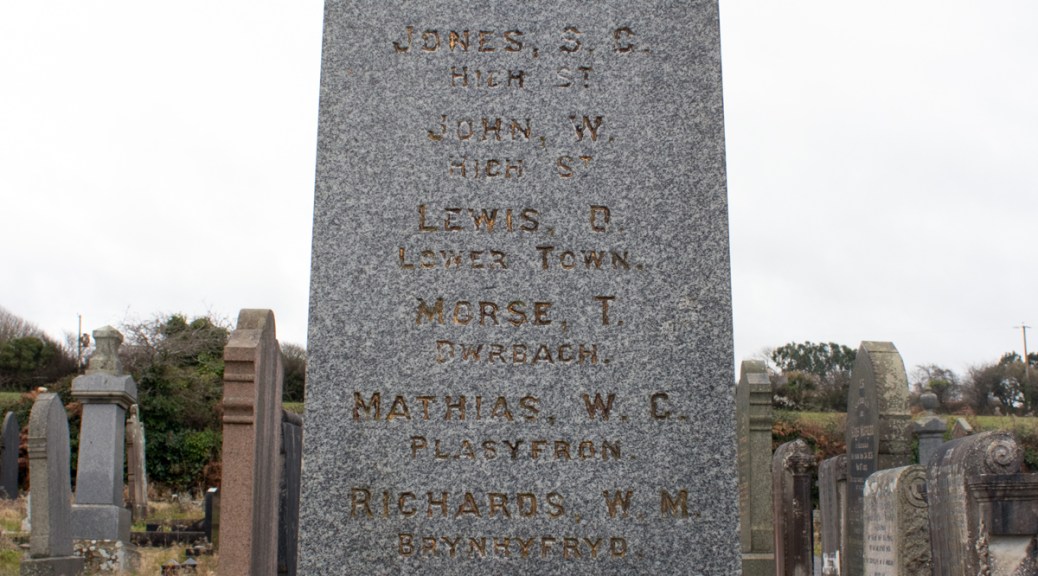
Thomas Morse was born in St Nicholas, Pembrokeshire, in the summer of 1885. One of thirteen children, his parents were Thomas and Mary Morse. Thomas Sr was an agricultural labourer, but when he completed his schooling, his son found work as a mason and, by the time of the 1911 census, he was boarding with his older sister Maria and her family.
When war broke out, Thomas Jr – who was better known as Tom – stepped up to play his part. Full details about his service have been lost to time, but it is clear that he enlisted in the Royal Army Service Corps. It is unclear whether he spent any time overseas, but towards the end of the war, he found himself based in Essex in the Mechanical Transport Division.
In the autumn of 1918, Tom, who had risen to the rank of Acting Corporal, fell ill. He came down with pneumonia, and was admitted to Colchester Hospital. The condition would prove fatal, and he passed away on 26th October 1918: he was 33 years of age.
The body of Thomas “Tom” Morse was brought back to Pembrokeshire for burial. He was laid to rest in the Hermon Baptist Burial Ground in Fishguard.
Intriguingly, the Commonwealth War Graves Commission have Tom’s rank as Serjeant. What remains of his service papers, however, all suggest he was an Acting Corporal.
Equally intriguing are the details of Tom’s dependents. His entry on the Army Register of Soldiers’ Effects gives his father, Thomas Sr, as his beneficiary. His Dependents’ Pension Record, however, gives his mother, Mary, and Miss M Nicholas, who is listed as the guardian of his illegitimate child. There no further information on them.
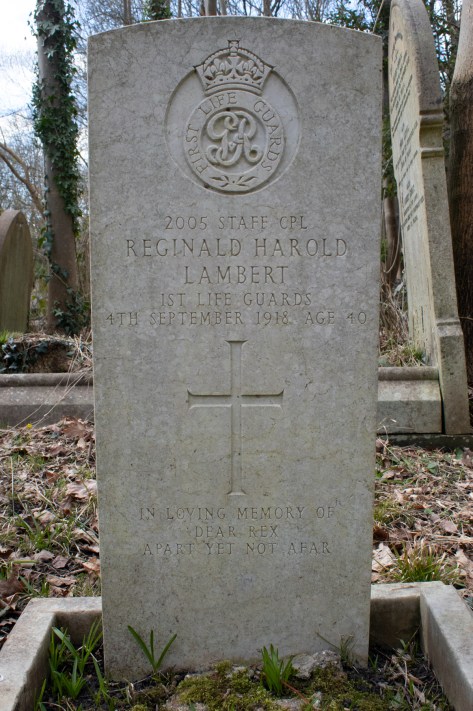
Reginald Harold Lambert was born in the spring of 1878 in Hurstpierpoint, Sussex. One of eight children, his parents were Henry and Elizabeth Lambert. Henry was a surgeon dentist, who had five more children from first marriage, giving Reginald a total of twelve siblings.
When Reginald finished his schooling, he took up work as a dental assistant, presumably under his father’s tutelage. Away from this, he volunteered for the Royal Sussex Regiment, and the military life drew him in. On 8th July 1897, he joined the 1st Life Guards: based in London, he took on the role of Farrier, tending to the regiment’s horses and looking after their hooves in particular.
On 25th April 1909, Reginald married Lilian Burns at St George’s Church in Tufnell Park, Middlesex. There is little information about her background, but she was the daughter of a grocer and, at 38 years old, seven years her new husband’s senior.
As the point of his marriage, Reginald was listed as a Corporal, and gave his address as Knightsbridge Barracks. By the time of the 1911 census, however, he and Lilian had set up home in second floor rooms at 6 Princess Road, Camden.
When war broke out in 1914, Corporal Lambert was called upon to play his part. His service records are long since lost, but the 1st Life Guards fought in some of the key battles of the conflict: at Ypres in both 1914 and 1915, at Loos in 1915, and at Arras in 1917. Exactly where and how Reginald served, however, is unknown, but by the end of the war he had risen to the rank of Farrier Staff Corporal.
The next record for Reginald is that of his death, which was registered in Islington, Middlesex. It seems likely that he either returned home, or was hospitalised close to home. He passed away through illness on 4th September 1918, at the age of 40 years old.
Reginald Harold Lambert was laid to rest in Highgate Cemetery, not far from where his widow still lived. His epitaph gave a nod to her pet name for him: In loving memory of dear Rex. Apart yet not afar.
Frank Ernest Brydgnes Buck was born in Islington, Middlesex, early in 1889, his mother’s name was Rosina, but his father’s details have been lost to time, the 1901 census confirming that she was a widow. The document notes that Frank was the youngest of four children, and the family had taken rooms in a three-storey house on Yerbury Road.
By the summer of 1917, Frank had emigrated to Australia. Settling in the town of Inverell, New South Wales, he took employment as a clerk. However, when war came to Europe, he was called on to play his part, and enlisted in the Australian Imperial Force on 16th July 1917.
Private Buck’s service records confirm that he was 5ft 11.5ins (1.82m) tall and weighed 11st 4lbs (71.7kg). He was recorded as having dark hair, blue eyes and a dark complexion. He had a burn scar on his right forearm, and a third nipple on the right side of his chest.
Frank’s unit departed from Sydney on 31st October 1917, and he spent the next two months on board the SS Euripides. During that time he was promoted to Acting Corporal and, when he disembarked in Devonport, Devon, on 26th December, he marched to the ANZAC camp in Fovant, Wiltshire.
Assigned to the 5th Training Battalion, Frank seems to have taken this unexpected return to Britain as a free ticket home: on 6th February 1918 he went AWOL, and only surrendered back to his unit on 9th April. Help in detention for a day, he forfeited 63 days’ pay, and was demoted to the rank of Private for his actions.
On 13th May, Private Buck was dispatched to France. He was assigned to the 17th Battalion of the Australian Infantry, but his time overseas was not to be a lengthy one. In July he was admitted to the 5th Australian Field Ambulance with gastritis: he was then transferred to the 5th Casualty Clearing Station, then the 3rd General Hospital in Le Treport. Medically evacuated to Britain for treatment, he ended up in Reading War Hospital for ongoing treatment.
Placed on furlough on 16th September, Private Buck went AWOL again on just two weeks later. Arrested on 26th November 1918, he was hauled before a judge at Highgate Police Court: his crimes amounted to being absent without leave, but also stealing three blank cheques and forgery. Pleading guilty, he was sent to Wormwood Scrubs for nine months.
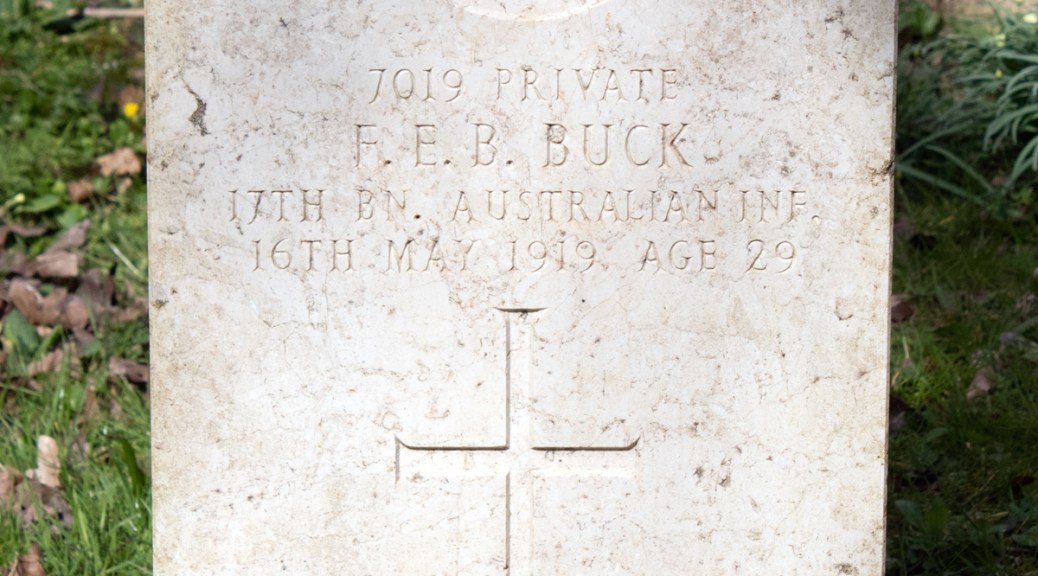
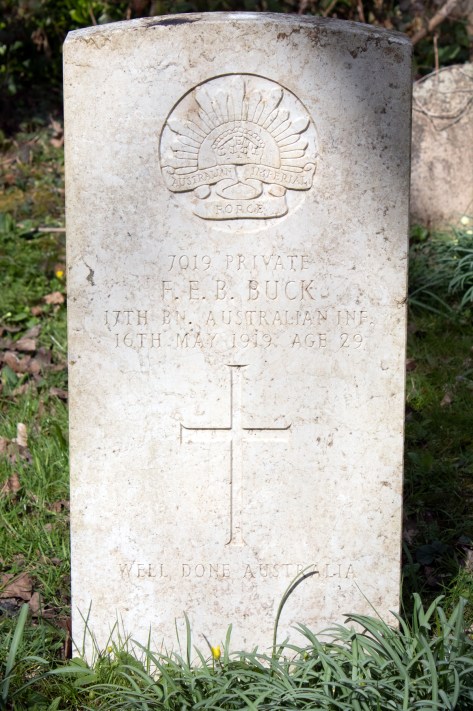
Frank would not end up serving his time, however. He was admitted to the infirmary with a perforated duodenal ulcer, and died from exhaustion on 16th May 1919. He was 29 years of age.
Frank Ernest Brydgnes Buck was laid to rest in Highgate Cemetery.
Gwyn Lewis Thomas was born in Llanrhian, Pembrokeshire, in 1894, and was the youngest of five children to George and Jane Thomas. George was a farmer, and by the time of the 1911 census, his son had been sent to work with another farmer, William Miles, in Mathry, four miles to the east.
When war broke out, Gwyn stepped up to serve his country. He enlisted in the Royal Engineers as a Sapper and, while little information about his service, it is clear that he was sent to France on 23rd August 1915. By the end of the conflict, he had achieved the rank of Corporal, and when the Armistice was declared, he returned home to Wales.
The only other documents connected to Corporal Thomas are those relating to his passing. He died from disease on 2nd March 1920, at the age of 25 years old. His death was registered in Haverfordwest, Pembrokeshire, which would suggest that he either passed there, or that that was the registry office to his home.
Gwyn Lewis Thomas was laid to rest in Mathry Congregational Chapelyard in Rehoboth, midway between his parents’ farm and that of his former employer. His headstone is inscribed with the words Bu farw o effaith y Rhyfel Mawrth (He died from the effects of the Great War).
The funeral of Corporal GH Collins, of the Royal Engineers, who died at Devonport at the age of 46, took place at Tiverton, where his mother and stepfather and sister reside. Corporal Collins’s wife and two children are at present in India. He had been in the army since 1899, and served in the South African War, for which he received the Queen’s and King’s medals with four clasps. He went to India in 1902, where he remained until the outbreak of the present war, when he came to France with his regiment. Corporal Collins was wounded, losing two fingers. He afterwards contracted fever, from which he died. The funeral was accorded military honours.
[Exeter and Plymouth Gazette – Monday 29 October 1917]
George Henry Collins was born in West Anstey, Devon, and was the son of George and Harriett Collins. There is little additional information about his early life available, and his was not an uncommon name in the area at the time.
George married Stella Euphrasia Constance O’Leary on 11th October 1911. At the time he was stationed in Myanmar, and the couple exchanged vows in the town of Maymyo, to the west of Mandalay. They would go on to have two children: Mary was born in August 1912, with Gertrude arriving the following November.
When the First World War broke out, it seems that Corporal Collins initially joined the Devonshire Regiment, but soon transferred to the Royal Engineers. Documentation suggests that he was assigned to the Special Brigade Depot at Saltash, Cornwall. However, this may have been the unit he was nominally allocated to when arrived in Britain for treatment to his injuries.
Frustratingly, there is little additional information available about George’s life. He died on 21st October 1917 was laid to rest in Tiverton Cemetery.
Frank Sloman was born in the autumn of 1887, and was the youngest of five children to Frank and Emma. Frank Sr was a mason from Jersey, in the Channel Islands, but it was in Tiverton, Devon, that he and Emma made their home and raised their family. The 1891 census found the family living on Castle Street, but by 1901 they had moved down the road to St Peter’s Street.
Frank Jr found work as a painter when he finished his schooling, but he sought adventure and a career. He was already a volunteer for the Devonshire Regiment, and, on 7th May 1904, he officially enlisted as a paid member of the troop. Private Sloman’s records show that he was 5th 10.5ins (1.79m) tall, and weighed 129lbs (58.5kg). He was noted as having brown hair, grey eyes and a fresh complexion.
Private Sloman spent two years on home soil. He quickly extended his contract, and this led to more opportunities. By December 1906 his unit was in India, and he would go on to spend five and a half years there.
In December 1907, Frank transferred to the Royal Garrison Artillery. He initially held the rank of Gunner, before being promoted to Bombardier in January 1912, and Corporal just three months later. In October, Frank returned to Britain, and was stood down to reserve status. He returned to Tiverton, and found work as a porter at the local station.
War was on the horizon, however, and when conflict broke out, Frank was called upon to play his part once more. Initially taking up the rank of Corporal in the Royal Field Artillery, he reverted to the role of Gunner at his own request. By this point, his unit was in France, and he would remain there for the next eight months.
On 6th May 1915, Frank returned to Britain, and was attached to 2B Reserve Brigade. He was based at the training facility in Bettisfield Park in Clwyd, and would spend the next eighteen months there. In June 1916, he was once again promoted to the rank of Bombardier.
Love was on the cards, and, on 17th June 1916, Frank married Frances Hadlow. There is little information available for her, but the couple exchanged vows at the Register Office in Windsor, Berkshire.
By the autumn of 1916, Frank’s health was becoming an issue. He contracted phthisis, or tuberculosis, and was sent to the the south coast for recuperation. His condition would ultimately render him unfit for continued military service, and Bombardier Sloman was discharged from the army on 17th December 1916.
His papers show that he had grown to 6ft 2.5ins (1.89m) in height, and, while physically unfit, he was a steady, sober and reliable man. He and Frances had taken rooms at 7 Hawley Street, Margate, Kent, but it seems that the couple soon moved back to Devon. Their new home was a small cottage at 3 Westbrook Place in Tiverton.
At this point, Frank’s trail goes cold. It is unclear whether he took up work again – or was able to do so – but his lung condition was ultimately to get the better of him. He passed away on 3rd June 1918, at the age of 30 years old.
Frank Sloman was laid to rest in Tiverton Cemetery, on the outskirts of the town in which he had grown up.
Alexander Albert Sturrock was born in the autumn of 1877. The second of two children, he was the only son of Alexander and Elizabeth Sturrock. Alexander Sr was a plasterer from Scotland, while his wife had been born in Bristol. It was in the Pimlico area of Middlesex, however, that the couple would raise their two children: Alexander and his older sister Eleanor.
The 1891 census found the family living at 253 Wellington Buildings, on Ebury Bridge Road. According to the next census, however, they had taken rooms at 52 Warriner Gardens, south of the Thames in Battersea.
By 1901, the Sturrocks had moved north again, and were living at 7 Fulham Place in Paddington. One of three families in the house, Alexander Sr and Elizabeth shared the rooms with their son and Eleanor’s son, Leslie. Alexander Sr was still working as a plasterer, while his son was now employed as a clerk.
Alexander Jr married Edith Concanen in 1910. A widow, she had a son, Douglas, and the three of them lived in her family home on Camden Road, Sutton, Surrey. Alexander was working as a commercial accountant, and at some point in the next five years, the family moved to Paignton, Devon.
When war came to Europe, Alexander stepped up to play his part. He enlisted in Exeter on 17th November 1915, and joined the Devonshire Regiment. His service records note that he was 5ft 11ins (1.8m) tall and weighed 185lbs (83.9kg). He was also recorded as having Edith’s name tattooed on his left forearm.
Private Sturrock was mobilised the following June, and was attached the 3rd (Reserve) Battalion. He was promoted to Lance Corporal in August 1916, and transferred to the 8th (Service) Battalion. Shipped to France in December, he would spend the next eighteen months overseas.
Alexander had ongoing issues with his health, however, and was hospitalised at least three times with diarrhoea. In July 1918, he was transferred to the Labour Corps, and reassigned to home soil. Promoted to Corporal by this point, he was attached to the 114th unit, although it is unclear where he served.
Corporal Sturrock’s health continued to dog him. The Armistice signed, he was medically discharged with nephritis on 14th June 1919, and returned home. Sadly, his reunion with Edith was not to be a lengthy one. Alexander passed away on 25th July 1919: he was 41 years of age.
Alexander Albert Sturrock was laid to rest in Paignton Cemetery, overlooking the town he had most recently called home.
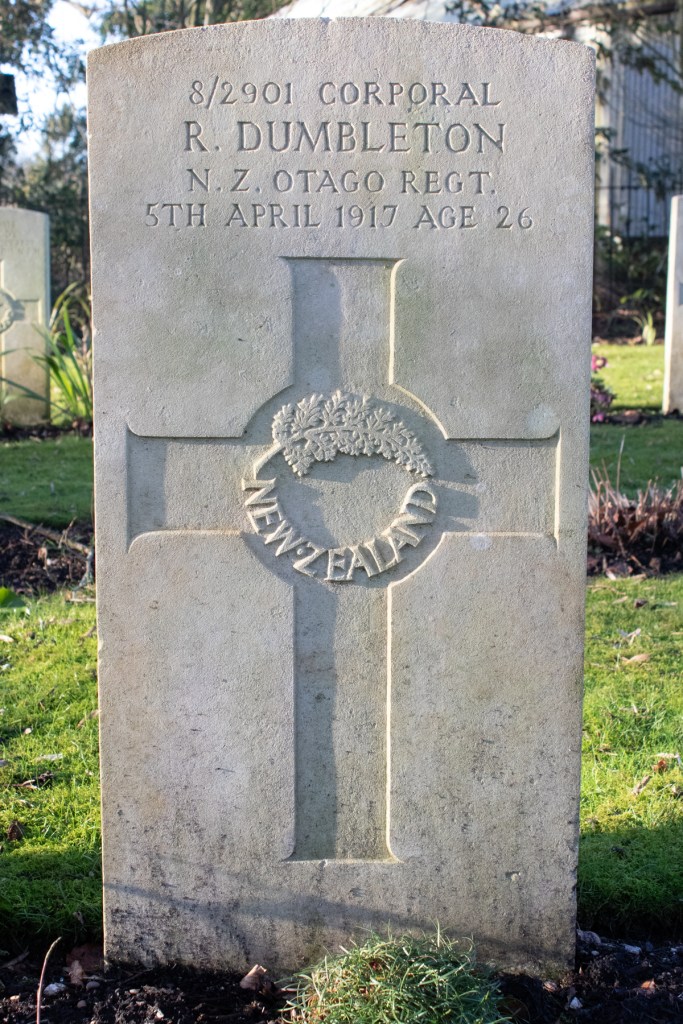
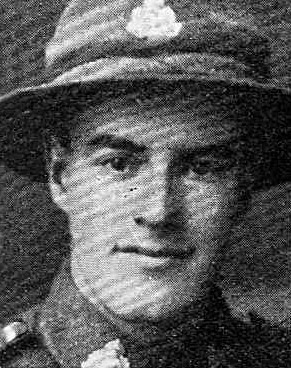
Ronald Dumbleton was born in Pukeuri Junction, New Zealand, at the end of 1890. His parents were William and Lucy, but about his early life, there is very little information.
When he finished his schooling, found work as a telegraphist and, by the time war broke out, he was employed at the Oamaru Post Office. This employment fitted in perfectly with his hobby as a volunteer in the Signal Company.
Ronald enlisted in the Otago Regiment of the New Zealand Infantry on 13th June 1915. His service records show that he was 5ft 8ins (1.73m) tall and weighed 140lbs (63.5kg). An Anglican by faith, he had black hair, dark eye and a dark complexion.
Assigned to the 7th Battalion, Private Dumbleton’s unit set sail for Europe towards the end of the year and, after a few weeks in Egypt, Ronald arrived in Britain in March 1916. His previous military service stood him in good stead. On 8th July 1915 he was promoted to Lance Corporal, and just six weeks later he had made full Corporal.
In April 1916, Ronald arrived in France. Transferred to the 1st Battalion, he would remain overseas for six months. Caught up in the fighting at the Somme, he was injured in his left arm and shoulder and medically evacuated to Britain for treatment. Corporal Dumbleton was admitted to the 1st Southern General Hospital in Birmingham, and remained there for a month.
In November, Corporal Dumbleton transferred to a hospital in Hornchurch, Essex. He then seems to have been moved to the ANZAC base near Codford, Wiltshire, for his ongoing recuperation. He was given two weeks’ leave in January 1917, returning to the base towards the end of the month.
At this point, Ronald’s trail goes cold. He remained based in Codford, possibly as he was not yet fit enough to re-join his unit on the Western Front. While in camp, however, he fell ill, passing away on 5th April 1917. He was 26 years of age.
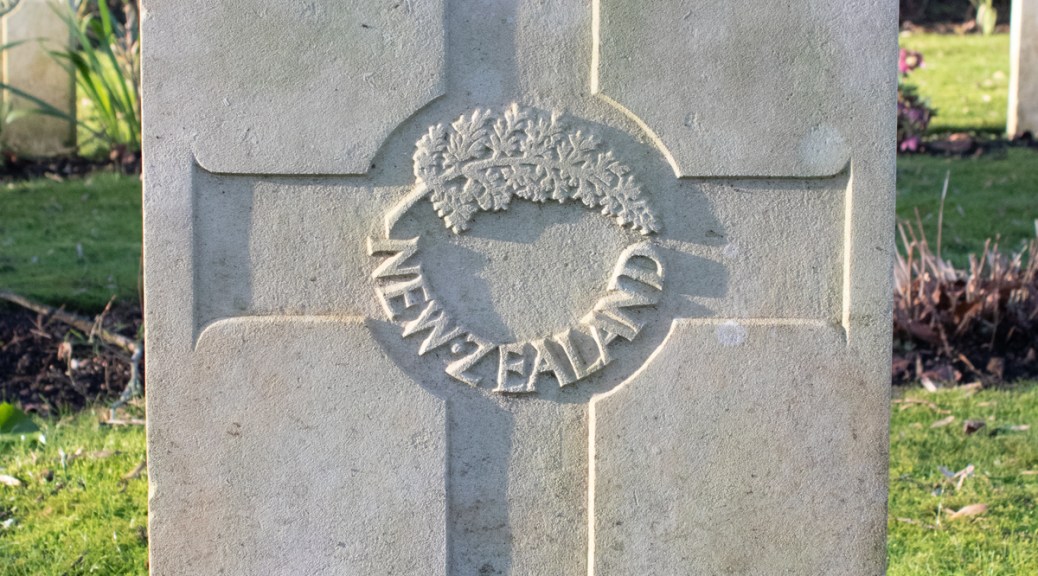
Thousands of miles from home, Ronald Dumbleton’s body was laid to rest in the extended graveyard of St Mary’s Church in Codford, not far form the base which he had called home.
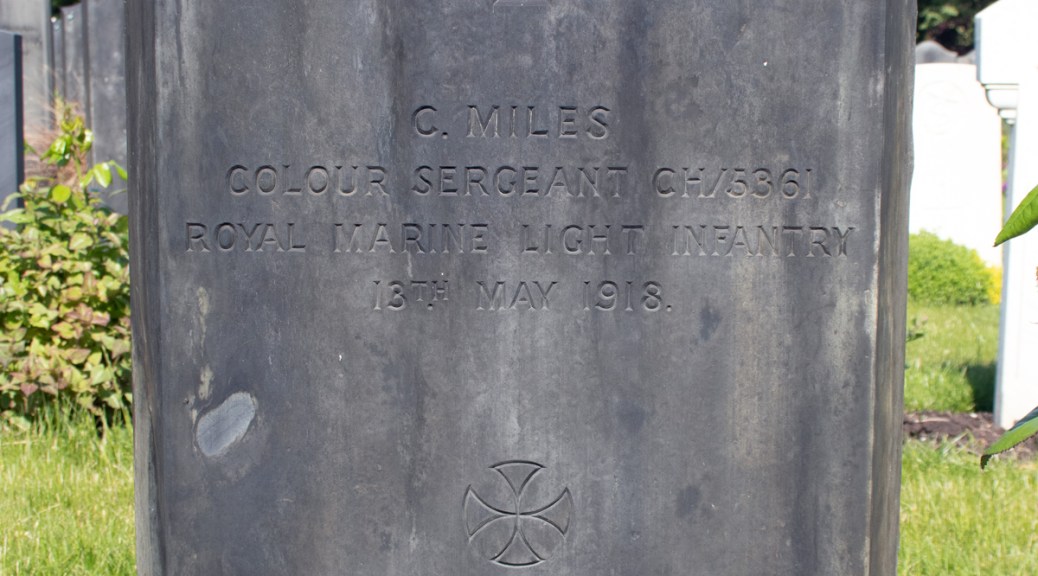
The early life of Charles Miles, whose body lies at rest in the Woodlands Cemetery in Gillingham, Kent, is a challenge to unpick, and the starting point is the last document relating to him.
His military Pension Ledger confirms that he died on 13th May 1918, from empyema, a bacterial infection affecting the lungs. The document cites his next-of-kin as Miss Hilda Miles, of 15 St John’s Road in Gillingham. She is noted as being the guardian of two children – Ada, born in 1905, and George, born the following year – because their mother, Charles’ wife, had passed away on 30th May 1912.
An online search for Ada and George gives an entry in the 1911 census. This finds them as the youngest two of six children to Charles and Elizabeth Miles. The document also gives a clue about their future guardian, Hilda: she is their older sister.
The Miles family were living at 45 Commercial Street in Whitechapel, East London. Charles, at 39, was recorded as a Royal Marines Pensioner and schoolkeeper. His wife, Elizabeth, was assisting with this role, and the couple had two other surviving children, Charles Jr and Walter.
While it is still difficult to piece together Charles’ childhood, his Royal Marine service records do shed a little light onto it. Born in Hampstead on 23rd November 1871, he was working as an ironmonger’s assistant when he enlisted. He joined up on 23rd August 1889, the document showing that he was 5ft 6ins (1.68m) tall, with brown hair, grey eyes and a fresh complexion. He also had a tattoo on his right forearm.
Private Miles had joined up in London but, as with most Royal Marine recruits, he was sent to the base in Walmer, Kent, for his initial training. In the spring of 1890 he moved to the Royal Naval Dockyard in Chatham, Kent, and this would become his regular port for the remainder of his service.
Charles’ service proved to be a committed one. Over the next decade he would serve on five ships, and would rise through the ranks. In October 1894 he was promoted to Lance Corporal, making full Corporal less than a year later. On 1st January 1899 he was promoted to Sergeant, and by the start of 1908, he held the rank of Colour Sergeant. Formally stood down to reserve status on 22nd November 1910, he was noted as having a very good character.
Away from the service, there is no record for Charles and Elizabeth’s marriage. She had been born in Sheerness, Kent, and was a year younger than her husband. It is likely that they were married by 1897, as this is when their oldest child was born. The 1901 census recorded them living on Manor Street in Gillingham, but, once Charles had been stood down, the school keeper’s position in the East End came up.
When war broke out, Charles was called upon to play his part once more. He returned to Chatham, leaving his younger children in Hilda’s care. By September 1914 he had moved to HMS Victory, the Royal Naval Dockyard in Portsmouth, Hampshire, and he would remain there for the next eighteen months. His shore base and naval experience suggest that, at 43 years of age, his was more of a training or mentoring role, although there is nothing in his records to confirm this.
In February 1916, Colour Sergeant Miles returned once more to Chatham, and the naval base there would be his home for the next few years. He was admitted to the Royal Naval Hospital in the spring of 1918, and passed away from the infection on 13th May 1918. He was 46 years old.
Charles Miles was laid to rest in Woodlands Cemetery, Gillingham.
After their father’s death, the Miles siblings found their own way in life.
By the time of the 1921 census, Ada, now 16 years old, was working as a domestic servant for Henry Chapman, a ship’s surveyor, and his family. They were living at 73 Milton Street in Fleetwood, a short stroll from the Lancashire coast.
Hilda, into whose care Charles had given his youngest children, was now 22 years of age. She had married William Swift, a pattern maker for the Admiralty, in the summer of 1918. They would not have any children, and the 1921 census found the couple living at 15 Milner Road, Gillingham. She too was just a short walk from the shoreline, but was also within walking distance from the cemetery in which her father had been buried.
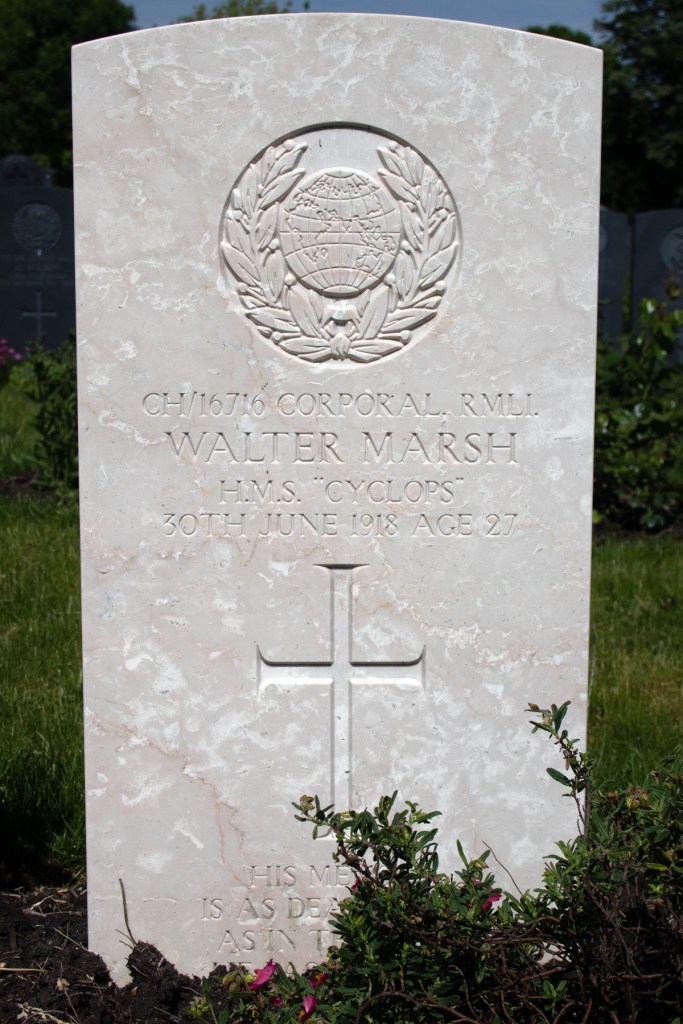
Walter Marsh was born on 17th April 1891 in Beckenham, Kent. The fifth of thirteen children, his parents were Harry and Louisa Marsh. Harry was a bricklayer from Doncaster, Yorkshire, while his wife was from Enfield, Middlesex. By the time their first child was born, however, they had moved to Kent, and the 1901 census found the family living in a small terrace at 77 Birkbeck Road.
In such a large family, it would have been a challenge to find your place. It seems that Walter wasn’t able to make his mark on the world within the constrains of his siblings and so, on 11th August 1910, he enlisted in the Royal Marine Light Infantry. His service records confirm that he was 5ft 6ins (1.68m) tall, with brown hair, blue eyes and a dark complexion. He was also noted as having a scar on his back, and passed his swimming exam when he was tested on 4th November.
Private Marsh’s initial training was undertaken in Deal, Kent, but over the following eight years, his main base was to be the Royal Naval Dockyard in Chatham. In six separate postings, he would spend more than three-and-a-half years at sea, including a year on the battleship HMS Russell and the submarine depot ship HMS Cyclops.
In January 1915 Walter was promoted to the rank of Corporal, and it was around this time that he got married. In the summer of that year, he tied the knot with Gertrude Crozier, a domestic servant, and daughter of a Chatham flour mill labourer.
Corporal Marsh would continue in the Royal Marine Light Infantry until January 1918. Medically discharged, he was seen to no longer be fit for military service, although it is unclear what condition or injury led to the end of his eight year career.
As this point, Walter’s trail goes cold, and the next record relates to his passing. He died in Chatham on 30th June 1918, at the age of 27 years old. Gertrude had given birth to their first child, a daughter named after her mother, just six months before.
The body of Walter Marsh was laid to rest in the naval section of Woodlands Cemetery, Gillingham, Kent, not far from the base that had become a home from home.
After the loss of her husband, Gertrude would go on to marry again, wedding Royal Navy Petty Officer Frederick Harris on 1st January 1920. The couple went on to have a child of their own, daughter Florence, towards the end of that year.







 Death and Service