Tag Archives: Lancashire

Sergeant Charles Chown

Sergeant Charles Chown

Charles Allen Chown was born in the Sussex village of Lyminster, at the start of 1882. The tenth of eleven children, his parents were Samuel and Mary Chown. Samuel was a general labourer, and when he passed away in 1898, Charles and his siblings rallied to support his now widowed mother.

The 1901 census found Mary, Charles and his brother Jesse living at 32 Lennox Road, Worthing, West Sussex. Jesse was employed as a brickmaker, while Charles had found work as a solicitor’s clerk. The family had two boarders, Helen and Rosie Bulbeck, and Charles’ niece, Minnie, was also staying with them.

Away from work, Charles was a music lover, and joined the local operatic society. In 1904 he appeared in a local version of Iolanthe, his “piece of portraiture being described as one of the successes of the occasion, for his facial play was good, and the drolleries of the character were displayed in an each and natural manner.” [Worthing Gazette: Wednesday 12th September 1917] In the following year’s Mikado, he took the role of the Lord High Executioner, and he was noted as being a “born comedian, with the most mobile countenance and a singularly dry form of humour…” [Worthing Gazette: Wednesday 12th September 1917]

By the time of the 1911 census, Charles had moved on with work, and moved out of home. Taking a room at 7 Tarring Road, Worthing, his landlords were Harold and Rose Ward. Still employed as a clerk, he was now employed by one of the estate agents in the town, although it is clear that his passion was elsewhere. When he joined up in the autumn of 1914, he gave his trade as musician.

Charles enlisted on 7th October 1914 in Ashton-under-Lyme, Lancashire. What took him north is unclear, although a theatre tour is a possibility. His service records note that he was 5ft 8.5ins (1.74m) tall and weighed 138lbs (62.6kg). He had dark brown hair, brown eyes and a sallow complexion.

Initially assigned to the Manchester Regiment, Private Chown was soon transferred to the 8th (Service) Battalion of the East Lancashire Regiment. He was obviously dedicated to his job: by the end of October 1914 he had been promoted to Lance Corporal, and within six weeks he rose to Sergeant.

In July 1915, Charles’ unit was dispatched to France. That autumn, they remained based near Tilques, in Northern France, but Sergeant Chown’s health was beginning to suffer. After just three months overseas, he was medically evacuated to Britain to receive treatment for pleurisy, and was hospitalised in Chatham, Kent.

When he recovered, Sergeant Chown was reassigned to the 10th Battalion of the East Lancashire Regiment, before being transferred to the 47th Training Reserve Battalion in September 1916. That winter, however, his health received a setback, and he contracted tuberculosis. He would spend the first half of the following year in hospitals in Aldershot in Hampshire, Sutton Veny in Wiltshire and, from May 1917, the 3rd Southern General Hospital in Oxford.

Sergeant Chown’s health would continue to deteriorate, and he was formally discharged from the army on 6th July 1917. He returned to Worthing, and his mother’s home, 2 Montague Place. Charles would eventually succumb to his medical condition, and he passed away on 31st August 1917, at the age of 35 years old.

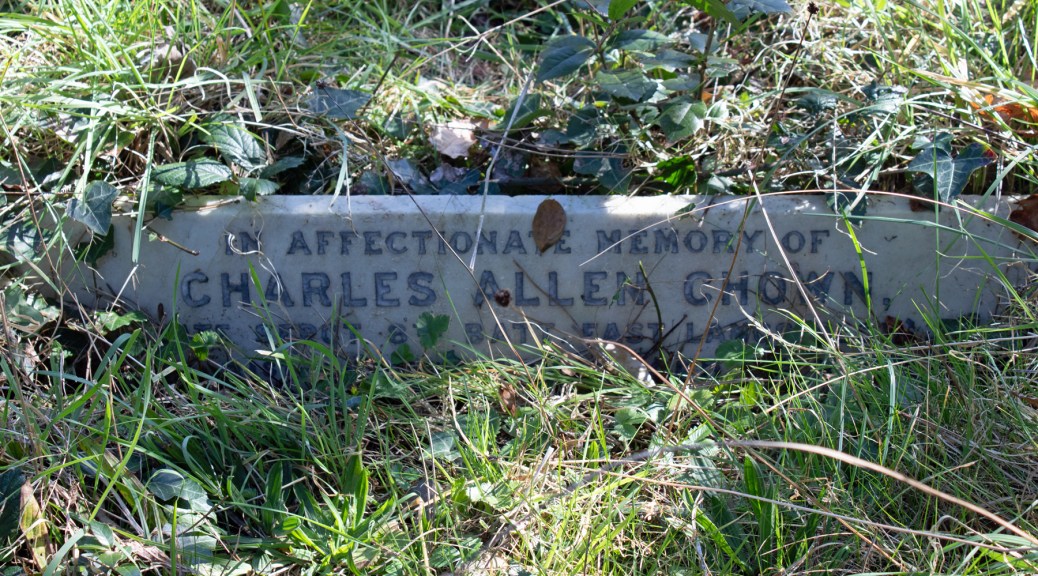
The body of Charles Allen Chown was laid to rest in the family plot in Broadwater Cemetery, Worthing.


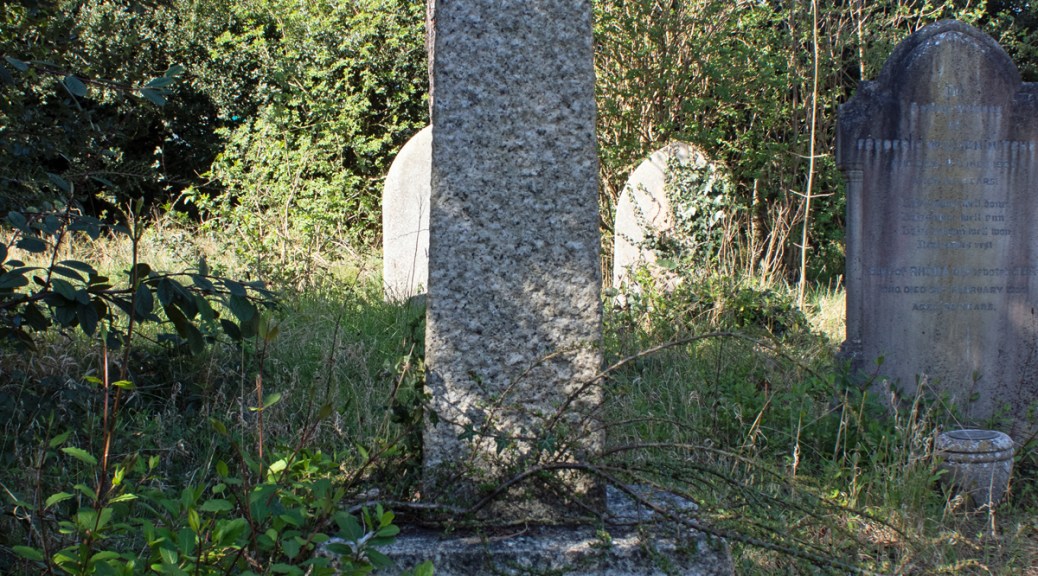
Lieutenant Allan Furlong

Lieutenant Allan Furlong

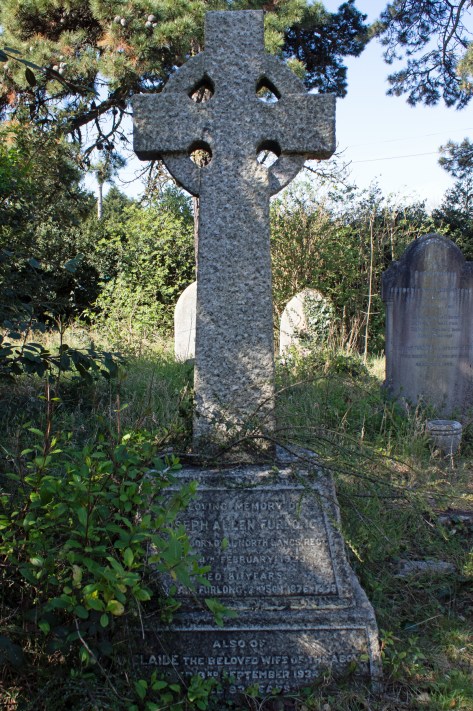
Allan Hyde Furlong was born the autumn of 1874, and was the oldest of seven children to Joseph and Adelaide Furlong. The place of his birth varies depending on which document you’re looking at, with census records suggesting he was born in Pembrokeshire, Wales, or Aldershot, Hampshire. His birth was registered in Eastry, Kent, however, so it is possible that this is where the family were based at the time.

Joseph was an officer in the North Lancashire Regiment, and his work meant the family moved time and time again. Allan’s younger siblings were born in Hampshire, Pembrokeshire and Athlone, Ireland. By the early 1880s, they had settled in Lancashire, the 1891 census recording them as living in the Fulwood Barracks in Preston.

Given his father’s military background, it is not surprising that Allan was drawn to follow suit. He took a different route, however, and enlisted in the Royal Naval Reserve. Midshipman Furlong took a commission on 27th August 1892, and would make a career out of the navy.

By the time war broke out, Allan was serving on board the SS Burma. In May 1915 he was promoted to Sub Lieutenant, and a further rise in rank – to full Lieutenant – followed in January 1918. He survived the war, and remained at sea through to the start of the new decade.

In March 1920, Lieutenant Furlong was admitted to the Royal Marine Infirmary in Deal, Kent, suffering from a combination of influenza and pneumonia. The conditions would get the better of Allan, and he passed away from them on 14th March 1920: he was 45 years of age.

Joseph and Adelaide were living in Worthing, West Sussex, by this point. Keen to bring their son home, the body of Allan Hyde Furlong was laid to rest in the town’s Broadwater Cemetery.


Lance Sergeant Henry Lewis

Lance Sergeant Henry Lewis

The early life of Henry Watkin Lewis is a challenge to piece together, and a lot of the detail comes from his later service records.

The document confirms that Henry was born in Pontypool, Monmouthshire, in December 1885. It gives his next of kin as his aunt, Ann Dunning, and there are no details about his parents.

Henry joined up in the days after war was declared. He was working as a plumber by this point, and enlisted in Preston, Lancashire, although it is not clear whether he was living in the area at this point. His records showing that he was 5ft (1.52m) tall and weighed 116lbs (52.6kg). With brown hair, blue eyes and a fresh complexion, he had a scar across the bridge of his nose and another on his lower lip.

Henry’s military career is an intriguing one. Assigned to the Loyal North Lancashire Regiment, he was initially given the rank of Private. He was promoted to Lance Corporal on 5th September 1914, just two weeks after enlisting. Four days later his rank was increased to Corporal, and by 14th October he had been promoted again, this time to Lance Sergeant. There is no evidence of any previous military background for him, and the cause of this rapid rise is unclear.

With any rapid rise, a rapid fall is often likely to follow, and Henry’s case was to be no different. He service records note that he was discharged from the army on 16th January 1915, as he was ‘not likely to become an efficient soldier’. Again, there is no further record as to why, although his papers do not suggest the cause was anything medical.

Lance Sergeant Lewis’ unit was based in Tidworth, Wiltshire, by this point, but he must have moved to Warminster following his discharge. It was here that he died on 23rd April 1915, the cause of his passing unknown. He was 29 years of age.

Henry Watkin Lewis was laid to rest in the graveyard of St Denys’ Church, Warminster.


Petty Officer Ernest Archer

Petty Officer Ernest Archer

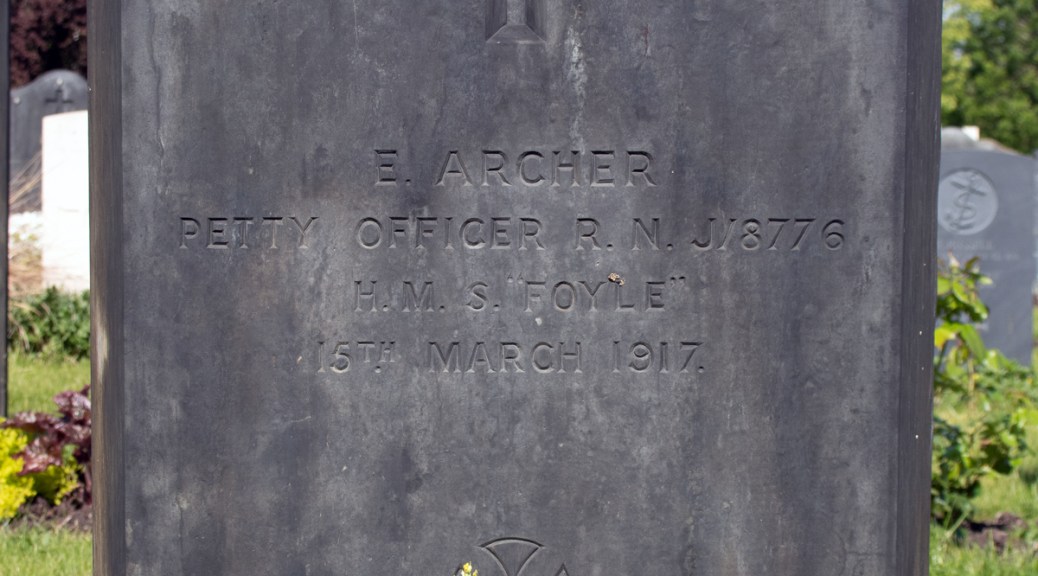
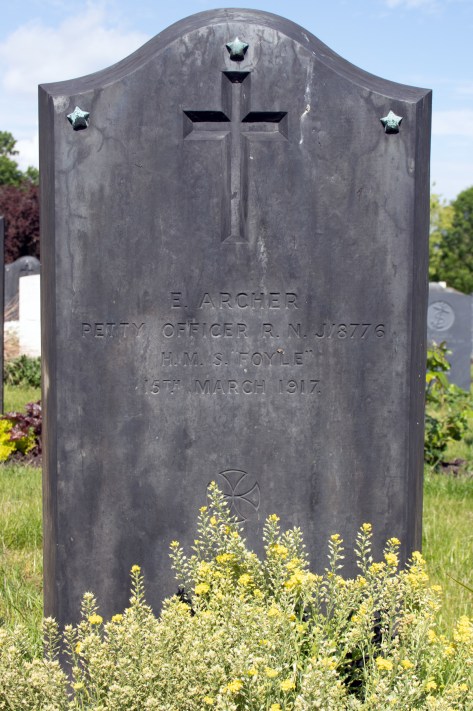
The life of Ernest Archer is challenging to piece together. His headstone, in Woodlands Cemetery, Gillingham, Kent, confirms he was a Petty Officer on HMS Foyle, which was a Royal Navy destroyer. She hit a mine in the English Channel off the Devon coast on 15th March 1917, and foundered while being towed to safety in Plymouth. A total of 28 crew members, Petty Officer Archer included, were killed.

Ernest’s service papers have been lost to time, but his Dependent’s Pension record gives his beneficiary as his aunt, Mrs H Greenhow, of 8 Kinmel Street, Liverpool. This would suggest that his parents had passed by 1917, but it’s not been possible to track her down through contemporary documents.

The same record notes that Ernest had a brother, James, and that he was an Able Seaman in the Howe Battalion of the Royal Naval Division. He was killed in action on 17th February 1917 – four weeks before his brother – and is commemorated on the Thiepval Memorial.

Further information on the lives of the siblings, however, is lost in the mists of time, Ernest Archer’s story taken to his grave with him.


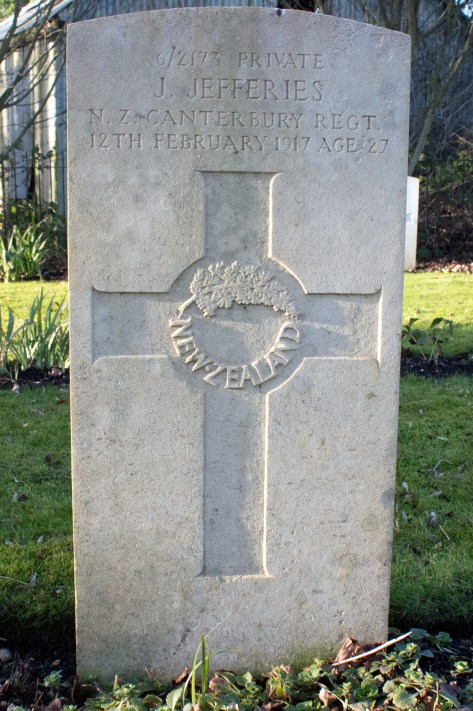
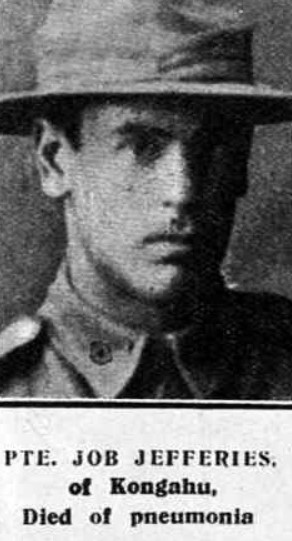
Private Job Jefferies

Private Job Jefferies

Job Jefferies was born on 12th October 1889 in the city of Timaru, on New Zealand’s South Island. The sixth of ten children, his parents were William and Ada Jefferies.

There is little information available about Job’s early life, but by the time war broke out, he had moved to Kongahu, at the northern tip of South Island. He was working as a labourer, and was employed by the Public Works Department.

Job was quick to step up and serve his country. He enlisted in the New Zealand Infantry on 12th February 1915, and was assigned to the Canterbury Regiment. His service records confirm that he was 5ft 10.75ins (1.79m) tall, and weighed 170lbs (77.1kg).

Private Jefferies left New Zealand in the summer of 1915, and his service record makes for grim reading.

On 9th August 1915, Job’s unit arrived in the Dardanelles, and he was firmly entrenched in the fighting at Gallipoli. Wounded on 5th September, he was initially treated at a casualty clearing station, before being medically evacuated first to Malta, then to Britain. He was admitted to the No. 2 Western General Hospital in Manchester, Lancashire, and would spend the next seven months there.

On 12th May 1916, Private Jefferies was on the move, leaving his base in Hornchurch, Essex, for the Western Front. He re-joined his unit on 7th July, but just nine days later was wounded at the Somme. Medically evacuated to Britain again, he spent the next couple of months being moved between hospitals. Discharged back to base in Hornchurch, Essex at the end of September, he would spend the next four months recuperating once more.

By February 1917, it would seem that Private Jefferies had been moved to Sling Camp near Bulford, Wiltshire. While there, he fell ill, and was admitted to the No. 3 New Zealand General Hospital in nearby Codford. He was suffering from pneumonia, and this time his body could take no more. Job passed away on 7th February 1917: he was 27 years of age.

Job Jefferies was laid to rest alongside his fellow soldiers in the ANZAC extension to St Mary’s Churchyard, Codford.


Private Job Jefferies
(from findagrave.co.uk)

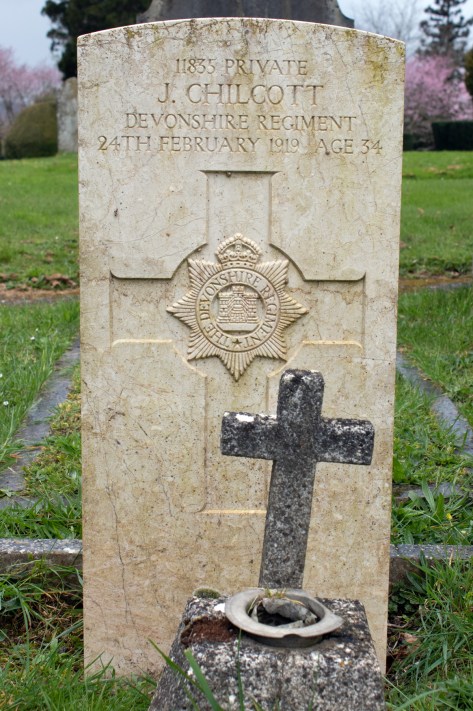
Private James Chilcott

Private James Chilcott

James Chilcott was born in Eccles, Lancashire, in the autumn of 1885. One of twelve children, his parents were William and Mary Chilcott. William seemed to be able to turn his hand to most things: the 1891 census recorded him as a hawker of fish, while ten years later he was employed as an insurance agent.

The Chilcotts had moved to Tiverton in Devon in around 1891, setting up home on St Andrew’s Street, to the south of the town centre. James initially found work as a bookseller’s assistant when he left school, but things were to change.

In the autumn of 1908, James married Mabel Candey. The couple moved to Nottinghamshire, settling in the village of Cresswell, where they lived in a small cottage at 6 John Street. James had found work as a coal miner in the area, which had taken the couple away from the comfort of Devon.

Over the next four years, James and Mabel would have four children, all of whom died before they celebrated their first birthday. The series of tragic events may have driven a need for Mabel to be with family, and by 1913, the couple had moved back to Tiverton. Daughter Dorothy was born in 1914.

When conflict his Europe the following year, James stepped up to play his part. Full details of his military service hare long since lost, but it is clear that he enlisted in the Devonshire Regiment, and had done so at the beginning of the war.

Attached to the 2nd Battalion, Private Chilcott was in France by 9th February 1915. Over the next few years, the unit saw fighting in most areas of the Western Front, including the Somme and Ypres. It is unclear how much of this James was involved in, but it is unlikely that he would have come away completely unscathed.

Pte. James Chilcott, of the 2nd Devons, who went through the dispersal camp at Fovant on February 20, died at Exeter on Monday from influenza. A son of Mr WH Chilcott, of St Andrew-street, Tiverton, he joined up at the beginning of the war, and had seen considerable service. He leaves a widow and one child.

[Western Times: Wednesday 26th February 1919]

James Chilcott died on 24th February 1919: he was 33 years of age. His body was taken back to Tiverton for burial, and he was laid to rest in the town’s cemetery.


“He leaves a widow and one child” does no justice to the pain that Mabel had to go through, having lost four children and her husband in a matter of six years. The 1921 census recorded her living on St Andrew Street with Dorothy, and showing she was undertaking home duties. She had two lodgers, who helped bring in a little more money.

Mabel Chilcott never remarried: she passed away in Tiverton in January 1946, at the age of 62.


Private Michael O’Hara

Private Michael O’Hara

In Paignton Cemetery, Devon, is a headstone dedicated to Private Michael O’Hara of the East Lancashire Regiment. There is little concrete information available about Michael, and a lot of what exists is contradictory.

The British Army Register of Soldiers’ Effects states Private O’Hara was attached to the regiment’s 7th Battalion, and confirms that his next-of-kin was his sister, Margaret Barrus.

An entry in the 1881 census suggests that Michael and Margaret’s parents may have been William and Mary O’Hara. The family were living in rooms a 5 Shed Street in Habergham Eaves, Lancashire, and 14-year-old Michael, who had been born in Bacup, was working as a mule spinner in a local cotton mill.

At this point the Michael’s story becomes vague again, and subsequent census returns throw up too many inconsistencies to corroborate a definite path for his life.

When war came to Europe, Michael stepped up to play his part. Again, full service details have been lost, but it is evident that he was sent to France on 17th July 1915. By the following spring Private O’Hara was back on British soil again, and had been admitted to the American Women’s Hospital at Oldway House in Paignton, Devon. The reason he was there is unclear, but it was to prove fatal: Michael passed away on 13th May 1916. Based on the 1881 census, he would have been around 49 years of age.

The body of Michael O’Hara was laid to rest in Paignton Cemetery, much of his life story buried there with him.


Private Frank Patience

Private Frank Patience

Frank Nicholas Patience was born in Mullewa, Western Australia, on 6th March 1898. The tenth of fifteen children (of which four did not survive childhood), his parents were Joseph and Elizabeth Patience.

There is little concrete information about Frank’s early life. When he finished his schooling, he found employment as a farm hand, and this is what he was working as when he stepped up to serve his country.

Frank enlisted in the Australian Imperial Force on 18th June 1917. Within six weeks he left his homeland for Europe, arriving in Liverpool, Lancashire, on 3rd October. Assigned to the 16th Battalion of the Australian Infantry, he was barracked in Wiltshire, at a camp not far from the village of Codford.

Tragically, Private Patience’s time in the army, and in Britain, was to be brief. Within weeks of arriving in Wiltshire, he contracted pneumonia, and was admitted to the camp hospital. The condition was to prove his undoing, however, and he passed away on 27th October 1917. He was just 19 years of age.

Frank Nicholas Patience was 9,000 miles (14,500km) from home. He was laid to rest in the extended graveyard of St Mary’s Church in Codford, Wiltshire.


Private Frank Patience
(from findagrave.com)

Private Alfred Wallis

Private Alfred Wallis

Alfred Edward Wallis was born on 7th February 1876, the youngest of five children to Charles and Mary. Charles was a carpenter and joined from Bruton in Somerset, but the family were born and raised in the Walcot area of Bath.

By the time of the 1901 census, Alfred was the only one of the Wallis siblings to remain living with his parents. They were living at 14 Belgrave Crescent, to the north of the city, and, at 25 years of age, Alfred had taken on work as a printer’s compositor.

On Christmas Day 1907, Alfred married Caroline Little. She was a farmer’s daughter from Cheltenham, Gloucestershire, and, at the time of their nuptials, the young couple were living at 8 Seymour Road, the next road over from his parents.

Alfred and Caroline would go on to have three children: Harold, Winifred and Lilian. The 1911 census found that they had moved again, and were now settled in a small terrace at 22 Cork Street, in the Weston area of Bath.

War broke out across Europe in the summer of 1914, and, in on 19th December 1915, Alfred enlisted in the Army Service Corps. His records noting that he was 39 years and 10 months old, stood 5ft 5ins (1.65m) tall, and weighed 128lbs (58kg).

Private Wallis was not formally mobilised until the August 1916. Attached to the 19th Company, he was sent for duty to the Queen Mary’s Military Hospital in Whalley, Cheshire. Full details of his duties are unclear, although he would remain in the area for the next couple of years.

As the war progressed, it is likely that Alfred was exposed to the illness with which the patients were being admitted. In October 1918, he became unwell, and was admitted to hospital with a combination of influenza and pneumonia. The hospital he was sent to was the King’s Lancashire Military Convalescent Hospital in Blackpool, Lancashire, so it is likely that he had left Whalley by this point.

Private Wallis’ illness was to prove too much for his body to bear. He passed away while still admitted, on 29th October 1918. He was 42 years of age.

The body of Alfred Edward Wallis was brought back to Somerset for burial. He was laid to rest in the majestic setting of Bath’s Locksbrook Cemetery.


Stoker 1st Class William Eley

Stoker 1st Class William Eley

William Charles Eley was born on 13th February 1890 in Liverpool, Lancashire. One of nine children, his parents were William and Ellen Eley. William Sr was noted as being a butcher on his son’s baptism record, but by the following year’s census, he was recorded as being a general labourer, and this is the line of work in which he continued.

When William Jr completed his schooling, he found employment as a carter. He sought bigger and better things, however, and, living so close to the Mersey dockyards, he was drawn to the sea. On 13th March 1908 he enlisted in the Royal Navy as a Stoker 2nd Class. His service records confirm that he was 5ft 6.5ins (1.69m) tall, with brown hair, blue eyes and a fresh complexion. He was also noted as having amole on his right cheek.

William was sent to HMS Acheron for his initial training. He spent six months on board, before moving to his first posting on board the battleship HMS Albermarle. She would be Stoker Eley’s home for the next eighteen months, and he gained a promotion to Stoker 1st Class during this time.

Over the next three years, William would serve on two more ships – HMS Victorious and HMS Lancaster. In between assignments, he was based at HMS Pembroke, the Royal Naval Dockyard in Chatham, Kent. On 15th March 1913, he completed his initial contract of five years’ service, and was transferred to reserve status.

This time back on civvy street would not last for long, however. On 2nd August 1914 William was mobilised once more and, after a few weeks back in Chatham, he was assigned to the battleship HMS Formidable. She was attached to the Channel Fleet, primarily guarding the south coast.

At 2:20am on Friday 1st January 1915, while off the Dorset coast, the Formidable was torpedoed by the German submarine U-24. Other ships in the convoy tried to assist, but after a couple of hours – and another torpedo strike – the damage was too great and she sank. 120 members of the crew were saved, but more than 540 officer and crew – including Stoker 1st Class Eley – were lost. He was just 24 years of age.

Luckily, William Charles Eley’s body was recovered and identified. His father had died a few years before, and it seems likely that Ellen could not afford to have her son brought back to Lancashire for burial. Instead, he was laid to rest in a communal grave in Lyme Regis Cemetery, Dorset, high above the seaside town where he had been brought ashore.