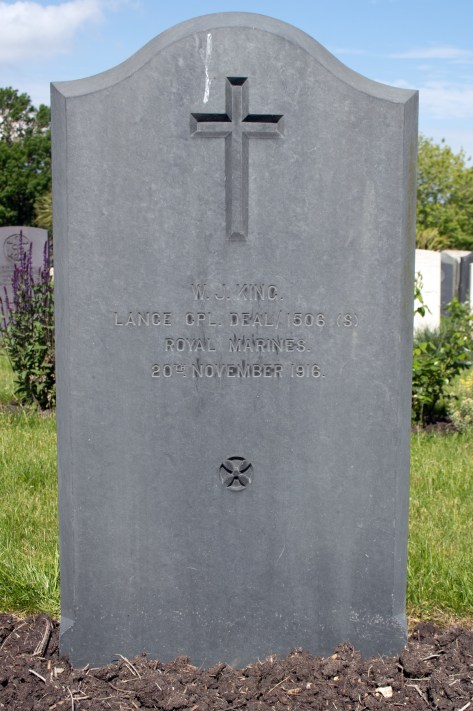
William James King was born on 7th March 1883 in Kensington, Middlesex. He was the fourth of eight children to bricklayer and builder’s labourer John King and his wife, Hannah.
There is little specific information available about William’s early life. The 1891 census found the family living at 16 Burlington Mews in Paddington, but he does not appear on any census returns after this date.
On 4th August 1906, William married Marion Oliver. Born in Chelsea, she was the daughter of a house painter, and the couple exchanged vows in St Luke’s Church, Paddington. The marriage certificate noted William’s trade as a bricklayer, and the couple went on to have two children: daughter Gwendoline, born in 1911, and son Henry, born two years later.
When war came to Europe, William was quick to step up and play his part. He enlisted on 5th October 1914, joining the Royal Marines. His service records show that he was 5ft 4ins (1,62m) tall, with brown hair, grey eyes and a fresh complexion.
Sent to Deal, Kent for training, Private King was initially assigned to the 2nd Field Company of the Mediterranean Expeditionary Force. Appointed to the rank of Lance Corporal he soon found himself ensconced at Gallipoli. On 15th May he was medically evacuated to Britain with an injury to his spinal cord. Admitted to Charing Cross Hospital, London, he was discharged from the army on 27th March 1916.
William’s treatment was ongoing, and by the autumn of 1916, he had been admitted to Gillingham Hospital in Kent. It was here that he would died, passing away on 20th November: he was 33 years of age.
William John King was laid to rest in Woodlands Cemetery, Gillingham, Kent.
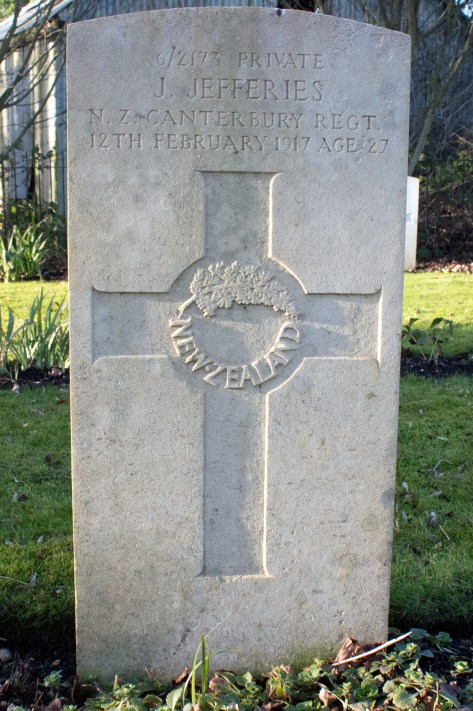
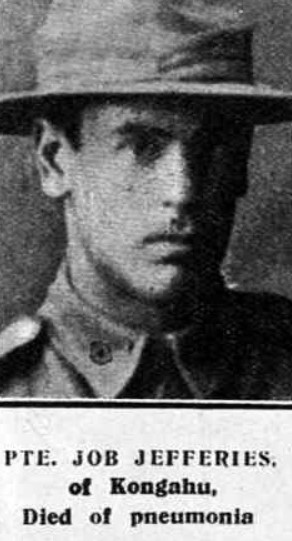
Job Jefferies was born on 12th October 1889 in the city of Timaru, on New Zealand’s South Island. The sixth of ten children, his parents were William and Ada Jefferies.
There is little information available about Job’s early life, but by the time war broke out, he had moved to Kongahu, at the northern tip of South Island. He was working as a labourer, and was employed by the Public Works Department.
Job was quick to step up and serve his country. He enlisted in the New Zealand Infantry on 12th February 1915, and was assigned to the Canterbury Regiment. His service records confirm that he was 5ft 10.75ins (1.79m) tall, and weighed 170lbs (77.1kg).
Private Jefferies left New Zealand in the summer of 1915, and his service record makes for grim reading.
On 9th August 1915, Job’s unit arrived in the Dardanelles, and he was firmly entrenched in the fighting at Gallipoli. Wounded on 5th September, he was initially treated at a casualty clearing station, before being medically evacuated first to Malta, then to Britain. He was admitted to the No. 2 Western General Hospital in Manchester, Lancashire, and would spend the next seven months there.
On 12th May 1916, Private Jefferies was on the move, leaving his base in Hornchurch, Essex, for the Western Front. He re-joined his unit on 7th July, but just nine days later was wounded at the Somme. Medically evacuated to Britain again, he spent the next couple of months being moved between hospitals. Discharged back to base in Hornchurch, Essex at the end of September, he would spend the next four months recuperating once more.
By February 1917, it would seem that Private Jefferies had been moved to Sling Camp near Bulford, Wiltshire. While there, he fell ill, and was admitted to the No. 3 New Zealand General Hospital in nearby Codford. He was suffering from pneumonia, and this time his body could take no more. Job passed away on 7th February 1917: he was 27 years of age.
Job Jefferies was laid to rest alongside his fellow soldiers in the ANZAC extension to St Mary’s Churchyard, Codford.
Thomas Fidler was born on 15th May 1881 in Newbury, Berkshire and was the fourth of eight children to Charles and Sarah. Charles was a groom, who travelled where the work was, and, by the time of the 1901, the family has relocated to Whitchurch in Hampshire.
When he finished his schooling, Thomas found work as a dairyman. However, he had always had his sights on bigger and better things, and, having been a volunteer for the local militia, he was keen to become a full soldier. Things did not go immediately to plan though, and he was initially turned down because he was under height – he was just 5ft 3ins (1.6m) tall when he turned 18.
But Thomas was persistent, and, on 27th June 1898, he was formally enrolled in the Hampshire Regiment. Along with his height, his service records confirm other details about the young man he had become. The document show that he weighed 124lbs (56.2kg), and that he had brown hair, brown eyes and a fresh complexion. The records advise that he was considered fit for duty, but also note that he was given special authority to enlist, presumably to bypass the concerns about his height.
Private Thomas Fidler would go on to build up quite a military career for himself. He spent nearly two years on home soil, before his unit was shipped out to South Africa. During his time in the colony, he served in a number of the campaigns, and was awarded with the Queen’s South Africa medal, including clasps for Cape Colony, Orange Free State and Transvaal, and the King’s South Africa Medal 1901-1902.
After more than two years spent overseas, Thomas’ unit returned to Britain. He would remain on home soil until 1903, extending his service beyond the five compulsory years, and choosing to remain on active duty, rather than being stepped down to reserve status. In September of that year, his unit was on the move again, and he was transferred to Malta.
It would not be until September 1905 that Private Fidler saw home soil again. He was formally stood down from duty the following June and assigned to the Army Reserve. Interestingly, his transfer papers recorded that his conduct was indifferent, disobedient… inclined to drink.
Thomas’ attitude over the years was evidenced by his entries in the Regimental Defaulter Book. He was disciplined no fewer than twelve times during his military career. His offences included being absent from parade and using insubordinate language. While stationed in Malta, he was punished for being drunk four times. Over the years, Private Fidler spent 125 days confined to barracks, and was fined a total of £1 2s 6d for his crimes.
When he was not confined to barracks, Private Fidler would likely be found in a sick bay. Between January 1901 and September 1905, he spent 342 days in hospital with conditions ranging from fevers, psoriasis, scabies and gonorrhoea.
On 22nd March 1905, while serving in Malta, Thomas was admitted to hospital having suffered a fractured jaw following a scuffle. The cause of the injury is recorded in detail in an eleven-page report, which outlined that Private Fidler had been out in Valetta, and ended up quite drunk. He was approached by a couple of military police officers, and became abusive towards them. While trying to take off his boots, a private from another regiment, who was also drunk, came along and punched him in the face, fracturing his jaw. Both men were arrested and taken back to barracks. The investigation in to the incident found that, while Private Fidler was off duty at the time, he was to blame for the altercation.
In June 1906, Thomas returned to civvy street, and to his former job as a dairyman. On 5th February 1907, he married Tryphena Snook, who was the daughter of his employer. The couple had had a son the previous year, and would go on to have three more children in the next few years.
The 1911 census found the young family living in Sparsholt, Hampshire, the household being made up of Thomas, Tryphena and their older two children, Tryphena’s parents, William and Emma, and a boarder, William Clark, who was a carter on the farm.
By the summer of 1914, Thomas had been formally stood down from the army, his contract coming to an end on 26th June. A storm was brewing over the Channel, however, and he would soon be called upon to play his part once more.
Details of Thomas’ re-enlistment into the army have been lost to time. It is likely that he was called upon quite quickly. He was assigned to the South Wales Borderers, and, with the experience he had under his belt, was given the rank of Lance Corporal.
Thomas’ unit – the 4th (Service) Battalion – was initially sent to France, and he arrived there early in July 1915. Within a matter of weeks, however, the battalion moved on to the Eastern Mediterranean, ending up at Gallipoli.
Lance Corporal Fidler’s time in on the peninsula would have been fraught with danger. In the autumn of 1915, he was badly injured and was medically evacuated to Britain for treatment. Admitted to hospital in Devon, his wounds were to prove too severe, and he passed away on 5th November, at the age of 34.
The funeral rook place at Paignton… of Lance-Corpl. Thos. Fidler, of the 4th South Wales Borderers, who died at Oldway Hospital on Friday as a result of wounds sustained at Gallipoli. The widow and other mourners followed, and the Matron of the Hospital (Miss Blackmore) was among those present. Wounded convalescents from Oldway and a Company of the 7th Devons, under Capt. Brearley, attended, and the Devons provided a firing party.
[Exeter and Plymouth Gazette – Tuesday 09 November 1915]
Thomas Fidler was laid to rest in Paignton Cemetery.
James Hughes was born on 12th November 1884 in the town of Kapuni, New Zealand. One of eleven children, his parents were Daniel and Margaret – or Peggy – Hughes. There is little specific information about James’ early life, but the service records he completed when he enlisted for the army confirms that he was working as a farmer by the summer of 1914.
James enlisted on 18th December 1914. He had had some voluntary experience with the army before the war, and was assigned to the New Zealand Wellington Mounted Rifles as a Trooper. His medical exam confirmed he was 5ft 10ins (1.77m) tall and weighed 174lbs (78.9kgs). He was noted as having brown hair, hazel eyes and a fair complexion.
Trooper Hughes and his unit set sail sailed for the Mediterranean in April 1915, finally arriving in the Dardanelles by the summer. There is little specific confirmation of his movements, but he was reported wounded at Anzac Cove on the Gallipoli peninsula on 27th August. Medically evacuated to Mudros (Moudros) on Greek island of Lemnos. He had received a gun shot wound that fractured his skull, and was shipped back to England for ongoing treatment.
James was admitted to the American Women’s War Hospital in Paighton, Devon. This was based at Oldham House, which had been conscripted for use from Paris Singer, part of the sewing machine manufacturing family.
Trooper Hughes’ wounds would ultimately prove too severe. He died from his injuries on 17th October 1915: he was a month short of his 31st birthday.
Yesterday, at Paignton, the funeral took place of Trooper James Hughes, of the Wellington (New Zealand) Mounted Rifles, who died on Sunday at Oldway Hospital… He was wounded in Gallipoli, the wound being perilously near the brain, and recover was hopeless from the first. However, he lingered for six weeks. Deceased being a Roman Catholic, Father Kirk officiated at the Roman Catholic Church and at the cemetery. Several members of the 7th Devon Territorials, under Captain Hunter, were present, as well as a firing party of the Battalion, and a party of wounded from Oldway and The Larches Hospitals also attended. At the graveside the firing party fired three volleys, and the bugles sounded the Last Post.
[Western Times: Wednesday 20th October 1915]
With his family thousands of miles away, James Hughes was instead laid to rest in Paignton Cemetery, not far from where he had spent his last days.
James’ younger brother Charles also fought in the Great War. Serving in the same regiment as his brother, he was injured in the Middle East, and died of his wounds on 19th April 1917: he was 25 years of age. Trooper Charles Hughes was buried in Gaza Cemetery.
Oldway Mansion, Paignton. It was taken over for war service from Paris Singer, of the sewing machine family, and became the American Women’s War Relief Hospital during the First World War.
Charles McManus was born in Ballymena, County Antrim, in 1891. The middle of three children, his parents were John and Maryann McManus. John was a horse dealer: when they finished their schooling Charles’ older brother, John Jr, found work as a hawker.
Maryann died in 1907, aged just 47 years of age. The next census record, in 1911, found John Jr living with his wife and family in Ballymena, while John Sr was boarding with a fishmonger elsewhere in the town. Alexander, Charles’ younger brother, was a pupil at an industrial school in Dublin, but Charles himself is missing from the census return.
John Sr passed away in 1913, at the age of 53 years old. Charles was 22 years old and an orphan. The following year war was declared, and Charles was one of the first to step up and serve his country. He joined the Royal Inniskilling Fusiliers on 14th September 1914, and was attached to the 1st Battalion.
Full service records for Private McManus are lost to time. However, his unit was sent to Gallipoli in the spring of 1915, only to be evacuated from the region the following January. The 1st Battalion was then sent to France where it became entrenched at the Somme. For Private McManus and his colleagues, this must have felt like going from the frying pan into the fire, but this time he was not to emerge unscathed.
At some point Charles was wounded. He was medically evacuated to Britain for treatment, and admitted to the King George’s Hospital in London. Whatever his injuries, they were to prove too severe: he died on 24th July 1916, at the age of 25 years old.
Charles McManus’ body was taken back to Antrim for burial. He was laid to rest in the Crebilly Cemetery, overlooking his home town, Ballymena. His pension ledger suggests there was happiness in his life, beyond the killing fields. His next of kin is noted as Miss Mary Gordon of Ballymena, recorded as his unmarried wife.
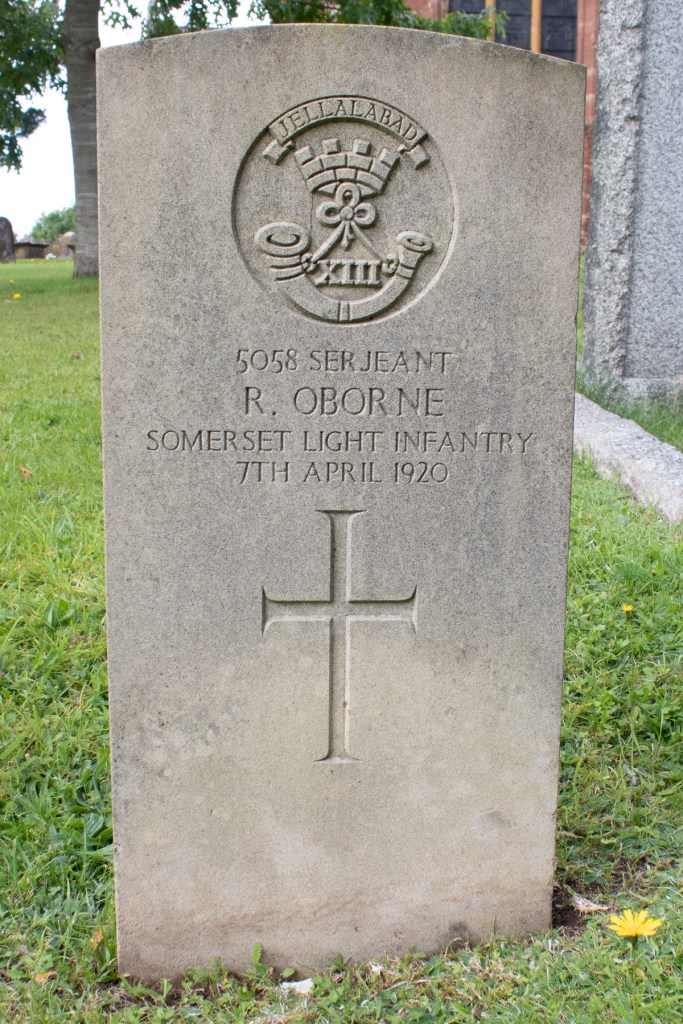
Robert Oborne and his twin, William, were born in the summer of 1880, two of ten children to John and Elizabeth Oborne. John was an agricultural labourer, and the family were raised in Bishop’s Lydeard, Somerset.
Death was to surround Elizabeth Oborne: William died when he was only three years old and John also passed away in 1886. This was around the time that she gave birth to their last child, who she also named William. The 1891 census recorded Elizabeth as living in the centre of Bishops Lydeard with four of her children: John, who was a farm labourer, Elizabeth, an errand girl, and Robert and William, both of whom were still at school.
When he completed his schooling, Robert found work as a coal hewer. He moved to South Wales, and boarded with the Hampshire family, in Ystradyfodwg, Glamorganshire. Further details of his life before the outbreak of war are scarce, although it seems that he changed career, taking up work as a groom. Known as Bobbie, later reports suggest that he was a genial young man, and had a large number of friends.
1915 proved a pivotal year for Robert: that summer he married Amy Lyons in Taunton. Elizabeth died in October, and his next oldest sibling, a sister also called Elizabeth, passed away just weeks later.
“Just before the war he joined the Somerset Light Infantry [Territorial] and went through the Gallipoli campaign, and then went to Egypt… he acted [in the capacity of a groom] to his officer commanding, and whilst in Egypt had the misfortune to get thrown from his horse, which caused internal trouble.” [Taunton Courier and Western Advertiser: Wednesday 14th April 1920]
The now-Serjeant Oborne was medically discharged from 3rd/4th Battalion on 21st August 1916, and returned to Somerset. He took up employment with Colonel Dennis Boles MP, acting as his groom from him from Watts House, on the outskirts of Bishops Lydeard.
Robert appears to have continued with this life for the next few years, but his wartime injuries continued to dog him.
…on Tuesday, March 2nd [1920], he gave up work and went to the doctor, who advised his removal to the hospital, where he was taken the following Friday, and underwent an operation the same evening. Hopes were held out for his recover, and he lingered until 1:30 on Wednesday morning [7th April], when he passed away.
Taunton Courier and Western Advertiser: Wednesday 14th April 1920
Robert Oborne was 39 years old when he died. He was laid to rest in the grounds of St Mary’s Church in his home village, Bishops Lydeard.
George Henry Stevens was born in Winscombe, Somerset, in the spring of 1869. The oldest of four children, his parents were blacksmith Joseph (or John) Stevens and his wife, Eliza.
When he finished his schooling, George found work as a collier. In 1893, he married a woman called Maria, and went on to have three children: Edward, Mary and Charlie. By 1900 the family had moved to South Wales for his work. They settled in Llanwonno, Glamorganshire, and went on to have three more children: John, Cyril and George Jr.
By 1911, George and Maria had been married for eighteen years. George was working as a repairer for the colliery, while Edward had followed his father into the mines.
When war came to Europe’s shores, George stepped up to play his part. He enlisted in the Welch Regiment, and was assigned to the 1st/5th Battalion. While his full service records no longer exist, his troop served in Gallipoli during 1915, so it is possible that he spent times overseas.
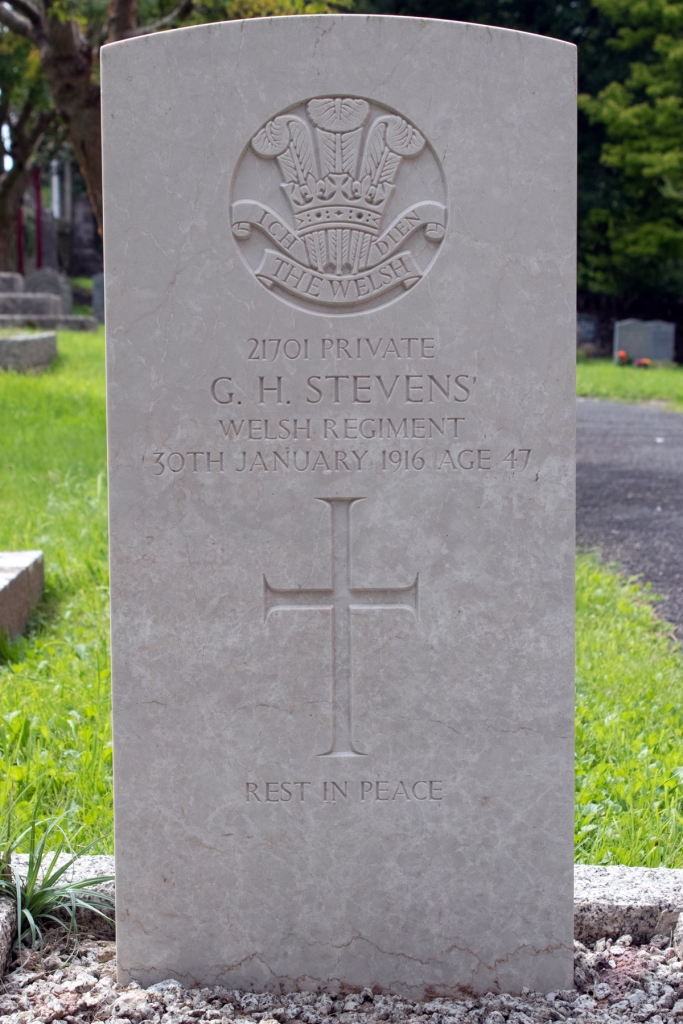
By January 1916, however, Private Stevens was back in Britain, and had become unwell. Again, little specific information remains, but he passed away on 30th January 1916, having fallen into a diabetic coma. He was 47 years of age.
George Henry Stevens was brought back to Somerset for burial. He was laid to rest in the graveyard of Holy Trinity Church in Cleeve, where Maria had moved back to with the family when her husband went to war.
Charles Hookins was born on 15th October 1895 in Pawlett, Somerset. The eighth of nine children, his parents were William and Susan Hookins. William was a labourer in a brickyard, but when he finished his schooling, Charles went to work on his cousin’s farm in neighbouring Huntspill.
Farming was not what Charles had in his mind as a career, however, and on 7th April 1913, he joined the Great Western Railway. Initially employed as an engine cleaner, he was sent to work at the Duffryn Yard, South Wales. He soon moved on again, however, and by October 1913, he was living in Tondu, to the north of Bridgend, where he worked as an engine fireman.
War came to Europe in 1914, and, within weeks of hostilities being declared, Charles volunteered for service. He enlisted on 1st September 1914 in Bridgend, joining the Royal Field Artillery. His service records confirm that he was 19 years of age, stood 5ft 7.5ins (1.71m) tall, and weighed 135lbs (61.2kg). He was noted as having brown eyes, brown hair and a fresh complexion.
Gunner Hookins spent most of the next year on home soil training and became attached to the 57th Brigade. On 2nd August 1915 he set off for the Mediterranean, his troop unusually making their way across mainland France, rather than sailing around Spain and Portugal. They left European shores from Marseille on 7th August, and arrived at Suvla Bay on the Gallipoli peninsula just nine days later.
The 57th Brigade remained at Gallipoli for the next five months, and during this time, in November 1915, the now Acting Bombardier Hookins spent a week in the local field ambulance, through causes unknown.
Charles’ health seemed to be suffering by this point. On 17th January 1916, he was moved to Alexandria, Egypt, where he spent another week admitted to a field hospital. After a couple of months’ grace, he was transferred back to France, again disembarking at Marseille. After another week’s admission to hospital, he was invalided back to England, eventually arriving back home at the end of April.
Acting Bombardier Hookins had contracted pulmonary tuberculosis, and the risk to others, as well as his own health, led to him being discharged from military service on 15th July 1916, having served for just under two years.
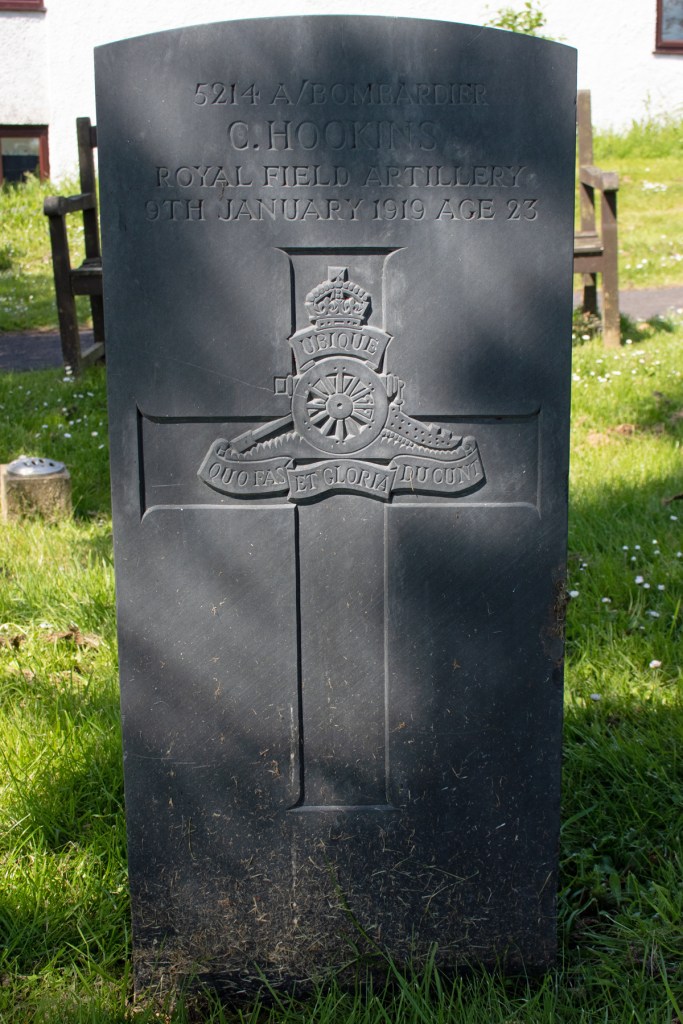
Charles’ trail goes cold at this point. He returned home, but his medical condition was ultimately to get the better of him. He passed away on 9th January 1919, at the age of just 23 years old.
Charles Hookins was laid to rest in the quiet graveyard of St John the Baptist Church in his home village of Pawlett, Somerset.
Charles Edward Fernley was born on 28th November 1874 in Stepney, East London. One of thirteen children, his parents were Richard and Eliza Fernley. Richard was a sluice keeper, who worked his way up to be an inspector of sewers and drains for London County Council. By 1888, he had been able to move his family out of the East End, to suburban Bromley, south of the river in Kent.
By the time of the 1891 census, Charles had finished his schooling, and had found work as a printer’s labourer. Ten years later, however, he was employed as a packer for a millinery warehouse. There seems to have been more need for this back in the East End, however, as he was living in Bow in the summer of 1901.
On 21st August 1901, Charles married Hannah Weston in St Faith’s Church, Stepney. She was three years younger than her husband, and was the daughter of a boatbuilder. The couple settled in a small terraced house in East Ham and had a son, Leonard, who was born in 1908.
When war came to Europe, Charles was keen to play his part. He enlisted in the Essex Regiment, and was assigned to the 1st/4th Battalion. Sent to the Balkans in August 1915, it is likely that he was caught up at Gallipoli and, in December 1915, evacuated with his battalion to Mudros on the Greek island of Lemnos.
By this point, the now Corporal Fernley had contracted dysentery, and was repatriated to Britain for treatment. He was admitted to the Newton Park VAD Hospital on the outskirts of Bath, but was to succumb to the condition on 31st December 1915. He was 41 years of age.
Charles Edward Fernley was laid to rest in the quiet Holy Trinity Churchyard in Newton St Loe, Somerset.
While Charles’ headstone is dedicated to Sergeant Fernley, all other documentation suggests that he held the rank of Corporal when he died.
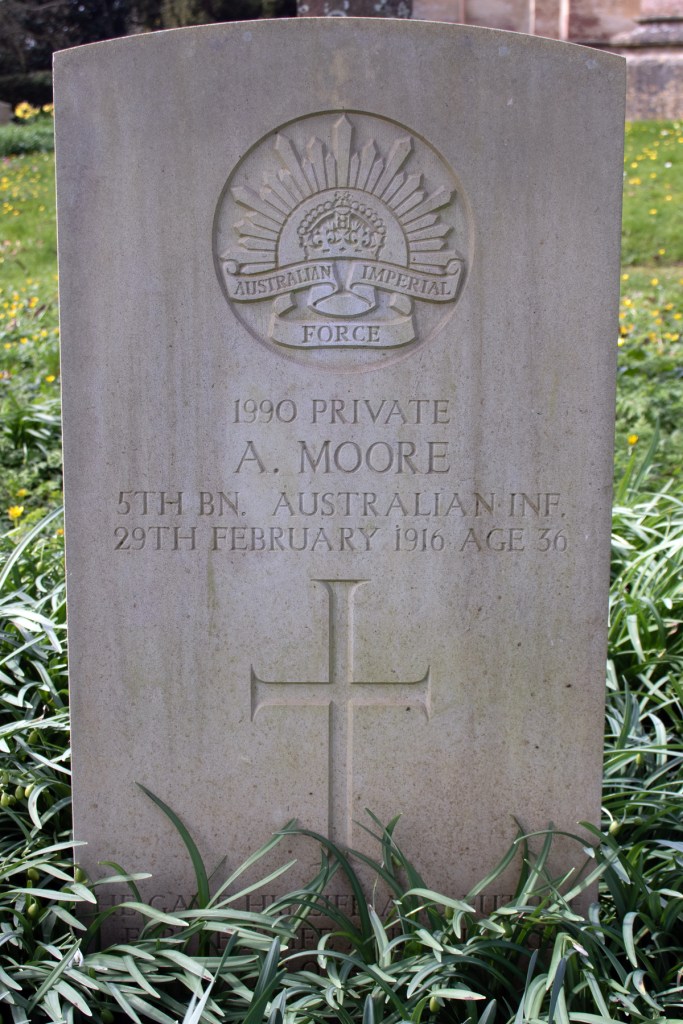
On Wednesday 1st March, the relatives of Private Arthur Moore, formerly of Whatley, heard with great regret the sad news that he had passed away. Private Moore, who belonged to the 5th Battalion Australian Expeditionary Force, left Whatley about fourteen years ago for Australia, where he lived until last year. When war broke out he was among the first in Australia to respond to the call of the Motherland. After undergoing his training he was sent to the Dardanelles, and there with many other brave Anzac received what was to prove his death wound, being shot in the head last August by a Turkish sniper. He was brought to King George’s Hospital, London, where he remained for some time and was thence sent to a convalescent home at Isleworth. But three weeks ago his friends, who were expecting him home, were alarmed to hear that he had been sent to the hospital to be again operated on, the wound not having satisfactorily healed. The operation took place on February 28th, but was not successful, as he never rallied, and died the next day… So has passed away another who had tried to do his duty, another of Britain’s many sons who are dying that England may liv. May he rest in peace!
[Somerset Standard: Friday 17th March 1916]
Arthur Moore had been born in Warminster, Wiltshire, in around 1880, and was the son of Henry Albert and Elizabeth Thurzia Moore. Little further information about his early life is available, but some details can be gleaned from his service records.
Private Moore enlisted on 12th January 1915 in Colac, Victoria, around 150km west of Melbourne. His service records note that he was working as a barman, and that he had spent five years volunteering in the Yeoman Cavalry. Arthur’s medical report confirmed he was 5ft 8ins (1.73m) tall and weighed 168lbs (76.2kg). He had fair hair, blue eyes and a fair complexion.
Arthur gave his next-of-kin as Francis Moore, possibly his brother, but his service documents also noted that his father had died by the time he enlisted and recorded his mother’s details as well.
The Somerset Standard summarised Private Moore’s military career, cut tragically short when the Turkish sniper attacked. After he passed, Arthur’s body was brought back to Somerset for burial. He was laid to rest next to his father, in the quiet graveyard of Holy Trinity Church in Chantry, not far from the family home.










 Death and Service