Walter Griffin was born on 15th December 1886 in Woolwich, Kent. Details of his early life are lost to time, but, by the time of the 1901 census, he was working as a cooper’s mate at a cement factory in Higham, Kent.
Walter sought bigger and better things for himself, and, on 19th June 1907, he enlisted in the Royal Navy as Cook’s Mate 2nd Class. His service records confirm that he was 5ft 4ins (1.62m) tall, with brown hair, grey eyes and a fresh complexion.
Walter was initially sent just down the coast to the Royal Naval Dockyard in Chatham, Kent, for his training. He remained there for nine months, and was promoted to Cook’s Mate 1st Class for his service.
In January 1908, he was given his first posting, on board HMS Wildfire, and, over the next nine years, he served on a further four ships, returning to Chatham in between postings. Walter was obviously dedicated to the work he was doing: in January 1910 he was promoted to Leading Cook’s Mate, and by 1917, he was promoted again, to the ran of Ship’s Cook.
This promotion coincided with a transfer to what would be his last assignment, on board HMS Racoon. This Beagle-class destroyer patrolled the waters between Scotland and Northern Ireland, and he spent the winter of 1917/18 on board.
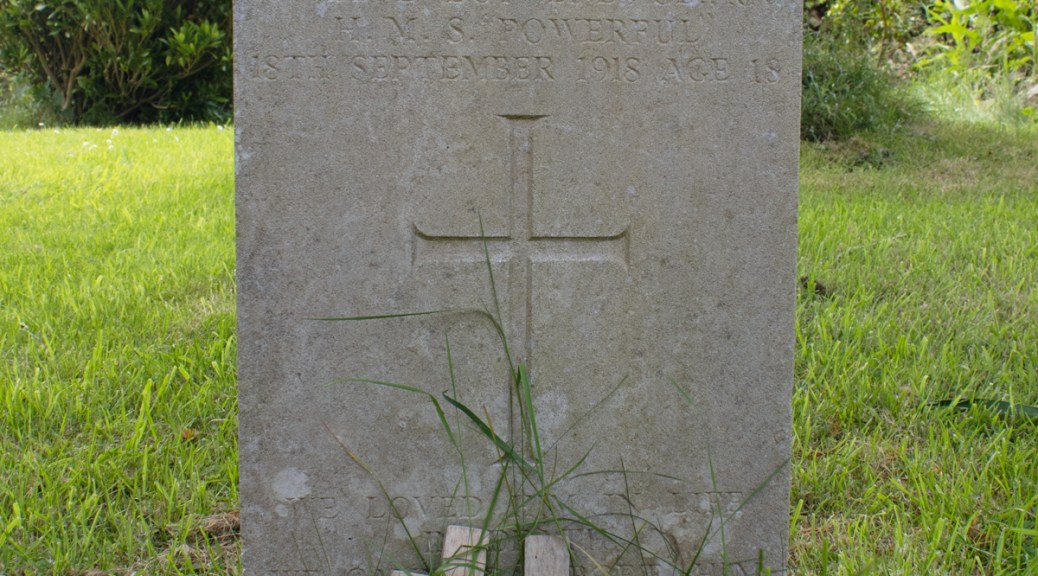
On 9th January 1918, there were storm conditions off the Irish coast: high seas and blizzard limited limited vision. At 2am, the Racoon struck rocks, and foundered: in the treacherous conditions, all hands were lost. Shio’s Cook Griffin was 31 years of age.
Walter Griffin’s body washed ashore near the village of Ballintoy, Country Antrim, the following day. He was laid to rest in the parish church, next to two other crew members, Ordinary Seaman Frank Green and Stoker 2nd Class Frederick Sarell.
Frederick Clifford Sarell was born on 6th July 1899, one of six children to James and Theresa. James was a general labourer from East London, and the family were born and brought up in West Ham, Essex.
The Sarell family were beset by tragedy: Frederick’s oldest brother, James, died in 1903, at the age of 23, while James Sr passed away three years later. By the time of the 1911 census, Theresa was raising her five remaining children in a small house in Fife Road, Canning Town, with her oldest three children bringing in some money to support the family,
In 1913, another of Frederick’s brothers, George, passed away, and the following year his oldest sister, Theresa Jr, also died. By the summer of 1917, with war raging across Europe, Frederick stepped up to play his part. It is unclear whether his motives were to support his mother, or because he was conscripted, but either way he enlisted in the Royal Navy.
Frederick had been working as a dock labourer when he signed up. He Employed as a Stoker 2nd Class, his naval records show that he was 5ft 6.5ins (1.69m) tall, with brown hair, grey eyes and a fresh complexion. He was noted as having a scar on his right knee, a distinguishing mark that would tragically help to identify his body before the year was out.
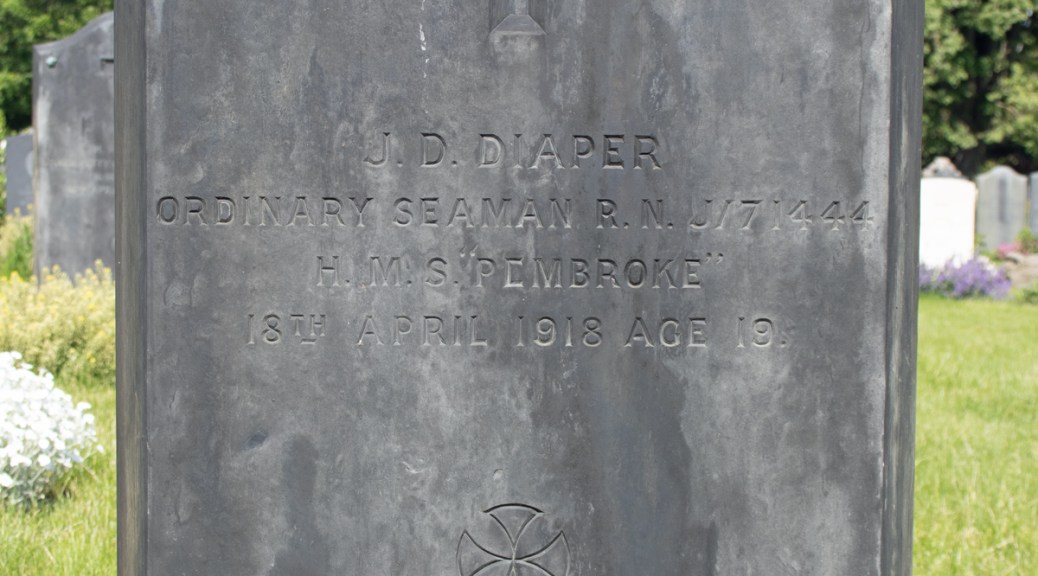
Stoker Sarell was initially sent to HMS Pembroke, the Royal Naval Dockyard in Chatham, Kent, for his training. On 10th October 1917, he was given his first posting, on board the destroyer HMS Racoon, which patrolled the seas between Ireland and Scotland.
Frederick was on board when, on 9th January 1918, the Racoon struck rocks off the coast of Northern Ireland in heavy seas and blizzard conditions. All of the crew – more than 90 men – were lost. Stoker 2nd Class Sarell was just eighteen years old when he died: he had been in the Royal Navy for less than six months.
The body of Frederick Clifford Sarell washed ashore near Ballintoy, County Antrim. He was laid to rest in the graveyard of the village’s church next to two other crew members, Ordinary Seaman Frank Green and Ship’s Cook Walter Griffin.
Frank Ernest Green was born in Stratford, Essex on 14th November 1889. One of nine children, his parents were printer’s compositor John Green and his wife, Susan. The family were raised in Leytonstone and, by the time of the 1911 census, they were living in a house in Elsham Road.
Frank found work as a clerk for a financial company when he finished his schooling. On 31st August 1912, he married sailor’s daughter Charlotte Greenland, who was four years his senior. The couple settled in Gibbon Road, Peckham, Surrey, where Frank continued his work.
When war broke out, Frank was called upon to play his part. On 3rd January 1917, he enlisted in the Royal Navy for the duration of the war. His service records show that he was 5ft 6.5ins (1.69m) tall, with brown hair, blue eyes and a fresh complexion.
Ordinary Seaman Green was initially sent to HMS Pembroke, the Royal Naval Dockyard in Chatham, Kent, for training. He spent short periods of time on two ships before being assigned to HMS Racoon, a Beagle-class destroyer,
Initially patrolling the Mediterranean, by the time Frank joined the crew the Racoon she was part of the Second Destroyer Flotilla, based from Northern Ireland. In January 1918, she struck harsh weather:
HMS Racoon, Lieut. George LM Napier RN, in command, struck some rocks off the north coast of Ireland at about 2am on the 9th [January], and subsequently foundered with all hands.
Nine of the crew had been left behind at her last port of call, and these are the sole survivors.
Seventeen bodies have been picked up by patrol craft, and are being buried at Rath Mullan. Five more bodies have been washed ashore, and are being buried locally.
All the next of kin have been informed.
Exeter and Plymouth Gazette – Monday 14 January 1918
Ordinary Seaman Frank Ernest Green was one of those to be washed ashore. He was just 28 years of age. He was laid to rest in the peaceful and picturesque graveyard of Ballintoy Church, County Antrim, not far from where he had come to land. He was buried next to two other crew members, Ship’s Cook Walter Griffin and Stoker 2nd Class Frederick Sarell.
On Saturday last an inquest was held at the Seaman’s Institute on the body of Gunner Wm. Moore, RNTS.
Mrs Brennan, sister of the deceased, stated that he was 43 years of age, and lived when off duty with her at Somerville, Seacombe, Cheshire. He joined the Royal Marine Light Infantry over 20 years ago.
Mr R Sussex Langford, Lloyd’s agent, stated that he saw deceased on landing. He help to get him into a cart, but found he was too ill to travel that way, so he had him put on an ambulance and taken to the Royal National Mission for Deep Sea Fishermen, and immediately sent for the doctor. Deceased was semi-conscious and very sick. He was a gunner from a torpedoed ship. Deceased died on Thursday [25th July 1918] at 6 o’clock.
Dr Sargent stated that he was called on the 23rd to see deceased, and found him semi-conscious, complaining of great pain in the abdomen and vomiting. He lay in that condition until the 25th, when death took place. The cause of death was acute traumatic peritonitis, the result of injuries received by the explosion of an enemy torpedo.
[Newquay Express and Cornwall County Chronicle – Friday 02 August 1918]
Other than the details outlined in the newspaper report, little concrete information is available about the life of William Moore. The name does crop up in the 1891 census in Seacombe, Cheshire, and, if this relates to Gunner Moore, then he was one of five children to widowed lithographer Margaret Moore. Beyond that one census, however, it is not possible to find any more specific details.
William was on board the steam ship SS Anna Sophie in the summer of 1918, which was sailing from Rouen to South Wales, On 23rd July, she was torpedoed by the German submarine U-55 off Trevose Head, Cornwall. The Anna Sofie was sunk, Gunner Moore was one of those who subsequently passed from their injuries.
William Moore’s sister may not have been able to pay for her brother to be brought back to Cheshire for burial. Instead, he was laid to rest in Padstow Cemetery, and shares his resting place with another member of the crew, Lance Corporal William Whitmore.
William’s headstone reads: “In honoured memory and grateful remembrance of William Moor [sic] who lies here, and all others who in the Great War 1914-1918, perished at the enemies hands off this coast. RIP.”
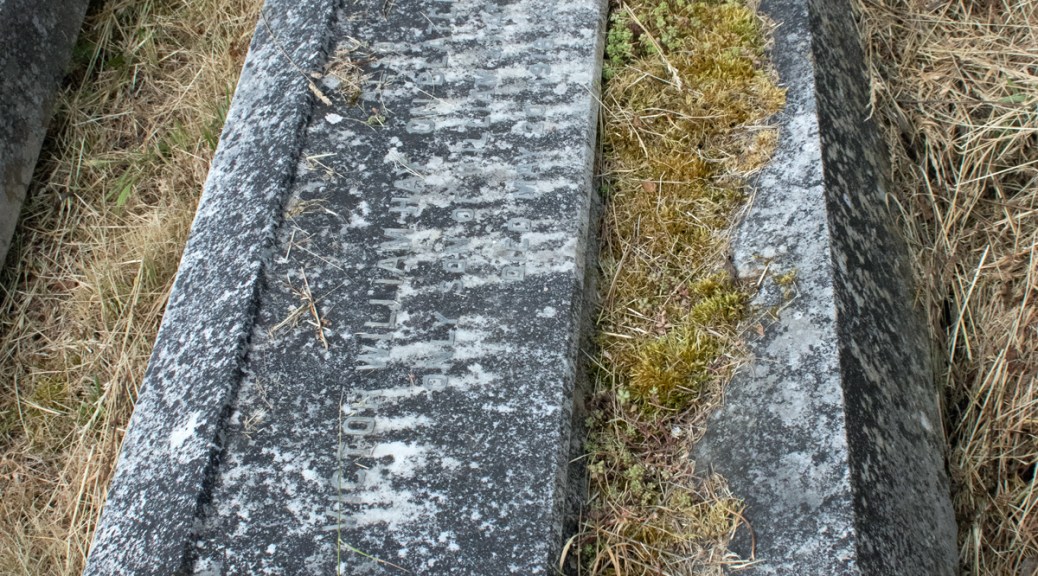
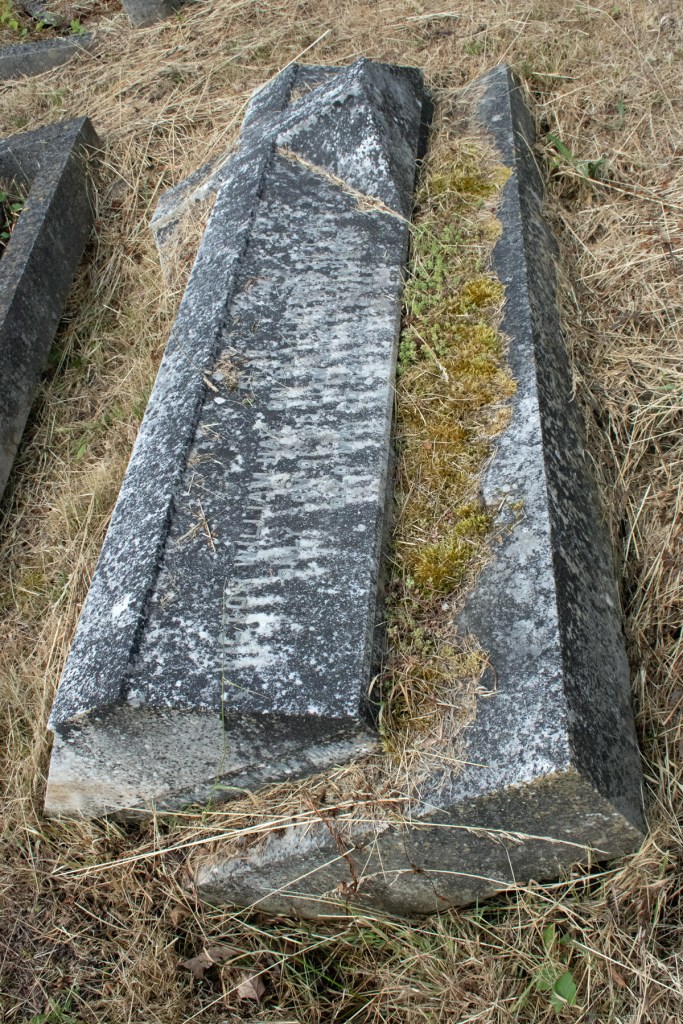
William Henry Whitmore was born in Stoke-on-Trent, Staffordshire, on 21st May 1875. One of nine children, his parents were William and Mary Whitmore. He was not the first of their sons to be called William – a brother born nine years previously was also called by that name, but he died when just a few months old.
William Sr was a journeyman joiner, and seems not to have played much of a part in his family’s life. The 1881 and 1891 census returns found Mary raising her children as the head of the household, and this seems to have paid a toll. By the time of the 1901 census, she was one of 150 patients at the North Staffordshire Infirmary in Stoke-on-Trent. She died in 1907, at the age of 67 years old.
William Jr, meanwhile, had been making a life for himself. On 28th August 1895, he enlisted in the Royal Marine Light Infantry, set on a career at sea. His service records confirm that he was 5ft 8ins (1.73m) tall, with brown hair, grey eyes and a fresh complexion. The document also highlights two tattoos on his left forearm, one of a crossed heart.
Private Whitmore was sent to Walmer in Kent for his initial training. He spent nine months on site, before moving to what would become his shore base, the Royal Naval Dockyard in Portsmouth. Over the twelve years of his contact, he would go on to serve on six ships, each time returning to the Hampshire port.
On 18th February 1904, William married Margaret Cook. She was the daughter of a farm labourer from Somerset, but the couple wed in the parish church of Eastry, near the Royal Marines base in Walmer.
William’s term of service came to an end in September 1907, and he was placed into the Royal Fleet Reserve. He and Margaret, together with daughter Kathleen, settled in Wellingborough, Northamptonshire. Their home was a small terraced cottage on Salisbury Road, close to the train station. William had found employment as a labourer in a blast furnace not far from home. A second child, daughter Nora, was born in 1910, and the family was complete.
Private Whitmore was called into service once more when war was declared. After initially returning to Portsmouth, he was assigned to the converted liner HMS Carmania, spending nearly two years on board. After a brief spell back on dry land, William found himself assigned to the steam ship SS Anna Sophie.
On 23rd July 1918, the ship was en route from Rouen to South Wales, when she was torpedoed the German submarine U-55 off Trevose Head, Cornwall. The Anna Sofie was sunk, and one member of the crew died. Others subsequently passed from their injuries, including the now Lance Corporal Whitmore. He was 43 years of age.
William Henry Whitmore’s body was recovered, but his family were unable to cover the cost of bringing him back to Northamptonshire for burial. Instead, he was laid to rest in Padstow Cemetery, in a shared grave with fellow crewman Gunner William Moore.
Lance Corporal William Whitmore (from ancestry.co.uk)
Charles Henry Edwards was born in Padstow, Cornwall, in around 1888. One of three children, his parents were Charles and Elizabeth Edwards. Charles Sr was a farm labourer, and his son, who was one of four children, followed suit when he finished his schooling.
Charles Sr passed away in 1903: the next census record found Charles and two of his sisters living with Elizabeth. She was claiming parish relief, while her daughters were doing occasional char work to bring in a little more money.
Charles married a woman called Florence Dunn in the summer of 1911: little information is available for her, other than she was born in Devon, to Joseph and Maria. The couple set up home in Leadwell Street, Padstow, and went on to have four children: Lilian, Charles, Elsie and Alfred.
When war came to Europe, Charles stepped up to play his part. He enlisted 11th December 1915, by which point, he had found work as a cowman. He joined the Devonshire Regiment as a Private and spend the next fourteen months on home soil, moving across to the 5th Labour Company in February 1917.
At this point, Private Edwards was sent to France, and he spent most of that year overseas. He returned to Britain on 8th November, having contracted bronchitis while serving at Etaples. When he had recovered, Charles returned to duties, and was attached to the 650th Labour Coy.
Alfred, Charles and Florence’s youngest child, was born on 1st April 1918, but seemed to be a sickly boy. He passed away on 27th September, aged just six months, from a combination of influenza and bronchitis. Tragically, Charles was also unwell at this point, and he passed away just four days later from pneumonia. He was just 30 years of age.
Charles Henry Edwards was laid to rest in Padstow Cemetery. The report of his funeral does not mention Alfred, but it seems likely that father and son were buried together.
Florence lived on until 1964. She passed away in Bodmin, at the age of 78, and was laid to rest with her husband, reunited after more than four decades.
John Edward Stone was born on 10th April 1894 in Torquay, Devon. The oldest of seven siblings – of whom three survived childhood, his parents were John and Hannah Stone.
John Sr was a masons labourer, but when his son finished his schooling, he found work initially as a grocer’s errand boy, then as an outdoor porter. John Jr sought bigger and better things, however, and, in February 1913, he enlisted in the Royal Navy.
Stoker 2nd Class Stone’s service records show that he was 5ft 5ins (1.65m) tall when he joined up, and that he had brown hair, grey eyes and a fresh complexion. He was based at HMS Vivid, the Royal Naval Dockyard in Devonport, and this is where he spent the first six months training.
John’s first sea-going posting was on board the armoured cruiser HMS Defence and she was to be his home from 2nd September 1913 to May 1916, when she was sunk during the Battle of Jutland. During his month aboard, he was placed in the brig for 14 days due to ‘absence’. This imprisonment seemed to have refocused John’s priorities, however, and he was promoted to Stoker 1st Class on 26th February 1914.
Rescued from the lost Defence, John was taken back to Devonport, and he remained there until the end of August 1916. From here he transferred to the depot ship, HMS Blake, which was to be his home until the end of the war.
In the spring of 1917, John married Sarah Juliff in St Columb, Cornwall. The couple went on to have a daughter, Christiana, a few months later.
Stoker 1st Class Stone fell ill towards the close of the war, contracting pneumonia. He passed away while still on board HMS Blake, on 15th November 1918. He was 24 years of age.
Sarah was living in Middle Street, Padstow when her husband passed. He was brought back to the county, and was laid to rest in the town’s cemetery.
The official documents go on to say that Sarah moved to the Caerwilliam Hotel in Cabres Bay. However, there are no records for the hotel or location, although it could refer to Carbis Bay in St Ives, Cornwall.
Richard George Dale was born Padstow, Cornwall, in the summer of 1889, the oldest child to Alice Dale. She married Frederick Bryant in March 1894, but and went on to have two children – Frederick and Albert – but, by the time of the 1901 census, her husband has passed away. The document gives Richard’s surname as Bryant, but there is no real indication that he was Frederick’s son.
Alice had been living with her greengrocer parents, but the 1901 census in a small cottage off Lanadwell Street, a couple of door away from them. As a widow at 31 years old, she is noted as being on parochial relief.
Details of Richard’s later life are a challenge to track down. Absent from the 1911 census, it was around that time that he married Agnes MacKintosh. While she was born in Edinburgh, the wedding took place in St Columb, Cornwall.
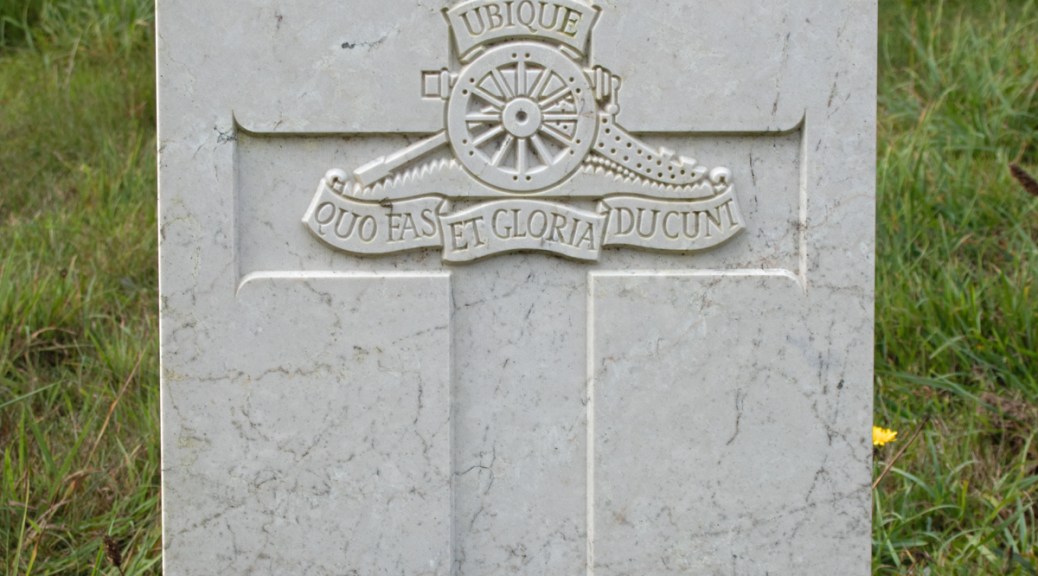
When war broke out, Richard was working as a farmer. He enlisted the day after hostilities were declared, and joined the Royal Garrison Artillery. Gunner Dale was, according to the records, 5ft 3ins (1.6m) tall, with medium colour hair, blue eyes and a fresh complexion. He had a scar between his eyebrows.
Gunner Dale served for nearly four years, all the time being based on home soil. He suffered from epilepsy, however, and this is what led to his eventual discharged from armed service in March 1918.
Richard returned home, but his health was compromised. He passed away on 11th October 1918, from a combination of influenza and pneumonia. He was 29 years of age.
Richard George Dale was laid to rest in Padstow Cemetery, in sight of his younger brother Albert, who had passed away eleven years before.
The funeral of Mr Henry Hutchings, the Zulu war veteran, who died suddenly at Lower Weston on Tuesday, took place on Saturday afternoon…
The principal mourners were: Mrs Hutchings (widow), Sergt. Hutchings (son)(who wore the Mons ribbon and a Zulu war medal), Mr AE Adams (step-son), Mrs A Hutchings (daughter-in-law), Mr David Adams (step-son), and Mrs Emily Pickworth (step-daughter).
In order to attend the funeral Mr AE Adams had returned from France, where he has been carrying out work for a local firm.
Bath Chronicle and Weekly Gazette: Saturday 16th February 1918
Tracking down Henry Hutchings’ early life is a bit of a challenge, but working backwards through census records sheds some light onto his later years.
The Commonwealth War Graves Commission record states “Hutchings, Pte. Henry, 14475. Royal Defence Corps. 5th Feb., 1918. Age 59. Husband of Theresa Hutchings… Served in the Zulu War (1877-79) with Army Service Corps.”
The 1911 census recorded Henry and Theresa living in Shepherd’s Bush, Hammersmith. The document confirms they had been married for less than a year and, unusually, suggests both were twice married. Henry had been born in Notting Hill, and was employed as a smith’s hammerman. Theresa was born in Byfleet, Surrey, and the couple were living with Henry’s son, Henry Jr, and Theresa’s daughter, Alice.
Turn the clock back ten years, and the 1901 census tells a more confused story. Henry was living in Edmonton, Middlesex, where he was employed as a general labourer. Theresa is noted as being his wife – in contrast to the later census return – and the couple were living in Gilpin Crescent with Henry’s sons – Henry Jr, Edward and Sidney – and Theresa’s two children – Alice and Albert.
Going back a further ten years leads to a dead end. Neither Henry nor Theresa are readily identifiable on the 1891 census, even though both should have had their older children by that point.
An 1877 military record confirms Henry’s earlier time in the army. It was in July of that year that he enlisted, joining the Army Service Corps. At 18 years of age, he had been working as a carman, but a dedicated career is what he sought out. His record confirms he was 5ft 4ins (1.63m tall, with brown hair, blue eyes and a fresh complexion. Henry lists his next of kin as brother Robert Hutchings, although, again further family details are lost in the mists of time.
Private Hutchings spent twelve years in the army. After eighteen months on home soil, he was dispatched to South Africa, as the later newspaper report suggests, and spent a year overseas. He returned home in March 1880, and was stood down to reserve status until the end of his contract in July 1889.
The documentation uncovers details of Henry’s second period of time in the military. He enlisted in the Royal Defence Corps in September 1915, and was based at Alexandra Palace in London. His time there was limited, however, as he began to show signs of heart disease. By the following summer, Private Hutchings suffered from breathlessness and chest pains, to the point where he was medically discharged from service on 21st August 1916.
Henry and Theresa had moved to Somerset by January 1917, presumably for the cleaner air that their home in Bath would provide. This was not to be enough, however. Henry died a little over a year later, at the age of 59 years old.
Henry Hutchings was laid to rest in the sweeping grounds of Locksbrook Cemetery, Bath. He was to be reunited with Theresa when she passed away in 1926.
William Kennedy Blundell early life seems anything but ordinary. Born in Cardiff, Glamorgan, in the summer of 1890, he was the only child to bank clerk Edmund Blundell and his wife, Annie. Edmund was born in Staplegrove, Somerset, while Annie had grown up in Lahore, India.
The 1891 census found William living with his maternal grandparents James and Edith Kennedy in the Walcot area of Bath, while his parents were firmly based in Cardiff. Edmund died the following year, so it is possible that he was placed out of the way while Annie tended to her husband (along with her sister-in-law and a domestic servant).
By the time of the next census return, Annie and William were reunited, and were living in Avenue Road, Wimborne Minster, Dorset. Anne was living off her own means, and had a servant, Emily Chaffey, to hep look after the home.
Both Annie and her son disappear from the 1911 census. It is likely that William had embarked on a military career by this point, and may have been serving overseas. Sadly, his trail goes cold, but scraps of later information help identify some of what became of him.
By the outbreak of the First World War, he was serving in the Bedfordshire Regiment. He was based in Egypt from January 1916, and rose to the rank of Captain by the end of the conflict. By 1918, he was attached to the 12th (Transport Workers) Battalion, and was back in Britain.
Captain Blundell was in Sussex by the time of the armistice, and it was here that he fell ill, contracting pneumonia. He was admitted to the General Eastern Hospital in Brighton, but the condition was to prove too severe. He passed away on 13th December 1918, at the age of 28 years old.
William Kennedy Blundell’s body was taken back to Somerset for burial. He was laid to rest in the sweeping grounds of Locksbrook Cemetery in Bath.