Tag Archives: family

Private Charles Sparey

Private Charles Sparey

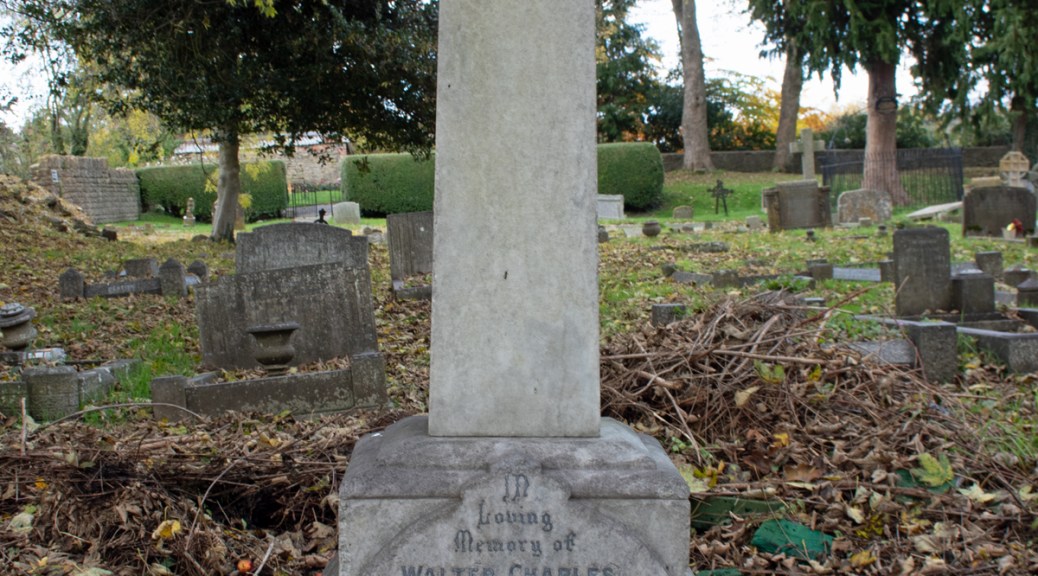
Walter Charles Sparey was born on 3rd Aril 1890 in the Somerset town of Frome. He was a twin, and was one of a total of seven children to Walter and Susan Sparey. Walter Sr was a plasterer and tiler and the family lived on Culver Hill, to the south of the town centre, and next to the Girls’ Asylum Institute.

When he left school, Walter Jr – who was known as Charles, to avoid confusion with his father – found work as a grocer’s porter, while his twin, Henry, was employed as a labourer for the local brewery.

Europe was on the brink of war and, while full details of Charles’ military service are not available, some aspects are clear. He enlisted within weeks of war breaking out, joining the Somerset Light Infantry as a Private. By July 1915, he found himself on the Western Front in France.

Private Carey was caught up in the fighting and, on 3rd April 1916, received gun shot wounds in the back and shoulder. He seems to have recovered, but was dogged by lung and heart afflictions afterwards, and did not return to active duty. He was eventually discharged from military service on 15th August 1917.

Charles returned home, but the effects of his injuries eventually proved too much. He passed away on 1st March 1918, aged just 28 years old, and was laid to rest in the graveyard of Christ Church in his home town of Frome.


Corporal Cyril Allen

Corporal Cyril Allen

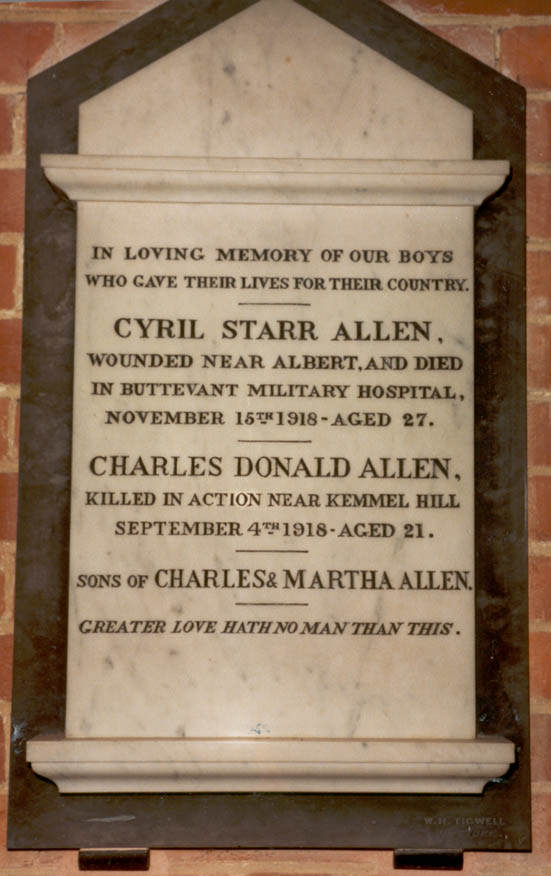
Cyril Starr Allen was born on 15th June 1891 in the village of Baughurst, near Tadley in Hampshire. He was the second youngest of five children to Charles and Martha Allen. Charles was a rate collector, and the family moved around the county during Cyril’s early years.

By the time Cyril left school, Charles had become an assistant bursar in Wootton, near Basingstoke. Cyril, meanwhile, had found similar administrative employment and was working as a clerk for a local land agent.

At the start of 1911, Cyril enlisted in the British Army. He joined the 4th Battalion of the Wiltshire Regiment as a Private and was soon based on Salisbury Plain. His service records confirm that he was 19 years and 7 months old, and stood at 5ft 5ins (1.65m) tall. Private Allen served for his initial term of four years, before being remobilised.

In November 1915, Cyril married Mabel Young. She was a printer’s daughter from Wiltshire, and the couple married in Salisbury, before settling down in Frome, Somerset. They went on to have a child, a daughter they called Kathleen.

Remobilised in the autumn of 1915 Private Allen received a series of promotions – to Lance Corporal, Corporal, Lance Sergeant and Sergeant, and, by June 1917, he found himself at the Front.

On 22nd April 1918, Cyril was injured, sustaining gunshot wounds to his shoulder and left arm. He was invalided back to England for treatment, and was hospitalised in the north of the country. He was then transferred to the Royal Welch Fusiliers with the rank of Corporal and sent to Ireland to continue his recovery and work light duties.

While in Ireland, Corporal Allen contracted influenza and was admitted to the Buttevant Hospital in County Cork. Sadly, in his weakened state, it was something he was to succumb to, and he passed away, with Mabel at his bedside, on 15th November 1918. He was just 27 years of age.

Cyril Starr Allen’s body was brought back to England; he was laid to rest in the graveyard of Christ Church in Frome, Somerset.


Corporal Cyril Allen (from ancestry.co.uk)

After the loss of her husband, Mabel went on to live her life. In 1923, she married James Burr, a draughtsman from Frome; they went on to have a child – a brother for Kathleen – called James.


Cyril’s two brothers, Winthrop and Charles, also fought in the First World War.

(from ancestry.co.uk)

Winthrop had emigrated to North America in 1911, but returned to Europe as part of the Canadian Expeditionary Force when war broke out.

Lance Corporal Charles Allen served with the 15th Battalion of the Hampshire Regiment. He fought on the Western Front and was killed near Kemmel Hill in Belgium on 4th September 1918. He was just 21 years old. Charles is commemorated at the Tyne Cot Memorial in Zonnebeke, Belgium.


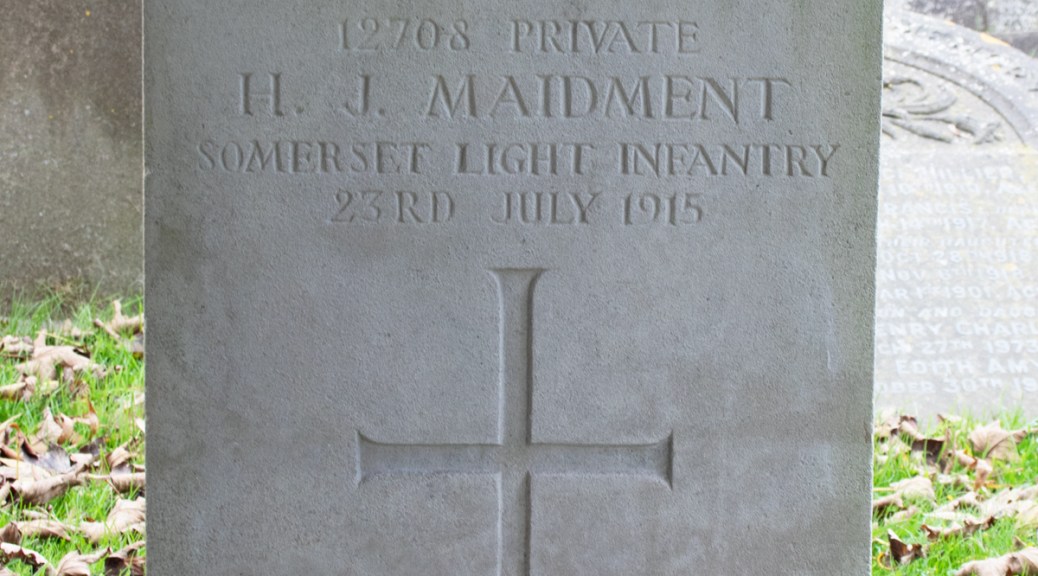
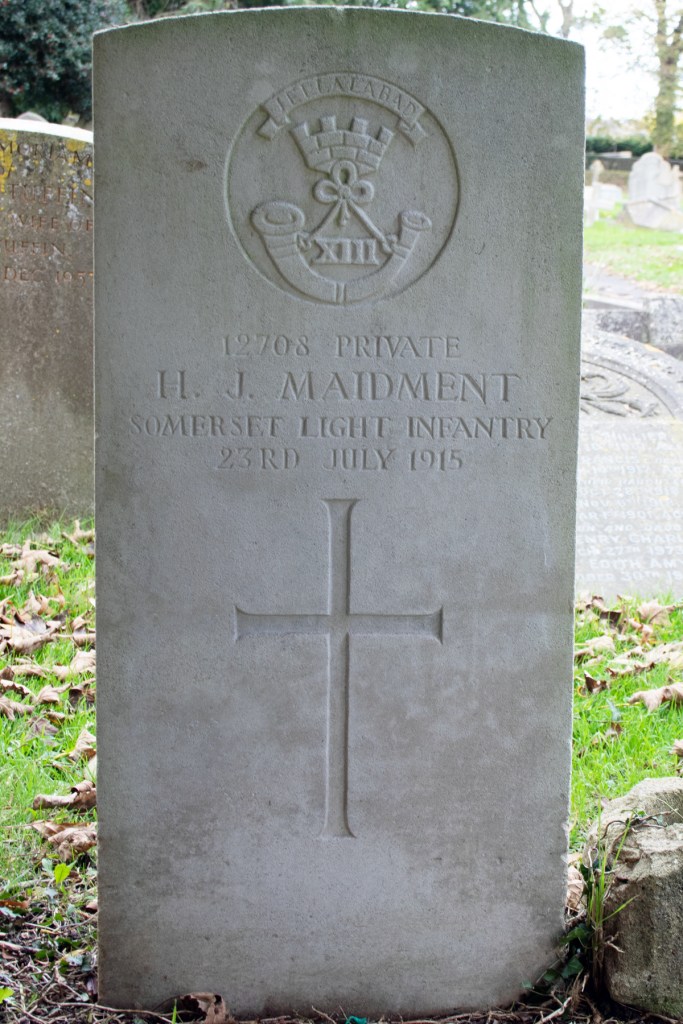
Private Harry Maidment

Private Harry Maidment

Henry James Maidment – known as Harry – was born in Penarth, South Wales, in the autumn of 1890. He was one of seven children to Somerset-born Henry and Minnie Maidment. Henry Sr was a general labourer, and, when he died in 1899, Minnie remained in Penarth, earning money to support the family as a hawker of fruit.

By the time of the 1911 census, most of Minnie’s children were still living at home, with all but one of them working. Harry was employed as a van driver for a laundry, while his siblings were working variously as labourers, sailors and a housekeeper.

In the autumn of 1911, Harry married Annie Hillier, a servant who had been born in Yeovil, but who had also moved to South Wales. The couple went on to have a son, Henry, in October 1912, but he tragically passed away when he was just a couple of months old. They were not to have any other children.

War was coming to Europe by this point, and Harry was keen to play his part. He enlisted towards the end of 1914, joining the 1st Battalion of the Somerset Light Infantry as a Private. He arrived in France at the beginning of May 1915, and would have seen fighting at Ypres that spring.

It seems that Private Maidment was wounded at Ypres; he was medically evacuated home and was admitted to the Graylingwell Hospital in Chichester, West Sussex. Details of his injuries are not available, but they must have been severe; he passed away from them on 23rd July 1915, aged just 25 years old.

Harry James Maidment’s body was brought back to Somerset; he was laid to rest in the graveyard of Christ Church, Frome, his parents’ home town, and where his widow, Annie was living.


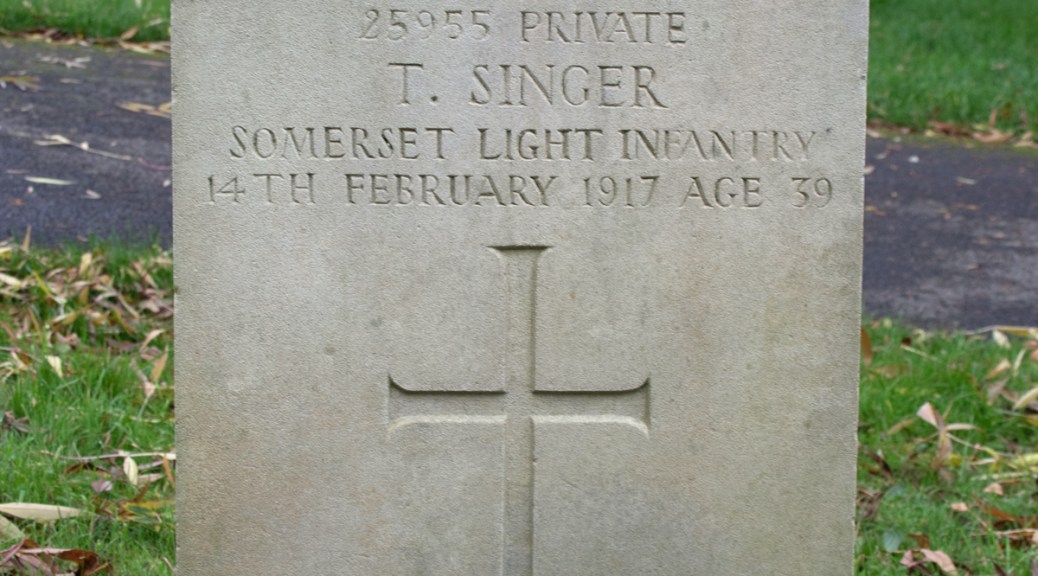
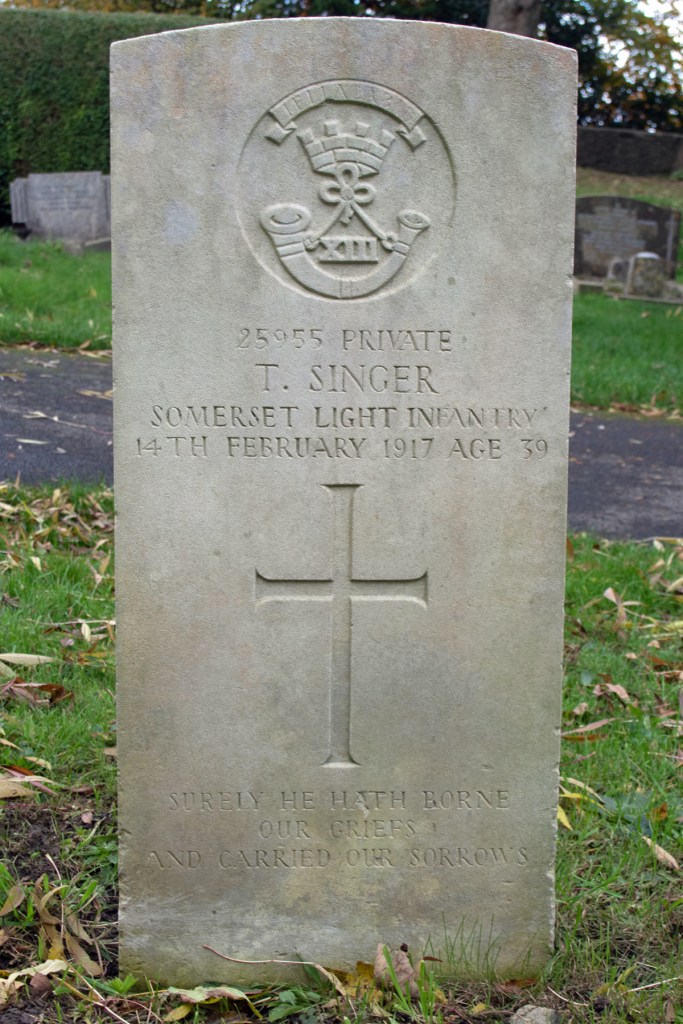
Private Thomas Singer

Private Thomas Singer

Thomas – better known as Tom – Singer was born in Frome, Somerset, in the summer of 1876, the youngest of seven children to John and Sophia Singer. John was a labourer on the railway, who sadly passed away when Tom was only three years old. Sophia was left to raise the family on her own, and she did so by taking in washing for other people (the 1891 census has her listed as a pauper, but she still managed to support her children). Sophia also died in 1892, meaning Tom was an orphan by the time he was just 16 years old.

Tom found work as an errand boy when he left school, although he soon moved on to labouring work. After Sophia’s death, he moved in with his brother Walter, who had also recently been widowed, and the money they brought in helped support Walter’s three children and pay for a housekeeper to do so.

On 21st July 1904, Tom married Edith Mary Bugler, a labourer’s daughter from nearby Selwood; the couple went on to have five children. With a growing family to support, Tom found new work as an ostler at the pub in Witham Friary, to the south of Frome.

War was coming to Europe, and Tom was called upon to do his duty. Full details of his service are not available, sadly, but it is clear that he enlisted as a Private in the Somerset Light Infantry at some point before the summer of 1916.

Private Singer was sent to France in November 1916, but fell ill soon afterwards. He was medically evacuated back to England and admitted to hospital, where he underwent an operation. Sadly, he did not recover, and passed away on 14th February 1917, at the age of 40 years old.

Tom Singer was laid to rest in the graveyard of Christ Church in his home town of Frome.

Stoker 1st Class Frederick Reyner

Stoker 1st Class Frederick Reyner

Frederick Walter Reyner was born in Braintree, Essex, on 18th May 1884. The youngest of five children, his parents were Stephen and Martha Reyner. Stephen was a carpenter, who raised his family alone, when Martha passed away in 1889.

When Frederick left school, he found work as an iron worker. When Stephen also died in 1902, Frederick moved in with his older brother, Henry.

His father’s death seemed to have been the spur he needed to move on to bigger and better things: on 21st April 1904, Frederick enlisted in the Royal Navy as a Stoker 2nd Class for an initial period of five years. His service records show that he stood 5ft 4ins (1.63m) tall, had brown hair, brown eyes and a fresh complexion, with a small scar on his left thumb as an identifying mark.

Over the course of his term of service, Stoker Reyner served on three ships – HMS Acheron, Berwick and Irresistible – and was promoted to Stoker 1st Class. After each voyage, he returned to HMS Pembroke, the Royal Naval Dockyard in Chatham, Kent.

When his initial term ended in 1909, Frederick was placed on reserve, and moved back in with Henry and his family. He worked to pay his way, finding employment as a postman around Brixton, where his brother lived. He met local woman Charlotte Rebecca Scott, and the couple married in St Andrew’s Church, Peckham, on 31st May 1914.

War, by this time, was imminent, and Frederick soon found himself called back in to action. After spending a year on shore, at HMS Pembroke and HMS Victory – the Naval Dockyard in Portsmouth – Stoker Reyner was assigned to HMS Europa, a cruiser that patrolled the Eastern Mediterranean. He spent two years on board, before returning to HMS Pembroke in July 1917.

The base was particularly busy that summer, and the large number of extra servicemen meant that Frederick was billeted in temporary accommodation in Chatham Drill Hall.

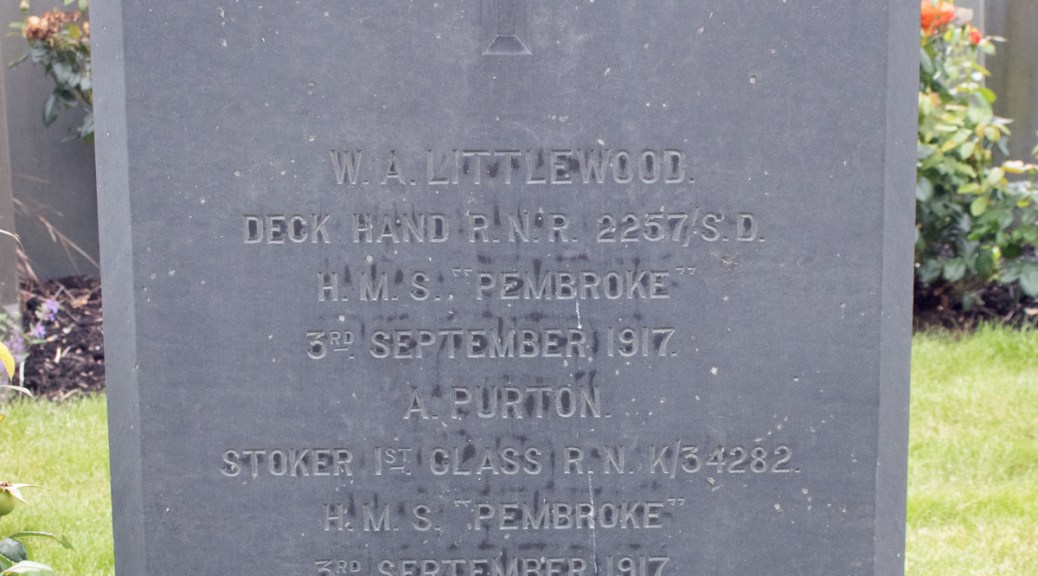
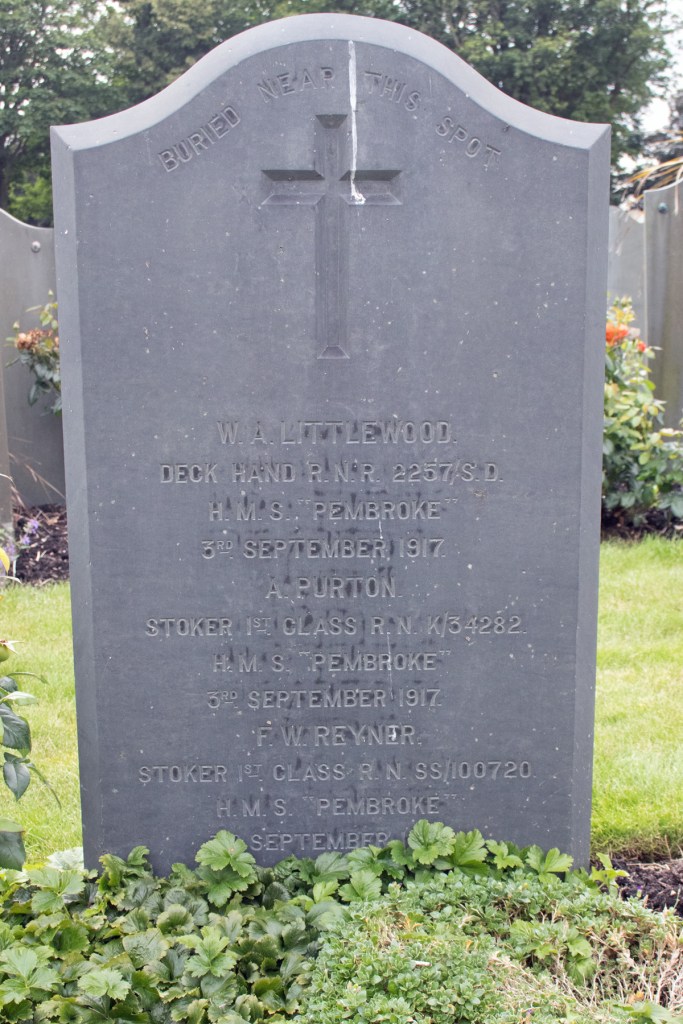
On the 3rd September 1917, the first night air raid carried out by the German Air Force bombarded the town, and scored a direct hit on the Drill Hall; Stoker 1st Class Reyner was among those killed instantly. He was 33 years old.

Frederick Walter Reyner was laid to rest, along with the other victims of the Chatham Air Raid, in the Woodlands Cemetery, Gillingham. Tragically, the Navy Death Records state that he was Buried as unidentified in one of the following graves: 516, 522, 642, 735, 935, 937 or 948.


To add to the sadness of Frederick’s story, Charlotte was pregnant when he died. She gave birth on 31st May 1918, to a son who she named in memory of her late husband.


Ordinary Seaman George Shuttle

Ordinary Seaman George Shuttle

George James Henry Shuttle was born in Brentford, Middlesex, on 12th July 1899. His mother was Helen (or Ellen or Nellie) Shuttle, but he does not seem to have had a close connection to her and, according to the records, there was no father on the scene. Initially fostered out to Noah and Carmina Scott as a nurse child, by the time of the 1911 census, the couple had adopted him.

When he left school, George worked as a milk boy, but he seemed to know that a life of adventure awaited him. In June 1915, he joined the Royal Navy; being only 15 at the time, he was given the rank of Boy 2nd Class.

His initial posting was on board the cruiser HMS Powerful, and his training there paid off, as he quickly rose to Boy 1st Class. After a couple of months’ at HMS Victory – the Royal Naval Dockyard in Portsmouth – George was assigned to his second ship, HMS Malaya. Within weeks, the brand new battleship had cut her teeth in the Battle of Jutland, during which 65 of her crew were killed.

George spent more than eighteen months on Malaya; his time on board saw him turn eighteen, and gain the rank of Ordinary Seaman. His service records at the time show that he was 5ft 3.5ins (1.61m) tall, had brown hair, grey eyes and a fresh complexion.

By August 1917 Ordinary Seaman Shuttle had returned to shore, and was assigned to HMS Pembroke, the Royal Naval Dockyard in Chatham, Kent. The base was particularly busy when he arrived. Temporary accommodation at Chatham Drill Hall had been set up, and George found himself billeted there for the summer.

On the 3rd September 1917, the German Air Force carried out one of the first night-time air raids on England: an unprepared Chatham was heavily bombed and the Drill Hall received a direct hit. Ordinary Seaman Shuttle was badly injured and died of his wounds in hospital the following day.

George James Henry Shuttle was laid to rest, along with the other victims of the Chatham Air Raid, in the Woodlands Cemetery, Gillingham.


George’s mother, Helen, had continued with her life. A year after George was born, she had another son, Cyril, but he also seems to have been fostered out to enable her to work.

In 1903, she married musician Harry Burgiss-Brown, and the couple set up home in Richmond, Surrey. They went on to have two children, and Helen seemed focused on her new life, rather than the one she had before marrying.

Helen died in 1949, just short of her 70th birthday.


Ordinary Seaman Victor Duckett

Ordinary Seaman Victor Duckett

Victor Rous Duckett was born in Margate, Kent, on 2nd September 1887, the youngest of seven children to publican and stonemason Charles Duckett and his wife, Emily. Tragically, both of Victor’s parents died when he was young: Charles passed away on 31st October 1891, while managing the Clifton Arms public house; Emily passed away just four months later.

Victor’s brothers Charles and William took over the running of the pub, and, understandably, took on the responsibility for the family. The 1901 census records that he was one of eight boys boarding at a ‘private school’ in a house in Stanley Road, within walking distance of the Clifton Arms. The school was managed by James and Mary Hawkins and had one master, Alexander Smith.

When he left school, Victor found work as a compositor, setting type for a local printer. In the meantime, while his brothers were still running the pub, his three sisters had set up a ladies’ outfitters in Broadstairs, where they employed an assistant, Amy Leggett. Victor and Amy became close and the couple married in Sussex – where Amy was from – in the spring of 1911. They set up home in Croydon, and went on to have twin daughters, Caroline and Dorothy, the following year.

War was on the horizon, and Victor was called up on 27th February 1917. He enlisted in the Royal Navy as an Ordinary Seaman, and was sent to HMS Pembroke, the shore-based establishment in Chatham, Kent. His service records show that he stood at 5ft 10.5ins (1.79m) tall, had brown hair, blue eyes, and a fresh complexion.

HMS Pembroke was extraordinarily busy when Ordinary Seaman Duckett arrived there. Temporary accommodation at Chatham Drill Hall had been set up, and Victor found himself billeted there for the summer.

On the 3rd September 1917, the German Air Force carried out one of its first night-time air raids on England: Chatham was heavily bombed and the Drill Hall received a direct hit. Ordinary Seaman Duckett was badly injured and died of his wounds in hospital the following day. He had celebrated his thirtieth birthday just two days before.

Victor Rous Duckett was laid to rest, along with the other victims of the Chatham Air Raid, in the Woodlands Cemetery, Gillingham.


Ordinary Seaman
Victor Duckett
(from ancestry.co.uk)

Able Seaman Robert Peters

Robert Peters was born on 27th May 1893 in Dundee. Little information remains documented about his early life, but he was one of at least four children to John and Agnes Peters, and had two sisters, one called Mary, and an older brother. The family lived in towards the west of the city centre, in the now-spartan Annfield Road.

The bulk of the information about Robert comes from one document – his Royal Navy Service Records. He enlisted as an Ordinary Seaman on 4th April 1912, but, because of his work as an iron turner, he seems to have been put on reserve until hostilities broke out two years later.

While on reserve, he received the training that all reservists would have done, which meant that, when he was formally called into action in June 1916, he did so at the rank of Able Seaman. Robert’s service records also show that he was 5ft 5ins (1.65m) tall, had dark hair and brown eyes.

Able Seaman Peters first posting was at HMS Victory – the Naval Dockyard in Portsmouth. After a couple of months’ additional training, he was assigned to HMS Wallington, a depot ship based on the Humber Estuary.

After a year on board, Robert transferred to HMS Pembroke, the Royal Naval Dockyard in Chatham, Kent. The base was a busy place that summer, and temporary accommodation was set up at the Dockyard’s Drill Hall. This is where Robert found himself billeted.

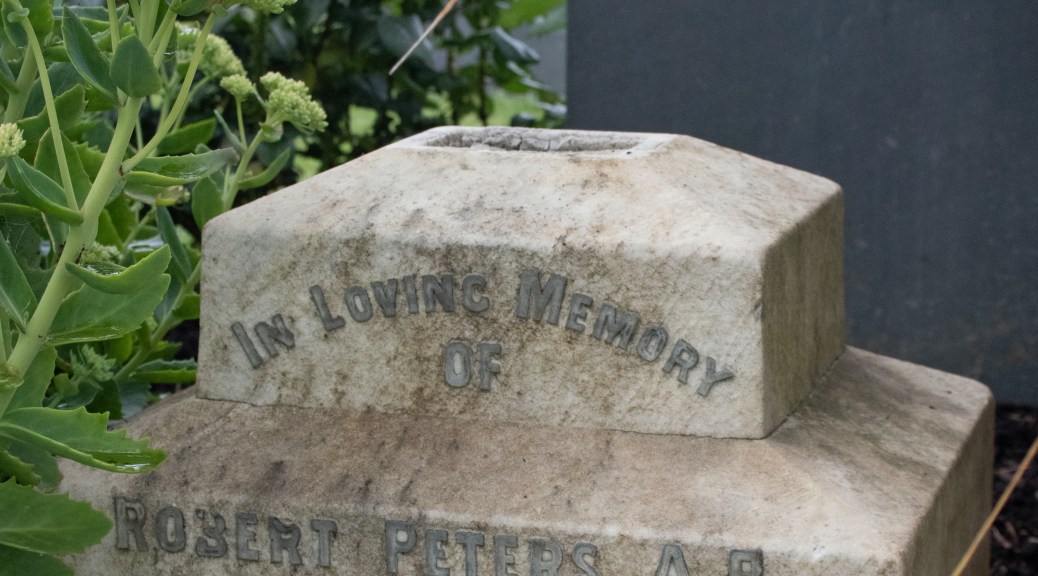
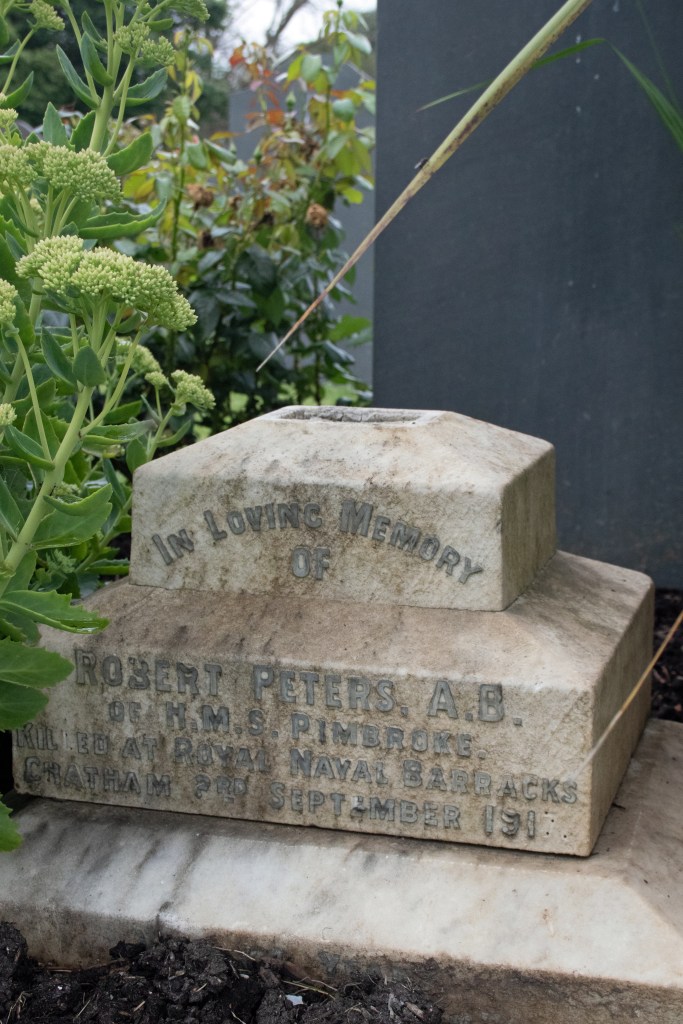
On the 3rd September 1917, the German Air Force carried out its first night air raid: Chatham was heavily bombed and the Drill Hall received a direct hit; Able Seaman Peters was among those killed instantly. He was just 24 years of age.

Robert Peters was laid to rest, along with the other victims of the Chatham Air Raid, in the Woodlands Cemetery, Gillingham. His parents had passed away before the war, and so his sister Mary was confirmed as his next of kin.


Able Seaman Robert Peters (from findagrave.com)

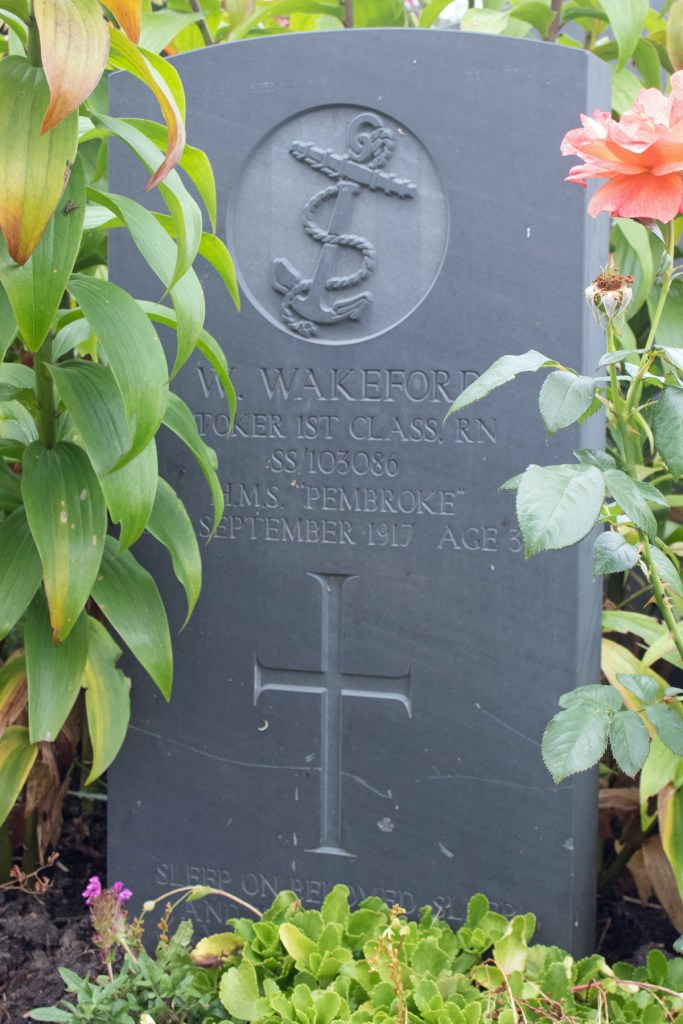
Stoker 1st Class William Wakeford

Stoker 1st Class William Wakeford

William Edward Wakeford was born on 18th April 1885, the oldest of seven children to William and Theresa. William Sr had been born in East London and was a labourer for the engineering company Vickers. Theresa came from south of the Thames, in Greenwich, and it was in South East London that the Wakefords raised their family.

When he left school, William Jr found work as an assistant to a corn dealer. He was set on a better life and career, however, and, on 1st June 1906, at the age of 20, he enlisted in the Royal Navy with the rank of Stoker 2nd Class.

William learnt on the job; he was initially assigned to HMS Acheron and, during his initial five-year term of service, he served on five further vessels, rising to the rank of Stoker 1st Class as a result of his hard work. In between his voyages, however, he was based at HMS Pembroke, the Royal Naval Dockyard at Chatham, Kent.

When his contract came to an end in May 1911, Stoker Wakeford was assigned to the Royal Naval Reserve. With war looming, however, this did not turn out to be for long and, when hostilities begun in 1914, he was called back into action. He was assigned to the battleship HMS Cornwallis, and spent more than two years on board. During this time, the ship saw action in the Eastern Mediterranean, primarily the Dardanelles Campaign, and the fighting around Gallipoli.

By the start of 1917, Stoker Wakeford was back on dry land, and based at HMS Pembroke. For a variety of reasons, that was a particularly busy year at the dockyard, and temporary additional accommodation was set up at the Chatham Drill Hall nearby; this is where William found himself billeted.

On the 3rd September 1917, the German Air Force carried out its first night air raid: Chatham was heavily bombed and the Drill Hall received a direct hit; Stoker 1st Class Wakeford was among those killed instantly. He was 32 years of age.

William Edward Wakeford was laid to rest, along with the other victims of the Chatham Air Raid, in the Woodlands Cemetery, Gillingham.


William’s younger brother Cecil also fought in the Great War. Serving as a Private in the 2nd Battalion Royal Inniskilling Fusiliers, he saw fighting on the Western Front. Caught up in the Battle of St Quentin in March 1918, he was killed as the regiment were cut off by German advances. He was just 22 years old. He was laid to rest in France, and is commemorated at the Pozières Memorial.


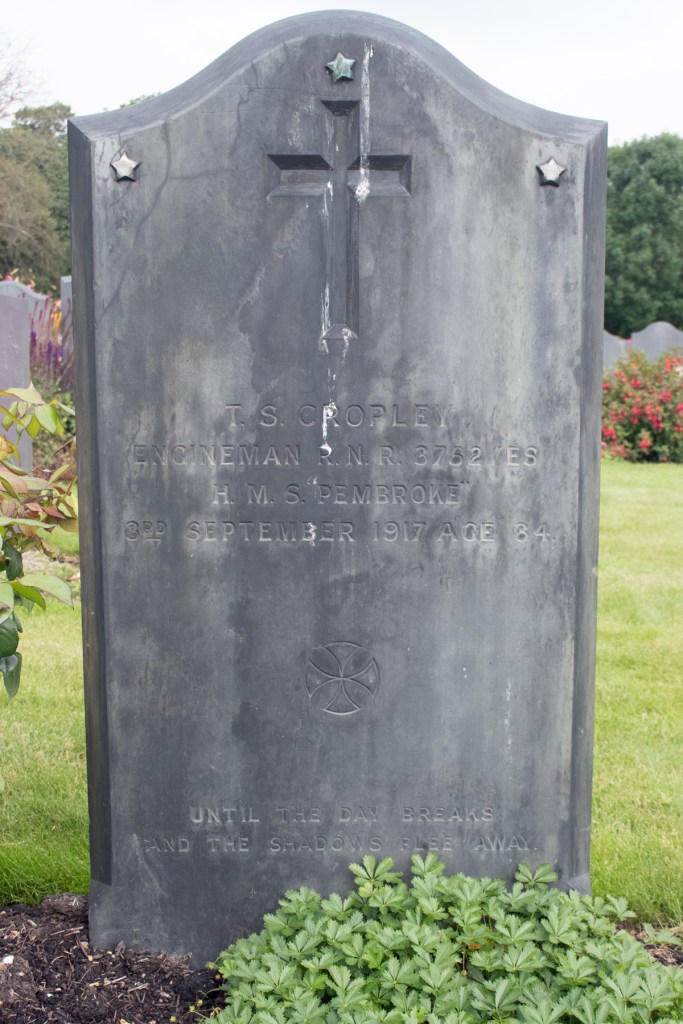
Engineman Thomas Cropley

Engineman Thomas Cropley

Thomas Samuel Cropley was born on 16th November 1882 in the Suffolk village of Mutford. The fifth of eight children, his parents were Robert and Hannah Cropley. Given Mutford’s proximity to the Hundred River Hundred and the coastal town of Lowestoft, it is little surprise that Thomas’ father was a ropemaker. Hannah was also employed, the 1901 census recording her as a monthly nurse – helping women during the month after childbirth.

Thomas’ location to the coast made fishing an ideal choice of work for him, and when he left school he followed his three older brothers into the trade. Indeed, he listed his trade as a deep sea fisherman on his marriage records.

As a young man, he had met bricklayer’s daughter Edith Tuttle, and they tied the knot on 29th May 1906. The couple set up home in Factory Street, Lowestoft, and went on to have seven children.

Sadly, little information on Thomas’ wartime service remains documented. His knowledge of boats and the sea made the navy an obvious option for him, and he enlisted in the Royal Naval Reserve.

Engineman Cropley was assigned to HMS Pembroke – this Royal Naval Dockyard at Chatham in Kent. While it is likely that he served on ships as well, this is certainly the base to which he returned.

Thomas found himself based here in the summer of 1917, which was a particularly busy place at that point in the war. Additional accommodation was desperately needed and he found himself billeted at Chatham Drill Hall, away from the main barracks.

By 1917, the German Air Force had suffered huge losses during the daylight bombing raids it had been undertaking. It was imperative for them to minimise these losses, and so a new tactic – night time raids – was employed.

The first trial of this approach was on the night of 3rd September 1917, and Chatham suddenly found itself in the firing line, startlingly unready and fundamentally unprotected. One of the German bombers landed a direct hit on the Drill Hall, and Engineman Cropley was killed. He was just 34 years old.

Ninety-eight servicemen perished during the Chatham Air Raid that night. They were buried in a mass funeral at the Woodlands Cemetery in nearby Gillingham. This, too, is where Thomas Samuel Cropley was laid to rest.


The lives of Thomas’ family outlines a lot about living conditions in the late nineteenth and early twentieth centuries, with a large number of his relatives dying young.

His father was 68 when he died in 1916; Hannah had passed away fourteen years before, when she was 56 years old. Of his siblings, two did not survive childhood, one died their 20s, one was aged 40, while three reached their late sixties.

Thomas’ widow died in 1921, at the age of 35; their two youngest children died before their first birthdays. Of the other five, one was 31 when he died, while the others lived much longer – one was in their mid-70s, two in their eighties, and the oldest reached her hundredth birthday. A varied legacy indeed.