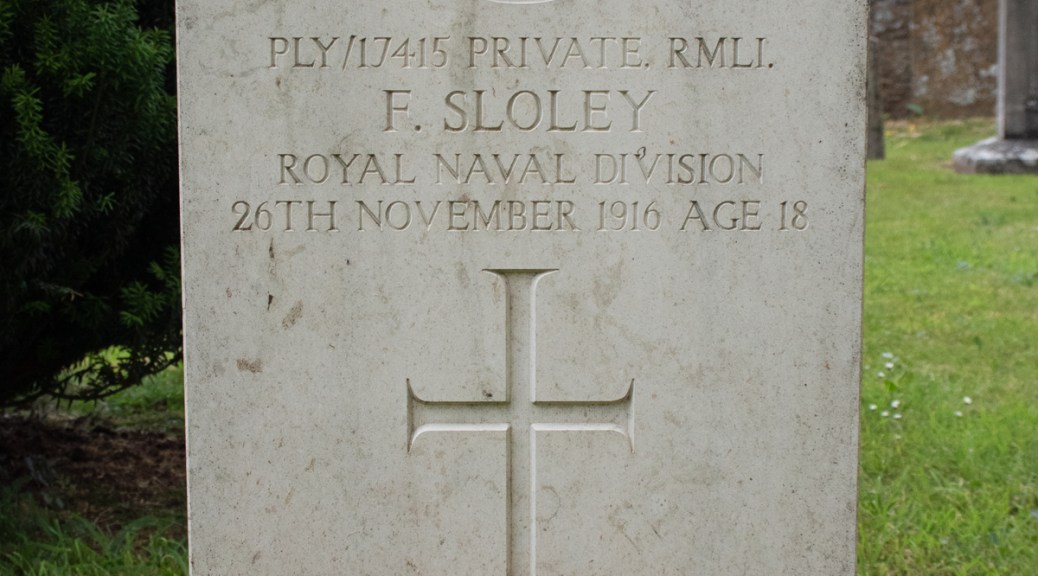
Frederick Sloley was born on 7th April 1897 in Kingston St Mary, Somerset, and was the fourth of nine children to Walter and Mary Jane Sloley. The family were farm workers and were living with Walter’s parents – also agricultural labourers – in the 1901 census.
After he finished his schooling, Frederick found began working with the horses on the farm. When war broke out, however, he saw an opportunity to serve his King and Empire, and enlisted in the Royal Marine Light Infantry. He joined up on 5th October 1914, and his service records show that he was 5ft 4ins (1.63m) tall, with black hair, grey eyes and a fresh complexion.
Private Sloley was initially sent to the Reserve Depot in Deal, Kent, for training, before moving to the Plymouth Division in Devon in March 1915. He records do not make it clear where he served specifically, but by 1916 he has fought in the Dardanelles and Mesopotamia.
It was while he was in the Eastern Mediterranean that Frederick was injured. Wounded in the spine by enemy gunfire, he was medically evacuated to Britain for treatment. Admitted to King George’s Hospital in London, surgery proved too late. Private Sloley passed away on 26th November 1916, at the age of just 19 years old. His mother, Mary, had managed to see him before he died.
The body of Frederick Sloley was brought back to Somerset for burial. He was laid to rest in the peaceful graveyard of St Mary’s Church in his home village of Kingston.
Montgomerie Boyle was born on 20th March 1859 in Hendon, London. The youngest of three children, his parents were John and Jane Boyle. John was a barrister, and the family lived in some comfort – the 1861 census found them living in a house in Harrow, Middlesex, with four live-in servants and a groom.
[Montgomerie] joined the South Notts Yeomanry 22 years ago. Subsequently he obtained an appointment at Weston-super-Mare, under the Somerset Territorial Force Association, and did much useful work in co-ordinating the Army Service Corps in the county.
Taunton Courier and Western Advertiser: Wednesday 2nd April 1919
In the spring of 1891, Montgomerie married Constance Smith. She was a banker’s daughter from Nottingham, and the couple tied the knot in Basford, now a suburb of the larger city. They went on to have a daughter, Marion, who was born the following year.
By the 1901 census, the young family had moved to Timsbury, Somerset. Montgomerie was recorded as living on his own means, and the family had a retinue of servants to support them. A decade later, they had moved into the manor house in Staple Fitzpaine, Somerset. Montgomerie was now listed as a Captain in the Army Service Corps.
Storm clouds were gathering over the continent and, when war broke out, Captain Boyle was called back into active service.
…he was stationed with his Regiment on the East Coast for twelve months, and then went to France, where he remained for six months. He was re-called for service with the Mechanical Transport Section of the Army Service Corps in German East Africa, contracted malaria at the end of fifteen months and was invalided home. On his recovery he was despatched to the Egyptian front, and was with the British troops in Jerusalem. He became ill while there, and, on going down to the base at Cairo, was for a month in the Citadel Hospital, where he was treated for a malignant disease. By slow stages, first in a hospital ship, then in a Red Cross train through France, he was conveyed to [Le] Havre. Here, curiously enough, the doctor in charge of the hospital ship upon which he was placed happened to be… an old friend and medical attendant. Major Boyle landed at Southampton, and went immediately to the 3rd London General Hospital at Wandsworth [Surrey], where he was examined by an eminent specialist. His condition was serious but on Monday week last he arrived at his old home, where, despite the devoted care of his wife and daughter, he passed away quietly.
Taunton Courier and Western Advertiser: Wednesday 2nd April 1919
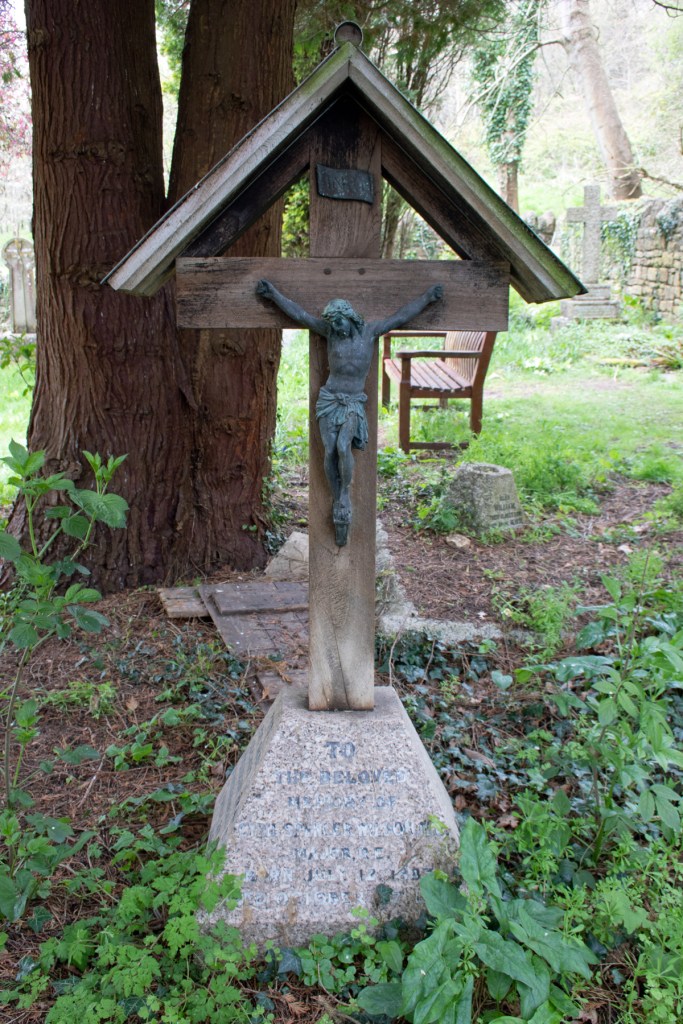
Major Montgomerie Boyle passed away on 27th March 1919, a week after his sixtieth birthday. He was laid to rest in the quiet graveyard of St Peter’s Church, on the outskirts of the grounds of the manor house the Boyles had made their home ten years before.
When Constance died ten years later, at the age of 70 years old, she was laid to rest in the family plot, reunited with her late husband once more.
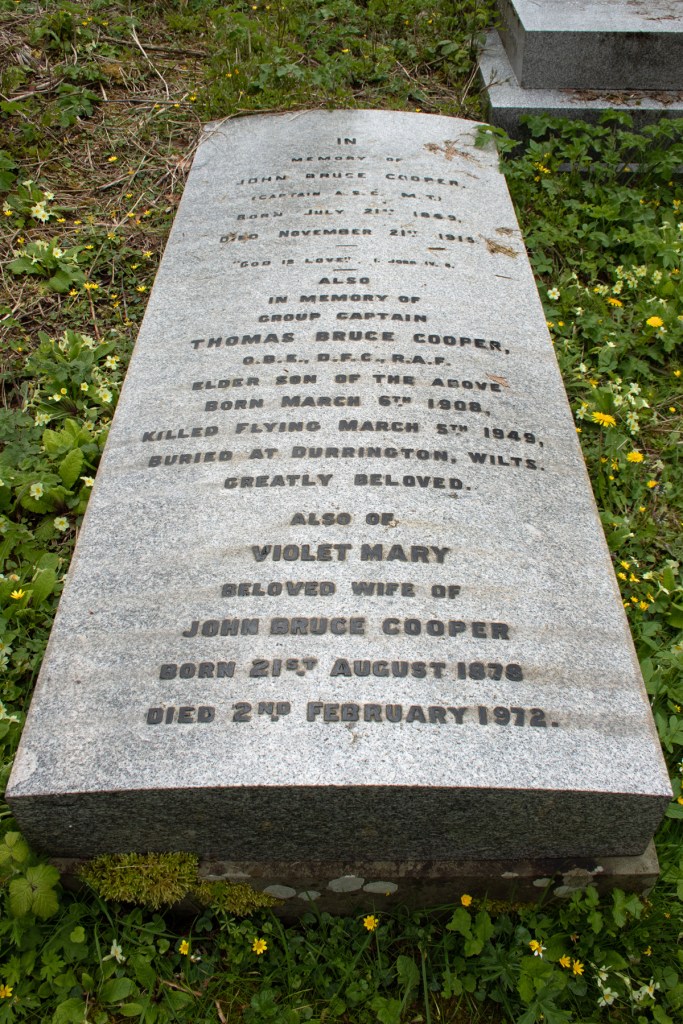
John Bruce Cooper was born on 21st July 1869 in Croydon, Surrey. He was the oldest of eight children, all but one boys, to John and Maria Cooper. John Sr was a boot and shoe manufacturer whose business, by the time of the 1881 census, was employing around 600 people.
By 1901, the business was doing well. The family had moved to Northamptonshire, and were living at Delapré Abbey, on the outskirts of Northampton. They were now supported by fourteen servants living on site, while grooms, coachmen and gardeners were housed on the estate.
John Sr died in August 1906, while Maria passed away less than six months later. Their children, now aged between 25 and 37, went on to live their separate lives. Five of John Jr’s brothers remained in bootmaking, in Leicestershire, Northamptonshire and Surrey, while one of them, Philip, took holy orders. John, however, sought a different route.
In April 1907, John married Violet Mary Gordon in Kensington, London. She was the daughter of a general in the Indian Army, and had been born in Simla. The couple settled in a house in Basingstoke, Hampshire, and went on to have two children: Thomas and Richard. The 1911 census records the family residing in Daneshill Cottage, with two live-in domestics. By this point John was noted as being a dealer in motor cars.
When war broke out, John felt duty bound to serve his country. Little information about his military career remains documented, but a contemporary newspaper report of his funeral provides some indication of his service.
Captain Bruce Cooper… was formerly an officer of Territorial [Royal Army Medical Corps], being transport officer of the 2nd South-Western Mounted Brigade, and was stationed at Frome [Somerset]. Obtaining a commission in the [Army Service Corps], he was promoted captain, and was so proficient and zealous that he became Officer Commanding Vehicles at Bulford Camp, where he was held in the greatest esteem.
Bath Chronicle and Weekly Gazette: Saturday 27th November 1915
Captain Cooper fell ill in October 1915, and was suffering from phlebitis, or inflammation the veins. This was to prove fatal, and he passed away at the family home in Bath, Somerset, on 21st November 1915. He was 46 years of age.
John Bruce Cooper was laid to rest in a family plot in the cemetery of Bath Abbey. His older son, Thomas was laid to rest with him, when he passed away in 1949. Violet was reunited with her husband and son when she was buried with them in 1972.
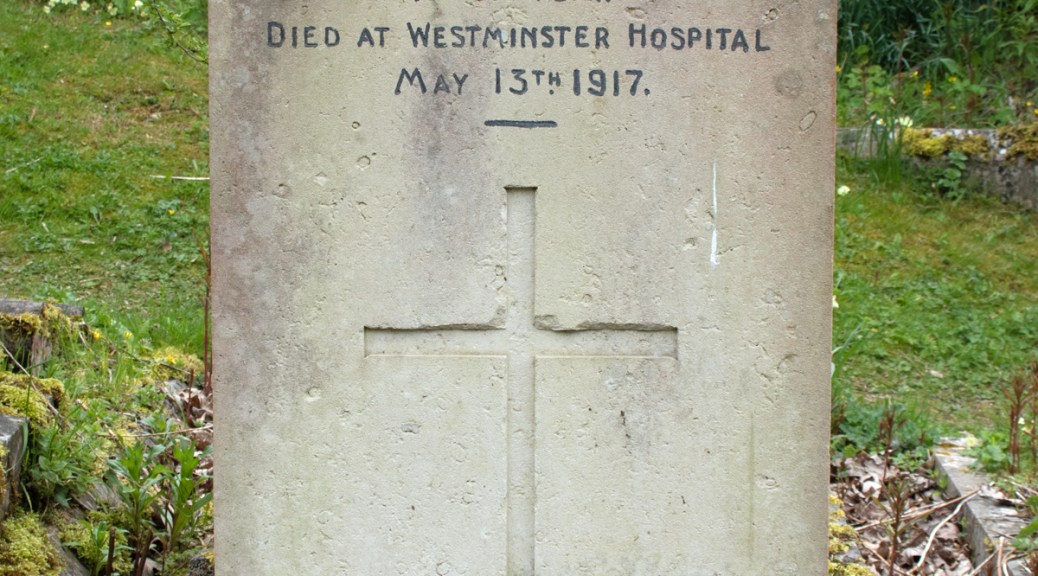
Much public interest was manifested in the funeral, on Thursday, of Private John St Clair Cotterell eldest son of Mr T Sturge Cotterell, JP, of Bath. Deceased, who was 26 years of age, was educated at Bath College, and left England to take up the life of a rancher in Canada. Here he joined the Alberta Rifles and saw service on the Western Front, where he was dangerously wounded in an attack on the Arras front on April 28th. He was, however, brought back to this country, only to succumb to his severe wounds in Westminster Hospital on Saturday. He leaves a widow and one child.
Bath Chronicle and Weekly Gazette: Saturday 19th May 1917
John St John Cotterell was born in Bristol, Gloucestershire, on 17th September 1891. One of six children, his parents were wallpaper manufacturer turned quarry manager Thomas Sturge Cotterell, and his wife, Edith. John remains noticeably absent from both the 1901 and 1911 censuses in which his parents and sibling – and servants – are recorded, so his early life is hard to piece together.
By 1908 John had emigrated to Canada to become a farmer. It was here that he met and married Gladys Nettleton. The couple settled in Alberta and had a daughter, Nellie, who was born in 1915.
When war came to Europe, John stepped up to play his part for King and Empire. He enlisted in the Canadian Expeditionary Force on 8th March 1916, and was assigned to the 192nd Overseas Battalion. Private Cotterell’s service records confirm that he was 5ft 5ins (1.65m) tall, weighed 117lbs (53kg) and had fair hair, grey eyes and a fair complexion.
Private Cotterell left Canada for Britain on 1st November 1916, arriving in Liverpool ten days later. He was transferred to the 9th (Service) Battalion of the Canadian Infantry, and barracked at St Martin’s Plain, near Folkestone in Kent. Early in 1917, he was moved to the 10th Battalion and, on 4th March was shipped off across the English Channel.
John’s arrival in France was not an auspicious one. Tightly packed barracks were a breeding ground for disease, and, by the time he had arrived in Le Havre, John had contracted mumps. He was laid up in a camp hospital for just over a month before returned to his battalion and heading to Arras.
Private Cotterell’s was severely injured in the fighting, and he received a gunshot wound to his spine. Medically evacuated to Britain, he was admitted to the Westminster Hospital in London. His medical report noted that his ‘1st lumbar vertebra [was] shattered and [spinal] cord [was] cut through‘. He had complete paralysis below the groin and that he was in a ‘hopeless condition‘. His injuries proved too severe, and he passed away on 13th May 1917, three days after being admitted. John was just 25 years of age.
John St Clair Cotterell’s body was brought back to Somerset for burial. He was laid to rest in Bath’s Abbey Cemetery.
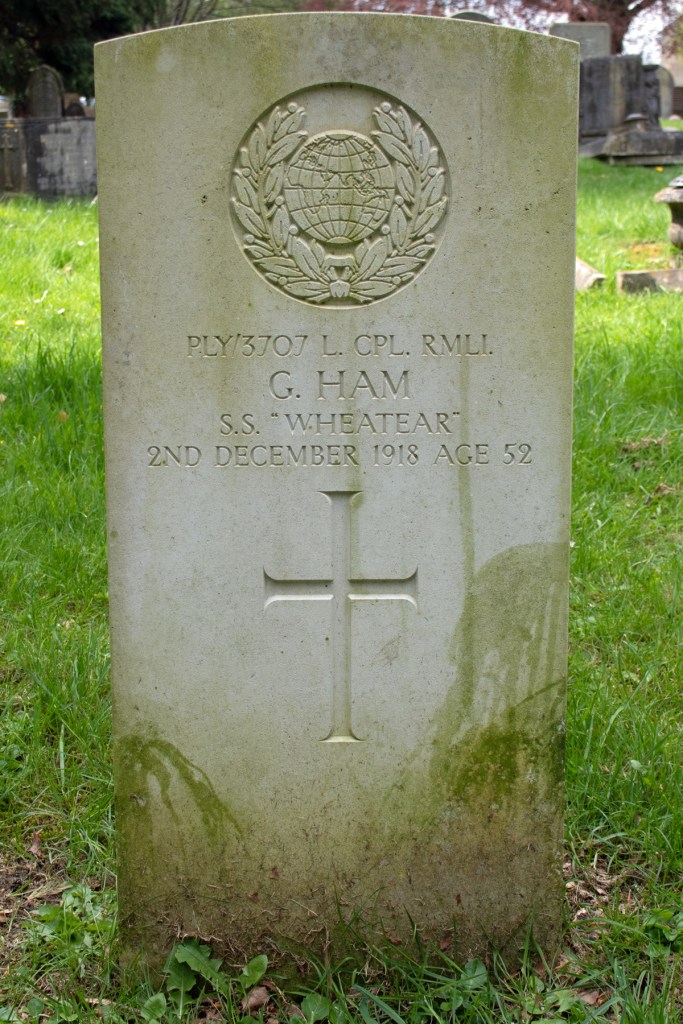
George Ham was born on 19th December 1867 in Twerton, Somerset. His parents were George and Emily Ham, and he was the oldest of their nine children. George Sr was a mason, and initially his first born followed suit, but he was pulled towards something bigger and better and, on 19th January 1886, he enlisted in the Royal Marine Light Infantry.
George’s service records note that he was 5ft 6ins (1.68m) tall, with brown hair, grey eyes and a fresh complexion. He was initially sent to the barracks at Walmer in Kent, and it was from here that Private Ham began a 21 year career in the Royal Marines. Over that time, he served on seven separate ships, and, between voyages, he was based in barracks in Plymouth, Devon. Both his character and ability were consistently noted as being very good.
Private Ham’s career took him around the world and, in 1887, he found himself on the gunboat HMS Banterer, on which he served for three years. His tour of duty included a period of time in Galway, Ireland, and it was here that he met Mary Ann Goode. On 5th July 1889, the couple married in city’s St Nicholas’ Church. The church’s records suggest that the couple went on to have four children – Frederick George; Emily, who died just after her first birthday; Albert; and Katherine.
George’s records from this point become a little disjointed. In October 1890, he returned to his Plymouth base, and the following year’s census recorded him as living in the East Stonehouse Barracks, although his marital status was noted as single.
The next census, in 1901, presents a different picture. George and Mary were, by this time, living in family barracks in East Stonehouse, with two children, (Frederick) George and Albert. Katherine, the couple’s youngest child, was born the following year.
In January 1907, after more than two decades’ service, George was stood down from active service in the Royal Marines. He was placed on reserve status, and took up work as a mason once more. At this point, however, the family seemed to have hit more troubled times, underlined by four separate 1911 census documents.
George, who was 44 by this point, was recorded as being an inmate in the Bath Union Workhouse and Infirmary in Lyncombe, Somerset. Mary and Katherine, meanwhile, were in two rooms in a house in Stonehouse, Devon. Frederick, who was now better known as George, had followed his father into military service, and was a Private in the Royal Marine Light Infantry, serving on HMS Colossus. Albert, who was 13 years old, was one of 946 students boarding at the Royal Hospital School for Sons of Seamen in Greenwich, London.
George spent nine years in the reserves, and, in 1914, was called up again for war service, this time as a Lance Corporal. According to a contemporary newspaper:
[He was] engaged on naval patrol work against submarines off the Canadian coast and elsewhere, and was in charge of a gun on an armed merchant ship. Once the boat he was on was torpedoed, and on another occasion he had a long running fight with a submarine in the Irish Channel. The ship, however, reached Portrush (Ireland), and the inhabitants gave Lance-Corporal Ham a testimonial, and he was also rewarded in other ways, the Cardiff owners of the vessel recognising his skill and gallantry.
Bath Chronicle and Weekly Gazette: Saturday 7th December 1918
Tragedy was to strike in the end, however, and George was to meet a sad end to a distinguished career.
While at Cork [George] fell, either from a boat or the dock, and sustained an injury to the side of his head. It did not appear very serious, and it is understood that he made a trip to Cardiff and back to Londonderry, [where] he became so seriously ill as to necessitate his going to a military hospital in Londonderry. Hemorrhage [sic] of the brain set in, and he died on Monday [2nd December 1918] before his brother, Mr Albert Ham, who had been telegraphed for, could reach him.
Bath Chronicle and Weekly Gazette: Saturday 7th December 1918
Lance Corporal George Ham was days short of his 51st birthday when he died. His body was brought back to Somerset for burial, and he was laid to rest in Twerton Cemetery. The newspaper report give no indication as to whether Mary or their children were in attendance and, in fact, does not mention his wife and family at all.
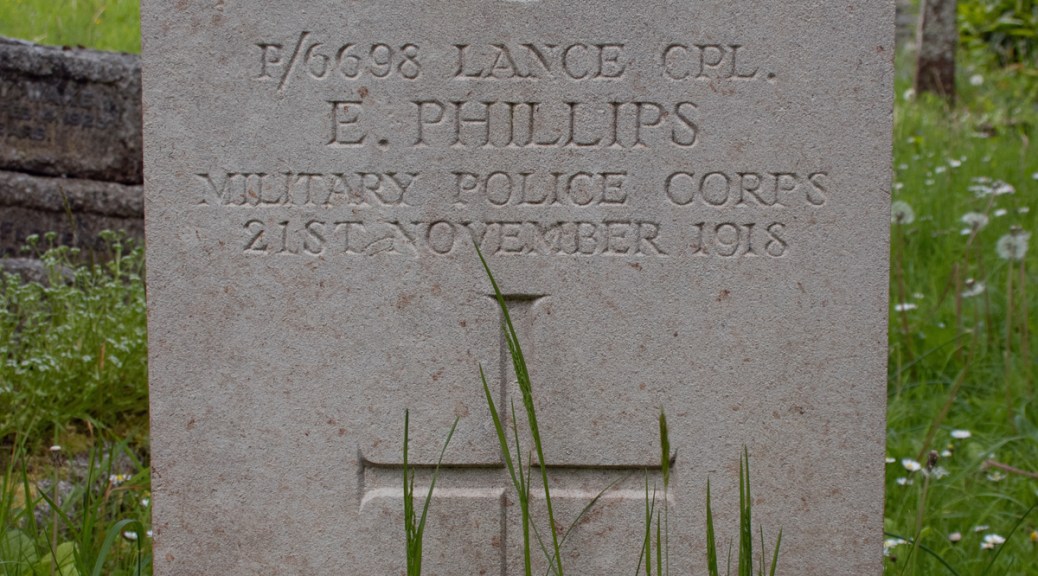
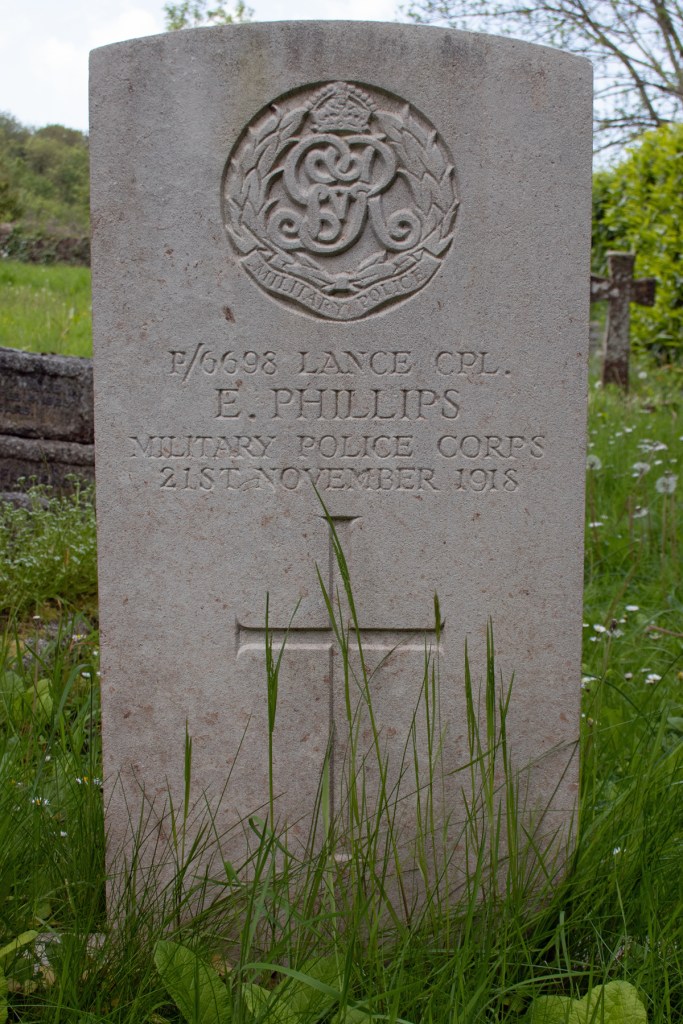
Ernest Algernon Phillips was born at the start of 1879 in the Somerset village of Winscombe. One of nine children, his parents were Arthur and Elizabeth Phillips. Arthur was a gardener, and Ernest followed suit when he finished his schooling.
By the time of the 1911 census, he was boarding with his younger sister Rose and her family – brother-in-law Leonard and nephew Leslie. Just a couple of weeks later, on 11th May 1911, Ernest married Winifred Carey. She was a coachman’s daughter from Winscombe, and the couple set up home in a cottage on the outskirts of the village.
When war broke out, Ernest felt a need to play his part. He enlisted in Bristol on 8th December 1915, but was not formally mobilised until the following June. Initially assigned to the Devonshire Regiment, he was transferred to the Worcestershire Regiment and attached to the 6th Battalion.
Private Phillips’ troop was based on home soil, and he was barracked in the garrison in Harwich, Essex, for the next six months. On 31st January 1917, he was transferred to the Military Police Corps, and given the rank of Acting Lance Corporal. Full details of his service from this point on are lost to time, but it is clear that he remained on home soil until the end of the war.
By November 1918, Ernest had fallen ill. He was admitted to the Queen Alexandra Military Hospital in London on 20th November, suffering from pneumonia. Within a matter of hours, while this seemed to have cleared, his pulse was ‘rapid, irregular and compressible.’ He was medicated, but did not respond to treatment, and passed away the following day. His death was noted as apparently being caused by clots of blood in the heart, but, at the request of his family, no postmortem examination was carried out. He was 39 years of age.
Ernest Algernon Phillips was brought back to Somerset for burial. He was laid to rest in the quiet graveyard of St James the Great Church in Winscombe.
Herbert Austin Fry was born on 30th January 1889 in the Somerset village of Moorlinch. He was the fifth of ten children and his parents were Joseph and Ellen Fry. Joseph was a farmer, and by the time Herbert was just two years old, the family had moved to Sutton Farm, in nearby Sutton Mallet.
The whole family chipped in to play their part on the farm, and, even before he finished his schooling, this was something that Herbert was also destined to do.
When war came to Europe, Herbert was keen to play his part. He enlisted in the Royal Naval Volunteer Reserve on 7th September 1916 as an Ordinary Seaman. His service records give a hint as to the young man he had become: he was 5ft 11ins (1.8m) tall, with sandy hair, blue eyes and a fair complexion.
Ordinary Seaman Fry was initially sent to HMS Victory – the Royal Naval Dockyard in Portsmouth, Hampshire – for training. Over the next year, he was given two sea-going postings, before returning to HMS President in London in September 1917.
On 31st October, Herbert boarded SS Dunrobin, a merchant ship. Having sailed to Almeria in Spain, she was returning to Britain, with a cargo of iron ore and grapes. On 24th November 1917, while 49 miles (79km) south-west of The Lizard in Cornwall, the Dunrobin was torpedoed by a German submarine. She sunk, and 31 lives – including that of Ordinary Seaman Fry – were lost. Herbert was 28 years of age.
Herbert Austin Fry’s body was recovered and brought back to Somerset for burial. He was laid to rest in the peaceful Sutton Mallet Churchyard.
Cyril Spencer Wilson was born on 12th July 1883 in Charlcombe, Somerset. The youngest of three children, his parents were John and Edith Wilson. John was a solicitor who went on to become President of the Bath Law Society and, because of his standing, Cyril and his siblings had a comfortable upbringing: all three censuses covering his life – in 1891, 1901 and 1911 – all show the family living in a large villa in Charlcombe, with a cook and a housemaid to support them.
[Cyril] was educated at Bath College and Lancing College, and then studied engineering at Bristol University. He then became an articled pupil at the Great Western Railway Works at Swindon. Very interested in, and a keen supporter of, the Territorial movement, he was a Captain of the [Royal Engineers] Wilts Fortress Engineers when war broke out.
Bath Chronicle and Weekly Gazette: Saturday 2nd November 1918
Cyril had begun work for the Great Western Railway in July 1902, and became attached to the Institute of Civil Engineers the following January.
Captain Wilson formally enlisted when war was declared, and was soon sent to France. “He was awarded the Military Cross early in the summer of 1917, after being twice mentioned in despatches for excellent work.” [Bath Chronicle and Weekly Gazette: Saturday 2nd November 1918]
Cyril was promoted to Major soon after this, and would go on to serve in France for more than a year more. In February 1918 he married Amy Pounds, the daughter of a bank clerk from East London and the couple exchanged vows in the city.
Major Wilson returned to France, but contracted dysentery that summer. He returned to Britain to recuperate, but came down with pneumonia, and this was to take his life. He died on 27th October 1918, aged 35 years old.
Cyril Spencer Wilson’s body was brought back to Somerset for burial. He was laid to rest in the family plot in St Mary’s Churchyard, Charlcombe.
Frederick Murray Walker was born on 29th July 1862 in the village of Terregles, Kircudbrightshire, Scotland. The fifth of eleven children, his parents were Colonel Sir George Gustavus Walker, Member of Parliament for Dumfries & Galloway, and his wife, Anne. Sir George owned the Crawfordton Estate, and this is where Frederick was raised, with a retinue of fourteen staff to help the family.
Following his father’s military career, Frederick felt a draw to serve. On 15th July 1875, he entered the Royal Navy as a Midshipman. He set out to build a dedicated career, visiting most parts of the world in the process.
While Frederick’s initial service took him to the Mediterranean – where he received the Egyptian Medal and Alexandria Clasp – by 1883 he was out in China, but he also spent time in India and South Africa. In 1882 he was promoted to Sub Lieutenant, three years later he rose to the rank of Lieutenant. By 1899, Frederick had become a Commander.
By his own request, Frederick retired from the Royal Navy on 1st August 1909. He was now 47 years old, and had spent 34 years in service and was given the rank of Captain as a mark of his career.
On 19th June 1891, Frederick had married Lucy Scriven in St Saviour’s Church, Paddington, London. They would go on to have seven children, and to begin with, the life of a Naval Captain took Lucy around the coastal ports of Southern England. When Frederick retired, however, the family settled in a large house in Milford-on-Sea, Hampshire, where they were supported by a governess, cook, parlour maid and housemaid.
When war broke out in 1914, Captain Walker stepped up once more to serve his King and Country. He remained in territorial waters and was given successive command of the yachts James, Zaria and Albion III. By 1917, Frederick’s health was beginning to suffer, and he was placed on HMS Victory’s reserve books, ready should Portsmouth’s Royal Naval Dockyard need his service.
Frederick was not to be called to action again. By the time the Armistice was declared Frederick’s condition was worsening. He had developed cancer of the tongue, and it was having a real impact. He was admitted to the Haslar Hospital in Portsmouth, and passed away there on 7th February 1919, at the age of 46 years old.
By this point the family had relocated to Bath, Somerset, and this is where Frederick Murray Walker’s body was brought for burial. He was laid to rest in the prestigious Lansdown Cemetery, overlooking the city.
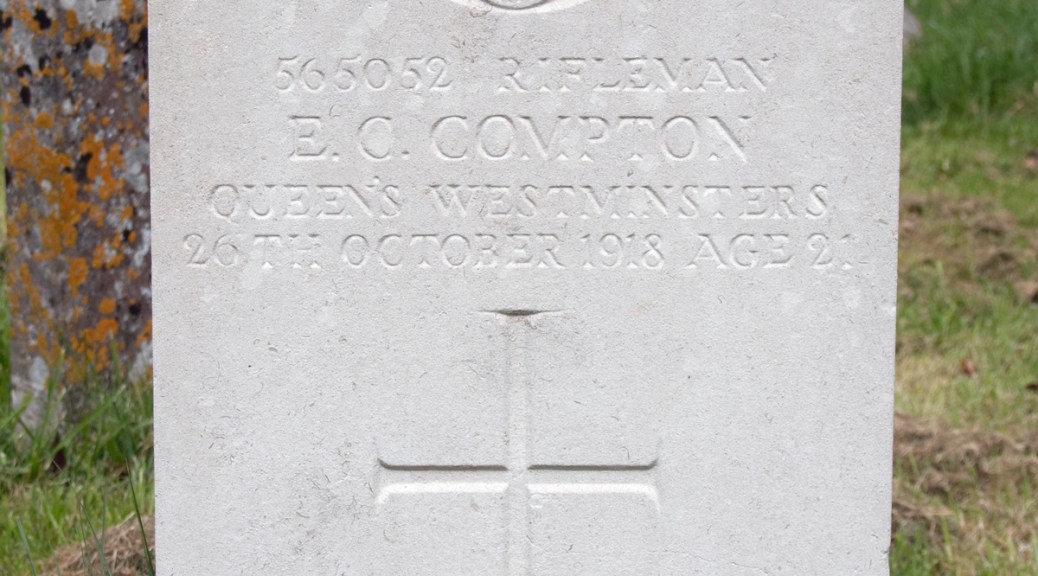
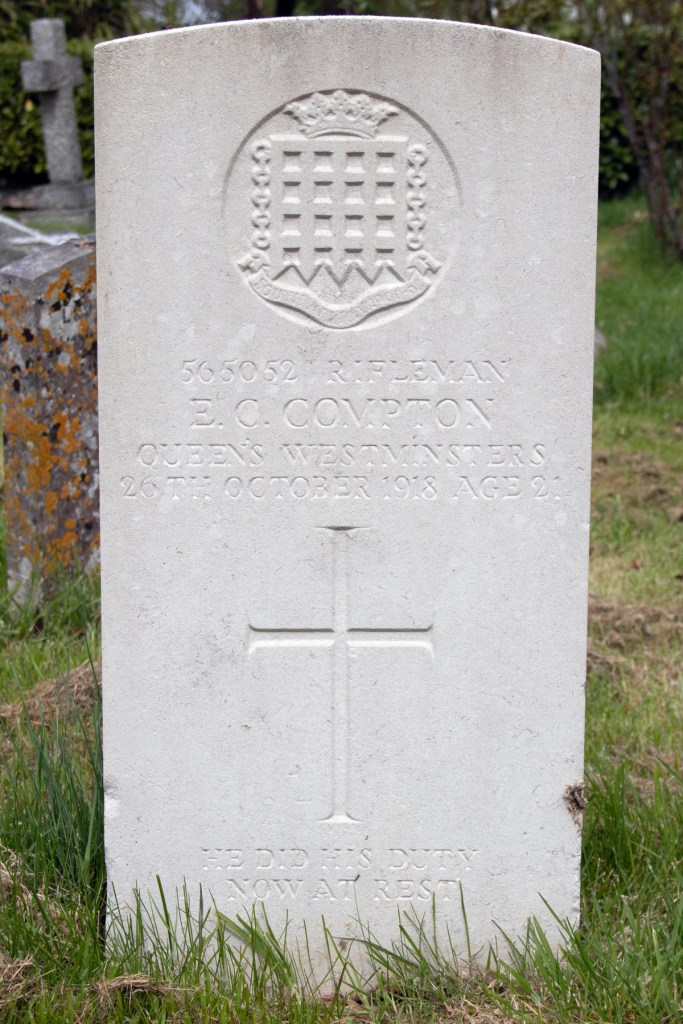
Edward Charles Compton was born in Islington, Middlesex on 4th July 1897, the only child to Charles and Ada Compton. Charles was an agent for the Prudential Insurance company, and the family lived on Devonshire Road, with Charles’ aunt, Mary.
When he finished his schooling, on 7th July 1911, Edward found work as a clerk for the North African Mission. When war came to European shores, he was eager to serve his King and Country. He enlisted on 10th September 1914, and was assigned to the 11th (Reserve) Battalion of the London Regiment.
Rifleman Compton’s service records confirm that he was 5ft 8ins (1.73m) tall, with good vision and physical development. He wasn’t formally mobilised until the summer of 1916 and, after training, he was transferred to the 16th (County of London) Battalion, also known as the Queen’s Westminster Rifles. He was sent to France on 19th December 1916.
Edward would have been involved in the German retreat to the Hindenburg Line in the spring of 1917, and the First and Third Battles of the Scarpe in April and May. At the end of July he returned to Britain and, while the reason for this is unclear, it seems that his health was suffering.
On 24th September 1917, Rifleman Compton was medically discharged from the army, after three years and fifteen days’ service. The cause for this isn’t documented, but there is no evidence that he was wounded, so it is likely to have been an illness of some description.
Edward returned to Islington and on 20th October 1918, he married Emily Backholer. She was a farmer’s daughter from Paignton, Devon, and was registered as living there when the couple’s banns were read during October.
Tragically, Edward and Emily’s marriage was not to be a long one: he died in Kelston, near Bath, Somerset, on 26th October 1918, less than a week after his wedding. He was just 21 years of age.
Edward Charles Compton was laid to rest in the graveyard of St Nicholas’ Church in Kelston, Somerset.










 Death and Service