Tag Archives: Suffolk

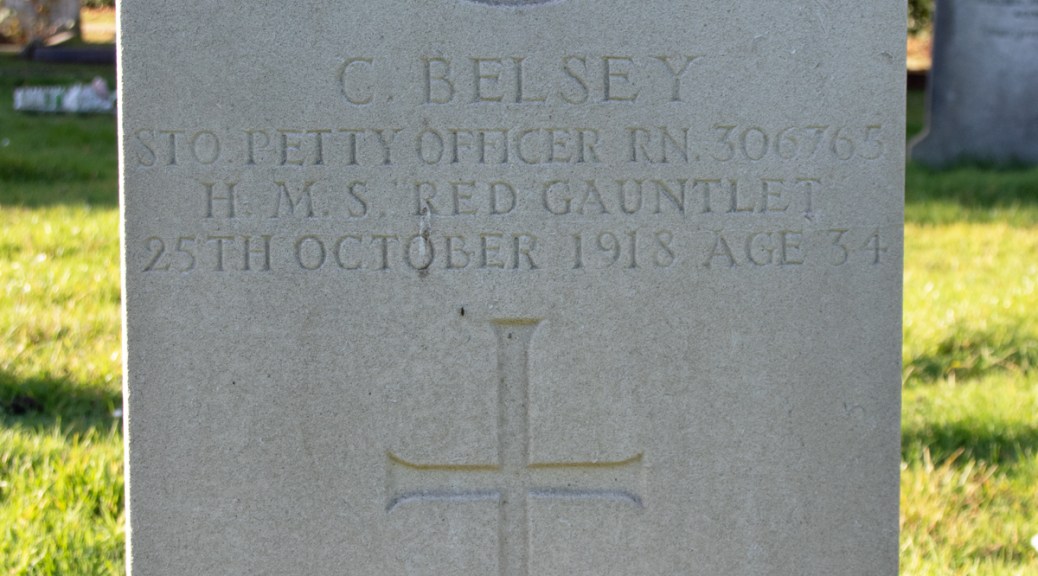
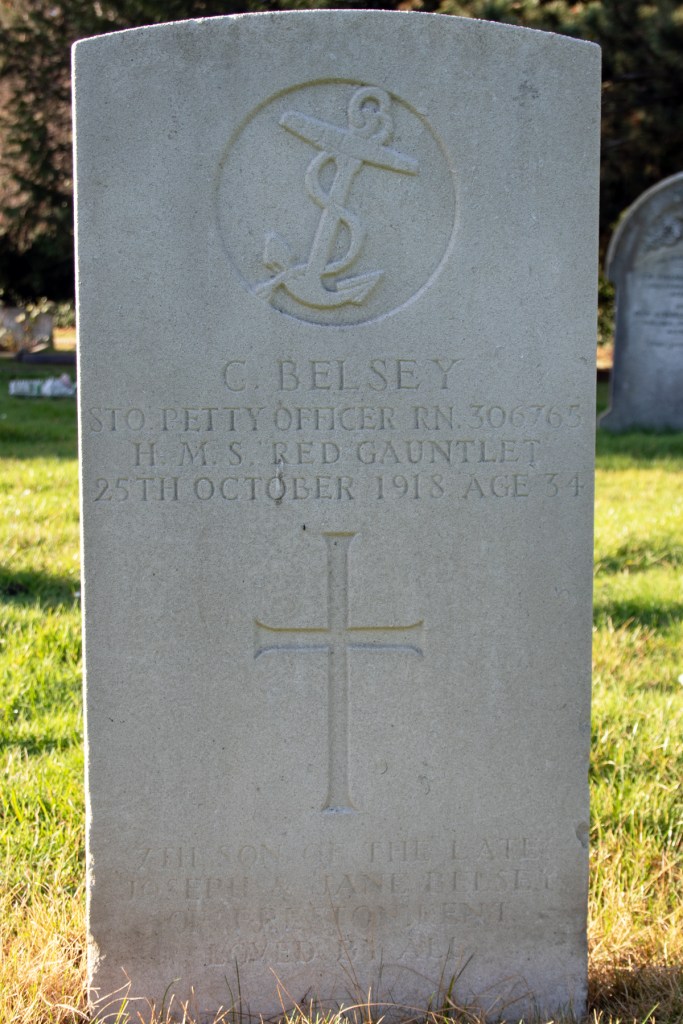
Stoker Petty Officer Christian Belsey

Stoker Petty Officer Christian Belsey

Christian Belsey was born on 12th February 1884 in the village of Preston, Kent. He was one of fourteen children to Joseph and Jane Belsey. Joseph was a farm labourer, and Christian followed suit on leaving school.

He wanted bigger and better things, however, and after his older brother Charles had sought out a life in the Royal Navy, he followed suit. Christian enlisted on 28th June 1904; his service records show that he was 6ft (1.83m) tall, had brown hair, brown eyes and a fresh complexion.

Stoker 2nd Class Belsey was based out of HMS Pembroke, the Royal aval Dockyard in Chatham, Kent, and this is where he returned to in between voyages. His first posting was on board the destroyer HMS Acheron, on board which he spent six months.

Over the twelve years of his initial service he was assigned to six different ships, rising through the ranks to Stoker 1st Class (in 1906), Leading Stoker (1911) and Stoker Petty Officer (1912).

When war broke out in August 1914, Christian was back in Chatham; he was soon assigned to HMS Laertes, a destroyer based out of Harwich, which patrolled the North Sea. She was involved in the attempt to head off the German attack on Yarmouth and Lowestoft in April 1916, during which, two of Christian’s colleagues, Stoker Ernest Clarke and Stoker Petty Officer Stephen Pritchard, were awarded the Distinguished Service Medal for their bravery under fire.

After three years on board Laertes, Christian was transferred to HMS Redgauntlet. He served on board for eighteen months until, in October 1918, he fell ill.

Admitted to a hospital in Samford, near Ipswich, Suffolk, Stoker Petty Officer Belsey was suffering from pneumonia. Sadly, the lung condition was to get the better of him, and he passed away on 25th October 1918, at the age of 34 years old,

Christian Belsey was brought back to Kent for burial. He was laid to rest in Faversham Borough Cemetery.


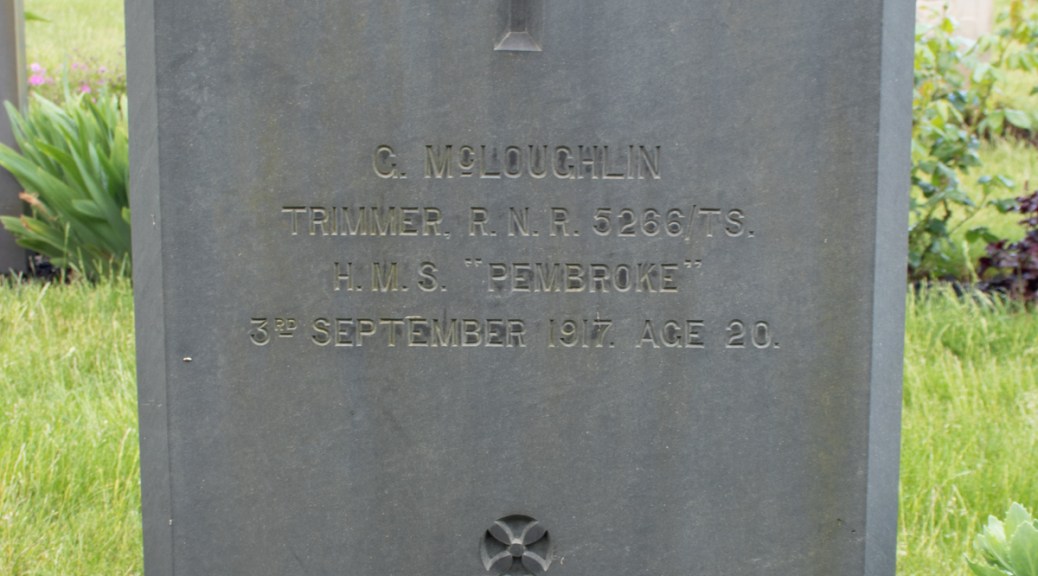
Trimmer Gilbert McLoughlin

Trimmer Gilbert McLoughlin

Gilbert McLoughlin was born in Grimsby, Lincolnshire, on 19th August 1896, one of eight children to Charles and Isabella McLoughlin. Being a fishing port, it is likely that Charles was involved in the industry, and it is no surprise that Gilbert and his siblings followed suit.

When war came to Europe, his skills at sea led to him being brought into the Royal Naval Reserve, and indeed Gilbert joined up on 20th March 1916. His service records show that he stood 5ft 2.5ins (1.59m) tall, had brown eyes and a sallow complexion, and had tattoos on his left arm.

Trimmer McLoughlin was based at HMS Pekin, a shore establishment in Grimsby, from which he would have served on ships patrolling the Lincolnshire coast. He remained posted in his home town until the end of 1916, at which point he moved down the coast to HMS Ganges, the naval base in Ipswich.

Gilbert made a further move in July 1917, when he was posted to HMS Pembroke, the Royal Naval Dockyard in Chatham, Kent. The base was particularly crowded that summer, and he was billeted in temporary accommodation set up in the barracks’ Drill Hall.

On the night of 3rd September, Chatham came under attack from a German air raid, and the Drill Hall received a direct hit. Trimmer McLoughlin was among those to be killed that night. He was just 20 years of age.

Gilbert McLoughlin was laid to rest in the Woodlands Cemetery in Gillingham, Kent, alongside the other victims of the Chatham Air Raid.


Gilbert’s older brother Joseph McLoughlin was also a victim of the First World War. As the conflict began, he continued his work as a trawlerman, although the role of his ship – the Kilmarnock – now also included elements of mine location.

On the afternoon of the 22nd September 1914, the Kilmarnock left Grimsby on a routine trip. She was around thirty miles offshore when the captain spotted floating mines ahead.

The skipper put out a buoy to mark the position, and intended returning to port to report the matter to the Admiralty authorities, but seeing some naval vessels in the distance he made towards them instead with the object of reporting.

Whilst doing so an explosion occurred amidships, and the vessel was blown into two parts, which sank immediately.

The skipper was blown to pieces on the bridge and the chief engineer badly injured.

The naval vessels, attracted by the explosion, hurried to the spot, picked up the wounded engineer, mate, and one member of the crew.

Boston Guardian: Saturday 26th September 1914

Joseph was one of the six crewmen to be killed in the incident. He was just 19 years of age.


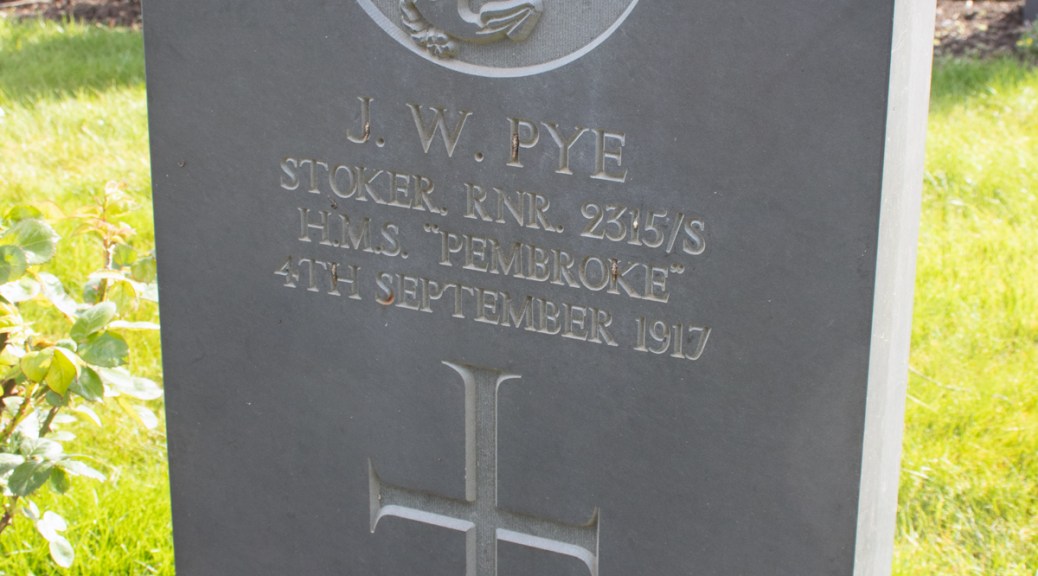
Stoker James Pye

Stoker James Pye

James William Pye was born on 14th August 1892, the oldest of ten children to James and Florence Pye. James Sr was a carter from Lowestoft, Suffolk, and this is where and he and Florence raised their family.

James Jr sought bigger and better things, and a career: he does not appear on the 1911 census, but, on 8th February 1912, he enlisted in the Royal Naval Reserve as a Stoker. His service records confirm that he was 5ft 7ins tall, had a fresh complexion and blue eyes. He was, by this point, living in Bungay, but no further information is given.

James was officially mobilised on 18th August 1914, and was sent to HMS Pembroke, the Royal Naval Dockyard in Chatham, for training. The following year Stoker Pye was assigned to the armoured cruiser HMS Shannon. He spent nearly two years on board, before returning to Chatham.

The summer of 1917 was a particularly crowded time at HMS Pembroke; additional space for the crews was needed, and the barracks’ Drill Hall was given over to accommodation. This is where James found himself billeted for his 25th birthday.

On the night of 3rd September, Chatham came under attack from a German air raid, and the Drill Hall received a direct hit. Stoker Pye was badly injured and admitted to the Chatham Naval Hospital; he succumbed to his injuries the following day.

James William Pye was laid to rest in the Woodlands Cemetery in Gillingham, Kent, alongside the other victims of the Chatham Air Raid.


Stoker 1st Class Horace Godden

Stoker 1st Class Horace Godden

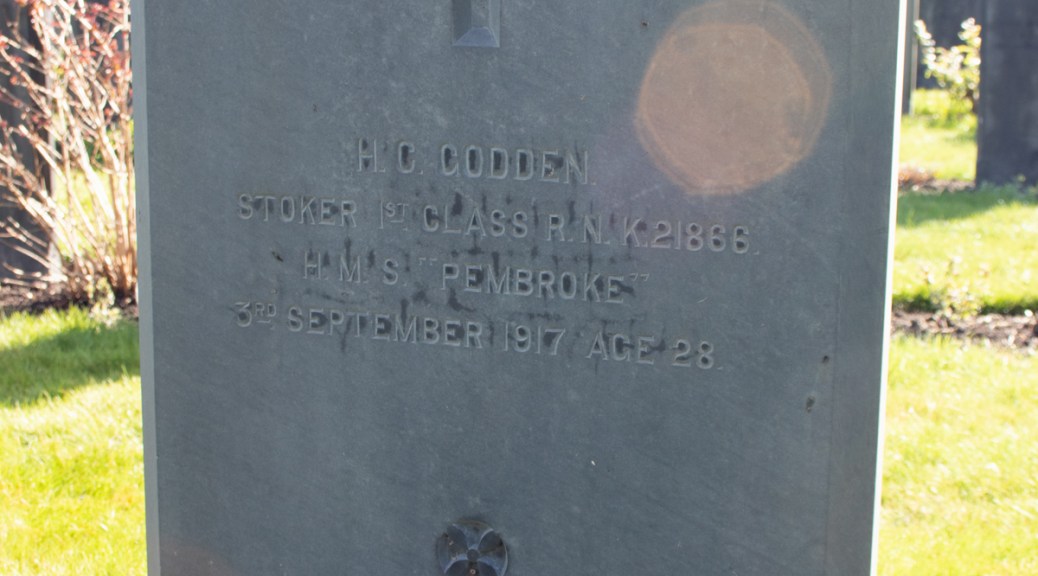
Horace Cecil Godden was born on 8th February 1889 in the Suffolk village of Boxford. He was one of eleven children to Charles and Sarah Ann Godden. Charles was a butcher and pig trader, and butchering was a trade that Horace also got into on leaving school.

He was after bigger and better things, however, and on 23rd January 1914, he enlisted in the Royal Navy. as a Stoker 2nd Class. His service records show that he stood 5ft 3ins (1.59m) tall, had brown hair, brown eyes and a fresh complexion. Horace was also noted as having a scar on the back of his left hand.

Stoker Godden was initially sent to HMS Pembroke – the Royal Naval Dockyard in Chatham, Kent – for training. His first sea-going assignment was on board the gunboat HMS Jason and, during his first year with the navy, he served on three ships in total.

Horace was promoted to Stoker 1st Class in December 1914, and served on board another two ships before returning to Chatham in November 1915. His time was not without incident, however, and he spent time in the brig on two separate occasions – for 7 days in May 1915, and for two weeks that October – although his crimes are not recorded.

In March 1916, Stoker 1st Class Godden returned to sea once more, this time on board the sloop HMS Cadmus. He came back to Chatham the following February, and then remained at the HMS Pembroke.

That summer, the Royal Naval Dockyard was packed to capacity, and Horace was billeted in temporary accommodation put in place at Chatham Drill Hall. On the night of the 3rd September 1917, during a German air raid, the Hall received a direct hit and Stoker 1st Class Godden was among those to be killed. He was just 27 years of age.

Horace Cecil Godden was laid to rest, along with the other victims of the Chatham Air Raid, in the Woodlands Cemetery in Gillingham, Kent.


Leading Seaman Edward Mudford

Leading Seaman Edward Mudford

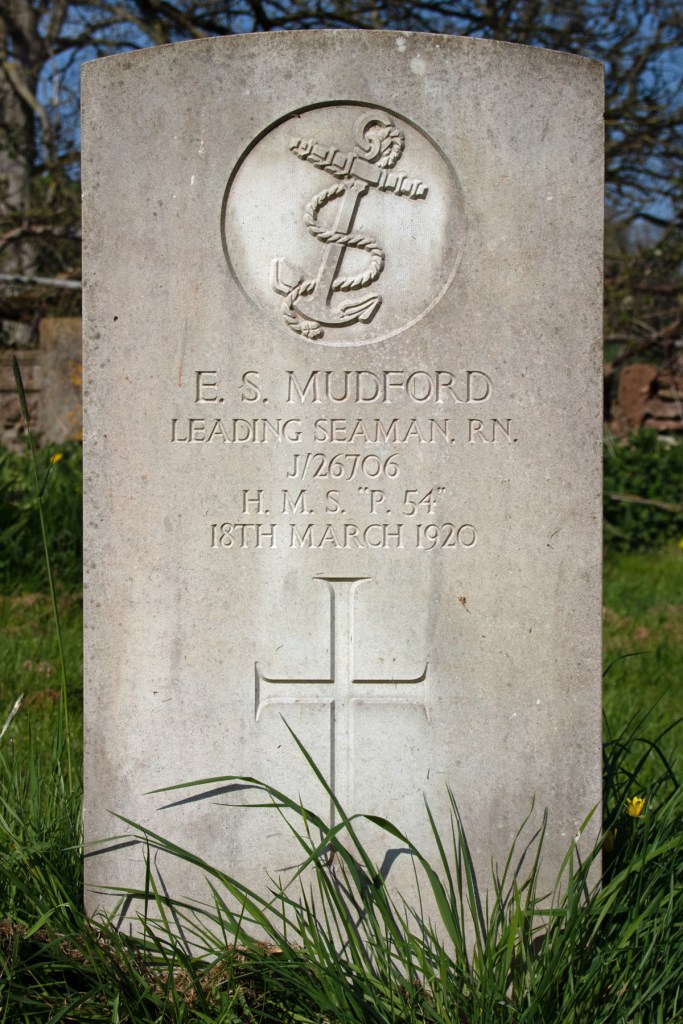
Edward Short Mudford was born on 29th March 1898 in the Somerset village of Stratton-on-the-Fosse. He was one of nine children to Joseph and Mary Mudford.

Information about his early life is confusing: the 1901 census gives his name as Edwin, rather than Edward; his father appears to have died by this point, leaving Mary to raise the family alone. The 1911 census records Edward and a younger sister living in the Union Workhouse in Shepton Mallet, while Mary has apparently remarried and was living in Radstock with two of Edward’s siblings and a daughter from her second marriage, although her new husband is noticeable in his absence from the document.

From this shaky start, however, Edward sought a new life for himself. On 21st August 1913 he enlists in the Royal Navy. His service records show that he stood just 5ft 1ins (1.55m) tall, had fair hair, hazel eyes and a fresh complexion. Being under age at the time, he was given the rank of Boy 2nd Class.

Edward was initially sent to HMS Ganges, the naval training establishment outside Ipswich, Suffolk. Promoted to Boy 1st Class in February 1914, he was soon given his first posting, on the cruiser HMS Crescent.

After another short spell at HMS Vivid, the Naval Dockyard in Plymouth, Boy Mudford found himself on board HMS Thunderer. Edward spent nearly four years aboard the battleship, coming of age and gaining the rank of Ordinary Seaman, while also being promoted to Able Seaman in March 1916.

Edward returned to Plymouth in February 1918, and spent the next couple of years between there, Portsmouth and Woolwich Dockyards. He was again promoted, given the rank of Leading Seaman in September 1918.

Life at sea and in barracks took its toll, however, and, in in the spring of 1920, Leading Seaman Mudford contracted influenza and pneumonia. Sadly the conditions proved too much to bear: he passed away on 20th March 1920, a week shy of his 22nd birthday.

Brought back to Somerset, where, presumably some of his family still lived, Edward Short Mudford was laid to rest in the graveyard of St John the Baptist Church in Chilcompton.


Able Seaman John Abrey

Able Seaman John Abrey

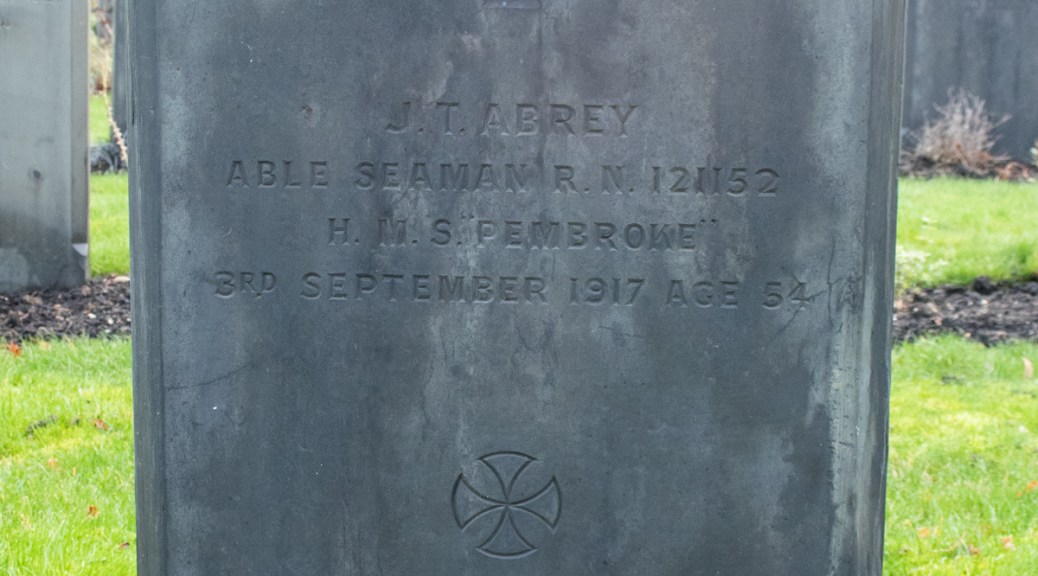
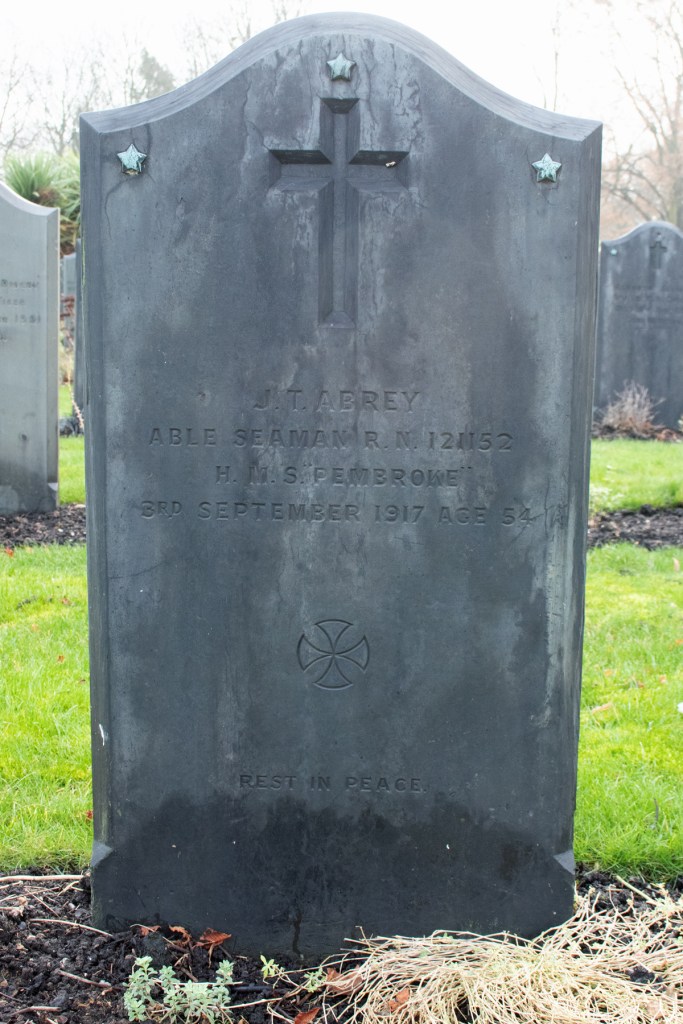
John Thomas Abrey was born in Earl’s Court on 12th August 1867, the middle of five children to John and Anne Abrey. John Sr was a carpenter and labourer from Suffolk, and Anne was from Suffolk. By the time they married, however, the couple had settled in London.

When he left school, John Jr found work as a printer, but he was after bigger and better things and, on 4th October 1882, he joined the Royal Navy. He was only 15 at this point, and so was given the rank of Boy 2nd Class. His service document record that he was 5ft 2ins (1.57m) tall, had brown hair, brown eyes and a sallow complexion.

John received his training at HMS Ganges, the shore-based establishment near Ipswich, Suffolk, and gained promotion to Boy 1st Class. He then spent six months on the training ship HMS Impregnable, before being given his first posting on HMS Minotaur. He served aboard for just over a year, during which he turned 18, and so was formally inducted in the Royal Navy, and was given the rank of Ordinary Seaman.

At this point, John signed up for a period of ten years and, over that time, he served on board seven further ships, and was promoted to the rank of Able Seaman.

On 25th May 1890, John married Christiana Ann Hamshaw at All Saints Battle Bridge in Islington. Christiana had been married and widowed twice, and had two teenaged daughters. The couple settled down – as much as a sailor can – and had two children of their own, John and William.

In August 1895, having completed ten years’ naval service, Able Seaman Abrey was stood down to the Royal Naval Reserve. Over the next few years, he maintained this service, while finding work as a labourer.

When war broke out, John was recalled to active duty and, over the next three years, served on a number of vessels. Between each assignment, however, he returned to HMS Pembroke, the Royal Naval Dockyard in Chatham, Kent, which had become his base. It was here that he was barracked in the summer of 1917.

It was a particularly busy for the base, and temporary accommodation was set up in the Drill Hall; this is where John was billeted.

On the night of 3rd September 1917, Chatham suddenly found itself in the firing line as a wave of German aircraft bombed the town. The Drill Hall received a direct hit, and Able Seaman Abrey was amongst those to be instantly killed. He had celebrated his 50th birthday the month before.

John Thomas Abrey was laid to rest in the Woodlands Cemetery in Gillingham along with the other servicemen who had perished during the Chatham Air Raid that night.


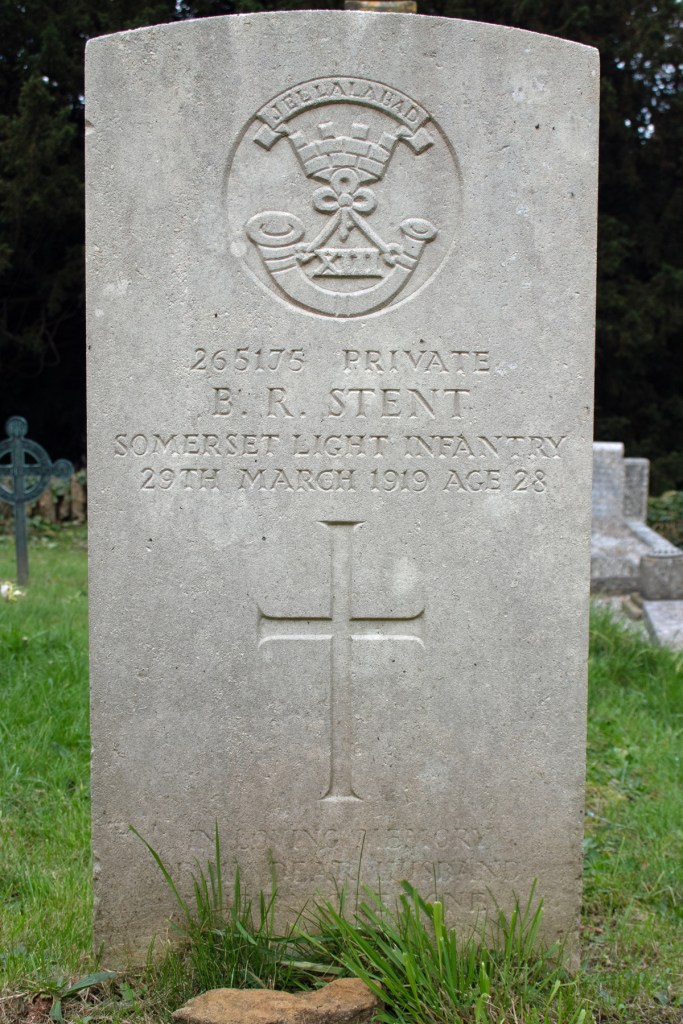
Private Bertie Stent

Private Bertie Stent

Bertie Reginald Stent was born early in 1892, one of fifteen children to Henry and Emily. Henry was a painter – initially for the railways, and then a house painter – from Frome, Somerset, and the family were raised on The Mint in town.

When he left school, Bertie also left an overcrowded home. He found work as a carter, and moved to Wellow, near Bath, where he boarded with stonemason Albert Barnes and his family. War was coming to Europe, however, and things were about to change.

Bertie enlisted in the 85th Provisional Battalion of the Territorial Force early on in the conflict. He was initially based on home soil, serving in Herne Bay in Kent and Wrentham in Suffolk. His troop became the 11th Battalion of the Somerset Light Infantry at the start of 1917 and, by the spring of the following year, he found himself in Northern France.

By this point, Bertie had met and married a woman called Ethel May. Sadly, little further information about the wedding is available, but the couple set up home in the same road as his parents and went on to have two children.

Private Stent was involved in some of the final battles of the war – the Battle of Albert and the advances in Artois and Flanders. When the Armistice was signed, he remained in France, returning home in the following spring.

Tragically, he had contracted influenza while waiting to be demobbed and, on 29th March 1919, he passed away at home from pneumonia. He was just 27 years old and had been back in Frome for just a week.

Bertie Reginald Stent was laid to rest in the churchyard of Holy Trinity Church in Frome, within sight of his family home.


While there is little information about Bertie and Ethel’s marriage, there is some detail about her life after her husband’s death. Ethel continued to live in Frome, on the same road as her marital home. The 1939 Register lists her as an unpaid domestic worker – in effect, a housewife – and she is living with Reginald, her and Bertie’s second child, who was a land worker.


Bertie’s sister, Annie, married Albert Withey, who also died after coming home from war. Read his story here.

Captain Fergusson Barclay

Captain Fergusson Barclay

Fergusson Barclay was born in Cheltenham, Gloucestershire, towards the end of 1877 and was the oldest of six children. His father, Henry, was a retired army captain, and so it is of little surprise that Fergusson and his siblings had something of a privileged upbringing.

The 1881 census recorded Henry and his wife, Agnes, bringing up the family in Tenby, South Wales. With three children under four, the Barclays employed two live-in nursemaids to support them.

Ten years later, the family had moved to Weston-super-Mare, Somerset, living in a large house to the north of the town centre. With five children now living at home, Henry and Agnes found additional help was needed: they were now employing a governess, manservant, cook and a housemaid. The family were not alone in this support: the 1891 census shows that all of the Barclays’ neighbours had at least one domestic servant.

The new century turned, and a new census followed. Captain Barclay and his family were still living in their three-storey Victorian villa in Weston-super-Mare. By this point, however, only three of the children were still living at home. Fergusson, now 23, was working as an architect, his brother Herbert was a legal professional, and his sister, Hermione, also still lived there. The house was not empty, however, as the Barclays’ retinue of staff remained. By this point, they were employing a gardener, groom, coachman, parlour maid, cook, kitchen maid and house maid. Agnes, who was around 20 years younger than her husband, also had a live-in companion, spinster Helen Empson.

Little had changed for the family when the next census was recorded in 1911. Henry was by now 84 years old, and he and Agnes had been married 34 years. Fergusson and Herbert were still living at home, fully immersed in their jobs. Helen was still providing companionship for Agnes, and the family still employed four members of staff: butler Daniel O’Brien and his wife, Jesse, who was the cook; parlour maid Rosie Davies and house maid Edith Booden.

In March 1912, Henry passed away, and it was inevitable that things would change for the Barclay household. Fergusson had been a volunteer for the Royal Engineers since the late 1890s and had steadily worked his way up through the ranks. With the outbreak of war, he found himself called into a more formal role.

Full details of his military career are not evident, but it is clear that, by the spring of 1918, Fergusson had gained the rank of Captain. He joined the Royal Air Force and was assigned to 75th Squadron.

On the afternoon of 7th December 1918, Captain Barclay took off from Elmswell Aerodrome in Suffolk, when the engine of his Avro 504K aircraft cut out. He attempted to turn the plane to land, but it nosedived into the ground and Fergusson was seriously wounded. He was taken to hospital, and died of his injuries later that day. He was 40 years old.

Captain Fergusson Barclay’s body was taken back to Somerset – he lies at rest in the Milton Road Cemetery in Weston-super-Mare, walking distance from his family home.


Captain Fergusson Barclay
(from findagrave.com)

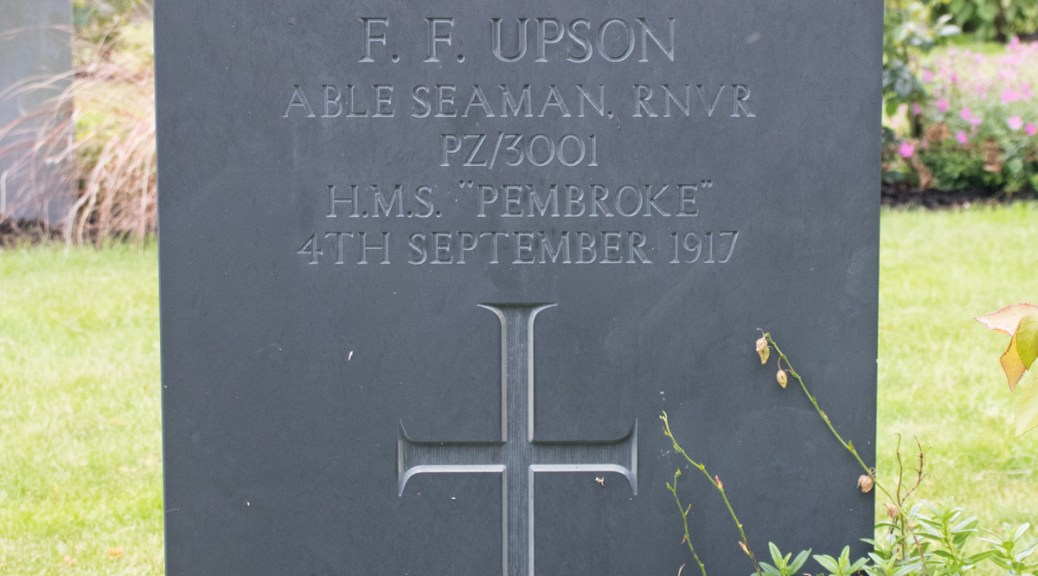
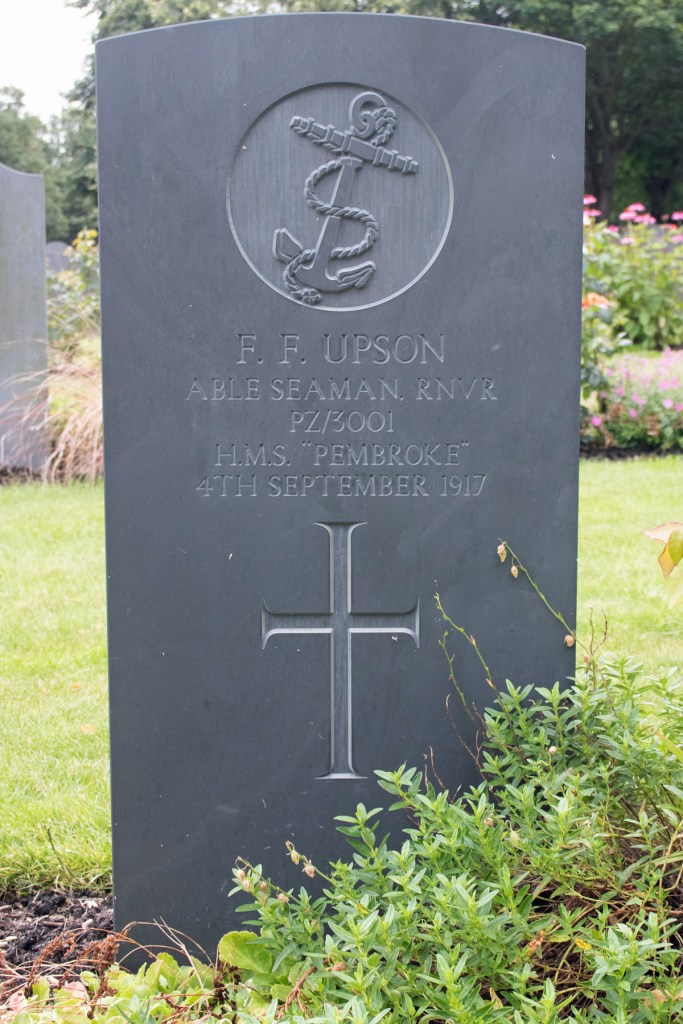
Able Seaman Frederick Upson

Able Seaman Frederick Upson

Frederick Frank Upson was born in Woodbridge, Suffolk, on 4th June 1897 and was one of eight children to Frederick and Mary Upson. Frederick Sr was an agricultural labourer and horseman, and when he left school, his soon took on a shepherding role on the same farm.

With the war raging, and the port of Ipswich not far from home, Frederick Jr seemed destined for a life at sea. In June 1915, having turned 18 years old, he enlisted in the Royal Navy as an Ordinary Seaman. His service records show that he stood 5ft 6.5ins (1.69m) tall, had brown hair, grey eyes and a fair complexion.

Frederick’s first posting was at HMS Vivid, the training base at Devonport, Devon. He spent a couple of months there, before being given his first ocean-going assignment on board the scout cruiser HMS Blonde. Ordinary Seaman Upson was on board for just over a year, and was promoted to Able Seamen during his time there.

In January 1917, he returned to shore, and was transferred to HMS Pembroke, the shore-based establishment at the Royal Naval Dockyard in Chatham, Kent. The base was particularly busy that year, and temporary accommodation was set up in the Drill Hall; Frederick found himself billeted there for the summer.

On the 3rd September 1917, the German Air Force carried out one of its first night-time air raids on England: Chatham was heavily bombed and the Drill Hall received a direct hit. Able Seaman Upson was badly injured and died of his wounds in hospital the following day. He was just 20 years of age.

Frederick Frank Upson was laid to rest, along with the other victims of the Chatham Air Raid, in the Woodlands Cemetery, Gillingham.


Stoker 1st Class Albert Goddard

Stoker 1st Class Albert Goddard

Albert Alfred Goddard was born on 7th April 1891, and was the oldest of seven children. His parents were Suffolk born and bred Alfred and Ellen Goddard, and it was in the village of Saxtead where Alfred – and then Albert and his brothers – worked as farm labourers.

War was coming to Europe and, when the call came, Albert took his place amongst the many. He enlisted in the Royal Navy on 24th May 1916, joining as a Stoker 2nd Class. His service records confirm that the stood 5ft 5.5ins (1.66m) tall, had brown hair, blue eyes and a fair complexion.

Stoker Goddard was initially sent to HMS Pembroke – the Royal Naval Dockyard in Chatham, Kent – for his training. After six months, he transferred to HMS Victory – the Portsmouth Naval Base – where he spent nearly a year, and gained promotion to Stoker 1st Class.

In August 1917, he was again assigned to HMS Pembroke. Chatham’s Dockyard was particularly busy that summer, and Albert was billeted in temporary accommodation in the base’s Drill Hall.

On the 3rd September 1917, the first night air raid carried out by the German Air Force scored a direct hit on the barracks and Drill Hall; Stoker 1st Class Goddard was killed instantly. He was just 26 years old.

The local newspaper reported that “the recent air raid at Chatham has brought grief to our locality. Mr and Mrs Alfred Goddard, of Saxtead, were officially notified that their sailor son was among those who were killed; they journeyed to London on Wednesday, and were present a their son’s funeral on the following day.” [Framlingham Weekly News: Saturday 8th September 1917]

Albert Alfred Goddard was laid to rest, alongside the other victims of the Chatham Air Raid, in the Woodlands Cemetery, Gillingham.