
John Kerr Foreman was born in Aberdeen, Scotland, on 18th December 1878. The son of Thomas and Jessie, details of his early life are sparse. The 1881 census records him living on York Street with Jessie, while the next return notes him as living just round the corner at 4 Links Street with his paternal grandfather, Jessie Kerr.
Thomas’ absence from the documents would suggest that he was away at the time the details were taken. John’s grandfather was a fish labourer, and the family lived next to the port. It is likely that Thomas was a fisherman or part of a boat crew, and a life at sea was something that his son also fell into.
John does not appear on either the 1901 or 1911 census returns. In the early 1900s he married Lily Craig, the daughter of another fish worker. They went on to have five children between 1905 and 1916 but, like her husband, there is no record of Lily or the family in the early 20th century.
When war broke out, John stepped up to play his part. Joining the Royal Naval Reserve – another hint at an undocumented life at sea – on 36th May 1916, his papers note that he was 5ft 8ins (1.73m) tall, with grey eyes and a fair complexion. He was also recorded as having a number of tattoos: a pierced heart, thistle and the word Scotland on his right arm, and an anchor and his initials on his left.
Engineman Foreman’s time in the navy was actually spent on shore. For eighteen months he was attached to HMS Gunner, the shore base at Granton Harbour, near Edinburgh. In August 1917, however, he was transferred south. He arrived at his new home, HMS Pembroke, the Royal Naval Dockyard in Chatham, Kent, on 4th August 1917.
The dockyard was a particularly busy place that summer, and temporary accommodation was set up. John found himself billeted at Chatham Drill Hall, away from the main barracks.
On the night of 3rd September 1917, Chatham suddenly found itself in the firing line, as the German Air Force launched a bombing raid. One of the bombs landed squarely on the Drill Hall, and Engineman Foreman was badly injured. He was taken the naval hospital in the town, but died from his injuries the following day. He was 38 years old.
The body of John Kerr Foreman was taken back to Scotland for burial. He was laid to rest in Aberdeen’s Trinity Cemetery, a short walk from where his family still lived.
Engineman John Foreman (from findacrage.com)
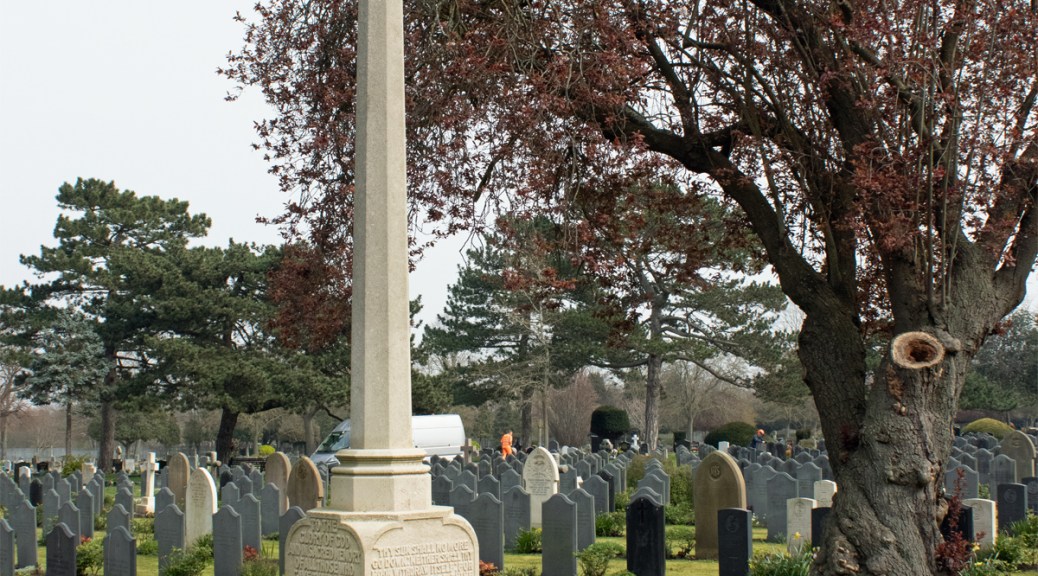
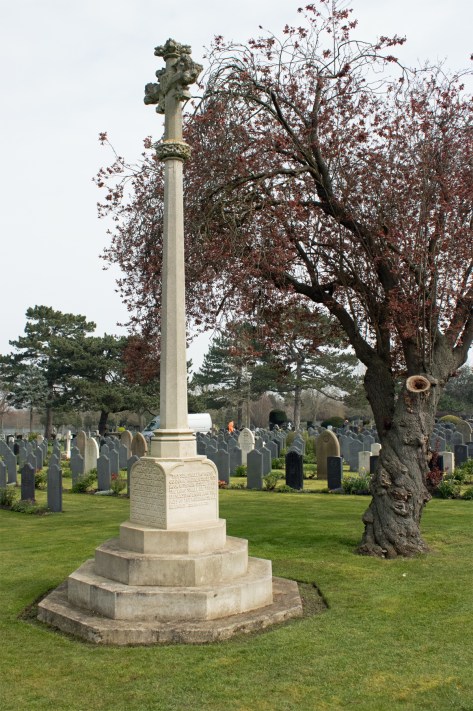
[Note: the photo above is of the memorial to the Chatham Air Raid victims, close to the mass grave for those whose bodies were not identified, in Woodlands Cemetery, Gillingham, Kent.]
Alexander Cursiter Shurie was born in Orkney, in 1886. The youngest of seven children, his parents were farmers James and Maria Shurie. The family were born and raised in West Grenigoe, a small hamlet between Orphir and Scapa, on the Orkney mainland.
There is little information about Alexander’s young life. James died in 1902, and it is likely that his son helped with the running of the farm. When war broke out, he did not enlist immediate and, while his service records have been lost to time, it seems likely that he did not join up until the autumn of 1916.
Private Shurie’s unit – the 6th Battalion or the Seaforth HIghlanders – served on the Western Front during the conflict, but there is nothing to show that Alexander spent any time overseas himself. By March 1917, he had fallen ill, and was admitted to the Norwich War Hospital in Norfolk. His condition is unclear, but it would prove fatal: he passed away on 18th March 1917, at the age of 31.
The body of Alexander Cursiter Shurie was taken back to Orkney for burial. He was laid to rest in the family plot in the graveyard of St Magnus’ Cathedral, Kirkwall.
Frederick Isaac Diver was born in Hopton, Suffolk, on 4th July 1888, the third of nine children to Matthew and Louisa Diver. Matthew was a tinsmith from Thetford, Norfolk, and was twenty years older than his wife. He had been married before, but was widowed in 1880, leaving him with six children to raise (tragically he and his first wife, Emily, had lost two children in the year before she died).
Matthew married Louisa in the autumn of 1881 and the couple raised their family at 17 Old Market Street, close to Thetford town centre. Matthew himself died late in 1909, and the census return that was taken two years later found his widow and four of her children still living in the family home. Frederick was the only one bringing in a wage, and was employed as a general labourer.
In the autumn of 1911, Frederick married Ethel Talbot. The daughter of a postman from Brandon, Suffolk, she was a couple of years younger than her new husband. The couple set up home on Castle Street, Thetford, and had three children – Sybil, Arthur and Frederick Jr.
Frederick worked at the docks on the town’s river and, when war came to Europe, he would be called upon to play his part. He was conscripted into the Royal Navy and, as a Stoker 2nd Class, was sent to HMS Pembroke, the dockyard in Chatham, Kent, for his training. His service records show that he was just under 5ft 9ins (1.75m) tall, with brown hair, blue eyes and a fresh complexion.
After a couple of months, Stoker Diver was given his first posting, on board the battleship HMS Vanguard. She would remain his home for just under a year, during which time he was promoted to Stoker 1st Class. At the start of July 1917, he was home on leave, Frederick Jr having been born a few months before.
HMS Vanguard was stationed in Scapa Flow, in the Orkneys, when, on 9th July 1917, a series of magazine explosions tore the ship apart. She sank almost at once, and 843 of the 845 crew were killed. Stoker Diver had had a lucky escape.
At the end of his leave, Frederick returned to HMS Pembroke, to await a new assignment. The loss of Vanguard resulted in the dockyard being a busy place – its replacement crew were based there, and were now stuck there as they waited to be re-assigned. Stoker 1st Class Diver was billeted in temporary accommodation in Chatham Drill Hall.
On the 3rd September 1917, the first night air raid carried out by the German Air Force bombarded the town, and scored a direct hit on the Drill Hall; Stoker Diver was not so lucky this time, and was among those killed. He was just 29 years of age.
The body of Frederick Isaac Diver was taken back to Norfolk for burial. He was laid to rest in Thetford Cemetery, not far from where his widow was still living.
[Note: the photo above is of the memorial to the Chatham Air Raid victims, close to the mass grave for those whose bodies were not identified, in Woodlands Cemetery, Gillingham, Kent.]
Henry – or Harry – Hosier was born on 22nd September 1880 at 2 Wenban Terrace, Worthing, West Sussex. The fourth of ten children, his parents were Charles and Elizabeth. Charles was a jack of all trades, working as a carman for the railway in 1881, and a gardener by 1891. That census recorded that the family had moved to 1 Ham Road, in East Worthing, and that Charles was the only person bringing money into the household.
When Harry completed his schooling, he found work as a coachman. On 3rd November 1900 he married Elizabeth Jenkins at Christ Church in Worthing town centre. Elizabeth was living in nearby Broadwater when the couple exchanged vows. Her father is unknown and the surname she went by was her mother Charlotte’s first husband’s name, although he died eighteen months before she was born. Charlotte married a second time, to a Stephen Lillywhite, and, for a while her daughter was listed with his surname. By the time she married Harry, however, Elizabeth had reverted to Jenkins.
Harry and Elizabeth initially moved in with Charlotte and Stephen. By the time of the 1911 census, however, they had set up their own home on Broadwater Street, to the north of Worthing town centre. The couple would go on to have seven children, although two would pass away in infancy.
Harry was working as a cab driver by this point but, when war broke out, he would be called upon to play his part. He enlisted on 26th June 1916, joining the Royal Navy as an Ordinary Seaman. His service papers show that he was 5ft 3.5ins (1.61m) tall, with dark brown hair, brown eyes and a dark complexion. His is also noted as having a number of tattoos on his arms.
Ordinary Seaman Hosier was initially sent to HMS Victory, the Royal Naval Dockyard in Portsmouth, Hampshire, for his training. In August 1916, however, he was assigned to the destroyer HMS Broke. Fresh from the Battle of Jutland, she was part of the 4th Destroyer Flotilla, charged with protecting the English Channel.
On the 20th and 21st April 1917, Broke took part in the Battle of Dover Strait against six German torpedo boats. In the confusion of the skirmish, Broke rammed the enemy ship SMS G42, and the two vessels became locked together. For a while the crews fought in hand-to-hand combat, before the British ship managed to break free. Soon afterwards the German boat sank. Badly damaged, HMS Broke had to be towed back to Dover: 21 of the crew – including Ordinary Seaman Hosier – were killed, and a further 36 were wounded. Harry was 36 years of age.
The body of Harry Hosier was taken back to Sussex for burial, his funeral at Broadwater Cemetery, making the local newspapers:
A fallen hero of the naval fight off Dover last week was buried in Worthing yesterday with full service honours. Worthing people welcomed the opportunity to show honour to a townsman who had laid down his life in one of the most brilliant naval exploits of the war, and the occasion was unique in that the funeral was the first to take place locally during the war of a naval man killed in action. Seaman Harry Hosier was serving on the destroyer leader “Broke,” so valiantly commanded by Commander Edward Evans, CB, when he met his end. He died the death of a Briton after nobly doing his duty. The coffin was conveyed from Dover to Worthing for the funeral at the request of the deceased’s relatives. Scenes of the most impressive character were witnessed, the route of the procession being thronged from one end to the other, and several thousand people assembled at the cemetery…
The Red. EJ Elliott (Rector) officiated, and from the pulpit gave a stirring address. He said “In the course of the 700 years’ history of this church, I don’t suppose there has ever been a service quite like the present one – the funeral of a Broadwater man killed in action. Forty or more Broadwater men have already made the supreme sacrifice, and we are glad this afternoon to be able in a special way to honour these noble men. In all probability Henry Hosier will be the last in this war who will be called upon to die whose funeral will take place at home. In doing honour to whim whose mortal remains are with us this afternoon – the remains of a gallant bluejacket belonging to HMS Broke – we do honour to our two score other parishioners who at the call of duty, joined up, and are now sleeping their last sleep.
“They heard their Motherland calling to them for the help of their sons and at once, with enthusiasm and alacrity, they responded. They loved their loves as we do, but they loved something more – they had a deeper love for their country and for the safety of their homes and hearth. They died, let us remember, for us, in order that we at home might be spared the agony and the martyrdom of the Belgians and the Serbians. They died in order that we might remain safe and comfortable in the home land and not be called upon the endure the nameless agony and also the atrocities perpetrated by the Huns. We leave the soul of Henry Hosier and of our 40 other Broadwater heroes in God’s hands…”
[Sussex Daily News: Friday 27th April 1917]
Two of Harry’s siblings – Christopher and Ernest – had added to the tally of Broadwater’s forty.
Ernest Hosier was born in 1895, and was the ninth of Charles and Elizabeth’s children. He found work as an errand boy when he left school, but managed to associate himself with the wrong group of friends.
Ernest Hosier, 14, errand boy, on bail, and Frederick Clark, 21, rag and bone collector, were indicted for offences against Fanny Newman and Alice Smith, girls between 13 and 16 years of age, at Worthing, between December 1st, 1909, and March 11th, 1910.
Clark pleaded guilty and Hosier not guilty. The latter gave an absolute denial to the charge, and suggested that the girls had associated him with the charge in revenge because he would have nothing to do with them…
After hearing the evidence, the jury found Hosier not guilty, and his Lordship said he was discharged without any imputation whatever upon his character. Clark was sentenced to six months’ hard labour, his Lordship remarking that girls of the character of those in this case were a terror and a real temptation to men.
[Hastings and Bexhill Independent: Thursday 30th June 1910]
Soon after the court hearing, Ernest joined the Royal Navy, the 1911 census recording him as a boarder at the Training Establishment in Shotly, near Ipswich, Suffolk. After serving on a number of vessels, he came of age, and formally enlisted as an Ordinary Seaman on 16th October 1912. Within a year he had been promoted to Able Seaman and in the summer of 1914, he was assigned to the battlecruiser HMS Invincible.
Able Seaman Hosier was on board during the Battle of Heligoland Bight in August 1914, and the Battle of the Falklands that November. In May 1916 Invincible was involved in the Battle of Jutland, and Ernest was one of the 1,000 crew who were killed when she was was hit by a number of German salvoes and sank. Able Seaman Hosier was 21 years of age, and is commemorated on Portsmouth Naval Memorial.
Christopher Hosier was born in 1887, and was working as a cellarman when war broke out. He enlisted in the Royal Sussex Regiment, and was assigned to the 7th Battalion.
In the autumn of 1917, Private Hosier’s unit was caught up on the Western Front, as Arras and Cambrai. It was here, on 20th November 1917, that he was killed, although his body was not recovered. He was 29 years of age, and is commemorated on the Cambrai Memorial.
Herbert Lawrence Cooney was born in Newcastle-upon-Tyne on 26th April 1890. The fourth of five children, his parents were Thomas and Margaret Cooney.
Thomas is notable by his absence: the 1891 census found Margaret and the children living with her mother at 2 Newton Street. Herbert’s mother died in 1897, and the next census record found him living with her brother’s family at 109 Malcolm Street in Byker.
When Herbert finished his schooling, he took work as a miner. By the time of the 1911 census, he had moved north to the Northumbrian town of Blyth, and was boarding with the Oldfield family in a two-up-two-down terraced house, 17 Goschan Street. Head of the household, Robert Oldfield, was a miner, as were three other members of the household: son William, and stepsons Thomas and George Anderson. Robert’s wife Jean, and her daughter Margaret Anderson, made up the extended family.
When war broke out, Herbert was keen to play his part. Calling on some previous seafaring experience, he enlisted in the Royal Naval Reserve on 30th December 1914, and took the rank of Stoker. His service papers show that he was 5ft 11ins (1.8m) tall, with grey eyes and a dark complexion. He was also noted as having two tattoos on his left forearm: his name H Cooney, and hands across the sea.
Stoker Cooney was initially sent to HMS Pembroke, the Royal Naval Dockyard in Chatham, Kent. On 2nd February 1915, however, he was assigned to the seaplane tender HMS Engadine. Love had blossomed for Herbert during his stay with the Oldfield family and, in the spring of 1916, he married Margaret Anderson, the stepdaughter of his former landlord.
Herbert would spend two years on board Engadine, and was part of her crew during the Battle of Jutland. In the course of the skirmish, the cruiser HMS Warrior was attacked and foundered, and Stoker Cooney’s ship drew alongside and rescued the faltering ship’s crew.
In July 1917, Stoker Cooney returned to Chatham to await his next assignment. The dockyard was overly busy that summer, and he was billeted in temporary accommodation in the town’s Drill Hall.
On the night of 3rd September 1917, Chatham suddenly found itself in the firing line as a wave of German aircraft bombed the town. The Drill Hall received a direct hit, and Stoker Cooney was badly injured. He was admitted to the Royal Naval Hospital in the town, but his wounds would prove too severe, and he died the following day. He was 27 years of age.
The body of Herbert Lawrence Cooney was taken back to Northumberland for burial. He was laid to rest in Blyth’s Cowpen Cemetery, not far from where his widow was still living with her family.
[Note: the photo above is of the memorial to the Chatham Air Raid victims, close to the mass grave for those whose bodies were not identified, in Woodlands Cemetery, Gillingham, Kent.]
In the extension to St Mary’s Churchyard in Codford, Wiltshire, is the grave of Private A Holmes of the NZ Maori Battalion. Much of his life has been lost to time, but his military records give some glimpses into his time in the army.
Arthur Holmes was born on 22nd June 1884 in Auckland, New Zealand. His service papers show that he was working as a labourer in the Waihara region of North Island when he joined up, and gave his next-of-kin as his sister Mrs E Dixon (although this was later amended to his half-brother William Marshall-Muir).
By the time he joined the army on the 9th December 1915, he was 5ft 5ins (1.65m) tall, and weighed 10st 5lbs (65.8kg). He was described as having had brown hair, grey eyes and a fair complexion. The medical record also noted that two toenails on his right foot had been ‘chopped off in childhood’.
Private Holmes’ unit set off for Europe in the spring of 1916 and, after a three week pause in Suez, Egypt, he arrived in Étaples, France, on 9th June.
Arthur’s time in the army seems to have been beset by illness, with hospital admissions in June, July and August 1916. He seems to have spent eighteen months in France, and fought at the Somme and Messines Ridge.
At the end of 1917, after another short spell in hospital, Private Holmes was given leave in Britain, but was again admitted to a medical unit, having come down with bronchitis. Initially hospitalised in Surrey, by 19th December he had been moved to the No. 3 New Zealand General Hospital in Codford, Wiltshire. By this point, however, his health had been severely impacted, and he passed away on 28th December 1917, at the age of 33 years old.
The body of Arthur Holmes was laid to rest in the graveyard extension of St Mary’s Church, Codford.
Robert William Collett was born on 20th April 1893 in Barnsbury, now part of Islington, Middlesex. Little information about his early life remains available – he does not feature on any census records – although later records confirm than his parents were called George and Sarah.
When he completed his schooling, Robert found work as a baker, but he had bigger and better things in mind. On 24th August 1911, he enlisted in the Royal Navy. His service papers show that he was 5ft 1.5ins (1.56m) tall, with dark brown hair and eyes, and a fresh complexion.
Stoker 2nd Class Collett was sent to HMS Pembroke, the Royal Naval Dockyard in Chatham, Kent, for his training. In February 1912, he was given his first assignment, on board the battleship HMS Berwick. She would be his home for the next year, during which time he was promoted to Stoker 1st Class.
After a further spell on shore, Robert transferred to another battleship, HMS Swiftsure. She would spend much of the war serving in the Mediterranean, with Stoker Collett on board. He seems to have had a rebellious nature, and this led to his time aboard Swiftsure not being smooth sailing.
During his time on the battleship Robert spent three separate period in the brig: three days in October 1914, and seven days in June 1915. In October that year, things came to a head, and he was convicted of threatening to strike an Engine Room Artificer. For this he was incarcerated again, for 42 days.
Stoker Collett left Swiftsure in May 1916, and transferred to another vessel, the battlecruiser HMS Repulse. After an eight-month stint on board, he returned to Chatham while waiting for a new posting. His time here was not without incident, however, and he was thrown in the brig for a further seven days for an unrecorded misdemeanour.
HMS Pembroke was overcrowded in the summer of 1917, and when he was released Stoker Collett was billeted in temporary accommodation in the dockyard’s Drill Hall.
By this point in the war, the German Air Force was looking to minimise daytime casualties, and was, instead, trialling night raids; on 3rd September, Chatham found itself in their flight path. The Drill Hall received a direct hit, and Stoker 1st Class Collett was killed, along with close to 100 others. He was just 24 years old.
The body of Robert William Collett was taken back to London for burial. He was laid to rest in Islington Cemetery, not far from where his parents were still living.
[Note: the photo above is of the memorial to the Chatham Air Raid victims, close to the mass grave for those whose bodies were not identified, in Woodlands Cemetery, Gillingham, Kent.]
George Victor Jim Elmes was born in the autumn of 1897 in the village of Derry Hill, between Calne and Chippenham in Wiltshire. One of six children, his parents were Nelson and Hannah Elmes. Nelson was a shepherd, and when George completed his schooling, he found work as a labourer on the same farm. Money must have been tight, and the 1901 and 1911 census returns both show that the family had taken in boarders for a little extra.
There is little further documentation about George’s life. He would enlist in the Machine Gun Corps at some point after June 1917, and would undertake his training in Dorset.
The death took place at the Trowbridge Red Cross Hospital on Wednesday of Gunner George Elmes, Machine Gun Corps. Gunner Elmes, whose home is at Chippenham, was travelling thence from Bovington Cap on Monday when he was found to be seriously ill at Trowbridge. Dr Bond conveyed him to the hospital in his motor car, but he got rapidly worse and died on Wednesday. He was going to Chippenham to visit his mother, who is seriously ill.
[Wiltshire Times and Trowbridge Advertiser: Saturday 6th January 1917]
George Victor Jim Elmes died on 3rd January 1917: he was just 19 years of age. Hannah passed away soon after her son: she was 55 years old.
With two funerals to pay for, money must have been incredibly tight for Nelson and the rest of the family. While Hannah was buried locally, the body of George Elmes was laid to rest in Trowbridge Cemetery, not far from the hospital to which he had been taken when he fell ill.
Howard Stephen Rees was born in the spring of 1895 in Trowbridge, Wiltshire. He was the second of six children – and the older of two sons – to Stephen and Annie. Stephen was an engine driver, and the 1901 census found the family living in a small terraced house at 18 Gloucester Road, a short walk from the town’s railway station.
By the time of the next census, the family had moved to a larger house, and were living at 15 Innox Road, to the north of the town centre. Stephen was still employed as an engine driver, while there were too further wages coming into the household. Howard’s older sister, Catherine, was working as a rug weaver, while he himself was employed as a page boy, a bell hop for one of the hotels in the town.
By the time war broke out, Howard had moved from page boy to cellarman. The pull to serve his country was strong, though, and he gave up his job to enlist in the army on 7th September 1914, just a month after the start of the conflict.
Private Rees was assigned to the Wiltshire Regiment. His service papers show that he was 5ft 11ins (1.8m) tall and weighed 120lbs (54.4kg). He was noted as having brown hair, brown eyes and a fair complexion. Howard’s medical examination was to conclude that he was not fit for army service, due to a ‘very poor physique and.. an impediment of speech’. He was recorded as being quite unfit for a soldier. His time in the army was to last just 20 days.
Howard was not deterred by this setback, however, and it seems that he tried to enlist again at some point, and this time succeeded. Full details have been lost, but from the documents that remain, he had joined the 2nd Battalion of the Wiltshire Regiment by the spring of 1917.
The funeral took place on Monday a the cemetery of Private Howard Stephen Rees, Wilts Regiment, aged 22 years, who passed way after a painful illness lasting five months, at the Bath War Hospital on Wednesday September 26th from wounds received in action in France on April 23rd.
[Wiltshire Times and Trowbridge Advertiser: Saturday 6th October 1917]
Howard Stephen Rees received his injuries during the Arras Offensive of 1917, his eagerness to be included in the war having led to his death. His body was taken back to Wiltshire, and was laid to rest in Trowbridge Cemetery.
Charles Alfred Clarke was born in Lowestoft, Suffolk on 1st June 1888. The middle of eleven children, his parents were William and Jane Clarke. William was a fisherman, and, according to the 1901 census, the family lived at Coopers Cottages, on Hemplands, close to the town centre, and not far from the seafront.
Given his father’s trade, and the fact that his older brothers also followed suit, it is no surprise that Charles found work as a fisherman. The 1911 census recorded him as one of eight crew on board the John & Sarah, a 36ft steam boat, that had moored in Penzance, Cornwall. Charles was noted as being an engineman and fish packer.
Away from the sea, Charles had found love. Clara Fletcher was two years his junior, and was the daughter of publican Samuel, who ran the Mechanic’s Arms on Lowestoft’s Crown Street. The couple exchanged vows in the summer of 1916, the wedding being registered in Mutford, to the south east of their home town.
By this point, and with war raging across Europe, Charles had been called into military duty. Attached to the Royal Naval Reserve from May 1915, he was attached to the torpedo gunboat HMS Halcyon, which acted as a depot ship off the Suffolk coast. His service papers note that he was 5ft 6ins (1.68m) tall, with hazel eyes and a fresh complexion.
Engineman Clarke remained with Halcyon until the summer of 1917, when he was transferred to HMS Pembroke, the Royal Naval Dockyard in Chatham, Kent. The base was a particularly busy place at that point in the war and temporary accommodation was set up. Engineman Clarke found himself billeted at The Drill Hall, away from the main barracks.
On the night of 3rd September 1917, Chatham suddenly found itself in the firing line, as the German Air Force launched a bombing raid. Two bombs landed squarely on the Drill Hall, shattering its glass roof, and Engineman Clarke was amongst the dozens killed. He was 29 years of age.
The body of Charles Alfred Clarke was taken back to Suffolk for burial. He was laid to rest in the town’s cemetery on Normanston Drive.
[Note: the photo above is of the memorial to the Chatham Air Raid victims, close to the mass grave for those whose bodies were not identified, in Woodlands Cemetery, Gillingham, Kent.]