Tag Archives: Kent

Engineman John Foreman

Engineman John Foreman

John Kerr Foreman was born in Aberdeen, Scotland, on 18th December 1878. The son of Thomas and Jessie, details of his early life are sparse. The 1881 census records him living on York Street with Jessie, while the next return notes him as living just round the corner at 4 Links Street with his paternal grandfather, Jessie Kerr.

Thomas’ absence from the documents would suggest that he was away at the time the details were taken. John’s grandfather was a fish labourer, and the family lived next to the port. It is likely that Thomas was a fisherman or part of a boat crew, and a life at sea was something that his son also fell into.

John does not appear on either the 1901 or 1911 census returns. In the early 1900s he married Lily Craig, the daughter of another fish worker. They went on to have five children between 1905 and 1916 but, like her husband, there is no record of Lily or the family in the early 20th century.

When war broke out, John stepped up to play his part. Joining the Royal Naval Reserve – another hint at an undocumented life at sea – on 26th May 1916, his papers note that he was 5ft 8ins (1.73m) tall, with grey eyes and a fair complexion. He was also recorded as having a number of tattoos: a pierced heart, thistle and the word Scotland on his right arm, and an anchor and his initials on his left.

Engineman Foreman’s time in the navy was actually spent on shore. For eighteen months he was attached to HMS Gunner, the shore base at Granton Harbour, near Edinburgh. In August 1917, however, he was transferred south. He arrived at his new home, HMS Pembroke, the Royal Naval Dockyard in Chatham, Kent, on 4th August 1917.

The dockyard was a particularly busy place that summer, and temporary accommodation was set up. John found himself billeted at Chatham Drill Hall, away from the main barracks.

On the night of 3rd September 1917, Chatham suddenly found itself in the firing line, as the German Air Force launched a bombing raid. One of the bombs landed squarely on the Drill Hall, and Engineman Foreman was badly injured. He was taken the naval hospital in the town, but died from his injuries the following day. He was 38 years old.

The body of John Kerr Foreman was taken back to Scotland for burial. He was laid to rest in Aberdeen’s Trinity Cemetery, a short walk from where his family still lived.


Engineman John Foreman
(from findacrage.com)

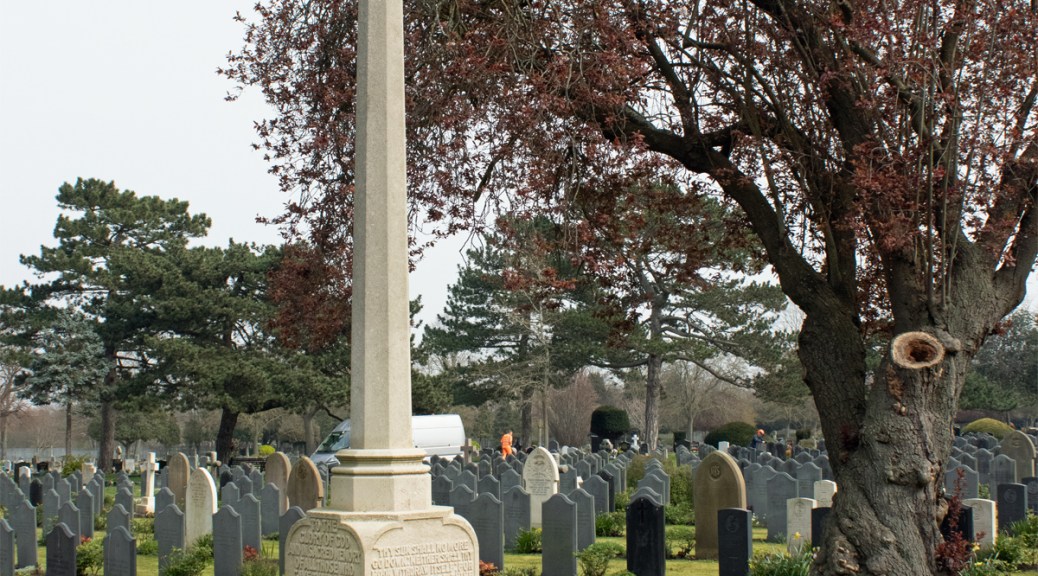
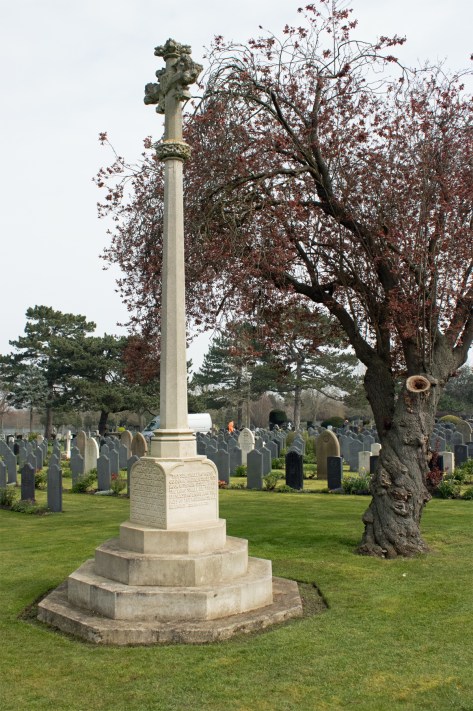
[Note: the photo above is of the memorial to the Chatham Air Raid victims, close to the mass grave for those whose bodies were not identified, in Woodlands Cemetery, Gillingham, Kent.]
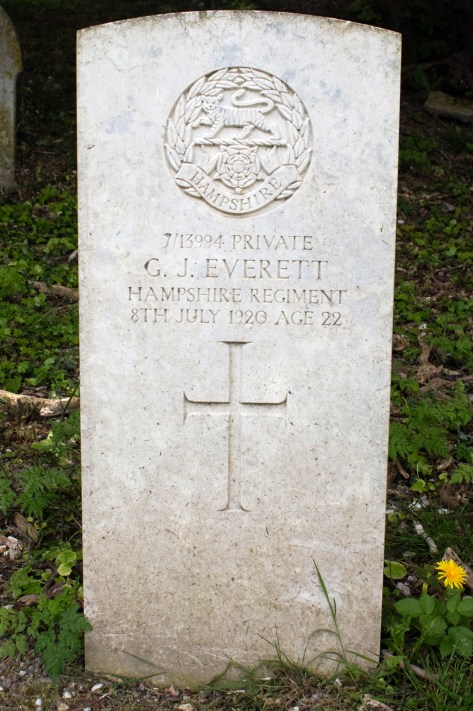
Private George Everett

Private George Everett

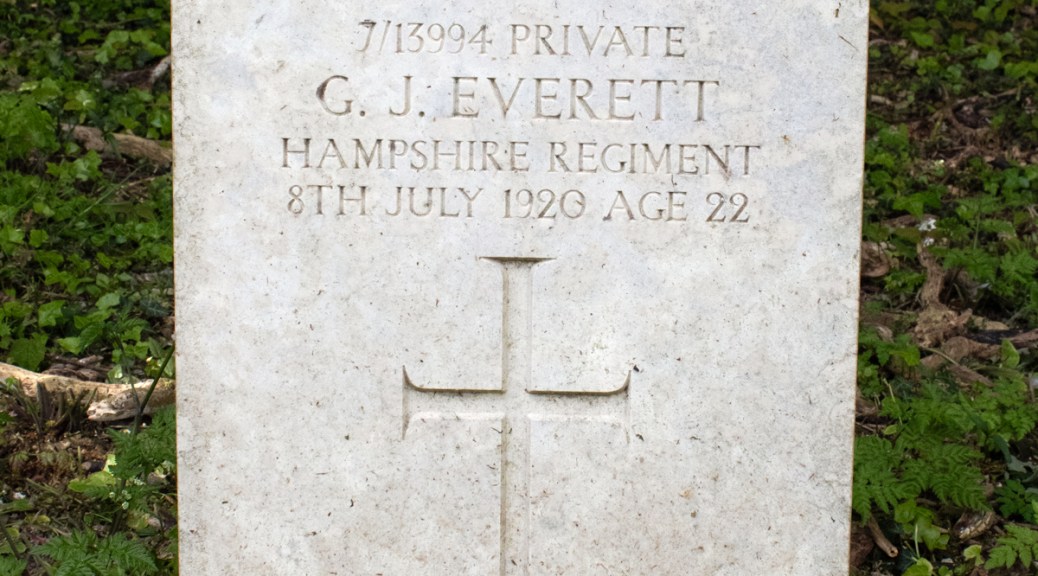
George James Everett was born in Fordington, Dorset, on 3rd July 1898. The fifth of six children, his parents were Frank and Jane Everett. Frank was a shepherd, and farm work was a trade into which at least two of George’s older siblings went.

George was only sixteen at the outbreak of the First World War, and so had to bide his time before he could serve his country. This he did, however, enlisting in the Hampshire Regiment on 24th July 1916. Assigned to the 52nd (Graduated) Battalion, he was sent to Canterbury, Kent for his training.

Private Everett’s time in the army was not to be as much of an adventure and he might have hoped. He spent his time on home soil, and, by the end of 1917, his health wasn’t standing up to the rigours of army life. George had contracted tuberculosis, and the contagious health condition led to his discharge from the military service on 5th December.

At this point, George’s trail goes cold. He returned to home to recuperate, and back at home, he fell in love. Amelia Aylen had been born in Beckenham, Kent, and it seems that she may have moved to Dorset to live with her brother, , Thomas, who had found farm work there. George and Amelia married in Blandford Forum on 3rd March 1919, and had a son, George Jr, that September.

George’s health would ultimately get the better of him. He passed away from tuberculosis and exhaustion on 8th July 1920: he had turned 22 years old just a few days before.

The body of George James Everett was laid to rest in the graveyard of St Peter’s Church in the village of Pimperne, to the north of Blandford.


As George and Amelia had been married after his discharge from the army, she was not eligible for his war pension. The 1921 census found her working as a servant for a retired army major in Wiltshire, while George Jr was being raised by her brother’s family.


Private Edward Kent

Private Edward Kent

Edward Kent was born in the Berkshire village of Little Coxwell on 8th December 1887. One of fourteen children, his parents were John and Agness Kent. John was a mason’s labourer, and by the time of the 1901 census, the family had relocated to Fisherton de la Mare in Wiltshire.

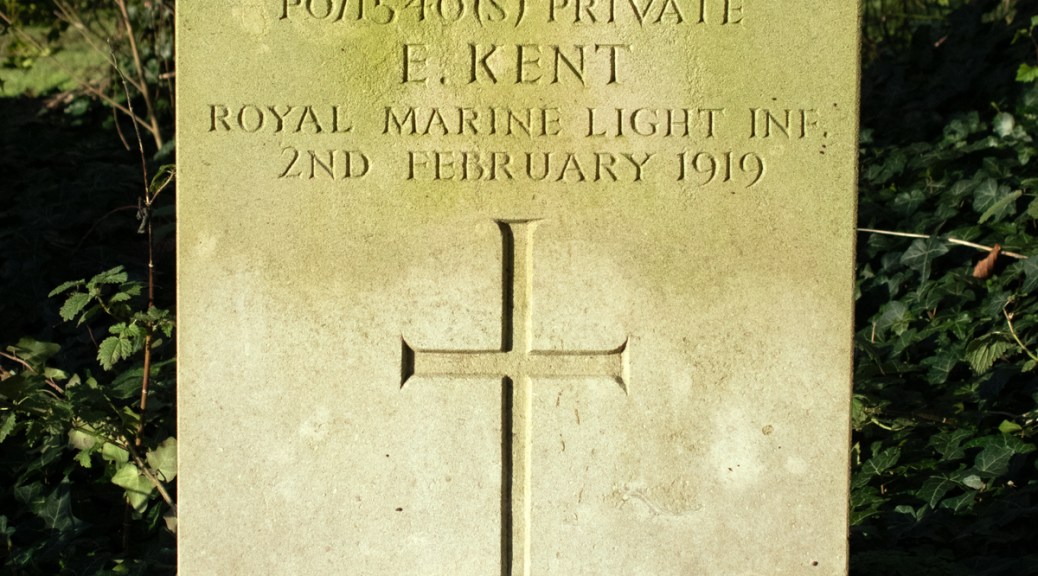
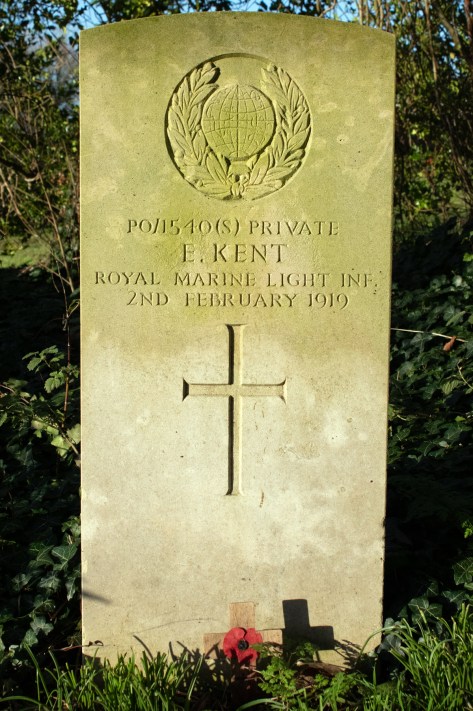
Edward found work as a general labourer when he completed his schooling, but when war broke out, he was called upon to serve his country. Conscripted in the spring of 1916, he enlisted in the Royal Marine Light Infantry as a Private. His service papers show that he was 5ft 6.5ins (1.69m) tall, with brown hair, brown eyes and a fresh complexion. He was also noted as having a scar on the back of his neck.

Private Kent was sent to Deal, Kent, for his training, but by September 1916, he had moved to Portsmouth, Hampshire. Change was afoot, however, and in November Edward was assigned to the 3rd Battalion and sent to the Aegean, where he would remain for the rest of the conflict.

Edward returned to Portsmouth in January 1919, and was admitted to the Haslar Hospital, suffering from pneumonia. The condition would prove fatal, however, and he passed away on 2nd February 1919: he was 31 years of age.

The body of Edward Kent was taken back to Wiltshire for burial. He was laid to rest in the graveyard of St Nicholas’ Church, Fisherton de la Mere.


Driver Charles Newman

Driver Charles Newman

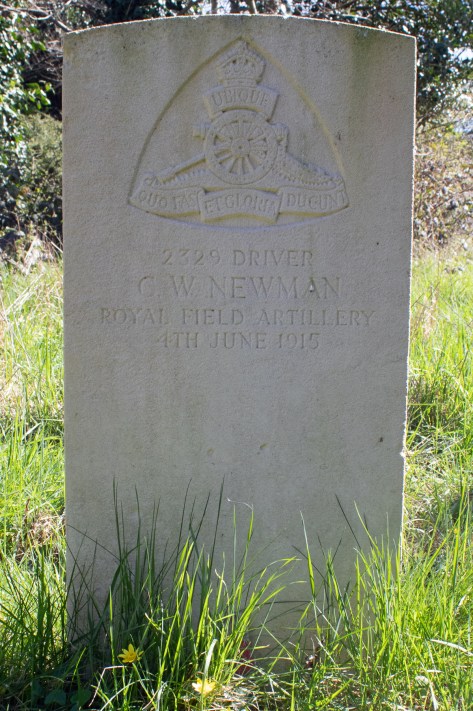
Charles William Newman was born in Worthing, West Sussex, on 16th April 1880. The younger of two children, he was the only son of John and Eliza Newman. John worked as a plasterer, and the family boarded with Mary Ann Brooker, initially on Stanhope Road, then at Campion Terrace, off Worthing High Street.

By the time of the 1901 census, John and Eliza were living in a place of their own, a terrace house at 14 Lennox Road. Charles had completed his schooling by this point, and was employed as a house painter. Eliza was working as a dressmaker, and the Newmans had a lodger, hawker Harry Fielder.

On 11th October 1903, Charles married Ellen Stilwell. Eight years her new husband’s senior, she was a shepherd’s daughter. The couple married in St Botolph’s Church, to the west of Worthing town centre. The couple would not go on to have any children, and the 1911 census found them living at 24 Lanfranc Road, a small terraced cottage, near West Worthing station.

Charles was still employed as a house painter, but had also taken up work as a member of the ground staff at Worthing Sports Ground. When war broke out, however, he stepped up to serve his country, enlisting in the Royal Field Artillery in the early months of the conflict.

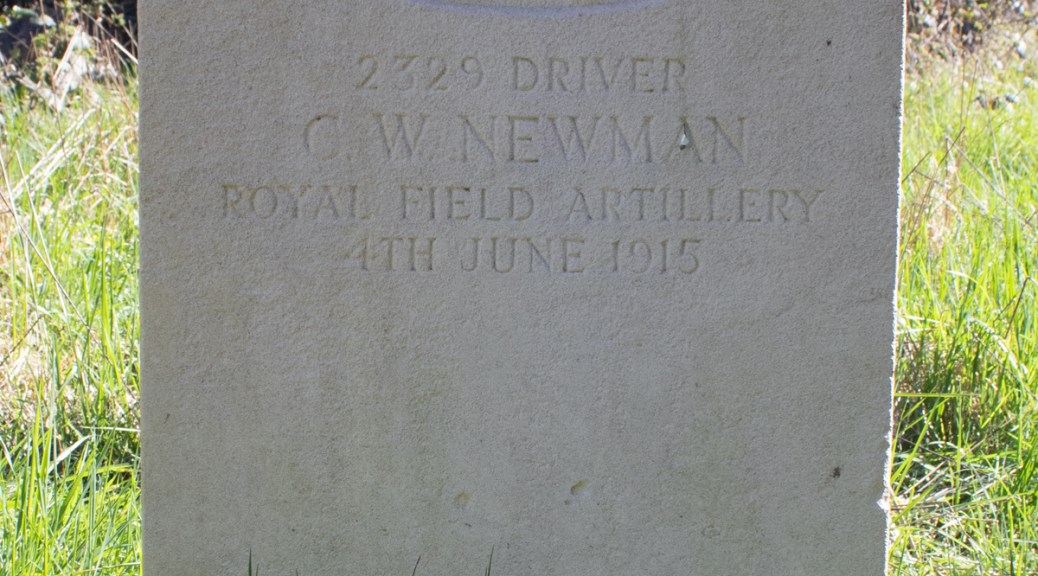
When information last reached us concerning certain local members of the Home Counties Brigade of the Royal Field Artillery, they were at Slough, but recently they were transferred to Westerham, in Kent, where a fatal accident occurred to one of their number, Driver Charles William Newman… who was killed by a runaway horse.

His widow was one of the witnesses examined at the Inquest, and the evidence revealed the fact that the horse was attached to a water van which Newman himself was driving.

Newman… was expected to go home on short leave on Friday, the day of the accident, to see his wife.

[Worthing Gazette: Wednesday 9th June 1915]

Driver Charles William Newman was 35 years old when he died, on 4th June 1915. His body was taken back to Sussex for burial, and he was laid to rest in Broadwater Cemetery, a short walk from where Ellen was still living.


Stoker 1st Class Frederick Diver

Stoker 1st Class Frederick Diver

Frederick Isaac Diver was born in Hopton, Suffolk, on 4th July 1888, the third of nine children to Matthew and Louisa Diver. Matthew was a tinsmith from Thetford, Norfolk, and was twenty years older than his wife. He had been married before, but was widowed in 1880, leaving him with six children to raise (tragically he and his first wife, Emily, had lost two children in the year before she died).

Matthew married Louisa in the autumn of 1881 and the couple raised their family at 17 Old Market Street, close to Thetford town centre. Matthew himself died late in 1909, and the census return that was taken two years later found his widow and four of her children still living in the family home. Frederick was the only one bringing in a wage, and was employed as a general labourer.

In the autumn of 1911, Frederick married Ethel Talbot. The daughter of a postman from Brandon, Suffolk, she was a couple of years younger than her new husband. The couple set up home on Castle Street, Thetford, and had three children – Sybil, Arthur and Frederick Jr.

Frederick worked at the docks on the town’s river and, when war came to Europe, he would be called upon to play his part. He was conscripted into the Royal Navy and, as a Stoker 2nd Class, was sent to HMS Pembroke, the dockyard in Chatham, Kent, for his training. His service records show that he was just under 5ft 9ins (1.75m) tall, with brown hair, blue eyes and a fresh complexion.

After a couple of months, Stoker Diver was given his first posting, on board the battleship HMS Vanguard. She would remain his home for just under a year, during which time he was promoted to Stoker 1st Class. At the start of July 1917, he was home on leave, Frederick Jr having been born a few months before.

HMS Vanguard was stationed in Scapa Flow, in the Orkneys, when, on 9th July 1917, a series of magazine explosions tore the ship apart. She sank almost at once, and 843 of the 845 crew were killed. Stoker Diver had had a lucky escape.

At the end of his leave, Frederick returned to HMS Pembroke, to await a new assignment. The loss of Vanguard resulted in the dockyard being a busy place – its replacement crew were based there, and were now stuck there as they waited to be re-assigned. Stoker 1st Class Diver was billeted in temporary accommodation in Chatham Drill Hall.

On the 3rd September 1917, the first night air raid carried out by the German Air Force bombarded the town, and scored a direct hit on the Drill Hall; Stoker Diver was not so lucky this time, and was among those killed. He was just 29 years of age.

The body of Frederick Isaac Diver was taken back to Norfolk for burial. He was laid to rest in Thetford Cemetery, not far from where his widow was still living.


[Note: the photo above is of the memorial to the Chatham Air Raid victims, close to the mass grave for those whose bodies were not identified, in Woodlands Cemetery, Gillingham, Kent.]


Stoker Herbert Cooney

Stoker Herbert Cooney

Herbert Lawrence Cooney was born in Newcastle-upon-Tyne on 26th April 1890. The fourth of five children, his parents were Thomas and Margaret Cooney.

Thomas is notable by his absence: the 1891 census found Margaret and the children living with her mother at 2 Newton Street. Herbert’s mother died in 1897, and the next census record found him living with her brother’s family at 109 Malcolm Street in Byker.

When Herbert finished his schooling, he took work as a miner. By the time of the 1911 census, he had moved north to the Northumbrian town of Blyth, and was boarding with the Oldfield family in a two-up-two-down terraced house, 17 Goschan Street. Head of the household, Robert Oldfield, was a miner, as were three other members of the household: son William, and stepsons Thomas and George Anderson. Robert’s wife Jean, and her daughter Margaret Anderson, made up the extended family.

When war broke out, Herbert was keen to play his part. Calling on some previous seafaring experience, he enlisted in the Royal Naval Reserve on 30th December 1914, and took the rank of Stoker. His service papers show that he was 5ft 11ins (1.8m) tall, with grey eyes and a dark complexion. He was also noted as having two tattoos on his left forearm: his name H Cooney, and hands across the sea.

Stoker Cooney was initially sent to HMS Pembroke, the Royal Naval Dockyard in Chatham, Kent. On 2nd February 1915, however, he was assigned to the seaplane tender HMS Engadine. Love had blossomed for Herbert during his stay with the Oldfield family and, in the spring of 1916, he married Margaret Anderson, the stepdaughter of his former landlord.

Herbert would spend two years on board Engadine, and was part of her crew during the Battle of Jutland. In the course of the skirmish, the cruiser HMS Warrior was attacked and foundered, and Stoker Cooney’s ship drew alongside and rescued the faltering ship’s crew.

In July 1917, Stoker Cooney returned to Chatham to await his next assignment. The dockyard was overly busy that summer, and he was billeted in temporary accommodation in the town’s Drill Hall.

On the night of 3rd September 1917, Chatham suddenly found itself in the firing line as a wave of German aircraft bombed the town. The Drill Hall received a direct hit, and Stoker Cooney was badly injured. He was admitted to the Royal Naval Hospital in the town, but his wounds would prove too severe, and he died the following day. He was 27 years of age.

The body of Herbert Lawrence Cooney was taken back to Northumberland for burial. He was laid to rest in Blyth’s Cowpen Cemetery, not far from where his widow was still living with her family.


[Note: the photo above is of the memorial to the Chatham Air Raid victims, close to the mass grave for those whose bodies were not identified, in Woodlands Cemetery, Gillingham, Kent.]

Private Eric Fullilove

Private Eric Fullilove

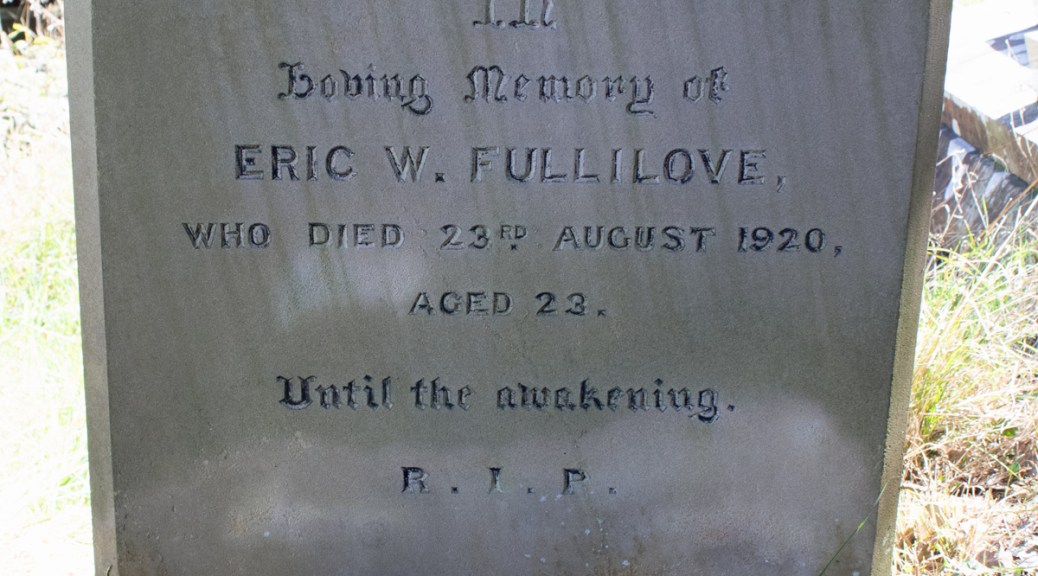
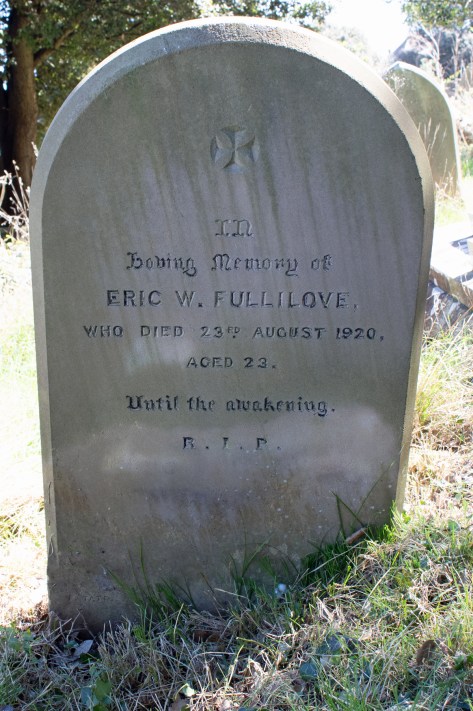
Eric William Fullilove was born in the Kent town of Deal on 25th April 1897. The middle of three children, his parents were Harry and Sarah Fullilove. Harry was a Sergeant in the Royal Marine Light Infantry, and by the turn of the century, the family had rooms at 16 Victoria Street, not far from the seafront.

Harry retired from military service, and the family moved to West Sussex. The 1911 census found the family living in a house on West Street in Worthing. Harry was now working as a bath attendant for the borough council, while Eric was being paid for being an errand boy when he wasn’t at school. The family had four visitors, Henry and Stanley Parsloe from Devon, and Florence and Margaret Gill from London.

Eric sought adventure in his life, and, on the day after his fourteenth birthday, he enlisted in the Royal Marine Light Infantry as a Bugler. His service papers show that he was just 5ft (1.52m) tall, with brown hair, brown eyes and a fair complexion.

Bugler Fullilove was assigned to the newly commissioned HMS Princess Royal, and would remain attached to her for the next four years. n the spring of 1915, he moved ashore, and was based in barracks in Portsmouth, Hampshire. While there, he came of age, and formally inducted into the Royal Marines. Now a Private, his papers show that he had grown 8.5ins (22cm).

Over the next five years, Eric served on two different vessels, returning to his Hampshire base in between assignments. His annual reviews noted a very good character, and a satisfactory/superior ability. Private Fullilove survived the conflict, but his health seems to have been impacted, and he was invalided out of the service on 1st April 1920.

Eric William Fullilove returned home, and his trail goes cold. He passed away on 23rd August 1920, through causes unconfirmed: he was 23 years of age. He was laid to rest in Broadwater Cemetery, to the north of Worthing, West Sussex.


Stoker 1st Class Robert Collett

Stoker 1st Class Robert Collett

Robert William Collett was born on 20th April 1893 in Barnsbury, now part of Islington, Middlesex. Little information about his early life remains available – he does not feature on any census records – although later records confirm than his parents were called George and Sarah.

When he completed his schooling, Robert found work as a baker, but he had bigger and better things in mind. On 24th August 1911, he enlisted in the Royal Navy. His service papers show that he was 5ft 1.5ins (1.56m) tall, with dark brown hair and eyes, and a fresh complexion.

Stoker 2nd Class Collett was sent to HMS Pembroke, the Royal Naval Dockyard in Chatham, Kent, for his training. In February 1912, he was given his first assignment, on board the battleship HMS Berwick. She would be his home for the next year, during which time he was promoted to Stoker 1st Class.

After a further spell on shore, Robert transferred to another battleship, HMS Swiftsure. She would spend much of the war serving in the Mediterranean, with Stoker Collett on board. He seems to have had a rebellious nature, and this led to his time aboard Swiftsure not being smooth sailing.

During his time on the battleship Robert spent three separate period in the brig: three days in October 1914, and seven days in June 1915. In October that year, things came to a head, and he was convicted of threatening to strike an Engine Room Artificer. For this he was incarcerated again, for 42 days.

Stoker Collett left Swiftsure in May 1916, and transferred to another vessel, the battlecruiser HMS Repulse. After an eight-month stint on board, he returned to Chatham while waiting for a new posting. His time here was not without incident, however, and he was thrown in the brig for a further seven days for an unrecorded misdemeanour.

HMS Pembroke was overcrowded in the summer of 1917, and when he was released Stoker Collett was billeted in temporary accommodation in the dockyard’s Drill Hall.

By this point in the war, the German Air Force was looking to minimise daytime casualties, and was, instead, trialling night raids; on 3rd September, Chatham found itself in their flight path. The Drill Hall received a direct hit, and Stoker 1st Class Collett was killed, along with more than 100 others. He was just 24 years old.

The body of Robert William Collett was taken back to London for burial. He was laid to rest in Islington Cemetery, not far from where his parents were still living.


[Note: the photo above is of the memorial to the Chatham Air Raid victims, close to the mass grave for those whose bodies were not identified, in Woodlands Cemetery, Gillingham, Kent.]

Engineman Charles Clarke

Engineman Charles Clarke

Charles Alfred Clarke was born in Lowestoft, Suffolk on 1st June 1888. The middle of eleven children, his parents were William and Jane Clarke. William was a fisherman, and, according to the 1901 census, the family lived at Coopers Cottages, on Hemplands, close to the town centre, and not far from the seafront.

Given his father’s trade, and the fact that his older brothers also followed suit, it is no surprise that Charles found work as a fisherman. The 1911 census recorded him as one of eight crew on board the John & Sarah, a 36ft steam boat, that had moored in Penzance, Cornwall. Charles was noted as being an engineman and fish packer.

Away from the sea, Charles had found love. Clara Fletcher was two years his junior, and was the daughter of publican Samuel, who ran the Mechanic’s Arms on Lowestoft’s Crown Street. The couple exchanged vows in the summer of 1916, the wedding being registered in Mutford, to the south east of their home town.

By this point, and with war raging across Europe, Charles had been called into military duty. Attached to the Royal Naval Reserve from May 1915, he was attached to the torpedo gunboat HMS Halcyon, which acted as a depot ship off the Suffolk coast. His service papers note that he was 5ft 6ins (1.68m) tall, with hazel eyes and a fresh complexion.

Engineman Clarke remained with Halcyon until the summer of 1917, when he was transferred to HMS Pembroke, the Royal Naval Dockyard in Chatham, Kent. The base was a particularly busy place at that point in the war and temporary accommodation was set up. Engineman Clarke found himself billeted at The Drill Hall, away from the main barracks.

On the night of 3rd September 1917, Chatham suddenly found itself in the firing line, as the German Air Force launched a bombing raid. Two bombs landed squarely on the Drill Hall, shattering its glass roof, and Engineman Clarke was amongst the dozens killed. He was 29 years of age.

The body of Charles Alfred Clarke was taken back to Suffolk for burial. He was laid to rest in the town’s cemetery on Normanston Drive.


[Note: the photo above is of the memorial to the Chatham Air Raid victims, close to the mass grave for those whose bodies were not identified, in Woodlands Cemetery, Gillingham, Kent.]

Stoker 2nd Class Thomas Fisher

Stoker 2nd Class Thomas Fisher

Thomas Fisher was born in Lyminge, Kent, on 7th October 1876. One of eleven children, his parents were agricultural labourer William Fisher and his wife, Frances.

William moved the family to where the work was. The 1881 census found them living away from the coast to Crundale, Kent; they had moved to Rough Common near Canterbury by 1891.

Thomas followed in his father’s footsteps, and by the time of the 1901 census, he was the oldest of three of the Fisher siblings to still be living at home. Frances died in 1910, and William moved in with his son Albert’s family in Rough Common. Albert was employed as a stoker with the Royal Navy, so presumably this gave his wife, Daisy, and their children, Albert Jr and Esther, some support.

Thomas, meanwhile, was boarding with his sister, Harriet, and her children, also in Rough Common. Again, this was probably to provide her with some financial support while her husband Charles, who was a Stoker Petty Officer in the navy, was also away at sea.

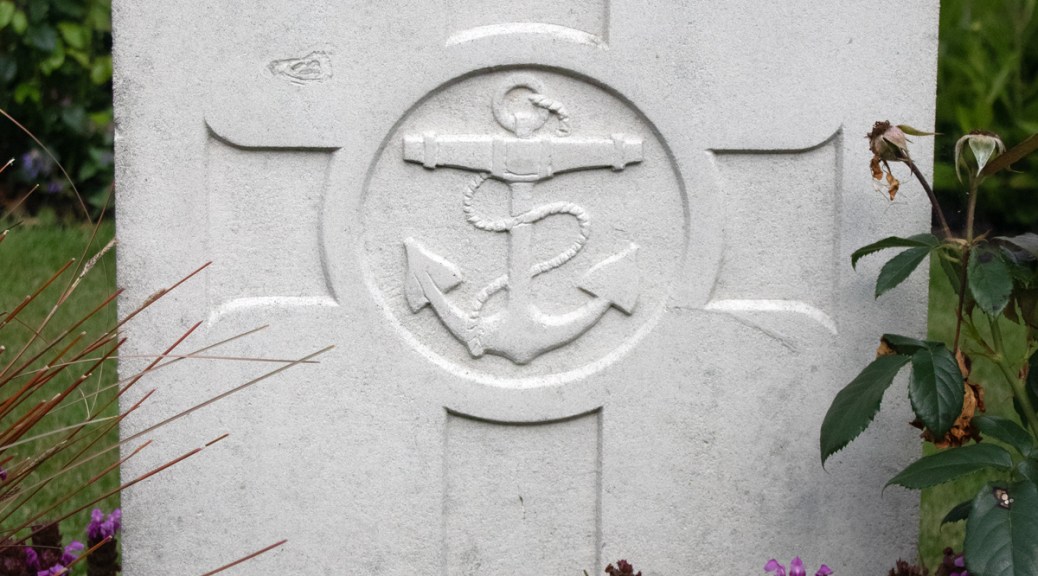
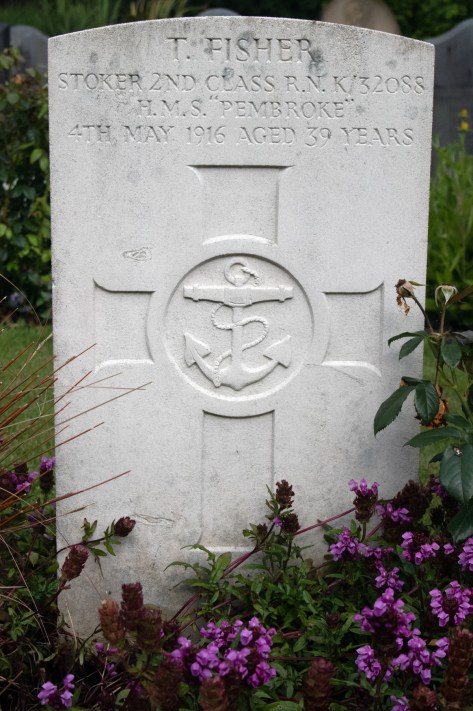
When war broke out, Thomas was called upon to play his part. He enlisted on 22nd March 1916, joining the Royal Navy as a Stoker 2nd Class. His service records show that he was 5ft 4.5ins (1.63m) tall, with brown hair, blue eyes and a fresh complexion.

Thomas was sent to HMS Pembroke, the Royal Naval Dockyard in Chatham, Kent, for his training, but his time there was not to be lengthy. By the end of April, he had been admitted to the naval hospital in the town, suffering from pneumonia. The condition would prove his undoing: he passed away on 4th May 1916, at the age of 39 years old. He had been in the Royal Navy for just six weeks.

The body of Thomas Fisher was laid to rest in Woodlands Cemetery, Gillingham, Kent, not far from the base at which he had spent his naval career.