William George Hasley was born on 14th June 1897. He was the oldest of three children to William and Sarah Hasley. William Sr, a former soldier, worked as a commissionaire, and the family lived at 11 Coach & Horses Yard, St James, Westminster.
Things had changed by 1900, and William Sr was employed as an engineer’s labourer. The family had moved to Dorset, setting up home in the village of Bourton, and their daughter, Susan, was born there at the turn of the century. Susan Sr came from just up the road in Zeals, Wiltshire, and it is likely that she was staying there when her youngest child, Sidney, was born in 1902.
By the time of the 1911 census, the family of five were living at Beach Cottage, Bourton. William Sr was drawing his army pension, but still employed at the engineering foundry; his eldest son, while still at school, was also listed as a news boy, possibly selling the periodicals to villagers.
War came to Europe in the summer of 1914, and William Jr was quick to step up and play his part. Giving up his job as an engineer’s fitter, enlisted on 1st September 1914, and joined the Somerset Light Infantry. His service records show that he stood 5ft 8.5ins (1.74m) tall, and weighed 124lbs (56.3kg). Private Hasley was noted as having brown hair, brown eyes and a sallow complexion. He also had a scar on the tip of the middle finger of his left hand.
Assigned to the 3rd (Reserve) Battalion, Private Hasley’s unit moved to Devonport, Devon, at the start of 1915. It was here that he contracted tuberculosis, which would ultimately lead to his medical discharge from the army in July. He served just 308 days.
At this point, William’s trail goes cold. It is likely that he returned to Bourton, although he had regular check-ups by the army inspection board. He was deemed totally incapacitated by the illness on 3rd January 1917.
William George Hasley’s lung condition would seal his fate. He passed away on 23rd March 1917: he was just 19 years of age. He was laid to rest in Bourton Cemetery.
Joseph Hawke was born in Paignton, Devon, on 8th January 1887. Details of his early life are lost to time, although the 1891 census suggests that he was one of five children to Maria Hawke, who had been widowed by that point. The family had taken rooms at 104 Pembroke Street in Devonport.
When he finished his schooling, Joseph initially found work as a packer. However, possibly driven by his proximity to the Devon dockyards, he soon stepped up to take a job in the Royal Navy. Joining the training cruiser HMS Northampton, he was given the rank of Boy 2nd Class, as he was under the age to enlist.
Over the next few years, Joseph proved his mettle. In May 1904 he was promoted to Boy 1st Class and, when he came of age on 8th January 1895, he was formally inducted into the Royal Navy, taking the rank of Ordinary Seaman. His service papers show that he was 5ft 3ins (1.6m) tall, with fair hair, hazel eyes and a fresh complexion. It was also noted that he a mole on his right shoulder and abdomen, a scar on his chin, and tattoo marks on the back of his left hand and on his right forearm.
Ordinary Seaman Hawke would serve on three ships in total. On 26th February 1906 he became a Stoker 2nd Class, a role change that might be seen as a semotion, although his records suggest he was of very good character. By November 1906 Joseph had become Stoker 1st Class, but within twelve months, he gave up his life at see, buying himself out of the Royal Navy.
This change of heart may have been driven by love as, on Christmas Day 1908, he married Ellen Saunders, in Tower Hamlets, London. Their wedding certificate gives Joseph’s father’s name as cabinet maker George Hawke, but doesn’t suggest that he is deceased.
The document also gives Joseph’s job as a stoker, later confirmation suggesting that he was employed by the electrical works in Paignton, Devon. Joseph and Ellen would go on to have five children – Marie, Joseph, Albert, Harry and Ellen – between 1909 and 1917.
When war broke out, Joseph was called upon to play his part once more and, as part of the Royal Naval Reserve, he was assigned to HMS Gibraltar in November 1914. Over the next four years, he would serve as a Stoker 1st Class on four more ships, each time returning to HMS Vivid, the Royal Naval Dockyard in Devonport, in between voyages.
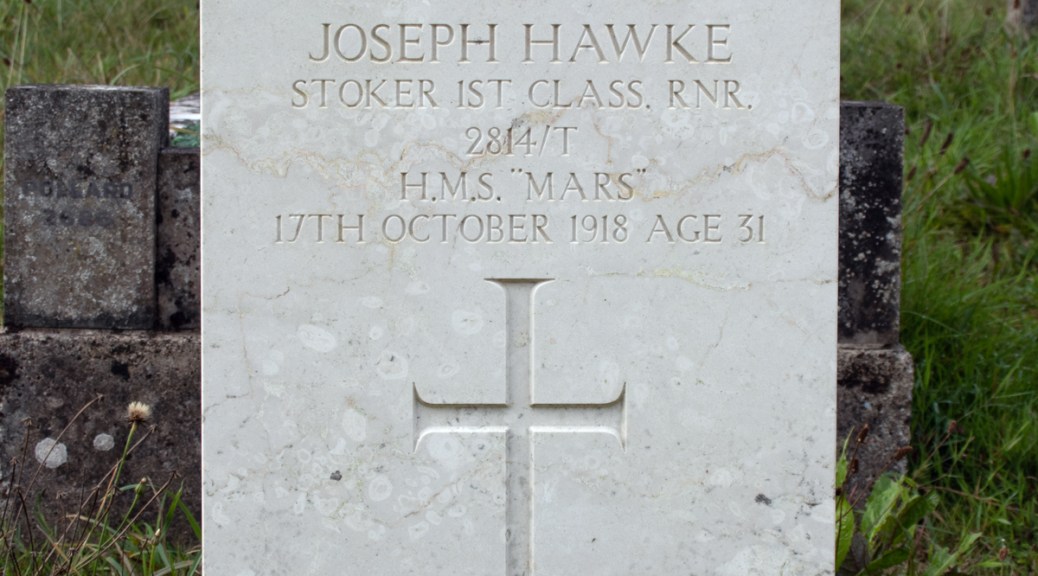
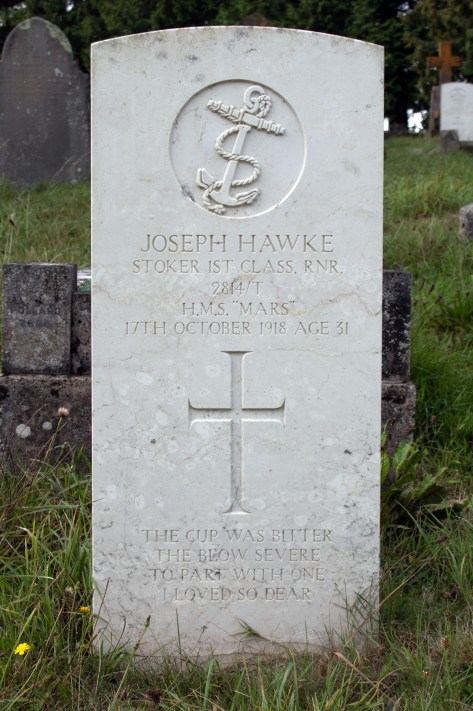
By the spring of 1918, Joseph’s health was struggling. He was medically dismissed from active service on 22nd May, and returned home to Paignton. His condition was to worsen, however, and on 17th October 1918 he passed away froma combination of dysentery and influenza. He was 31 year of age.
Joseph Hawke was laid to rest in Paignton’s sweeping cemetery, not far from his family home in Laura Terrace.
Jean Nellie Miles Walker was born in Hamilton, Tasmania, on 16th November 1878. Her parents were Arthur and Louisa Walker, and her surname moves from Walker to Miles-Walker, depending on the document. There is little information about Jean’s early life, but by 1906 she had taken up nursing.
When war broke out, Jean was quick to step up and help those who were fighting. Initially enlisting on 27th September 1914, she was assigned to a hospital ship a year later, arriving in Ismailia, Egypt, in January 1916.
Now a Sister in the Australian Army Nursing Service, Jean’s records shot the woman she had become. At 36 years of age, she was 5ft 10ins (1.78m) tall, and weighed 128lbs (58kg). She had dark brown hair, brown eyes and a dark complexion.
Over the next couple of years, Sister Walker moved to where she was needed. By September 1916 she was attached to the No. 15 General Hospital in Alexandria, by the end of the year saw her in the 3rd Australian Auxiliary Hospital in London. Jean’s service records note that she was mentioned in despatches on 1st October 1916, but there is no clarification about why she was recognised.
Jean was promoted to Matron in the summer of 1917, and over the next year, she spent time at hospitals in both Britain and France. By the autumn of 1918, she had moved to the No. 1 Australian General Hospital in Sutton Veny, Wiltshire. It was while based here that she fell ill, contracting a fatal combination of influenza and pneumonia.
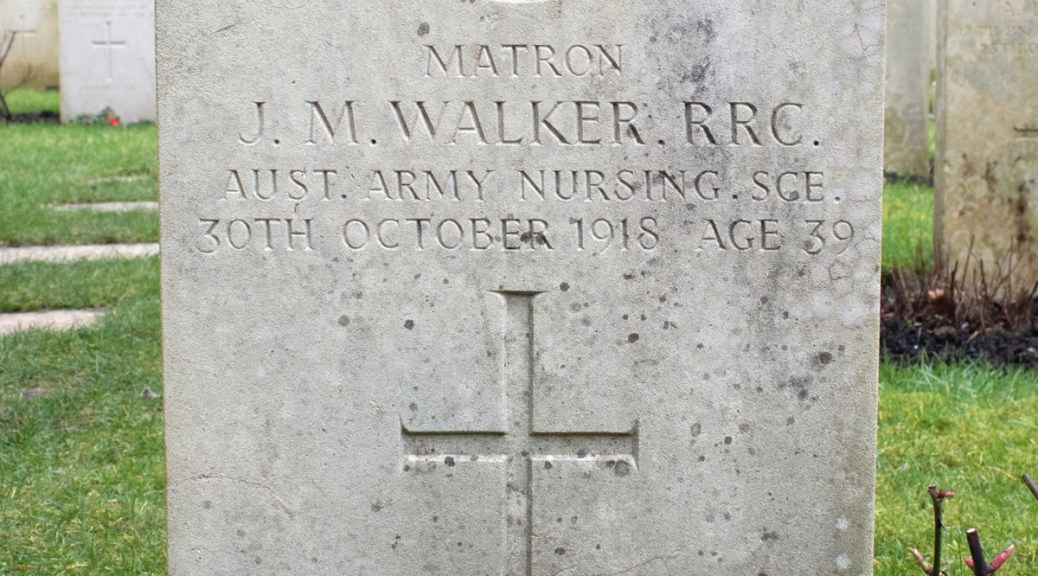
Sister Walker passed away in the Sisters’ Quarters on 30th October 1918. She was just a couple of weeks short of her 40th birthday.
Jean Nellie Miles Walker was laid to rest in the grounds of St John’s Church, Sutton Veny, close to the hospital in which she had served.
Robert Kennedy Grogan Graves was born on 1st January 1878. An announcement in the local newspaper confirmed that “at Baronne Court, County Tipperary, the wife of Lieutenant-Colonel W. Grogan Graves, 82nd Regiment, of a son (prematurely).” Robert was the older of two children, while his parents were William Graves, a Justice of the Peace in Ireland, and his wife, Georgianna Graves.
William died in 1890, and Georgianna moved the family to London. The 1891 census found her residing at the Golden Hotel in St Martin in the Fields, while her two boys, Robert and his younger brother, Geoffrey, were boarding students at Francis Napier’s classics school on Shooter’s Hill Road in Kidbrooke, Kent.
Robert found his calling through education. He studied medicine, and by January 1896 he was a student at St George’s Hospital in Tooting, Surrey.
By 1906 Robert had set himself up in an infirmary on Southgate Street in Gloucester, Gloucestershire. That same year, he married Kathleen Schofield: the couple went on to have two children, Robert Jr in 1912, and Bernard the following year.
Graves, Robt. Kennedy Grogan, Scison Lodge, Clevedon, Somerset (Tel. 11 Y Clevedon) – MRCS, LRCP London 1904; (St Geo.); Hon, Med, Off. Clevedon Cott. Hosp.; Med. Off Mutual Insur. N.Y. & Clevedon Hydro. Estab.; late Sen. Ho. Surg. & Asst. Ho. Surg., & Surg. Gloucester Co. Infirm., & Asst. Med. Regist. & Obst. Clerk St Geo. Hosp.
[The Medical Directory, 1910]
Robert had set himself up well during his life. The 1911 census found him and Kathleen – who was better known by her middle name, Gladys – living in their 17-room house on Linden Road in Clevedon. They afforded themselves three servants, including a housemaid, a cook and a motor driver. By the outbreak of war, Robert has an entry in the town’s Kelly’s Directory, and seemed to be a focal member of the community, joining the local Grand Lodge in September 1908.
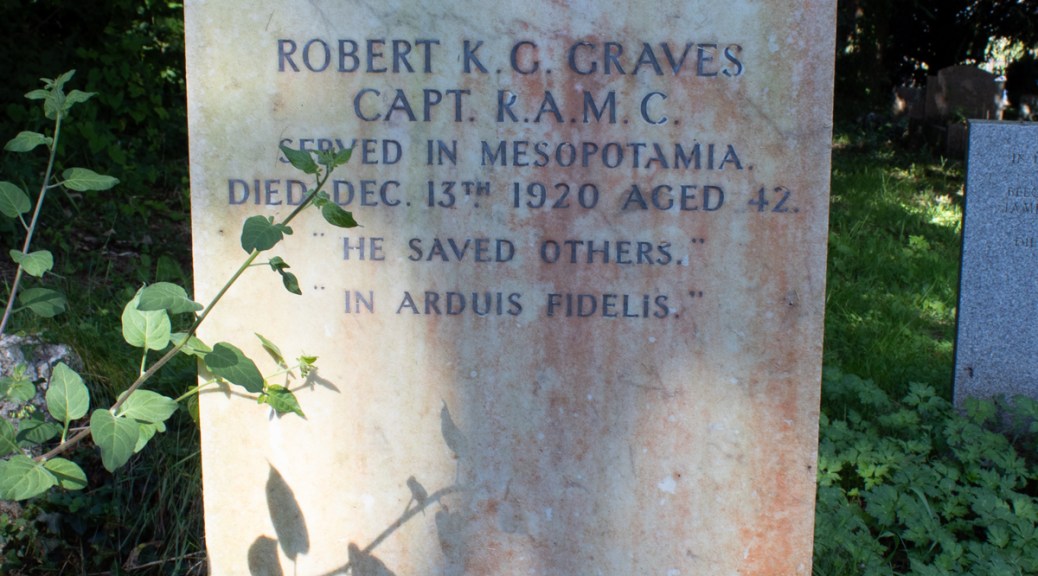
Robert’s time in the army, is hard to piece together. He joined the Royal Army Medical Corps as a Captain, and appears to have been connected to the air force. His headstone suggests that he served in Mesopotamia, but when and exactly where, however, is lost to time.
After the war, Robert returned to Britain. Leaving the Somerset coast, however, he and Kathleen appear to have set themselves up in Dorset. He died, through causes not detailed, on 12th December 1920, at 42 years of age. His entry on the probate register states:
GRAVES Robert Kennedy Grogan of 1 Charnwood Chambers Seabourne-road West Southbourne Hampshire died 12 December 1920 at The Grange Buckfastleigh Devonshire…
It is unclear whether Charnwood Chambers was his working address, with The Grange being the family’s official home, or if Buckfastleigh served as a place of convalescence.
Robert Kennedy Grogan Graves left an estate totalling £370 14s 7d (approximately £21,100 today) to Kathleen. He was buried in the graveyard of Holy Trinity church, Buckfastleigh.
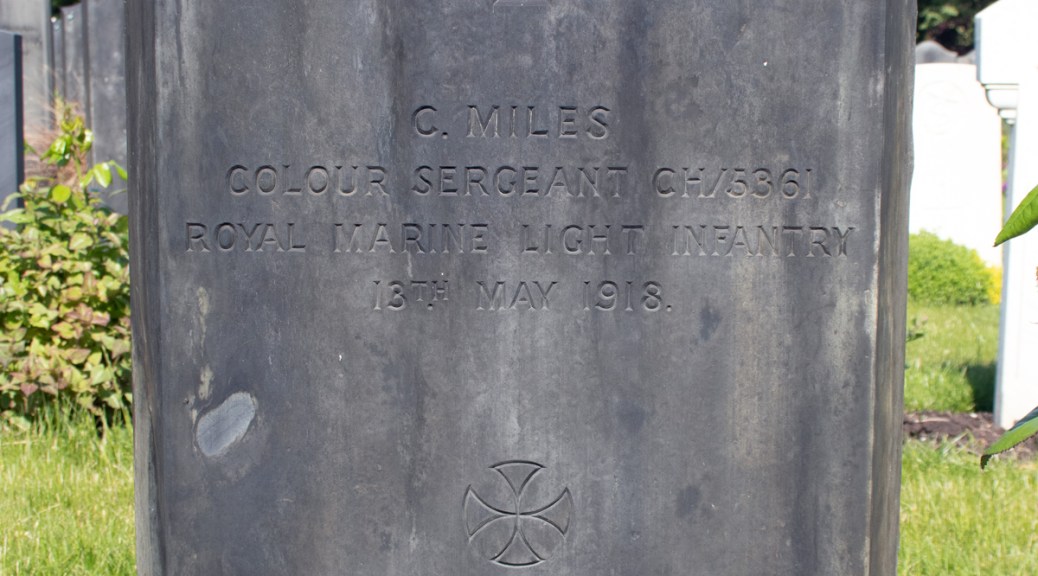
The early life of Charles Miles, whose body lies at rest in the Woodlands Cemetery in Gillingham, Kent, is a challenge to unpick, and the starting point is the last document relating to him.
His military Pension Ledger confirms that he died on 13th May 1918, from empyema, a bacterial infection affecting the lungs. The document cites his next-of-kin as Miss Hilda Miles, of 15 St John’s Road in Gillingham. She is noted as being the guardian of two children – Ada, born in 1905, and George, born the following year – because their mother, Charles’ wife, had passed away on 30th May 1912.
An online search for Ada and George gives an entry in the 1911 census. This finds them as the youngest two of six children to Charles and Elizabeth Miles. The document also gives a clue about their future guardian, Hilda: she is their older sister.
The Miles family were living at 45 Commercial Street in Whitechapel, East London. Charles, at 39, was recorded as a Royal Marines Pensioner and schoolkeeper. His wife, Elizabeth, was assisting with this role, and the couple had two other surviving children, Charles Jr and Walter.
While it is still difficult to piece together Charles’ childhood, his Royal Marine service records do shed a little light onto it. Born in Hampstead on 23rd November 1871, he was working as an ironmonger’s assistant when he enlisted. He joined up on 23rd August 1889, the document showing that he was 5ft 6ins (1.68m) tall, with brown hair, grey eyes and a fresh complexion. He also had a tattoo on his right forearm.
Private Miles had joined up in London but, as with most Royal Marine recruits, he was sent to the base in Walmer, Kent, for his initial training. In the spring of 1890 he moved to the Royal Naval Dockyard in Chatham, Kent, and this would become his regular port for the remainder of his service.
Charles’ service proved to be a committed one. Over the next decade he would serve on five ships, and would rise through the ranks. In October 1894 he was promoted to Lance Corporal, making full Corporal less than a year later. On 1st January 1899 he was promoted to Sergeant, and by the start of 1908, he held the rank of Colour Sergeant. Formally stood down to reserve status on 22nd November 1910, he was noted as having a very good character.
Away from the service, there is no record for Charles and Elizabeth’s marriage. She had been born in Sheerness, Kent, and was a year younger than her husband. It is likely that they were married by 1897, as this is when their oldest child was born. The 1901 census recorded them living on Manor Street in Gillingham, but, once Charles had been stood down, the school keeper’s position in the East End came up.
When war broke out, Charles was called upon to play his part once more. He returned to Chatham, leaving his younger children in Hilda’s care. By September 1914 he had moved to HMS Victory, the Royal Naval Dockyard in Portsmouth, Hampshire, and he would remain there for the next eighteen months. His shore base and naval experience suggest that, at 43 years of age, his was more of a training or mentoring role, although there is nothing in his records to confirm this.
In February 1916, Colour Sergeant Miles returned once more to Chatham, and the naval base there would be his home for the next few years. He was admitted to the Royal Naval Hospital in the spring of 1918, and passed away from the infection on 13th May 1918. He was 46 years old.
Charles Miles was laid to rest in Woodlands Cemetery, Gillingham.
After their father’s death, the Miles siblings found their own way in life.
By the time of the 1921 census, Ada, now 16 years old, was working as a domestic servant for Henry Chapman, a ship’s surveyor, and his family. They were living at 73 Milton Street in Fleetwood, a short stroll from the Lancashire coast.
Hilda, into whose care Charles had given his youngest children, was now 22 years of age. She had married William Swift, a pattern maker for the Admiralty, in the summer of 1918. They would not have any children, and the 1921 census found the couple living at 15 Milner Road, Gillingham. She too was just a short walk from the shoreline, but was also within walking distance from the cemetery in which her father had been buried.
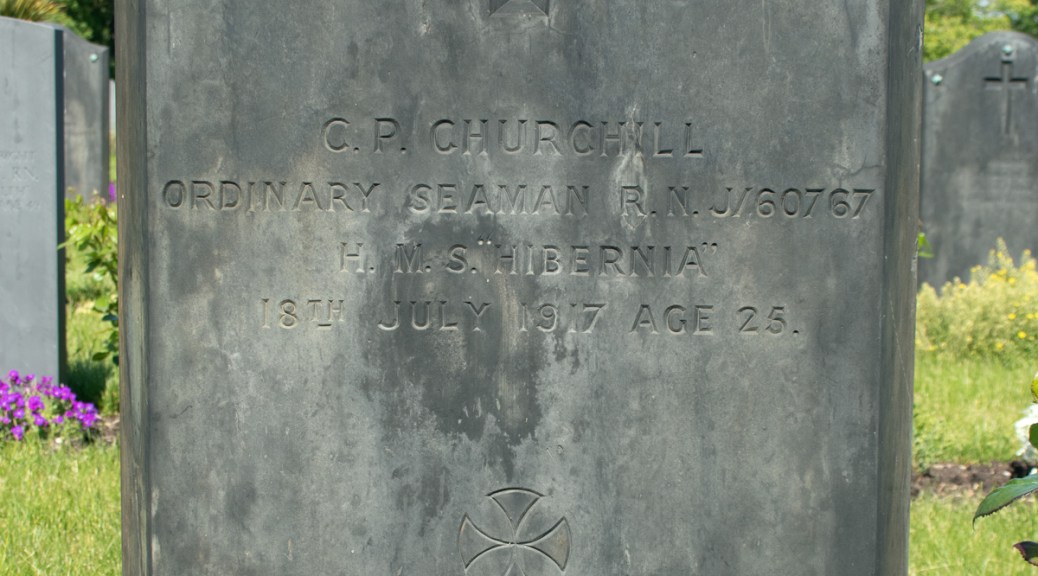
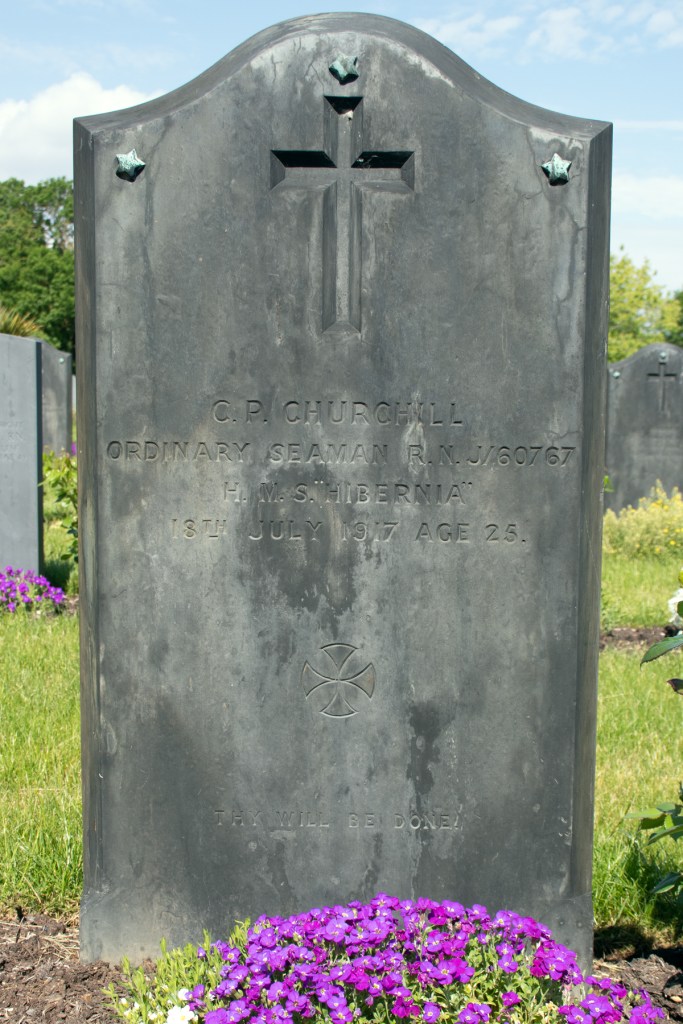
Charles Percival Churchill was born on 31st January 1892 in Marylebone, London. The oldest of three children, his parents were Charles and Annie Churchill.
Charles Sr was a farrier, and was 18 years his wife’s senior. When he died in 1904, at the age of 54, Annie got married again. At this point, Charles Jr found work as a houseboy to John and Florence Cassley-Whitaker, a couple living on their own means in Frinton-on-Sea, Essex.
When war came to Europe, Charles would be called upon to play his part. Conscripted in the autumn of 1916, he enlisted in the Royal Navy, and was given the rank of Ordinary Seaman. His service records show that he was 5ft 6.5ins (1.69m) tall, with brown hair, blue eyes and a dark complexion.
Ordinary Seaman Churchill was initially sent to HMS Pembroke, the Royal Naval Dockyard in Chatham, Kent, for training. He remained there until March 1917, when he was assigned to the battleship HMS Hibernia. Part of the Nore Command she helped patrol the Thames Estuary and protect the north Kent coast.
Charles’ time at sea was not to be a lengthy one. In July 1917 he was admitted to the Royal Naval Hospital in Chatham, Kent, having contracted anthrax. The condition was to ravage his body, and he died on 18th July: he was 25 years of age.
The body of Charles Percival Churchill was laid to rest in Woodlands Cemetery, Gillingham, Kent, not far from the naval base he had so briefly called home.
It was reported to the Chatham Town Council on Wednesday that a fatal case of anthrax had occurred at the Royal Naval Hospital. The deceased bought and used a cheap shaving brush from a shop in the borough, and a similar brush purchased at the same shop for experimental purposes was found at the Royal Naval Laboratory to contain a bacillus similar to the anthrax bacillus. The Medical Officer took possession of the whole of the stock of brushes and sent some to the County Council Laboratory and others to the Local Government Board for examination. Some of the brushes had been found to contain anthrax spores, and further tests were being made.
South Eastern Gazette: Tuesday 18th September 1917
While Ordinary Seaman Churchill’s name is not mentioned in the article, the severity of the condition, and the timing of the report would suggest that this was how Charles had met his fate.
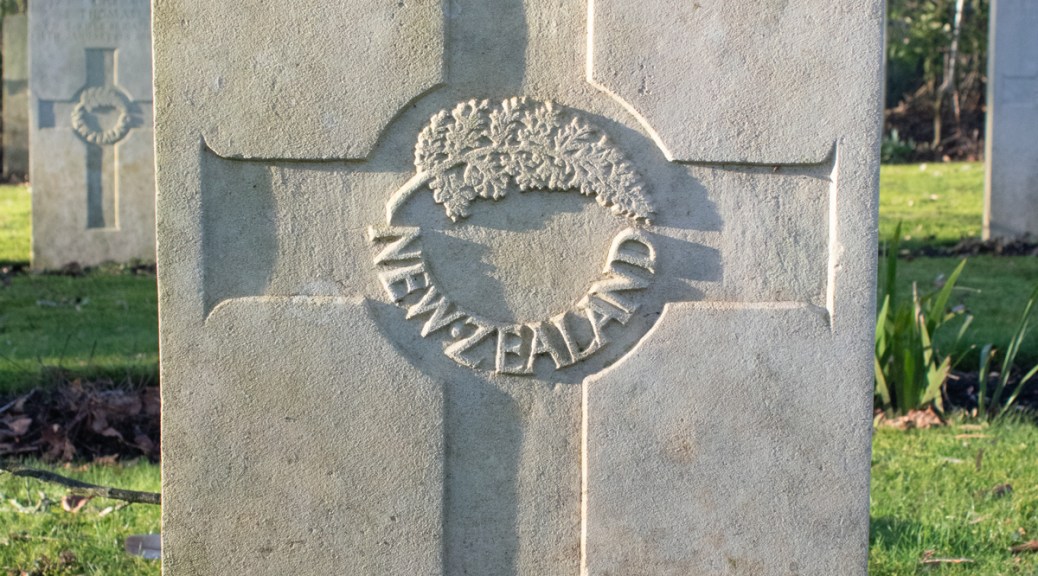
Francis Arthur Holland was born in Maryborough, Victoria, Australia, the fifth of seven children to Matthew and Elizabeth. Details of his early life are lost to time, although a later document confirms his date of birth as 19th July 1887.
Matthew died in 1901, and the New South Wales Police Gazette of 16th February 1910 included a request seeking a missing person:
Francis Arthur Holland, 22 years of age, 6feet high, about 13 stone weight, dark complexion; a sleeper-getter or labourer. Inquiry at the instance of his brother, James Holland, Bradshaw’s College, 250 Flinders-street, Melbourne, Victoria.
The 2nd March edition of the same publication noted that Francis had been found.
By 1916, Francis had moved to New Zealand, and was working as a bushman at the Grosvenor Hotel, New Plymouth. It was while here that he was called upon to serve in the war, and he enlisted on 29th June 1916 in Trentham, North Island. His service records confirm his height, and give his weight as 174lbs (78.9kg). It also noted that he had brown hair, hazel eyes and a fair complexion. He had a scar across the based of his right foot, and another on the left side of his throat.
Private Holland was assigned to the New Zealand Auckland Regiment, and his unit spend the next few months training. On 22nd September 1916, Francis was promoted to the rank of Lance Corporal, but reverted to his previous rank just a matter of weeks later. On 11th October, his unit boarded a ship and set sail for Europe.
Francis arrived in Plymouth, Devon, on 29th December, and set off for France just over a month later. His unit would serve on the Western Front, and, within a matter of months, Private Holland was admitted to field ambulance hospitals twice, for an undisclosed illness in May 1917, and a sprained ankle in June.
This second injury led to a transfer to Britain, and from here on in Francis’ health become more and more impacted. Admitted to hospital in London, he developed tonsillitis and, as he was recovering from this, he was moved again, this time to the ANZAC military camp near Codford, Wiltshire.
While in the camp hospital, it was determined that Private Holland was suffering from a heart infection, endocarditis. Sadly, his health had been tested to the limits by this point, and this was the condition to which he would succumb. Francis passed away on 6th September 1917, at the age of 30 years old.
Having been born in Australia, emigrated to New Zealand and fought on the Western Front, Francis Arthur Holland was now thousands of miles from wherever he might call home. He was laid to rest in the extension to St Mary’s Churchyard in Codford, not far from the camp in which he had spent his last days.
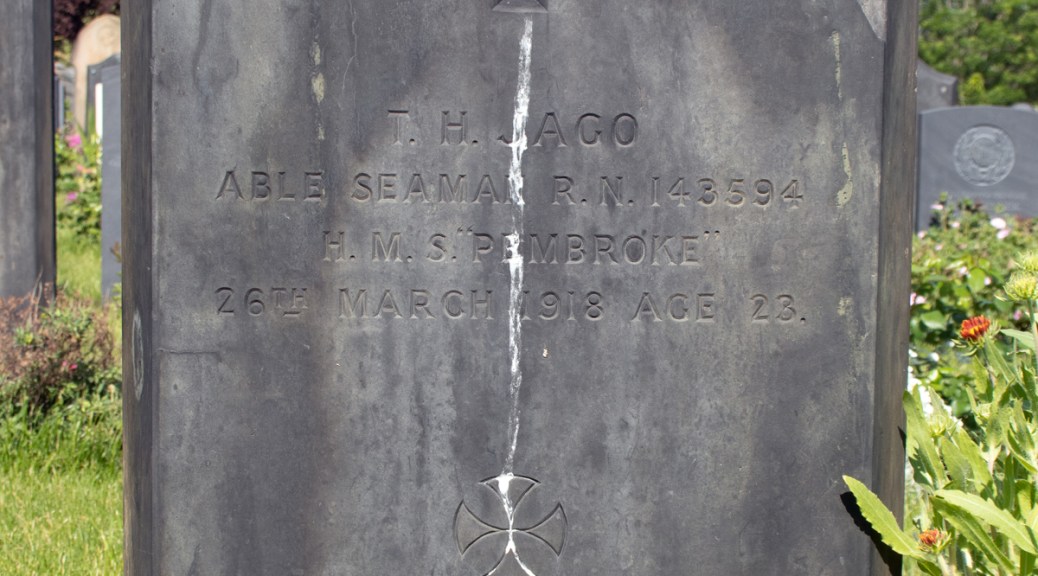
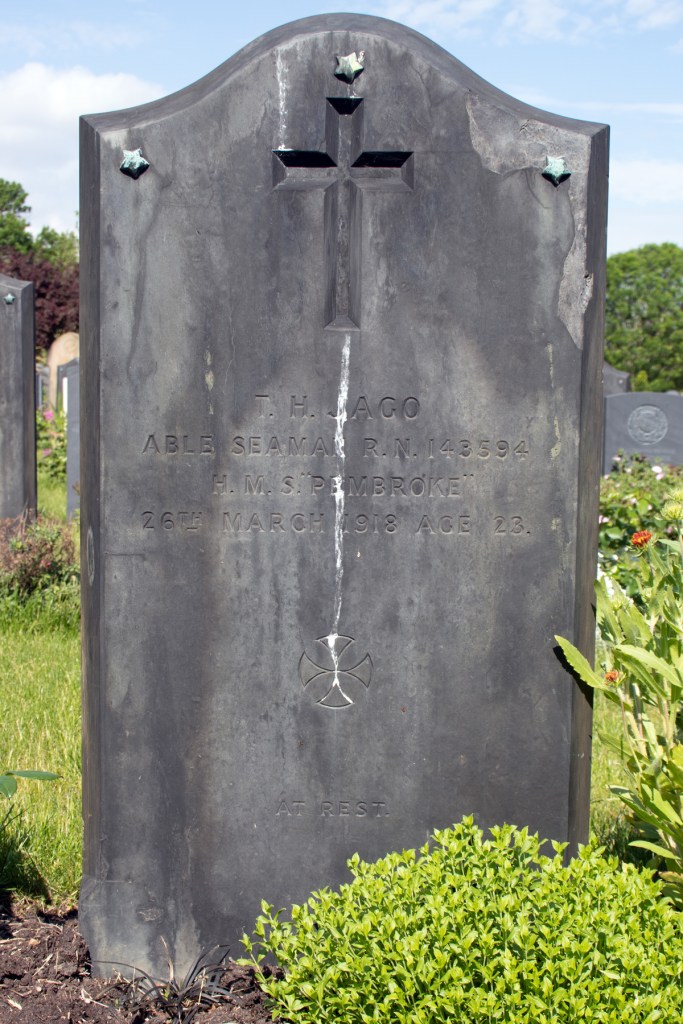
Thomas Henry Jago was born on 3rd June 1872 in Romney Marsh, Kent. The second of ten children, his parents were James and Elizabeth. James was a coastguardman, and his son was destined to be connected to the sea.
Thomas joined the Royal Navy on 19th December 1887. Given the rank of Boy 2nd Class, his records show that he was just 5ft (1.52m) tall, with dark brown hair, grey eyes and a fresh complexion. He was sent to HMS St Vincent, the training ship based in Haslar, Hampshire, and would remain there until June 1889. During this time, he was promoted and given the new rank of Boy 1st Class.
Thomas’ first ocean assignment was on board the corvette HMS Active. She would be his home for the next three years. In June 1890 he came of age, and was formally inducted into the Royal Navy as an Ordinary Seaman. By November 1890, he had proved his worth again, and was promoted to Able Seaman.
Over the next seventeen years, Thomas would serve on 21 ships. Frustratingly, the dates on his service records become a little muddled as time goes on, but it was while he was on board the RMS Empress of India in the late 1890s that he was promoted to Leading Seaman, then Petty Officer 2nd Class and Petty Officer 1st Class, all within a matter of three years.
In March 1903 he was demoted to Petty Officer 2nd Class, but the higher rank was reinstated eighteen months later. In September 1907, while serving on HMS Magnificent, Thomas seems to have been in some sort of trouble. This resulted in the removal of his ranking, and he was downgraded to Able Seaman once more, a rank that he would then hold until the end of his naval career.
In between voyages, Able Seaman Jago would have a shore base to return back to. His most common port seems to have been Chatham, and HMS Pembroke, the town’s Royal Naval Dockyard, features on his records more and more as time goes by.
In June 1912, after 22 years of service, Thomas was stood down to reserve status. Over the next few years his trail goes cold, although a later document suggests that he had moved to Sandgate, Kent, where he was renting rooms at 18 High Street.
War was soon raging across the world, and Able Seaman Jago was called upon to serve again. Assigned to London’s HMS President in December 1915, he quickly returned to Chatham Dockyard again. Over the next couple of years, Thomas serves on two further ships – HMS Diligence and HMS Mars – but HMS Pembroke definitely became a home from home.
In February 1918, Able Seaman Jago returned to the Royal Naval Dockyard in Chatham one last time. He was unwell by this point, and was admitted to the the town’s Royal Naval Hospital for an operation on his mouth. Thomas was suffering from carcinoma of the tongue, and the condition was to prove fatal. He passed away on 26th March 1918, at the age of 45 years old.
Thomas Henry Jago was laid to rest in the naval section of Woodlands Cemetery in Gillingham, Kent, not far from the base he had called home for so many years.
George Constable was born in the summer of 1893 in Findon, West Sussex. His parents were Albert and Ruth Constable, and they had seven children: Ruth Jr, Thomas, Albert Jr, William, George, Arthur and Rachel.
There is little concrete information about George’s early life. The 1901 census found the Constable family living at 2 Mill Cottages in Findon, with George’s oldest brother, Thomas, helping his father’s gardening work.
When war came to Europe, George and his older brothers stepped up to play their part. Thomas joined the Dorsetshire Regiment and worked his way to the rank of Lance Corporal. His time in service was to be tragically brief, however. He was killed in France on 26th October 1914, aged 27 years old. He is commemorated on both the Le Touret Memorial, and on the headstone to the family ploy in St John the Baptist Churchyard, Findon.
George also joined the Dorsetshire Regiment and, like his brother, was assigned to the 1st Battalion. During his short time with the regiment – he enlisted no later than October 1914 – he rose through the ranks, and, by the spring of 1915, had been promoted to Serjeant.
Sent to France, George was wounded in April 1915, and medically evacuated to Britain for treatment. He was admitted to the 1st London General Hospital, but his injuries were to prove too severe. He passed away on 5th April 1915 aged just 21.
Albert and Ruth had lost two of their sons to the conflict within six months. While Thomas’ body lay in France, George was brought back to Sussex for burial.
George Constable was buried in the family plot in the graveyard of St John the Baptist Church, Findon.
William Constable was assigned to the Royal Sussex Regiment when he enlisted. He too rose through the ranks, and would take on the role of Serjeant, like his younger brother. His unit, the 2nd Battalion, fought at Loos in the autumn of 1915, and this is where William would be killed. He died on 25th September 1915, aged just 23 years old.
Serjeant Constable is commemorated on the Loos Memorial, while Albert and Ruth, having now lost three sons within a year, added his name to the family headstone.
Albert Constable Jr, was also involved in the conflict. Along with George and Thomas, he had joined the 1st Battalion of the Devonshire Regiment, but unlike his brothers, he survived the horrors of the Western Front.
By the last months of the war, Lance Corporal Constable was caught on in the Battles of the Hindenburg Line, and, tragically, he too was killed. Albert passed away on 15th September 1918, at the age of 29 years old. He was buried in Cologne Southern Cemetery, Germany.
By this point, the face of the family headstone was already full with commemorations to his three brothers, Albert is remembered in lettering around the edge of the grave marker.
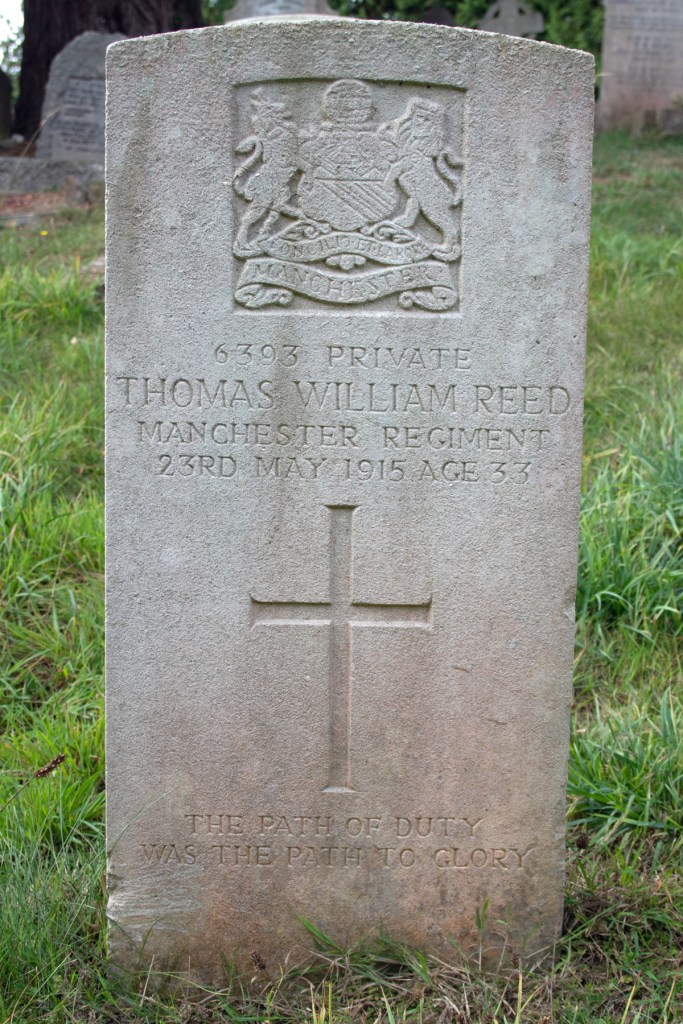
Thomas William Reed was born in 1883 and was one of nine children to George and Catherine. George was a general labour and he and his wife were born in Alton, Hampshire. It was in South London, however, that they raised their family.
Thomas found work as a house painter when he completed his schooling. The 1911 census recorded him as being the only one of his siblings still living in the family home, 16 Valentine Row in Blackfriars.
When war came to Europe, Thomas stepped up to play his part. Full service records have been lost to time, but from what remains it is clear that he had enlisted in the army in the opening months of the conflict. Private Reed was assigned to the Manchester Regiment and, as part of the 2nd Battalion, would have quickly found himself on the Western Front.
Thomas’ time in the army was to be tragically brief. By the spring of 1915 he was back in Britain, hospitalised in Devon with nephritis, or inflamed kidneys. His condition worsened, and he passed away on 23rd May: he was 32 years of age.
Thomas William Reed was laid to rest in Paignton Cemetery, not far from the Devon hospital in which he had breathed his last.










 Death and Service