Tag Archives: wounded

Company Sergeant Major George Mote

Company Sergeant Major George Mote

George Arthur Mote was born on the 25th August 1888 in Islington, Middlesex. The oldest of three children, his parents were Arthur and Norah Mote. The 1891 census recorded Arthur as a shoemaker’s finishing ink maker and the family had taken rooms at 45 Wyatt Road in Islington.

The next census return, taken in 1901, found that Arthur had been promoted, and was now a foreman or a leather dyer. The family had moved around the corner from the old address, and were living in rooms at 193 Blackstock Road.

At this point, George’s trail goes cold. By the autumn of 1914, he had emigrated to Canada, and was working as a corset cutter in Quebec. With war having broken out in Europe, it was here that he enlisted to serve his empire.

Goegre’s service records confirm the young man he had become. Standing 5ft 8ins (1.72m) tall, he had black hair, blue eyes and a dark complexion. A number of scars were also noted on his left forearm, the middle finger of his right hand, and on the left side of his neck.

While back in Britain, George had volunteered for the Middlesex Regiment, and this experience stood him in good stead, as he enlisted with the rank of Sergeant.

Attached to the 3rd Battalion of the Canadian Infantry, Sergeant Mote arrived in St Nazaire, France, on 11th February 1915. His unit was thrown into the deep end from the start, and George’s actions at the Second Battle of Ypres that spring won him the DCM. By the autumn, he had been promoted to Company Sergeant Major.

George continued to serve on the Western Front, but his luck was to change. On 5th June 1916, he was badly injured, receiving gunshot wounds to his right shoulder and back. Medically evacuated to Britain, he was admitted to Fort Pitt Hospital in Chatham, Kent. His medical records noted than he was paralysed, and, in October 1916, he was transferred to the Duchess of Connaught Hospital in Taplow, Berkshire.

Company Sergeant Major Mote spent the next four months admitted to the hospital, but his wounds would prove too severe to overcome. He passed away on 6th February 1917 at the age of 28 years old.

George Arthur Mote’s body was taken back to Middlesex for burial. He was laid to rest in the majestic Highgate Cemetery.


Second Lieutenant Dudley Weedon

Second Lieutenant Dudley Weedon

Dudley Harry Weedon was born in Islington, Middlesex in the spring of 1891. The second of two children, his parents were solicitor’s clerk Thomas Weedon and his wife, Frances.

When Dudley finished his schooling, he also found work as a clerk. The 1911 census recorded the Weedon family living at a prestigious address – an eight roomed Victorian villa at 59 Canonbury Park North, Islington. Thomas was still employed as a solicitor’s clerk, Dudley as a clerk for a corn merchant, and his older brother, Horace, as a clerk for a mining company.

War came to Europe in the summer of 1914, and Dudley was keen to step up and play his part. He enlisted early on, joining the 1st/2nd County of London Yeomanry, also known as the Westminster Dragoons. The regiment spent most of the war in the Middle East, and by November 1914, Private Weedon found himself in Egypt.

Dudley would spend the next year or so overseas, and was sent to, and evacuated from, Gallipoli. In February 1916, he received a promotion – to the rank of Second Lieutenant – this increase in rank coming with a transfer to the Northumberland Fusiliers. His new unit – the 8th (Service) Battalion – had also served in the Dardanelles, but by that summer they had moved to France.

Second Lieutenant Weedon spent the next eighteen months on the Western Front, fighting at Messines and at Ypres. It was here, possibly at the Battle of Polygon Wood, that Dudley was injured. Details are unclear, but his wounds were sever enough for him to be medically evacuated to Britain for treatment.

Dudley was admitted to a hospital in Roehampton, Surrey, but his injuries were to prove too severe. He passed away on 20th November 1917, at the age of 26 years old.

Dudley Harry Weedon was laid to rest in Highgate Cemetery, not far from his grieving family’s home.


Lieutenant Thomas Prior

Lieutenant Thomas Prior

Thomas Ashley Prior was born in Islington, Middlesex, at the start of 1886. The third of seven children, he was the only son to Thomas and Ellen Prior. Thomas Sr was a colonial produce broker agent and, at the time of the 1891 census, the family were living in rooms at 115 Sussex Road.

Over the following years, the family lived together, but moved homes. By 1901 they were living at 1 Blythwood Road, Islington; ten years later they had set up home at 10 Oakfield Road, Stroud Green. By this point Thomas Sr was listed as being a rubber broker. Four of the children were employed in respectable trades: Thomas Jr as a bullion refiner’s clerk, his older sisters as a paper merchant’s clerk and a saleswoman for the court dressmaker. The youngest employed sibling, 22 year old Margaret, was also a clerk, for an estate agent. The family had a live in servant, Alice Charles, supporting them.

War rose its ugly head in 1914, and Thomas Jr stepped up to play his part. He was already a volunteer in army and, as a later military history confirms, he threw himself into a more permanent role:

PRIOR, THOMAS ASHLEY. Enlisted 1909. Served continuously and went to France with 1st Batt. Nov. 1914-May 1915 (wounded). 2nd Lieut. 28/9/15. Served in France again with 1st Batt. March-June 1916 and Nov. 1916-June 1918. Lieut. 1917. Sports. Member of Brighton March and Marathon Teams. Died 1921.

[The History of The London Rifle Brigade 1859-1919]

Thomas’ regiment – the London Rifle Brigade – was actually the 5th Battalion of the London Regiment. Based on his unit’s time abroad, it is likely what Thomas was wounded at Ypres – possibly during the Battle of St Julien. On his return to the front, he would have fought at Arras and Ypres in 1917, and at the Somme (Arras) the following year.

Lieutenant Prior’s return to Britain is not documented. HIs mother, Ellen, had died in 1912, and his father followed in 1918. The London City Directory for 1920 recorded him as living at 8 Oakfield Road, a double-fronted Victorian terrace within sight of Finsbury Park.

Thomas Ashley Prior died on 10th February 1921. Just 34 years of age, the cause of his passing is not clear. He was laid to rest in Highgate Cemetery, not far from his last recorded address.


Private Frank Belthle

Private Frank Belthle

Frank Hermann Belthle was born in Dartford, Kent, on 25th June 1893. The oldest of four children, his parents were German-born Frederick Emil Hermann Belthle and his wife Elizabeth, who came from Surrey.

Frederick – who was better known as Hermann – was a manufacturer compressed tablets and pills. By the time of the 1901 census, he had moved his family to Aldrington, Sussex, were the set up home at 58 Westbourne Street. They had the house to themselves, unlike their neighbours, with two or three families sharing each property.

Hermann took the family to where work required him, and between 1903 – when Frank’s youngest sibling was born – and 1911, they relocated to London. Now seventeen years old, Frank was assisting his father in the business, and that business was obviously paying dividend: the Belthles’ new home was the 8-roomed house at 106 Barnsbury Road, Islington. Again, they occupied the whole building, while others in the street renting just a couple of rooms.

The outbreak of war must have had an impact on German national Hermann and his family. Frank looks to have stepped up to play his part, however, joining the Royal Army Medical Corps, possibly because of the medical training he had picked up through the family business.

There is little documentation about Private Belthle service, although he was awarded the Military Medal. By the summer of 1917, his unit – the 14th Field Ambulance – was supporting troops at Arras. While here, on 9th May, he was badly wounded, and medically evacuated to Britain for treatment. His injuries were to prove too severe, however, and, on 25th June 1917, he passed away: it was his 24th birthday.

Frank Belthle was laid to rest in the majestic Highgate Cemetery.


After the war, Hermann continued with his business. Things were more difficult for the family, however and, while they had moved to the prestigious Lonsdale Square, Islington, they were one of six families taking rooms in the large Georgian terrace.

Hermann passed away in the autumn of 1932, at the age of 70: he was laid to rest alongside his son in Highgate Cemetery.


Lance Corporal William King

Lance Corporal William King

William James King was born on 7th March 1883 in Kensington, Middlesex. He was the fourth of eight children to bricklayer and builder’s labourer John King and his wife, Hannah.

There is little specific information available about William’s early life. The 1891 census found the family living at 16 Burlington Mews in Paddington, but he does not appear on any census returns after this date.

On 4th August 1906, William married Marion Oliver. Born in Chelsea, she was the daughter of a house painter, and the couple exchanged vows in St Luke’s Church, Paddington. The marriage certificate noted William’s trade as a bricklayer, and the couple went on to have two children: daughter Gwendoline, born in 1911, and son Henry, born two years later.

When war came to Europe, William was quick to step up and play his part. He enlisted on 5th October 1914, joining the Royal Marines. His service records show that he was 5ft 4ins (1,62m) tall, with brown hair, grey eyes and a fresh complexion.

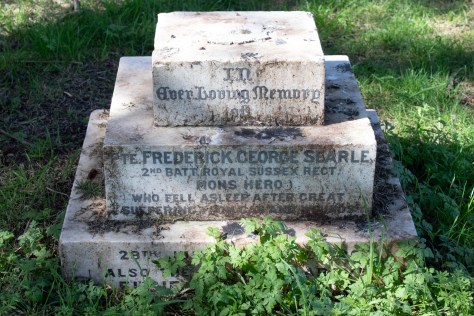
Sent to Deal, Kent for training, Private King was initially assigned to the 2nd Field Company of the Mediterranean Expeditionary Force. Appointed to the rank of Lance Corporal he soon found himself ensconced at Gallipoli. On 15th May he was medically evacuated to Britain with an injury to his spinal cord. Admitted to Charing Cross Hospital, London, he was discharged from the army on 27th March 1916.

William’s treatment was ongoing, and by the autumn of 1916, he had been admitted to Gillingham Hospital in Kent. It was here that he would died, passing away on 20th November: he was 33 years of age.

William John King was laid to rest in Woodlands Cemetery, Gillingham, Kent.


Serjeant George Bailey

Serjeant George Bailey

George Grove Bailey was born towards the end of 1873, in the Hampshire town of Lymington. He was the second of two children to John and Emma Bailey. John was a butler, but when Emma died when their youngest boy was just two years old, he seems to have changed career. The 1881 census found the family living at 45 High Street, Lymington, not far from the school and the Church of St Thomas the Apostle.

While he had the support of domestic servant Mary Ann, John was still young and, in 1884, he married again. His new bride was Sarah Woodman, and the couple would go on to have a daughter, Edith, two years later.

George falls off the radar at this point, and it is only from a newspaper report of his funeral in June 1918 that we are able to fill in some of the details:

The funeral took place on Monday afternoon of Sergt. George Bailey, youngest son of Mr John Bailey, of Highfield, Lymington, who passed away in the military hospital at Brighton, following a short illness. The deceased, who was 45 years of age, and was recently married, served in the South African War, and joined up at the commencement of the present war, being for some twelve months in the Fusiliers at the front. He was wounded, and since his return to this country has been acting as sergt.-instructor.

[Hampshire Advertiser: Saturday 15th June 1918]

George’s new wife was Winifred Mary Bailey, but there is little additional information about her. His regiment – the 5th Battalion of the Royal Fusiliers – was based on home soil, and would not have been the unit with which he had served on the Western Front. It’s not possible, therefore, to determine where he fought, or how he was wounded.

George Grove Bailey was buried in the family plot in the graveyard of St Thomas’ Church, Lymington, not far from where his father’s shop had been. John, who had been working as a poor rate collector, died a year after his son, and was laid to rest alongside his wife and youngest child.


Serjeant James Barrington

Serjeant James Barrington

James Barrington was born in Westminster, Middlesex, on 1st June 1890. One of twelve children, his parents were Alfred and Hetty Barrington. Alfred worked in a soap factory, and the family seemed to move around: the 1891 census found them living in rooms at 3 Charles Buildings, St Martin-in-the Fields, while a decade later there were at 6 Lyric Place in Kennington, Surrey.

With so many mouths to feed, Alfred and Hetty were keen to get their children to work. The 1911 census found James working as a cowman on a farm in Mathry, Pembrokeshire, which must have come as a huge culture shock.

James soon settled in, however, and, on 9th November 1912, he married Elizabeth Thomas, the daughter of a labourer from nearby. The couple had a daughter, Hilda, who was born the following February.

When war broke out, James was called upon to play his part. There is little concrete information about his service, but he was assigned to the Welch Regiment, as was attached to the 18th (Service) Battalion (2nd Glamorgan). He had attained the rank of Sergeant by the summer of 1917.

Sergeant Barrington’s unit fought in some of the key battles of the early stages of the conflict, including the Battle of the Ancre in 1916, and the German retreat to the Hindenburg Line the following spring. It was during fighting on the Western Front that summer, though, that he was wounded, and medically evacuated to Britain for treatment.

James was admitted to a hospital in London, but his wounds would prove too severe: he passed away on 31st August 1917, at the age of 27 years old.

The body of James Barrington was taken back to Wales for burial. He was laid to rest in Mathry Church Cemetery, not far from where his widow still lived.


Private Robert Fisher

Private Robert Fisher

Robert Fisher was born on 12th September 1888 in Lyndhurst, Hampshire. He was the sixth of eight children to James and Sarah Fisher. James was a coachman, and the family lived on Pike’s Hill, to the north of the town centre.

James died in 1901, and Robert remained at home to support his mother and two younger sisters. The 1911 census found the family living in the same four-roomed cottage on Pike’s Hill: Robert was employed as a mail driver, while his sister Kathleen worked as a domestic servant. The family also had a lodger, William Penny, to help bring in some extra money.

When war broke out, Robert stepped up to play his part. His service documentation has been lost, but it is clear that he enlisted in the opening weeks of the conflict, and was assigned to the 1st Battalion of the Hampshire Regiment. As proof of a quick turnaround for these new recruits, Private Fisher found himself in France by mid-November 1914.

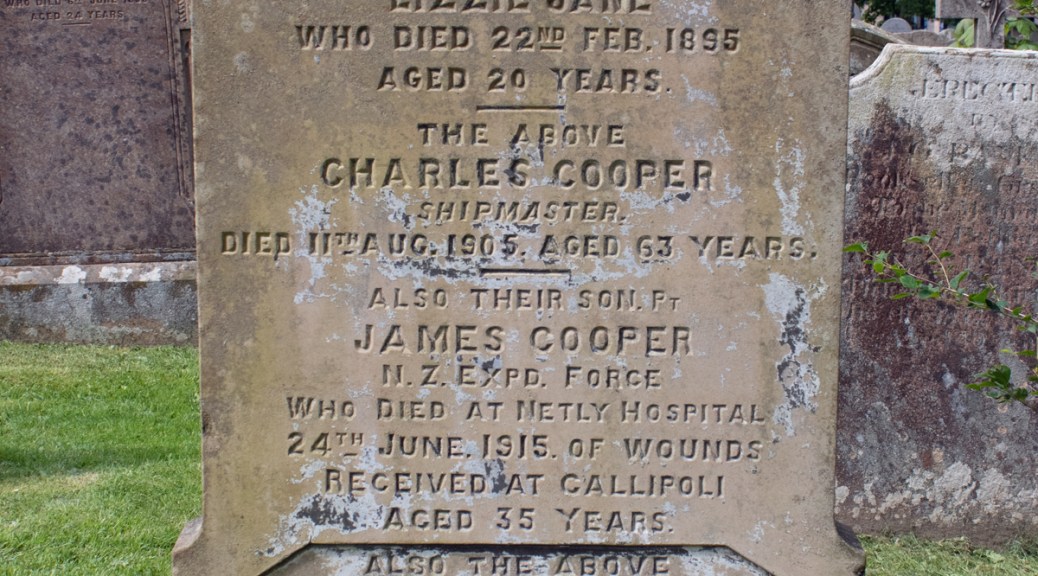
Fighting on the Western Front near Armentières, Private Fisher was wounded on 3rd December 1914. He was medically evacuated to Britain for treatment, and admitted to Netley Hospital near Southampton, Hampshire. He had been “struck in no less than seven places by shrapnel.” [Hampshire Independent: Saturday 3rd July 1915]

Eventually well enough to return home, by June 1915, Robert’s health had deteriorated. He contracted meningitis, and was admitted to the Isolation Hospital back in Southampton. The condition would ultimately prove fatal and Private Fisher passed away on 20th June 1915: he was 26 years of age.

Robert Fisher was laid to rest in the family plot in Lyndhurst Cemetery, alongside his father, and not far from where his grieving mother still lived.


Rifleman William McMullan

Rifleman William McMullan

William McMullan was born in Okaihau, on New Zealand’s North Island, on 10th May 1896. One of three children, his parents were James and Rose McMullan.

There is little concrete information about William’s early life. By the beginning of 1916, he was working as a bushman and volunteering for the local militia. The First World War provided an opportunity to put his skills to use, and he enlisted in the New Zealand Rifle Brigade on 15th January 1916.

Rifleman McMullan’s service records show that, at 19 years and 8 months of age, he was 6ft (1.83m) tall and weighed 12st 6lbs (79kg). A Roman Catholic, he had brown hair, blue-grey eyes and a medium-dark complexion.

William left New Zealand in May 1916, bound for Britain. The journey took ten weeks and, after disembarking in Devonport, Devon, his unit marched to Sling Camp, near Bulford, Wiltshire, arriving there on 29th July. Just a few weeks later, however, Rifleman McMullan was on the move again, and he found himself on the Western Front towards the end of September.

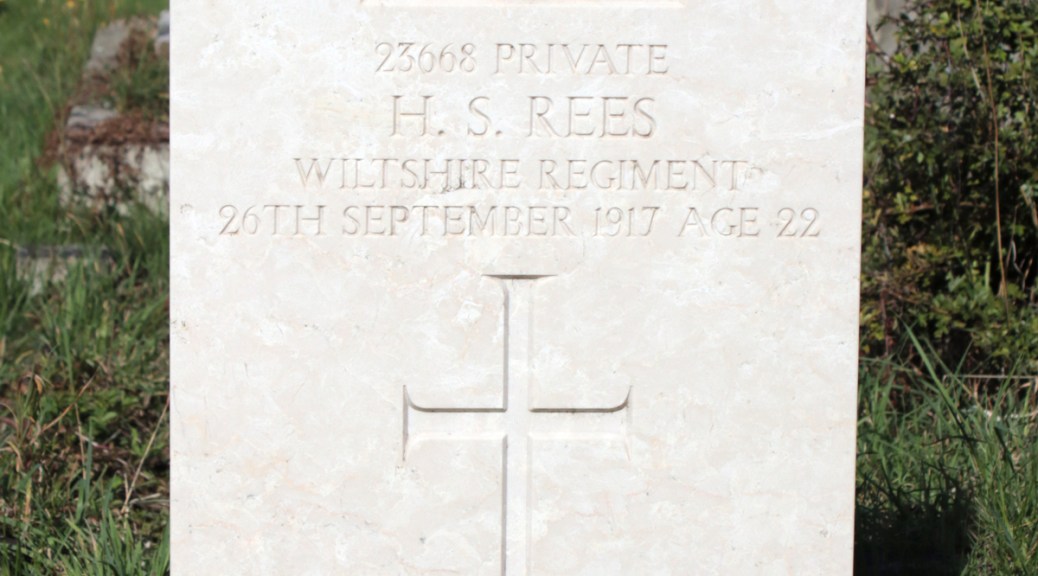
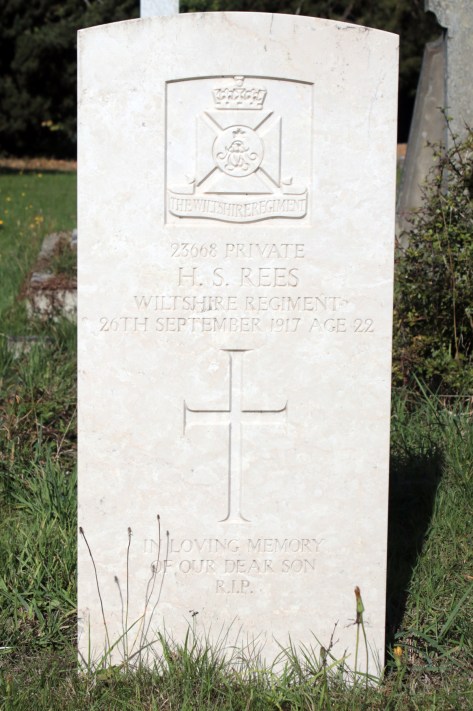
On 16th November 1916, while fighting at the Somme, Rifleman McMullan received a gunshot wound to his thigh. A blighty wound, it saw him medically evacuated to Britain for treatment, and he was admitted to the No. 1 New Zealand General Hospital in Brockenhurst, Hampshire. A few weeks later, he was moved to Codford, Wiltshire, for recuperation at the No. 3 NZ General Hospital.

William would spend the next few weeks in Wiltshire, but after initially being discharged from hospital, he was re-admitted on 25th January 1917. He had contracted broncho-pneumonia, and this would be the condition to which he would succumb. Private McMullan passed away on 13th February, at the age of just 20 years old.

Thousands of miles away from home, William McMullan was laid to rest in the ANZAC extension to St Mary’s Churchyard in Codford, close to the camp he had most recently called home.


Private Job Jefferies

Private Job Jefferies

Job Jefferies was born on 12th October 1889 in the city of Timaru, on New Zealand’s South Island. The sixth of ten children, his parents were William and Ada Jefferies.

There is little information available about Job’s early life, but by the time war broke out, he had moved to Kongahu, at the northern tip of South Island. He was working as a labourer, and was employed by the Public Works Department.

Job was quick to step up and serve his country. He enlisted in the New Zealand Infantry on 12th February 1915, and was assigned to the Canterbury Regiment. His service records confirm that he was 5ft 10.75ins (1.79m) tall, and weighed 170lbs (77.1kg).

Private Jefferies left New Zealand in the summer of 1915, and his service record makes for grim reading.

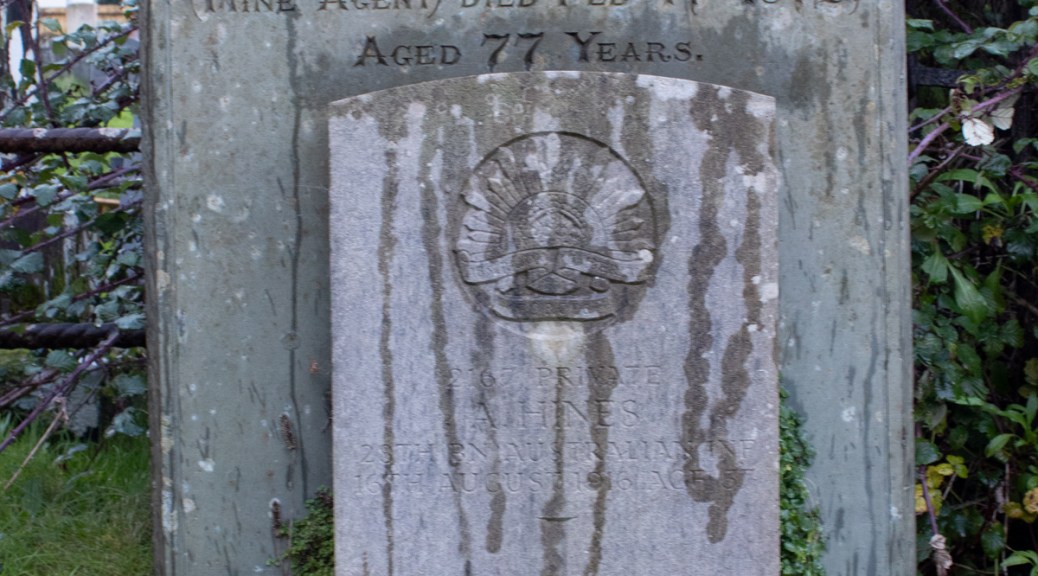
On 9th August 1915, Job’s unit arrived in the Dardanelles, and he was firmly entrenched in the fighting at Gallipoli. Wounded on 5th September, he was initially treated at a casualty clearing station, before being medically evacuated first to Malta, then to Britain. He was admitted to the No. 2 Western General Hospital in Manchester, Lancashire, and would spend the next seven months there.

On 12th May 1916, Private Jefferies was on the move, leaving his base in Hornchurch, Essex, for the Western Front. He re-joined his unit on 7th July, but just nine days later was wounded at the Somme. Medically evacuated to Britain again, he spent the next couple of months being moved between hospitals. Discharged back to base in Hornchurch, Essex at the end of September, he would spend the next four months recuperating once more.

By February 1917, it would seem that Private Jefferies had been moved to Sling Camp near Bulford, Wiltshire. While there, he fell ill, and was admitted to the No. 3 New Zealand General Hospital in nearby Codford. He was suffering from pneumonia, and this time his body could take no more. Job passed away on 7th February 1917: he was 27 years of age.

Job Jefferies was laid to rest alongside his fellow soldiers in the ANZAC extension to St Mary’s Churchyard, Codford.


Private Job Jefferies
(from findagrave.co.uk)