Category Archives: injury

Stoker Neil Moore

Leading Stoker Neil Moore

Neil Moore was born on 17th April 1882 in Glasgow, Lanarkshire. One of twelve children, he was the second son to John and Jane Moore. John was a cabinetmaker and, according to the 1891 census, the family lived in rooms at 13 Melville Street in the city’s Govan district.

Although little is known about Neil’s early life, his enlistment in the Royal Naval Reserve on 26th July 1904 offers the first clear insight into the young man he had become. His service papers describe him as twenty-two years old, 5 ft 4 in (1.63 m) tall, with grey eyes and fair hair.

Over the next decade, Stoker Moore travelled the world, taking in Canada and South America. There were times when he was out of work – he was recorded as seeking a job over the winter of 1912 – but generally his employment appears to have been steady.

Intriguingly, after a stint on the SS Sardinian, Neil left the Royal Naval Reserve on 17th November 1913. He was re-engaged on 17th December, but is then reported as having deserted just three days later. He was then recorded as being assigned to HMS Wildfire – a shore base in Northwood, Middlesex – on 3rd February 1914.

It is possible that it was around this time that Neil got married. His wife was called Elizabeth, but there is little further information about her.

When war broke out, Stoker Moore appears to have been formally mobilised once more. Over the next three years, he served on half-a-dozen vessels, before finally being attached to HMS Pembroke, the Royal Naval Dockyard in Chatham, Kent, in the spring of 1917.

Over the course of that summer, Pembroke was hit by two significant challenges. The battleship HMS Vanguard was sunk in Scapa Flow, leaving its planned replacement crew stuck in the Kent dockyard with nowhere to go. At the same time, a bout of spotted fever broke out and more space was needed to slow the transmission of the contagious disease.

Pembroke’s Drill Hall was brought into use as temporary accommodation, and this is where, in September 1917, Stoker Moore found himself billeted.

On the night of the 3rd September, the German air force carried out an audacious raid on North Kent. Four aircraft bombed Chatham, and two devices landed direct hits on the Drill Hall. The glass roof shattered, raining shards onto the sleeping men below. Stoker Moore was badly injured, and he was transported to the town’s Royal Naval Hospital for treatment. Sadly, this would prove ineffective, and Neil died from his injuries on 8th September 1917. He was 35 years of age.

The body of Neil Moore was taken back to Scotland for burial. He was laid to rest in St Kentigern’s Roman Catholic Cemetery, to the north of the city centre.


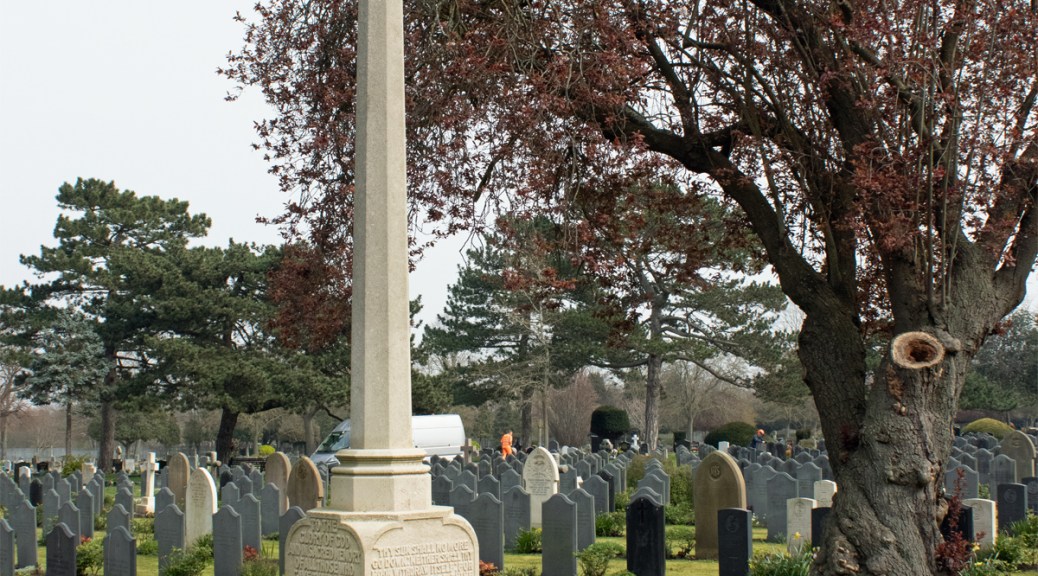
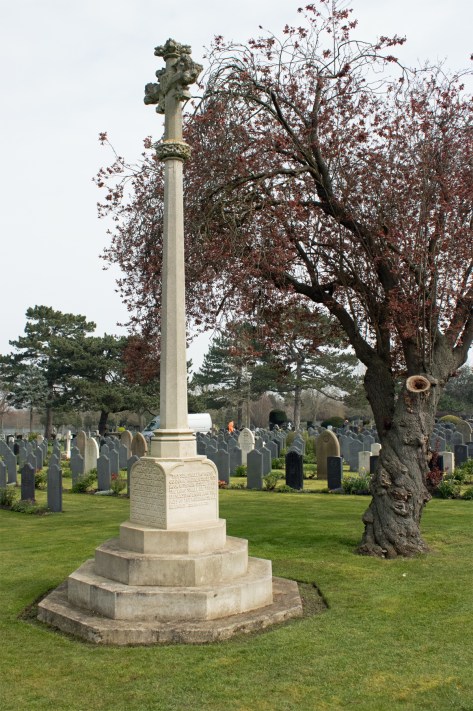
[Note: the photo above is of the memorial to the Chatham Air Raid victims, close to the mass grave for those whose bodies were not identified, in Woodlands Cemetery, Gillingham, Kent.]
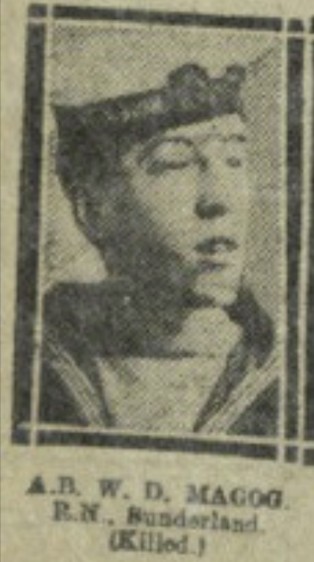

Able Seaman William Magog

Able Seaman William Magog

William Dowsey Magog was born on 23rd March 1898 in Sunderland, County Durham. He was the only child to William and Mary Magog. William Sr was a railway fireman who died when Mary was three months pregnant. He would never know his son, but William was named in his father’s honour.

With a baby to raise, Mary needed support and married for a second time in 1900. Her new husband was Thomas Gardner, who was employed as a chain testing labourer. The extended family set up home on Thomas Street, initially at No. 7, then moving to No. 19 by the time of the 1911 census. By this point, William had three half-siblings, Mary Jr, Elizabeth and Robert.

William followed his stepfather into factory work, taking a job as a moulder. However, he had his sights set on bigger and better things, and on 31st August 1913, he joined the Royal Navy. Too young for formally enlist at this stage, he was given the rank of Boy 2nd Class, and sent to HMS Ganges, the training base near Ipswich, Suffolk.

Boy Magog seemed to impress his seniors, and within nine months had been promoted to Boy 1st Class. He was given his first assignment, on board the cruiser HMS Grafton, in June 1914. That summer, as war broke out, he was sent to HMS Pembroke, the Royal Naval Dockyard in Chatham, Kent.

At the end of October 1914, William was transferred to the battleship HMS Dominion, and she would remain his home for the next three years. During this time, he came of age, and formally joined the Royal Navy. His service papers show that the he stood just 5ft 1/2in (1.54m) tall, and had brown hair, brown eyes and a fresh complexion.

The now Ordinary Seaman Magog was dedicated to his role, although his annual reviews noted a very good (or average) character and a satisfactory (again average) ability. He rose through the ranks, however, becoming an Able Seaman in April 1917.

During this time, Dominion patrolled the North Sea as part of the Third Battle Squadron. She was not involved in many of the major skirmishes of the First World War, although she did take part in the protection of Scarborough during the German raids of 1914, and the Battle of Dogger Bank just a few months later.

By the summer of 1917, Able Seaman Magog had returned to Chatham to await his next assignment. The dockyard was a particularly busy and overcrowded place by this point in the conflict: the sinking of HMS Vanguard had left its replacement crew with nowhere to go, and an outbreak of meningitis had meant that additional accommodation was needed to provide space in the cramped barracks. It was because of this that William found himself billeted in temporary barracks in the dockyard’s Drill Hall.

On the night of the 3rd September 1917, the German air force carried out an audacious night raid on the north Kent coast. The Drill Hall was hit by two bombs, shattering its glass roof, and killing dozens of men who were sleeping below. Able Seaman Magog was badly wounded, and was taken to the Royal Naval Hospital in Chatham. Tragically, his injuries would prove too severe, and he passed away two days after the bombing. He was just 19 years of age.

The body of William Dowsey Magog was taken back to County Durham for burial. He was laid to rest in Sunderland’s Ryhope Road Cemetery, just a few minutes’ walk from where Mary and the family were living.


Able Seaman William Magog
(from findagrave.com)

[Note: the photo above is of the memorial to the Chatham Air Raid victims, close to the mass grave for those whose bodies were not identified, in Woodlands Cemetery, Gillingham, Kent.]

Senior Reserve Attendant George Gilbert

Senior Reserve Attendant George Gilbert

The funeral took place at All Saints’ Cemetery, Jesmond Road, Newcastle, on Saturday, of Senior Sick Berth Reserve Attendant George Gilbert, of Portland Road, Newcastle, who was killed in the air raid on the South-East Coast on Monday last. The deceased, who was 53 years of age, was, prior to the outbreak of war, employed as a machine-man at Elswick Works, and was an active member of the St John Ambulance Brigade. When hostilities began he volunteered for service as a sick berth attendant in the Naval Division.

[Newcastle Journal: Monday 10th September 1917]

George Gilbert was born in 19th March 1866 in Birmingham, Warwickshire. One of five children, he was the oldest son to George and Mary Gilbert. George Sr was an engine fitter and, according to the 1881 census, the family lived at 42 Devonshire Street, to the north west of the city centre.

The next census, taken in 1891, found a change of circumstances for George Jr. Having moved to Leicester, he had found work as a boot finisher. He had also found love, and, in 1889, had married a woman called Ellen. Little information about her early life is available, but she had been born in Northampton: given that shoe-making was a key industry in the town, it is possible that the couple had met at work, although this is purely conjecture.

George was keen to support his family as best he could, and they moved to the Benwell area of Newcastle-on-Tyne. George found factory work, and the couple set up home at 64 Tyne Street. By the time of the 1901 census, Ellen had had two children, daughters Mabel and Lilian.

George’s career continued, and, as the newspaper report suggests, he took employment as an engine-man for the Elswick Ordnance Company. A munitions manufacturer, the factory was just a few minutes’ walk from where the Gilbert family had moved to, 30 Wellfield Road, Benwell. The 1911 census confirmed a third child, daughter Beatrice, who had been born in 1902. Ellen was now working, her occupation listed as a grocery dealer in her own account.

War broke out in the summer of 1914 and, despite his age, George was quick to step up and serve his country. Joining the Royal Naval Division on 2nd August, he took the role of Senior Reserve Attendant, and was assigned to the naval hospital in Chatham, Kent. His service records note that he was 5ft 9ins (1.75m) tall, with light hair, grey eyes and a fresh complexion.

Senior Reserve Attendant Gilbert stayed at the hospital for the next three years and was barracked at HMS Pembroke – the Royal Naval Dockyard. By the summer of 1917, the base was overcrowded: the sinking of HMS Vanguard led to its replacement crew being stuck there waiting for new assignments, and an outbreak of meningitis meant additional accommodation was needed to slow the spread of infection. George found himself billeted in temporary quarters in the dockyard’s Drill Hall.

By this point in the war, the German Air Force was looking to minimise daytime casualties, and was, instead, trialling night raids; on 3rd September, Chatham found itself in their flight path. The Drill Hall received a direct hit, and Senior Reserve Attendant Gilbert was badly injured. He was taken to the hospital he had worked in, but his wounds proved too severe. He passed away the day after the attack: he was 51 years of age.

The body of George Gilbert was taken back to Newcastle for burial. He was laid to rest in the city’s All Saints’ Cemetery, not far from where his grieving family lived.


[Note: the photo above is of the memorial to the Chatham Air Raid victims, close to the mass grave for those whose bodies were not identified, in Woodlands Cemetery, Gillingham, Kent.]

Stoker 1st Class Alfred Gibbs

Stoker 1st Class Alfred Gibbs

Alfred Gibbs was born on 14th November 1893 in Tower Hamlets, Middlesex. He was one of four children to Alfred and Sarah Gibbs.

There is tantalisingly little information available about Alfred Jr’s early life. Sarah appears to have died not long after her youngest child’s birth in 1897, and the 1901 census found the family living in Tenbury Place, Limehouse. Alfred Sr was recorded as being a rope maker, and they had a boarder, Mary Cambridge, to bring in a little extra money.

Alfred Sr seems to have passed away by the end of the decade, and his son found work as a general labourer. A more reliable career was needed, however, and on 11th March 1912, Alfred Jr enlisted in the Royal Navy.

Stoker 2nd Class Gibbs was sent to HMS Pembroke, the Royal Naval Dockyard in Chatham, Kent, for his training. His papers show that he was 5ft 2.5ins (1.59m) tall, with brown hair, brown eyes and a fresh complexion.

The start of Alfred’s naval career was not an auspicious one. He enlisted for a period of five years, but just a couple of months after joining up, he ran off, and was not caught and brought to justice until the end of September.

Once back in the fold, Stoker Gibbs seemed to have settled into something of a routine. While it appears he would not be one to rise through the ranks – his annual reviews noted a good or very good character and an ability that varied between moderate and satisfactory – for the next couple of years he focused on the job.

Alfred’s first assignment was on board the gunboat HMS Speedy, and during his short time on board, he was promoted to Stoker 1st Class. In March 1913 he returned to Chatham, HMS Pembroke becoming his home in between attachments.

Over the next four years, Stoker Gibbs would serve on three further vessels, but his time in the navy would not be without incident. In December 1914, he was thrown in the brig for seven days for an unrecorded misdemeanour. He found himself back in the cells for a similar time in March 1916.

By the summer of 1917, Alfred was back at HMS Pembroke. The dockyard was a particularly busy place at that point in the war and temporary accommodation had been set up. Stoker Gibbs found himself billeted at The Drill Hall, away from the main barracks.

On the night of 3rd September 1917, Chatham suddenly found itself in the firing line, as the German Air Force launched a bombing raid. Two bombs landed squarely on the Drill Hall, and dozens of men were killed. Alfred was badly wounded, and taken to the local Naval Hospital. His injuries would prove insurmountable, however, and he died the next day. He was just 23 years old.

The body of Alfred Gibbs was taken back to Middlesex for burial. He was laid to rest in the City of London and Tower Hamlets Cemetery.


[Note: the photo above is of the memorial to the Chatham Air Raid victims, close to the mass grave for those whose bodies were not identified, in Woodlands Cemetery, Gillingham, Kent.]
Engineman John Foreman

Engineman John Foreman

John Kerr Foreman was born in Aberdeen, Scotland, on 18th December 1878. The son of Thomas and Jessie, details of his early life are sparse. The 1881 census records him living on York Street with Jessie, while the next return notes him as living just round the corner at 4 Links Street with his paternal grandfather, Jessie Kerr.

Thomas’ absence from the documents would suggest that he was away at the time the details were taken. John’s grandfather was a fish labourer, and the family lived next to the port. It is likely that Thomas was a fisherman or part of a boat crew, and a life at sea was something that his son also fell into.

John does not appear on either the 1901 or 1911 census returns. In the early 1900s he married Lily Craig, the daughter of another fish worker. They went on to have five children between 1905 and 1916 but, like her husband, there is no record of Lily or the family in the early 20th century.

When war broke out, John stepped up to play his part. Joining the Royal Naval Reserve – another hint at an undocumented life at sea – on 26th May 1916, his papers note that he was 5ft 8ins (1.73m) tall, with grey eyes and a fair complexion. He was also recorded as having a number of tattoos: a pierced heart, thistle and the word Scotland on his right arm, and an anchor and his initials on his left.

Engineman Foreman’s time in the navy was actually spent on shore. For eighteen months he was attached to HMS Gunner, the shore base at Granton Harbour, near Edinburgh. In August 1917, however, he was transferred south. He arrived at his new home, HMS Pembroke, the Royal Naval Dockyard in Chatham, Kent, on 4th August 1917.

The dockyard was a particularly busy place that summer, and temporary accommodation was set up. John found himself billeted at Chatham Drill Hall, away from the main barracks.

On the night of 3rd September 1917, Chatham suddenly found itself in the firing line, as the German Air Force launched a bombing raid. One of the bombs landed squarely on the Drill Hall, and Engineman Foreman was badly injured. He was taken the naval hospital in the town, but died from his injuries the following day. He was 38 years old.

The body of John Kerr Foreman was taken back to Scotland for burial. He was laid to rest in Aberdeen’s Trinity Cemetery, a short walk from where his family still lived.


Engineman John Foreman
(from findacrage.com)

[Note: the photo above is of the memorial to the Chatham Air Raid victims, close to the mass grave for those whose bodies were not identified, in Woodlands Cemetery, Gillingham, Kent.]
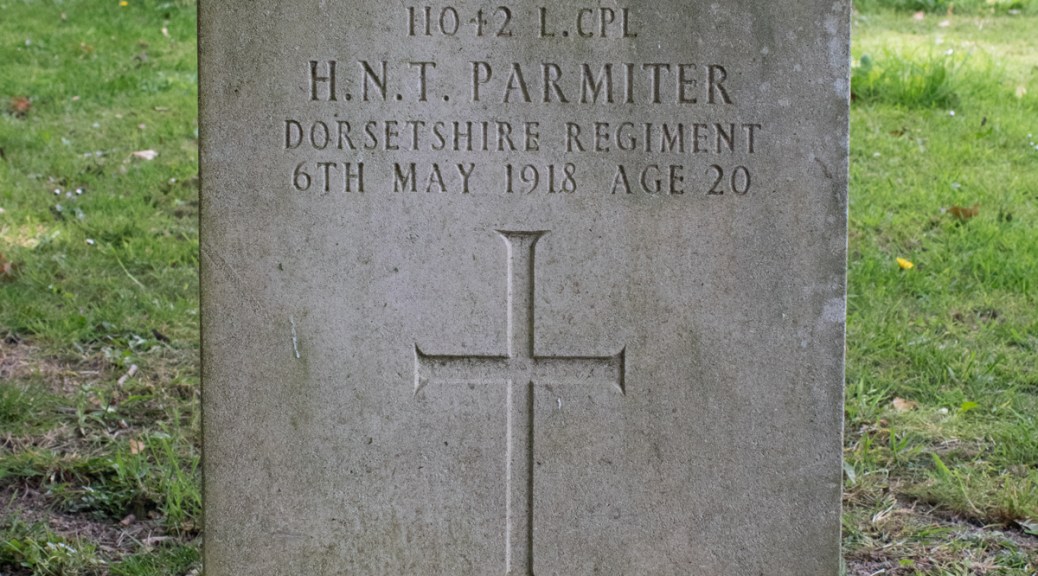
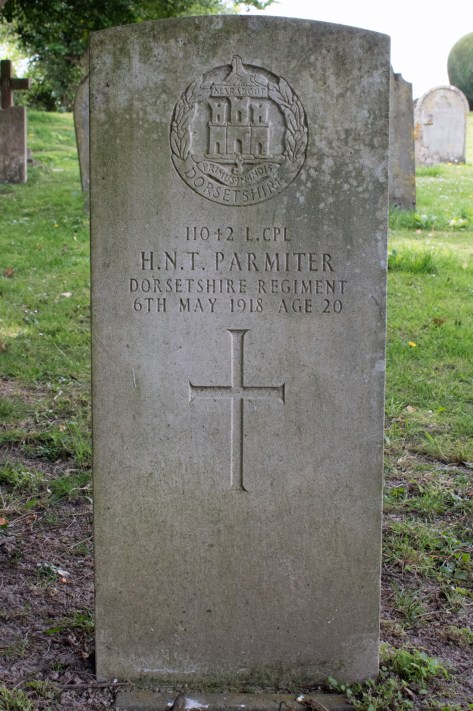
Lance Corporal Hugh Parmiter

Lance Corporal Hugh Parmiter

Hugh Norman Trivick Parmiter was born on 21st February 1898, and was the sixth of ten children. His father, James, was a Sergeant in the Dorsetshire Regiment, and the family travelled to where the army needed him. Hugh was the third of the children to be born in Bangalore, India, while his mother, Annie, gave birth to his oldest two siblings in Egypt.

By 1900 the Parmiters had returned to Britain, Annie and the children living in family barracks in Dorchester, while James was being trained in Hythe, Kent.

The 1911 census records the family living in the rural Dorset village of Gussage St Michael. Having been pensioned from the army, James was employed as a dairyman, and the family lived in a modest village cottage. At thirteen years of age, Hugh was still attending school, growing up in the peaceful surroundings of the Dorset countryside.

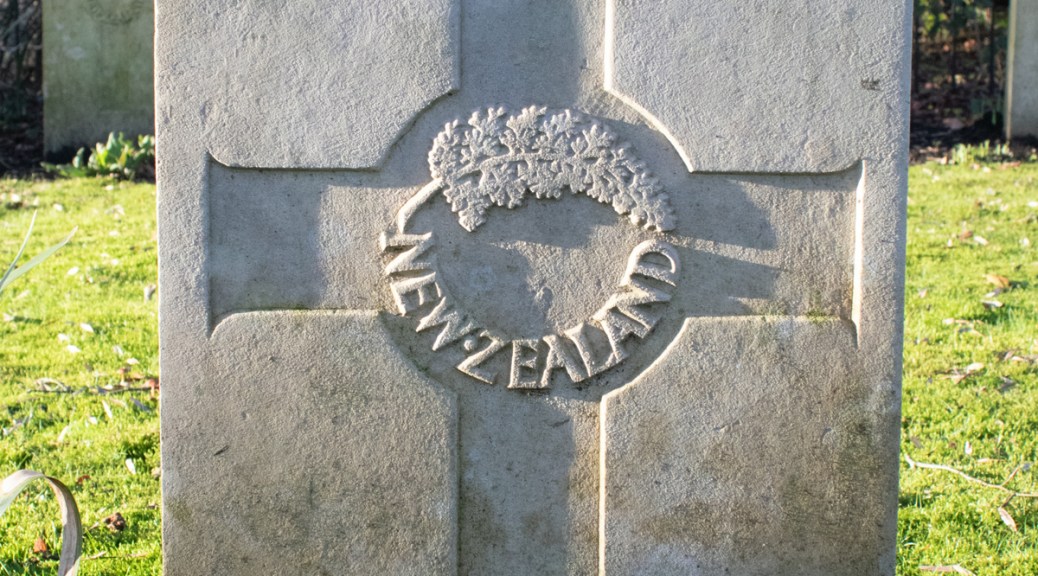
When war broke out, Hugh stepped up to play his part. Full details of his service have been lost to time, but from what remains it is clear that he enlisted in the Devonshire Regiment in the opening weeks of the war. By 11th July 1915, Private Parmiter’s unit was ensconced in the Balkans.

Hugh was caught up in the fierce fighting at Gallipoli, and rose to the rank of Lance Corporal. He would not come out unscathed, however, and was medically evacuated to Britain for treatment. While details of his injuries are unclear, they were severe enough for him to be medically discharged from the army: he was formally stood down on 17th January 1916, a week after the final evacuations from the Dardanelles Strait.

At this point, Hugh’s trail goes cold. James had passed away in 1914, and Annie had moved to Pimperne, a village on the outskirts of Blandford Fordham. Hugh’s health still dogged him however, and he passed away on 6th May 1918: he was 20 years of age.

The body of Hugh Norman Trivick Parmiter was laid to rest in St Peter’s Churchyard in Pimperne.


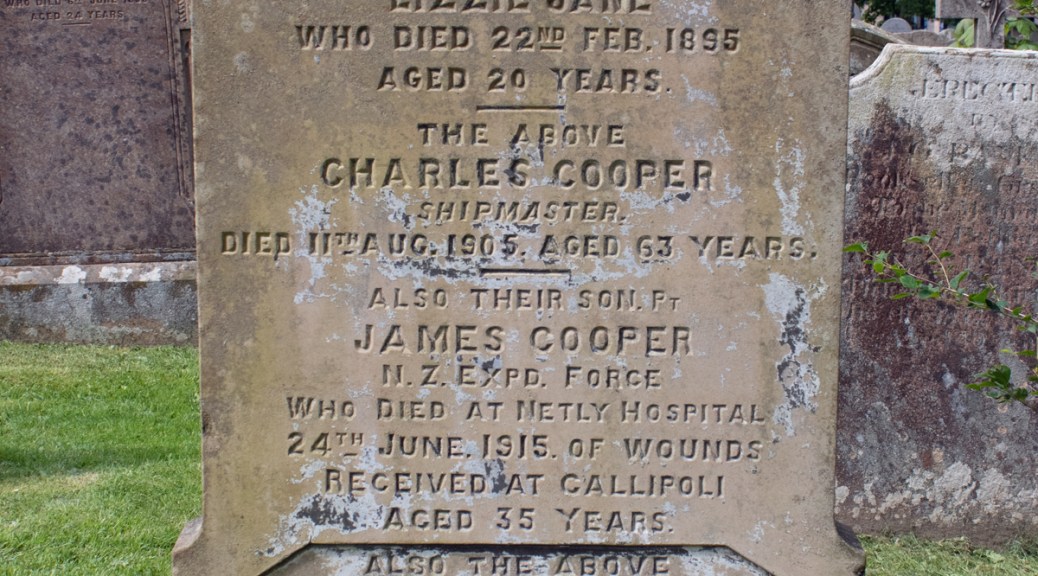
Private James Cooper

Private James Cooper

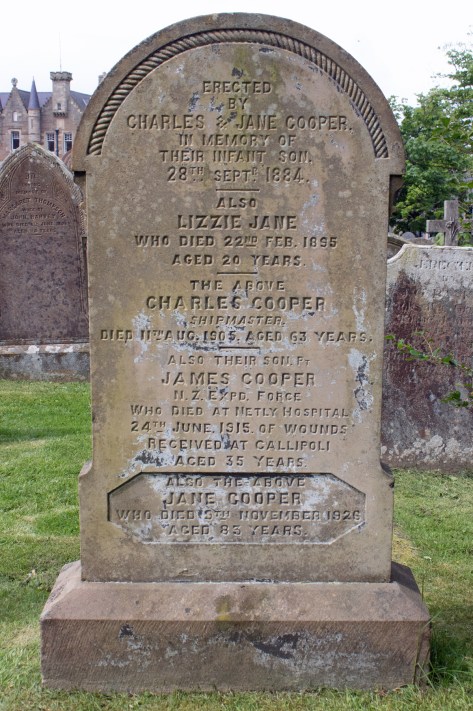
Private James Cooper, a native of Kirkwall, died in the Red Cross Hospital at Netley last Thursday from a wound received at the Dardanelles. Private Cooper, who was 35 years of age, was a son of Mrs Cooper, School Place, Kirkwall (with whom much sympathy is felt), and of the late Capt. Charles Cooper. After being employed for some time in a shop in Kirkwall, he decided to follow his father’s vacation [sic] and went to see for some years, during which time he served in the Naval Reserve. He was in New Zealand when the war began, and at once enlisted in the 6th Hamaki Coy. With the New Zealand contingent he went to Egypt and took part in the fighting with the Turks near the Suez Canal. In April the contingent was sent from Egypt to the Dardanelles, and towards the end of that month Private Cooper received a gunshot wound in the left arm. With other wounded he was sent to the base hospital at Alexandria, and thence, after a few weeks, was sent home to the hospital at Netley. In all his letters home he wrote cheerfully and made light of his wound, but the nurse wrote that the wound was a serious one. At Netley the arm was amputated. Private Cooper gradually sank and died last Thursday.

[Orkney Herald: Wednesday 30th June 1915]

James Cooper was born on 9th October 1879 in Kirkwall, Orkney. He was one of seven children – and the youngest of three sons – to Charles and Jane Cooper. With her husband being away at sea a lot of the time, Jane was used to raising her family on her own.

In August 1905, tragedy struck the family:

At an early hour on Friday morning last, the town of Stromness was thrown into a stat of alarm by the report that a sad burning fatality had taken place on board the barquentine Brazilian on Ness patent slip. To accurately describe how the accident took place is impossible, but from careful enquiries we learn that on Thursday evening Captain Charles Cooper, belonging to Kirkwall, accompanied by an acquaintance, left the town and went on board the vessel, where they lit a fire and make a cup of coffee, after which friend left him. At that time the fire was very low, and no danger apprehended. At an early hour of the morning, the vessel was observed to be on fire, and an alarm given. In a short time the fire hose from the town was on the scene, and two streams playing on the burning vessel. The fire was fortunately confined to the cabin and companion way, where the rescue party discovered the body of Capt. Cooper terribly burned and disfigured, to such an extent that it was quite unrecognisable… There can be no doubt but that death was caused by suffocation, but what led to the fire is not known. It is supposed, however, that after the friend left the vessel, Capt. Cooper had taken the paraffin oil flask to put some oil on the nearly burnt-out fire, when possibly an explosion took place, and the cabin got suddenly full of smoke.

[Orkney Herald: Wednesday 16th August 1905]

Charles was 64 when he died. Jane brought his body across the island, and he was buried in the family plot in the churchyard of St Magnus’ Cathedral.

By this point, James was serving in the Royal Navy. The exact details are unclear, but he seems to have bought his way out, after completing six years. He travelled to Australia, and worked as a cook for a while, before moving on to New Zealand, setting up home in the town of Thames, on the country’s North Island.

When war was declared, he was quick to step up, and, joined the Auckland Regiment of the New Zealand Expeditionary Force. His service papers show that he was 5ft 7ins (1.7m) tall and weighed 159lbs (72.1kg). He had brown hair, grey eyes and a medium complexion. He had a tattoo of a naval coat of arms on his right forearm, and one of a full length woman on the back of his left forearm.

Private Cooper’s unit left New Zealand on 16th October 1914, heading for Egypt. As the newspaper report stated, he moved from there to Gallipoli, before being medically evacuated to Egypt, and then to Netley Hospital, Hampshire.

After his passing, the body of James Cooper was taken back to Orkney for burial. He was laid to rest in the family plot at St Magnus’ Cathedral, reunited with his father after ten years.


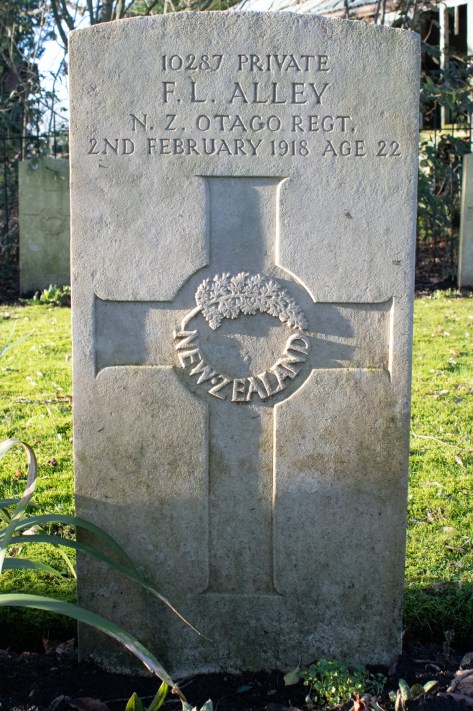
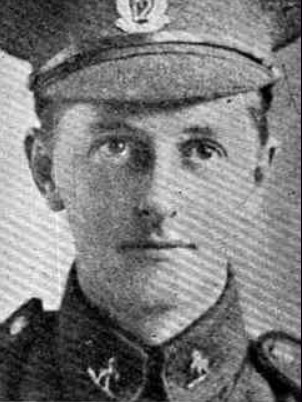
Private Francis Alley

Private Francis Alley

Francis Lignori Alley was born in Hikutaia, on New Zealand’s North Island, on 18th February 1896. There is little information about his early life, but it is clear that he was one of six children to John and Elizabeth Alley.

By the time he had completed his schooling, the Alley family had moved to the port town of Gisborne. Francis found work as a warehouseman in for Macky Logan Caldwell Ltd. When war broke out, however, he was called upon to play his part.

On 11th January 1916, Francis enlisted in the New Zealand Otago Regiment. His service records show that he was 5ft 8.5ins (1.74m) tall, and weighed just 90lbs (40.8kg). A practicing Roman Catholic, he had brown hair, grey eyes and a fair complexion. His papers also noted an operation scar in his groin.

Private Alley’s unit left New Zealand in the spring of 1916. After a month’s stop in Suez, they arrived in Southampton, Hampshire, on 7th August, and were marched to their camp in Sling, Wiltshire. Within a matter of days, however, Francis found himself on the Western Front, and would remain there for the next month.

On 9th June 1917, during the Battle of Messines, Francis was wounded. Initially treated on site, he was medically evacuated to Rouen, then Britain for treatment to gun shot wounds to his face and eye. He spent the next few months being treated and recuperating, hit service papers stating that he re-joined his unit in Étaples on 8th August. That autumn, he was given leave, but while back in Britain, he fell ill, and was admitted to the venereal section of the No. 3 New Zealand General Hospital in Codford, Wiltshire.

Private Alley was discharged on 7th November 1917, and remained at the camp in Codford. On Boxing Day, he was admitted back to hospital again, suffering from septicaemia: the condition was to prove fatal, and he passed away on 2nd February 1918. He was just 21 years old.

The body of Francis Lignori Alley was laid to rest in the graveyard extension of St Mary’s Church, Codford, not far from the camp he had been based at.


Private Francis Alley
(from findagrave.com)

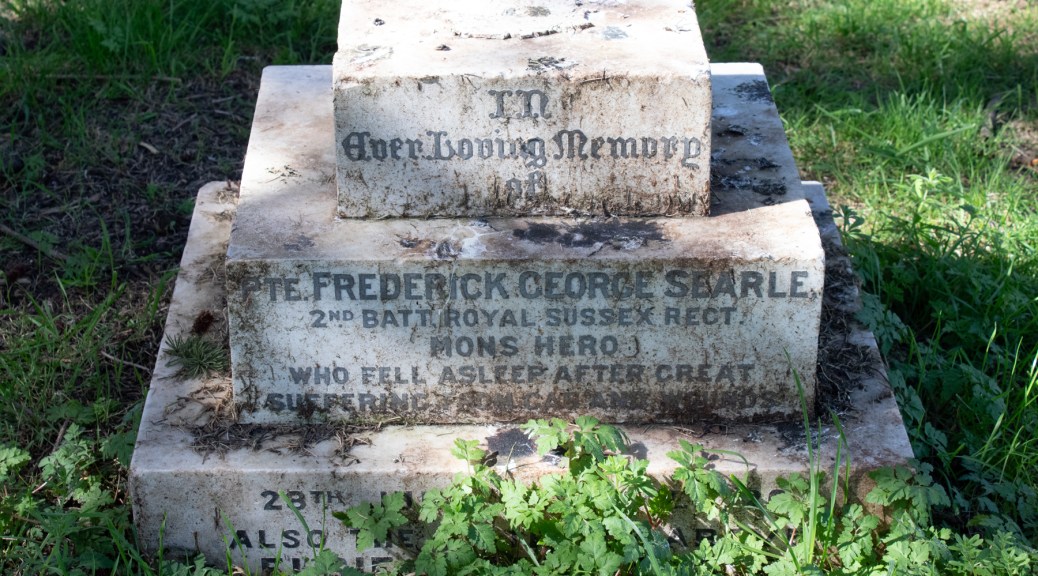
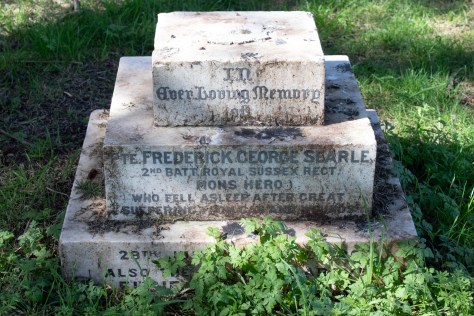
Private Frederick Searle

Private Frederick Searle

Frederick George Searle was born in the Sussex village of Warminghurst in the spring of 1894. One of thirteen children, his parents were William and Annie Searle.

William was a carter, and moved the family to where the work was. The 1901 census found the Searles living in Wiggonholt, between Pulborough and Storrington. By 1911, however, they had moved south, and were living in a cottage on the golf links in Broadwater, to the north of Worthing.

By this point, William was employed as a carter at the golf course, while three of the Searle children were also working at the club. Frederick – now 16 years of age, was a caddie, while his older brothers did mainly grounds work.

As one of thirteen siblings, Frederick was keen to make his own mark on the world and, on 24th September 1912, he enlisted in the Royal Sussex Regiment. His papers show that he was 5ft 5ins (1.65m) tall, and weighed 121lbs (54.9kg). He had light brown hair, grey eyes, and a number of scars – two on his back, one on the left side of his head and one at the base of his right forefinger.

When war broke out, Private Searle’s unit – the 2nd Battalion – was sent to France. He survived the Battle of Mons and subsequent retreat, but was badly wounded in the left arm on 13th November 1914, and medically evacuated to Britain for treatment. Frederick was moved to a depot while he recuperated, but because of his injury, he was formally discharged from the army on 30th April 1915.

Frederick returned to Sussex, and family life. In time, he took up his role on the golf club once more, but this seemed not to be enough for him. On 31st May 1917, he re-enlisted, joining the Mechanical Transport unit of the Army Service Corps as a Private. He was posted to Isleworth, Surrey, but his injury seemed to still be nagging at him. Despite his best efforts, and with the support of his superiors, at the end of August he took the decision to stand down, and was discharged from duty once more.

At this point, Frederick’s trail goes cold. What can be confirmed is that he passed away on 28th June 1919: he was 25 years of age.

The body of Frederick George Searle, former Private in two regiments, was laid to rest in the family plot in Broadwater Cemetery, not far from where his family still lived.


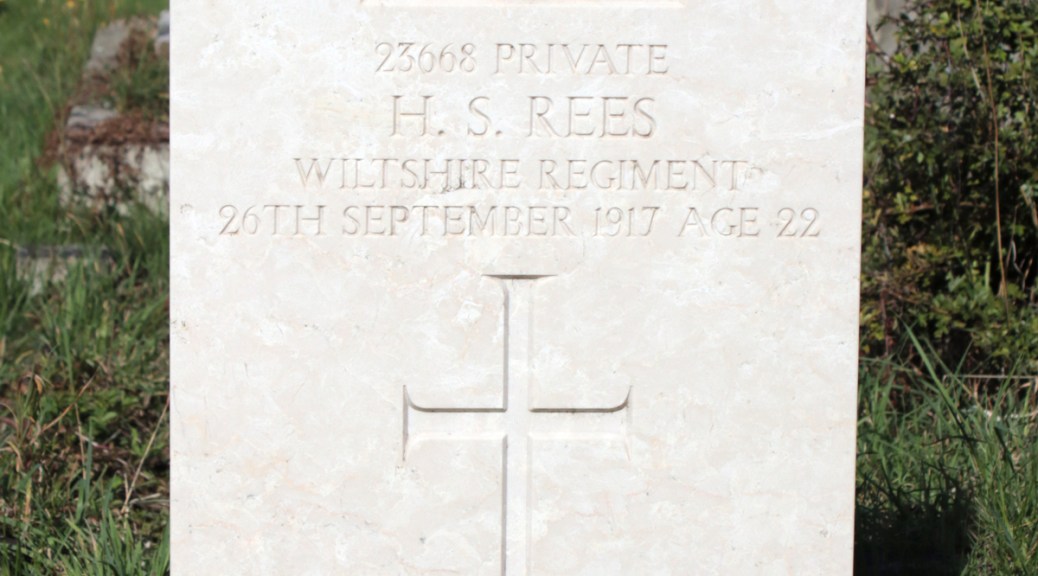
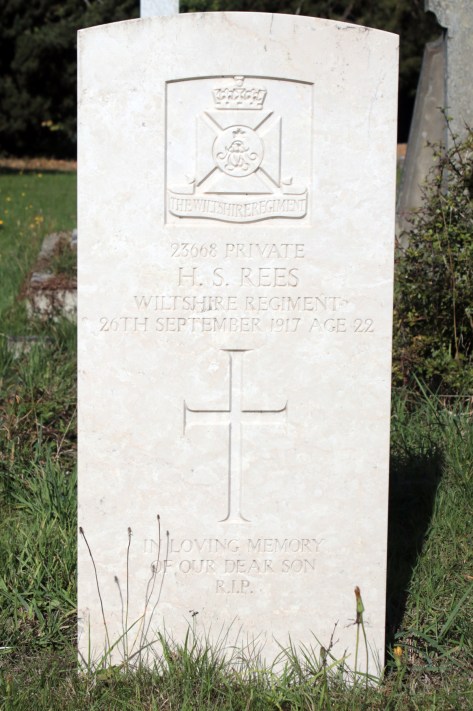
Private Howard Rees

Private Howard Rees

Howard Stephen Rees was born in the spring of 1895 in Trowbridge, Wiltshire. He was the second of six children – and the older of two sons – to Stephen and Annie. Stephen was an engine driver, and the 1901 census found the family living in a small terraced house at 18 Gloucester Road, a short walk from the town’s railway station.

By the time of the next census, the family had moved to a larger house, and were living at 15 Innox Road, to the north of the town centre. Stephen was still employed as an engine driver, while there were too further wages coming into the household. Howard’s older sister, Catherine, was working as a rug weaver, while he himself was employed as a page boy, a bell hop for one of the hotels in the town.

By the time war broke out, Howard had moved from page boy to cellarman. The pull to serve his country was strong, though, and he gave up his job to enlist in the army on 7th September 1914, just a month after the start of the conflict.

Private Rees was assigned to the Wiltshire Regiment. His service papers show that he was 5ft 11ins (1.8m) tall and weighed 120lbs (54.4kg). He was noted as having brown hair, brown eyes and a fair complexion. Howard’s medical examination was to conclude that he was not fit for army service, due to a ‘very poor physique and.. an impediment of speech’. He was recorded as being quite unfit for a soldier. His time in the army was to last just 20 days.

Howard was not deterred by this setback, however, and it seems that he tried to enlist again at some point, and this time succeeded. Full details have been lost, but from the documents that remain, he had joined the 2nd Battalion of the Wiltshire Regiment by the spring of 1917.

The funeral took place on Monday a the cemetery of Private Howard Stephen Rees, Wilts Regiment, aged 22 years, who passed way after a painful illness lasting five months, at the Bath War Hospital on Wednesday September 26th from wounds received in action in France on April 23rd.

[Wiltshire Times and Trowbridge Advertiser: Saturday 6th October 1917]

Howard Stephen Rees received his injuries during the Arras Offensive of 1917, his eagerness to be included in the war having led to his death. His body was taken back to Wiltshire, and was laid to rest in Trowbridge Cemetery.